Introduction
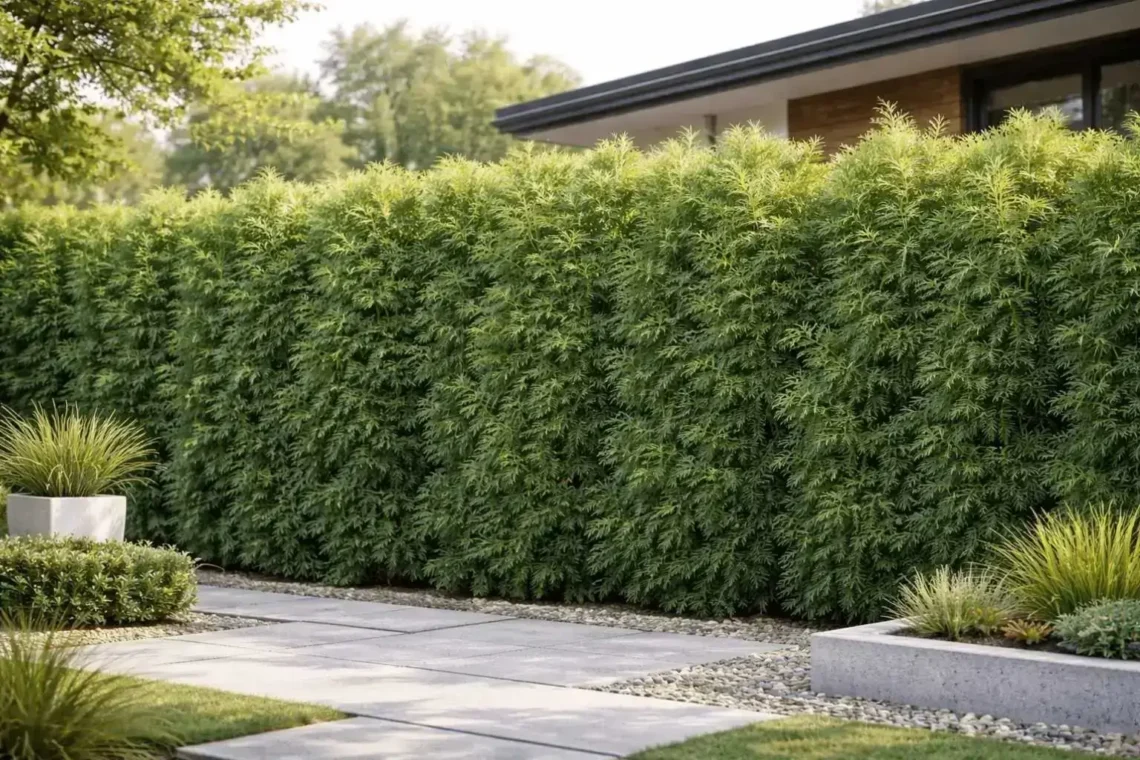
Pine fern is a refined ornamental evergreen tree valued for its soft texture, clean form, and long-lasting greenery. Botanically identified as Podocarpus gracilior, also classified as Afrocarpus gracilior, it is widely used in structured landscapes and modern garden designs. This evergreen species is especially popular for hedges, privacy screens, and formal boundaries due to its dense growth and pruning tolerance. Often referred to as a fern pine plant, african pine fern, or fern pine tree, it delivers the elegance of fern-like foliage with the durability of a tree. Its adaptability to different landscape styles and climates makes pine fern a reliable choice for residential and commercial planting.
What Is Pine Fern?
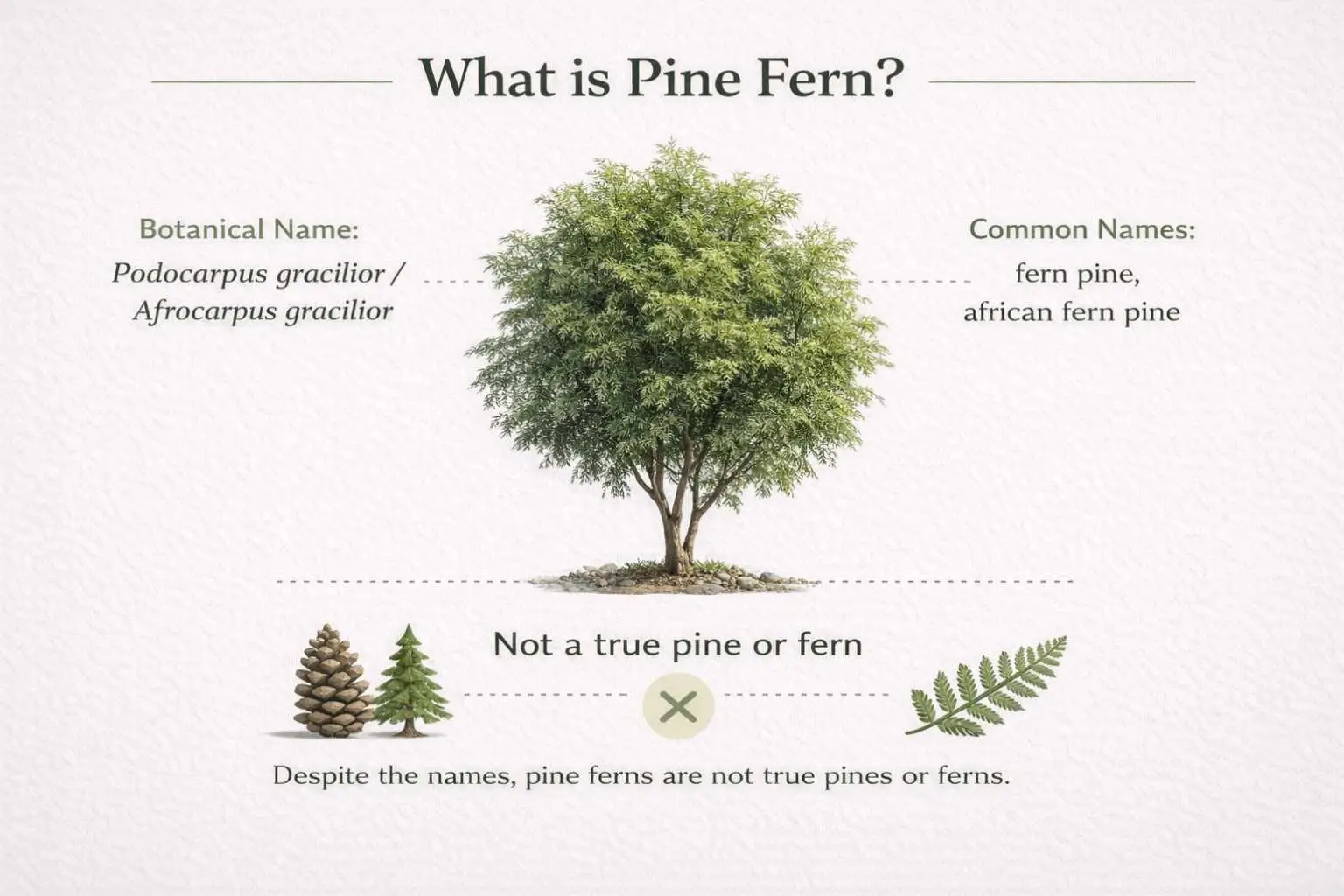
Botanical Name and Classification
Pine fern is scientifically known as Podocarpus gracilior, with Afrocarpus gracilior being its updated botanical classification in many references. Despite its common names, such as fern pine, african fern pine, and fern podocarpus, it is neither a true pine nor a fern. Pine fern belongs to the Podocarpaceae family, a group of ancient coniferous evergreens. The confusion arises from its needle-like, fern-textured foliage, which visually resembles both pine needles and fern fronds without sharing their botanical lineage.
Native Origin and Natural Habitat
The pine fern tree originates from eastern Africa, where it grows in highland regions with moderate temperatures. As an african fern tree, it has adapted to varied conditions while maintaining its evergreen nature throughout the year. African pine species like this one thrive in well-drained soils and mild climates, contributing to their resilience in cultivated landscapes. This natural adaptability allows pine fern to perform well in both warm and temperate regions.
Pine Fern Tree Characteristics
-
Pine Fern Leaves and Foliage Texture
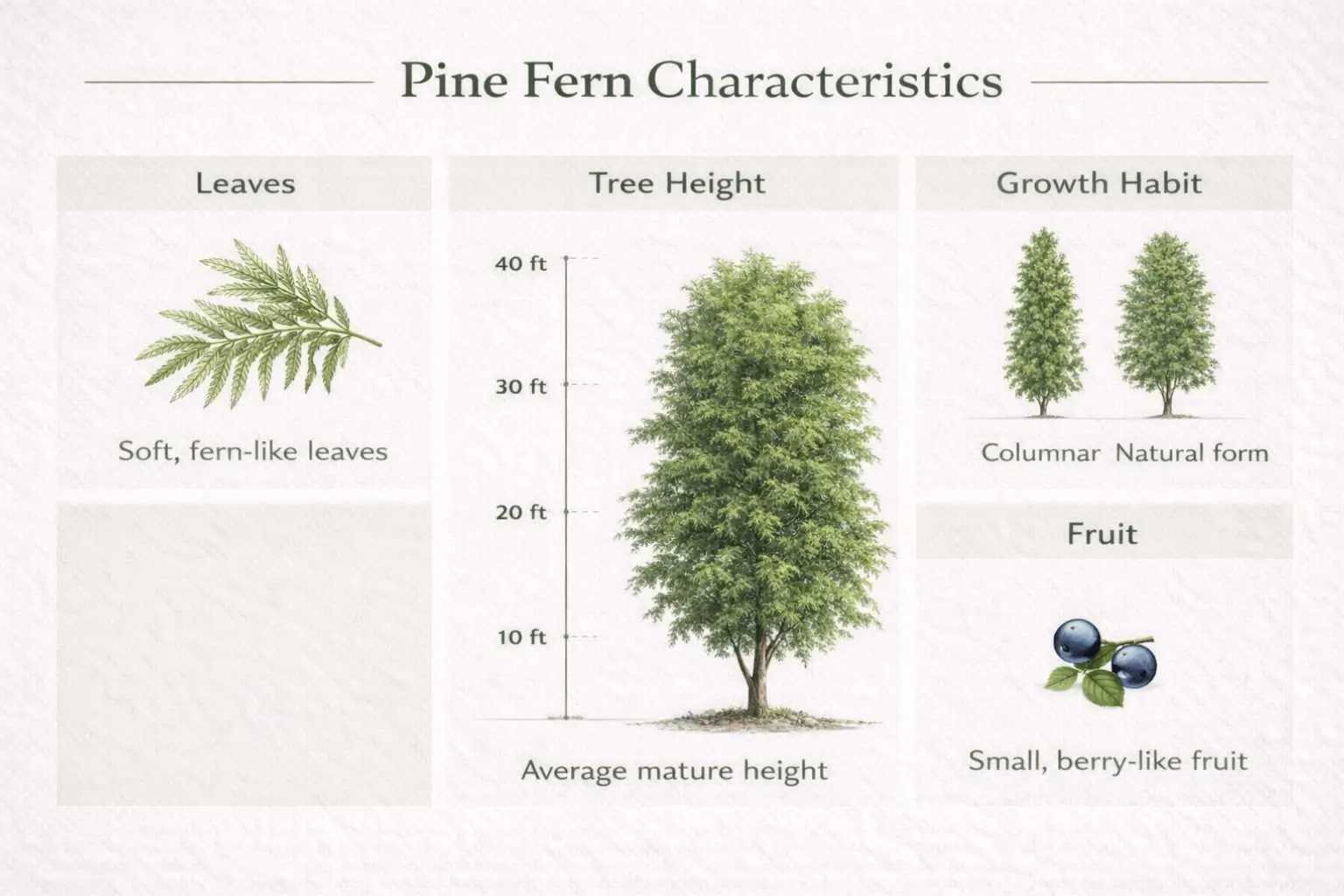
Pine fern leaves are slender, elongated, and soft to the touch, giving the plant a delicate, fern-like appearance. The fern pine leaves grow in a layered pattern that creates a smooth, flowing texture. Each podocarpus gracilior leaf is deep green, maintaining its color year-round and contributing to a polished evergreen look suitable for formal hedges and standalone planting.
-
Pine Fern Tree Size and Height
A mature pine fern tree typically reaches 30 to 50 feet in height when left unpruned, with a moderate spread. Podocarpus gracilior height can be easily controlled through pruning, making it suitable for both tall screens and narrow columns. Depending on training, podocarpus size may remain compact or develop into a broad natural form, offering flexibility for landscape planning.
-
Pine Fern Fruit and Growth Habit
Pine fern produces small, berry-like fruit that develops from mature female plants. These fern pine fruit are not ornamental focal points but can attract birds and local wildlife. The growth habit is upright and dense, making pine fern ideal for structured planting and natural screening.
Pine Fern Growth Rate and Development
How Fast Does Pine Fern Grow?
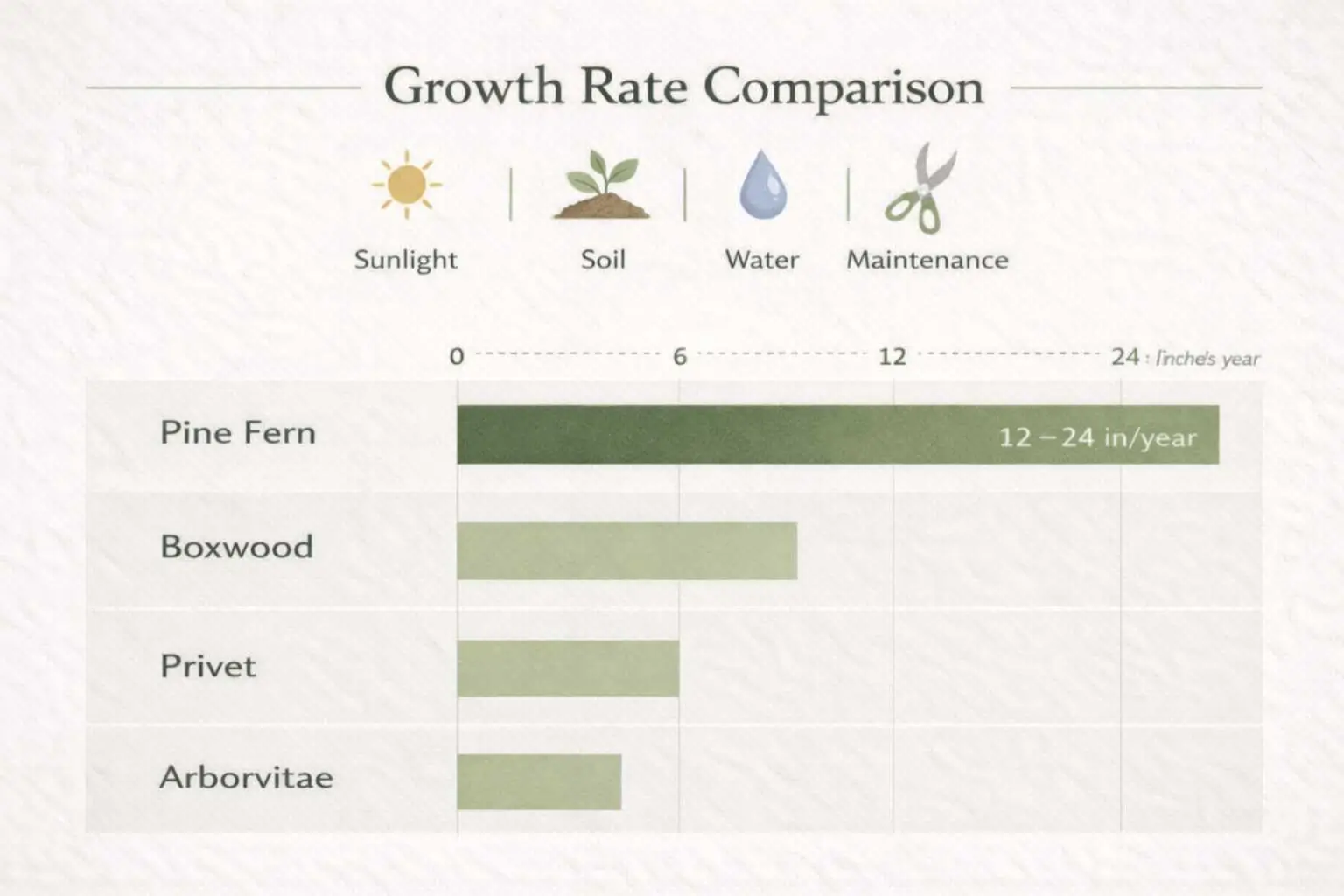
The fern pine growth rate is moderate, averaging 12 to 24 inches per year under optimal conditions. Compared to other evergreen hedges, podocarpus gracilior growth rate is steady and predictable rather than aggressive. Many gardeners ask how fast does podocarpus grow, and the answer depends largely on care, but it remains reliable for long-term hedge development.
Factors Affecting Growth Rate
Several factors influence podocarpus growth rate:
- Full sun to partial shade exposure
- Well-draining soil with consistent moisture
- Regular watering during establishment
- Proper fertilization and pruning
Maintenance practices directly affect overall growth density and speed. Pine fern’s moderate, predictable growth rate is one reason it consistently outperforms faster-growing screens in long-term maintenance comparisons. For a full side-by-side breakdown of how it stacks up against 16 other evergreen hedge species by growth rate, spacing, and drought tolerance, see this evergreen hedge growth rate comparison.
Reviewing this data helps confirm why gardeners favor podocarpus over faster but higher-maintenance alternatives like Leyland cypress.
Pine Fern Hedge and Privacy Uses
-
Pine Fern Hedge Benefits
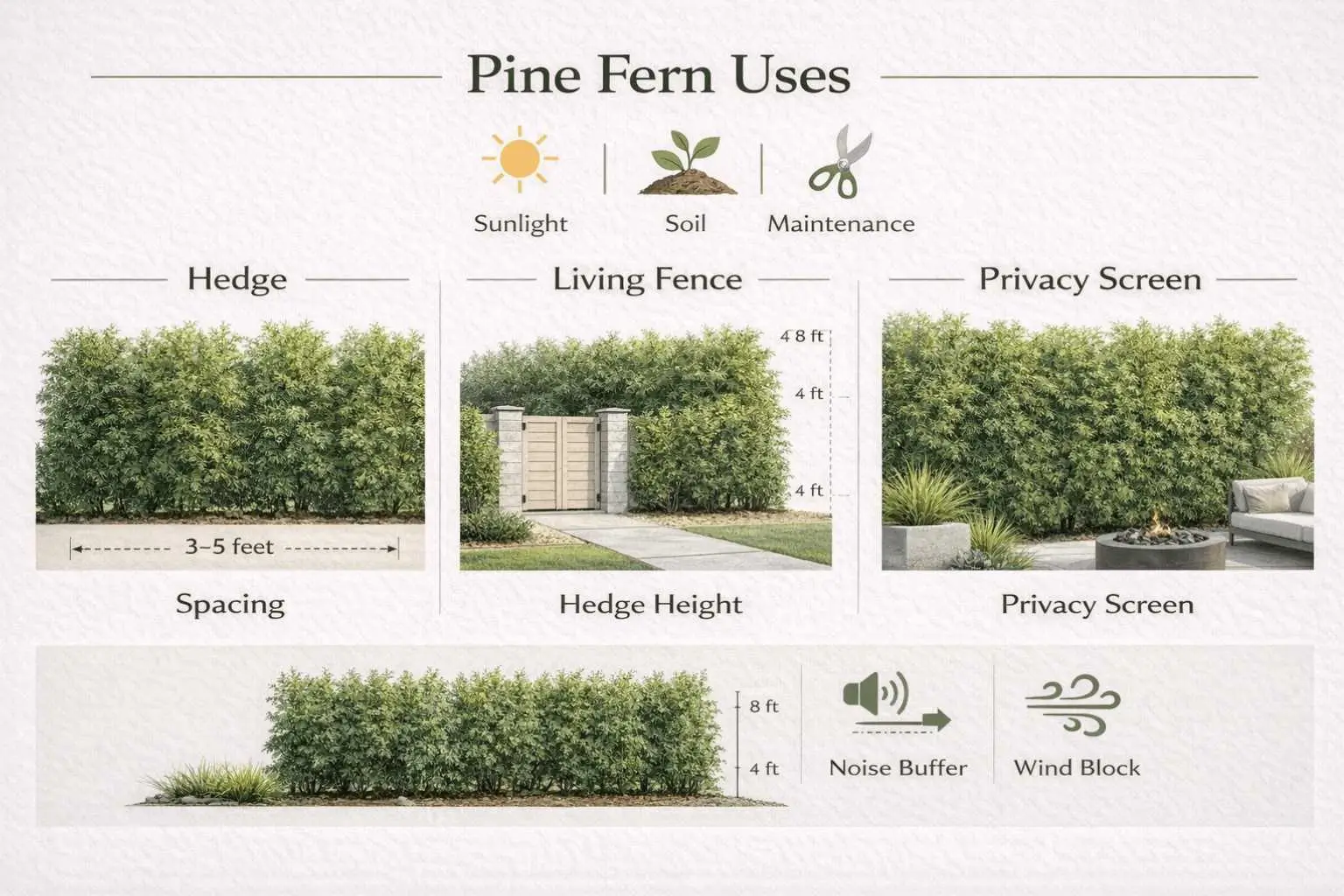
A pine fern hedge provides dense, evergreen screening suitable for privacy and noise reduction. African fern pine hedge plantings also help block wind and define property lines. As a podocarpus privacy hedge, it offers durability, visual softness, and long-term structure. Choosing between pine fern and other screening plants often comes down to your specific privacy goals, space, and climate. Use this interactive evergreen privacy screen selector tool to match your yard’s needs against the right species before committing to a hedge.
It’s a quick way to validate that podocarpus gracilior is the right fit before you plant a permanent boundary line.
-
Pine Fern Hedge Planting Spacing
Correct podocarpus hedge planting spacing is essential for thick coverage. Plants are typically spaced 3 to 5 feet apart for hedges, while wider spacing suits columnar designs. Podocarpus hedge height can be maintained at various levels depending on spacing and pruning frequency.
-
Pine Fern as Fence and Boundary Plant
Pine fern functions effectively as a living boundary. Podocarpus fence installations replace traditional fencing with greenery, while pine hedging provides a natural, cohesive perimeter.
Pine Fern Care and Maintenance
Light, Soil, and Water Requirements
Pine fern performs best in well-drained soil and adapts to sandy or loamy textures. It tolerates partial shade but grows most densely in full sun. Once established, it shows good drought tolerance, requiring only occasional deep watering.
Pruning and Shaping Pine Fern
Pruning maintains structure and density.
- Regular trimming supports hedge shaping
- Vertical pruning encourages column forms
- Podocarpus column and podocarpus gracilior column styles require consistent maintenance
Read Also: 7+ Powerful Benefits of Coastal Rosemary for Stunning Gardens
Pine Fern Varieties and Comparisons
Podocarpus Gracilior vs Macrophyllus
When comparing podocarpus gracilior vs macrophyllus, gracilior has finer foliage and faster vertical growth. Podocarpus macrophyllus vs gracilior shows differences in leaf size, with macrophyllus having broader leaves suited to shorter hedges. For gardeners weighing pine fern against other privacy hedge options at a glance, this privacy hedge evergreen comparison spreadsheet lays out height, spacing, and sun requirements side by side.
It’s a handy reference to double-check spacing and sun tolerance before finalizing your hedge layout.
Weeping and Columnar Podocarpus Forms
Weeping podocarpus varieties introduce cascading forms ideal for focal points. Podocarpus weeping selections add movement and decorative appeal in landscaped settings.
Buying Pine Fern Plants
Common Nursery Sizes Available
Nurseries commonly offer podocarpus 3 gallon plants for small projects and podocarpus gracilior 15 gallon sizes for instant impact. Larger sizes establish faster and provide immediate screening.
Pine Fern Price and Availability
Podocarpus gracilior for sale varies in price based on size and region. Podocarpus tree for sale listings are widely available, with podocarpus trees for sale offered through local nurseries and landscape suppliers.
Landscaping Ideas Using Pine Fern
Backyard and Residential Landscaping
Pine fern works well for privacy screens, driveway borders, and structured garden backdrops. Backyard pine trees such as tree podocarpus provide year-round greenery and architectural form.
Companion Plants and Design Tips
Pine fern pairs well with shade-tolerant groundcovers and ornamental shrubs. Visual layering is enhanced by placing ferns under pine trees to create depth and texture without competition.
Conclusion – Is Pine Fern Right for Your Landscape?
Pine fern offers evergreen structure, adaptable growth, and refined foliage suited for hedges, screens, and decorative planting. Its controlled growth, pruning tolerance, and visual appeal make it ideal for both residential and commercial landscapes. Choosing the right pine fern size and style ensures long-term success and design harmony.
Read Also: Dwarf Bottlebrush: 7 Stunning Reasons Gardeners Love It
FAQs
How tall does a pine fern grow at maturity?
Pine fern can reach 30 to 50 feet tall if unpruned, but height is easily managed with regular trimming.
How fast does pine fern grow compared to other hedges?
Pine fern grows at a moderate rate, slower than fast-growing hedges but denser and more controlled.
Is pine fern suitable for privacy hedges?
Yes, pine fern is highly suitable for privacy hedges due to its dense foliage and evergreen nature.
What is the difference between podocarpus gracilior and macrophyllus?
Gracilior has finer leaves and faster vertical growth, while macrophyllus has broader leaves and a denser habit.
How far apart should pine fern hedge plants be spaced?
Spacing of 3 to 5 feet is ideal for thick, uniform hedges.
Does pine fern require frequent pruning?
Pruning is moderate and mainly needed to maintain shape, especially for hedges and column forms.