Introduction
Learning how to plant garlic at home is simple, cost-effective, and highly rewarding, even for first-time gardeners. Garlic is naturally hardy, requires minimal care, and adapts well to different growing environments. With the right planting method and basic soil preparation, healthy garlic bulbs can be grown successfully without advanced gardening skills. One of the biggest advantages of garlic is its versatility—it grows equally well in garden soil, containers, and raised beds. Whether you have a large outdoor space or a small balcony, planting garlic fits easily into home gardening setups. Understanding the basics early ensures strong root development, steady growth, and flavorful bulbs at harvest.
Understanding Garlic Before Planting
What Is a Garlic Plant?
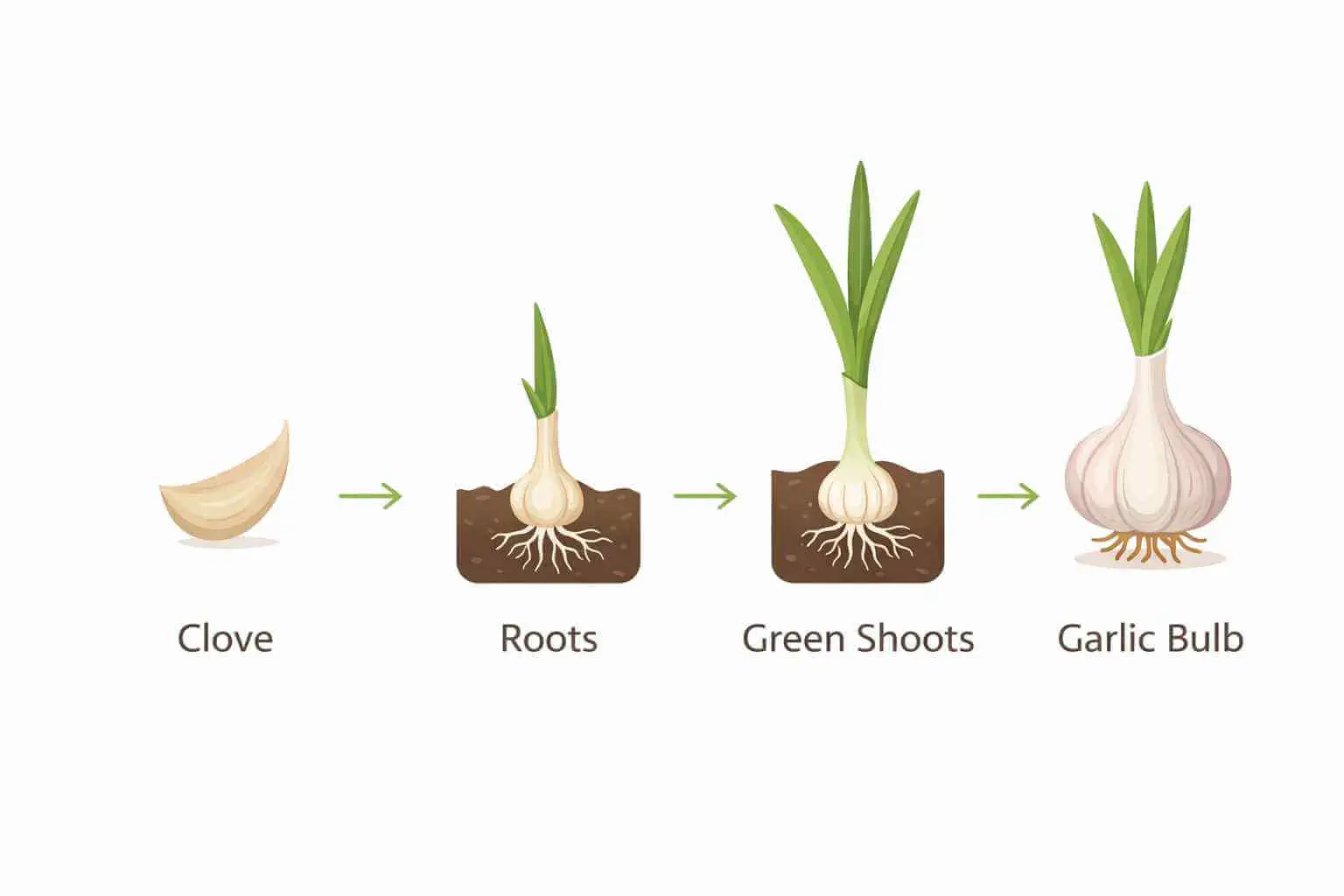
A garlic plant is a cool-season bulb crop grown from individual cloves rather than seeds. Each clove planted develops into a full garlic bulb containing multiple cloves. The garlic growth cycle begins with root establishment, followed by leaf development, bulb formation, and final maturation. During early growth, the plant focuses on leaf production, which directly influences bulb size. Understanding the difference between cloves and mature garlic bulbs is essential, as planting individual cloves—not whole bulbs—is what triggers proper growth and bulb development.
Best Time to Plant Garlic
The best time to plant garlic depends on climate and seasonal conditions. In most regions, garlic is planted in fall to allow roots to establish before winter dormancy. Cooler temperatures support strong root growth, while active growth begins in early spring. In mild climates, garlic can also be planted in late winter. Garlic starts active growth once soil temperatures stabilize and daylight hours increase, making timing an important factor for healthy development and larger bulbs.
How to Prepare Garlic for Planting
Choosing the Right Garlic Cloves
Successful garlic planting starts with selecting high-quality cloves. Always choose firm, disease-free cloves with intact skins. Soft, damaged, or moldy cloves should be avoided, as they reduce germination success. Treated or store-bought garlic is often sprayed to prevent sprouting and may fail to grow properly. Clove size directly affects bulb size—larger cloves generally produce larger, healthier garlic bulbs at harvest.
Preparing Soil for Growing Garlic
Garlic grows best in loose, fertile soil with excellent drainage. Compacted soil restricts bulb expansion and root development. Well-draining soil prevents waterlogging, which can lead to rot. Enriching the soil with organic matter such as compost improves fertility and structure. A balanced soil environment supports consistent nutrient uptake, ensuring steady garlic growth from planting through maturity.
Read Also: Sweet Pea Bush: 7+ Stunning Facts Gardeners Love
How to Plant Garlic in the Ground
Step-by-Step Ground Planting Process
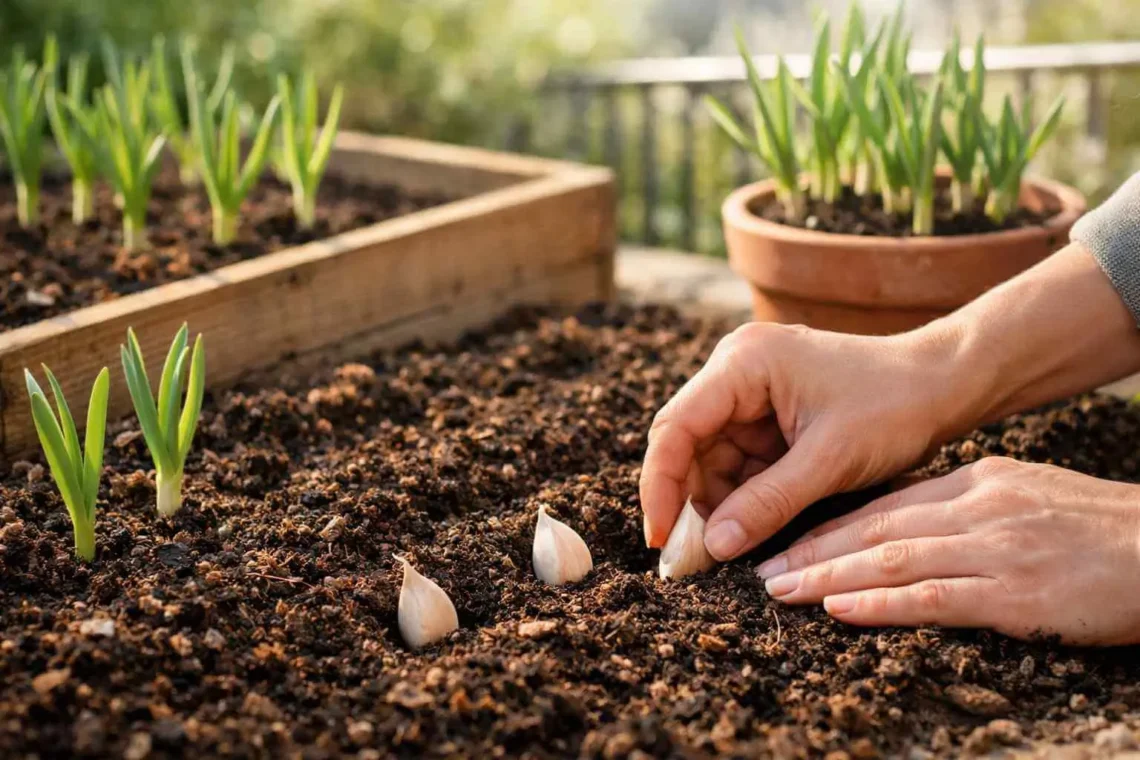
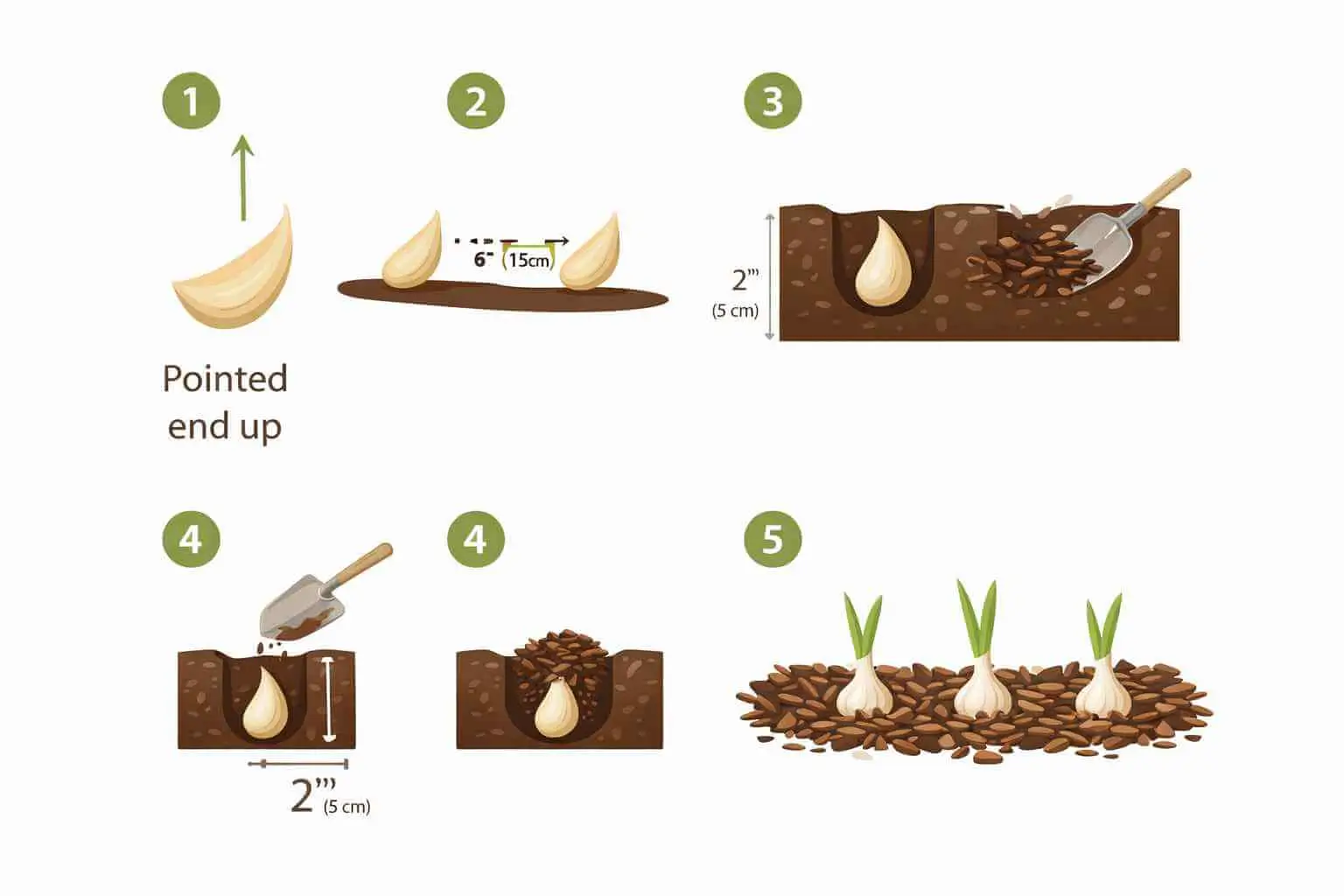
Plant garlic cloves in prepared soil with proper spacing to allow full bulb development. Space cloves 4–6 inches apart to prevent overcrowding. Place each clove upright with the pointed end facing up and the root end down. Cover cloves gently with soil and apply a light mulch layer to retain moisture and regulate temperature. Mulching also helps suppress weeds during early growth stages.
How Deep to Plant Garlic
Garlic should be planted at a depth of 2–3 inches in most soil types. In sandy soil, slightly deeper planting improves stability, while heavier soils may require shallower depth to avoid moisture retention. Proper depth protects cloves from temperature fluctuations and frost damage. In colder regions, mulch adds an extra layer of insulation during winter.
How to Plant Garlic in a Raised Bed
Raised Bed Advantages for Garlic
Raised beds offer improved drainage, which is critical for garlic health. Controlled soil composition allows better nutrient balance and structure. Elevated beds also reduce pest pressure and soil-borne diseases. These benefits make raised beds an ideal option for gardeners seeking consistent garlic growth with fewer environmental challenges.
Raised Bed Garlic Planting Tips
Garlic spacing in raised beds may be slightly closer due to better soil conditions, but overcrowding should still be avoided. Use a well-draining soil mix enriched with compost for optimal growth. Companion planting with herbs or leafy greens can improve space efficiency while supporting a healthier growing environment.
How to Grow Garlic in Pots
Choosing the Right Container
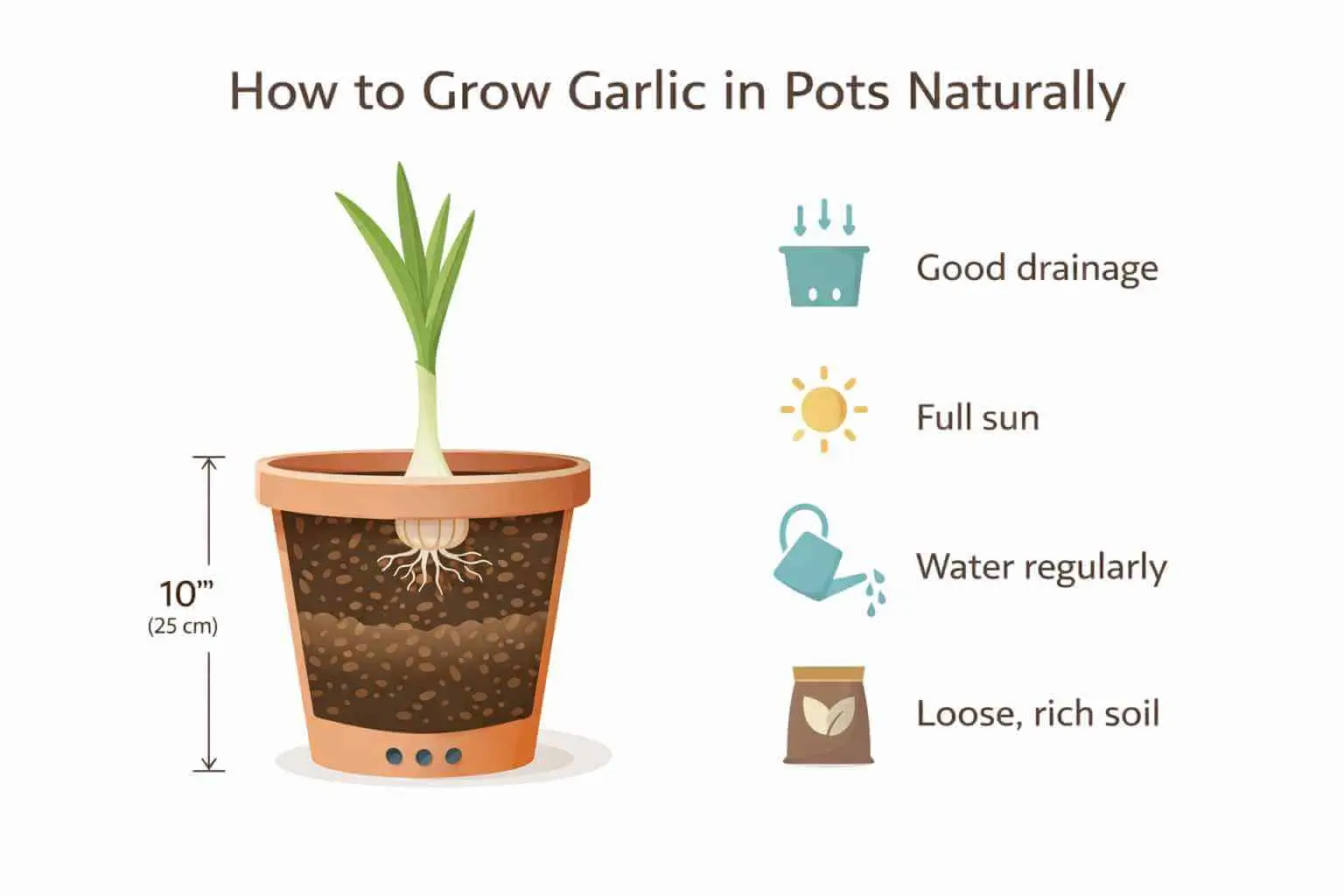
Selecting the correct container is essential for growing garlic in pots. Containers should be at least 8–10 inches deep to support root and bulb development. Drainage holes are mandatory to prevent water buildup. Materials such as terracotta or breathable fabric pots help regulate moisture and temperature, reducing the risk of rot.
How to Grow Garlic in Pots Successfully
To understand how to grow garlic in pots naturally, focus on soil quality, water control, and sunlight. Use loose, nutrient-rich potting soil with good drainage. Water consistently, keeping soil moist but never soggy. Garlic grown in pots requires full sun, ideally 6–8 hours daily, to support strong leaf growth and bulb formation.
Watering, Feeding, and Early Care
Watering Schedule for Growing Garlic
Garlic prefers evenly moist soil during early growth. Overwatering increases the risk of root rot and fungal issues. Water when the top layer of soil feels dry, adjusting frequency based on weather and soil conditions. Proper moisture balance supports healthy root and leaf development.
Fertilizing Garlic Plants
Garlic requires balanced nutrients, especially nitrogen during early growth. Organic fertilizers or compost-based feeding schedules provide steady nourishment. Feeding should be reduced as bulbs begin to mature to prevent excessive leaf growth at the expense of bulb development.
Common Garlic Planting Mistakes to Avoid
Incorrect Depth and Spacing
Planting garlic too shallow exposes cloves to temperature stress, while planting too deep can slow emergence. Improper spacing leads to competition for nutrients, resulting in smaller bulbs. Correct depth and spacing are critical for uniform growth and healthy bulb formation.
Poor Soil and Drainage Issues
Poor soil structure and inadequate drainage directly affect garlic bulb development. Waterlogged soil limits oxygen availability and increases disease risk. Improving soil texture and drainage is essential for successful garlic planting and long-term plant health.
Harvest Expectations After Planting Garlic
How Long Garlic Takes to Grow
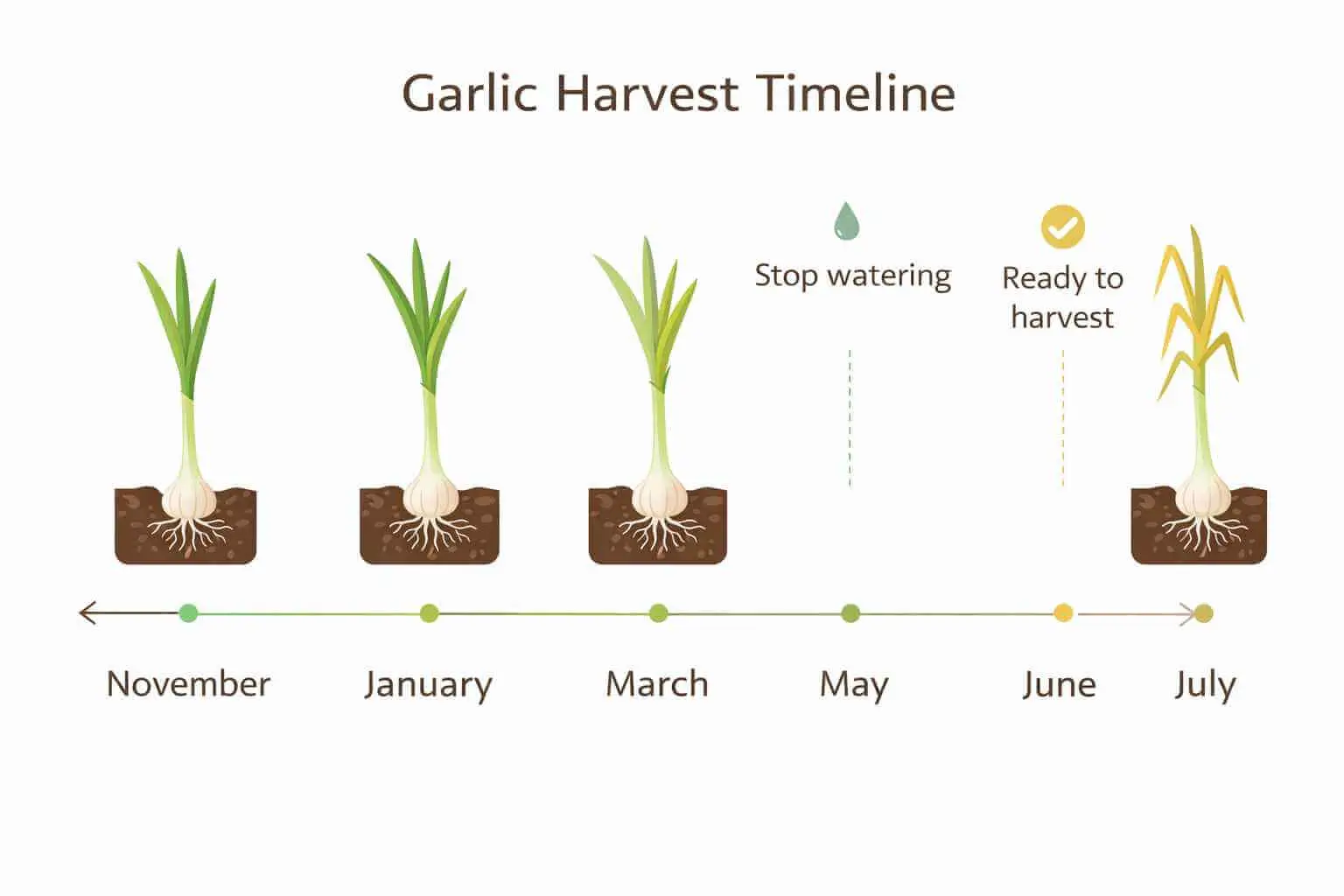
Garlic typically takes 7–9 months to mature, depending on variety and climate. Growth progresses from leaf development to bulb expansion. Signs of maturity include yellowing lower leaves while upper leaves remain green.
Preparing for Harvest
Leaf color is the most reliable indicator for harvest timing. When about one-third of the leaves turn brown, garlic is ready for harvesting. Watering should be stopped one to two weeks before harvest to allow bulbs to dry and mature fully.
Conclusion & Gardening Call-to-Action
Learning how to plant garlic the right way comes down to a few core principles: choosing healthy cloves, preparing well-draining soil, planting at the correct depth, and matching the method to your available space. Garlic performs reliably when planted with proper spacing, adequate sunlight, and balanced moisture. Whether grown directly in the ground, in a raised bed, or in containers, the same fundamentals apply and lead to strong bulb development. For beginners, starting with one method makes the process manageable and builds confidence. Choose the option that fits your garden or home setup best, plant carefully, and stay consistent with early care. Try planting garlic this season and enjoy the satisfaction of harvesting flavorful, homegrown bulbs.
Read Also:Pine Fern: 9 Stunning Benefits Every Landscape Needs
FAQs — How to Plant Garlic
How deep should you plant garlic for best growth?
Garlic should be planted about 2–3 inches deep. This depth protects cloves from temperature stress while allowing easy shoot emergence and proper bulb formation.
Can you grow garlic in pots successfully at home?
Yes, garlic grows well in pots when containers are deep enough, have drainage holes, and receive full sunlight. Proper soil and controlled watering are key to success.
What is the best soil for planting garlic?
Loose, fertile, well-draining soil enriched with organic matter is ideal. Good drainage prevents rot and supports healthy root and bulb development.
How long does a garlic plant take to mature?
Garlic typically takes 7–9 months to mature, depending on climate and planting time. Maturity is indicated by yellowing lower leaves.
Can garlic be planted year-round in warm climates?
In warm climates, garlic can be planted during cooler months rather than year-round. Mild winters allow successful growth without prolonged dormancy.