Introduction
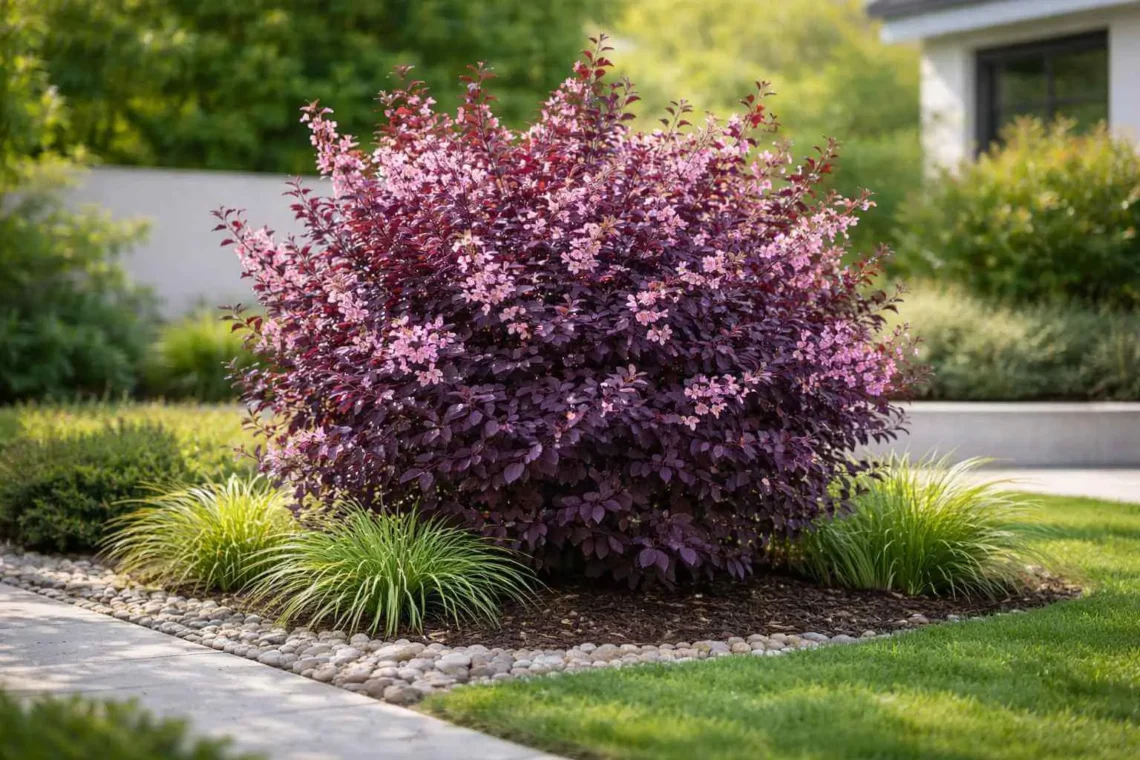
The purple plum bush is a striking ornamental plant valued for its deep purple foliage, spring flowers, and adaptability in residential landscapes. Grown as either a shrub or small tree, it adds strong visual contrast to gardens, hedges, and borders throughout the growing season. Homeowners favor the purple plum bush for its fast growth, minimal shaping needs, and ability to stand alone as a focal plant. Many gardeners also encounter the closely related purple leaf plum tree, which shares the same species but differs in size and form. Understanding how purple plum bushes relate to purple leaf plum trees helps gardeners choose the right plant for their space, maintenance level, and overall landscape design goals.
What Is a Purple Plum Bush?
A purple plum bush is an ornamental form of purple leaf plum cultivated to grow in a multi-stemmed, shrub-like shape rather than a single-trunk tree. It is primarily used for decorative landscaping rather than fruit production.
Purple Plum Bush vs Purple Leaf Plum Tree
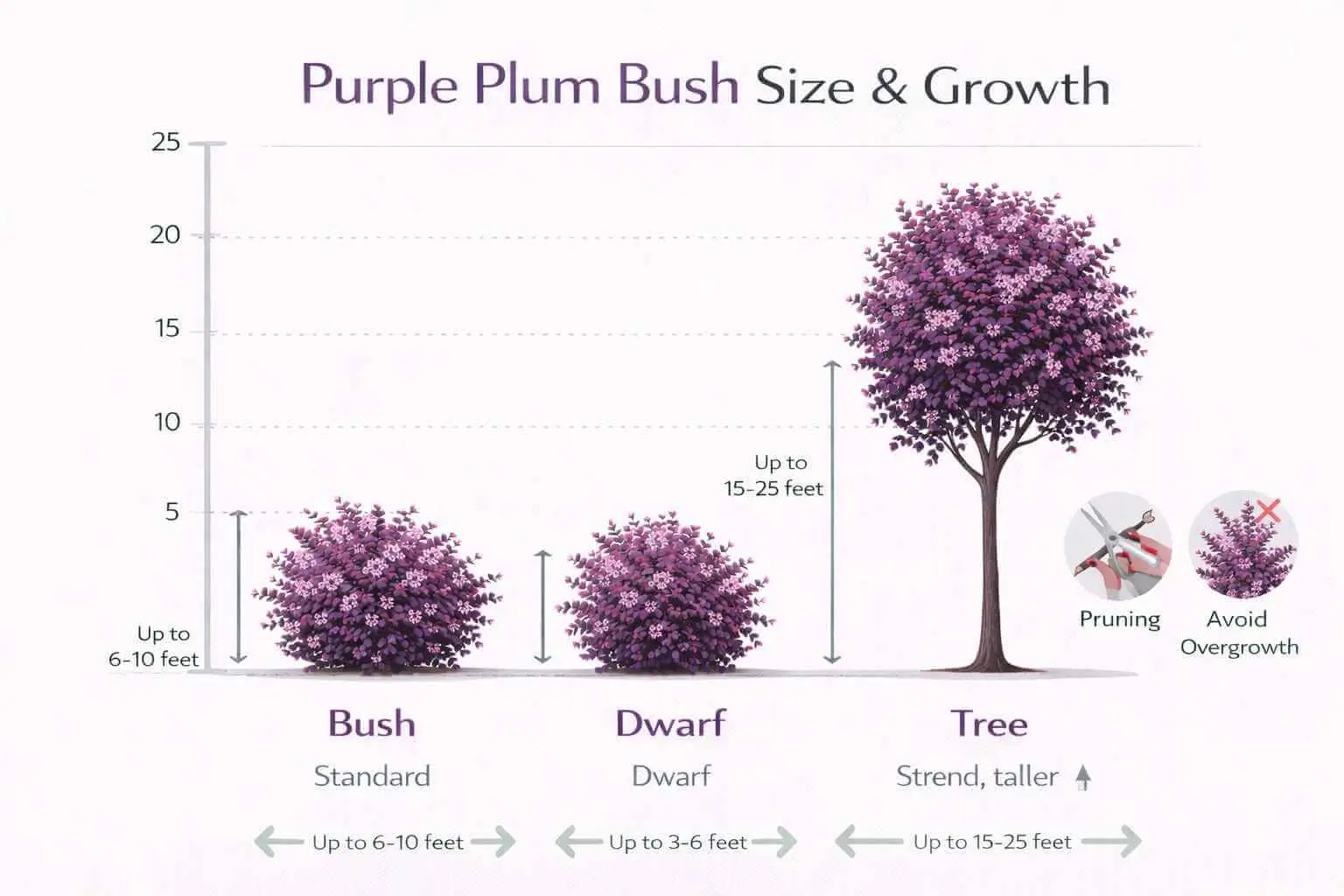
The purple plum bush and purple leaf plum tree come from the same species but differ in structure and use.
- Bush form: Multi-stemmed, dense growth, ideal for hedges, screens, and compact spaces
- Tree form: Single trunk, upright canopy, used as a specimen or small shade tree
- Landscape use: Bushes suit borders and privacy planting, while trees work best as focal points
Purple Leaf Plum Tree Scientific Name
The scientific name of the purple leaf plum tree is Prunus cerasifera.
- Family: Rosaceae
- Genus: Prunus
- Species: cerasifera
Common cultivars bred for shrub or bush growth include ‘Thundercloud,’ ‘Krauter Vesuvius,’ and ‘Atropurpurea.’
Popular Purple Plum Bush Varieties
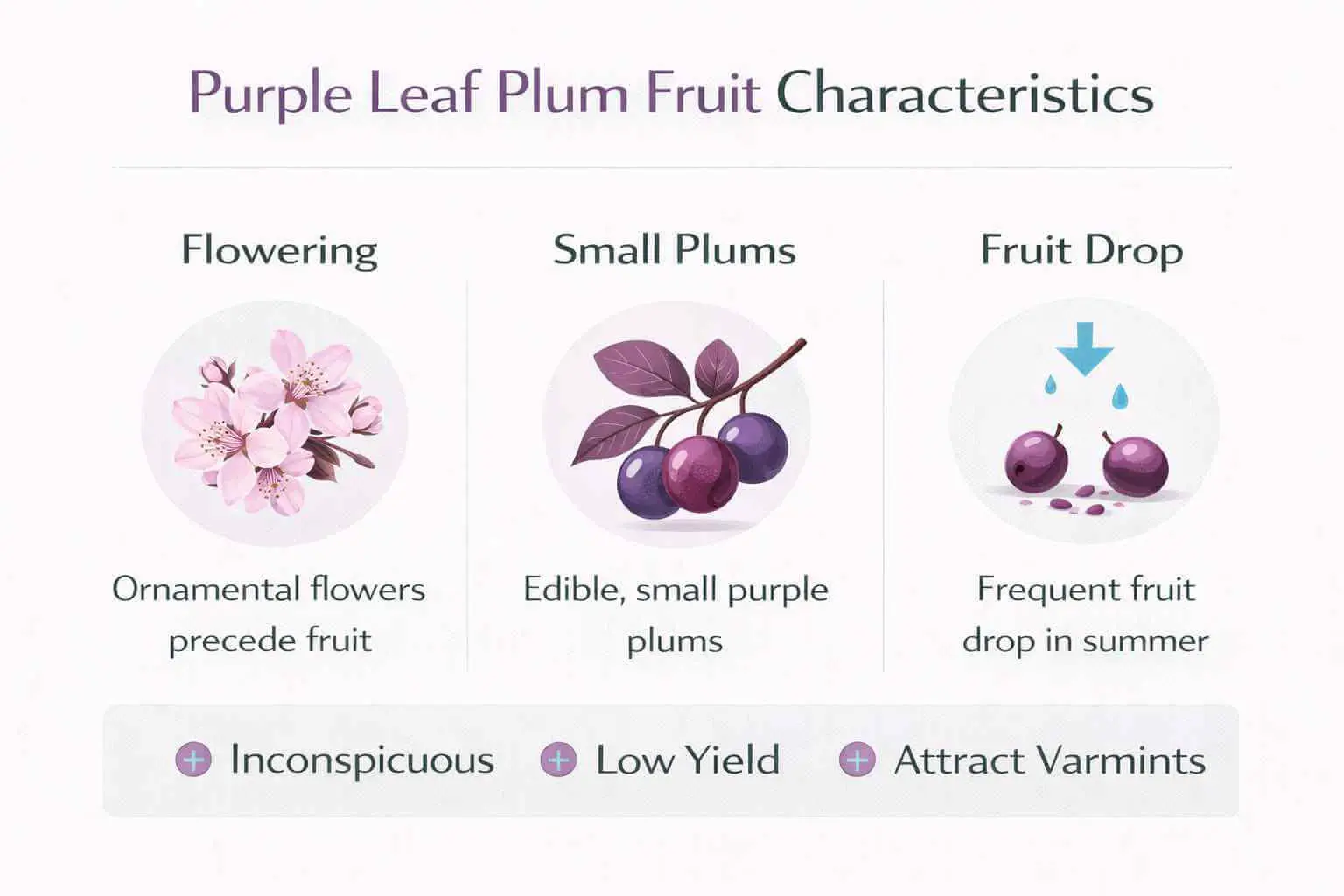
Standard Purple Plum Bush Varieties
Standard purple plum bush varieties are selected for ornamental foliage and flowering.
- Deep purple to burgundy leaves
- Pale pink to white spring blossoms
- Rounded or vase-shaped growth habit
- Seasonal color interest from spring through fall
Dwarf Purple Plum Bush
Dwarf purple plum bush varieties are compact and space-efficient.
- Smaller mature size
- Slower growth rate
- Suitable for containers, patios, and tight borders
- Ideal for low hedges and foundation planting
Purple Plum Bush Size and Growth Habit
Mature Height and Width
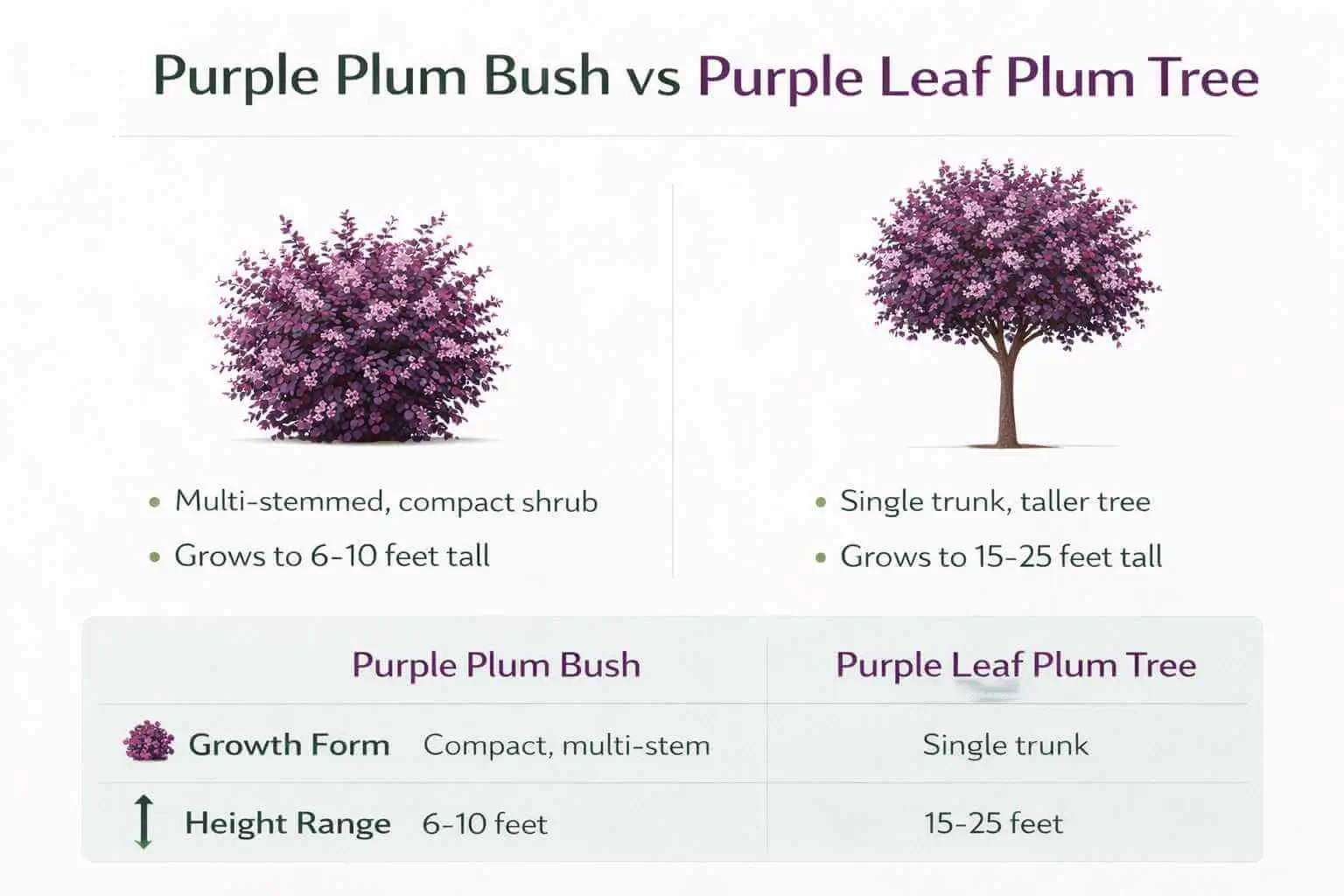
Typical purple plum bush size varies by variety.
- Standard bush forms: 8–15 feet tall and wide
- Dwarf forms: 5–8 feet tall
- Tree forms: 15–25 feet tall
Bushes remain shorter and fuller than tree varieties.
Growth Rate and Shape
Purple plum bushes grow at a moderate to fast rate.
- Upright or slightly spreading habit
- Naturally dense branching
- Pruning controls height, width, and symmetry
Regular shaping encourages compact growth and stronger color.
Purple Plum Bush Care Guide
Sunlight and Soil Requirements
Purple plum bush care starts with proper placement.
- Full sun produces the richest foliage color
- Partial shade reduces leaf vibrancy
- Well-draining soil is essential
- Moderately fertile soil supports healthy growth
Watering and Feeding
Consistent moisture is important, especially when young.
- Water deeply during the first growing season
- Reduce frequency once established
- Apply balanced fertilizer in early spring
- Avoid excessive nitrogen to prevent weak growth
Pruning and Maintenance
Pruning keeps the purple plum bush healthy and attractive.
- Prune in late winter or early spring
- Remove dead or crossing branches
- Light annual pruning maintains shape
- Proper pruning improves airflow and leaf color
Purple Leaf Plum Fruit — What to Expect
Does a Purple Plum Bush Produce Fruit?
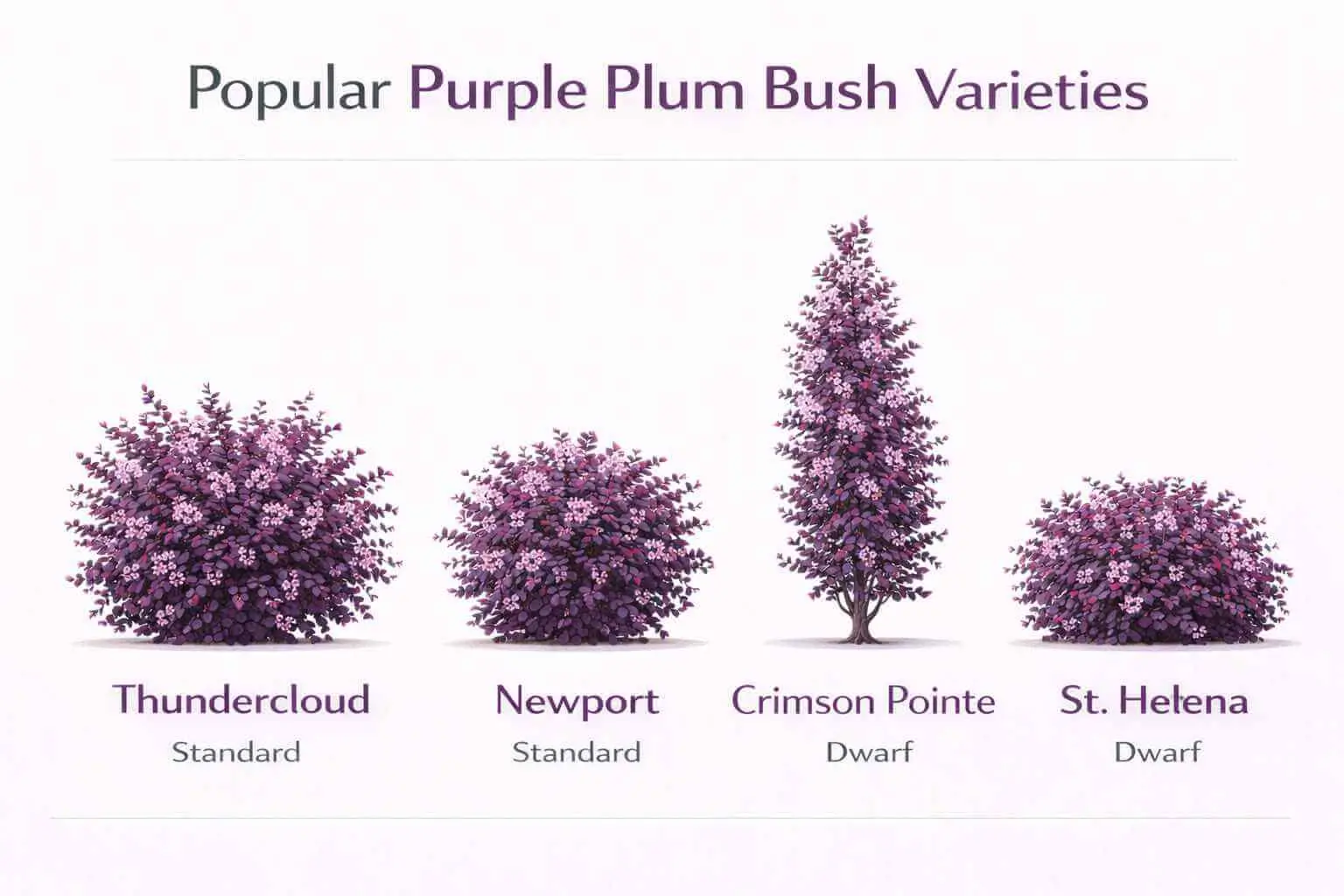
Yes, a purple plum bush can produce fruit.
- Small plum-like fruits form after flowering
- Fruit is technically edible but often tart
- Many gardeners grow it for ornamental value, not harvest
Fruit Drop and Cleanup Considerations
Fruit drop can affect garden maintenance.
- Fallen fruit may stain hard surfaces
- Cleanup is required in high-traffic areas
- Fruiting is desirable for wildlife gardens
- Non-fruiting cultivars reduce maintenance concerns
Purple Leaf Plum Tree Pros and Cons
Advantages of Growing Purple Plum Bushes
Purple plum bushes offer several benefits.
- Bold purple foliage
- Attractive spring flowers
- Fast landscape impact
- Flexible use as hedges or accents
Potential Drawbacks
There are a few considerations to keep in mind.
- Shorter lifespan than some shrubs
- Susceptible to pests and fungal diseases
- Fruit drop can be messy
- Requires regular pruning for best form
Landscaping Uses for Purple Plum Bush
Hedges, Screens, and Accent Planting
Purple plum bushes are versatile landscape plants.
- Dense growth works well for privacy hedges
- Effective as seasonal color accents
- Pairs well with green or silver foliage plants
Learn more: Sweet Pea Bush: 7+ Stunning Facts Gardeners Love
Small Garden and Urban Landscaping
Compact forms suit limited spaces.
- Dwarf varieties fit small yards
- Suitable for container planting
- Adds color without overwhelming space
Is a Purple Plum Bush Right for Your Garden?
Ideal Climate and Garden Types
Purple plum bushes adapt well to many regions.
- Thrives in temperate climates
- Suitable for suburban and urban gardens
- Performs well in ornamental-focused landscapes
Final Plant Selection Tips
Choosing the right form depends on space and goals.
- Select bush forms for hedges and borders
- Choose dwarf varieties for containers
- Opt for tree forms when vertical structure is needed
Conclusion / Call to Action
The purple plum bush stands out as a versatile ornamental plant offering rich foliage color, spring blooms, and adaptable growth habits. Whether used as a hedge, accent shrub, or compact feature plant, it delivers strong visual impact with manageable care requirements. By selecting the right variety and form, gardeners can enjoy long-lasting beauty tailored to their space. Explore local nurseries or plan your landscape design with purple plum bushes to add bold color and structure to your garden.
Learn more: Flax Lily Plant: 7+ Stunning Benefits & Care Secrets Revealed
FAQs — Purple Plum Bush
What is the difference between a purple plum bush and a purple leaf plum tree?
A purple plum bush has a multi-stemmed shrub form, while a purple leaf plum tree grows with a single trunk and taller canopy.
How big does a purple plum bush grow?
Most purple plum bushes grow between 8 and 15 feet tall, with dwarf varieties staying smaller.
Is the fruit of the purple leaf plum edible?
Yes, the fruit is edible, but it is usually tart and grown mainly for ornamental purposes.
Are dwarf purple plum bushes suitable for containers?
Yes, dwarf purple plum bushes are well-suited for containers and small garden spaces.
What are the pros and cons of planting a purple leaf plum tree or bush?
Pros include attractive foliage and fast growth, while cons include shorter lifespan, pest issues, and potential fruit drop.