Introduction
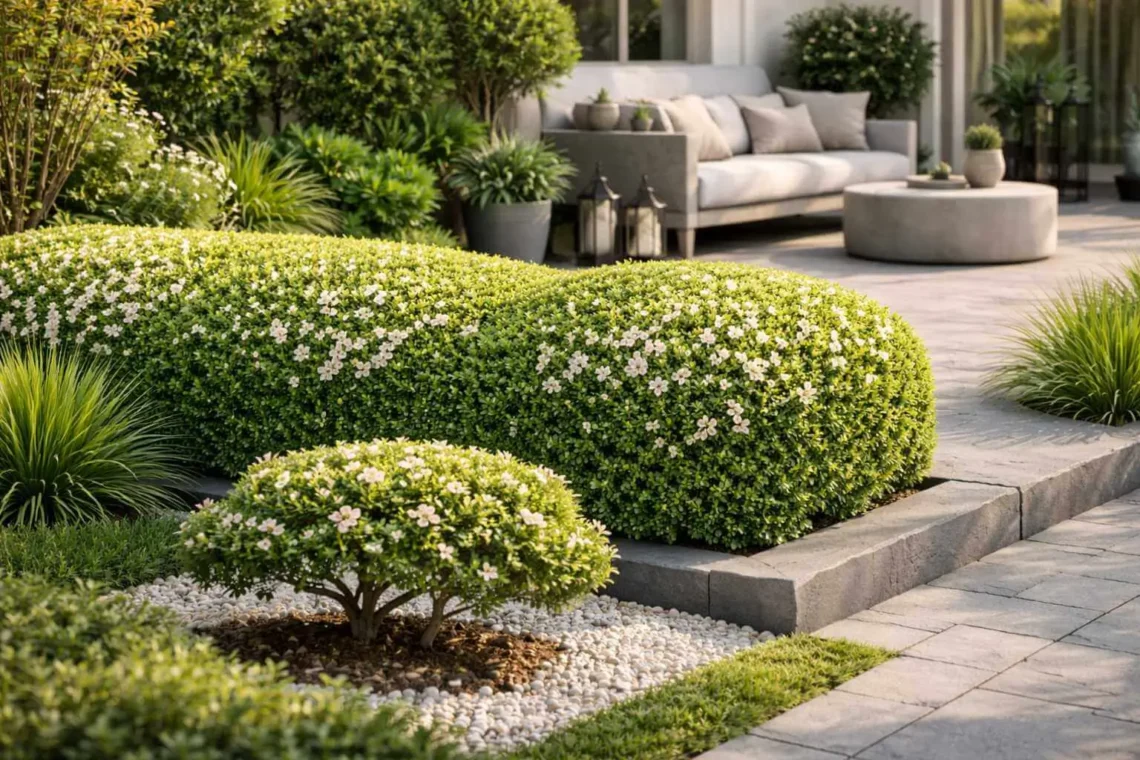
A dwarf myrtle hedge is a favorite among gardeners, patio designers, and bonsai enthusiasts due to its compact size, aesthetic appeal, and versatility. These small yet dense hedges offer a lush, green presence without overwhelming limited spaces. Varieties like the dwarf myrtle shrub and dwarf myrtle bush make it easy to create formal garden borders, casual patio accents, or even bonsai-inspired miniature landscapes. Their manageable growth habit, fragrant foliage, and adaptability make them perfect for anyone seeking beauty and functionality in a compact, elegant form.
What is a Dwarf Myrtle Hedge?
A dwarf myrtle hedge is a low-growing, dense planting ideal for creating borders, partitions, or decorative accents in gardens and patios. Unlike standard myrtle hedges, which can reach substantial heights and require frequent pruning, dwarf varieties remain small, neat, and easily shaped. Their small leaves, compact branches, and slow growth make them highly adaptable for various landscaping designs. Regional varieties, such as dwarf Greek myrtle and dwarf myrtle Arizona, allow gardeners to select plants suited to local climates while maintaining the distinctive beauty of myrtle hedges.
Types of Myrtle Plants Suitable for Hedges
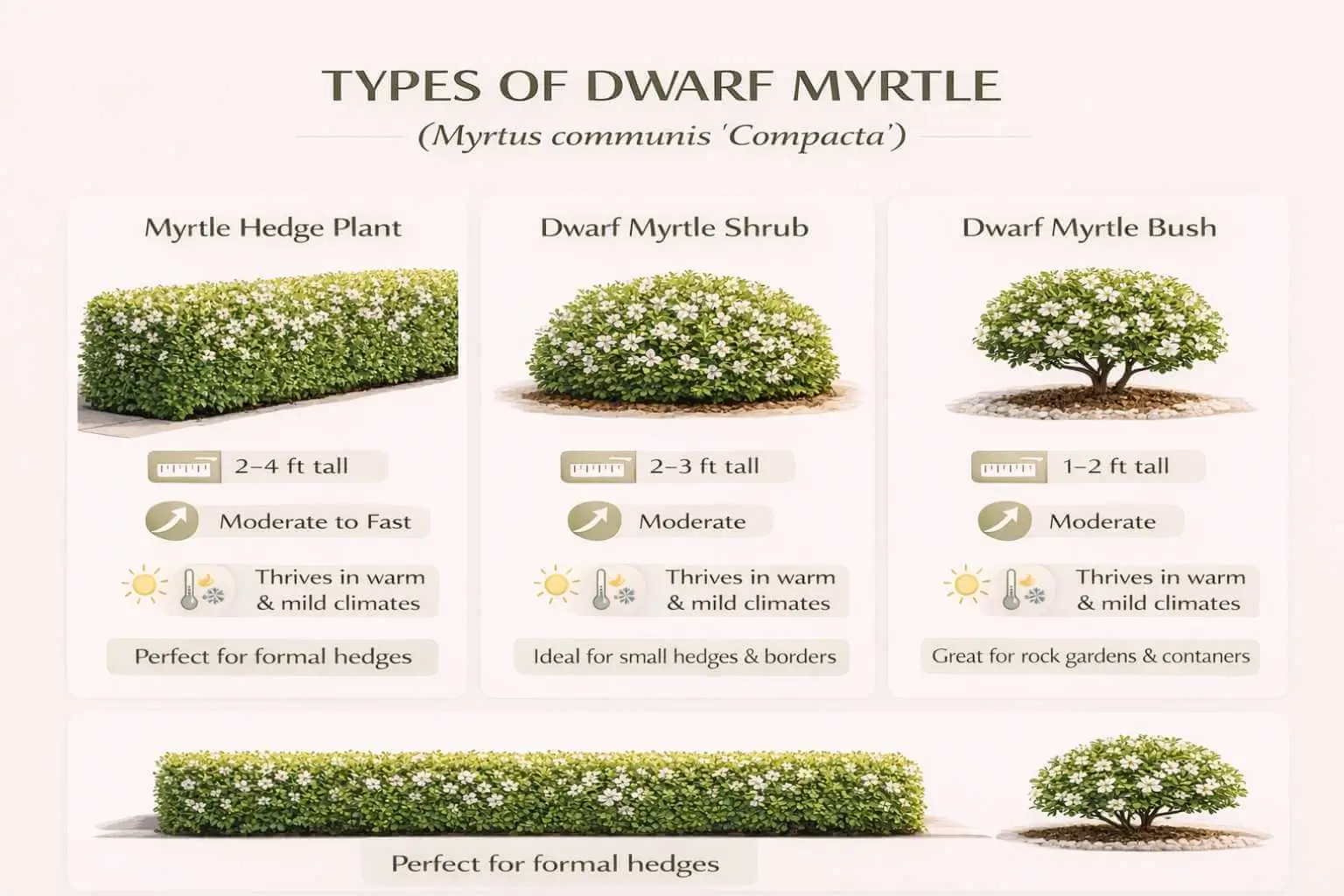
Several types of myrtle hedge plants are perfect for hedging, including dwarf myrtle shrub and dwarf myrtle bush varieties. These plants are chosen for their dense growth, manageable size, and aesthetic versatility. When selecting a variety, consider your climate, garden size, and desired hedge shape. Compact varieties are ideal for small gardens and patios, while larger spaces can accommodate more robust selections. By choosing the right type, you can ensure your hedge thrives, looks healthy, and complements your overall landscape design.
Benefits of Growing a Dwarf Myrtle Hedge
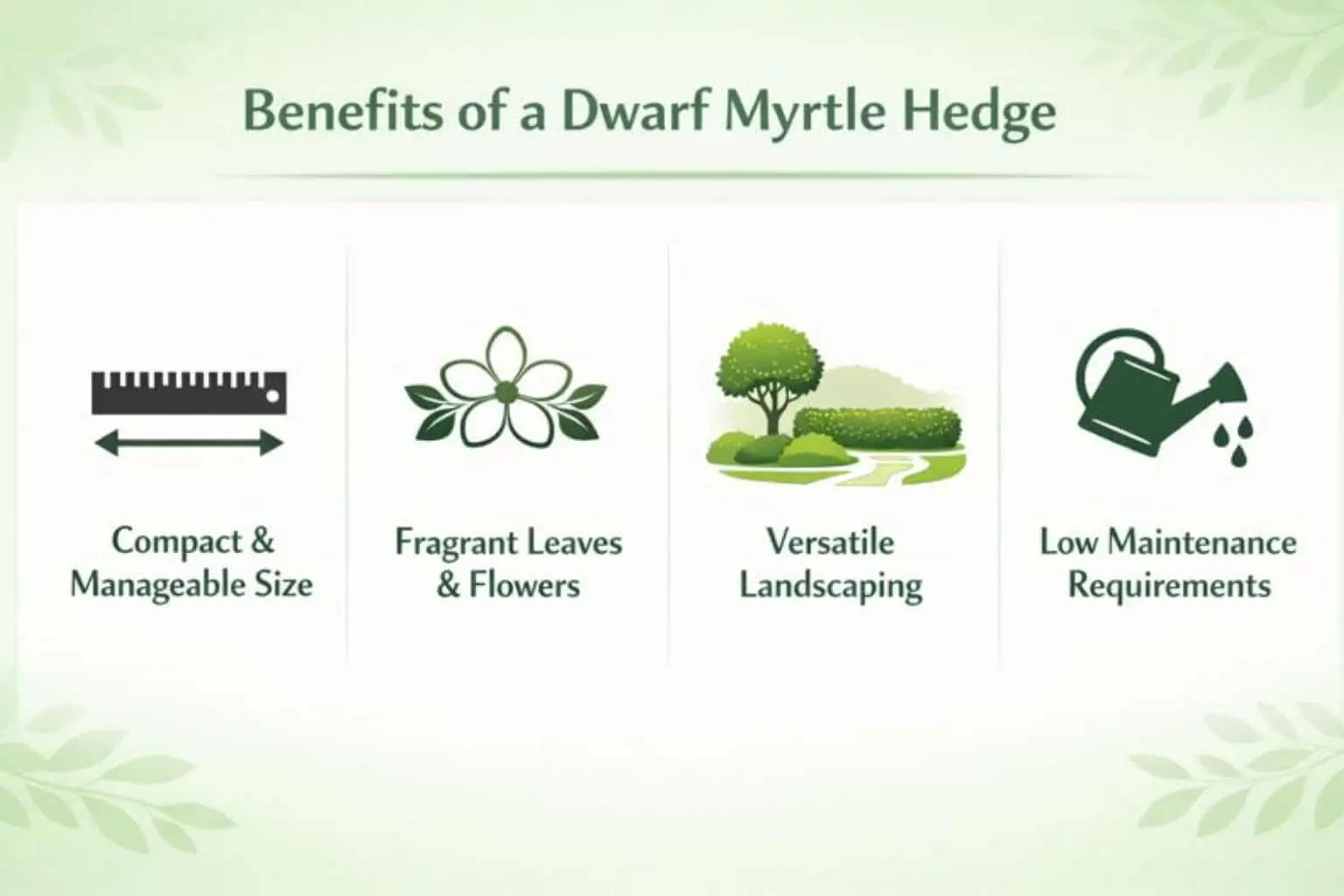
Growing a dwarf myrtle hedge offers numerous advantages:
- Compact and manageable size: Easy to maintain and prune without requiring excessive space or effort.
- Fragrant leaves and flowers: Adds natural aroma and visual interest to gardens and patios.
- Versatile landscaping options: Suitable for formal hedges, casual borders, or bonsai-inspired miniature designs.
- Low maintenance requirements: Hardy and resilient, requiring minimal care compared to larger hedges.
These benefits make dwarf myrtle hedges ideal for both experienced gardeners and beginners seeking elegance and practicality.
Learn more: Dwarf Myrtle Shrub: 7 Stunning Benefits Every Garden Needs
Planting and Growing Dwarf Myrtle Hedges
To ensure a thriving dwarf myrtle hedge, proper planting and growth care are essential. These hedges prefer well-drained soil rich in organic matter and full sun exposure for optimal leaf development and flowering. Water regularly but avoid waterlogging, allowing the soil to dry slightly between watering sessions.
When planting, maintain spacing of 12–18 inches between individual shrubs to encourage dense, uniform growth. Seasonal planting is best in spring or early autumn when temperatures are moderate, giving the plants time to establish roots before extreme weather.
Caring for Your Dwarf Myrtle Hedge
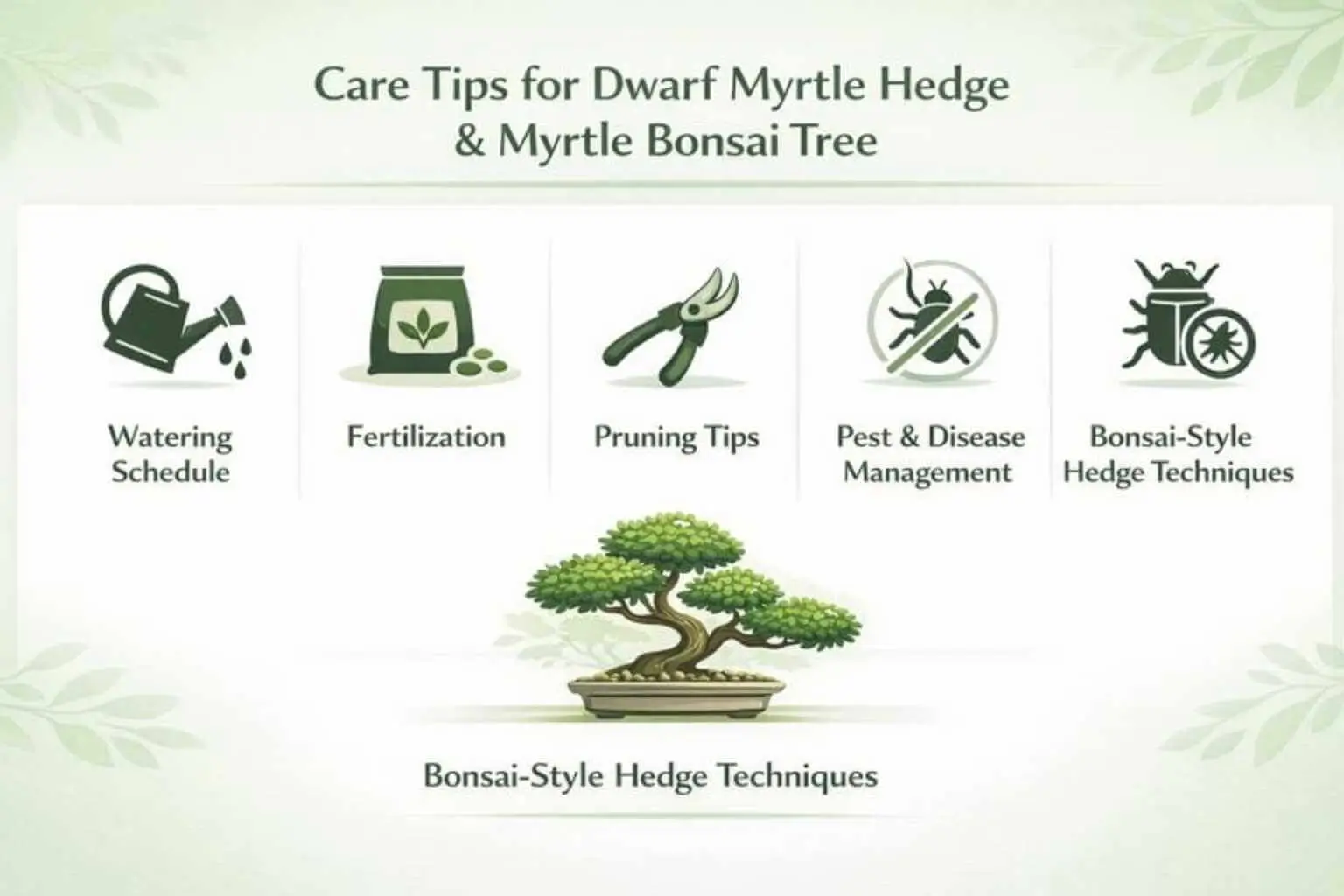
Proper care is vital for maintaining a healthy dwarf myrtle hedge:
- Watering: Keep soil consistently moist, reducing frequency in cooler months.
- Fertilization: Apply a balanced, slow-release fertilizer during the growing season.
- Pruning: Trim lightly to maintain shape and encourage dense growth.
- Pest and disease management: Monitor for common pests like aphids and treat promptly.
For bonsai-style dwarf hedges, using myrtle bonsai tree, myrtle bonsai, or myrtle tree bonsai techniques ensures miniature, artistic forms without compromising plant health.
Styling Options for Dwarf Myrtle Hedges
Dwarf myrtle hedges can be styled in multiple ways:
- Formal hedges: Clean, straight lines suitable for structured garden layouts.
- Topiary shapes: Geometric or whimsical forms for a decorative touch.
- Natural growth: Soft, organic shapes for a relaxed garden look.
Bonsai-inspired miniature hedges can use classic myrtle bonsai techniques to create artistic, scaled-down versions of standard hedges.
Dwarf Myrtle Hedge as a Bonsai Feature
Bonsai enthusiasts often incorporate dwarf myrtle hedges into miniature landscapes. By applying bonsai techniques, these hedges can resemble myrtle bonsai tree, crepe myrtle bonsai, or crepe myrtle bonsai tree forms. Combining dwarf myrtle hedges with bonsai aesthetics allows gardeners to enjoy a creative, compact, and visually stunning addition to patios, terraces, or indoor plant displays.
Creating a Dwarf Myrtle Bonsai Hedge
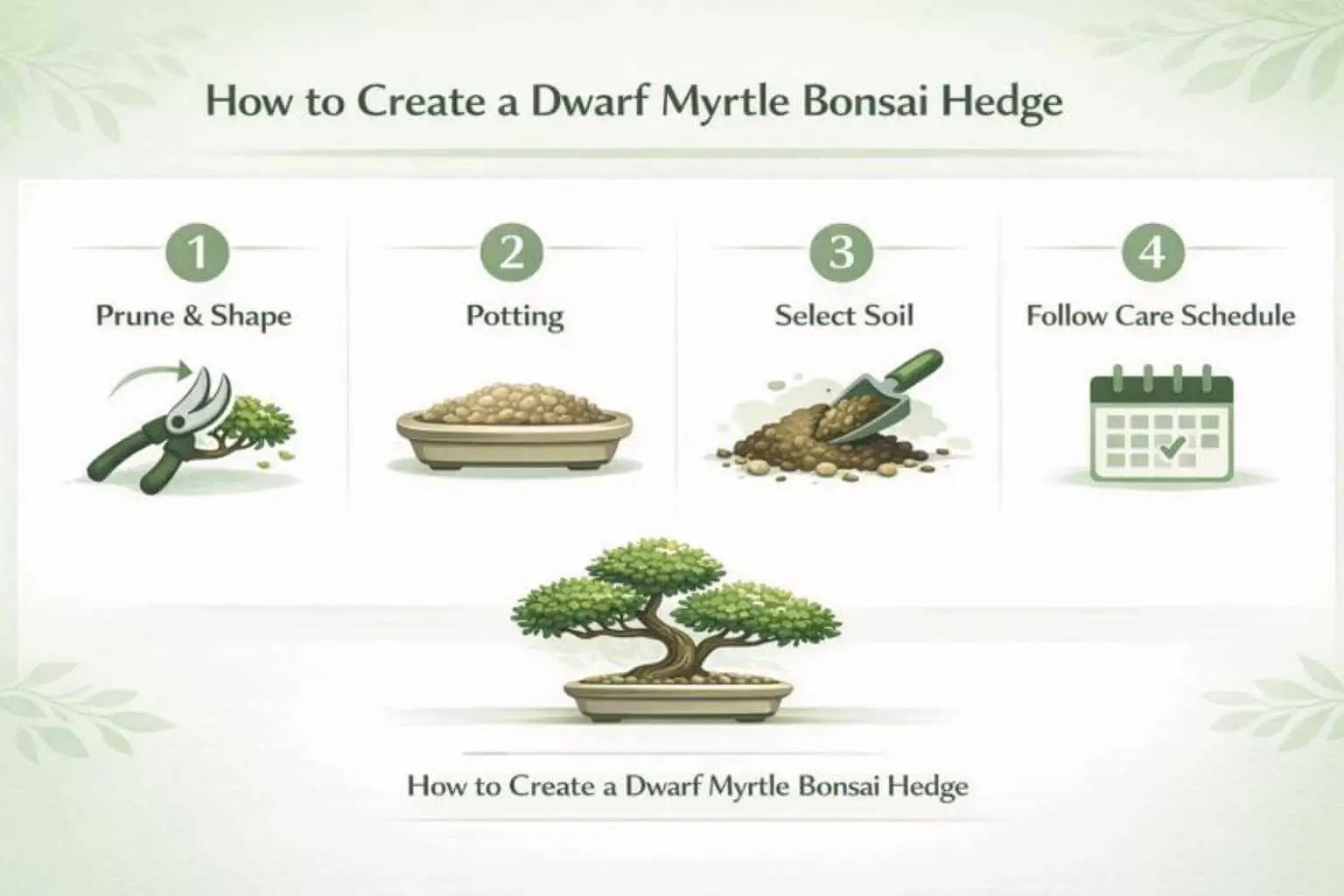
To craft a bonsai-style dwarf myrtle hedge:
- Pruning and shaping: Regularly trim branches to maintain desired hedge height and form.
- Potting: Use shallow containers with well-draining soil for root control and aesthetics.
- Care schedule: Maintain consistent watering, light fertilization, and seasonal pruning to ensure long-term health and lush growth.
Following these steps ensures a thriving, miniature hedge with a distinctive bonsai charm.
Buying and Selecting Dwarf Myrtle Hedges
When purchasing a dwarf myrtle hedge, options include local nurseries, online stores, or regional suppliers. Varieties like myrtle hedge plant or dwarf myrtle Arizona are excellent choices for specific climates. To select healthy plants, look for vibrant leaves, sturdy stems, and well-developed roots, avoiding signs of pests, disease, or wilting. Proper selection ensures strong growth and a beautiful hedge for years to come.
Conclusion & Call-to-Action
Dwarf myrtle hedges offer charm, practicality, and versatility for gardens, patios, and bonsai displays. Their compact size, fragrant foliage, and ease of maintenance make them an excellent choice for gardeners of all levels. Start small, grow your own hedge, and explore bonsai-style designs to bring creativity and elegance to your outdoor or indoor spaces. With proper care, your dwarf myrtle hedge can become a stunning, long-lasting feature in any garden.
Learn more: 7+ Stunning Benefits of Creeping Myoporum for Your Garden
FAQs
- What is the ideal sunlight and soil for a dwarf myrtle hedge?
Dwarf myrtle hedges thrive in full sun with well-draining, nutrient-rich soil. Consistent moisture without waterlogging is key. - How often should I prune my dwarf myrtle hedge?
Light pruning every 4–6 weeks during the growing season keeps the hedge dense and well-shaped. - Can I grow a dwarf myrtle hedge indoors or in a small garden?
Yes, compact varieties like dwarf myrtle shrub and dwarf myrtle bush are perfect for patios, small gardens, or indoor containers with sufficient sunlight. - What are the common pests or diseases affecting dwarf myrtle hedges?
Aphids, spider mites, and fungal infections can occur. Regular inspection, proper watering, and pest control prevent issues. - How does a dwarf myrtle hedge differ from a bonsai myrtle plant?
A dwarf myrtle hedge is primarily a dense, compact border plant, while a bonsai myrtle is a carefully trained miniature tree. Hedges can adopt bonsai techniques but retain a linear, shrubby form.