Introduction
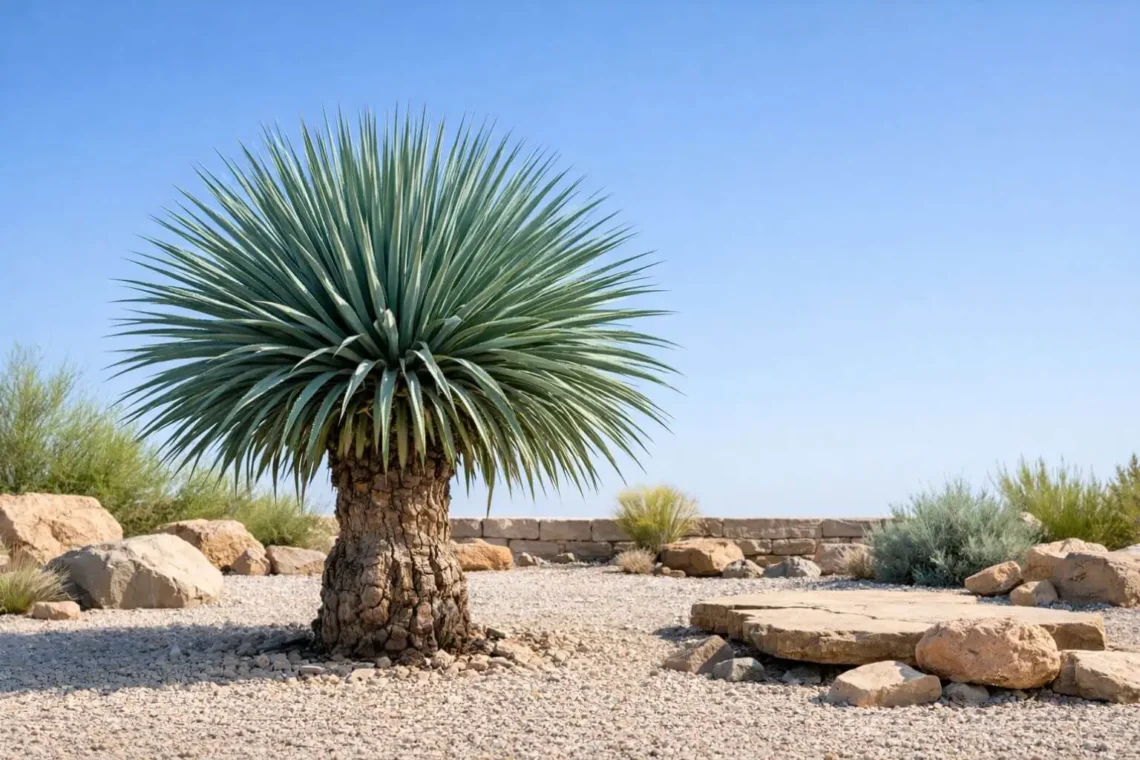
The mexican grass tree is a bold, architectural plant prized for its dramatic form and exceptional drought tolerance. Known for its fountain-like foliage and rugged structure, it has become a standout choice in xeriscaping, desert landscaping, and modern garden designs where water efficiency matters. This plant belongs primarily to the Dasylirion genus, a group of tough, slow-growing species adapted to harsh climates. Native to arid regions of Mexico and the southwestern United States, the mexican grass tree thrives in rocky soils, intense sun, and dry conditions. Its sculptural presence and low-maintenance nature make it ideal for homeowners and landscape designers seeking long-lasting visual impact with minimal water use.
What Is a Mexican Grass Tree?

Botanical Classification and Common Names
The mexican grass tree belongs to the Dasylirion genus, which includes several species commonly referred to as sotols or desert spoon plants. Despite the name, it is not a true grass. The “grass tree” label comes from its long, narrow, grass-like leaves that grow in dense rosettes. Botanically, Dasylirion plants are more closely related to agaves and yuccas than ornamental grasses.
Native Habitat and Natural Growth Pattern
Mexican grass tree species are native to northern and central Mexico and parts of the southwestern United States. In the wild, they grow on rocky slopes, desert plains, and mountainous terrain. These plants have evolved to survive extreme heat, limited rainfall, and poor soils, forming a slow-growing trunk over time with a symmetrical crown of rigid leaves.
Types of Mexican Grass Tree (Popular Varieties)
-
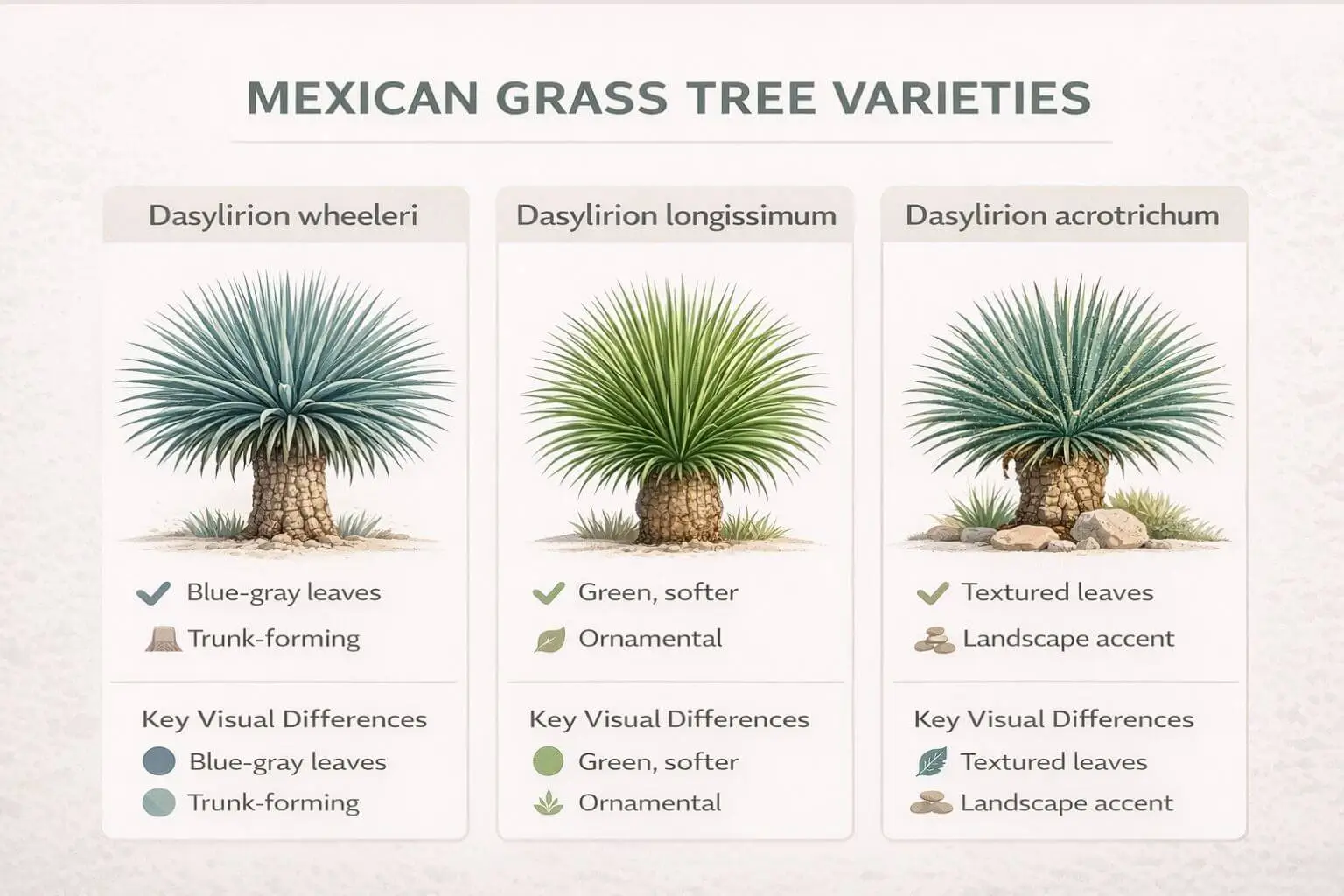
Dasylirion wheeleri
Dasylirion wheeleri is the most commonly grown mexican grass tree. It features blue-gray foliage with narrow, spiny leaves and gradually develops a woody trunk. This species is highly drought tolerant and well-suited to large landscapes.
-
Dasylirion longissimum
Dasylirion longissimum stands out for its softer, greener leaves and smoother appearance. The foliage is less spiny, making it more ornamental and easier to place near walkways or patios.
-
Dasylirion acrotrichum
Dasylirion acrotrichum has a distinctive leaf texture with fine serrations and a slightly arching form. It is often used as a focal point in contemporary designs. These mexican grass tree varieties highlight the diversity within Dasylirion species.
Mexican Grass Tree Growing Conditions
Light Requirements
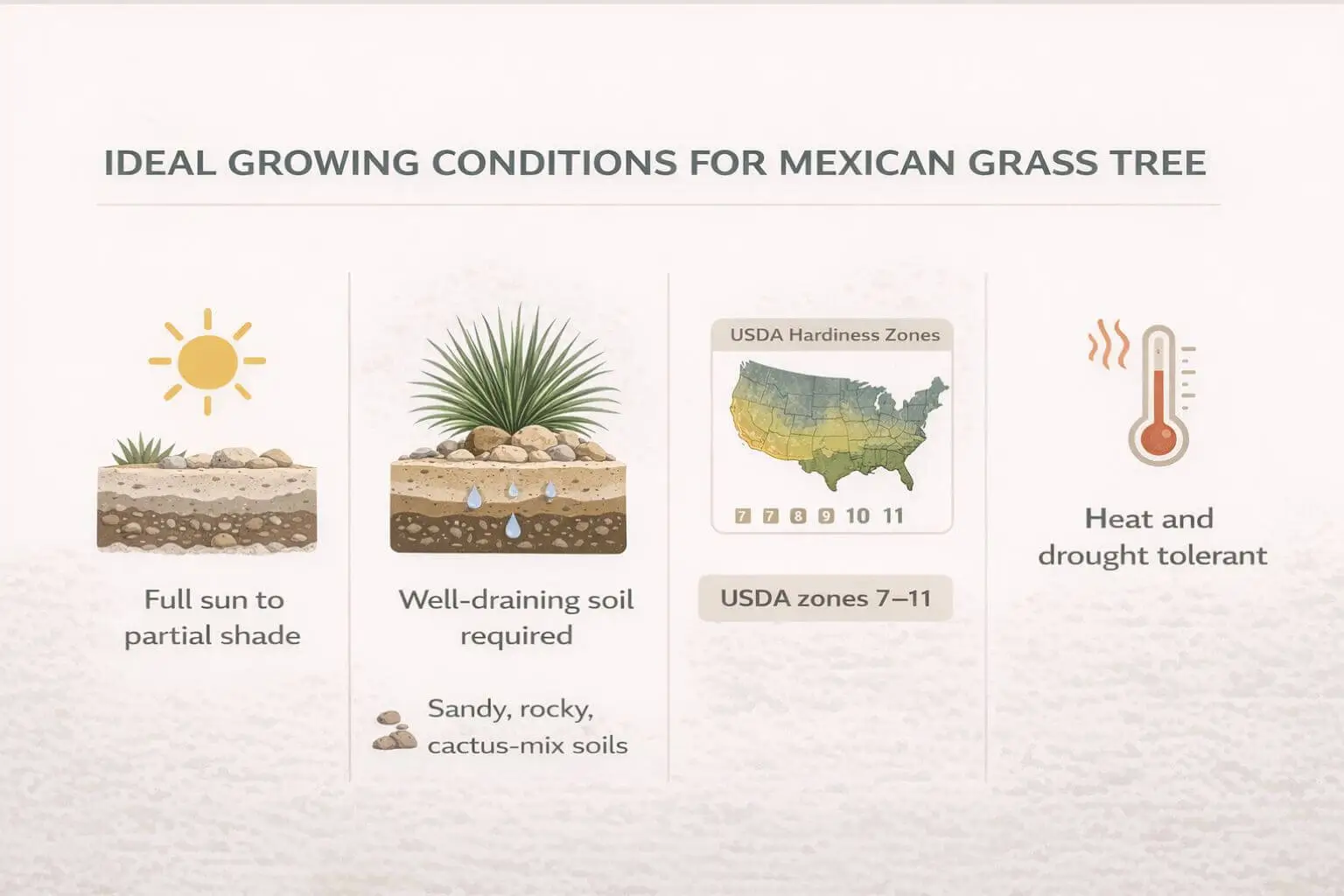
Mexican grass tree performs best in full sun, where it develops compact growth and strong leaf color. Partial shade is tolerated, especially in extremely hot climates, but growth may be slower and less dense.
Soil Preferences
Excellent drainage is critical for mexican grass tree health. Suitable soil options include:
- Sandy soil
- Rocky or gravel-based soil
- Cactus or succulent potting mix
Heavy or water-retentive soils increase the risk of root problems.
Climate and Hardiness Zones
Most mexican grass tree species grow well in USDA hardiness zones 7–11. They tolerate intense heat, prolonged drought, and brief cold snaps once established, though young plants need protection from severe frost.
How to Plant a Mexican Grass Tree
Planting in the Ground
Choose a sunny location with ample space for mature width. Prepare the planting hole with gravel or sand to improve drainage. Space plants several feet apart to allow airflow and future growth.
Growing Mexican Grass Tree in Containers
Use a large container with multiple drainage holes. A fast-draining soil mix is essential. Place the container in full sun and elevate it slightly to prevent water accumulation.
Mexican Grass Tree Care Guide

-
Watering Schedule
During the establishment phase, water deeply but infrequently. Once mature, mexican grass tree requires minimal supplemental watering. Overwatering is the most common cause of failure.
-
Fertilizing Needs
Fertilization is rarely necessary. These plants prefer low-nutrient soils. If needed, apply a light, balanced fertilizer once in spring.
-
Pruning and Maintenance
Remove dead or damaged lower leaves as needed. Always wear gloves and protective clothing, as the leaf edges can be sharp.
Common Problems With Mexican Grass Tree
-
Overwatering and Root Rot
Symptoms include yellowing leaves and soft, collapsing bases. Prevention relies on proper drainage and restrained watering.
-
Pests and Diseases
Mexican grass tree has strong natural resistance. Pest issues are rare and usually limited to stressed plants.
-
Leaf Browning and Stress Signs
Leaf browning may result from frost exposure, poor drainage, or sudden environmental changes rather than disease.
Mexican Grass Tree Landscaping Uses
-
Xeriscape and Desert Gardens
Mexican grass tree is ideal for water-wise landscapes, reducing irrigation needs while providing strong structure.
-
Modern and Architectural Landscapes
Its symmetrical form makes it a natural accent plant or focal point in minimalist and contemporary designs.
-
Pairing With Other Drought-Tolerant Plants
Common companions include:
- Agave
- Yucca
- Ornamental grasses
Is Mexican Grass Tree Low Maintenance?
Long-Term Growth and Care Expectations
Growth is slow, but maintenance demands are minimal. Once established, care is limited to occasional cleanup.
Pros and Cons of Growing Mexican Grass Tree
Pros
- Extremely drought tolerant
- Long lifespan
- Architectural appeal
Cons
- Slow growth
- Sharp leaf margins
- Requires excellent drainage
Conclusion
The mexican grass tree is an excellent choice for low-water landscapes that prioritize durability and design. Its resilience, sculptural form, and minimal care requirements make it suitable for a wide range of climates and garden styles. Before planting, assess available space, climate conditions, and design goals to ensure the best results. Explore more drought-tolerant plants or landscaping ideas to build a sustainable, visually striking outdoor space.
Learn more: 5+ Stunning Rio Dipladenia Care Tips for Vibrant Blooms
FAQs
- How fast does a mexican grass tree grow?
Growth is slow, often only a few inches per year, especially in cooler climates. - Is mexican grass tree drought tolerant?
Yes, it is highly drought tolerant once established. - Can mexican grass tree grow in pots?
Yes, it grows well in containers with proper drainage and full sun. - Does mexican grass tree need full sun?
Full sun is ideal, though partial shade is tolerated in very hot regions. - Is mexican grass tree safe for pets?
It is generally considered low toxicity, but sharp leaves can cause physical injury if pets brush against them.