Introduction
The pink powder puff tree is a visually stunning flowering plant that stands out for its vibrant, delicate blooms and lush foliage. Known scientifically as Calliandra pink powder puff, this plant has gained immense popularity among gardeners and landscapers seeking to add color and texture to outdoor spaces. Its unique fluffy pink flowers make it an eye-catching feature in home gardens, patios, and landscape designs. The pink powder puff plant thrives in warm climates and can be grown as a small shrub or a larger ornamental tree, making it versatile and highly favored for decorative purposes.
What is the Pink Powder Puff Plant?
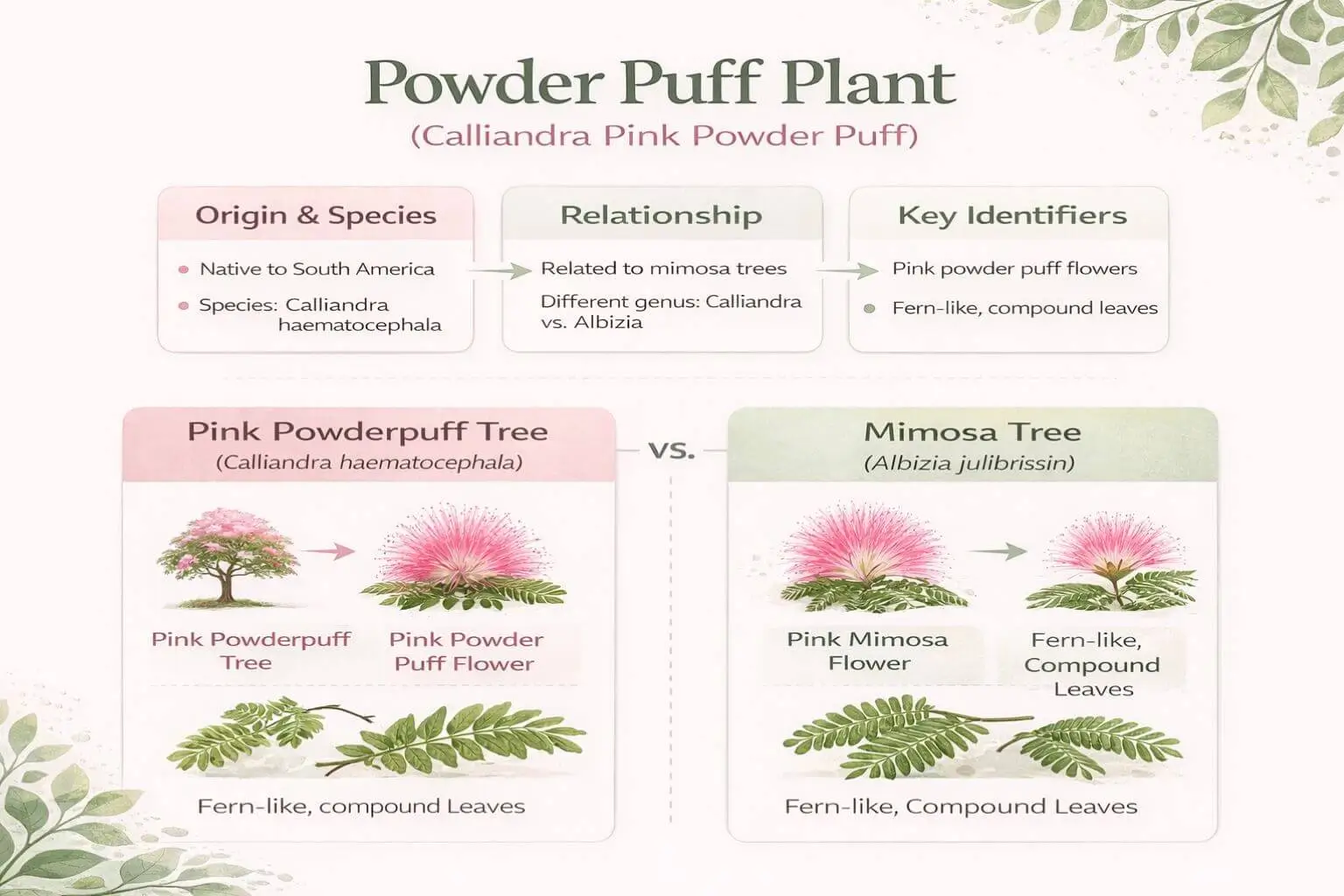
Overview of the species and origin
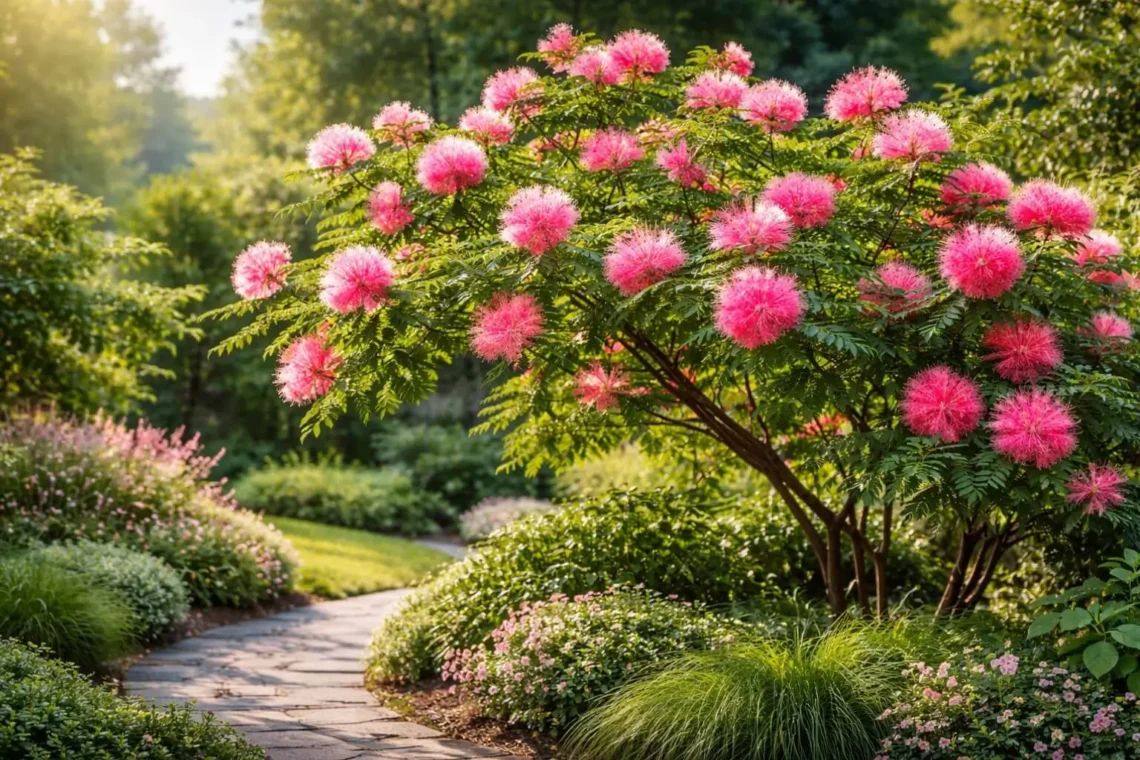
The pink powder puff plant, also called the Calliandra pink powder puff, is a member of the Fabaceae family. It is closely related to the broader powder puff tree group but differs from the mimosa tree in both flower structure and foliage. Unlike mimosa trees, the pink powder puff flower features dense clusters of filament-like blooms, giving it a distinctive puffed appearance. Gardeners appreciate the pink powderpuff tree for its ornamental value, easy care, and long flowering period, which makes it a lively addition to residential landscapes.
Key Characteristics
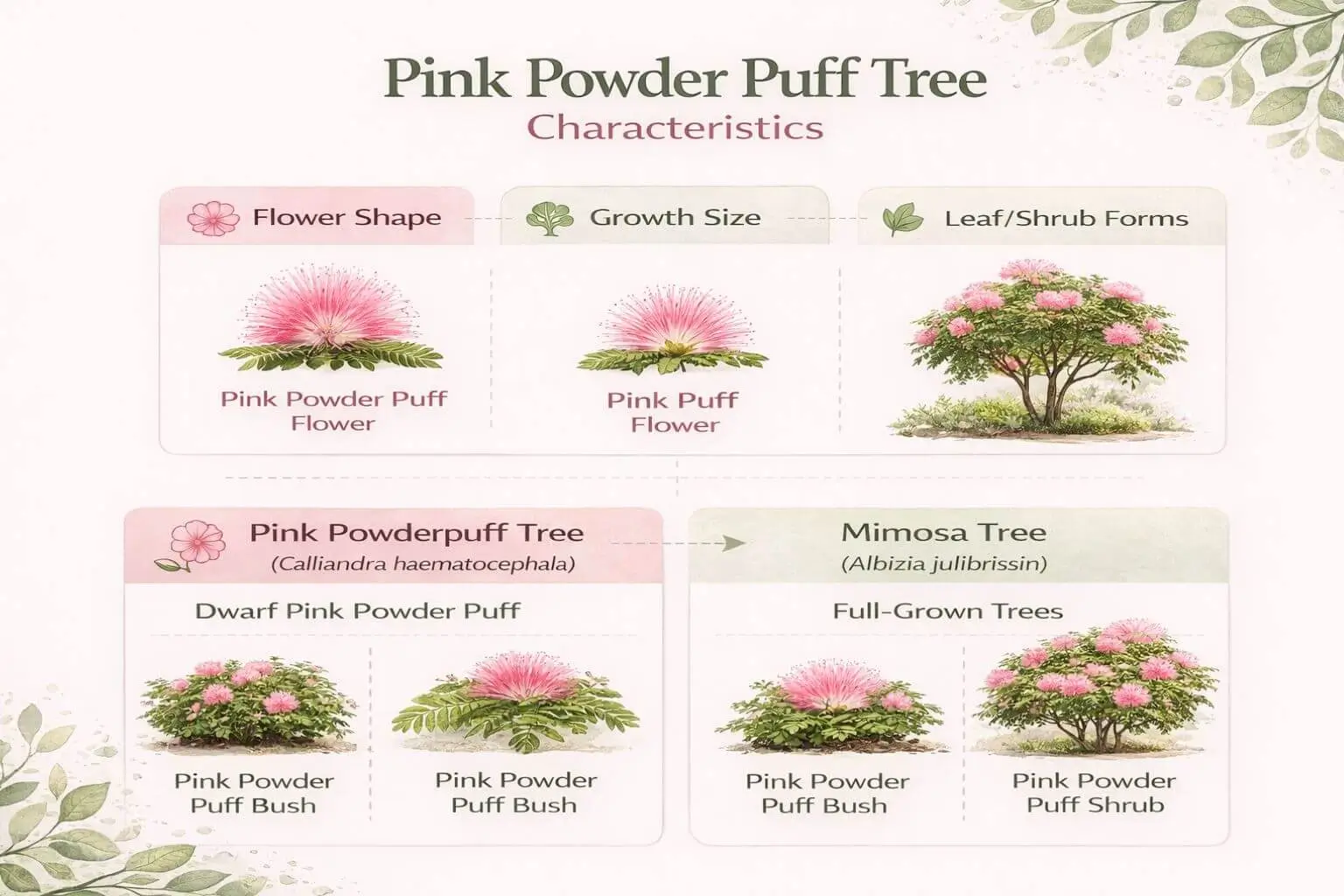
- Flower color and shape: The pink powder puff flower displays vibrant pink, soft, and round blooms reminiscent of tiny puffballs, often referred to as pink puff flowers or the pink puffball tree effect in full bloom.
- Growth size and dwarf varieties: Standard pink powder puff trees can grow into medium-sized shrubs or small trees, while dwarf pink powder puff and dwarf pink powder puff tree varieties are perfect for compact garden spaces or container planting.
- Leaf and shrub description: The plant features fine, feathery leaves that give it a soft, airy appearance. The pink powder puff bush and pink powder puff shrub forms are ideal for hedges or ornamental borders, adding both color and texture to landscapes.
Pink Powder Puff Tree vs. Mimosa Tree
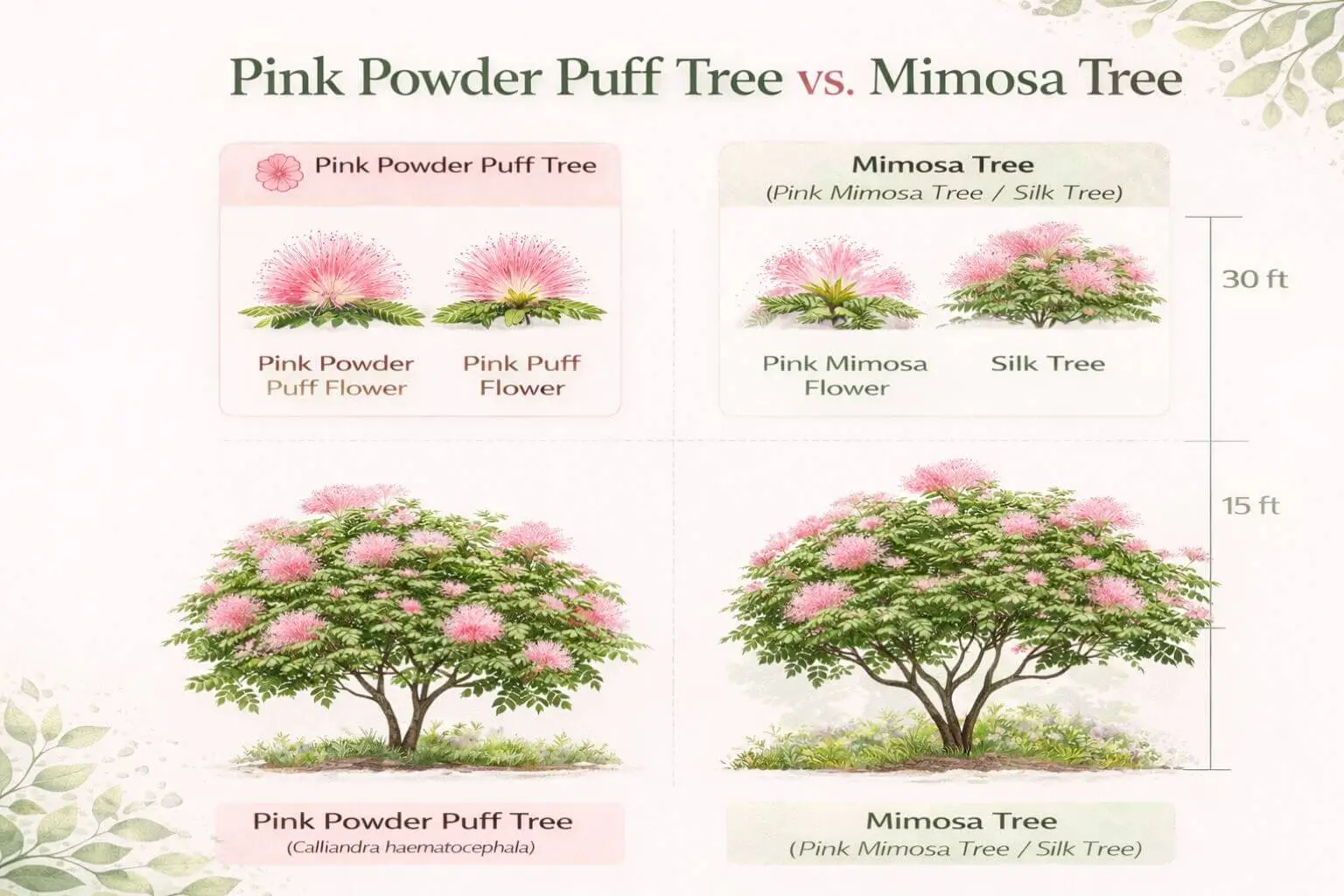
Differences in appearance
The pink powder puff tree vs mimosa tree comparison highlights notable differences. Mimosa trees (or silk trees) have broader leaves and more open, flat-topped blooms, while pink powder puff trees produce round, dense pink mimosa tree–like clusters. Foliage on the powder puff is more compact and shrub-like, giving it a fuller appearance. For gardeners seeking a bushier and more ornamental flowering plant, the mimosa tree vs powder puff tree distinction is clear: the powder puff is visually softer, with abundant pink blooms, whereas mimosa trees are taller and less dense.
Growing conditions
Pink powder puff trees thrive in full sun and prefer well-draining soil. They require regular watering during the establishment period but tolerate occasional dryness once mature. In comparison, powder puff tree full grown sizes remain smaller than typical mimosa trees. Mimosa trees can grow quite tall, raising the question of how big does a mimosa tree get, often exceeding the height of powder puff trees, making the latter more suitable for small gardens or landscaping borders.
How to Grow and Care for Pink Powder Puff Plants
Planting Tips
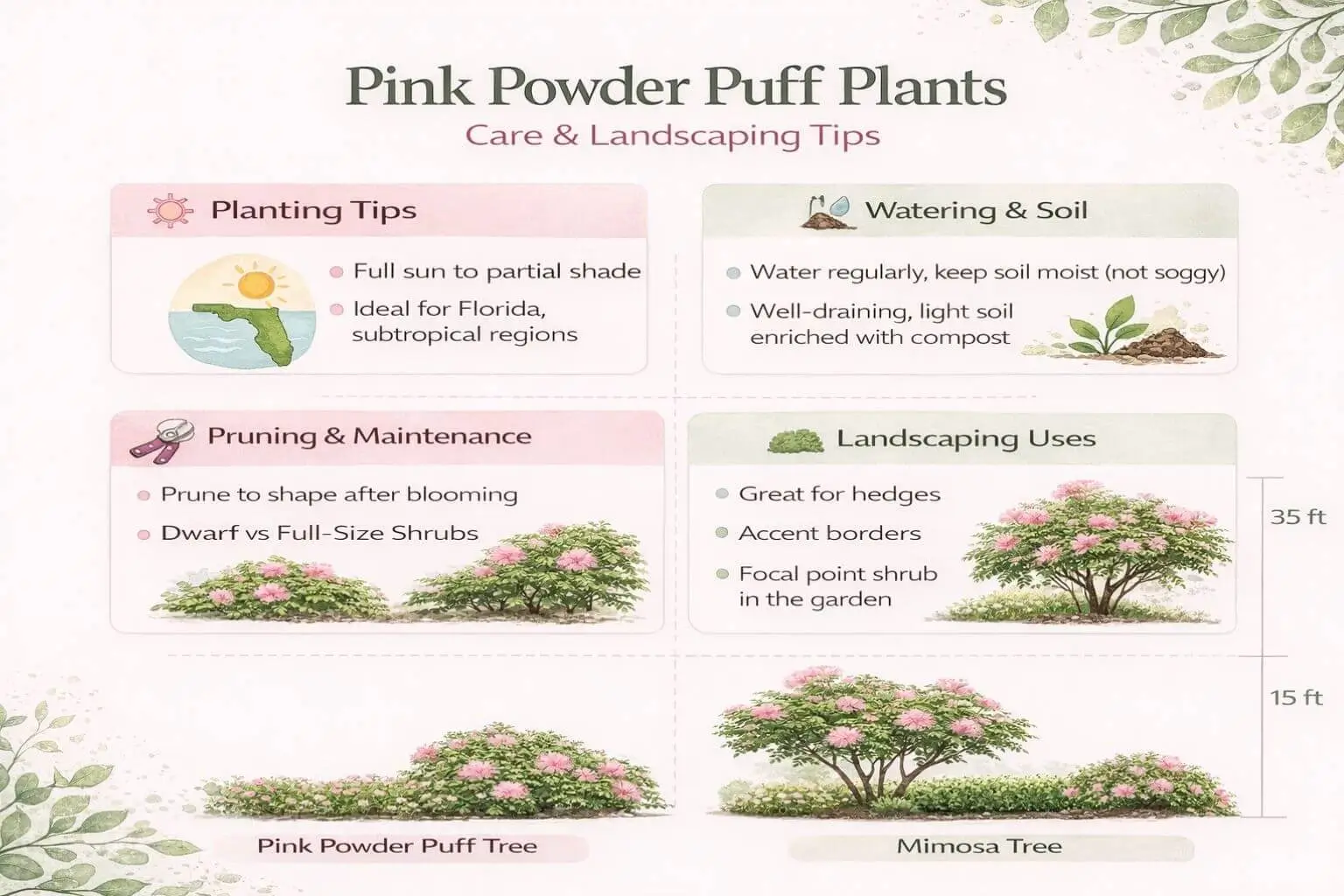
The pink powder puff tree Florida thrives in subtropical climates with warm temperatures and ample sunlight. Gardeners in regions similar to Florida or other powder puff plant Florida zones will find it easy to establish the plant. Ensure the soil is fertile and slightly acidic to neutral for the best flowering results. Powderpuff tree Florida gardens benefit from positioning these plants in areas with good air circulation and full sun exposure for vibrant blooms.
Watering and Soil Requirements
Pink powder puff plants prefer consistently moist soil but are sensitive to waterlogging. Well-draining loamy or sandy soils are ideal. During hot, dry periods, supplement with deep watering to maintain lush growth, but allow the top layer of soil to dry slightly between watering to prevent root rot.
Pruning and Maintenance
Regular pruning helps maintain the plant’s shape and encourages more blooms. Dwarf pink powder puff varieties benefit from light pruning, while larger pink powder puff shrubs can be shaped for hedges or as standalone ornamental trees. Prune after the flowering season to remove spent flowers and encourage bushier growth.
Common Problems and Solutions
- Pests: Aphids, scales, and spider mites can occasionally affect foliage. Treat with insecticidal soap or neem oil.
- Diseases: Root rot may occur due to overwatering; ensure proper drainage.
- Overwatering issues: Monitor soil moisture and avoid soggy conditions, especially during rainy seasons.
Landscaping and Decorative Uses
Garden Design Ideas
The pink powder puff bush and pink powder puff shrub make excellent hedges, borders, or focal points in any garden. Its compact size and vibrant flowers allow it to be used as a centerpiece in flower beds or as an accent along pathways. Pink puff plants are ideal for adding vertical interest and color contrast among greenery and other flowering plants.
Companion Plants
Suitable companion plants include tropical and subtropical species that thrive under similar sunlight and water conditions. Pairing with flowering shrubs, ornamental grasses, or groundcovers enhances both aesthetic appeal and ecological balance in the garden.
Conclusion & Call to Action
The pink powder puff plant/tree is a versatile, visually captivating addition to any garden or landscape. With its vibrant pink blooms, manageable size, and low-maintenance care requirements, it offers gardeners a unique option for color, texture, and ornamental beauty. Whether planted as a powder puff tree pink, a pink powder puff shrub, or a pink powderpuff bush, this plant brings charm and vibrancy to outdoor spaces. Add a pink powder puff tree to your garden today to enjoy long-lasting flowers and a stunning visual impact throughout the seasons.
Learn more: 7+ Stunning Bergenia Plant Secrets for Bold Beauty
FAQs About Pink Powder Puff Plants
- Is the pink powder puff plant the same as a mimosa tree?
No, the pink powder puff plant (Calliandra pink powder puff) differs from the mimosa tree. It has denser, rounder pink flowers and bushier foliage, while mimosa trees have flatter blooms and taller growth. - How fast does a pink powder puff tree grow?
Pink powder puff trees grow moderately fast, typically reaching 6–12 feet in height within a few years, depending on soil quality, climate, and care. - Can pink powder puff plants survive in Florida?
Yes, they thrive in Florida’s subtropical climate and are well-suited for gardens, landscapes, and container planting in the region. - What are the differences between dwarf and full-sized pink powder puff trees?
Dwarf varieties remain compact and are ideal for small spaces or containers, while full-sized trees can grow taller and provide more extensive foliage and flowers for larger landscapes. - How do I care for pink powder puff shrubs and bushes?
Provide full sun, well-draining soil, regular watering, and occasional pruning to maintain shape and encourage vibrant blooms. Watch for pests and overwatering to prevent common problems.