Introduction
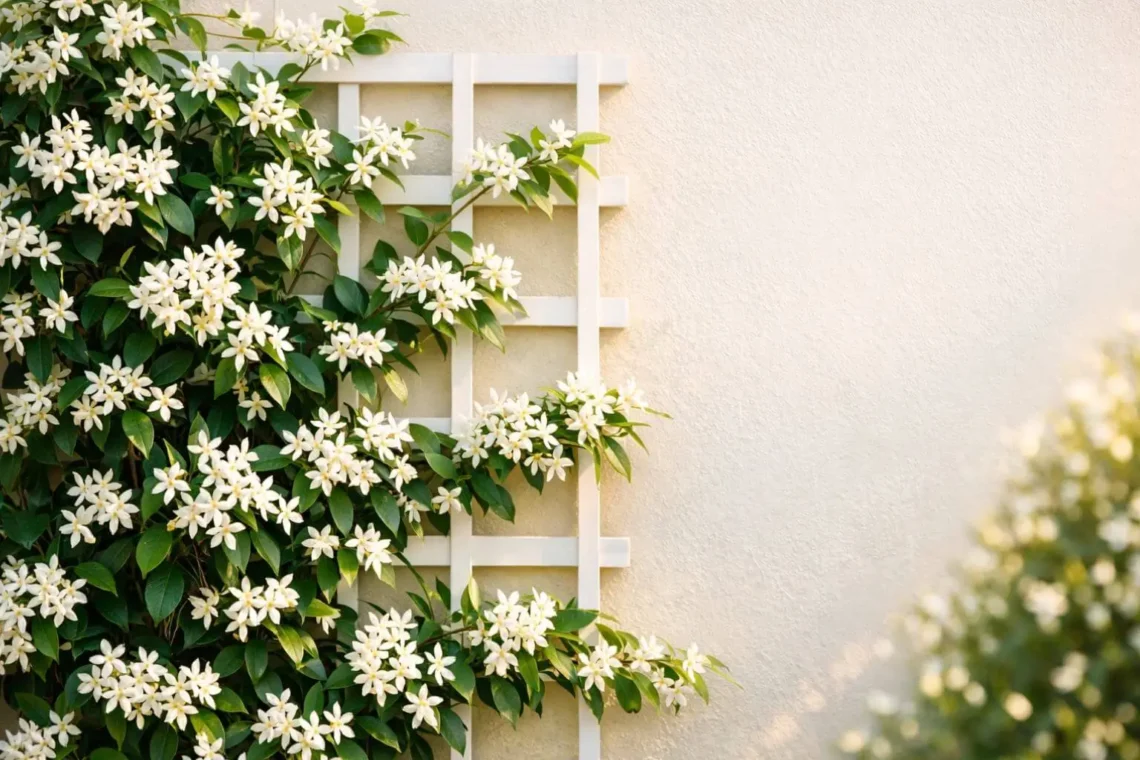
Star jasmine (Trachelospermum jasminoides) is a fragrant evergreen jasmine vine widely admired for its glossy foliage and star-shaped white blooms. Also known as confederate jasmine, this plant earned its common name from its popularity in the southern United States, where it thrives in warm climates. Although often grown as a climbing jasmine, it can also be shaped into an evergreen jasmine shrub. Gardeners love it for its sweet fragrance, vigorous climbing habit, and elegant appearance. In this guide, you’ll learn everything about planting, care, winter survival, toxicity concerns, common problems, and the many benefits of growing a versatile star jasmine plant.
What Is Star Jasmine (Trachelospermum Jasminoides)?
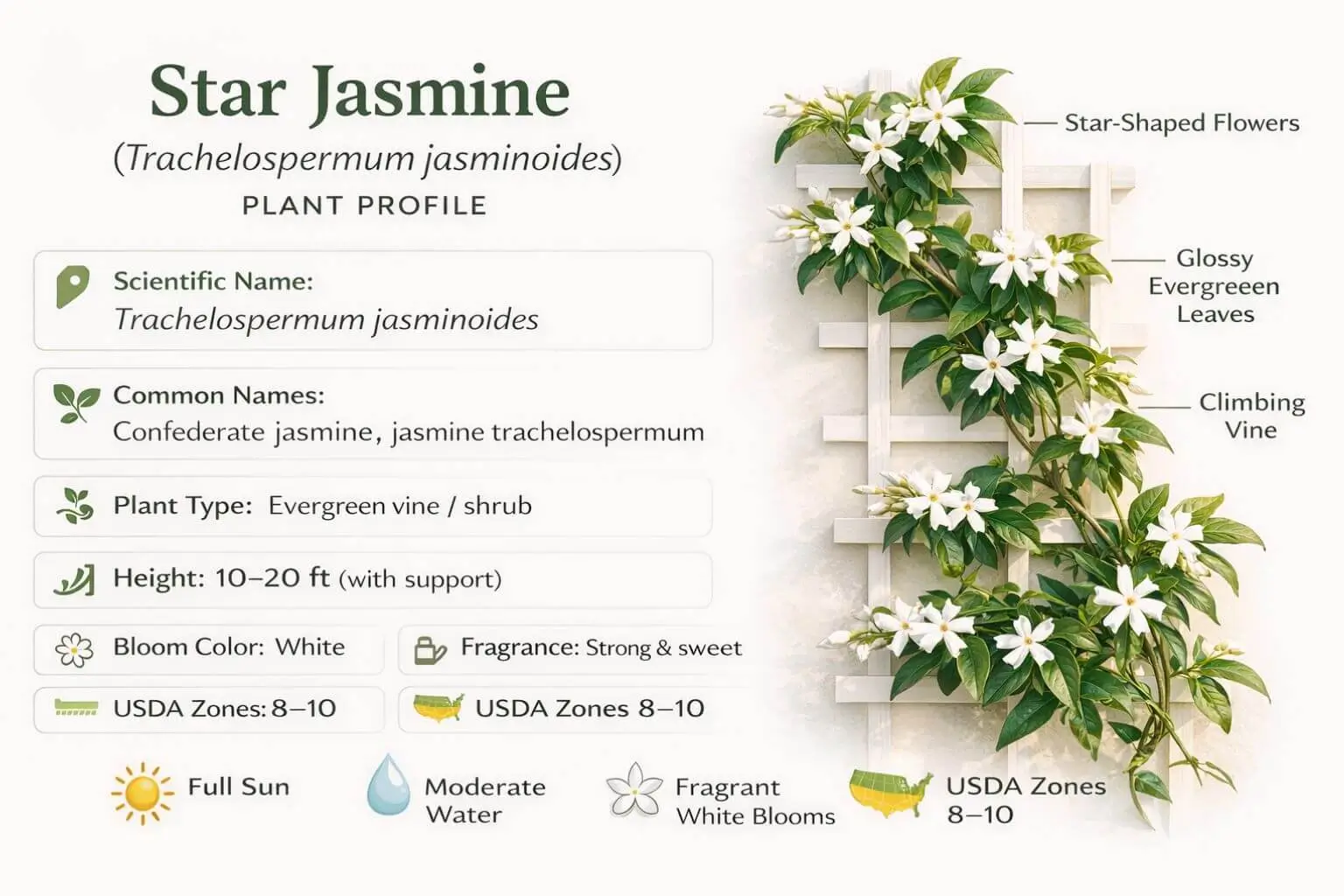
Botanical Name & Common Names
The scientific name of star jasmine is Trachelospermum jasminoides.
It is commonly known as:
- Jasmine trachelospermum
- Jasminoides star jasmine
- Confederate jasmine
Despite the jasmine name, it belongs to the Apocynaceae family, not the true jasmine genus.
Is Star Jasmine a True Jasmine?
Star jasmine is not a true jasmine. True jasmine plants belong to the Jasminum genus. While both are fragrant and vining, a jasmine vine from the Jasminum group differs botanically from Trachelospermum jasminoides.
It is often called climbing jasmine because of its twining growth habit and sweet scent, which closely resembles traditional jasmine flowers.
Growth Habit & Appearance
Star jasmine vine can grow as either:
- A climbing vine with support
- A dense shrub form when regularly pruned
Star jasmine height and spread:
- Height: 10–20 feet when supported
- Spread: 3–6 feet as ground cover
The white star jasmine vine produces small, pinwheel-shaped blooms in late spring to early summer. Star jasmine flowers release a strong, sweet fragrance, especially in warm evenings.
Star jasmine fruit is rare in cultivated gardens but may appear as slender seed pods in ideal conditions.
Available star jasmine colors are primarily white, though some varieties may develop creamy tones. When discussing star jasmine colours, white remains the dominant and most recognized bloom shade.
Planting Star Jasmine Successfully
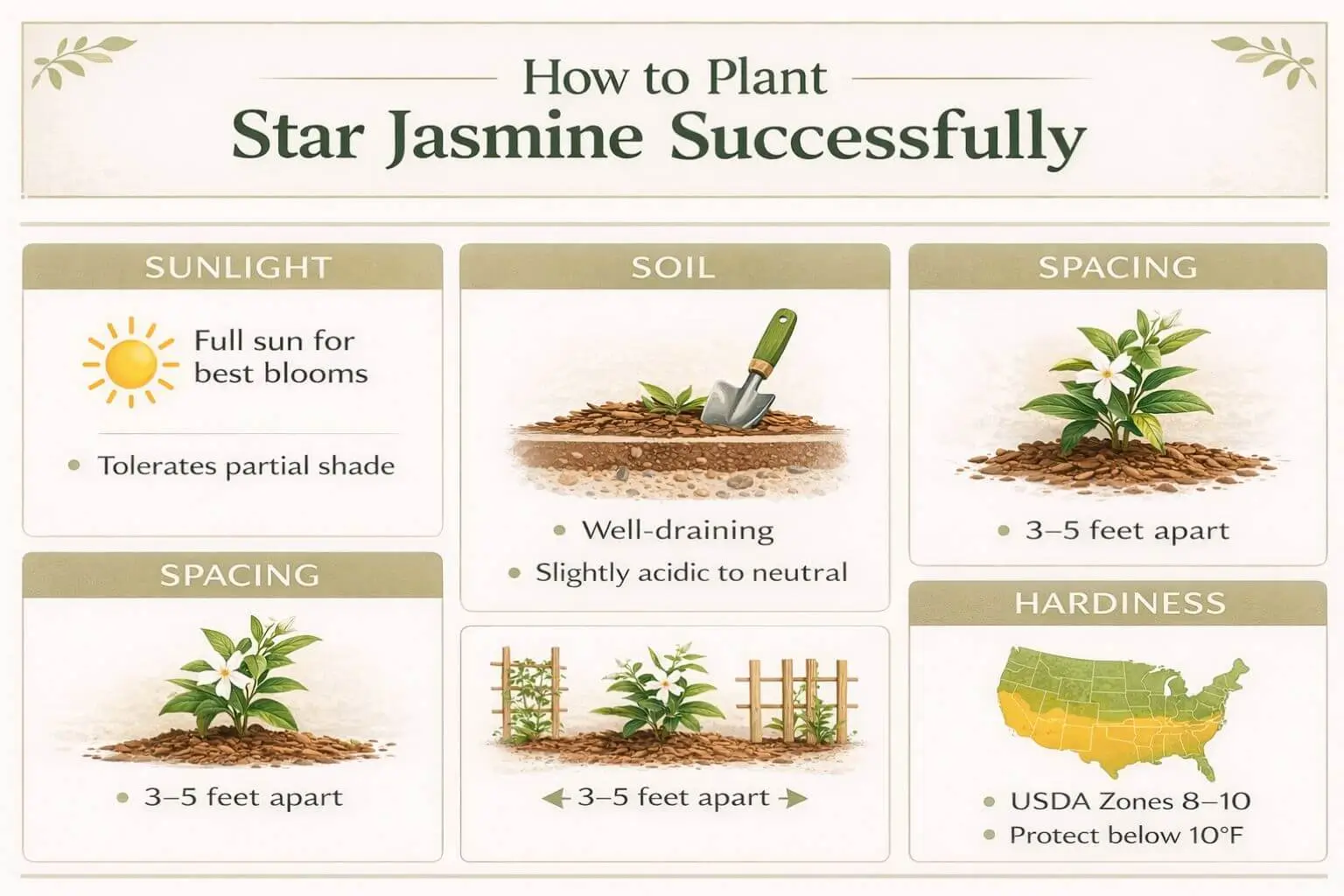
Best Location & Sunlight Requirements
Star jasmine performs best in:
- Full sun (for maximum flowering)
- Partial shade (in hotter climates)
Ideal placement includes:
- Walls
- Trellises
- Fences
These structures support the natural habit of a star jasmine climber.
Soil Requirements
For healthy growth, provide:
- Well-draining soil
- Slightly acidic to neutral pH (6.0–7.5)
Avoid heavy clay soil without amendments.
Planting Star Jasmine Step-by-Step
- Plant in spring or early fall.
- Space plants 3–5 feet apart.
- Install support structures for vertical growth.
- Water thoroughly after planting.
- For container planting options, use pots with drainage holes and quality potting mix.
Star Jasmine Hardiness Zone & Climate
The typical star jasmine hardiness zone is USDA zones 8–10.
Understanding star jasmine zone requirements helps ensure winter survival. It is considered a moderately cold hardy jasmine but may need protection in zone 7 during harsh winters.
Star Jasmine Care Guide
Watering Needs
- Deep watering once weekly during establishment
- Allow soil to dry slightly between watering
- Established plants show moderate drought tolerance
Fertilizing & Feeding
- Use balanced slow-release fertilizer in early spring
- Feed again lightly after flowering if needed
Pruning & Maintenance
- Prune after flowering to control star jasmine height
- Shape into a jasmine bush plant form if desired
- Trim lightly to encourage thicker growth
Star Jasmine Benefits
- Strong floral fragrance
- Effective ground cover
- Natural privacy screening
- Attracts pollinators like bees
Star Jasmine in Winter – Will It Survive?
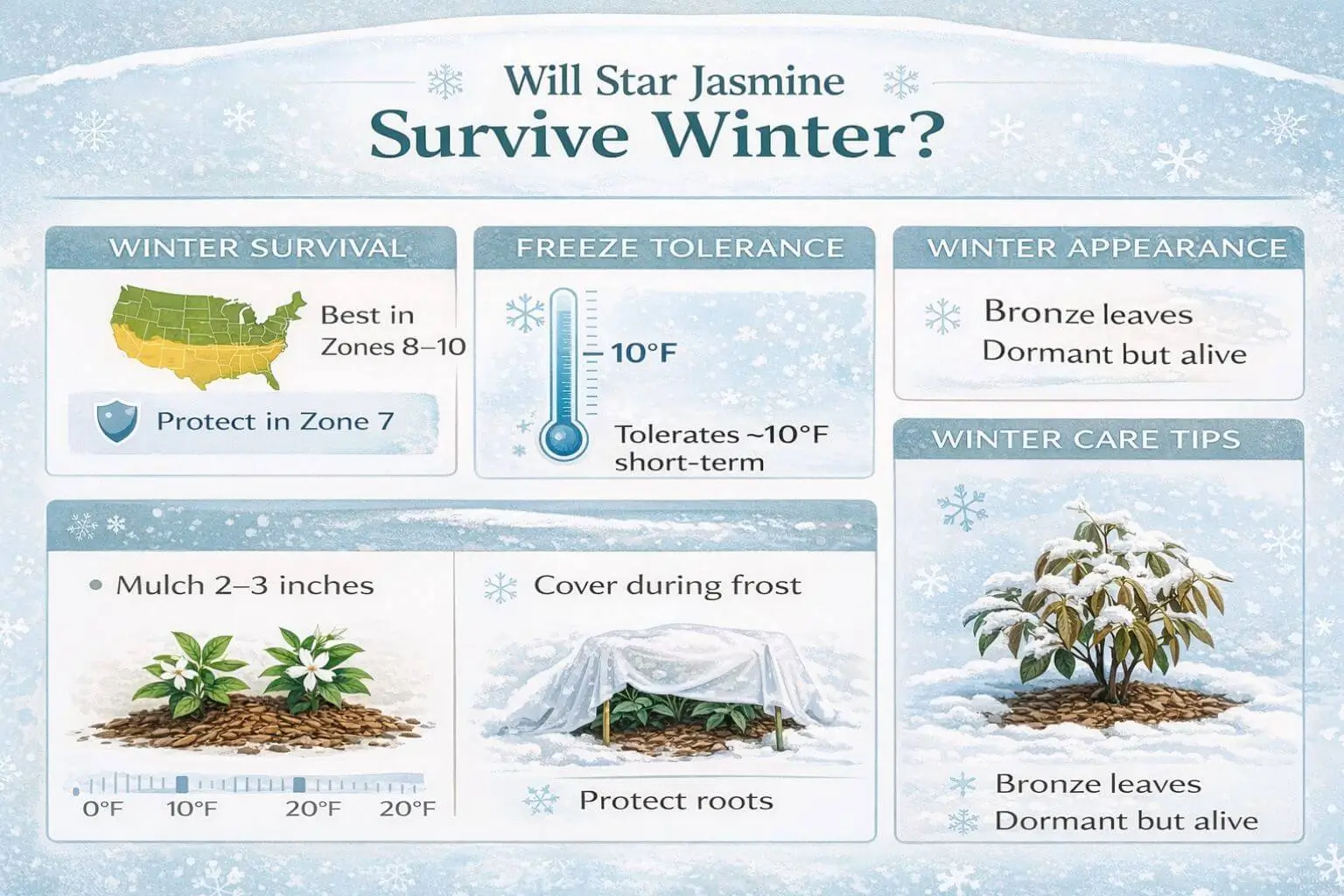
Will Star Jasmine Survive Winter?
Will star jasmine survive winter? In zones 8–10, yes. In colder areas, protection is necessary. Compared to true jasmine species, star jasmine is slightly more cold tolerant than many tropical varieties.
Star Jasmine Winter Care
- Protect roots with mulch
- Apply 2–3 inches of organic mulch
- Cover during frost with breathable fabric
Star Jasmine Freeze Tolerance
Star jasmine freeze tolerance typically reaches about 10°F (-12°C) for short periods.
Damage signs include:
- Blackened leaves
- Wilted stems
What Does Star Jasmine Look Like in Winter?
In winter, foliage may:
- Turn bronze or reddish
- Show mild leaf discoloration
Dormancy signs include slowed growth. A dormant plant differs from dead growth because stems remain flexible and green inside.
Star Jasmine Problems & Diseases
Common Star Jasmine Problems
- Yellow leaves from poor drainage
- Poor flowering due to low sunlight
- Overwatering issues causing root stress
Star Jasmine Diseases
- Fungal infections in humid conditions
- Root rot from soggy soil
Problems with Jasmine Plants
- Pests like aphids and spider mites
- Environmental stress from extreme cold
Star Jasmine Problems Pictures (Content Note)
Including star jasmine problems pictures in guides helps gardeners accurately identify yellowing leaves, fungal spots, and pest damage.
Is Star Jasmine Poisonous? (Pet Safety Guide)
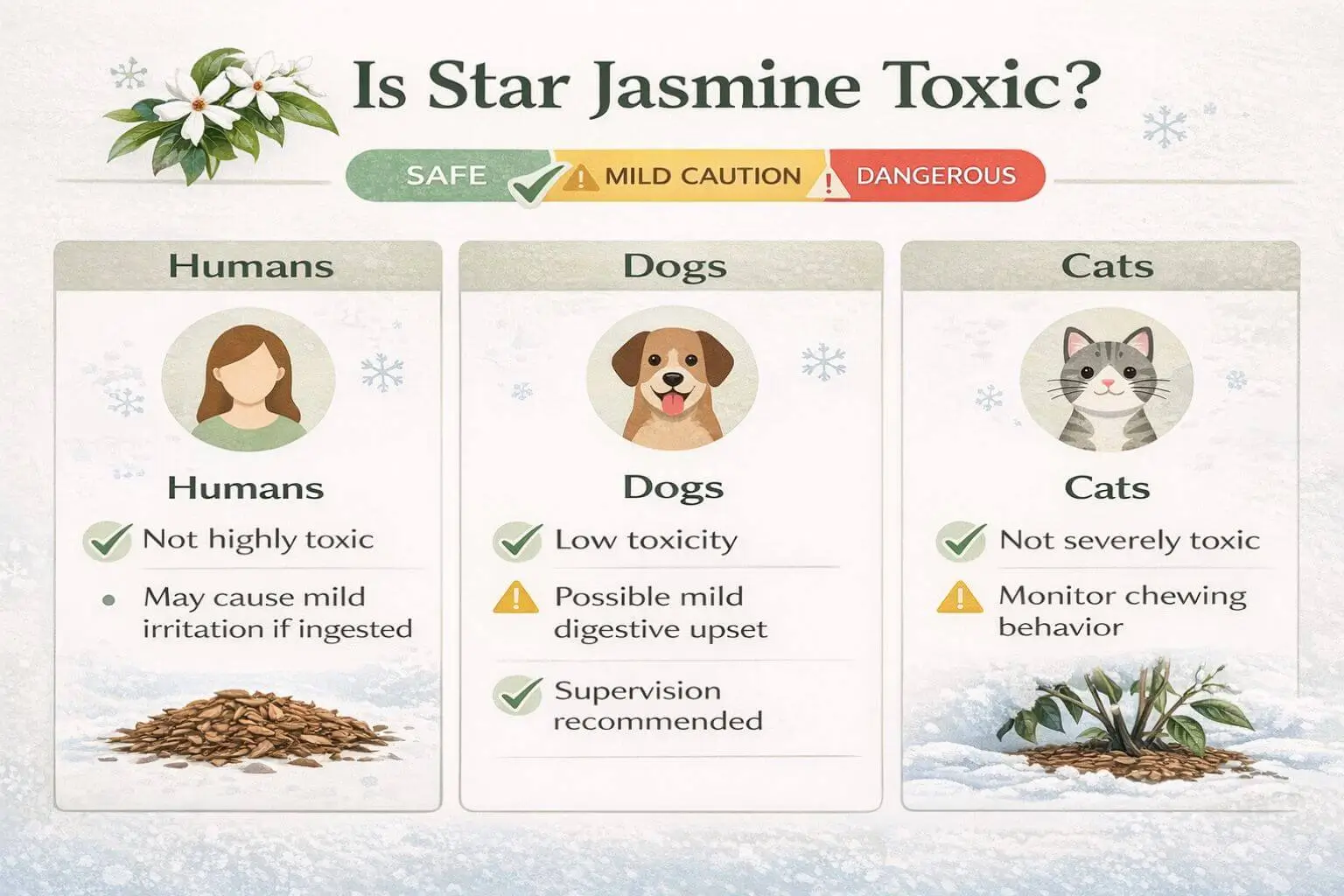
Is Star Jasmine Poisonous to Humans?
Star jasmine poisonous concerns are minimal. It is not considered highly toxic to humans, but ingestion may cause mild stomach upset.
Is Star Jasmine Toxic to Dogs?
Many ask: is star jasmine plant poisonous to dogs?
Star jasmine is not classified as highly toxic, but mild digestive irritation may occur.
Are star jasmine poisonous to dogs? Generally, no severe toxicity is reported.
Is star jasmine safe for dogs? It is considered relatively low risk but not intended for consumption.
Overall, star jasmine pet safe status is moderate with supervision advised.
Is Star Jasmine Toxic to Cats?
Regarding star jasmine toxic to cats concerns, it is not listed as severely toxic. However, mild gastrointestinal upset may occur. Monitoring star jasmine cats interactions is recommended.
Buying Guide – Star Jasmine for Sale
Where to Find Star Jasmine Plants
You can find:
- Star jasmine for sale at garden centers
- Star jasmine plant for sale through reputable online nurseries
Garden centers allow in-person inspection, while online shops offer variety.
What to Look for When Buying
- Healthy foliage without yellowing
- Strong root system
- Proper label: Trachelospermum jasminoides plant
- Visible trachelospermum jasminoides vine growth habit
Star Jasmine Uses in Landscaping
As a Climbing Vine
Ideal for:
- Walls
- Arbors
- Fences
As Ground Cover
Provides low-maintenance landscape coverage and weed suppression.
In Containers & Patios
Perfect for:
- Balcony décor
- Fragrant seating areas
Conclusion – Is Star Jasmine Right for Your Garden?
Star jasmine combines fragrance, evergreen beauty, winter resilience in suitable zones, and manageable care requirements. It thrives in warm climates, adapts as a vine or shrub, and offers privacy and ground coverage benefits. While mildly irritating if ingested, it is generally low risk for pets with supervision. If you want a versatile, fragrant, and visually elegant plant, consider adding this adaptable star jasmine plant to your landscape today.
Learn more: 5+ Stunning Aloe Tree Varieties to Transform Your Garden
Frequently Asked Questions (FAQs)
1. What is the hardiness zone for star jasmine (Trachelospermum jasminoides)?
Star jasmine grows best in USDA zones 8–10 and may survive in zone 7 with winter protection.
2. Is star jasmine toxic to dogs or cats?
It is not highly toxic but may cause mild digestive upset if ingested.
3. Will star jasmine survive winter in cold climates?
It survives mild winters but requires protection in freezing temperatures below 10°F.
4. How tall does a star jasmine vine grow?
With support, it can reach 10–20 feet tall.
5. What are common star jasmine problems and how do you fix them?
Yellow leaves from overwatering can be fixed by improving drainage. Poor flowering improves with more sunlight.
6. Is star jasmine a true jasmine plant?
No. It belongs to the Trachelospermum genus, not the true Jasminum genus.