Introduction
Bush germander is a versatile, low-maintenance shrub that has gained popularity in gardens, landscaping, and as ground cover. Its resilience and attractive foliage make it ideal for both ornamental and functional planting. Gardeners often appreciate its ability to thrive with minimal care, while still providing structure and visual interest. This germander plant comes in several varieties, including Teucrium fruticans and Teucrium chamaedrys, each offering unique growth habits and decorative appeal. Whether used as a compact shrub or a creeping ground cover, the bush germander plant provides year-round charm and supports pollinators, making it a staple in modern garden design.
What is Bush Germander?
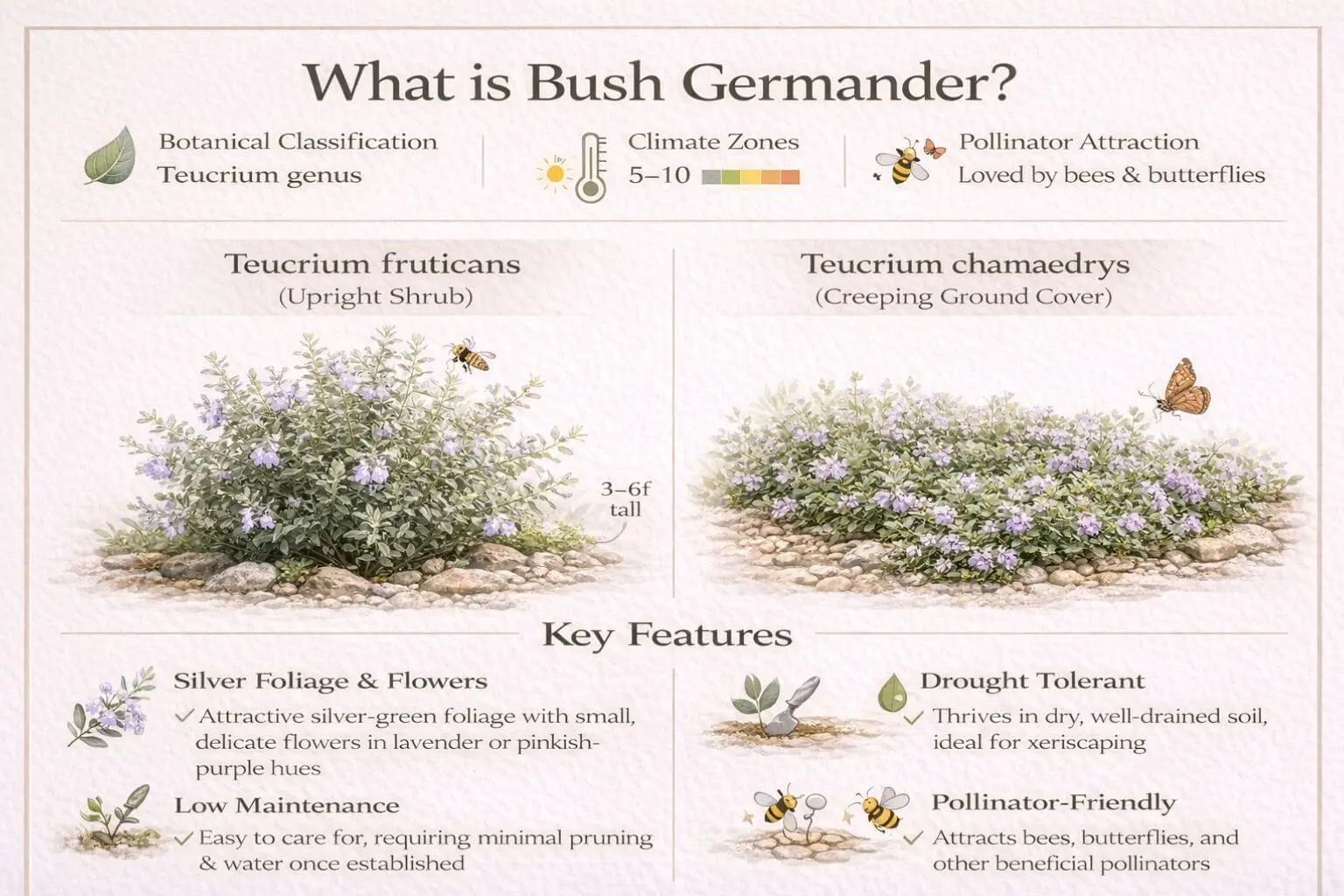
Bush germander is a member of the Lamiaceae family, known for its aromatic foliage and hardy growth. The plant is native to Mediterranean regions and thrives in warm climates. Common species include Teucrium fruticans and Teucrium chamaedrys, both valued for their durability and ornamental beauty.
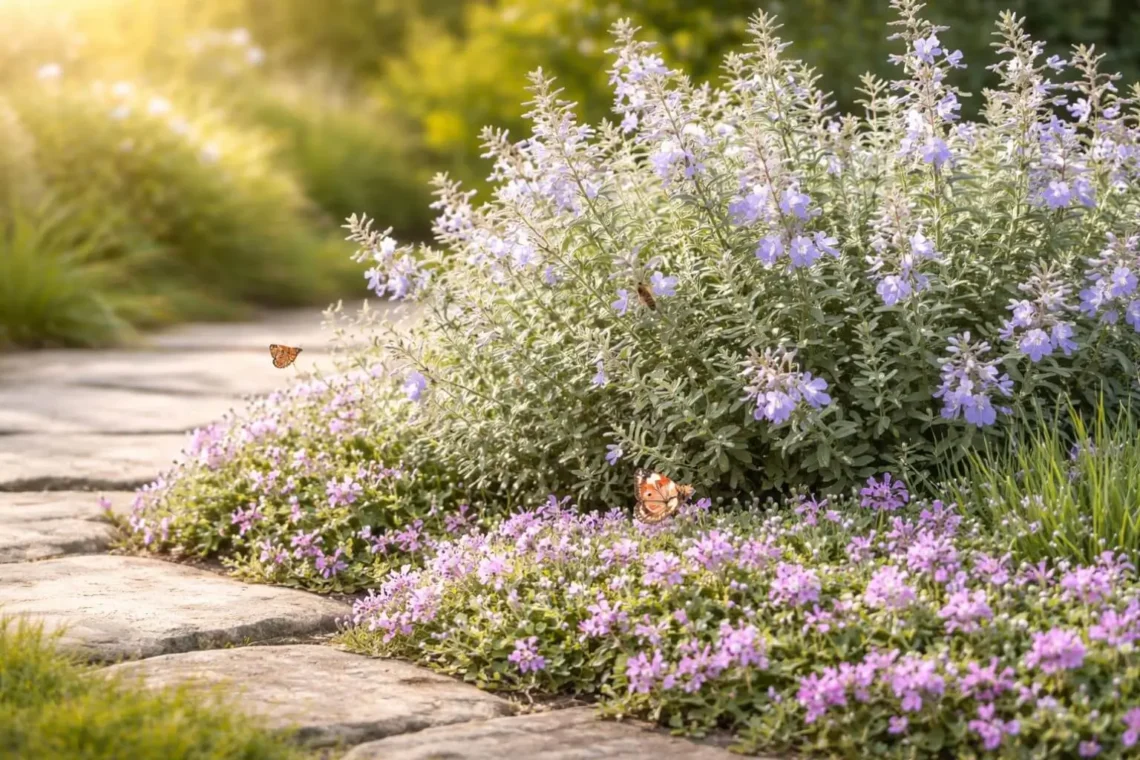
Bush germander is easily recognized by its silver-green foliage and small, delicate flowers that bloom during warmer months. Varieties like germander teucrium and silver bush germander are especially appreciated for their low-maintenance care and ability to complement diverse garden styles. The germander teucrium fruticans or silver germander exhibits an upright habit, while some creeping types form dense mats that help prevent soil erosion.
Types and Varieties of Bush Germander
-
Teucrium fruticans (Bush Germander)
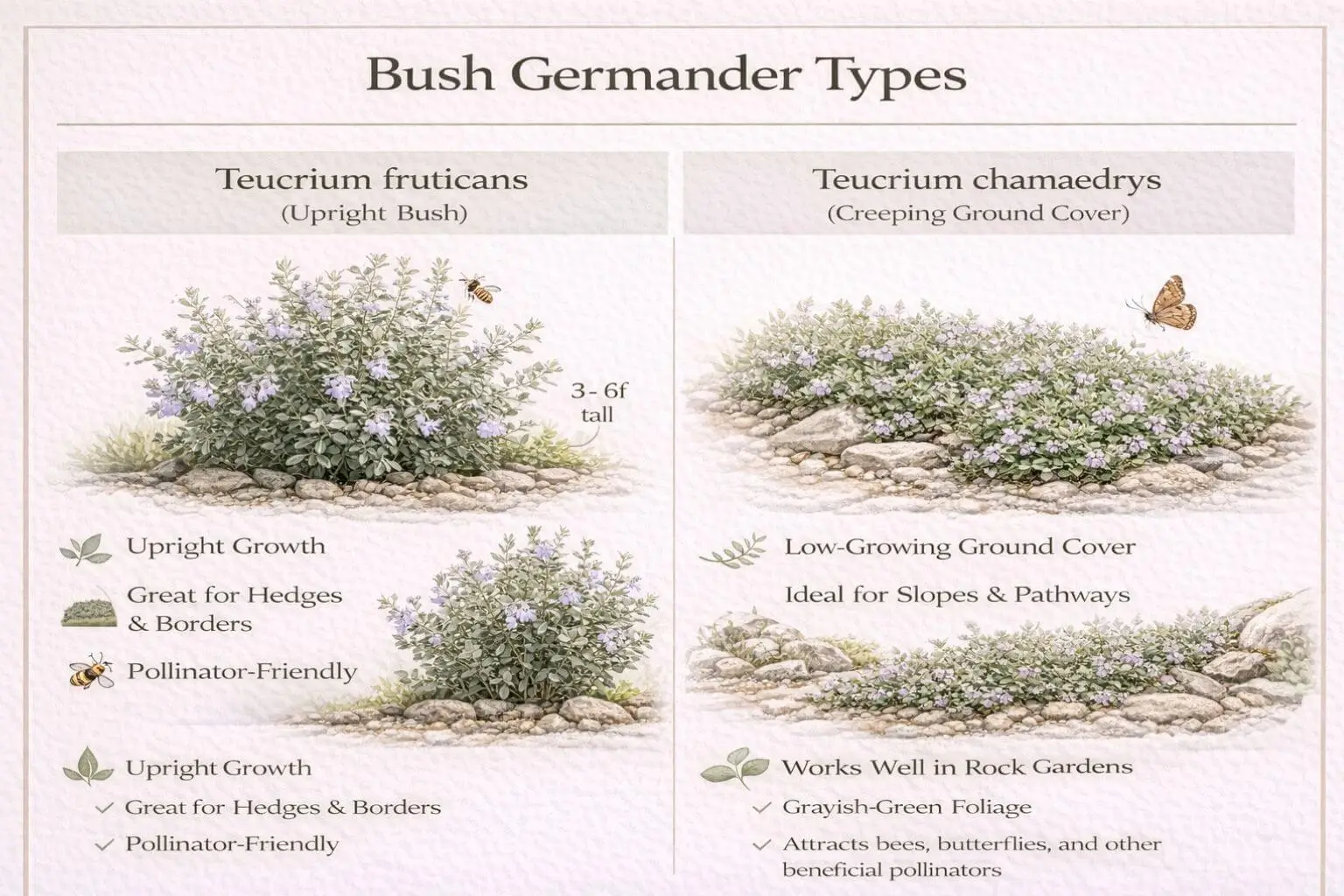
Teucrium fruticans bush germander is an upright, bushy shrub that works beautifully for hedges, borders, and garden accents. Its silvery foliage adds elegance, while its small flowers attract pollinators such as bees and butterflies. This teucrium fruticans plant is drought-tolerant, making it ideal for dry climates. Regular pruning helps maintain its shape and encourages more abundant blooms. As a teucrium fruticans germander, it provides both structure and aesthetic appeal in landscaping projects.
-
Teucrium chamaedrys (Creeping Germander)
Teucrium chamaedrys, also known as creeping germander, is a low-growing variety perfect for ground cover. It spreads efficiently, creating dense mats that stabilize slopes, pathways, and rock gardens. Common names include germander chamaedrys, germander creeping, and gray creeping germander. The plant thrives as a creeping germander plant in sunny, well-drained areas, and its hardy nature ensures minimal maintenance. Variants like teucrium chamaedrys germander or germander ground cover are ideal for controlling erosion while adding ornamental value.
Growing Bush Germander in Your Garden
-
Planting Conditions
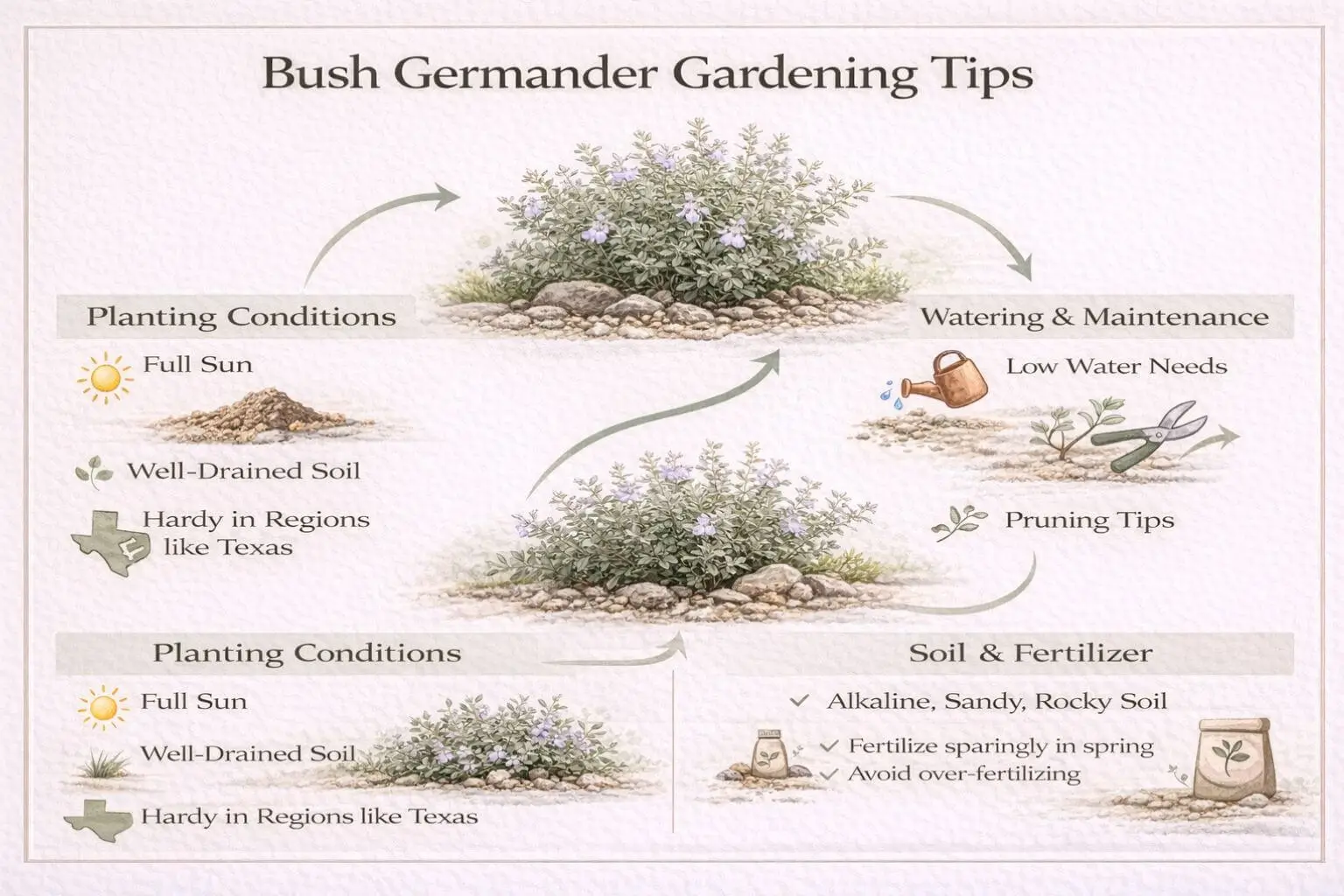
Bush germander requires full sun and well-drained soil to thrive. It is hardy in regions such as bush germander Texas and can adapt to other warm climates. Creeping varieties like creeping germander Texas perform well on slopes and in xeriscaped gardens.
-
Watering and Maintenance
Once established, bush germander has low water requirements. It tolerates drought conditions well, making it ideal for low-maintenance gardens. Regular pruning keeps the shrub compact, encourages new growth, and promotes continuous flowering throughout the season.
-
Soil and Fertilizer Tips
Bush germander prefers slightly alkaline, sandy, or rocky soils. While generally hardy, occasional fertilization during the growing season supports healthy foliage and flowering. Using a balanced, slow-release fertilizer ensures steady growth without overfeeding the plant.
Landscaping Uses of Bush Germander
-
As a Shrub or Hedge
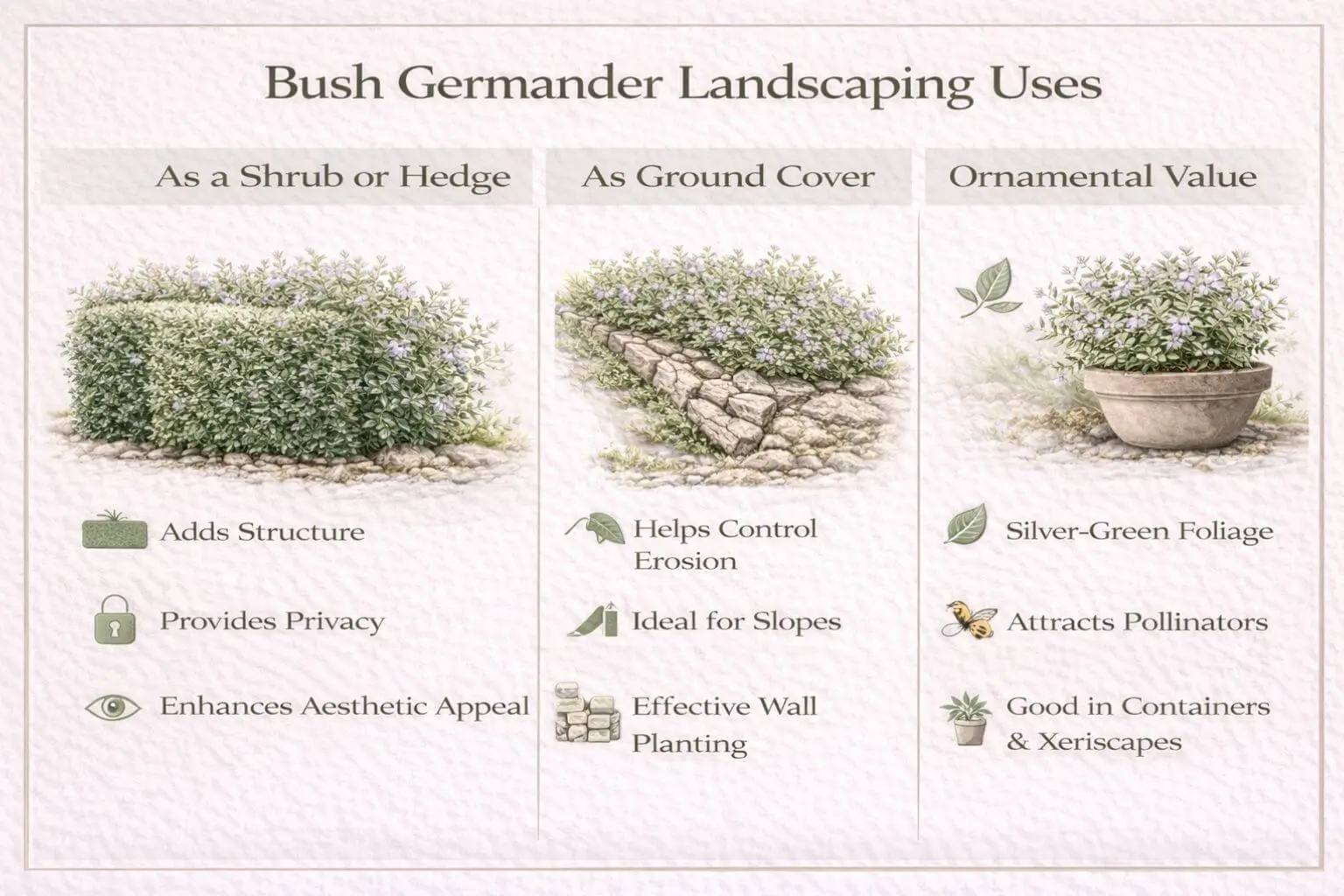
Bush germander provides structure and privacy when planted as a hedge or shrubby border. Its dense foliage and upright growth make it a perfect candidate for formal garden layouts. Keywords include germander shrub, germander bush, shrubby germander, and tree germander.
-
As Ground Cover
Creeping varieties of bush germander are excellent for erosion control and covering slopes or pathways. They also thrive against walls or in rock gardens, sometimes referred to as wall germander, wall germander plant, or wall germander zone.
-
Ornamental Value
The plant’s silver foliage and delicate flowers attract pollinators, making it an eco-friendly choice for gardens. Bush germander is suitable for containers, borders, and xeriscaping, adding a touch of elegance to any landscape.
Common Problems and Pests
Bush germander is generally resistant to pests but can face issues such as:
- Root rot in poorly drained soil
- Aphids and spider mites in some regions
Preventive measures include proper drainage, regular pruning, and monitoring for pests. Maintaining airflow around the plant reduces the risk of fungal diseases and ensures healthy growth.
Conclusion and Call-to-Action
Bush germander is a drought-tolerant, versatile, and aesthetically appealing shrub suitable for hedges, ground cover, and ornamental gardens. Its easy maintenance, pollinator-friendly flowers, and resilient foliage make it a must-have for modern landscapes. Consider planting bush germander in your garden today to enhance both functionality and beauty. Explore local nurseries or online gardening resources to select the ideal variety for your space.
Learn more: about Black Rose Succulent
FAQs About Bush Germander
- What is the difference between bush germander and creeping germander?
Bush germander is upright and bushy, ideal for hedges, while creeping germander grows low and spreads as ground cover. Both are drought-tolerant but serve different landscaping purposes. - How do I plant bush germander in Texas gardens?
Plant in full sun with well-drained soil. Space shrubs appropriately for growth, and prune regularly. Bush germander thrives in Texas heat and is hardy with minimal watering. - Does bush germander attract pollinators?
Yes, both upright and creeping varieties attract bees, butterflies, and other pollinators, supporting a healthy garden ecosystem. - Can bush germander be used as a hedge or ground cover?
Absolutely. Upright forms like Teucrium fruticans work well as hedges, while creeping types like Teucrium chamaedrys are excellent for ground cover and erosion control. - How do I maintain the silver foliage of bush germander?
Ensure full sun exposure, well-drained soil, and avoid overwatering. Occasional pruning and light fertilization help maintain vibrant silver foliage.