Introduction
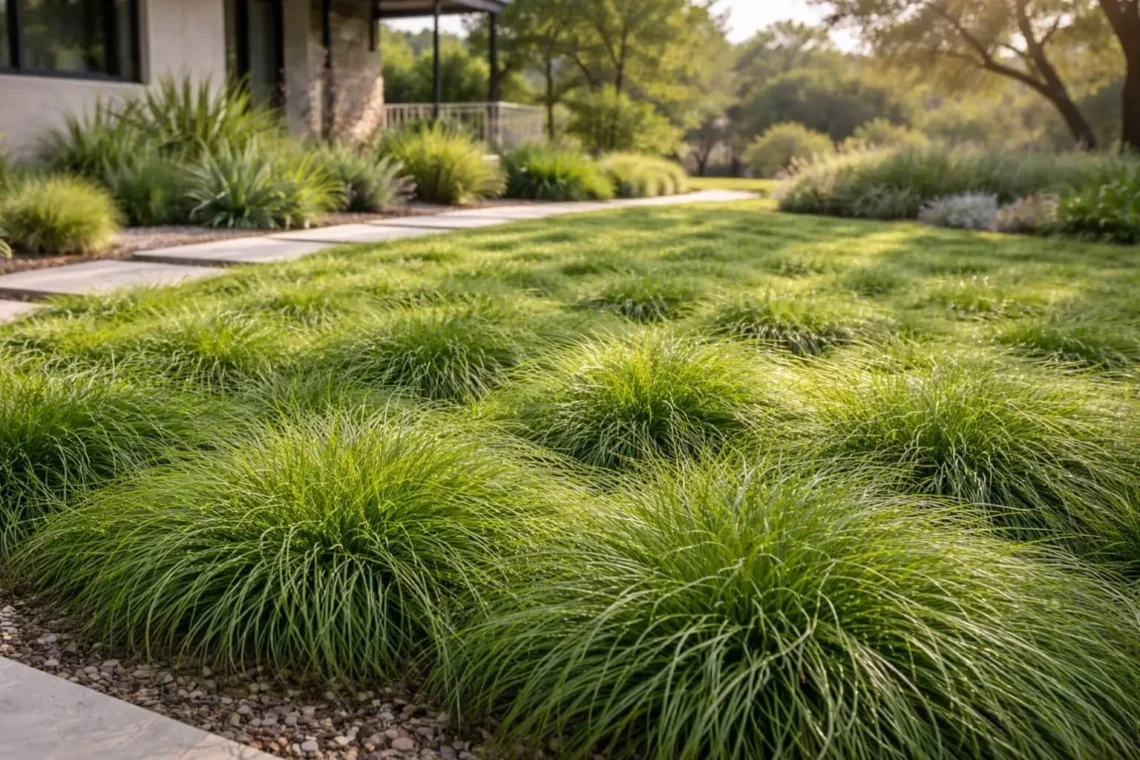
Berkeley Sedge (scientific name: Carex divulsa) is a versatile, grass-like perennial valued for its low-maintenance growth, aesthetic appeal, and ecological benefits. As a clumping sedge, it provides dense ground coverage, making it ideal for lawns, garden beds, and larger landscapes. This article explores Berkeley Sedge’s botanical traits, care requirements, and adaptability, especially for Texas climates. We will cover its growth patterns, native status, and landscaping uses, guiding readers in selecting sedge varieties suitable for sustainable, attractive, and resilient outdoor spaces.
What is Berkeley Sedge?
Botanical Overview
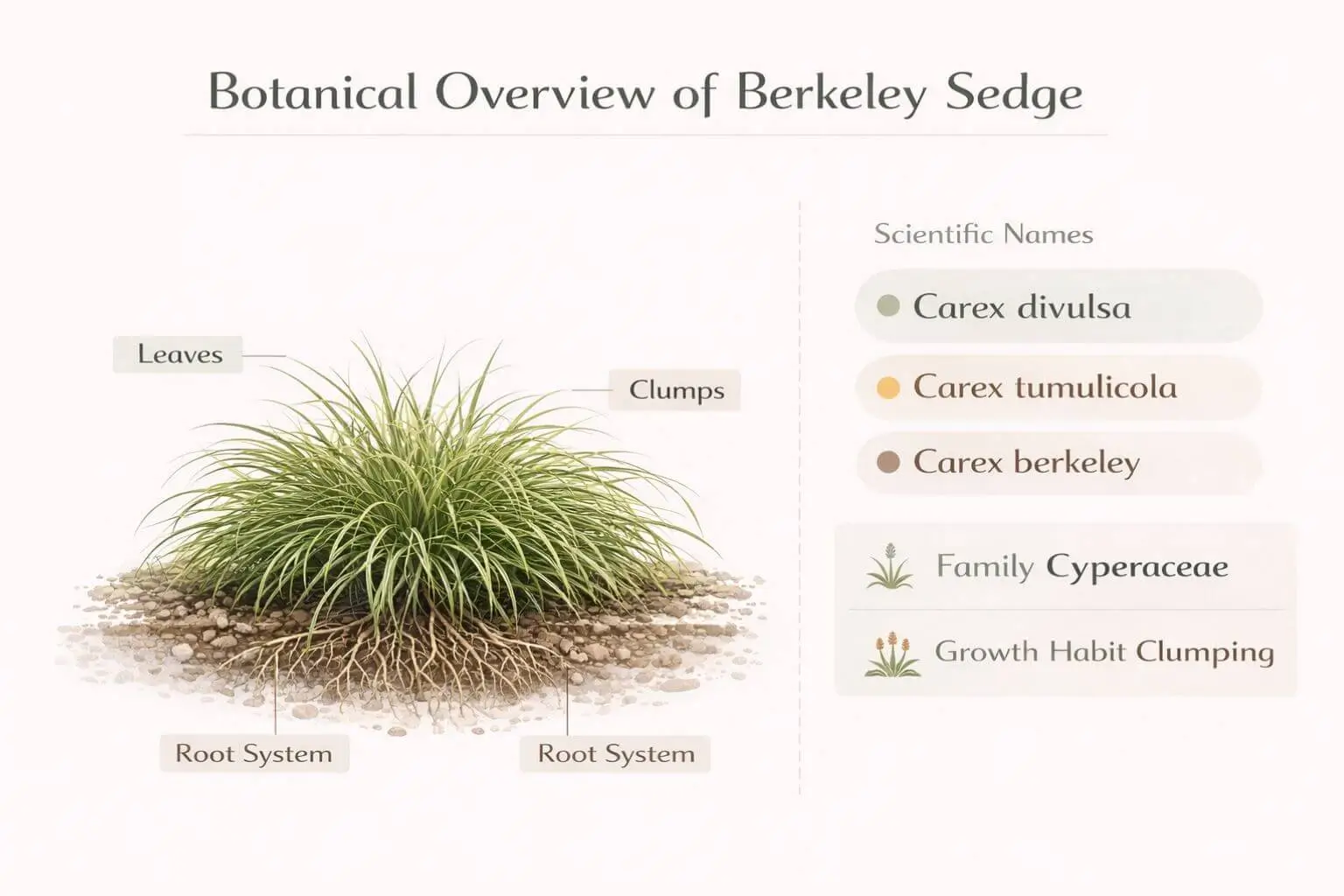
Berkeley Sedge belongs to the Carex genus within the Cyperaceae family. It is closely related to other sedges like Carex tumulicola (foothill sedge) and Carex berkeley. Classified as a perennial, Berkeley Sedge exhibits a clumping growth habit, distinguishing it from more aggressive spreading sedges. Its taxonomy and adaptability make it a practical choice for ecological landscaping and ornamental use.
Key Characteristics
- Growth form: Clumping, forming dense mats.
- Size and height: Typically 6–12 inches tall, creating a compact, uniform groundcover.
- Leaf traits: Fine-textured leaves with deep green tones, maintaining year-round visual interest.
- Aesthetic value: Offers a tidy, uniform look in lawns or garden beds.
Berkeley Sedge’s clumping habit and modest height make it ideal for low-maintenance landscapes while providing soil stability and visual texture.
Native Range and Adaptation
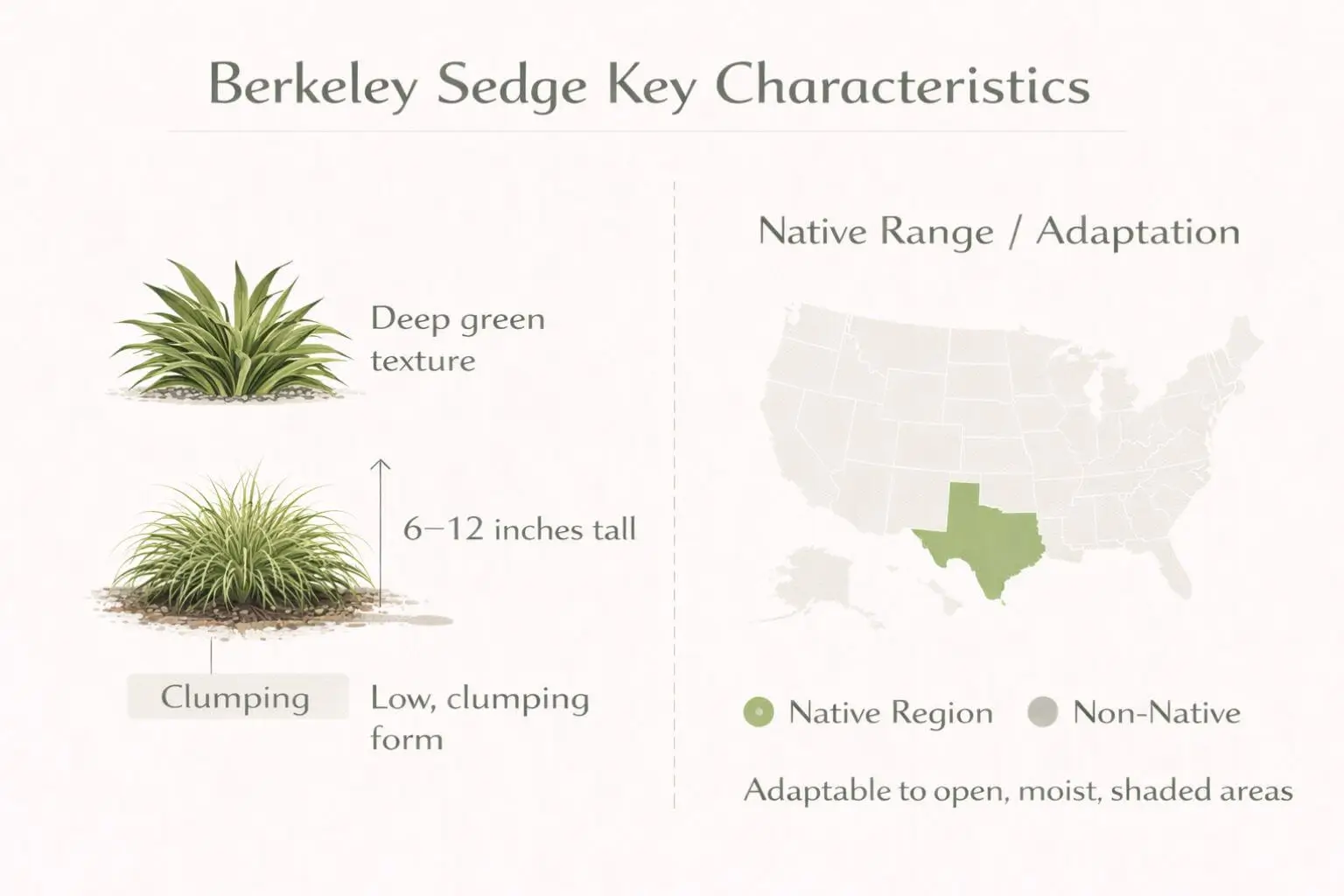
Berkeley Sedge is native to parts of Europe but has been widely adopted in North American regions, including Texas. It thrives in various environments, tolerating sun to partial shade and adapting to well-drained soils. Related entities include foothill sedge, hill country sedge, and meadow sedge, all of which share similar ecological niches and benefits.
Growing and Maintaining Berkeley Sedge
Planting and Spacing Guidelines
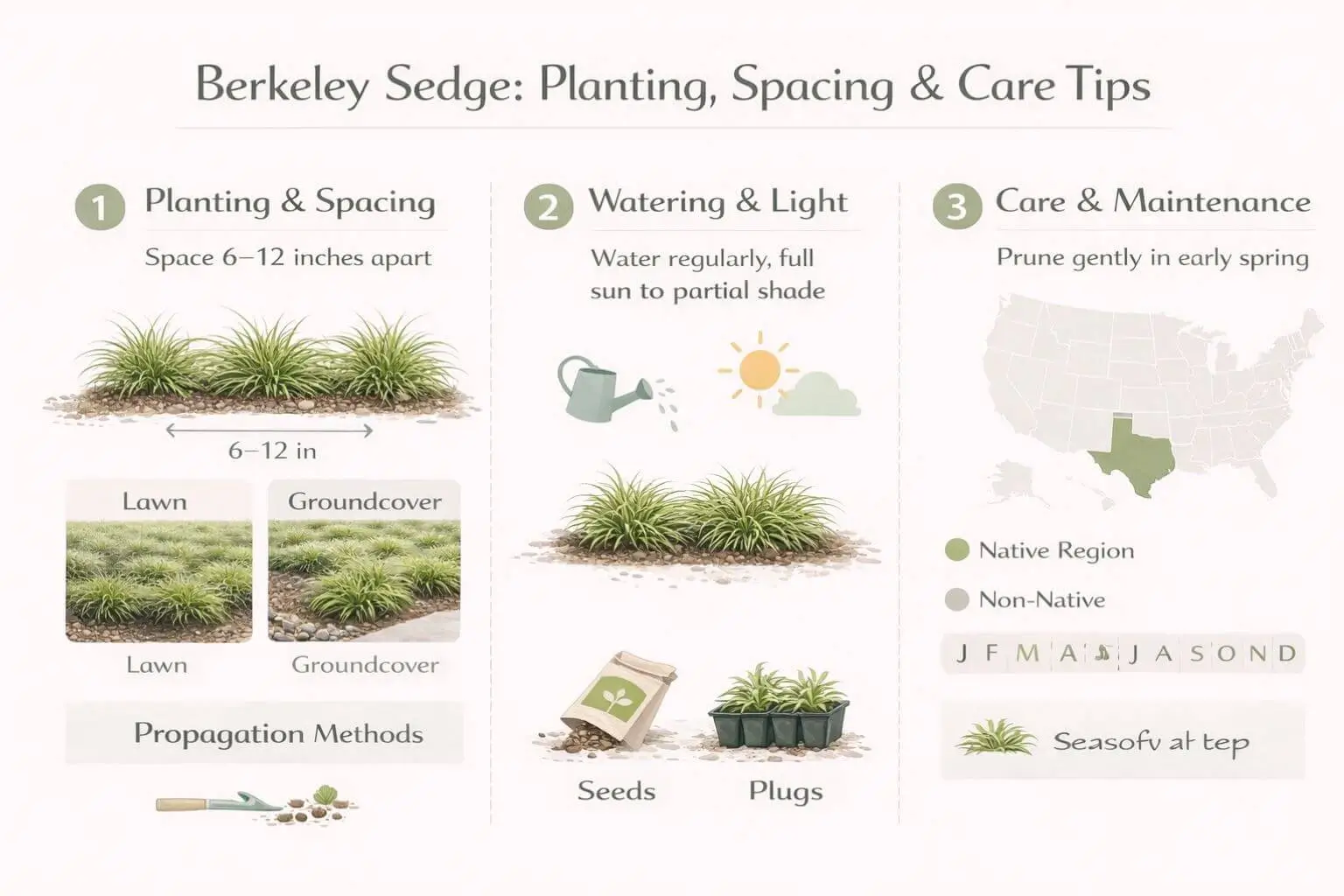
- Spacing: Plant clumps 6–12 inches apart to allow full expansion without overcrowding.
- Propagation: Available as seeds or plugs; plug planting offers faster coverage.
- Reference: Carex divulsa spacing ensures optimal growth density for lawns and garden beds.
Care Requirements
- Watering: Minimal; drought-tolerant once established.
- Fertilization: Occasional light feeding supports vibrant growth.
- Light: Thrives in sun to partial shade.
- Seasonal care: Prune old foliage annually for renewed growth.
Proper Berkeley Sedge care ensures longevity, dense coverage, and consistent aesthetics.
Lawn and Groundcover Applications
- Functions as a low-maintenance alternative to traditional turfgrass.
- Supports biodiversity by providing habitat for pollinators.
- Suitable for Texas sedge lawn and Berkeley Sedge lawn applications, reducing water usage and mowing needs.
Pros and Cons of Berkeley Sedge
Advantages:
- Drought-tolerant
- Low maintenance
- Effective erosion control
Disadvantages:
- Can spread under ideal conditions (monitor spacing)
- Limited height for certain landscaping needs
Reference: Always consider Berkeley Sedge pros and cons before large-scale planting.
Varieties and Related Species
Carex tumulicola vs Carex divulsa
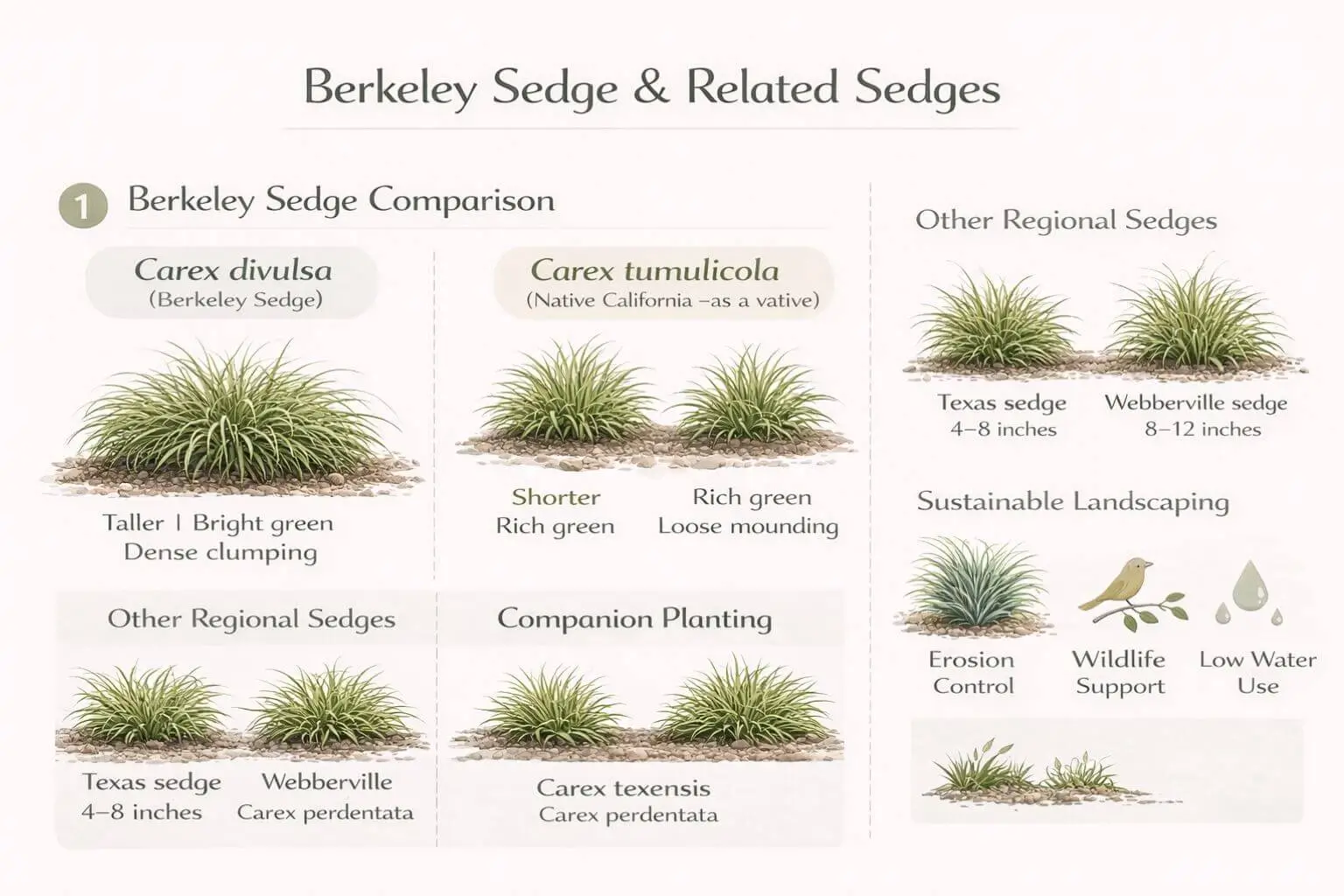
- Carex tumulicola (foothill sedge) tends to be taller and finer-textured.
- Carex divulsa forms denser, compact clumps suitable for uniform lawns.
- Selection depends on growth habit preference and garden purpose.
Other Regional Sedges
- Texas sedge, Webberville sedge, Carex texensis, Carex perdentata
- Differences include climate tolerance and visual texture.
- Regional sedges adapt well to hill country and low-water landscapes.
Companion Plants
- Pair with Dianella Little Rev (little rev flax lily) or other low-maintenance species.
- Enhances biodiversity, ecological balance, and aesthetic variety.
- Supports wildlife and complements sedge textures in mixed beds.
Environmental and Landscaping Considerations
Climate and Soil Adaptation
- Suitable for Texas landscapes and hill country regions.
- Thrives in drought-prone areas and well-draining soils.
- Tolerates sun to partial shade, maintaining health across diverse conditions.
Invasiveness and Management
- Generally non-aggressive but monitor growth in ideal conditions.
- Proper spacing and occasional pruning prevent Berkeley Sedge invasive tendencies.
- Mitigation strategies include controlled propagation and bed containment.
Sustainable Landscaping Benefits
- Prevents soil erosion and reduces water consumption.
- Provides wildlife habitat.
- Ideal for eco-friendly lawns and public green spaces.
Conclusion
Berkeley Sedge (Carex divulsa) is a practical, low-maintenance plant for lawns, gardens, and sustainable landscapes. Its clumping growth, drought tolerance, and aesthetic appeal make it a reliable choice for Texas climates. Understanding its care requirements, varieties, and environmental considerations ensures successful integration into lawns and eco-friendly landscapes. Explore more about sedge species for sustainable lawns and low-maintenance gardening.
Learn more: 5+ Stunning False Heather Plant Facts Every Gardener Must Know
FAQs
- What is Berkeley Sedge and its scientific name?
Berkeley Sedge is a clumping grass-like plant, scientifically called Carex divulsa, commonly used in lawns and landscaping. - How tall does Berkeley Sedge grow?
Typically grows between 6–12 inches, forming a dense, low-maintenance groundcover. - Is Berkeley Sedge invasive?
While generally non-aggressive, some forms can spread under ideal conditions; proper spacing and management prevent invasiveness. - Can Berkeley Sedge be grown in Texas?
Yes, it adapts well to Texas climates, including hill country and low-water gardens. - What are the differences between Berkeley Sedge and Foothill Sedge?
Foothill sedge (Carex tumulicola) is slightly taller and finer-textured, while Berkeley Sedge forms denser clumps suitable for lawns. - How do you care for Berkeley Sedge?
Requires minimal watering, tolerates sun or partial shade, benefits from occasional pruning, and thrives in well-draining soil.