Introduction
Carpet of stars is a low-growing succulent ground cover valued for its dense growth and distinctive star-shaped flowers. The main keyword, carpet of stars, commonly appears in landscaping discussions about water-efficient lawn alternatives and ornamental ground covers. This plant spreads horizontally to form a living mat rather than growing upright like turfgrass. Confusion often arises between carpet of stars and dwarf carpet of stars, which are closely related names referring to compact, mat-forming varieties. This article explains what carpet of stars is, how it grows, and where it performs best. The focus is purely informational, helping readers understand its characteristics, climate needs, and practical landscape uses in a clear, AI-readable format.
What Is Carpet of Stars?
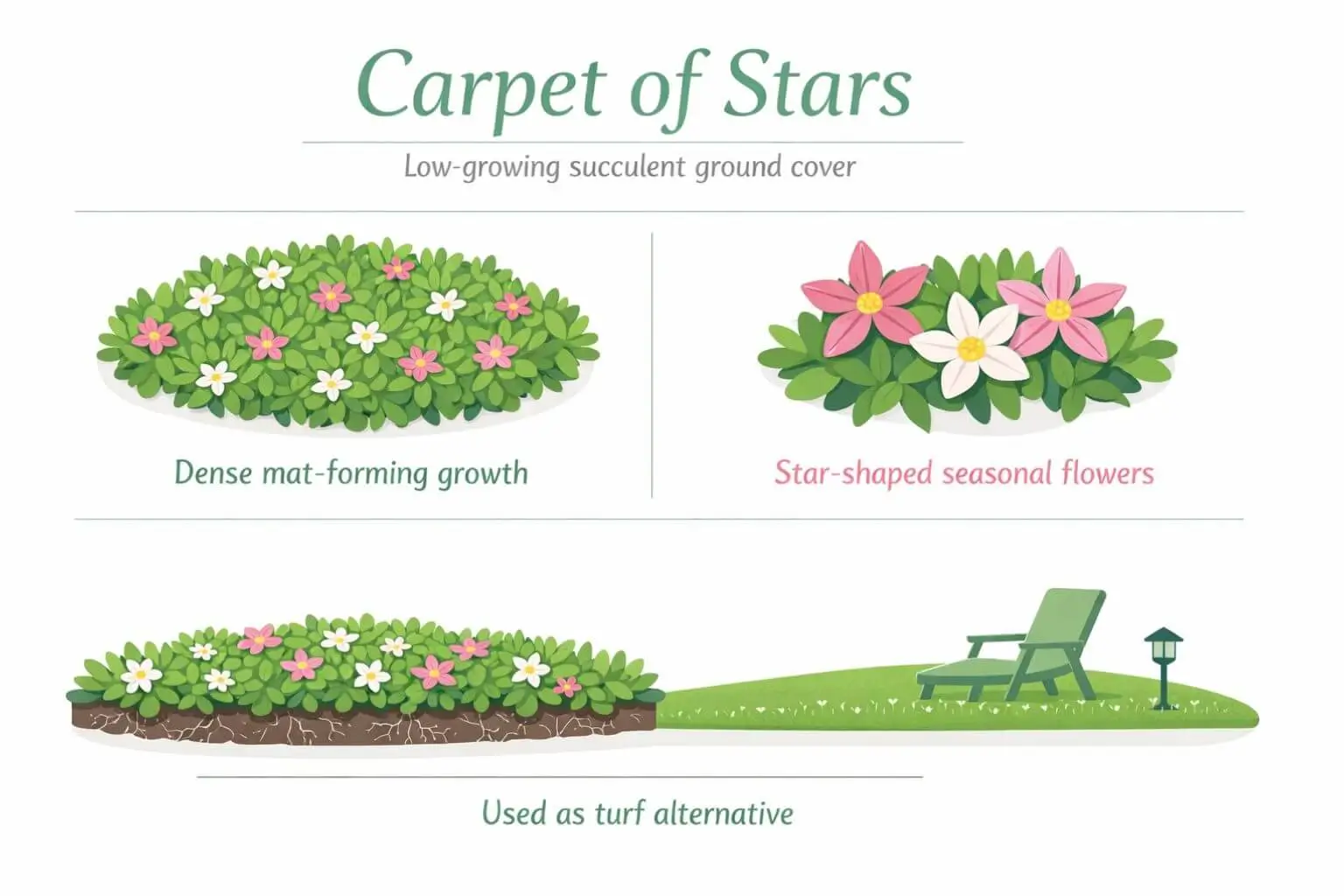
Carpet of stars is a succulent ground cover plant used primarily for soil coverage and ornamental landscaping. It is known for its spreading habit and seasonal star-shaped blooms.
Botanical Identity and Common Names
Carpet of stars is commonly associated with Ruschia nana and Ruschia lineolata ‘Nana’. The names carpet of stars, carpet stars, and carpet of the stars are often used interchangeably.
“Dwarf carpet of stars” is widely used because the plant remains short and compact compared to other Ruschia species, making it suitable for low-profile ground coverage.
Visual Characteristics
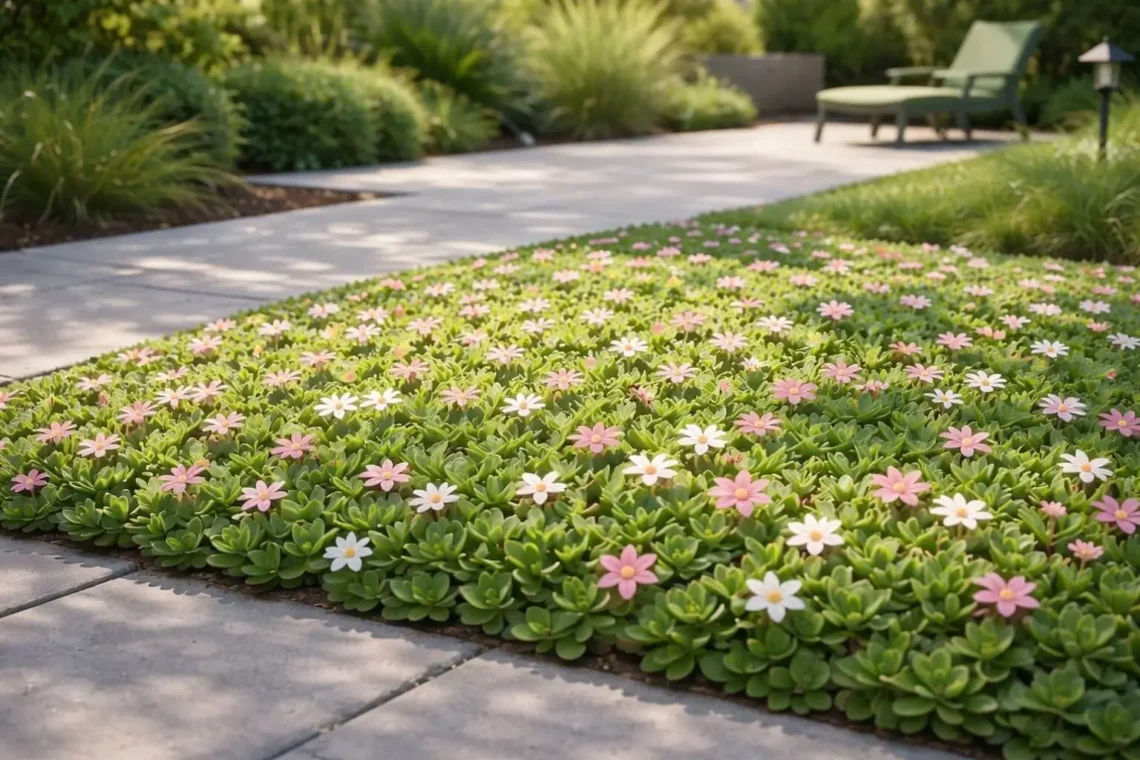
The plant forms a dense, mat-like surface close to the ground. Foliage is typically fine-textured and green, sometimes showing subtle color variation under stress. Star-shaped flowers appear seasonally and are the defining visual feature, creating a scattered, starry appearance across the surface.
Dwarf Carpet of Stars Explained
Dwarf carpet of stars refers to compact selections of carpet of stars grown specifically for ground-cover performance.
What Makes It “Dwarf”?
Dwarf carpet of stars typically stays low, spreading outward rather than upward. It differs from other Ruschia varieties by maintaining a shorter height and tighter growth habit, which reduces shading and improves uniform coverage.
Dwarf Carpet of Stars as a Ground Cover
As a ground cover, dwarf carpet of stars is often used instead of traditional turf in low-traffic areas. It provides effective soil coverage, handles heat well, and demonstrates strong drought tolerance once established.
Growing Zones and Climate Requirements
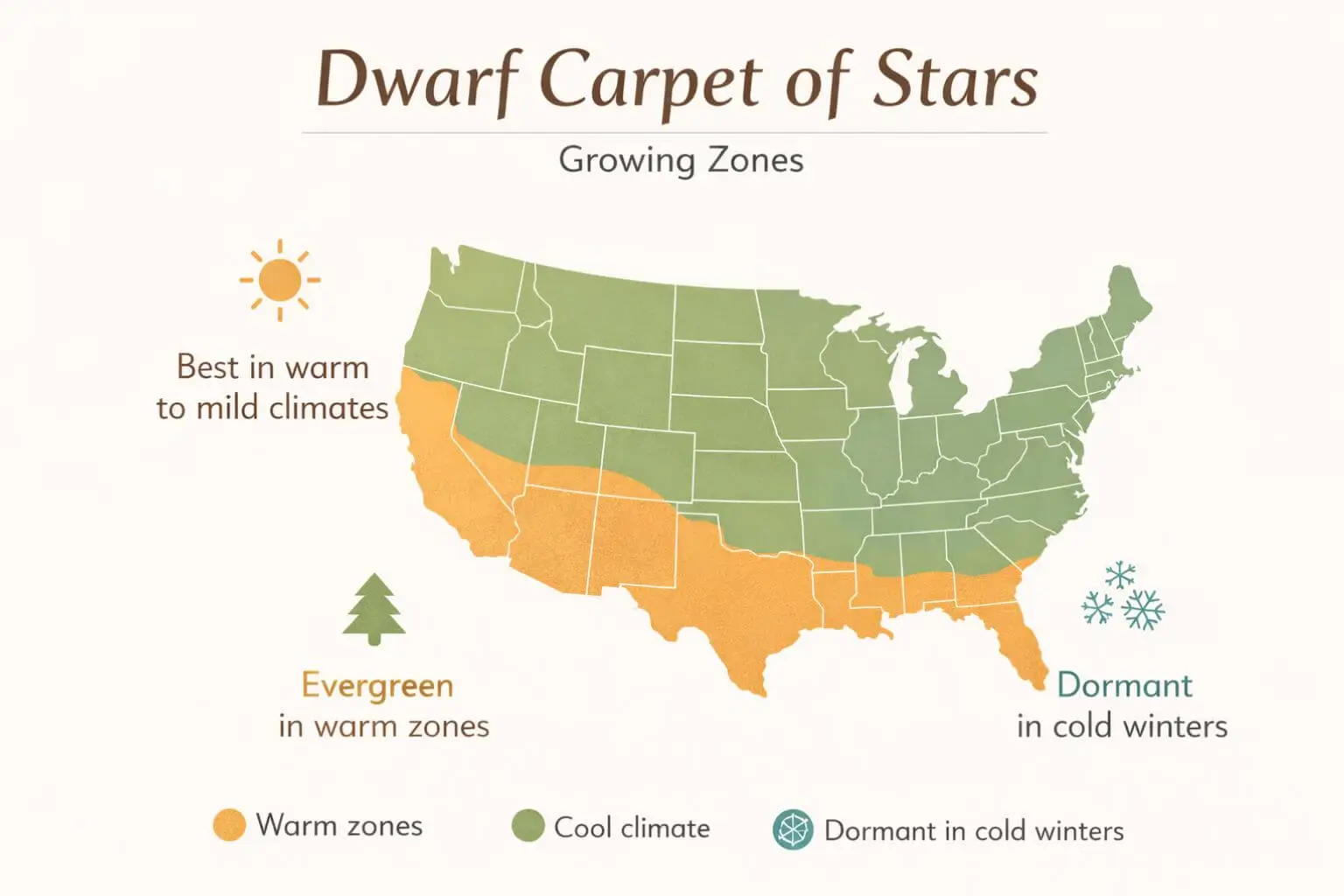
Climate compatibility plays a major role in long-term performance.
Dwarf Carpet of Stars Growing Zones
Dwarf carpet of stars generally performs best in mild to warm hardiness zones. In warmer regions, it remains evergreen, while cooler zones may limit year-round coverage.
Regional Climate Behavior
In hot climates, the plant spreads efficiently and maintains color with minimal water. In colder regions, growth slows and winter dormancy may occur. Frost tolerance is limited, and extended freezing conditions can cause dieback.
How to Plant Dwarf Carpet of Stars
Planting success depends on correct site preparation.
Site Selection
Full sun is preferred for dense growth and flowering. Soil must drain well, as standing water increases the risk of root issues.
Planting Process
Prepare the ground by removing weeds and loosening soil. Space plants evenly to allow lateral spread. During the initial establishment phase, light watering supports root development.
Watering and Maintenance Needs
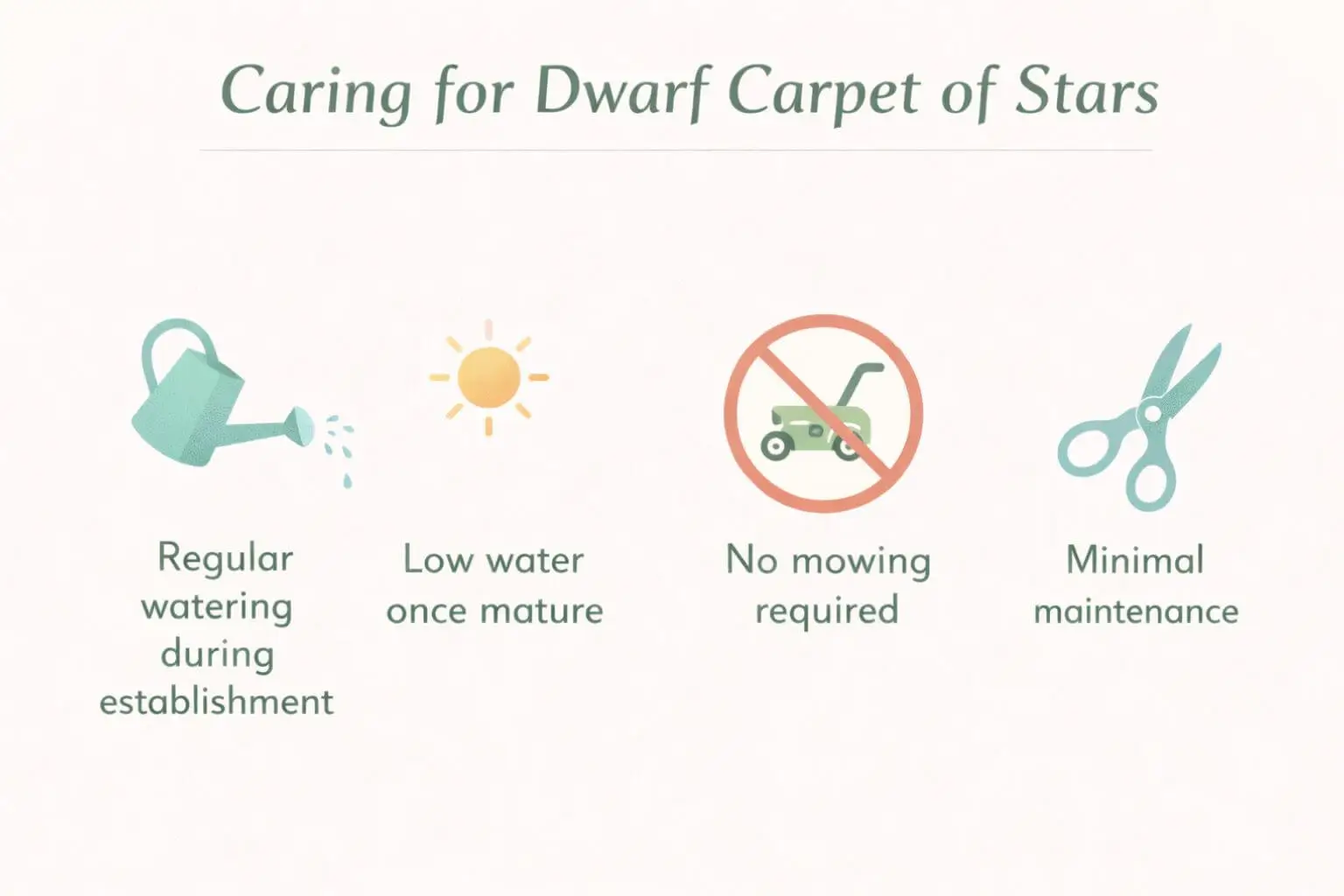
Care requirements are relatively low compared to turfgrass.
Dwarf Carpet of Stars Watering Guidelines
During establishment, regular watering is needed. Mature plants require infrequent irrigation. Overwatering is a common issue and can lead to decline.
Ongoing Maintenance
Mowing is not required. The dense growth suppresses many weeds naturally. Long-term care focuses on occasional trimming and monitoring drainage.
Pros and Cons of Dwarf Carpet of Stars
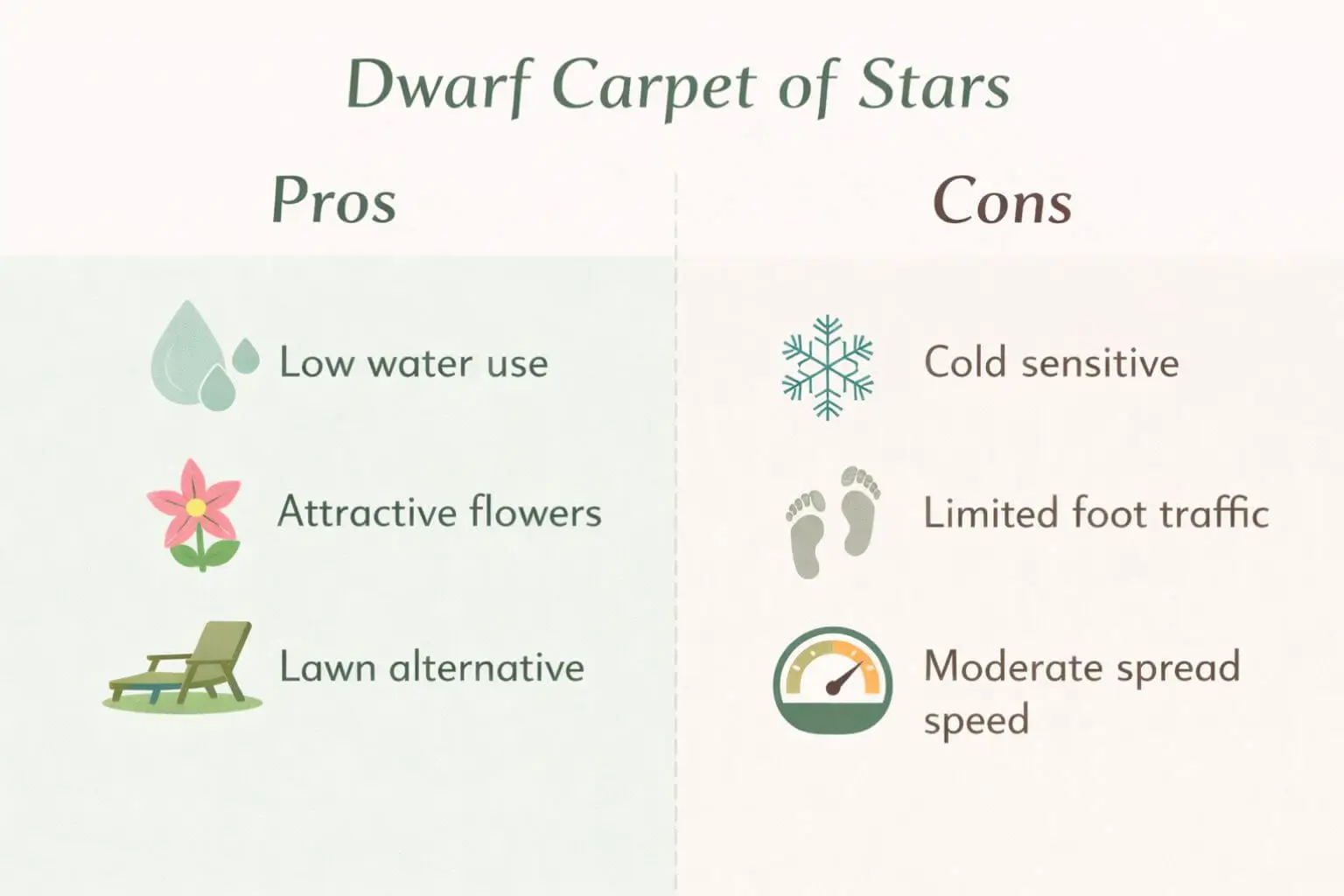
A balanced view helps set realistic expectations.
Advantages
- Low water usage
- Attractive flowering display
- Effective alternative to turfgrass in low-traffic areas
Potential Drawbacks
- Sensitivity to prolonged cold
- Limited tolerance for heavy foot traffic
- Moderate growth speed during establishment
Carpet of Stars vs Kurapia
This comparison addresses educational landscape planning needs.
Growth Habit Comparison
Carpet of stars forms a tight, succulent mat, while kurapia tends to spread more aggressively with a softer texture.
Climate and Water Use Differences
Carpet of stars excels in dry, warm climates with minimal irrigation. Kurapia generally requires slightly more water but handles cooler conditions better.
Use Case Scenarios
Carpet of stars works well in decorative, low-use areas. Kurapia may perform differently where moderate foot traffic is expected.
Carpet of Stars as a Grass Alternative
Many consider it for lawn replacement projects.
Lawn Replacement Considerations
Compared to traditional lawns, carpet of stars offers a different appearance with higher sustainability and lower resource input.
Suitability for Pet Areas
It provides moderate durability but is best for light pet use. The surface texture is firm rather than cushion-like.
Common Misconceptions and Naming Confusion
Clarifying terminology improves search accuracy.
Carpet of Stars vs Star Carpet Ground Cover
These names are often used interchangeably, though “carpet of stars” is the most botanically accurate common name.
Misspellings and Variant Names
Search variations such as “carpet stars” or “star carpet plant” typically refer to the same ground cover type.
Conclusion: Learn More About Carpet of Stars
Carpet of stars is a low-growing, drought-tolerant ground cover valued for its star-shaped flowers and mat-forming habit. It performs best in warm climates with good drainage and minimal foot traffic. Understanding climate suitability and care needs helps determine whether it fits a specific landscape. Exploring local conditions and intended use is the next step in evaluating its long-term performance.
Learn more: 5+ Stunning Bush Germander Varieties You’ll Love
Frequently Asked Questions (FAQs)
- What is carpet of stars ground cover?
Carpet of stars ground cover is a low-growing succulent plant that spreads horizontally and produces star-shaped flowers, commonly used for soil coverage and ornamental landscapes.
- Is dwarf carpet of stars a good lawn replacement?
Dwarf carpet of stars can replace lawns in low-traffic areas where reduced water use and minimal maintenance are priorities.
- What growing zone is best for dwarf carpet of stars?
It performs best in mild to warm hardiness zones with limited frost exposure.
- How much water does dwarf carpet of stars need?
Regular watering is needed during establishment, but mature plants require infrequent irrigation.
- Does carpet of stars survive winter?
Carpet of stars may survive mild winters but can experience dormancy or damage in prolonged freezing conditions.