
Introduction
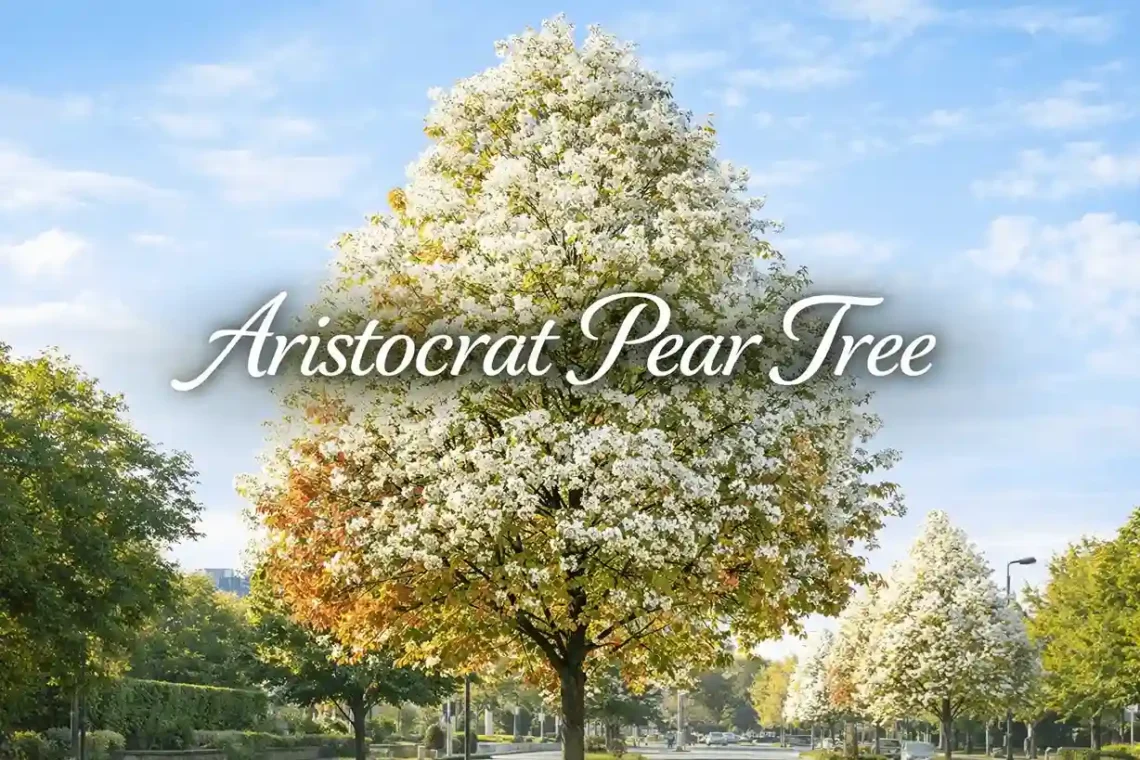
The aristocrat pear tree is a widely planted ornamental species valued for its upright structure, seasonal color changes, and adaptability in urban environments. Known botanically as Pyrus calleryana ‘Aristocrat’, it differs from fruit-bearing trees like the Manchurian pear or snow pear tree, as it is grown primarily for decorative landscaping purposes. This tree is commonly used along streets, in gardens, and in planned landscapes due to its strong branching structure and resilience. Its consistent growth pattern and visual appeal make it a preferred choice for structured planting designs.
Quick Summary
- The aristocrat ornamental pear is a deciduous tree grown for visual appeal rather than fruit production.
- It features a strong branch structure and a pyramidal to spreading form.
- Commonly compared with Bradford and Cleveland pear trees in landscaping.
- Ideal for streets, lawns, and organized landscape designs due to uniform growth.
What Is the Aristocrat Pear Tree? (Definition & Botanical Identity)
The aristocrat pear tree is an ornamental flowering tree classified under Pyrus calleryana ‘Aristocrat’ and is primarily grown for landscaping rather than fruit production. It belongs to the Rosaceae family and is part of the broader group of Callery pear trees. Unlike edible varieties, such as those covered in Manchurian Pear Varieties: 7+ Essential Types Guide, the Aristocrat pear is primarily ornamental. The Aristocrat pear is a cultivar of Pyrus calleryana, widely planted as an ornamental flowering tree.
This variety is often referred to as:
- Pyrus aristocrat
- Aristocrat callery pear tree
- Pyrus calleryana aristocrat
Unlike fruiting pear trees, ornamental pears like this one produce non-edible fruit and are valued for their structure and seasonal appearance rather than harvest yield.
Key Features of Aristocrat Ornamental Pear Tree
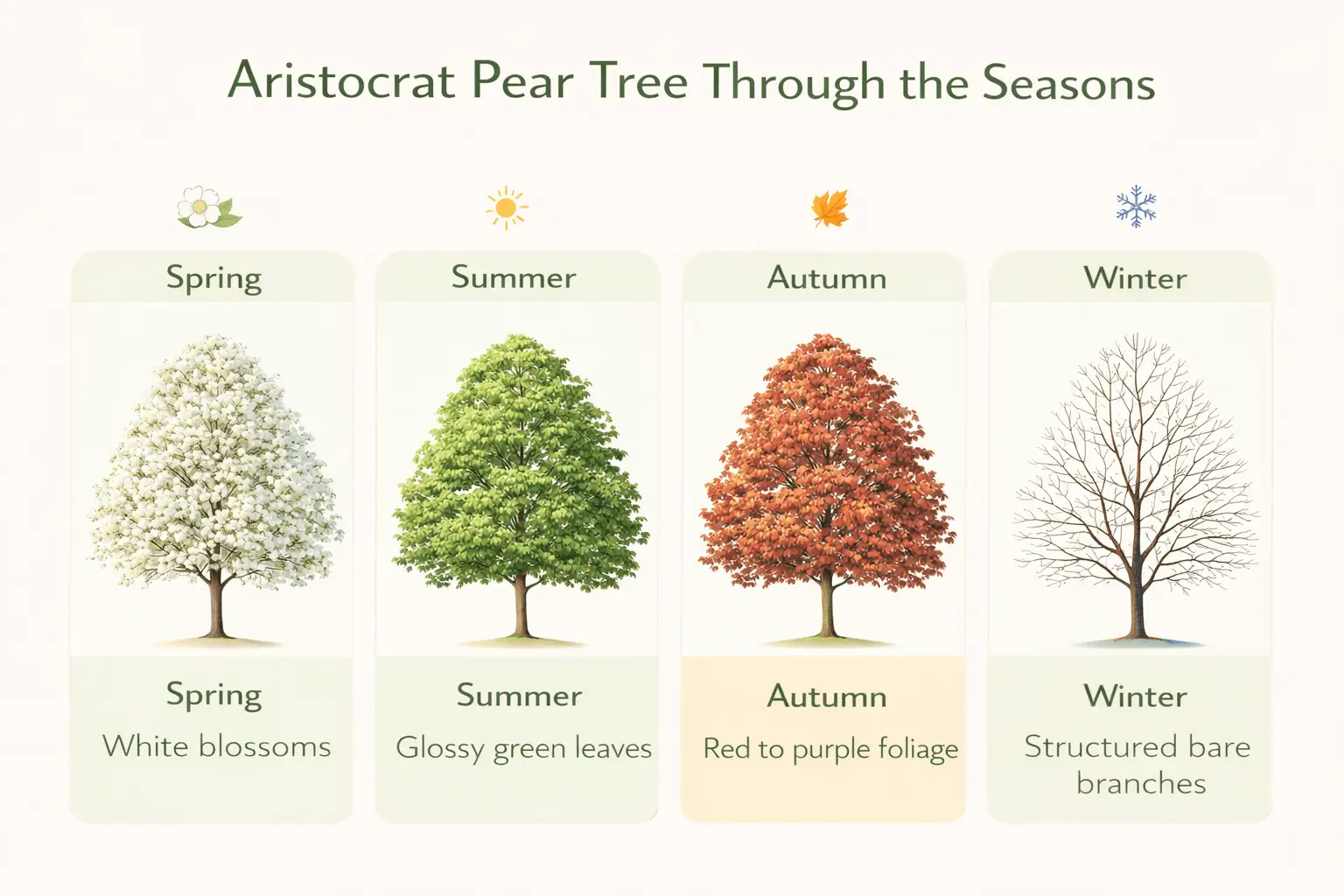
The aristocrat pear tree is recognized for its seasonal transformations and strong architectural form, making it suitable for ornamental use.
- Spring: Produces abundant white blossoms typical of flowering pear trees
- Summer: Displays glossy green foliage with dense canopy coverage
- Autumn: Leaves turn vibrant red to purple shades
- Winter: Reveals a well-balanced branching structure
Compared to Manchurian ornamental pear and evergreen ornamental pear trees, the aristocrat variety offers a more symmetrical form and stronger branch integrity.
Aristocrat Pear Tree Size, Height, and Growth Rate
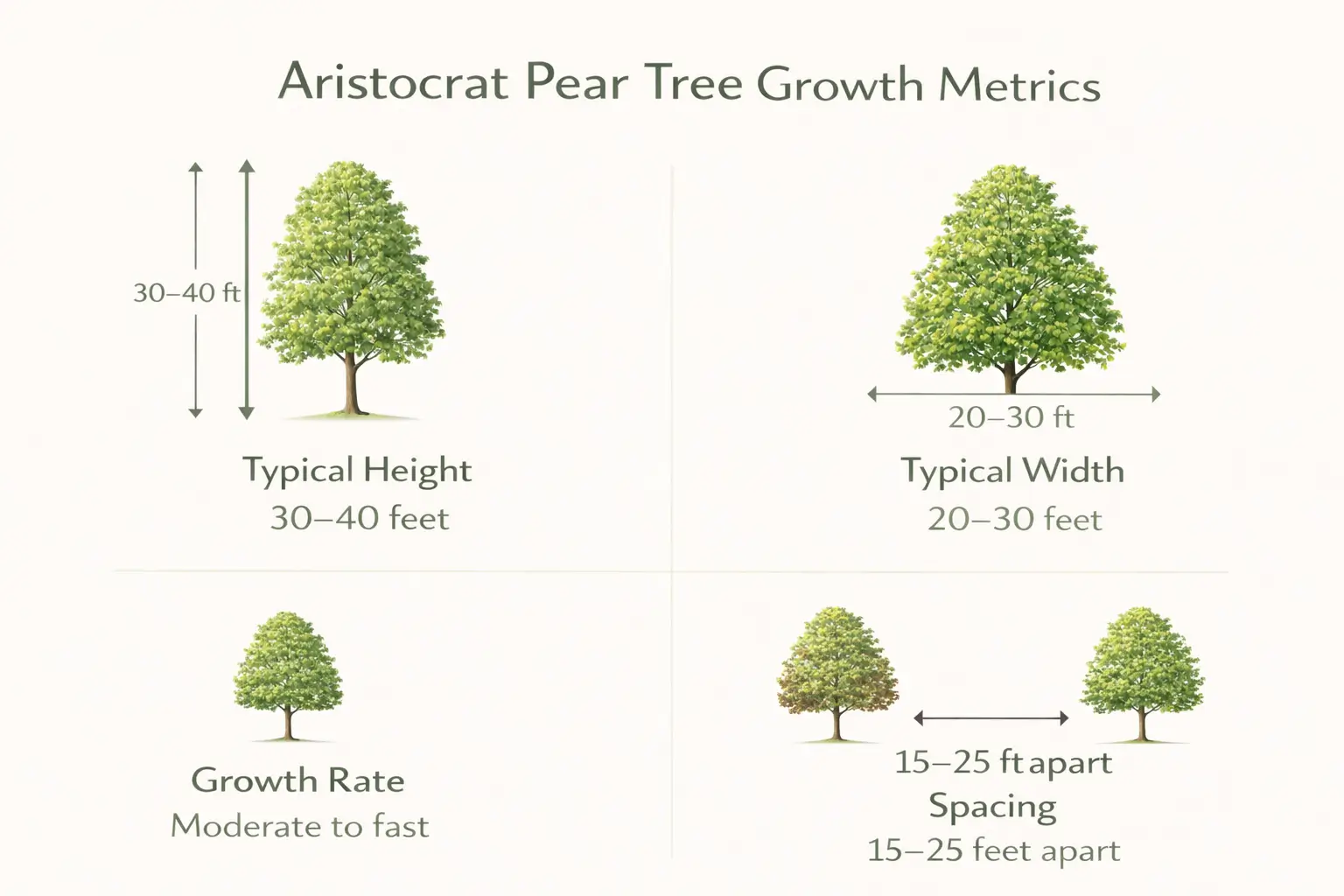
The aristocrat pear tree grows to a moderate-to-large size with a consistent growth pattern influenced by environmental conditions.
- Typical height: 30–40 feet
- Width: 20–30 feet
- Growth rate: Moderate to fast
Growth may accelerate in well-drained soil with adequate sunlight, while poor soil conditions can limit its development.
Planting Requirements and Spacing Guidelines
Proper planting ensures healthy growth and structural development of the tree.
- Full sun is preferred for optimal flowering and foliage
- Requires well-drained soil to prevent root issues
- Spacing: 15–25 feet apart to allow full canopy expansion
Adequate spacing improves airflow and reduces disease risk, especially in urban or dense plantings.
Care Guide for Aristocrat Pear Tree
The aristocrat pear tree requires minimal maintenance once established but benefits from consistent care during early growth stages.
- Watering: Moderate; becomes drought-tolerant after establishment
- Pruning: Minimal; focus on maintaining structure
- Soil: Adaptable to various soil types
- Climate: Performs best in temperate regions with urban tolerance
A common practice is to water deeply but infrequently to encourage strong root systems. For general plant care techniques that apply to both indoor and outdoor species, see our Guide to House Plants.
Aristocrat Pear Tree Pros and Cons
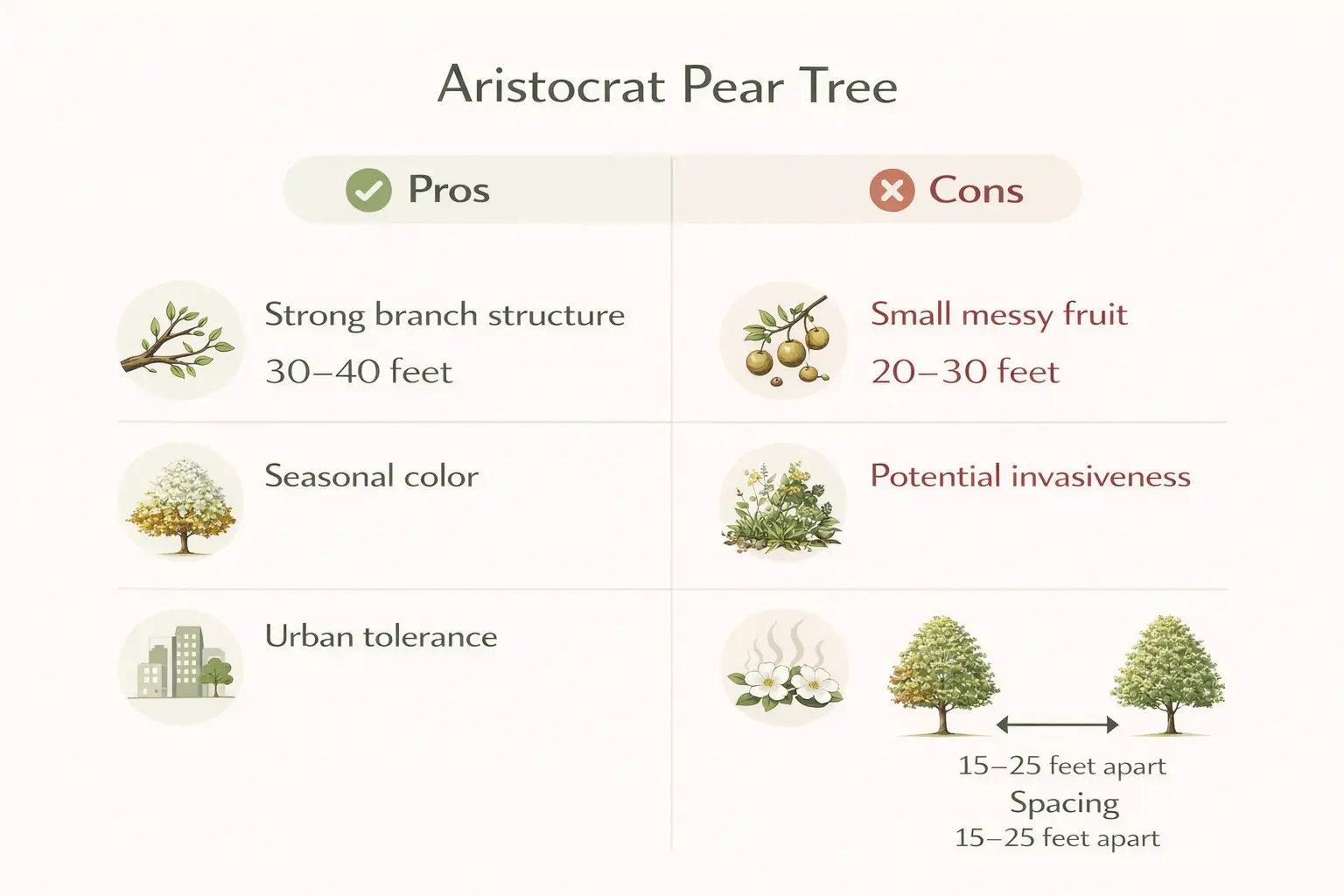
Understanding the advantages and limitations helps in making informed planting decisions.
Pros
- Strong branch structure, reducing breakage compared to Bradford pear
- Attractive seasonal color changes
- Tolerant of urban pollution and compacted soil
Cons
- Produces small, messy fruit
- Potential for invasive spread in some regions
- Flowers may emit an unpleasant odor
Common Problems and Troubleshooting
The aristocrat pear tree can experience several common issues related to disease, pests, and environmental stress.
- Fire blight risk
- Leaf spot diseases
- Weak root anchorage in poorly drained soil
Why Problems Occur and How to Fix Them
- Overwatering → root stress → improve soil drainage
- Poor airflow → disease development → ensure proper spacing
- Nutrient imbalance → weak growth → apply balanced fertilization
Regular monitoring helps prevent these problems from becoming severe.
Is the Aristocrat Pear Tree Invasive?
The aristocrat pear tree is considered less invasive than the Bradford pear tree but can still spread in certain environments. It produces viable seeds that may germinate outside cultivated areas.
In some regions, local regulations may restrict planting due to ecological concerns. Proper management and awareness of regional guidelines are recommended.
Lifespan and Long-Term Growth Behavior
The aristocrat pear tree typically lives between 20 and 40 years under suitable conditions. As it matures, its structural stability improves, and it requires less maintenance.
- Lifespan: 20–40 years
- Becomes structurally stronger over time
- Minimal pruning required in later stages
Comparison of Aristocrat Pear Tree vs Other Ornamental Pear Trees
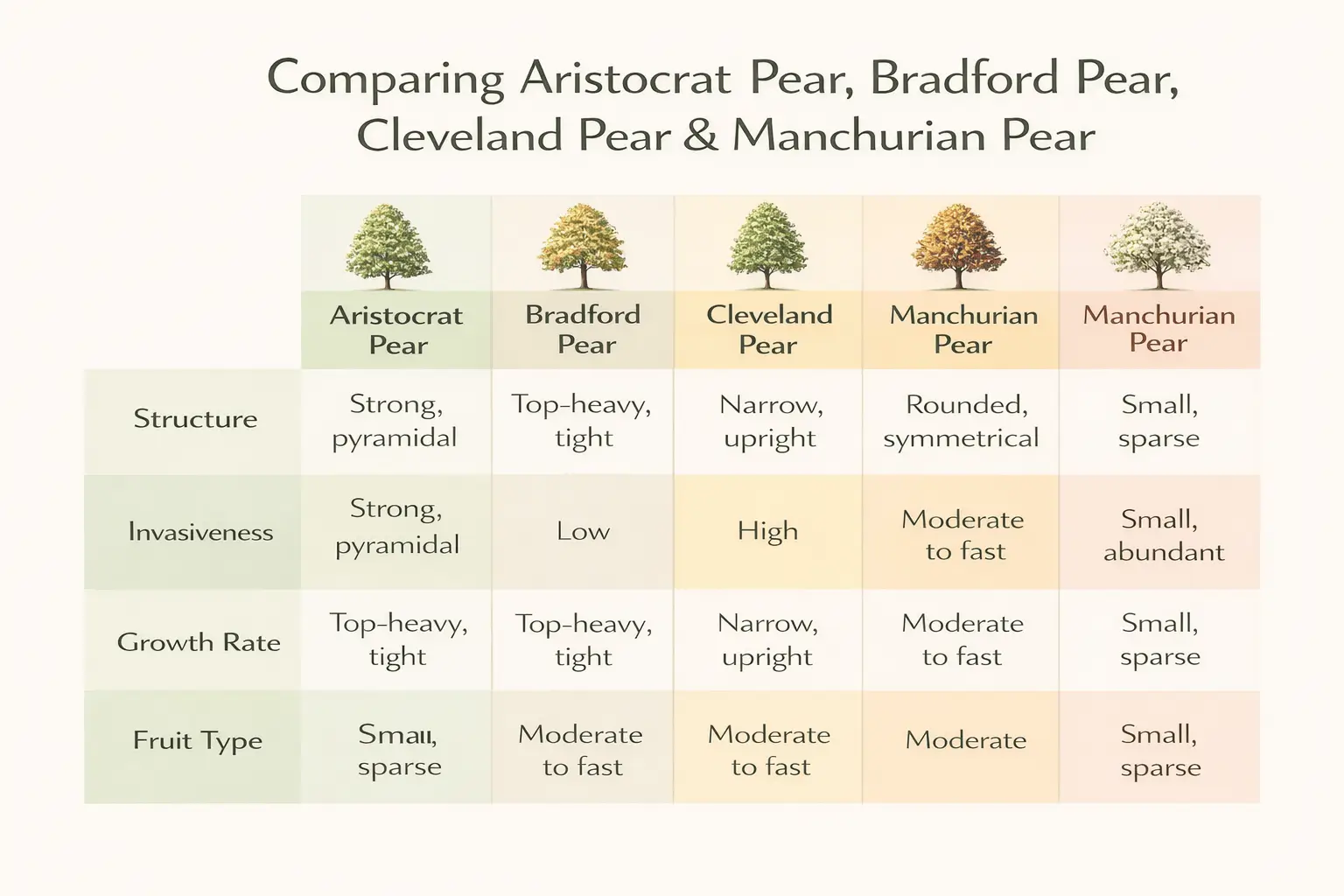
| Feature | Aristocrat Pear | Bradford Pear | Cleveland Pear | Manchurian Pear |
| Structure | Strong branching | Weak branching | Upright dense | Broader form |
| Invasiveness | Moderate | High | Low | Low |
| Growth rate | Moderate | Fast | Moderate | Slow |
| Fruit | Small, ornamental | Minimal | Minimal | Edible |
This comparison highlights the aristocrat pear tree’s balanced performance in structure and growth. For more information on non-fruiting ornamental pears, see our guide on Evergreen Pear Tree: Types, Growth, and Care Explained.
Types of Ornamental Pear Trees
There are several types of ornamental pear trees used in landscaping:
- Bradford ornamental pear
- Cleveland ornamental pear
- Evergreen ornamental pear tree
- Manchurian pear
Each type varies in structure, climate tolerance, and maintenance requirements.
Fruit Characteristics – Does Aristocrat Pear Produce Fruit?
Yes, the aristocrat pear tree produces small, hard fruit, but it is not edible. These fruits are primarily ornamental and do not have culinary value.
Unlike snow pear or Manchurian pear varieties, which produce edible fruit, this tree is cultivated solely for its aesthetic contribution to landscapes.
Environmental Limitations and Ideal Growing Conditions
The aristocrat pear tree performs best under specific environmental conditions.
- Sensitive to extreme cold temperatures
- Poor tolerance for waterlogged soil
- Thrives in temperate climates
- Exhibits strong tolerance to urban heat
Well-drained soil and adequate sunlight are essential for optimal growth.
Common Beginner Mistakes When Growing Ornamental Pear Trees
Avoiding common mistakes can significantly improve tree health and longevity.
- Planting trees too close together
- Ignoring mature size and canopy spread
- Overwatering young trees
- Selecting unsuitable varieties for local climate
Proper planning helps prevent long-term structural and maintenance issues.
Choosing the Best Ornamental Pear Tree
The best ornamental pear tree depends on landscape goals and environmental conditions.
- For strong structure → Aristocrat pear
- For compact spaces → Cleveland pear
- For colder climates → Manchurian pear
Selecting the appropriate variety ensures better performance and reduced maintenance.
How Aristocrat Pear Tree Fits into Landscaping and Garden Design
The aristocrat pear tree is widely used in structured landscape designs due to its uniform growth and visual appeal.
- Avenue planting along roads or pathways
- Feature tree in gardens or lawns
- Privacy lining in residential areas
Its predictable form makes it suitable for formal landscaping layouts. For inspiration on using feature trees in urban landscapes, check Feature Trees Brisbane: 7+ Smart Picks & Expert Tips.
Conclusion
The aristocrat pear tree is a reliable ornamental species valued for its strong structure, seasonal color variation, and adaptability. Compared to other ornamental pears like Bradford and Cleveland varieties, it offers improved branch strength and balanced growth. While it has minor drawbacks such as fruit drop and potential invasiveness, it remains a popular choice for urban and residential landscaping. Selecting the right ornamental pear tree depends on climate conditions, available space, and intended landscape use.
FAQs
1. What is the difference between Aristocrat pear tree and Bradford pear tree?
The aristocrat pear tree has stronger branch structure and better resistance to splitting, while the Bradford pear tree is more prone to structural failure due to weak branch angles.
2. Does the Aristocrat pear tree produce edible fruit?
No, the aristocrat pear tree produces small ornamental fruit that is not suitable for human consumption.
3. How fast does an Aristocrat pear tree grow?
It grows at a moderate to fast rate, depending on environmental conditions such as soil quality, sunlight, and watering.
4. Is the Aristocrat pear tree invasive?
It can spread in certain regions but is generally less invasive compared to the Bradford pear tree.
5. What is the ideal spacing for Aristocrat pear trees?
The recommended spacing is 15–25 feet apart to allow proper canopy development and airflow.