Introduction
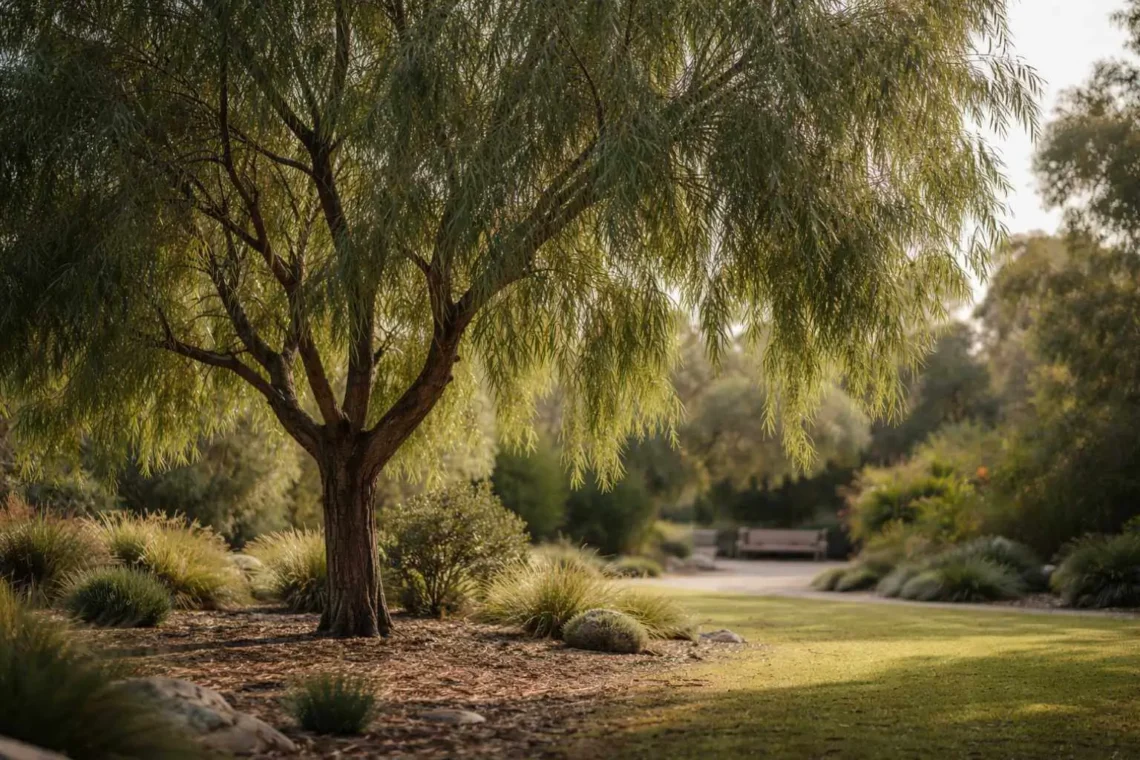
The Australian willow tree is a widely planted ornamental tree valued for its graceful appearance, reliable shade, and strong adaptability to Australian conditions. Although it closely resembles traditional willow trees, its true botanical identity is Geijera parviflora, a native species that naturally suits local climates and soils. Australian willow trees are commonly used in streetscapes, large gardens, and rural properties due to their resilience, drought tolerance, and minimal maintenance needs. Their soft, drooping foliage provides visual elegance without the environmental risks associated with introduced willows. As a native-looking and practical alternative, Australian willow continues to be a preferred choice for landscapers and homeowners across Australia.
What Is an Australian Willow Tree?
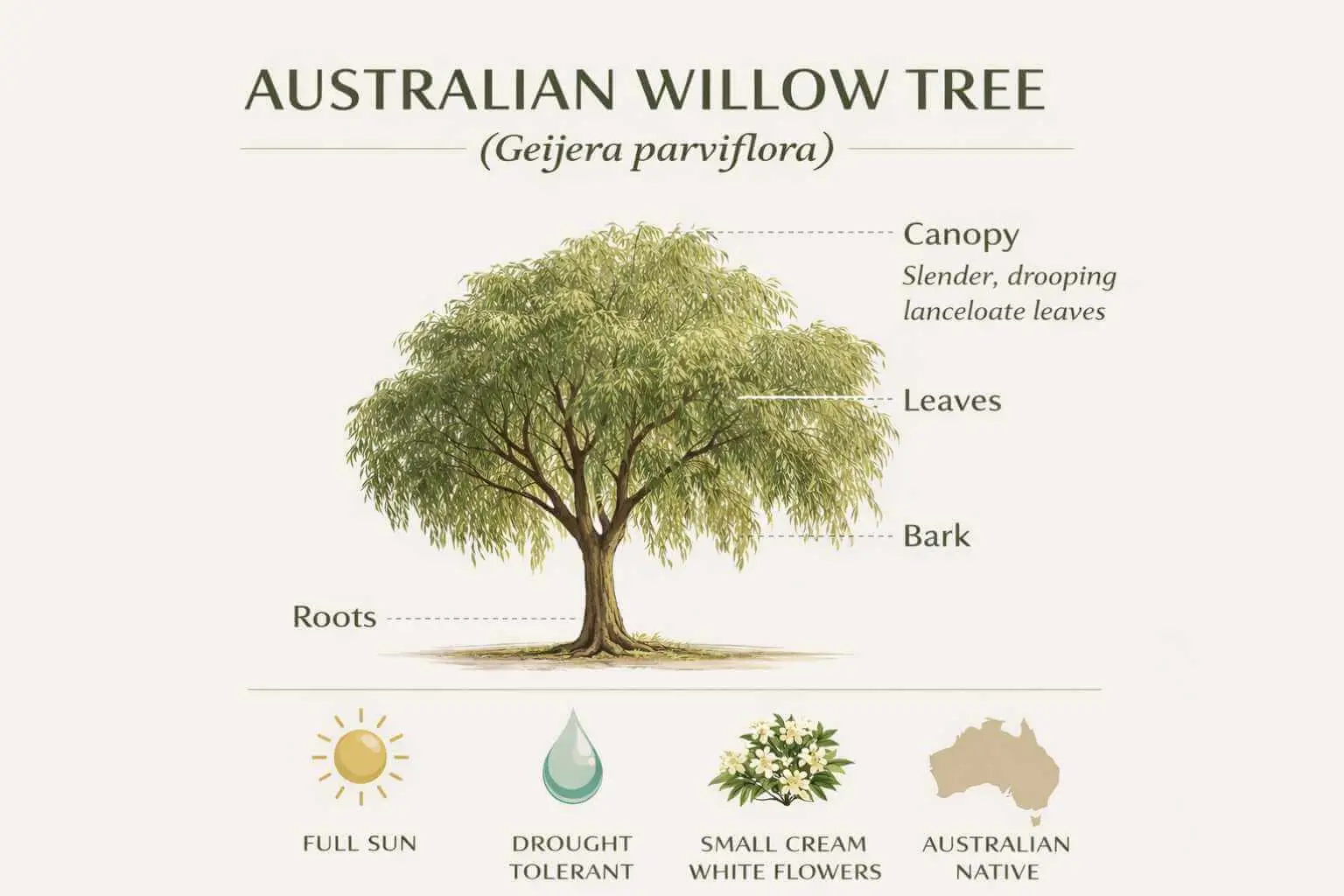
The Australian willow tree is a medium to large evergreen tree native to Australia, scientifically classified as Geijera parviflora. Despite its name, it is not a true willow but a native species that visually mimics willow-like foliage and form.
It is important to distinguish between:
- Australian willow (Geijera parviflora), a native, non-invasive tree
- True willow trees, which belong to the Salix genus and are mostly introduced species
- Australian-native lookalikes, selected for similar aesthetics but better environmental compatibility
The term australian willow geijera parviflora is commonly used to clarify this distinction in horticulture and landscaping contexts.
Geijera Parviflora – The True Australian Willow
The geijera tree is an evergreen species native to mainland Australia, naturally found in open woodlands and dry inland regions. Geijera parviflora typically develops a single or multi-trunk form with a dense, rounded to weeping canopy.
Leaves are narrow, glossy, and aromatic when crushed, giving the geijera parviflora australian willow its signature soft appearance. The bark is grey-brown, lightly textured, and becomes more rugged with age. Overall growth is upright with gently drooping branchlets, making geijera parviflora visually similar to traditional willows without their invasive traits.
Australian Willow vs Willow Trees in Australia
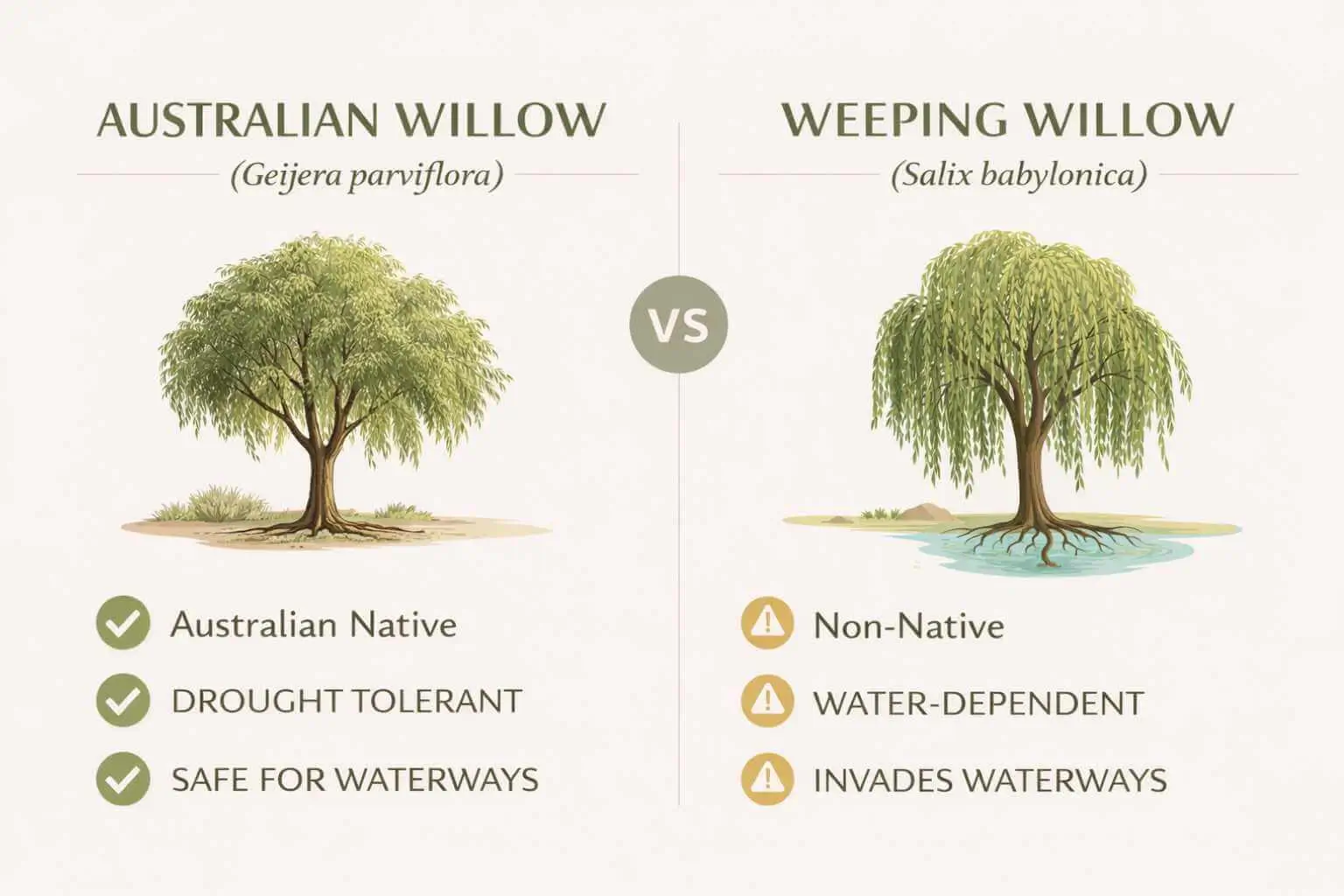
Australian willow differs significantly from traditional willow trees in Australia in terms of ecology and management. While Australian willow is native-adapted and environmentally stable, many introduced willow species can disrupt waterways and ecosystems.
Key differences include:
- Australian willow has controlled root systems
- Traditional willows often spread aggressively near water
- Native species support local biodiversity
Because of these impacts, many regions regulate or discourage the planting of non-native willows.
Weeping Willow Trees in Australia
Weeping willow trees in Australia refer mainly to Salix babylonica and related hybrids. These trees grow rapidly and favor moist environments, especially riverbanks. However, willow trees in Australia are known to alter water flow, outcompete native vegetation, and increase erosion risks.
As a result, willow trees Australia wide are subject to restrictions in several states. Weeping willow Australia plantings are often discouraged in favor of native alternatives like Australian willow.
Growth Rate and Mature Size of Australian Willow

The average Australian willow growth rate is moderate to fast, particularly during the first 10–15 years. Mature trees typically reach:
- Height: 8–15 metres
- Canopy spread: 6–10 metres
- Lifespan: 40–60 years
For landscape use, spacing of at least 6–8 metres from buildings and other large trees is recommended to allow full canopy development.
Australian Willow Leaves and Seasonal Appearance
Australian willow leaves are long, slender, and leathery with a glossy green surface. In warm climates, the tree remains fully evergreen. In cooler or drier regions, it may behave as semi-evergreen, shedding some leaves seasonally without becoming bare.
Pros and Cons of Australian Willow Trees

Understanding australian willow tree pros and cons helps homeowners make informed planting decisions.
Australian Willow Tree Pros
- Fast establishment in landscapes
- Excellent shade and privacy screening
- Low maintenance once established
- High drought tolerance and heat resilience
Australian Willow Tree Cons
- Roots may spread in confined spaces
- Not suitable for very small gardens or courtyards
Common Australian Willow Tree Problems
Common australian willow tree problems are generally manageable. Roots can interfere with paving if planted too close, and leaf drop may occur during drought or cold stress. The species shows strong resistance to most pests and diseases, making australian willow problems relatively uncommon compared to non-native trees.
How to Prevent Australian Willow Problems
- Choose an open planting location away from structures
- Apply controlled pruning to manage canopy size
- Maintain consistent watering during establishment
Australian Willow Trees for Sale – What to Know Before Buying
When purchasing Australian willow trees, select healthy specimens from reputable nurseries. Nursery-grown trees adapt better than recently transplanted large specimens. Root structure, trunk health, and leaf color are key indicators of quality.
Australian Willow Tree for Sale in Australia
Australian willow trees for sale are available as:
- Saplings (1–2 metres) at lower cost
- Advanced trees for instant impact
Pricing varies by size and maturity. Searching for australian willow tree for sale or australian willow for sale locally ensures climate-appropriate stock.
Australian Willow Bonsai – Is It Possible?
Australian willow bonsai cultivation is possible but less common than traditional willow bonsai. Growth habits are stronger and less flexible, requiring advanced pruning techniques. Compared to traditional willow species, Australian willow bonsai develops thicker trunks and denser foliage.
Australian Willow Bonsai Tree Care Basics
- Regular structural pruning to control shape
- Wide, shallow pots to manage root growth
- Controlled watering to moderate vigor
Proper care allows an australian willow bonsai tree to maintain proportion and health.
Australian Willow Hybrid Trees
Australian willow hybrid varieties are developed for rapid growth, windbreaks, and erosion control. These hybrids are commonly used in agricultural and land rehabilitation projects.
Austree Hybrid Willow Trees Explained
Austree willow trees are fast-growing hybrids bred for timber and environmental use. An austree hybrid willow tree differs from Geijera parviflora by having a stronger growth rate and different root structure. Austree hybrid willow and austree hybrid varieties are not ornamental substitutes but functional landscape tools.
Learn more: 5+ Powerful Benefits of the Brisbane Box Tree You’ll Love
Best Landscaping Uses for Australian Willow
Australian willow performs best as:
- A shade tree for large gardens
- Windbreaks and privacy screening
- Suitable for both urban parks and rural properties
Conclusion & Call to Action
Australian willow is a smart, native-friendly alternative to traditional willow trees, offering beauty, resilience, and environmental responsibility. Choose the right variety, purchase from reputable nurseries, and plan planting locations carefully to enjoy long-term benefits.
Learn more: 7+ Powerful Bamboo Plants Benefits for Modern Homes
FAQs – Australian Willow Tree
- Is Australian willow the same as a weeping willow?
No. Australian willow is Geijera parviflora, while weeping willow belongs to the Salix genus. - How fast does an Australian willow tree grow?
It has a moderate to fast growth rate, especially in the first decade. - Are Australian willow roots invasive?
Roots are generally well-behaved when planted with proper spacing. - Can Australian willow be grown as a bonsai?
Yes, but it requires advanced pruning and growth control. - Where can I buy Australian willow trees in Australia?
They are available through specialist native nurseries and landscape suppliers.