Introduction: What Are Banksia Tree Varieties?
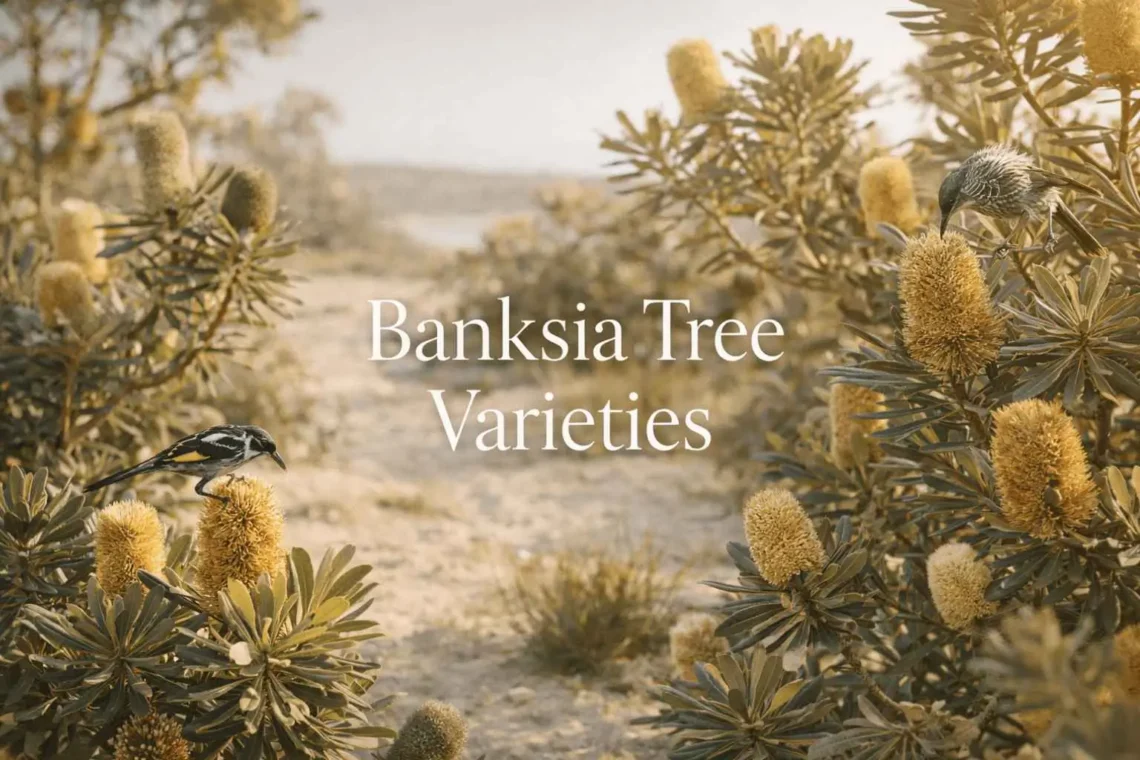
Banksia tree varieties refer to the diverse species within the genus Banksia, a group of native Australian plants known for their distinctive flowers and adaptability. These plants range from tall trees to compact shrubs and dwarf forms, offering wide versatility in landscaping and ecological use.
A banksia tree is typically defined by its woody structure, upright growth habit, and ability to reach significant heights compared to shrub varieties. Unlike smaller banksia shrubs, tree forms develop a central trunk and broader canopy, making them suitable for shade and structural planting. Banksia tree varieties belong to the genus Banksia, a group of native Australian plants widely recognized for their ecological importance.
The iconic banksia flower consists of cylindrical spikes made up of hundreds of tiny individual flowers, which later develop into woody cones. These plants play a vital ecological role by supporting pollinators and thriving in fire-prone environments.
Quick Summary
- Banksia tree varieties include tall trees, shrubs, and dwarf forms native to Australia
- Known for unique cylindrical banksia flowers and diverse banksia colours
- Popular types include Banksia integrifolia, Banksia serrata, and Banksia ericifolia
- Suitable for landscaping, coastal planting, and wildlife-friendly gardens
What Is a Banksia Tree and What Does It Look Like?
A banksia tree is a member of the Banksia genus, part of the Proteaceae family, commonly found across Australia. The banksia scientific name varies by species (e.g., Banksia integrifolia), but all share core botanical traits.
Banksia plants are easily recognized by their unique structure and textures. The overall appearance depends on the banksia plant type, but most feature elongated flower spikes, distinctive leaves, and woody seed cones.
Key Physical Features
- Flower spikes: Cone-like, cylindrical structures rich in nectar, attracting birds and insects
- Leaves: Vary widely—can be serrated, narrow, or leathery depending on species
- Seed pods: Woody cones that protect seeds and often open after exposure to fire
These visual traits define what a banksia tree looks like and make it highly recognizable in natural and landscaped environments.
Types of Banksia Trees and Species Overview
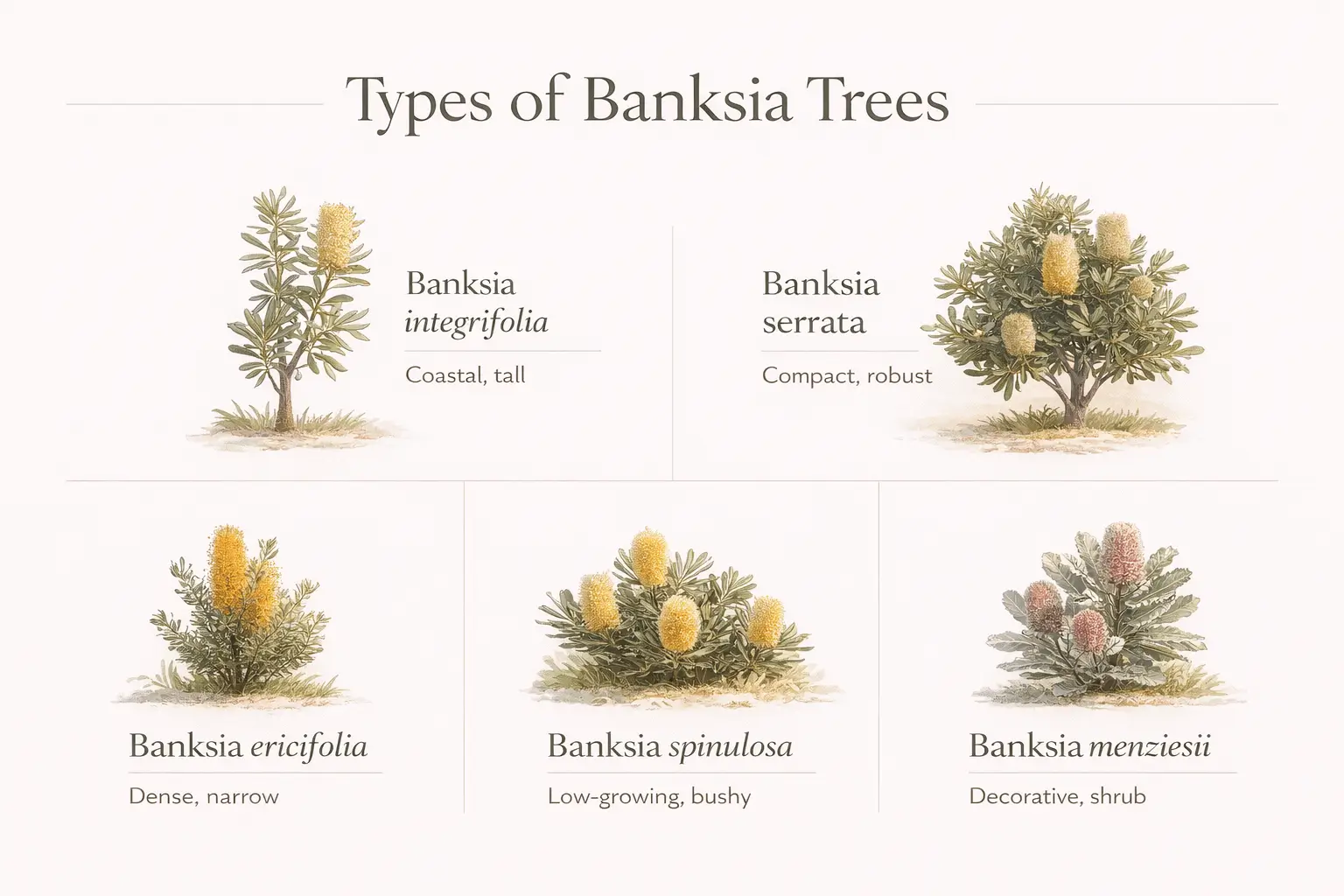
Types of banksia plants can be broadly divided into tree forms and shrub forms. Tree banksias typically grow taller with a single trunk, while shrubs remain compact and bushy.
There are many banksia species, each adapted to specific environments, from coastal dunes to inland woodlands.
Key Types of Banksia Trees
- Banksia integrifolia (Coastal Banksia): Known for salt tolerance and adaptability to coastal environments
- Banksia serrata (Old Man Banksia): Features rugged bark and large woody cones
- Banksia ericifolia (Heath Banksia): Produces vibrant orange and pink flowers
- Banksia spinulosa (Hairpin Banksia): Compact form with narrow leaves
- Banksia menziesii: Recognized for striking red and yellow flower spikes
These types of banksia trees differ in habitat, structure, and landscaping uses. Similar to other resilient coastal species like the Cupaniopsis anacardioides tree, many banksia types are specifically adapted to salt exposure and harsh seaside conditions.
Popular Banksia Tree Varieties (With Visual Characteristics)
| Variety | Common Name | Typical Height | Key Features |
| Banksia integrifolia | Coastal Banksia | Medium–tall | Salt-tolerant, glossy leaves |
| Banksia serrata | Old Man Banksia | Tall | Large cones, rugged bark |
| Banksia ericifolia | Heath Banksia | Medium | Bright orange/pink flowers |
| Banksia spinulosa | Hairpin Banksia | Small–medium | Narrow leaves, compact form |
| Banksia menziesii | Firewood Banksia | Medium | Red/yellow flower spikes |
Banksia tree varieties show clear visual differences in leaf shape, flower color, and growth habit. Flowering patterns vary by species, with some blooming seasonally and others producing long-lasting displays.
Dwarf and Small Banksia Tree Varieties
Dwarf banksia tree varieties are specially valued for compact landscapes and urban gardens. These smaller forms maintain the visual appeal of full-sized banksias but require less space.
Common Examples
- Banksia spinulosa dwarf red
- Banksia ericifolia ‘Little Eric’
- Banksia menziesii dwarf
Key Benefits
- Ideal for small gardens
- Lower maintenance requirements
- Suitable for container planting
Small banksia trees and miniature banksia varieties grow more slowly and remain manageable compared to full-sized trees.
Banksia Tree Size, Height, and Growth Patterns
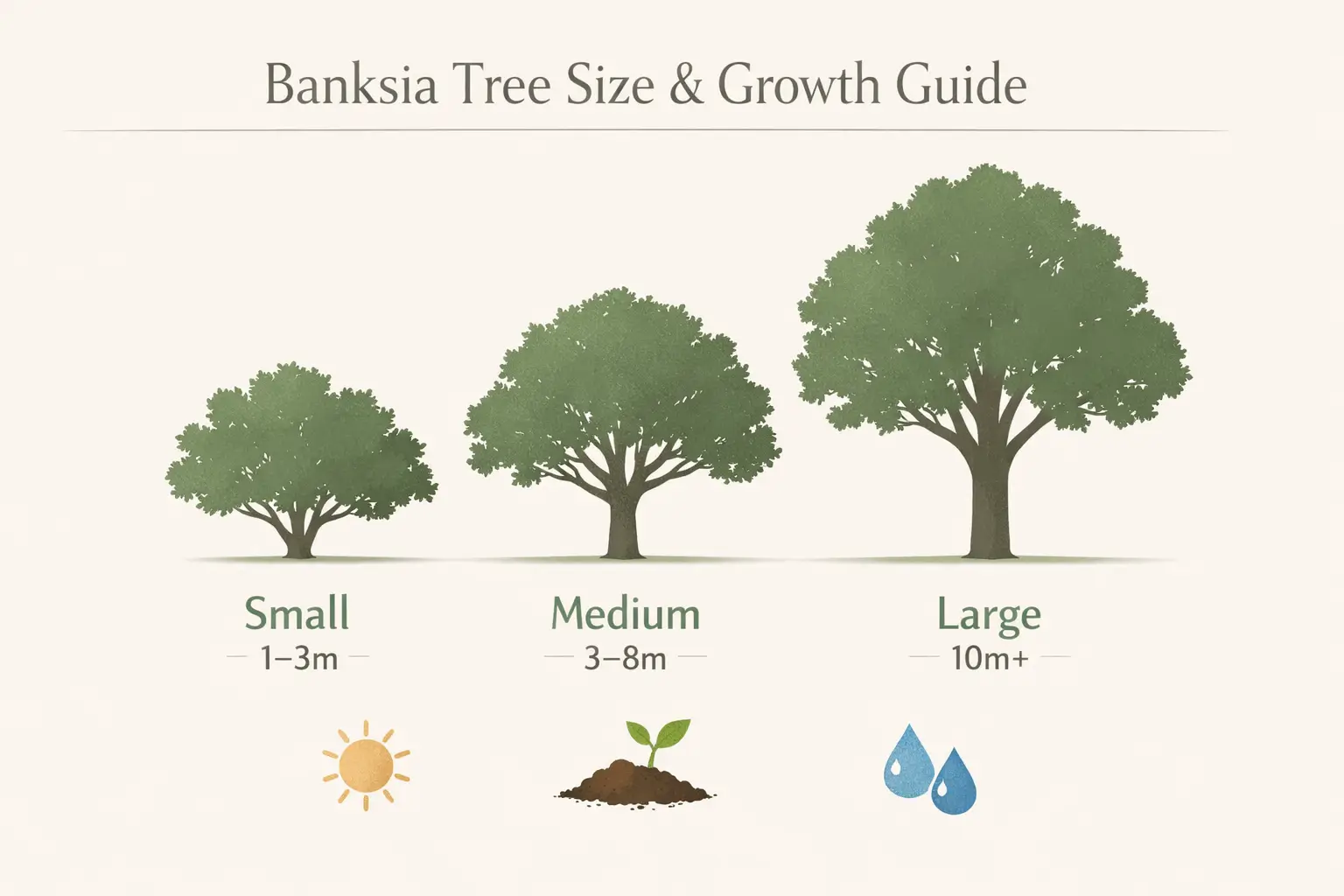
Banksia tree size varies widely depending on species and environmental conditions.
Typical Height Ranges
- Small varieties: 1–3 meters
- Medium varieties: 3–8 meters
- Large trees: 10+ meters
Factors Affecting Growth
- Soil quality and drainage
- Climate (coastal vs inland conditions)
- Water availability
For example, Banksia integrifolia height can reach over 10 meters in ideal conditions, while Banksia spinulosa height typically remains much lower.
Growth rates vary from slow to moderate depending on species and environment.
Banksia Flower Characteristics and Colours
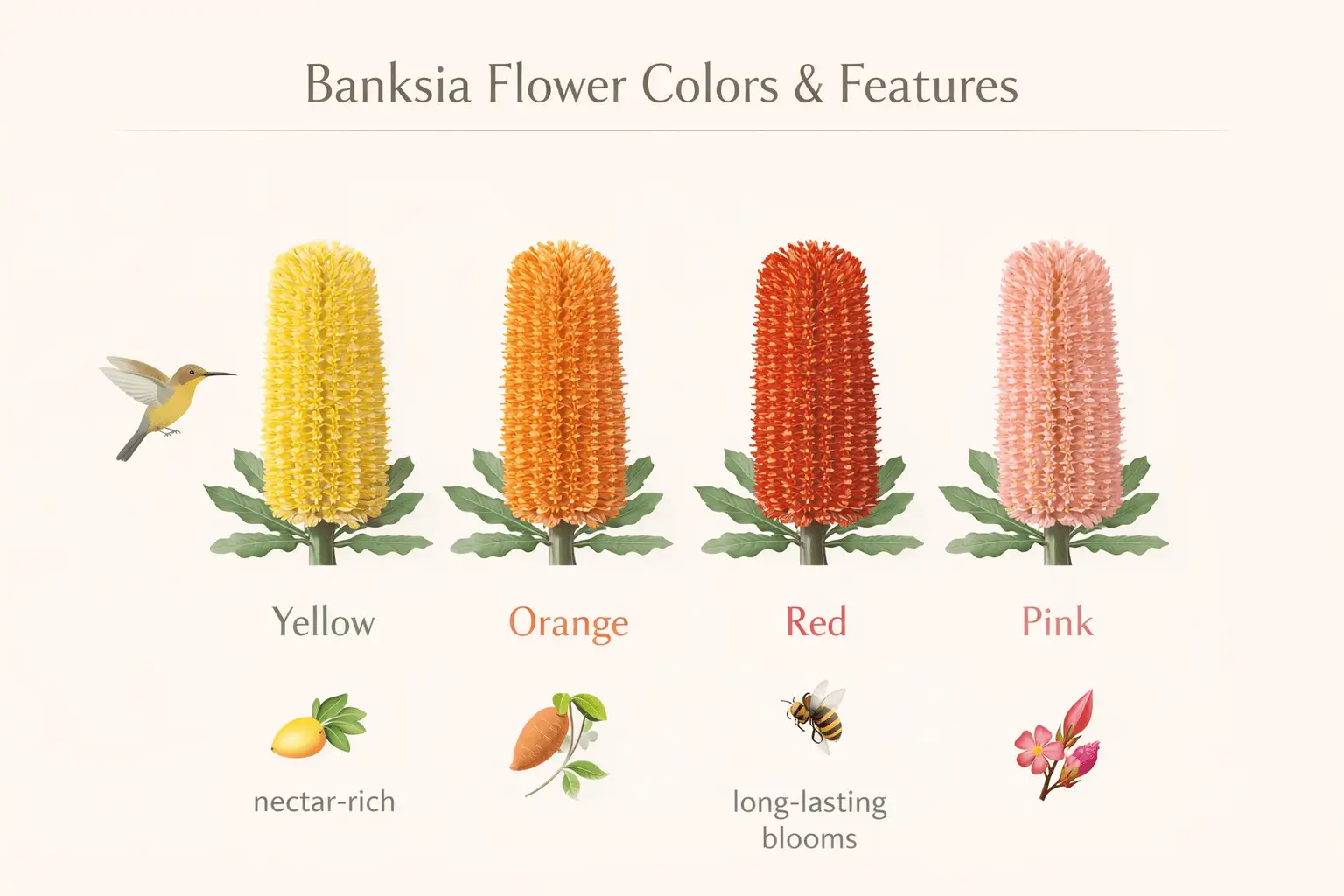
Banksia flowers are highly distinctive and play a key role in plant identification and ecological function.
Key Characteristics
- Cylindrical spikes made of hundreds of small flowers
- Nectar-rich, attracting birds, bees, and other pollinators
- Long-lasting blooms that persist on the plant
Common Banksia Colours
- Yellow
- Orange
- Red
- Pink
Banksia flower characteristics make them both visually striking and ecologically valuable, supporting biodiversity in native habitats.
Comparison: Tree vs Shrub Banksias
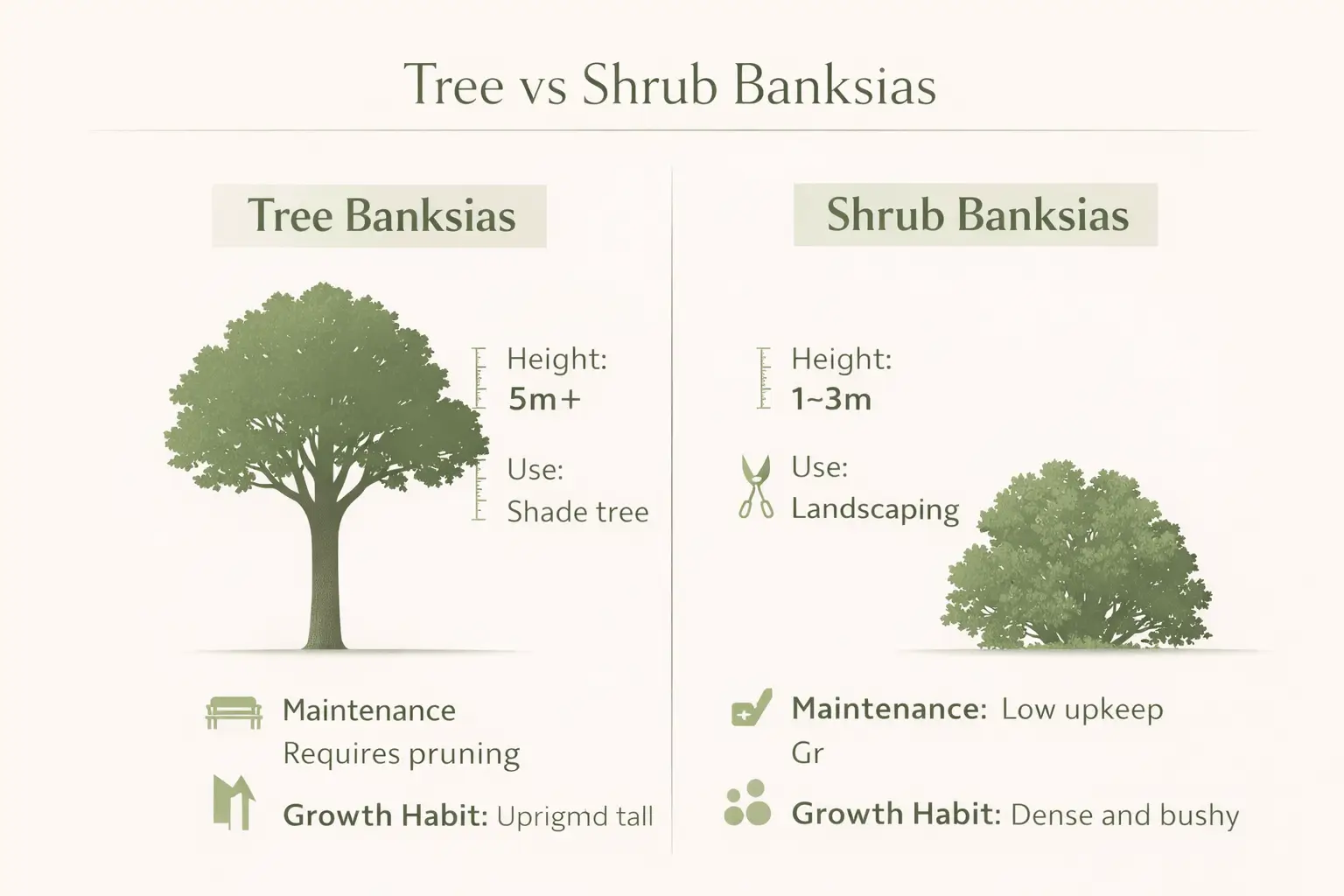
| Feature | Tree Banksias | Shrub Banksias |
| Height | Tall (5–15m) | Compact (1–4m) |
| Use | Shade, landscape anchors | Borders, small gardens |
| Maintenance | Moderate | Low |
| Growth Habit | Upright | Bushy/spreading |
Tree banksias provide structure and height, while banksia shrubs are better suited for smaller spaces and decorative planting. For low-maintenance landscapes, banksia trees can also be compared with other evergreen options that don’t shed leaves heavily throughout the year.
Environmental Adaptation and Growing Conditions
The Australian banksia tree thrives in harsh environments due to specialized adaptations.
Ideal Growing Conditions
- Well-drained sandy soil
- Full sun exposure
- High drought tolerance
- Fire-adapted survival mechanisms
Coastal banksia trees, such as Banksia integrifolia, are particularly suited to salty, windy environments, while inland species adapt to drier conditions.
Care Guide for Banksia Trees
Proper banksia plant care ensures healthy growth and long-term survival.
Essential Care Tips
- Watering: Minimal once established
- Soil: Low-phosphorus, well-drained soil
- Light: Full sun is essential
- Pruning: Light shaping only
- Fertilizer: Use low-phosphorus native plant fertilizer
Avoid overwatering or using rich fertilizers, as banksias are adapted to nutrient-poor soils.
Common Problems and Solutions
Banksia plants can face specific challenges if grown in unsuitable conditions.
Common Problems
- Yellowing leaves due to nutrient imbalance
- Root rot from poor drainage
- Slow growth caused by incompatible soil
Practical Solutions
- Improve soil drainage
- Avoid high-phosphorus fertilizers
- Select species suited to local climate
Preventative care is key to maintaining healthy banksia growth.
Special Features and Ecological Importance
Banksia trees have unique ecological traits that support native ecosystems.
Key Features
- Fire-adapted seed release mechanisms
- Support for pollinators like birds and insects
- Important role in Australian biodiversity
Banksia leaf features and woody cones contribute to their resilience and ecological significance.
Choosing the Right Banksia Variety for Your Garden
Selecting the right banksia variety depends on your garden conditions and goals.
Key Factors to Consider
- Available space
- Climate and soil type
- Preferred flower color
- Maintenance requirements
Understanding different types of banksias helps ensure the plant thrives in your specific environment. If your goal includes privacy or natural screening, combining banksias with other fast-growing options like tropical privacy plants can create a layered and functional landscape.
Conclusion
Banksia tree varieties offer remarkable diversity, ranging from tall structural trees to compact dwarf forms. Their adaptability to harsh environments, distinctive flowers, and ecological importance make them valuable in both natural and landscaped settings. Choosing the right banksia variety depends on space, climate, and desired aesthetic, ensuring long-term success and visual impact.
FAQs
What are the most common banksia tree varieties?
Common varieties include Banksia integrifolia, Banksia serrata, and Banksia ericifolia, each adapted to different environments and uses.
How tall do banksia trees grow?
Banksia trees can grow from small shrubs around 1 meter to large trees exceeding 10 meters, depending on species.
What colours do banksia flowers come in?
Banksia flowers appear in yellow, orange, red, and pink shades, varying by species.
Are banksia trees suitable for small gardens?
Yes, dwarf and small banksia varieties are well-suited for small gardens and container planting.
What conditions do banksia trees need to grow well?
They require full sun, well-drained soil, and low-phosphorus conditions similar to Australian native environments.
What makes banksia trees unique?
Their fire-adapted cones, distinctive flower spikes, and ecological role in supporting pollinators make them unique.