Introduction
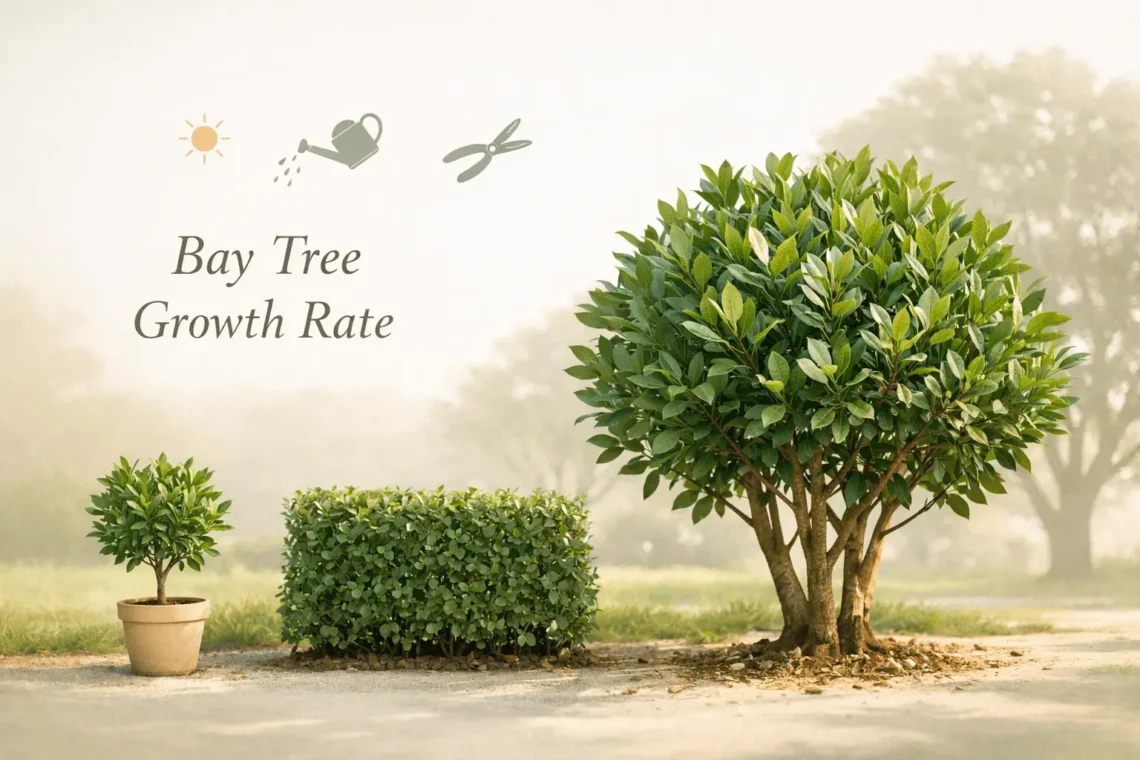
Bay tree growth rate refers to how quickly a Laurus nobilis develops in height, width, and structure under different conditions. Commonly known as the bay tree or bay laurel, it is widely used for hedging, topiary, and container gardening due to its evergreen nature and aromatic leaves.
Understanding the growth rate helps gardeners plan spacing, pruning, and long-term maintenance—whether growing a bay hedge, a bay tree in pot, or a mature landscape tree. Growth patterns vary significantly depending on environmental conditions, care practices, and planting method.
Quick Summary
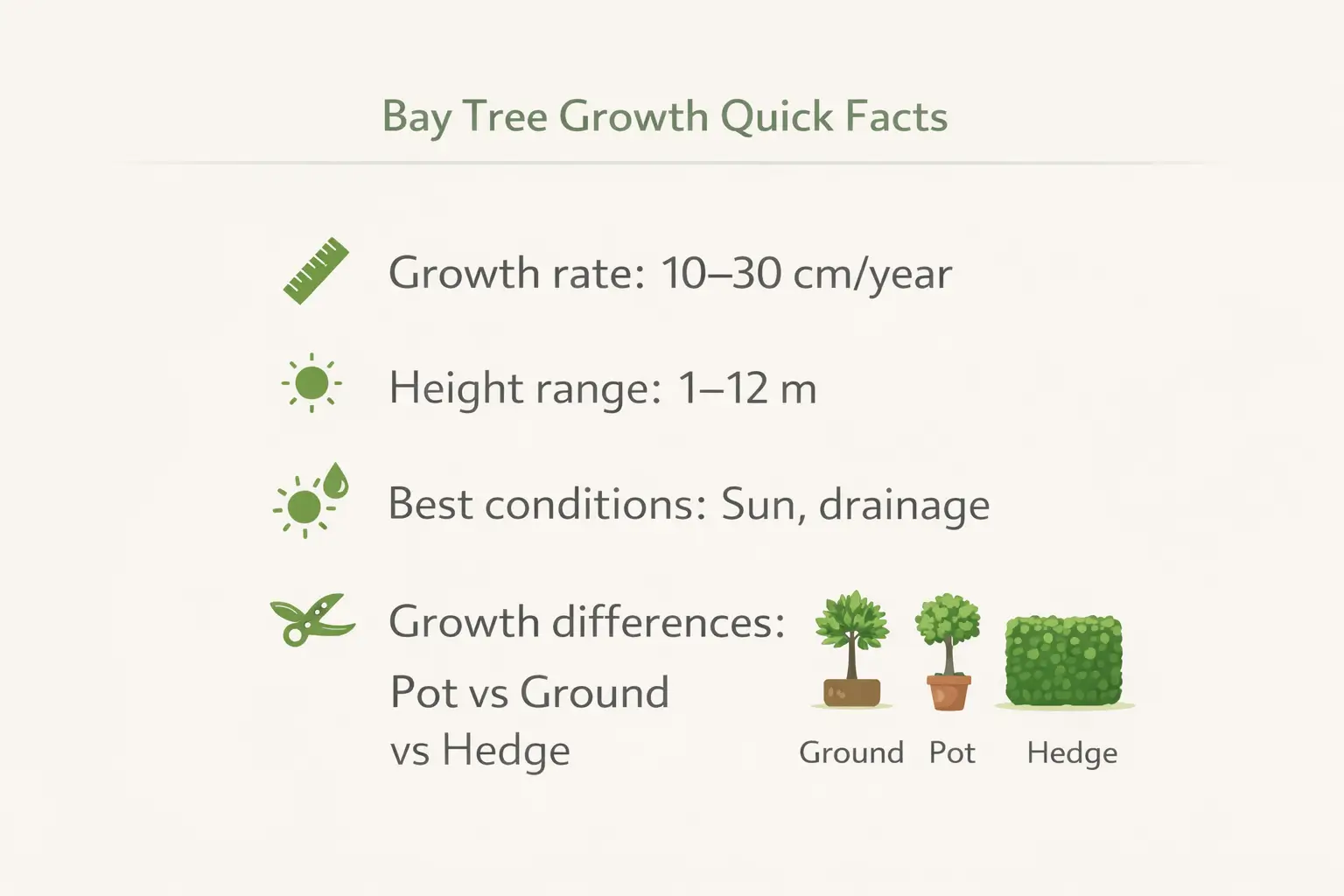
- Bay tree growth rate is typically slow to moderate (10–30 cm per year) depending on conditions
- Growth varies between ground planting, hedging, and pots
- Climate, pruning, and soil quality directly affect growth speed
- Different varieties like Miles Choice bay tree may grow at slightly different rates
What Is a Bay Tree (Laurus nobilis)?
Definition and Characteristics
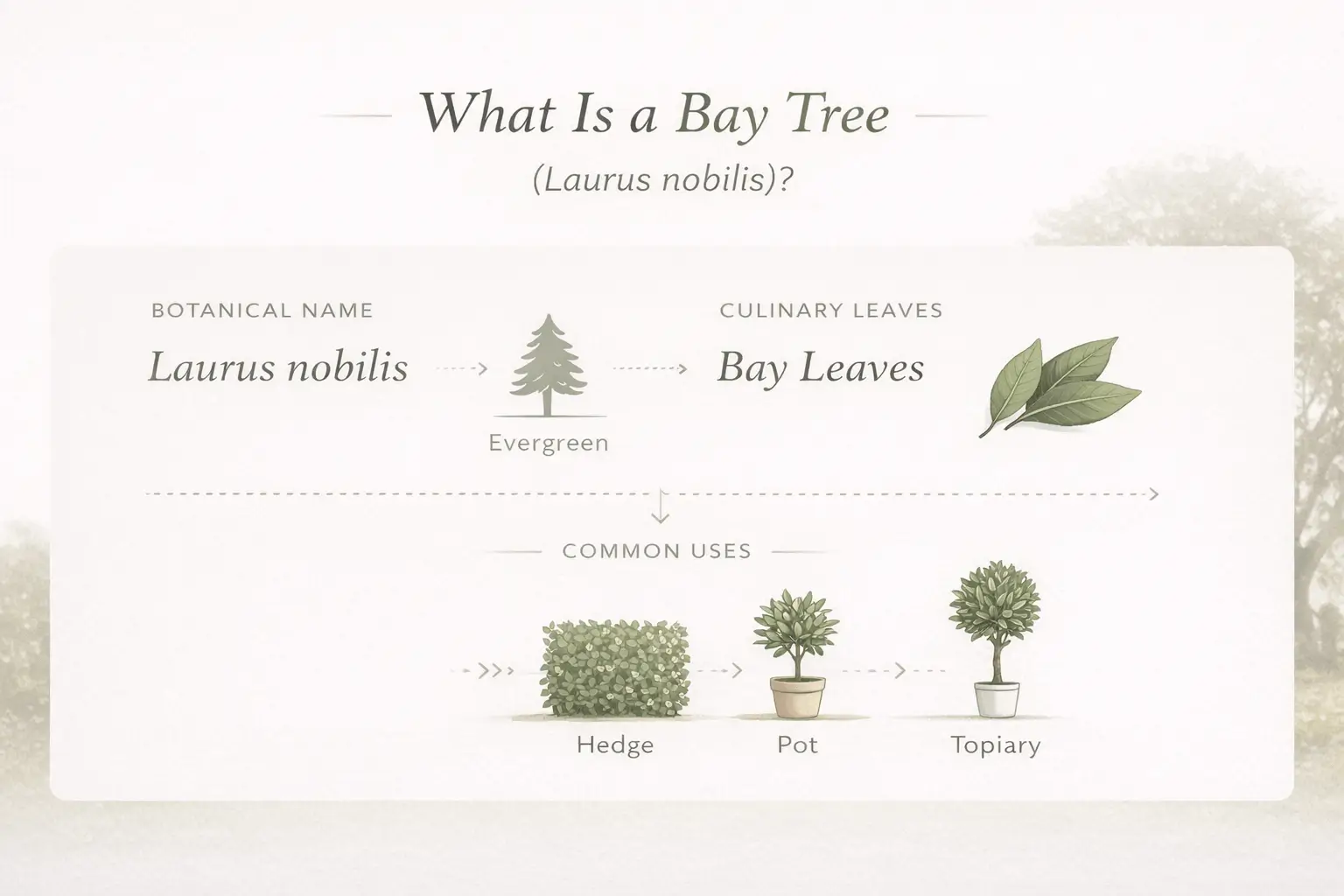
A bay tree (Laurus nobilis) is an evergreen aromatic plant belonging to the Lauraceae family, commonly grown for both culinary and ornamental purposes. It produces glossy, dark green leaves known as bay leaves, widely used in cooking.
The bay tree plant maintains year-round foliage, making it suitable for hedging and decorative shaping. It responds well to pruning, allowing gardeners to create structured forms such as topiary or bay tree hedges. A bay tree (Laurus nobilis) is an evergreen aromatic plant belonging to the Lauraceae family—learn more about its botanical classification on Wikipedia.
Common Uses
- Bay leaf hedge and ornamental hedging
- Container plants (bay trees in pots)
- Standard trees (e.g., Laurus nobilis standard forms)
This versatile plant is valued for its combination of functional culinary use and aesthetic landscaping appeal.
Bay Tree Growth Rate Explained
Average Growth Per Year
Bay trees typically grow 10–30 cm (4–12 inches) annually, depending on environmental conditions and care. Growth is slower during early establishment and becomes slightly more consistent as the plant matures.
Growth Phases
- Baby bay tree growth rate: Very slow during initial establishment as roots develop
- Mature bay trees: More stable growth, though still controlled and moderate
Factors Affecting Growth Speed
- Sunlight exposure: Full sun promotes better growth
- Soil drainage: Poor drainage slows root development
- Water availability: Consistent moisture supports steady growth
- Pruning frequency: Frequent trimming reduces vertical growth
Growth rate includes both height increase and canopy density, which is especially important for hedging applications.
Growth Rate by Growing Method (Ground vs Pots vs Hedge)
Bay Trees in Ground
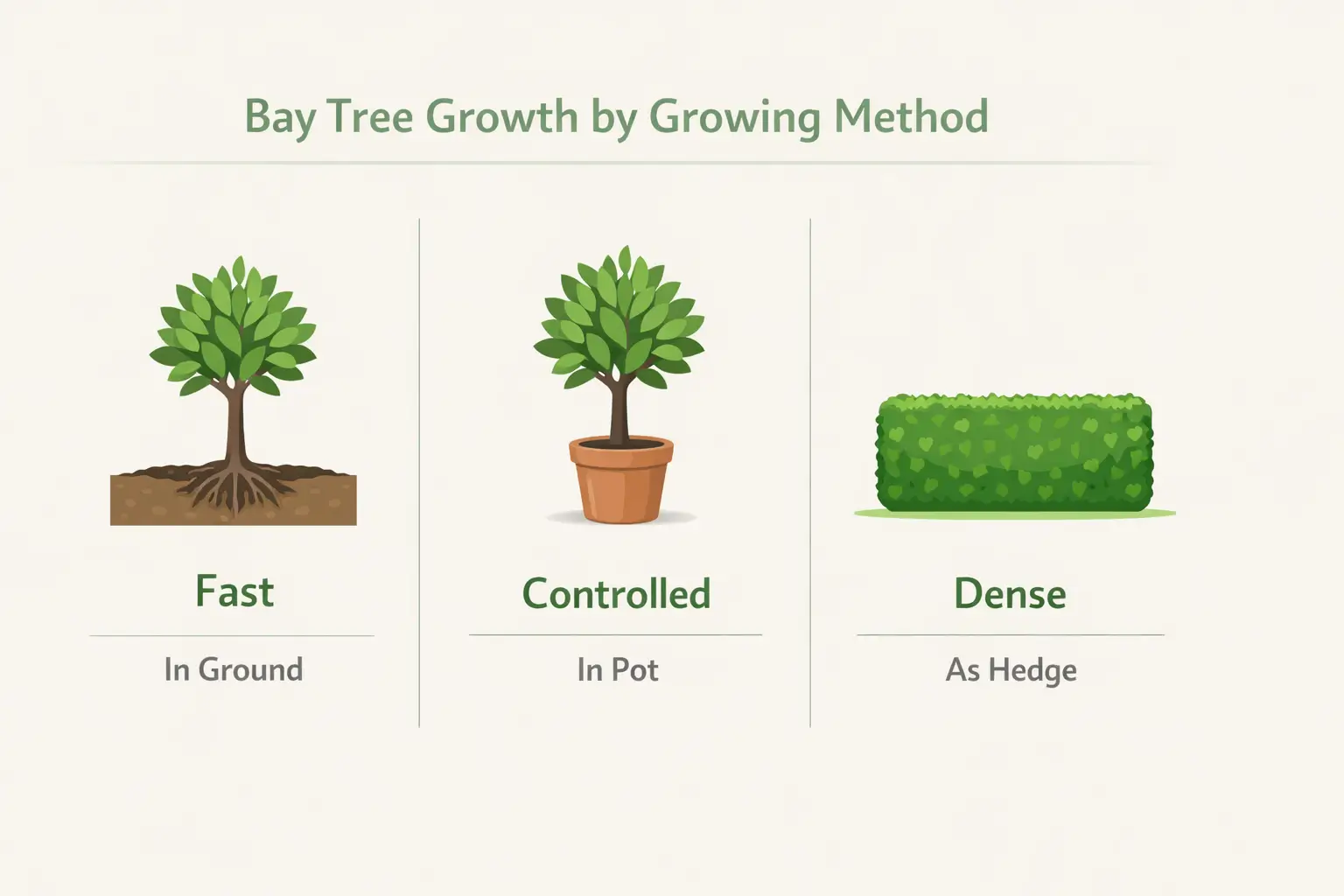
Bay trees planted in the ground grow faster due to unrestricted root expansion. This method supports achieving full bay tree height and a broader canopy.
Bay Trees in Pots
Bay trees in pots grow more slowly because root systems are confined. Regular repotting is required to maintain healthy growth and prevent stagnation.
Bay Tree Hedge Growth
Bay hedges grow densely but more slowly in height due to regular pruning. Trimming encourages lateral growth, resulting in a compact and structured hedge.
Bullet Breakdown
- Ground: Fastest growth
- Pots: Controlled growth
- Hedge: Dense but trimmed growth
For comparison, slow-growing structured hedges like bay trees are often paired with alternatives such as Boxwood Japonica, which is also widely used for formal hedging.
How Big Do Bay Trees Grow? (Size & Height Guide)
Typical Height and Spread
Bay trees can reach 5–12 meters in height when grown outdoors under ideal conditions. In containers, growth is limited to approximately 1–3 meters.
Controlled Growth Forms
- Bay tree hedge height varies depending on pruning practices
- Topiary forms remain compact and decorative
Bay Tree Size by Growing Method
| Growing Type | Average Height | Growth Speed |
| Ground-planted | 5–12 m | Moderate |
| Hedge | 1–4 m | Slow |
| Pot-grown | 1–3 m | Slow |
Miles Choice Bay Tree Growth Rate and Size
What Is Miles Choice Bay Tree?
The Miles Choice bay tree is a cultivated variety of Laurus nobilis known for its compact and uniform growth habit. It is commonly used in structured landscaping and hedging.
Growth Rate of Miles Choice Variety
This variety grows slightly slower than standard bay trees, making it easier to manage and shape.
Size Expectations
Miles Choice bay trees typically reach a smaller mature size, making them suitable for decorative planting and controlled hedge designs.
Comparison: Bay Tree Growth vs Other Bay-Type Trees
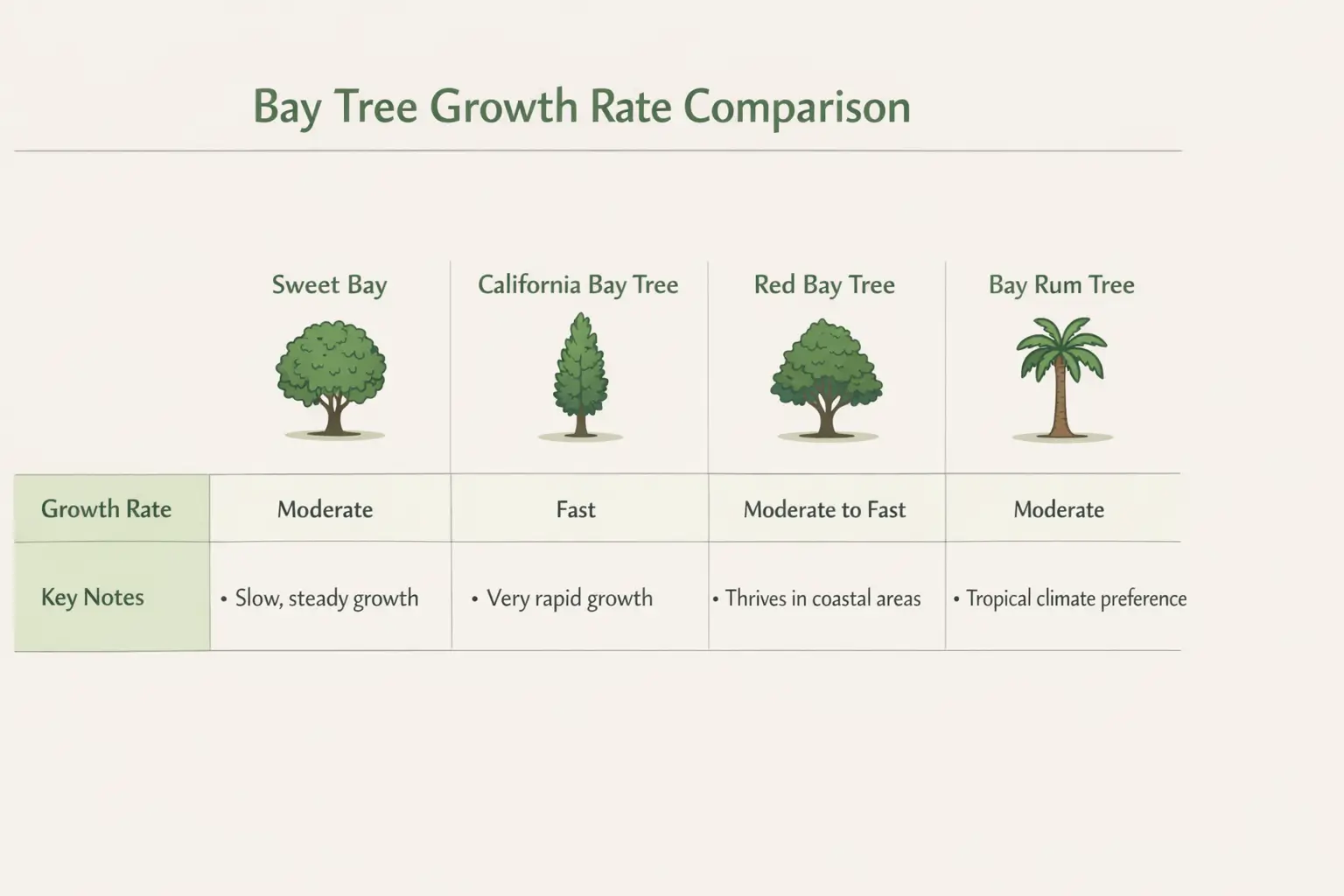
Growth Rate Differences
| Tree Type | Growth Rate | Notes |
| Sweet bay (Laurus nobilis) | Slow–moderate | Most common |
| California bay tree | Faster | Larger tree |
| Red bay tree | Moderate | Native species |
| Bay rum tree | Moderate | Tropical |
Bullet Highlights
- Not all “bay trees” grow at the same rate
- Species differences significantly affect growth patterns
You can compare bay tree growth with other hedge plants, such as ficus varieties—see this detailed guide on Ficus Flash Growth Rate to understand faster-growing hedge alternatives.
Ideal Growing Conditions for Faster Growth
Environmental Requirements
Bay trees grow best in:
- Full sun to partial shade
- Well-drained soil
- Mild, temperate climates
Care Factors
- Regular watering without waterlogging
- Balanced fertilization during growing season
- Protection from frost, especially in colder regions
Proper conditions directly influence growth speed and overall plant health.
Common Problems Affecting Growth
Slow Growth or Stunted Plants
Slow growth in bay trees is usually caused by poor soil, limited nutrients, or restricted roots.
Why it happens:
- Poor soil drainage
- Lack of nutrients
- Root restriction in pots
How to fix:
- Improve soil quality with organic matter
- Repot container plants regularly
- Adjust watering practices
Root Concerns: Do Bay Tree Roots Cause Damage?
Bay tree roots are generally non-invasive and do not typically cause structural damage when planted with adequate spacing.
Over-Pruning Issues
Excessive pruning reduces vertical growth and results in dense but slow-growing hedges.
Beginner Mistakes and Growth Limitations
Bay trees grow slowly by nature, and unrealistic expectations often lead to common mistakes.
- Planting in heavy clay soil restricts root development
- Overwatering young plants causes root stress
- Expecting rapid growth similar to fast-growing trees
- Ignoring the impact of pruning on height
Understanding these limitations helps set realistic expectations for growth.
Bay Tree Care Guide for Healthy Growth
-
Watering
Water moderately, allowing soil to dry slightly between watering. Avoid soggy conditions.
-
Light
Bay trees prefer bright, indirect light to full sun exposure.
-
Soil
Use well-draining soil with a slightly acidic to neutral pH.
-
Pruning
Regular trimming maintains shape and encourages dense growth for hedges.
-
Climate
Bay trees thrive in mild climates and should be protected from frost.
Conclusion
Bay tree growth rate is naturally slow to moderate, making it ideal for controlled landscaping, hedging, and container gardening. Whether grown in the ground, as a hedge, or in pots, Laurus nobilis provides consistent, manageable growth. Understanding its growth patterns, environmental needs, and care requirements ensures healthier plants and more effective long-term planning.
FAQs
1. How fast does a bay tree grow each year?
Bay trees typically grow 10–30 cm per year depending on environmental conditions and care practices.
2. Why is my bay tree growing so slowly?
Slow growth is often caused by poor soil quality, limited sunlight, or restricted root space in containers.
3. Can bay trees grow quickly in pots?
No, growth is slower in pots due to limited root space, but it can be improved with proper care and repotting.
4. What is the growth rate of Miles Choice bay tree?
Miles Choice bay tree grows slightly slower than standard varieties, making it ideal for compact and controlled growth.
5. How tall can a bay tree grow if not pruned?
A bay tree can reach up to 10–12 meters when grown freely in suitable outdoor conditions.
6. Do bay tree roots cause damage to structures?
Bay tree roots are generally non-invasive and rarely cause structural damage when properly spaced.