Introduction
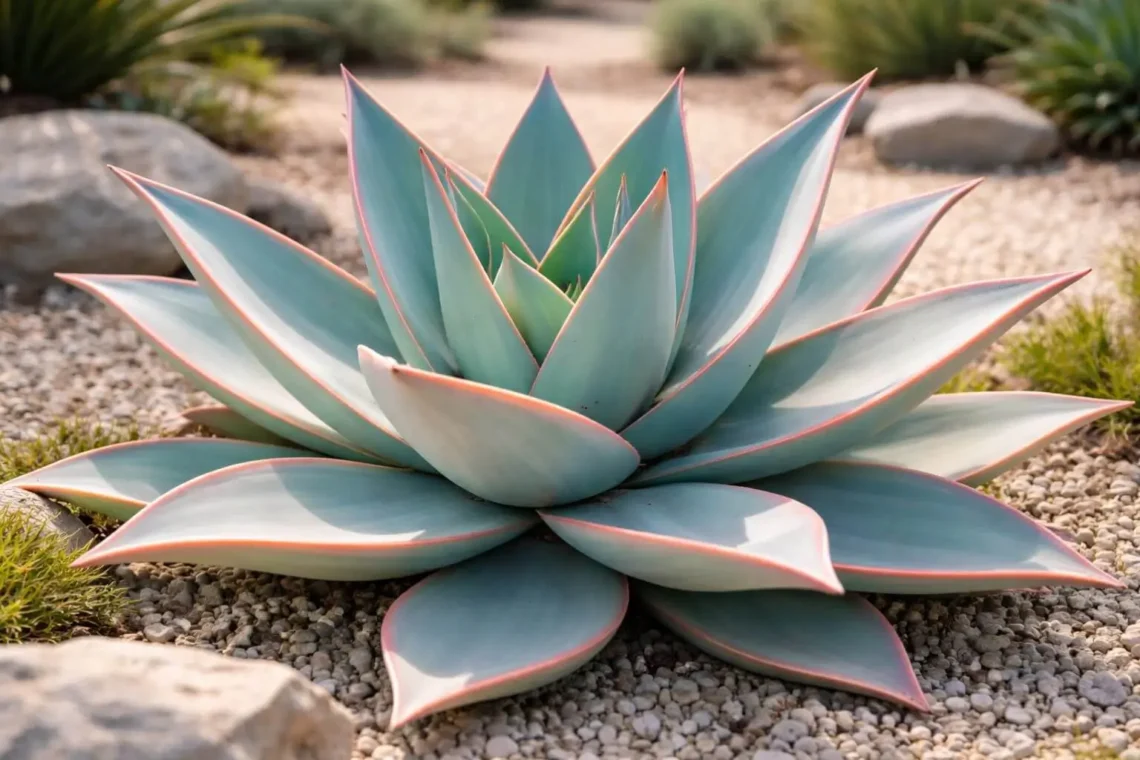
Coral aloe is a distinctive ornamental succulent valued for its smooth leaves, soft coloration, and reliable garden performance. Botanically known as Aloe striata, coral aloe stands apart from spiny aloe types due to its clean leaf margins and pastel tones. This aloe striata (coral aloe) is widely used in drought-tolerant landscapes, containers, and rock gardens. This guide focuses on coral aloe identification, physical traits, care requirements, varieties, growth behavior, and practical uses. The information is structured for clear understanding, fast reference, and AI-ready extraction, making it useful for gardeners, landscapers, and plant researchers seeking accurate coral aloe insights.
What Is Coral Aloe?
Botanical Overview of Aloe Striata
Coral aloe belongs to the Asphodelaceae family and the genus Aloe. It is native to South Africa, where it grows on rocky slopes in mild, semi-arid climates. Aloe striata differs from many aloe species by having smooth-edged leaves without teeth or spines. Its adaptation to well-drained soils and seasonal rainfall defines its growth pattern and care needs.
Common Names and Identification
Coral aloe and striata aloe refer to the same species. The term coral aloe striata emphasizes its pinkish leaf margins. It is sometimes confused with “coral aloe vera,” but it is botanically unrelated to aloe vera and does not share the same medicinal gel properties.
Physical Characteristics of Coral Aloe
Leaf Color, Shape, and Texture
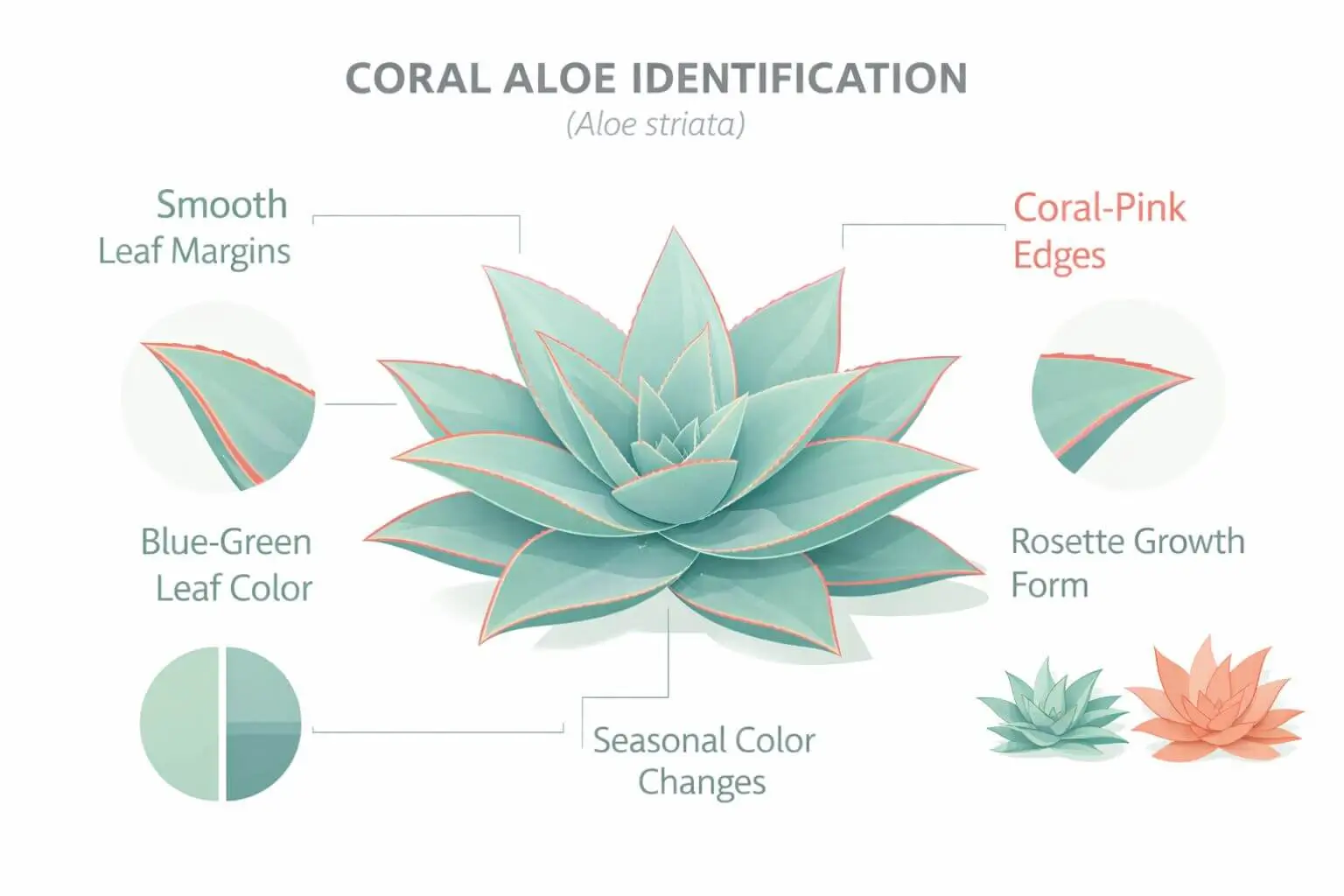
Coral aloe features broad, flattened leaves arranged in a rosette.
- Leaf color ranges from blue-green to gray-green
- Margins often show coral, pink, or red tones
- Leaf surfaces are smooth and waxy
Seasonal stress from sun or cool temperatures intensifies coloration.
Coral Aloe Size and Growth Habit
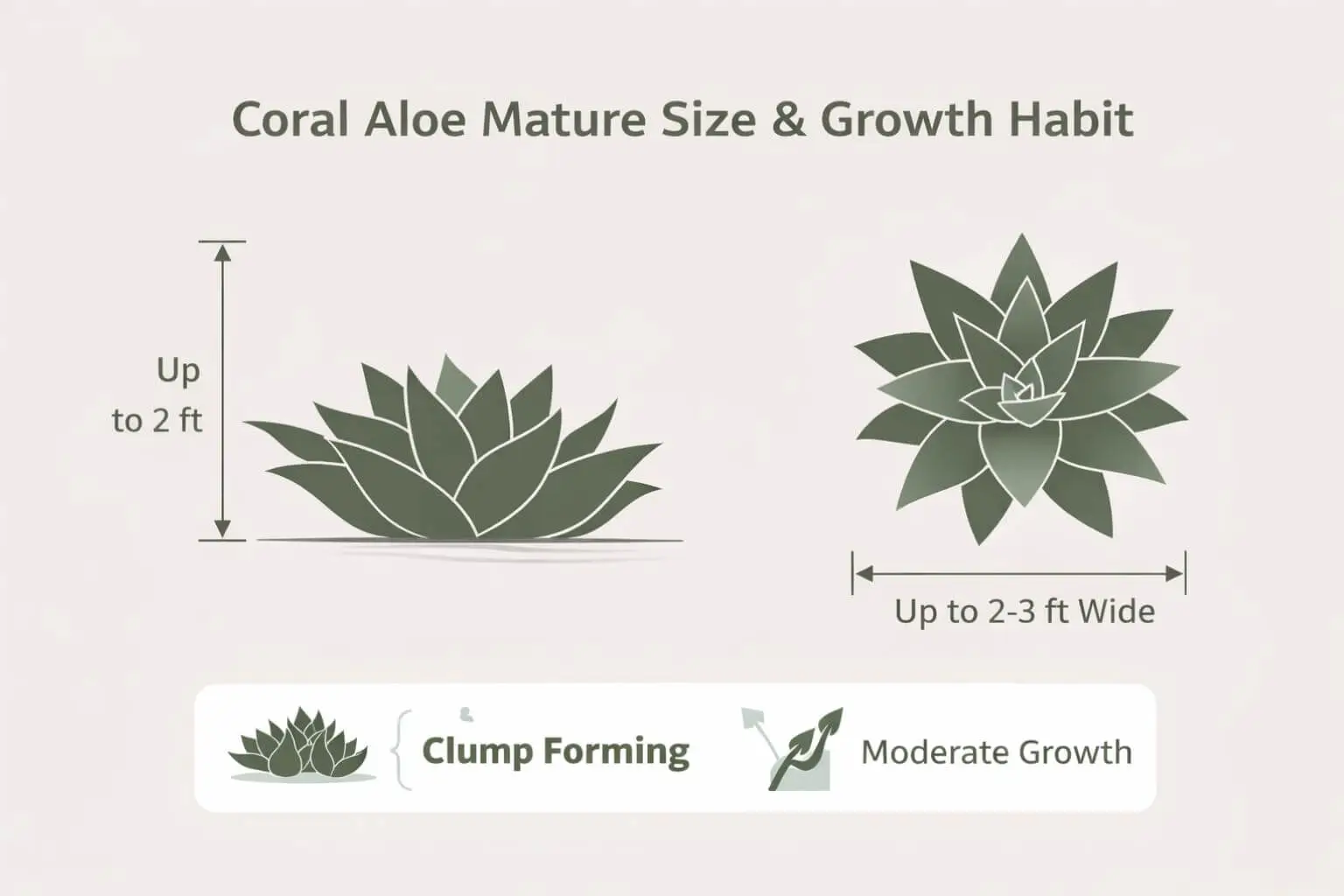
A mature coral aloe size typically reaches:
- Height: 12–18 inches
- Spread: up to 24 inches
Growth is moderate and clump-forming. It is often grouped with blue aloe plant types and visually complements other blue aloe plants in landscape designs.
Coral Aloe Flowers and Blooming Cycle
Coral Aloe Flower Description
The coral aloe flower appears on tall, upright stalks.
- Color: coral-pink to red-orange
- Shape: tubular
- Stalk height: up to 3 feet
Flowers attract bees and other pollinators.
When and How Coral Aloe Blooms
Coral aloe blooms primarily in late winter to early spring. Flowering depends on sunlight exposure, plant maturity, and seasonal temperature variation. Compared contextually, the blue elf aloe flower is smaller and produced on a more compact plant.
Coral Aloe Care Requirements
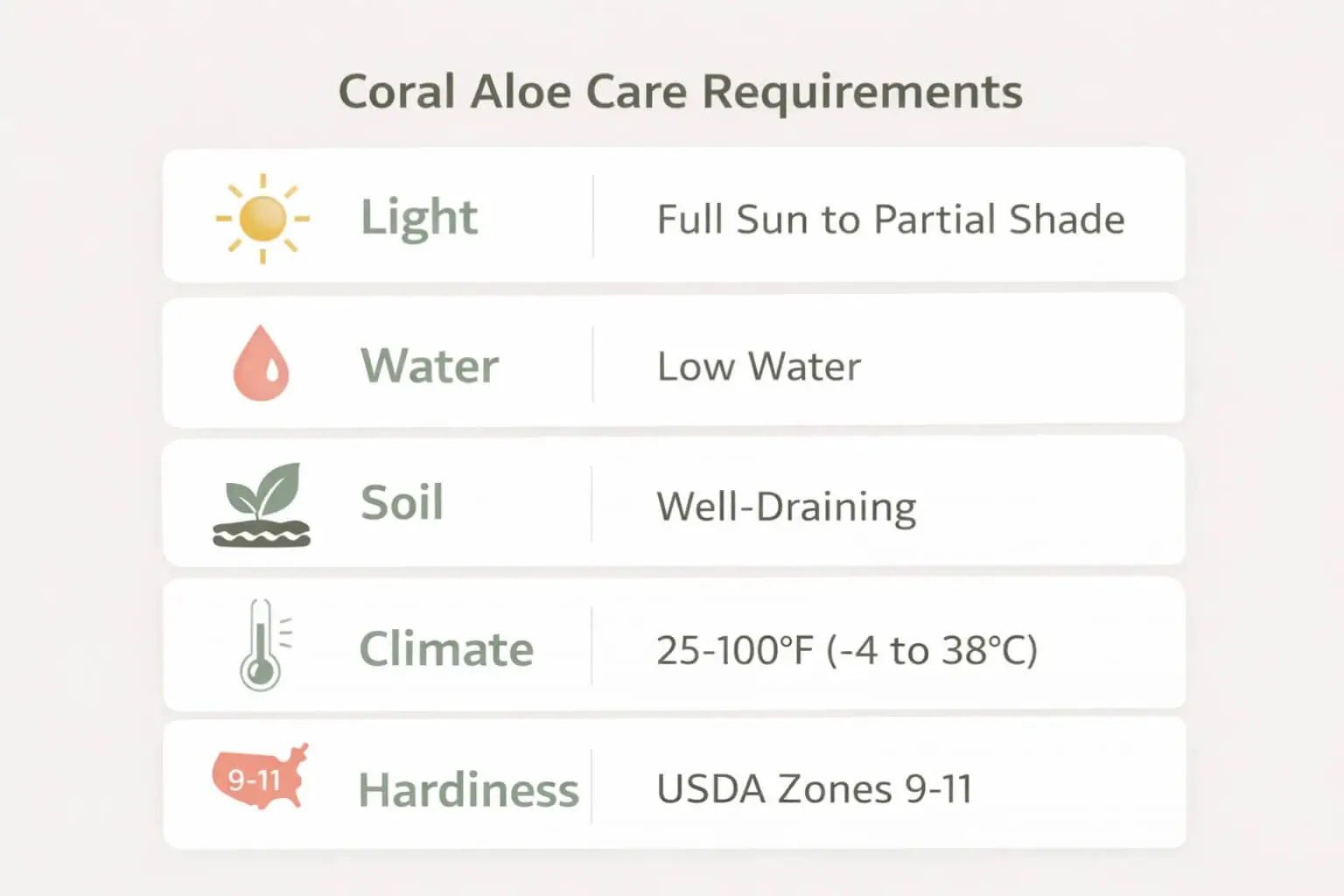
Light Requirements
Coral aloe grows best in:
- Full sun to partial shade
More sun enhances leaf color, while light shade prevents stress in hot climates.
Soil and Drainage Needs
Ideal soil is:
- Sandy or gritty
- Fast-draining
Poor drainage significantly increases rot risk.
Watering Guidelines
Coral aloe plant care emphasizes low water use.
- Water deeply but infrequently
- Allow soil to dry fully between watering
Overwatering is the most common cause of failure.
Temperature, Climate, and Hardiness Zones
Coral aloe zone tolerance typically spans USDA zones 9–11. It tolerates light frost but prefers mild winters. In colder regions, container growing allows seasonal protection.
Coral Aloe Propagation Methods
Propagating Coral Aloe From Seeds
Coral aloe seeds are viable when fresh.
- Germinate in warm conditions
- Use sterile, well-drained medium
Seed propagation is slower than division.
Offsets and Division
Offsets form at the plant base over time.
- Best divided in spring
- Allow cut surfaces to dry before planting
This is the most reliable coral aloe propagation method.
Coral Aloe Varieties and Hybrids
Common Coral Aloe Varieties
Natural forms vary slightly in leaf width, color intensity, and growth habit depending on origin.
Hybrids and Cultivated Forms
Cultivated selections include aloe striata hybrid types such as:
- Fire coral aloe
- Karasburg coral aloe
These hybrids may show deeper color or enhanced cold tolerance.
Uses of Coral Aloe
Ornamental and Landscape Uses
Coral aloe uses focus on low-water design.
- Xeriscaping
- Rock gardens
- Decorative containers
Ecological and Practical Benefits
Coral aloe supports pollinators and reduces landscape water demand. Its low-maintenance nature makes it suitable for sustainable planting schemes.
Coral Aloe vs Similar Aloe Plants
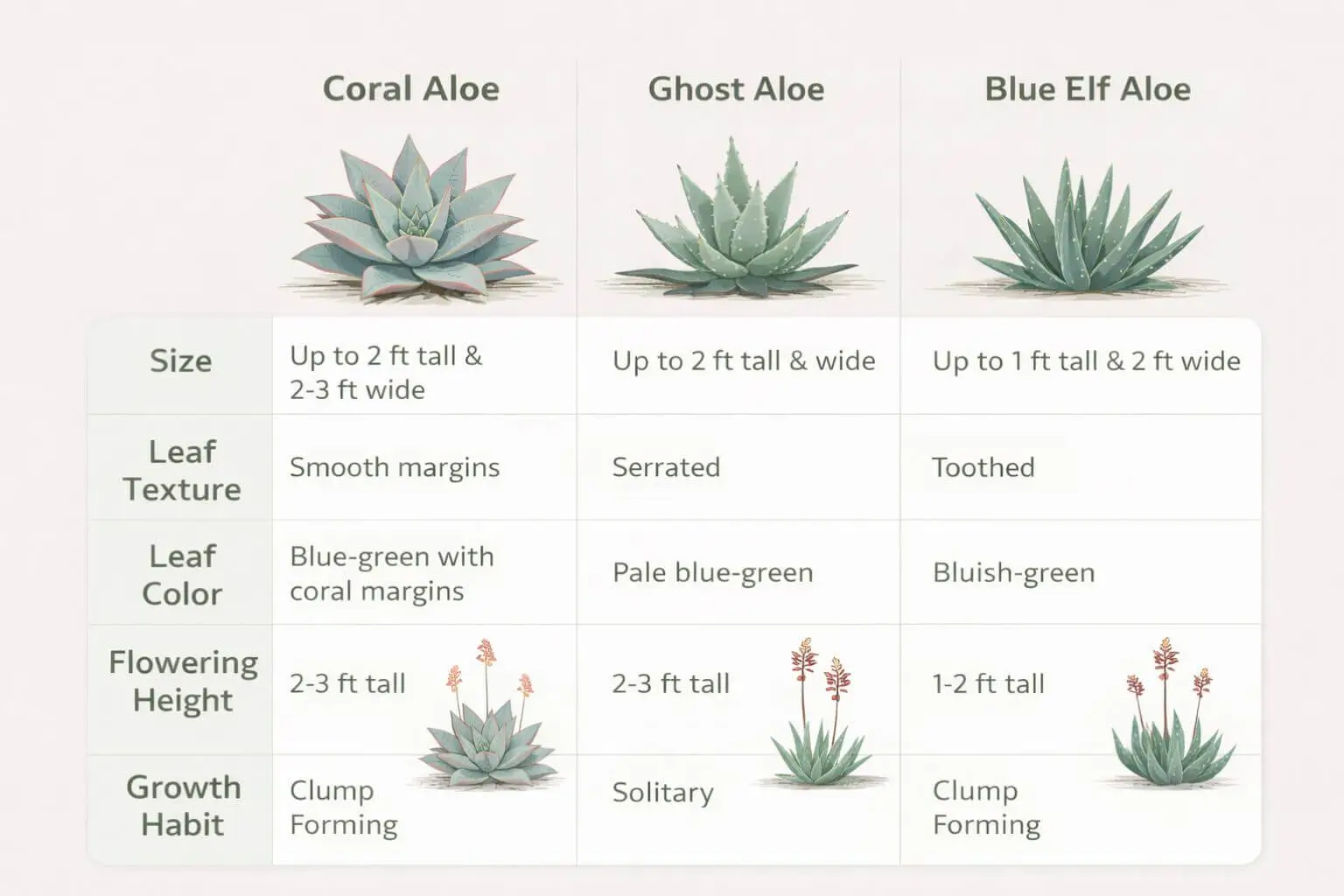
Coral Aloe vs Ghost Aloe
Ghost aloe differs by having narrower, toothed leaves and a more upright growth form. Coral aloe remains broader and smoother.
Coral Aloe vs Blue Elf Aloe
Blue Elf Aloe stays smaller than coral aloe and produces denser flower spikes. Coral aloe spreads wider and develops larger rosettes.
Common Problems and Growing Tips
Pests and Diseases
Potential issues include:
- Root rot from excess moisture
- Occasional aphids or mealybugs
Good drainage prevents most problems.
Growth and Color Troubleshooting
Loss of color often results from low light. Excess fertilizer, shade, or overwatering reduces leaf intensity and vigor.
Conclusion: Learning More About Coral Aloe
Coral aloe is easily identified by its smooth leaves, pastel coloring, and upright coral flowers. Proper light, drainage, and minimal watering are key to long-term success. By understanding its growth habits and care needs, gardeners can confidently cultivate coral aloe in landscapes or containers and explore its ornamental potential.
Learn more: 5+ Stunning Dwarf Karo Varieties That Transform Your Garden
FAQs
- What is coral aloe?
Coral aloe is Aloe striata, a South African aloe species known for smooth, blue-green leaves and coral-colored margins. - How big does coral aloe grow?
Coral aloe typically grows 12–18 inches tall and up to 24 inches wide. - Does coral aloe need full sun?
Yes, coral aloe prefers full sun but can tolerate partial shade, especially in hot climates. - How often should coral aloe be watered?
Water sparingly, allowing soil to dry completely between watering sessions. - Can coral aloe be grown indoors?
Coral aloe can grow indoors with bright light, but flowering is less likely. - Is coral aloe different from aloe vera?
Yes. Coral aloe is a separate species and does not share the medicinal properties of Aloe vera.