Introduction
The desert bird of paradise is a striking flowering plant perfect for xeriscaping and low-water gardens, celebrated for its vibrant blooms and resilience in arid climates. This plant thrives in hot, sunny conditions, making it a favorite among gardeners looking to add color without heavy maintenance. In this guide, you’ll learn about the various types of desert bird of paradise, methods for propagation, essential care tips, and where to purchase these stunning plants. Whether you’re designing a desert landscape or adding a drought-tolerant shrub, the desert bird of paradise is an excellent choice for beauty and sustainability.
What is the Desert Bird of Paradise?
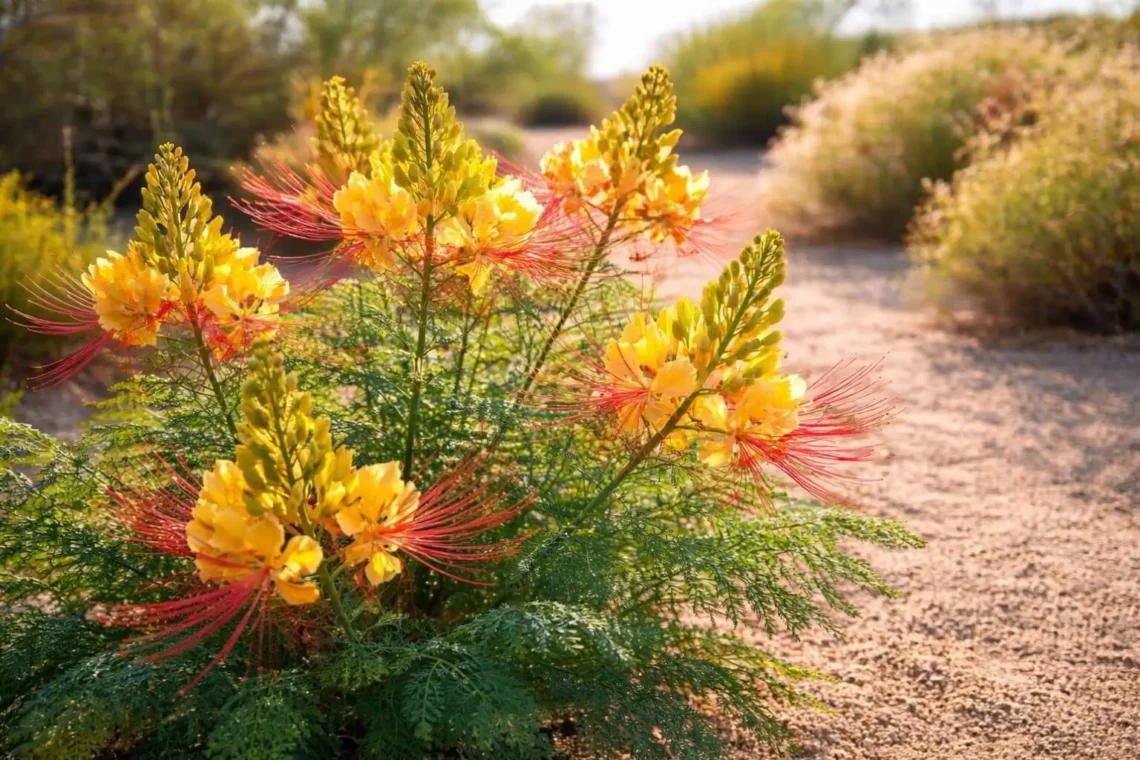
The desert bird of paradise, scientifically known as Caesalpinia gilliesii, is a hardy flowering shrub or small tree native to South America. Commonly referred to as the yellow bird of paradise, this plant is valued for its long-lasting, bright yellow flowers and feathery foliage. Unlike the red Mexican bird of paradise, the desert bird of paradise features a more subtle yellow coloration and a slightly smaller growth habit.
This shrub or tree is ideal for dry landscapes, providing vibrant color while tolerating heat and low water. In addition to its ornamental appeal, the desert bird of paradise shrub or tree attracts pollinators and can serve as a focal point in garden designs.
Varieties of Desert Bird of Paradise
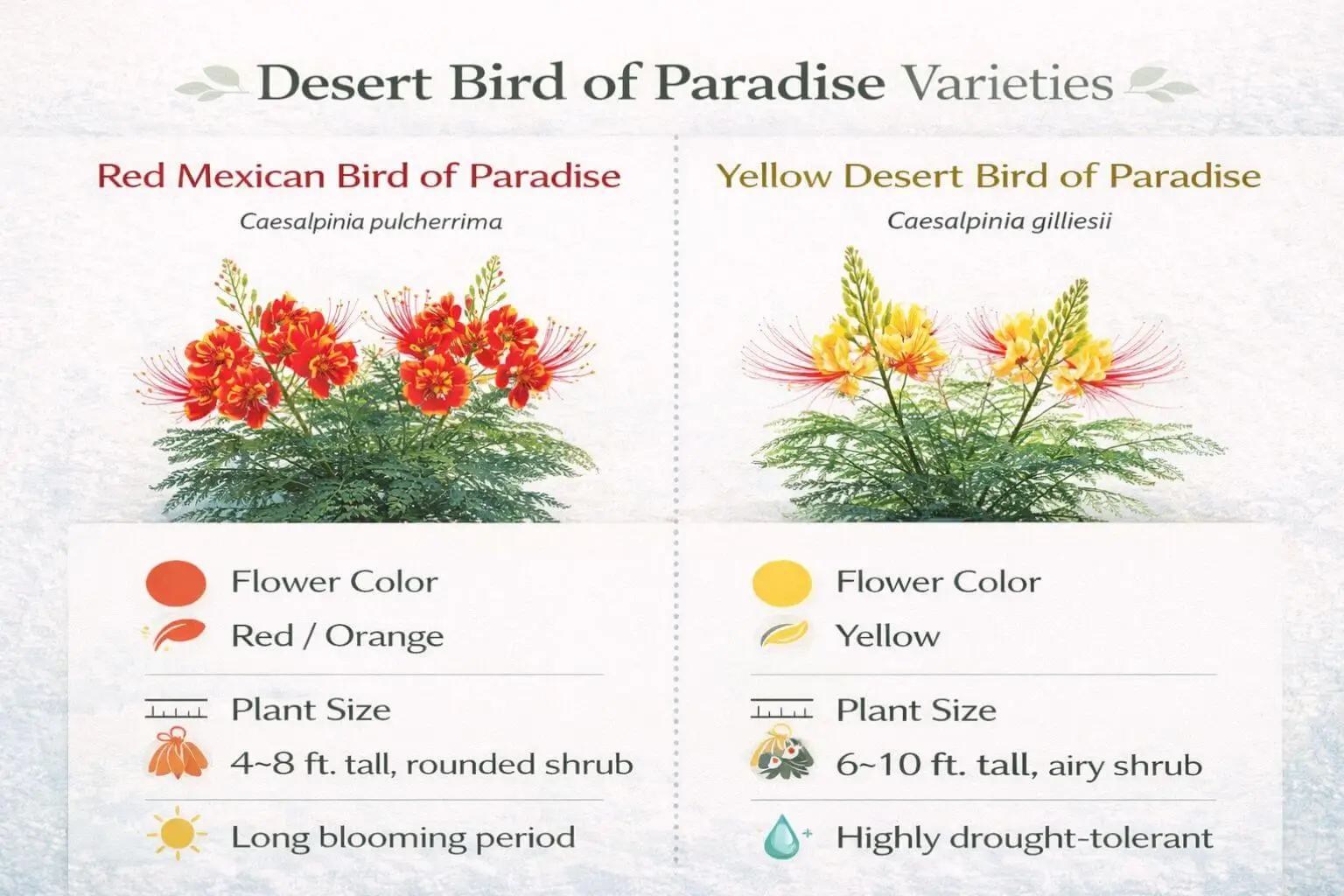
The desert bird of paradise comes in two main varieties, each with unique features:
- Red Desert Bird of Paradise: Often called the red Mexican bird of paradise or red bird-of-paradise, this variety produces fiery red and orange blooms. It tends to grow larger and is well-suited for dramatic landscape accents.
- Yellow Desert Bird of Paradise: Known as the yellow bird of paradise or Caesalpinia gilliesii yellow bird of paradise, this type offers delicate yellow flowers with elongated red stamens, creating a soft, elegant appearance.
These varieties differ in flower colors, plant size, and growth habits, allowing gardeners to select the one that best fits their landscape. Red bird of paradise plants generally require slightly more maintenance but offer bold visual impact, while yellow birds of paradise plants are hardy and ideal for low-water gardens.
Growing and Caring for Desert Bird of Paradise
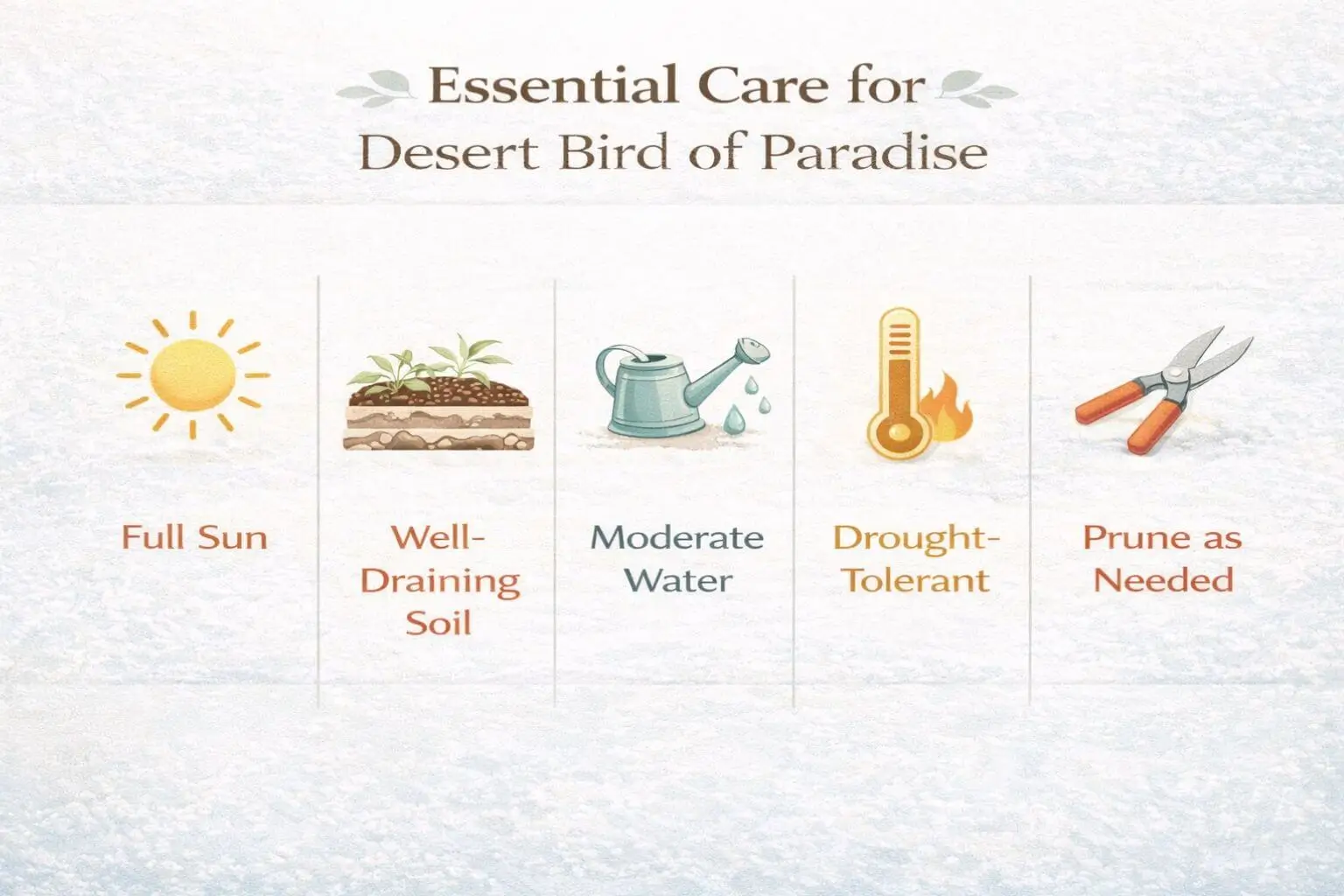
The desert bird of paradise plant is low-maintenance yet requires specific conditions to thrive:
- Soil: Well-draining soil is essential. Sandy or loamy soil is ideal.
- Sunlight: Full sun exposure ensures vibrant blooms and strong growth.
- Watering: Moderate watering during establishment; once mature, the bird of paradise desert plant tolerates drought.
- Climate: These plants flourish in hot, arid climates, making them perfect for Arizona bird of paradise bushes and other desert landscapes.
Regular pruning helps maintain shape and encourages flowering, while fertilization during the growing season promotes healthy growth.
Propagation Methods
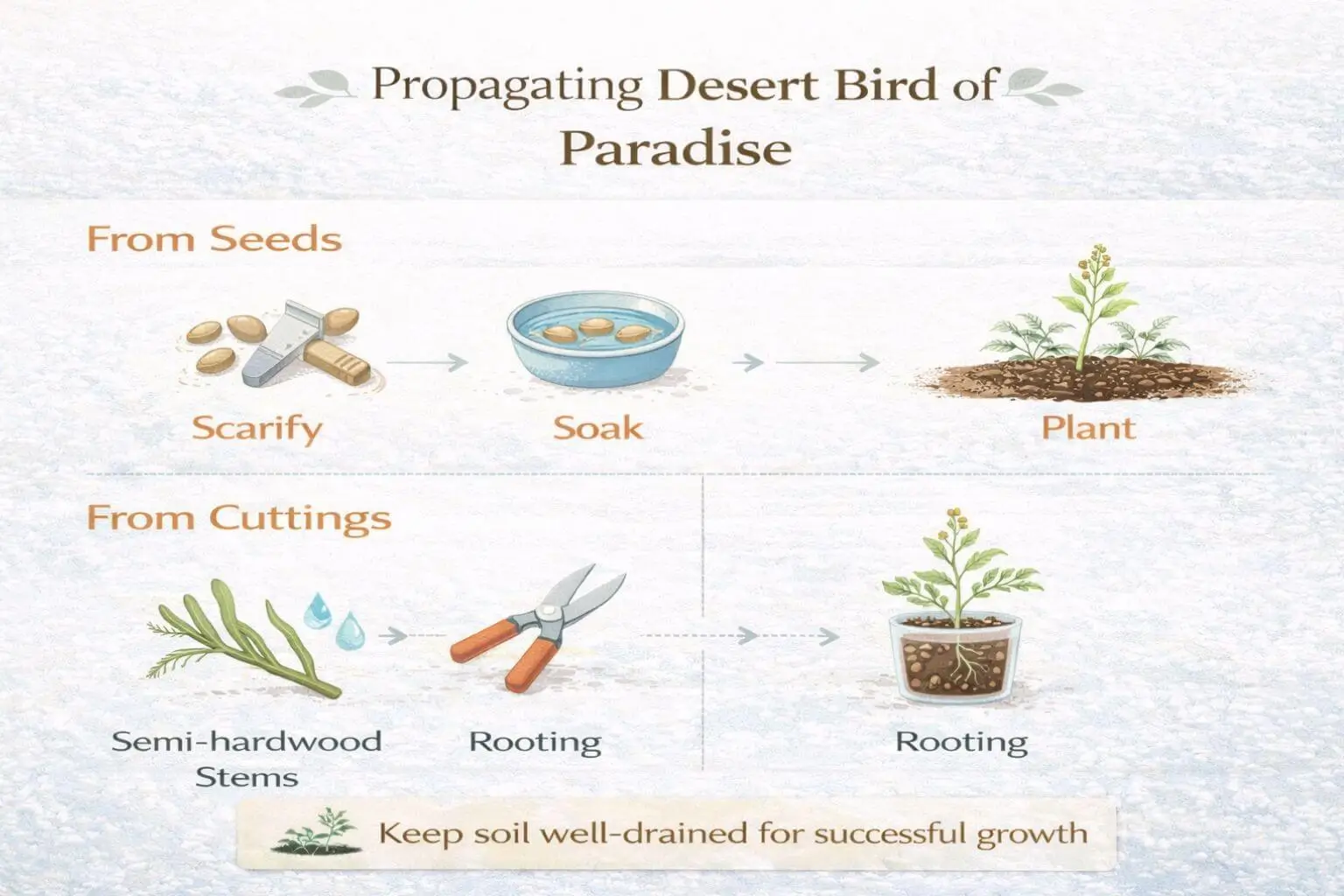
The desert bird of paradise can be propagated through seeds or cuttings:
- From Seeds: Desert bird of paradise seeds or Mexican bird of paradise seeds for sale can be planted after scarification to improve germination. Soak seeds overnight before planting in well-draining soil.
- From Cuttings: Propagate Mexican bird of paradise from cuttings by taking semi-hardwood stems and rooting them in a warm, humid environment. Propagating Mexican bird of paradise from cuttings often produces faster results than seeds.
For successful germination, keep seedlings moist but not waterlogged, and provide ample sunlight once established.
Common Issues and Safety
While beautiful, desert bird of paradise plants have safety considerations:
- Toxicity: Both red and Mexican bird of paradise are poisonous to dogs, cats, and humans if ingested.
- Pests & Diseases: Occasional pests include aphids and caterpillars, while fungal infections may occur in overly wet conditions.
- Environmental Stress: Extreme frost or prolonged overwatering can harm the plant.
Awareness of these issues ensures a safe and healthy garden.
Landscaping and Uses
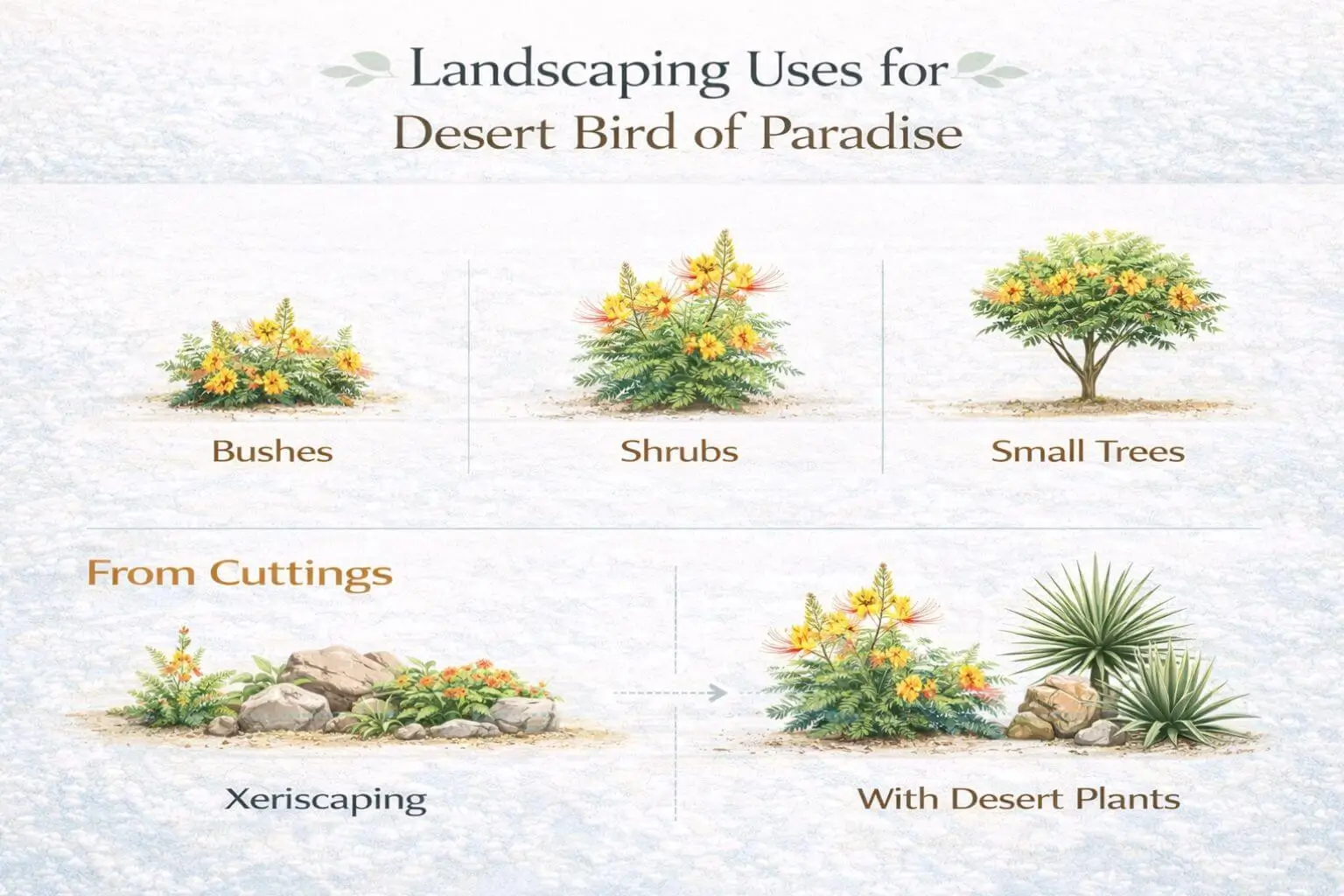
Desert bird of paradise bushes and shrubs are versatile in landscaping:
- Perfect for xeriscaping and low-water gardens.
- Pair well with other desert plants like agave, yucca, and desert marigolds.
- Suitable for decorative hedges, standalone shrubs, or small tree accents.
- Yellow bird of paradise bushes and trees add soft color, while red varieties create bold focal points.
Using desert bird of paradise shrubs in garden design combines beauty, drought tolerance, and minimal maintenance.
Where to Buy Desert Bird of Paradise
You can purchase desert bird of paradise plants through nurseries, online sellers, or local garden centers:
- Red vs. Yellow Varieties: Decide based on visual impact and maintenance preference.
- Available Options: Desert bird of paradise for sale, red bird of paradise for sale, Mexican red bird of paradise for sale.
- Online Sources: Search for where to buy red Mexican bird of paradise or Mexican bird of paradise plants for sale.
- Always choose healthy seedlings or well-established plants to ensure successful growth.
Conclusion
The desert bird of paradise is a resilient, low-water plant that brings vibrant color to any garden. By understanding its varieties, propagation methods, and care requirements, gardeners can enjoy stunning blooms throughout the year. Whether used as a shrub, bush, or small tree, this plant is perfect for xeriscaping and desert landscapes. Bring the vibrant desert bird of paradise to your garden and enjoy its striking flowers and unique beauty all year long.
Learn more: 5+ Stunning Silver Carpet Plant Ideas to Transform Your Garden
FAQs About Desert Bird of Paradise
- What is the difference between red and yellow desert bird of paradise?
Red varieties have fiery blooms and larger growth, while yellow varieties produce delicate yellow flowers with red stamens and a more compact habit. - How do I propagate desert bird of paradise from seeds or cuttings?
Seeds require scarification and soaking before planting. Cuttings are taken from semi-hardwood stems and rooted in warm, humid conditions. - Is desert bird of paradise safe for pets?
No. Both red and Mexican bird of paradise are toxic to dogs, cats, and humans if ingested. - What are the best growing conditions for desert bird of paradise?
Full sun, well-draining soil, and moderate watering are ideal. Mature plants tolerate heat and drought. - Where can I buy desert bird of paradise plants online or locally?
They are available through nurseries, online plant sellers, and garden centers. Look for healthy seedlings or established shrubs for best results.