Introduction
The dwarf myrtle shrub is a compact, evergreen plant valued for its neat growth, aromatic foliage, and year-round visual appeal. Popular in home gardens, formal hedging, and decorative containers, it offers structure without overwhelming small or medium landscapes. Its naturally dense form makes it easy to maintain, while its subtle fragrance adds an extra sensory benefit. Gardeners often choose dwarf myrtle for low hedges, borders, and patio planters because it responds well to pruning and adapts to various growing conditions. Known by names such as dwarf myrtle, compact myrtle, and commonly grouped with other myrtle shrubs, this plant combines ornamental beauty with practical versatility for both classic and modern garden designs.
What Is a Dwarf Myrtle Shrub?
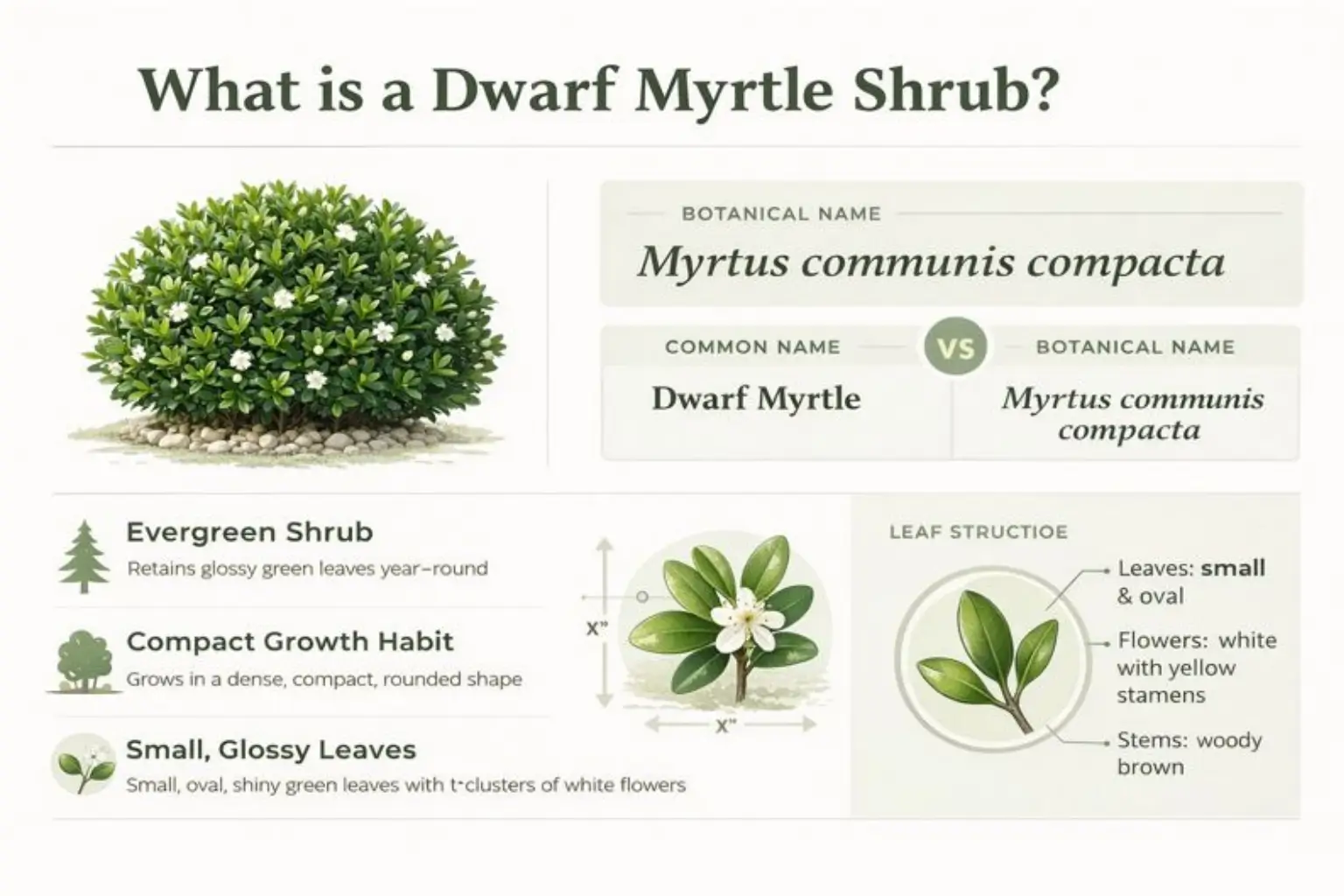
Botanical Background and Plant Classification
Dwarf myrtle shrub refers to compact forms of Myrtus communis compacta, a cultivated variety of common myrtle. Botanically, it belongs to the Myrtaceae family, known for aromatic evergreen plants. Terms such as myrtus myrtle, myrtle myrtus, and myrtus shrub all point to the same genus, which often causes confusion in plant labeling. The variation in names usually comes from differences between botanical classification and common nursery terms. While the scientific name provides accuracy, common names are often used interchangeably, leading gardeners to believe they are separate plants when they are closely related.
Difference Between Dwarf Myrtle and Regular Myrtle
The main difference between a dwarf myrtle shrub and a standard myrtle shrub plant lies in size and growth behavior. Dwarf varieties stay compact, with slower growth and tighter branching, making them ideal for controlled spaces. Regular myrtle grows taller and wider, requiring more frequent pruning to manage shape and spread. Dwarf myrtle also needs less aggressive trimming, while standard myrtle shrubs often demand consistent maintenance to prevent overgrowth in garden beds or hedges.
Types and Varieties of Dwarf Myrtle Shrubs
-
Myrtle Communis Compacta (Most Popular Variety)
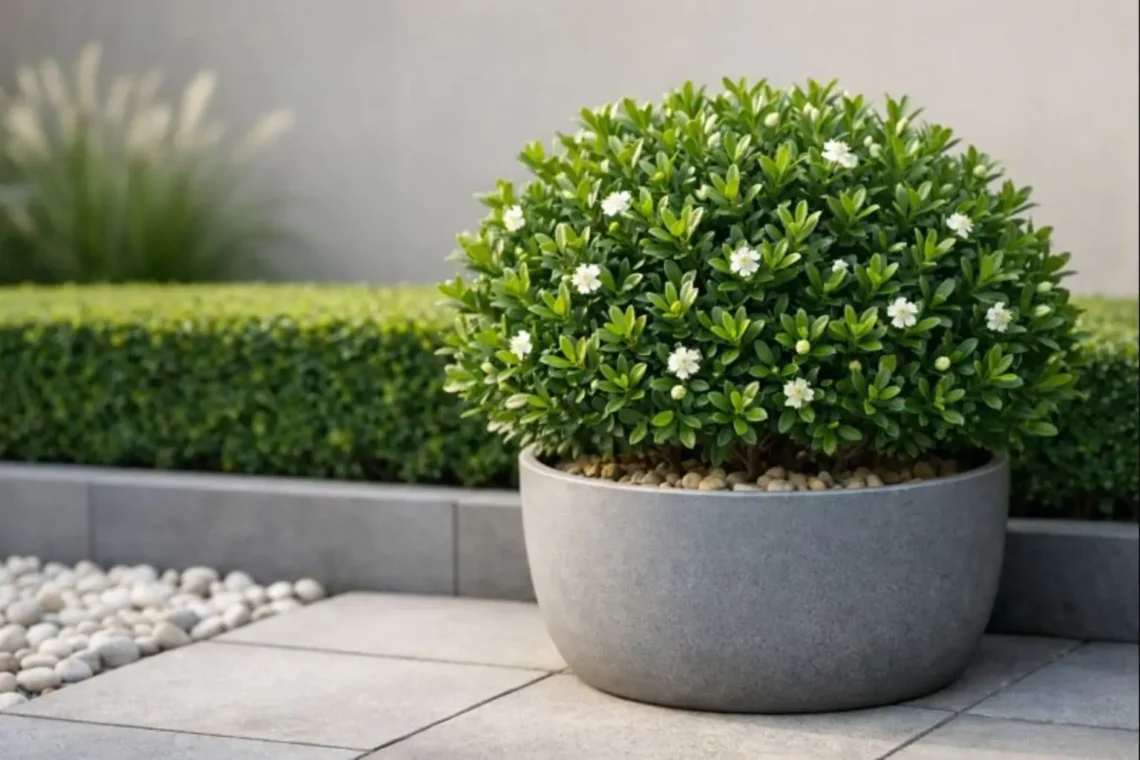
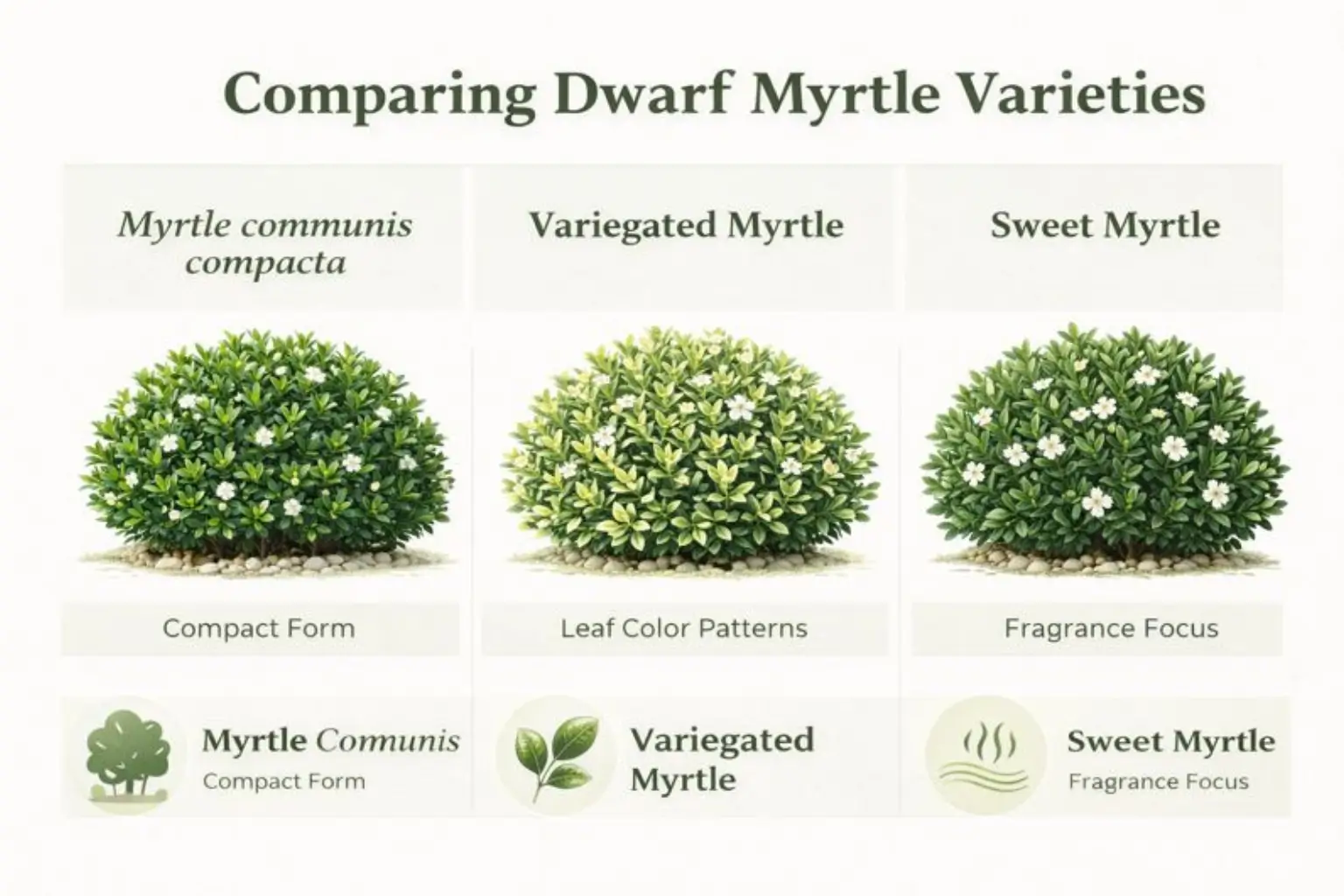
Myrtle communis compacta is the most widely grown dwarf form. Often labeled as myrtle compacta or myrtus compacta, this compact myrtle features dense foliage and a naturally rounded form. It works well in formal hedges, borders, and low screens, offering a polished look with minimal effort.
-
Variegated Dwarf Myrtle Varieties
Variegated types stand out for their decorative foliage. Variegated myrtle varieties, including myrtus communis variegata and myrtus variegata, display green leaves edged or patterned with creamy white tones. These plants add contrast and brightness to garden layouts while maintaining the same compact structure as standard dwarf forms.
-
Sweet Myrtle and Miniature Forms
Sweet myrtle is prized for its fragrant leaves and ornamental charm. The sweet myrtle plant releases a pleasant aroma when touched or pruned, enhancing sensory appeal. Miniature myrtle plant selections stay especially small, making them suitable for ornamental planting where space is limited but visual detail is desired.
How Big Does a Dwarf Myrtle Shrub Grow?
Height, Width, and Growth Rate
A dwarf myrtle shrub typically reaches a modest mature size, often compared to a mini myrtle tree in appearance. Depending on care and climate, it may grow 3–5 feet tall with a similar spread. Some gardeners train it into a myrtle tree mini or miniature myrtle tree form, but growth remains controlled and slow, ideal for structured landscapes.
Is Dwarf Myrtle a Shrub or a Tree?
By nature, dwarf myrtle is a shrub, forming multiple stems from the base. However, with careful pruning, it can be trained into a small tree form. This flexibility allows gardeners to adapt it for hedges, topiary, or standalone accents without sacrificing its compact character.
Growing and Caring for a Dwarf Myrtle Shrub
Light, Soil, and Water Requirements
Dwarf myrtle grows best in full sun to partial shade and prefers well-draining soil. Moderate watering supports steady growth, while overwatering should be avoided. As an evergreen plant, consistent care ensures healthy foliage color and year-round structure.
Pruning and Maintenance Tips
- Regular light pruning helps maintain a compact shape.
- For hedging, trim evenly to encourage dense growth.
- Dwarf myrtle responds well to shaping, making it suitable for formal designs and clean garden lines.
Read Also: 7+ Powerful Benefits of Coastal Rosemary for Stunning Gardens
Using Dwarf Myrtle Shrubs in Landscaping
Dwarf Myrtle as a Hedge or Border Plant
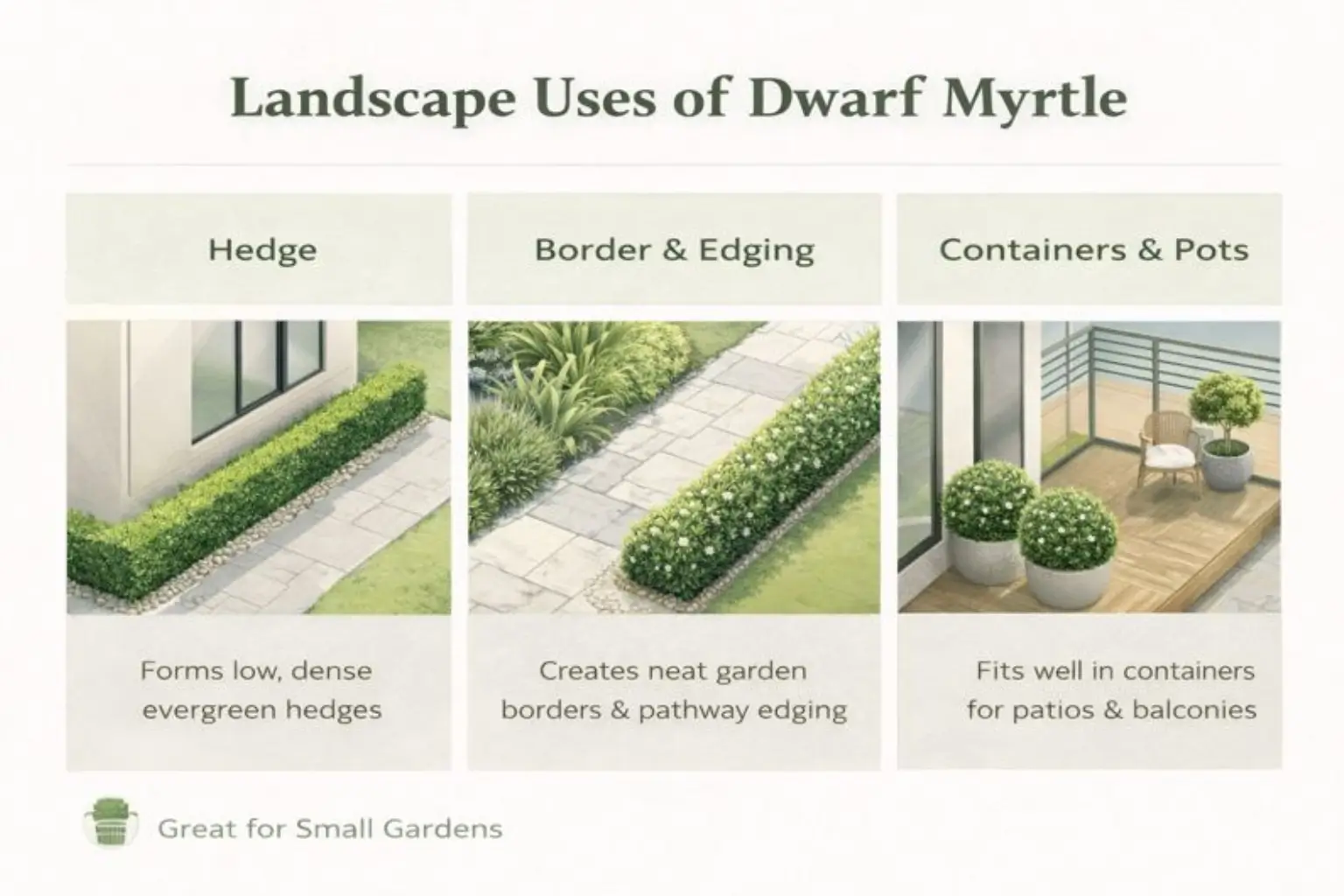
Dense branching makes dwarf myrtle hedge plantings effective for borders and low screens. Myrtle hedge and myrtle hedging applications benefit from uniform growth and easy maintenance, providing privacy and definition without excessive height.
Container Gardening and Small Spaces
Dwarf myrtle plant varieties perform well in containers. They suit patios, balconies, and decorative pots, offering evergreen beauty where ground planting is not possible.
Where to Buy a Dwarf Myrtle Shrub
Buying Online vs Local Nurseries
Online retailers often list myrtle plant for sale options with detailed descriptions, while local nurseries allow direct inspection. Availability of myrtus communis for sale may vary by region and season.
How to Find Myrtle Plants Near You
Local garden centers and plant suppliers are the best places to search for myrtle near me listings. Asking nursery staff where can I buy a myrtle plant ensures access to healthy, climate-suitable stock.
Common Problems and Growing Challenges
-
Pests, Diseases, and Leaf Issues
Dwarf myrtle can face pests such as aphids or scale insects. Proper air circulation, clean pruning, and routine inspection help prevent disease and leaf discoloration.
-
Climate Suitability and Cold Tolerance
This shrub performs best in mild to warm climates. In colder regions, protection during frost is essential to prevent damage, especially for container-grown plants.
Conclusion – Is a Dwarf Myrtle Shrub Right for Your Garden?
The dwarf myrtle shrub is an excellent choice for gardeners seeking a plant that combines compact size, evergreen foliage, and long-term versatility. Its naturally dense growth makes it easy to manage, while its year-round greenery adds structure and visual balance to outdoor spaces. Whether used for neat hedges, decorative containers, or formal garden layouts, dwarf myrtle adapts well to different planting styles and space limitations. With modest care needs and reliable performance, it suits both beginner and experienced gardeners. If you are looking to enhance your garden with a refined, low-maintenance evergreen, exploring planting or purchasing a dwarf myrtle shrub can be a practical and rewarding option.
Read Also: 7+ Powerful Reasons Rosemary Prostrate Transforms Any Garden
FAQs – Dwarf Myrtle Shrub
What is the difference between dwarf myrtle and myrtle communis compacta?
Dwarf myrtle is a general term used for compact forms of myrtle, while myrtle communis compacta is the specific botanical variety most commonly grown for its controlled size and dense growth habit.
Can a dwarf myrtle shrub be grown in pots?
Yes, dwarf myrtle grows well in pots and containers. Its compact root system and slow growth make it suitable for patios, balconies, and other small spaces.
How often should I prune a dwarf myrtle hedge?
Light pruning once or twice a year is usually sufficient. Regular trimming helps maintain a tidy shape and encourages dense, even growth in a dwarf myrtle hedge.
Is sweet myrtle the same as dwarf myrtle?
Sweet myrtle refers to fragrant myrtle varieties, while dwarf myrtle describes size and growth habit. Some sweet myrtle plants are compact, but not all sweet myrtles are dwarf forms.
Where can I buy a healthy dwarf myrtle shrub near me?
You can find dwarf myrtle shrubs at local garden centers, plant nurseries, or reputable online sellers. Checking nearby nurseries is often the best way to source healthy, climate-suitable plants.