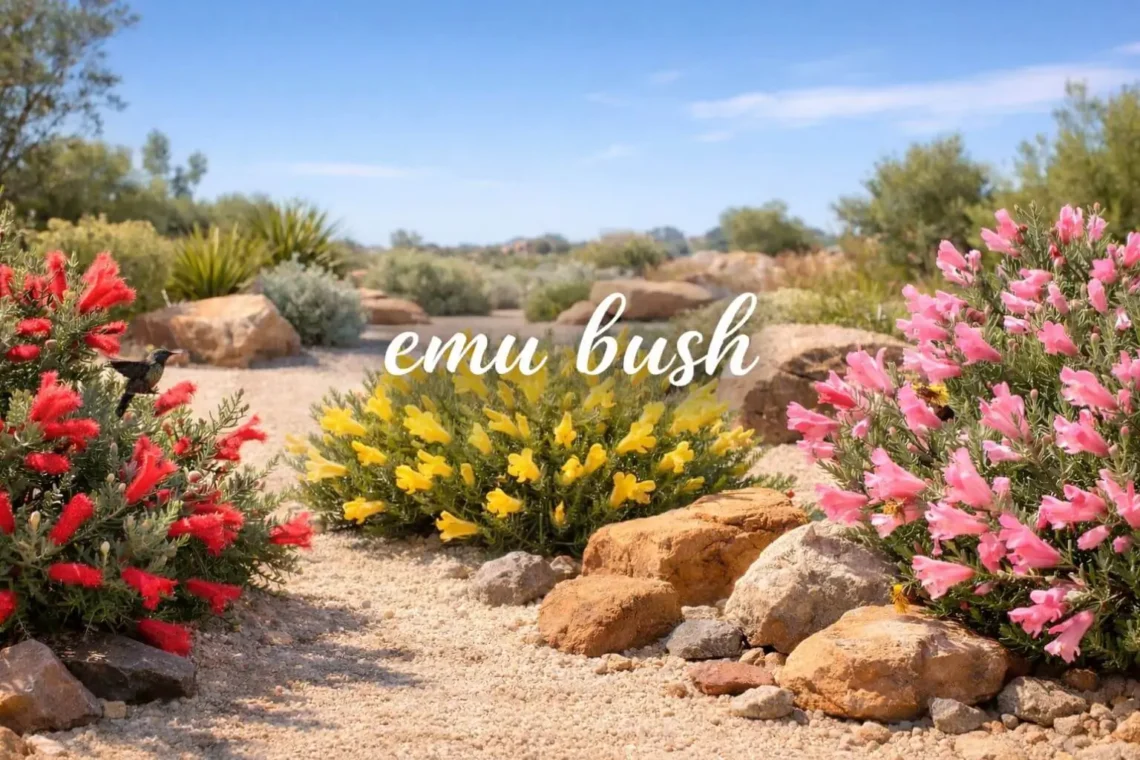
Introduction to Emu Bush
Emu bush is a drought-tolerant evergreen shrub belonging to the Eremophila genus, native to arid and semi-arid regions of Australia. Known for its vibrant tubular flowers and exceptional heat resistance, emu bush has become a favorite in water-wise landscaping worldwide. Many gardeners encounter it under the term eremophila emu bush in nurseries and botanical references. Popular varieties such as eremophila glabra, eremophila maculata, and eremophila carnosa offer diverse foliage textures and flower colors. Its ability to thrive in poor soils and dry climates makes emu bush a reliable solution for sustainable, low-maintenance gardens.
What is emu bush? (Botanical overview of the Eremophila genus)
Emu bush refers to over 200 species within the Eremophila genus. These flowering shrubs are specially adapted to desert climates, featuring narrow leaves, resin-coated foliage, and tubular blossoms designed to attract pollinators.
Native origins in Australia
Emu bush is indigenous to Australia’s dry inland regions, where extreme temperatures and minimal rainfall shaped its hardy characteristics.
Why emu bush is popular in drought-tolerant landscaping
- Exceptional drought tolerance
- Long blooming periods
- Minimal fertilization needs
- Excellent xeriscaping plant
Overview of common varieties
- Eremophila glabra — adaptable, varied flower colors
- Eremophila maculata — known as spotted emu bush
- Eremophila carnosa — compact growth habit
Botanical Profile of Emu Bush (Eremophila)
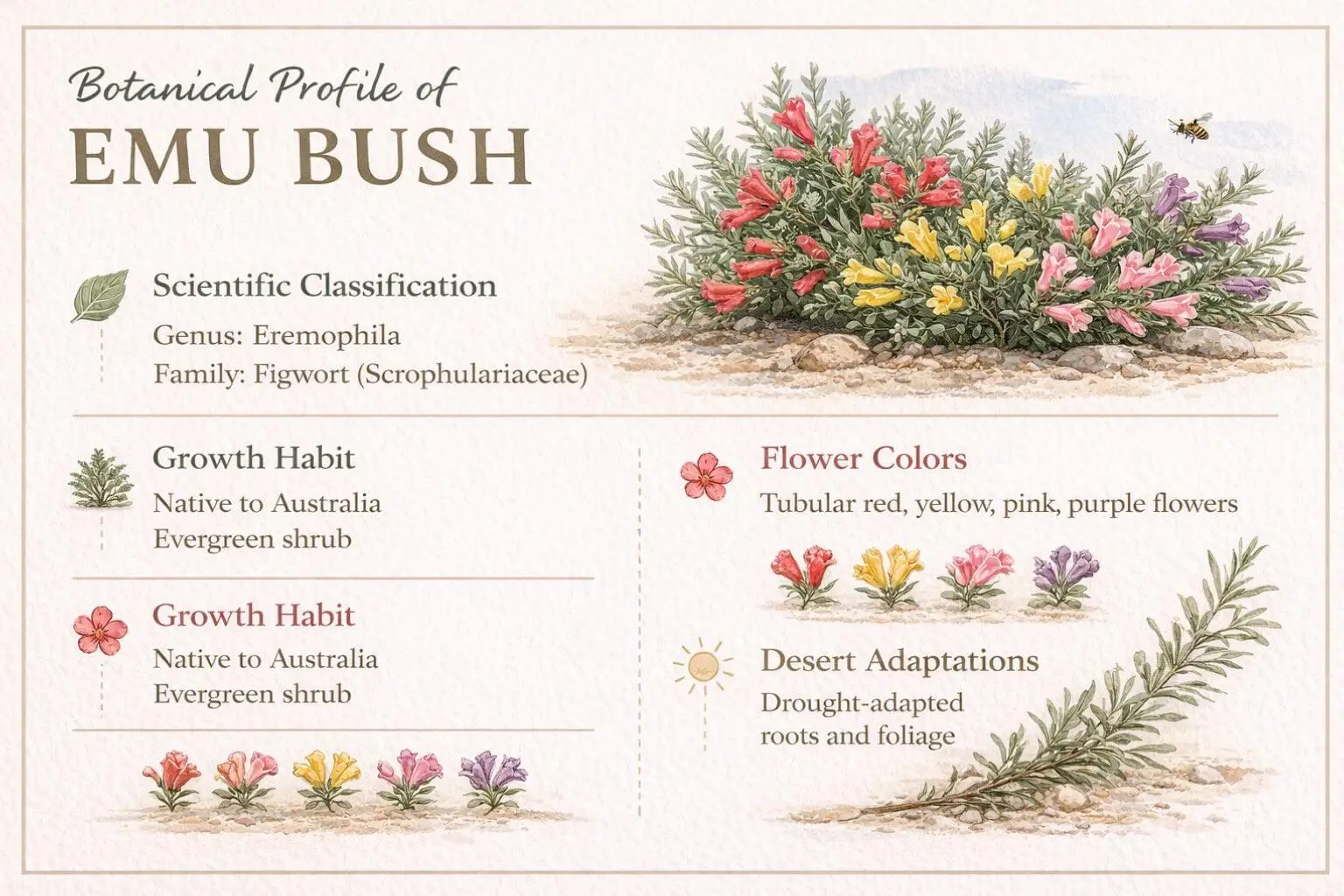
Scientific Classification
- Genus: Eremophila
- Family: Scrophulariaceae (Figwort family)
- Desert adaptation traits include deep root systems and reduced leaf surface area.
The name “emu bush” likely refers to its Australian origin, as emus inhabit similar regions.
Growth Habit and Appearance
Emu bush typically grows 3–10 feet tall, depending on species, with a spreading or upright shrub habit. Foliage ranges from silvery-gray to bright green and is usually evergreen. Flowers are tubular, sometimes speckled — which explains the common name “spotted emu bush” for certain varieties.
Flowering Season and Colors
Emu bush produces red, yellow, pink, and purple blooms. Popular types include:
- emu bush yellow varieties
- Valentine emu bush
- Winter blaze emu bush
These flowers attract birds, bees, and pollinators due to nectar-rich tubular blossoms.
Popular Types of Emu Bush
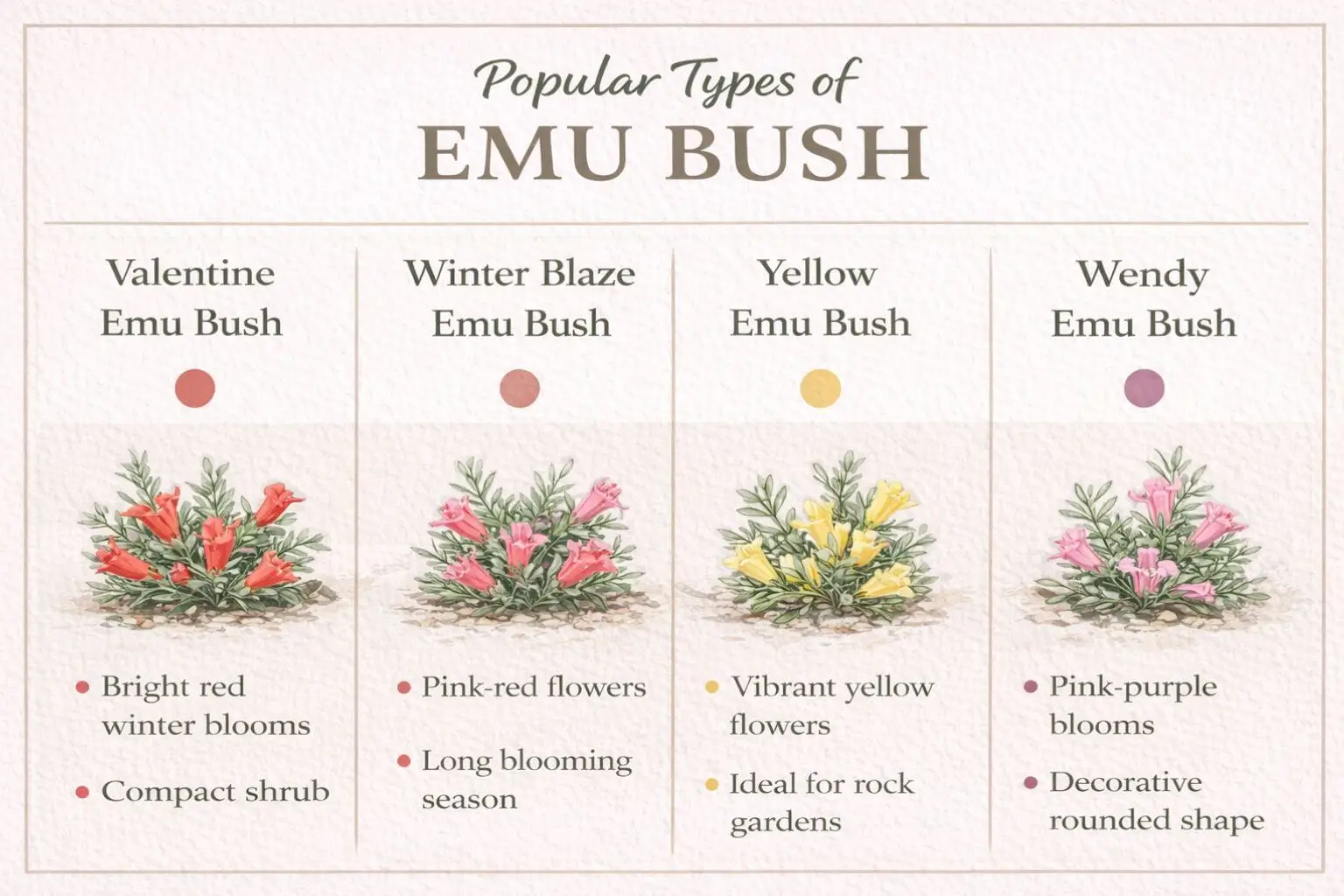
Valentine Emu Bush (Eremophila maculata ‘Valentine’)
Valentine emu bush is prized for its vivid red winter blooms. The compact shrub provides intense seasonal color when most plants are dormant.
Valentine emu bush poisonous?
Generally considered non-toxic, but pets should not ingest large amounts. Always monitor animals around ornamental shrubs.
Winter Blaze Emu Bush
Also called eremophila winter blaze, this compact shrub offers bright pink-red flowers. Differences between winter blaze, winter blaze emu, and winter blaze plant are mostly naming variations used in retail markets.
Yellow Emu Bush
Emu bush yellow varieties brighten desert gardens. They are ideal for:
- Rock gardens
- Border planting
- Water-wise landscapes
Wendy Emu Bush
Wendy emu bush features attractive pinkish-purple blooms and a rounded growth habit, making it highly decorative.
Emu Bush Arizona Varieties
Emu bush Arizona varieties thrive in hot desert climates due to superior heat tolerance. They are widely used in xeriscaping and low-water landscape design.
How to Grow Emu Bush Successfully
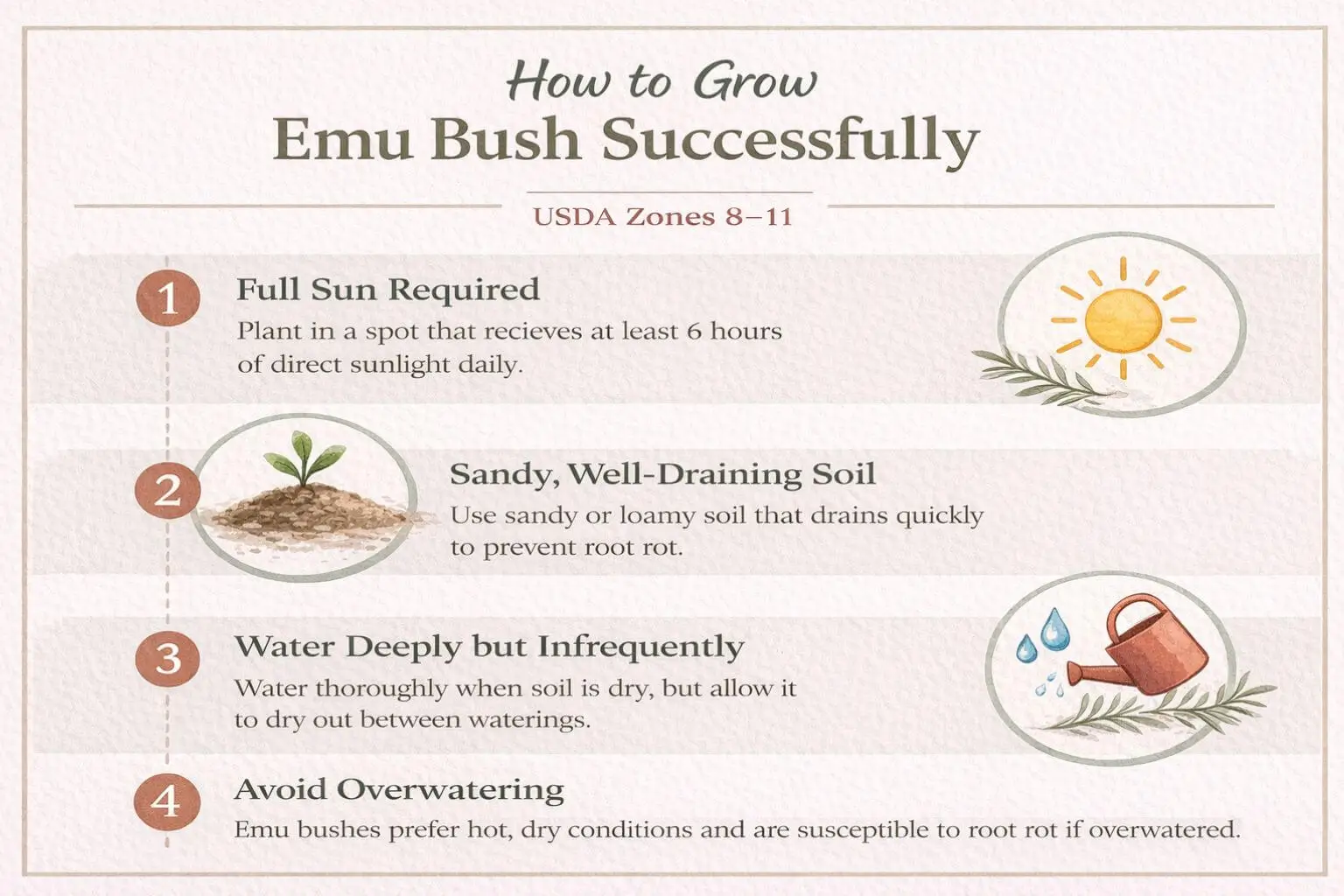
Ideal Climate and Hardiness Zones
- Suitable for USDA Zones 8–11
- Performs best in hot, dry regions
- Sensitive to prolonged frost
Soil Requirements
- Well-draining soil is essential
- Prefers sandy or rocky soil
- Avoid heavy clay
Watering Needs
- Highly drought tolerant once established
- Water deeply but infrequently
- Overwatering can cause root rot
Sunlight Requirements
- Full sun encourages maximum flowering
- Light shade tolerated but may reduce blooms
Planting and Care Guide for Emu Bush Plant
How to Plant Emu Bush
- Choose a sunny location.
- Prepare well-draining soil.
- Dig a hole twice the width of the root ball.
- Plant at soil level.
- Water thoroughly after planting.
Best time to plant: spring or early fall.
Pruning and Maintenance
Light pruning after flowering helps shape the emu bush plant and encourages dense growth. Avoid heavy pruning into old wood.
Fertilizing Tips
Emu bush requires minimal fertilizer. Use low-phosphorus fertilizer if necessary, as native plants prefer lean soils.
Propagation Methods
- Semi-hardwood cuttings are most successful
- Rooting hormone improves results
- Allows expansion of your emu plants collection
Landscaping Ideas with Emu Bush
Xeriscaping and Water-Wise Gardens
Eremophilas are perfect for low-water landscapes due to drought resistance and long bloom cycles.
Border and Hedge Use
Compact varieties work well as edging plants. Pair with other native drought-tolerant shrubs for cohesive design.
Container Gardening
Emu bush can grow in pots if drainage is excellent. Use sandy soil mix and ensure containers have drainage holes.
Common Problems and Solutions
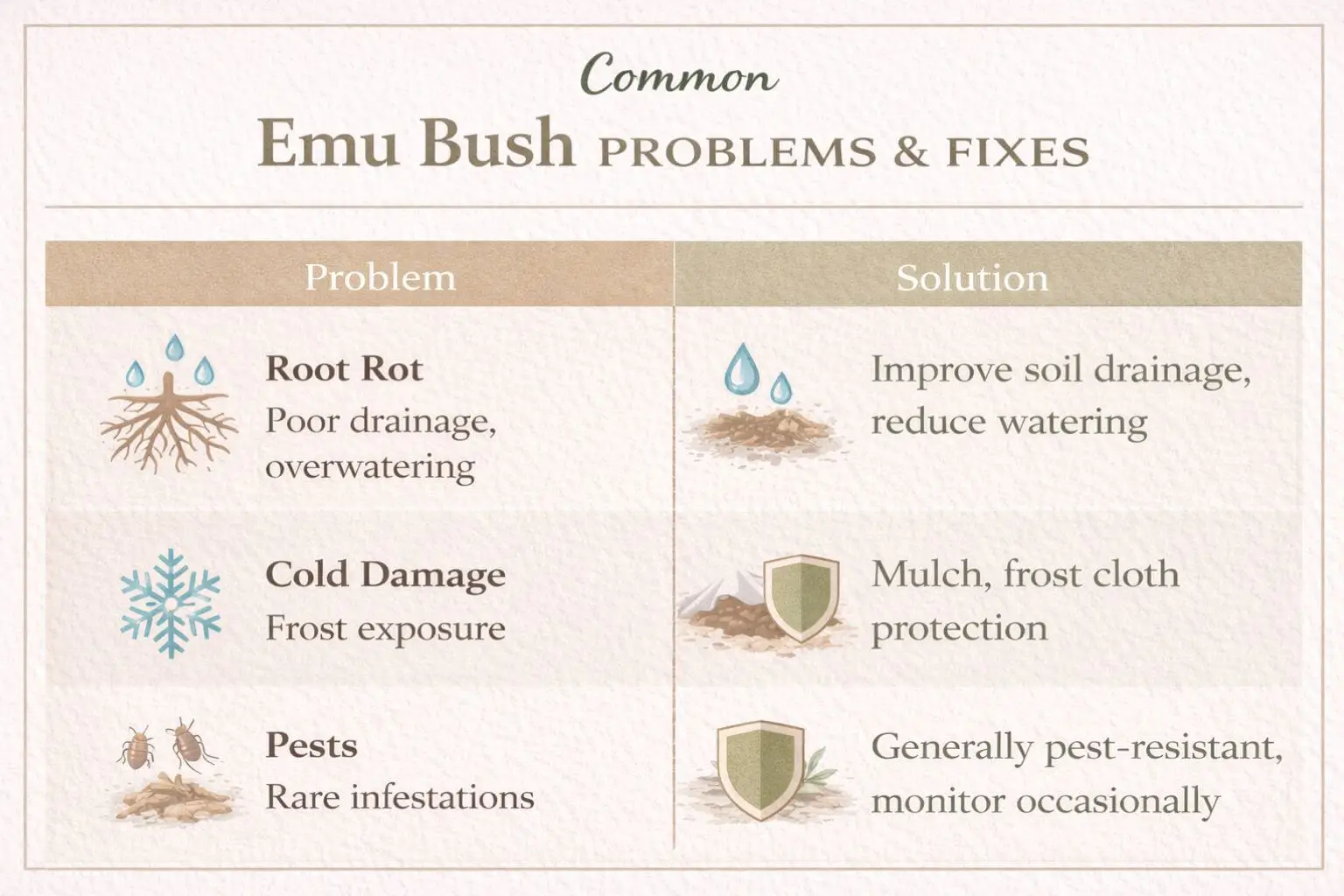
Root Rot and Drainage Issues
- Symptoms: Yellowing leaves, wilting despite watering.
- Prevention: Improve drainage and reduce watering frequency.
Pest Resistance
Emu bush is generally pest-resistant, reducing maintenance needs.
Cold Damage
Protect plants during frost using mulch or frost cloth in cooler climates.
Is Emu Bush Toxic?
Concerns about valentine emu bush poisonous are common. Most emu bush varieties are considered non-toxic to pets and children. However, ingestion of ornamental plants should always be discouraged.
Conclusion — Why Emu Bush Is a Perfect Low-Maintenance Shrub
Emu bush stands out as a resilient, colorful, and drought-tolerant shrub ideal for modern landscapes. Its adaptability, minimal watering needs, and vibrant blooms make it perfect for xeriscaping and desert gardens. Whether you choose Valentine, Winter Blaze, or yellow varieties, this Australian native offers year-round interest with little maintenance. Add emu bush to your garden for vibrant, low-water beauty and dependable performance.
Learn more: 5+ Stunning Tips for Growing Desert Bird of Paradise
FAQs About Emu Bush
- What is emu bush used for in landscaping?
Emu bush is used in xeriscaping, borders, hedges, and desert-themed gardens due to its drought tolerance and bright blooms. - Is valentine emu bush poisonous to dogs or cats?
Valentine emu bush is generally considered non-toxic, but pets should not consume plant material. - How often should you water an emu bush plant?
Water deeply every 2–3 weeks once established, adjusting for climate and soil drainage. - Does emu bush grow well in Arizona climates?
Yes, emu bush Arizona varieties thrive in hot desert regions with proper drainage and full sun. - What is the difference between eremophila glabra and eremophila maculata?
Eremophila glabra has smoother leaves and varied flower colors, while eremophila maculata often features spotted blooms and compact growth. - When does winter blaze emu bush bloom?
Winter blaze emu bush typically blooms from late fall through winter, providing seasonal color.