Introduction
Evergreen shade trees provide year-round foliage and cooling canopy in landscapes, retaining green leaves through all seasons while casting reliable shade. These trees thrive in partial to full shade conditions, making them ideal for understory planting or areas with limited sunlight. In Australia, evergreen trees are especially valuable for managing heat, improving privacy, and maintaining visual structure in gardens. From compact front yard trees to larger canopy trees, selecting the right species ensures long-term performance. This guide explains their characteristics, compares types, and outlines care practices suited to Australian climates and soil conditions.
If you’re also exploring indoor greenery, you may enjoy our guide on plants for homes and gardens and how they improve overall living spaces.
Quick Summary
- Evergreen shade trees maintain dense foliage year-round, offering consistent shade and privacy without seasonal leaf drop.
- Key benefits include non-invasive roots, drought and frost tolerance, and adaptability to Australian climates.
- Popular types include fast-growing, small to medium trees suitable for gardens, front yards, and backyards.
- Ideal for canopy layering, especially when using Australian native evergreen trees with low maintenance needs.
What Are Evergreen Shade Trees?
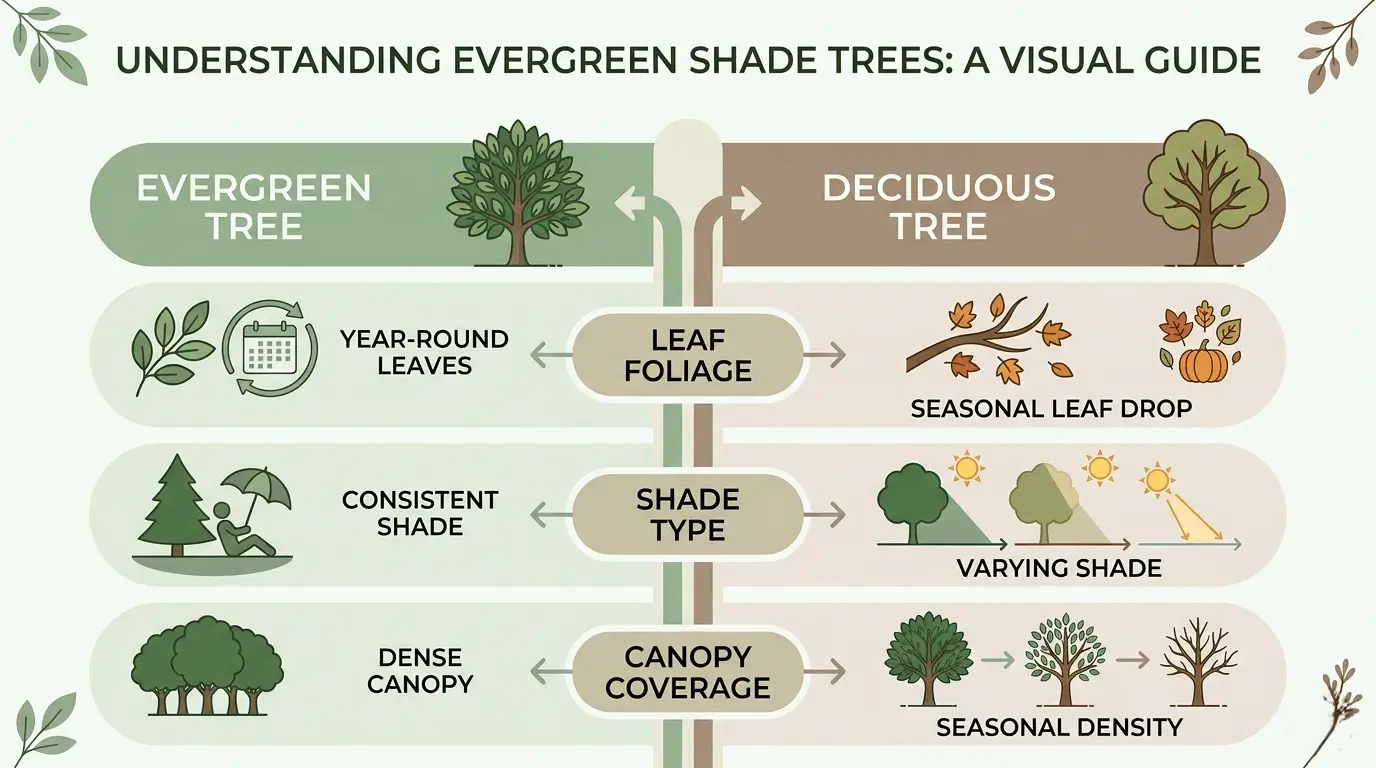
Evergreen shade trees are species that retain their leaves throughout the year while providing consistent canopy cover for cooling, shelter, and landscape structure. Unlike deciduous trees, they do not shed leaves seasonally, making them ideal for continuous shade and privacy. Evergreen trees are part of broader plant classification systems in botany, which categorize plants based on leaf retention and lifecycle patterns.
A canopy tree refers to any tree with a broad, spreading crown that creates overhead coverage, helping regulate temperature and protect understory plants. For a broader understanding of plant types across indoor and outdoor environments, see our guide on spider plant indoor benefits and purple heart plant indoor benefits.
Key Traits of Evergreen Shade Trees
- Retain foliage year-round
- Provide dense and consistent shade
- Often suitable for urban planting with controlled root systems
- Function as structural elements in landscaping
Evergreen vs Deciduous Shade Trees
| Feature | Evergreen Shade Trees | Deciduous Shade Trees |
| Foliage | Year-round green leaves | Seasonal leaf drop |
| Shade | Consistent, dense | Summer-only |
| Root Impact | Often non-invasive options | Varies, sometimes aggressive |
| Maintenance | Lower litter | Higher fall cleanup |
Key Characteristics of Ideal Evergreen Shade Trees
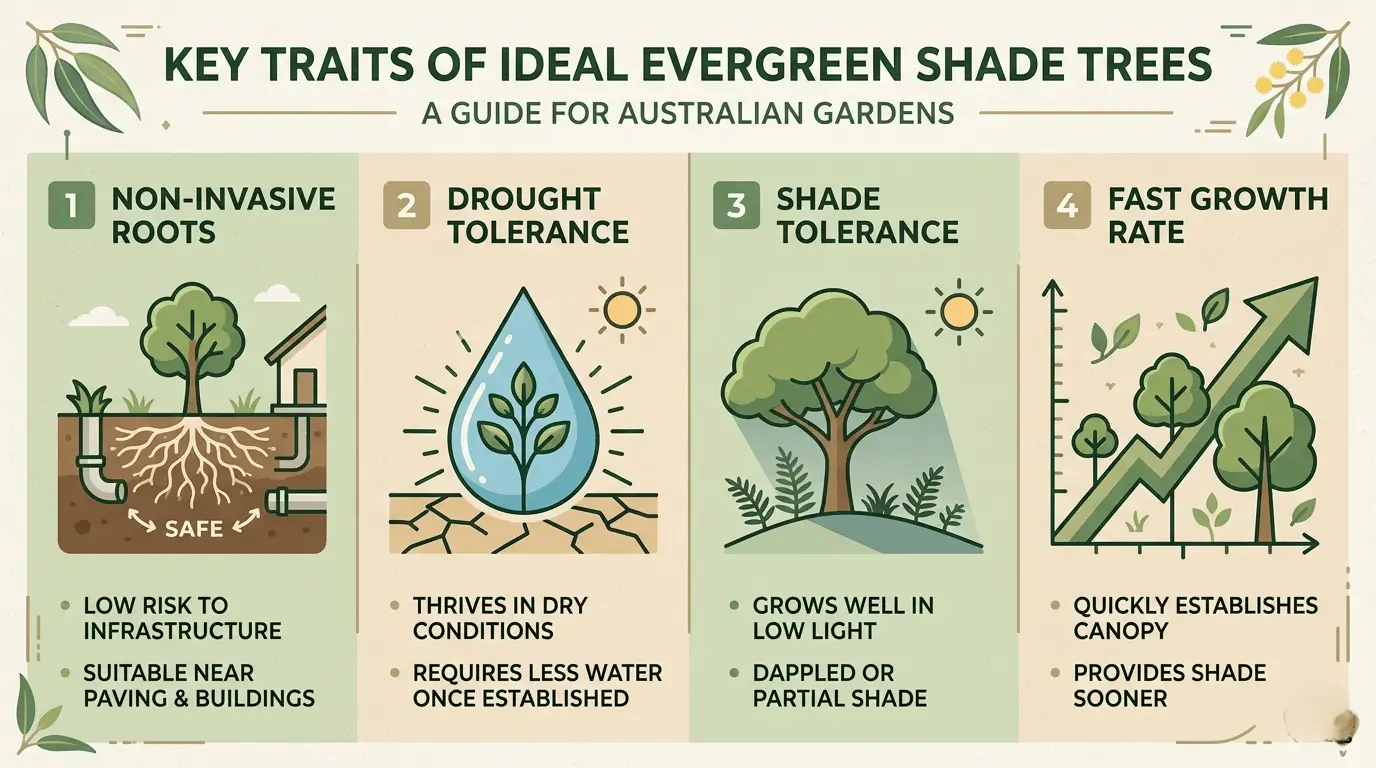
Selecting the right evergreen tree involves evaluating growth habits, root systems, and environmental adaptability, especially in Australian conditions.
Essential Traits
- Non-invasive roots: Prevent damage to foundations, pipes, and pavements
- Shade tolerance: Suitable for low-light or partially shaded areas
- Growth rate: Fast-growing trees (1–2m/year) establish canopy quickly
- Climate adaptability: Tolerant to drought, frost, and varying soil types
Growth and Tolerance Overview
| Trait | Ideal Range |
| Growth Rate | Fast: 1–2m/year |
| Drought Tolerance | Moderate to High |
| Frost Tolerance | Moderate (varies by species) |
| Root Behavior | Non-invasive preferred |
Top Australian Native Evergreen Shade Trees
Australian native trees are well-adapted to local climates, making them reliable for long-term growth and low maintenance.
Recommended Species
- Lilly Pilly (Syzygium spp.)
- Bottlebrush (Callistemon spp.)
- Tuckeroo (Cupaniopsis anacardioides)
- Coachwood (Ceratopetalum apetalum)
Natives vs Exotics Comparison
| Feature | Native Trees | Exotic Trees |
| Climate Adaptation | High | Moderate |
| Maintenance | Low | Variable |
| Wildlife Support | High | Lower |
| Water Needs | Lower | Often higher |
Species Comparison Table
| Tree | Height | Growth Rate | Root Type |
| Lilly Pilly | 6–12m | Fast | Non-invasive |
| Bottlebrush | 5–10m | Moderate | Generally safe |
| Tuckeroo | 8–12m | Fast | Non-invasive |
| Coachwood | 10–15m | Slow | Moderate |
Plant Size and Growth Rate
Evergreen shade trees vary in size from small front yard options to medium canopy trees suitable for larger landscapes.
Size Categories
- Small trees: 4–6m height/width (ideal for front yards)
- Medium trees: 8–12m canopy spread
- Large canopy trees: 12m+ for expansive shade
Growth Rate Insights
- Fast-growing trees can reach functional shade size in 5–10 years
- Moderate growers develop more slowly but require less maintenance
Factors Affecting Growth
- Soil quality and drainage
- Water availability
- Sunlight exposure (shade slows growth)
- Pruning and maintenance
Shade Tolerance and Placement Guide
Shade-tolerant evergreen trees can grow successfully in areas receiving less than 4 hours of direct sunlight.
Light Level Guide
- Full shade: Less than 4 hours of sun
- Partial shade: 4–6 hours of filtered light
- Dappled shade: Light filtered through canopy
Best Placement by Yard Type
| Yard Type | Recommended Trees |
| Small front yard | Dwarf Lilly Pilly |
| Backyard | Tuckeroo, Bottlebrush |
| Understory planting | Coachwood |
Placement Tips
- Use shade-loving trees beneath taller canopy layers
- Avoid planting in deep shade without airflow
- North-facing areas in Australia benefit from filtered light positioning
Comparison: Fast-Growing vs. Slow-Growing Options
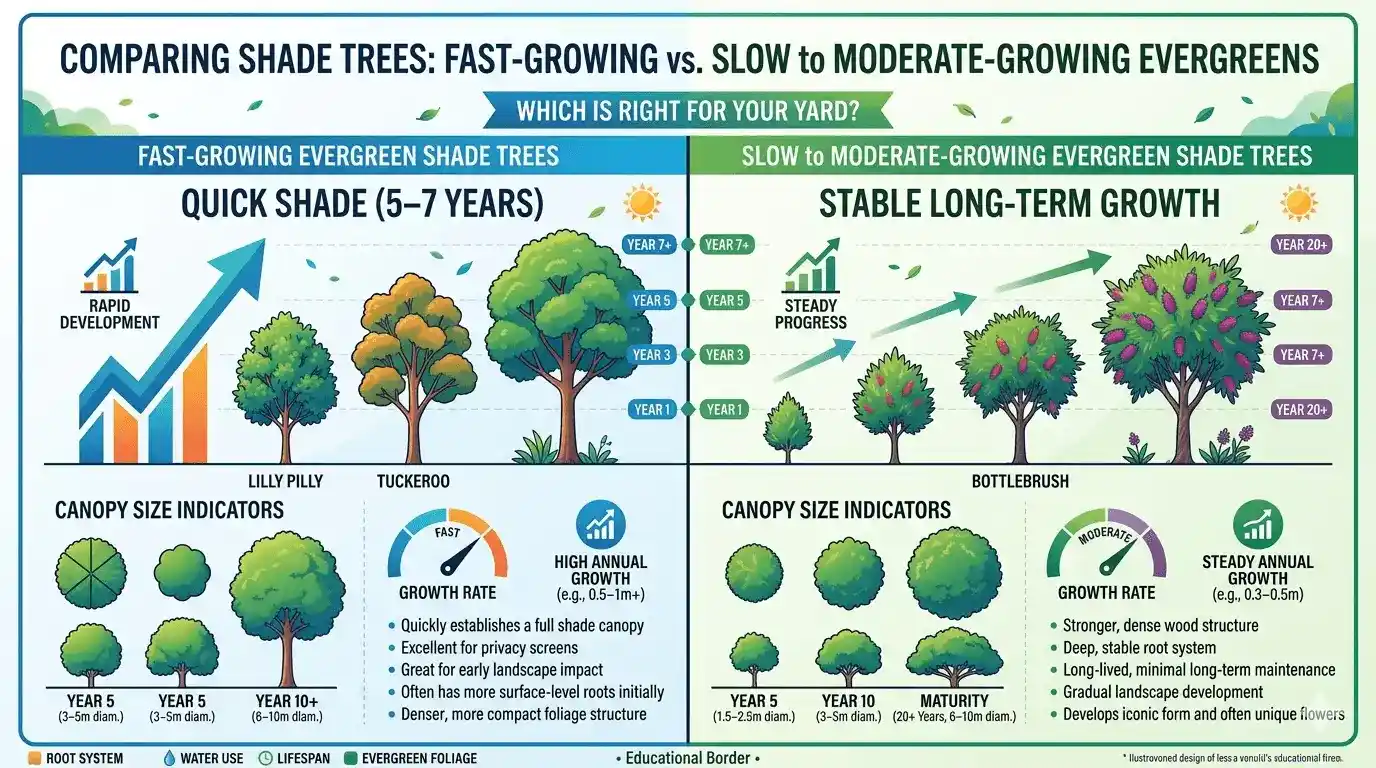
Fast-growing evergreen shade trees provide quick results, while slower-growing types offer longevity and structural stability.
| Type | Examples | Growth Rate | Mature Size | Best For |
| Fast-Growing | Lilly Pilly, Tuckeroo | 1–1.5m/year | 8–12m | Quick shade |
| Moderate | Bottlebrush | 0.5–1m/year | 6–10m | Low maintenance |
Key Differences
- Fast growers establish quickly but may need more pruning
- Moderate growers are easier to manage long-term
- Choice depends on urgency vs maintenance preference
Care Guide for Evergreen Shade Trees
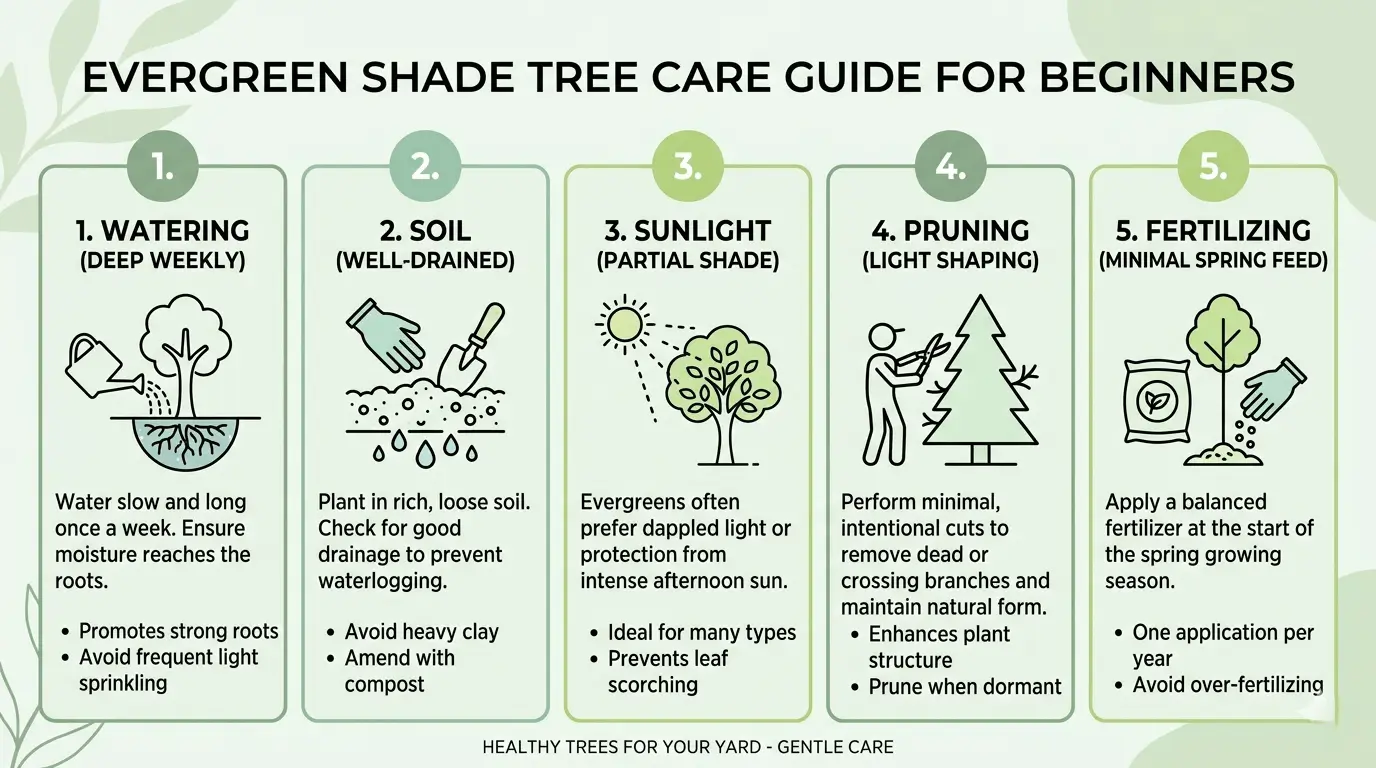
Proper care ensures healthy growth and long-lasting canopy coverage.
Core Care Requirements
- Watering: Deep watering weekly during establishment; reduce once mature
- Light: Partial shade to filtered sunlight preferred
- Soil: Well-drained soil with organic matter
- Fertilizer: Minimal; apply slow-release in spring if needed
- Pruning: Light pruning to shape and control size
- Climate: Choose species suited to local Australian zones
Practical Tips
- Mulch to retain moisture and regulate soil temperature
- Avoid overwatering, especially in clay soils
- Space trees properly to prevent overcrowding
Indoor plant care principles such as those used for plants like spider plants can also help improve general watering and maintenance awareness for outdoor trees.
Common Problems and Troubleshooting
Evergreen trees can face issues related to soil, water, and pests.
Common Issues and Solutions
- Yellow leaves
- Cause: Iron deficiency or overwatering
- Fix: Apply chelated iron fertilizer
- Prevent: Use acidic mulch and improve drainage
- Slow growth
- Cause: Poor soil or low nutrients
- Fix: Improve soil with compost
- Prevent: Regular soil conditioning
- Pest infestations (e.g., psyllids)
- Fix: Apply eco-oil spray
- Prevent: Maintain airflow and avoid overcrowding
Beginner Mistakes and Environmental Limitations
Many planting failures occur due to poor planning or misunderstanding environmental needs.
Common Mistakes
- Planting trees too close to structures without considering root zones
- Choosing species unsuitable for local climate conditions
- Overwatering young trees
Environmental Limitations
- Frost-sensitive species may struggle in colder regions
- Poor drainage can limit root development
- Extreme shade reduces growth rate
Seasonal Tips
- Protect young trees from frost using mulch or covers
- Adjust watering based on seasonal rainfall
Conclusion
Evergreen shade trees are essential for creating consistent canopy, cooling, and privacy in Australian landscapes. Their year-round foliage, shade tolerance, and low maintenance make them ideal for both small and large gardens. Native species offer the best adaptability, especially those with non-invasive roots and drought tolerance. By selecting trees based on space, climate, and growth rate, gardeners can achieve long-term success with minimal effort. The key takeaway is to prioritize resilient, fast-establishing evergreen trees that provide lasting environmental and aesthetic benefits.
FAQs
What are the best evergreen shade trees for Australia?
Australian native trees such as Lilly Pilly and Bottlebrush are among the best options due to their adaptability, fast growth, and tolerance to drought and frost conditions.
Which evergreen shade trees have non-invasive roots?
Trees like Tuckeroo and Dwarf Lilly Pilly are known for having non-invasive root systems, making them suitable for urban gardens and areas near structures.
How fast do evergreen shade trees grow in Australia?
Many evergreen shade trees grow at a rate of around 1 meter per year under ideal conditions, reaching functional shade size within 5 to 7 years.
Can evergreen shade trees grow in full shade?
Yes, certain shade-tolerant species such as Coachwood can grow in full shade, although growth may be slower compared to trees planted in partial sunlight.
What care do small evergreen shade trees need in front yards?
Small evergreen trees require well-drained soil, moderate watering during establishment, and occasional pruning to maintain shape, becoming drought-tolerant once mature.