
Introduction
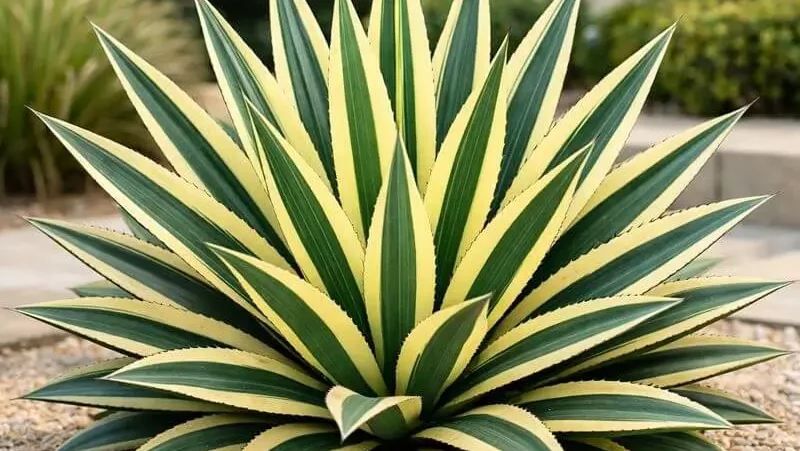
The false agave plant is a striking ornamental plant known for its bold, architectural form and strong resemblance to true agave species. At first glance, it clearly looks like an agave plant, which is why it is frequently mistaken for one in gardens and landscapes. Because of this resemblance, it is also commonly referred to as a faux agave plant, especially in decorative landscaping contexts. Despite its appearance, the false agave is not a true agave but belongs to a group of plants that closely mimic agave characteristics. These agave family look-alikes share similar leaf structures and growth habits, making identification confusing for many gardeners and plant enthusiasts.
What Is a False Agave Plant?
A false agave plant is an agave-like ornamental plant that resembles true agave in shape, leaf arrangement, and overall structure but differs botanically. It is typically identified by its stiff, sword-shaped leaves arranged in a rosette form, giving it a bold, sculptural presence.
The name “false agave” comes from this close visual similarity combined with its non-agave classification. While true agave plants belong to the Agave genus, false agave plants fall under different genera, most commonly Furcraea. The difference between false agave vs true agave lies primarily in botanical classification, growth behavior, and flowering patterns rather than outward appearance.
Is False Agave a Real Agave?
The term “agave false” is used to describe plants that resemble agave but are not true members of the Agave genus. Botanically, false agave plants do not share the same genus despite their similar form.
From a botanical standpoint, true agaves are succulents adapted to arid environments, while false agave species often have different moisture needs, flowering cycles, and reproductive habits. This clarification is essential for proper identification and care.
Plant of the Agave Family — Or Not?
False agave plants are often mistakenly described as a plant of agave family, but this is not technically accurate. While they share visual traits with agave plants, they belong to related plant groups rather than the true agave family line.
Their relationship is best described as agave-like rather than agave-derived. This distinction helps explain why they perform differently in landscapes and why their care requirements may not fully match those of real agave plants.
Scientific Name and Botanical Classification
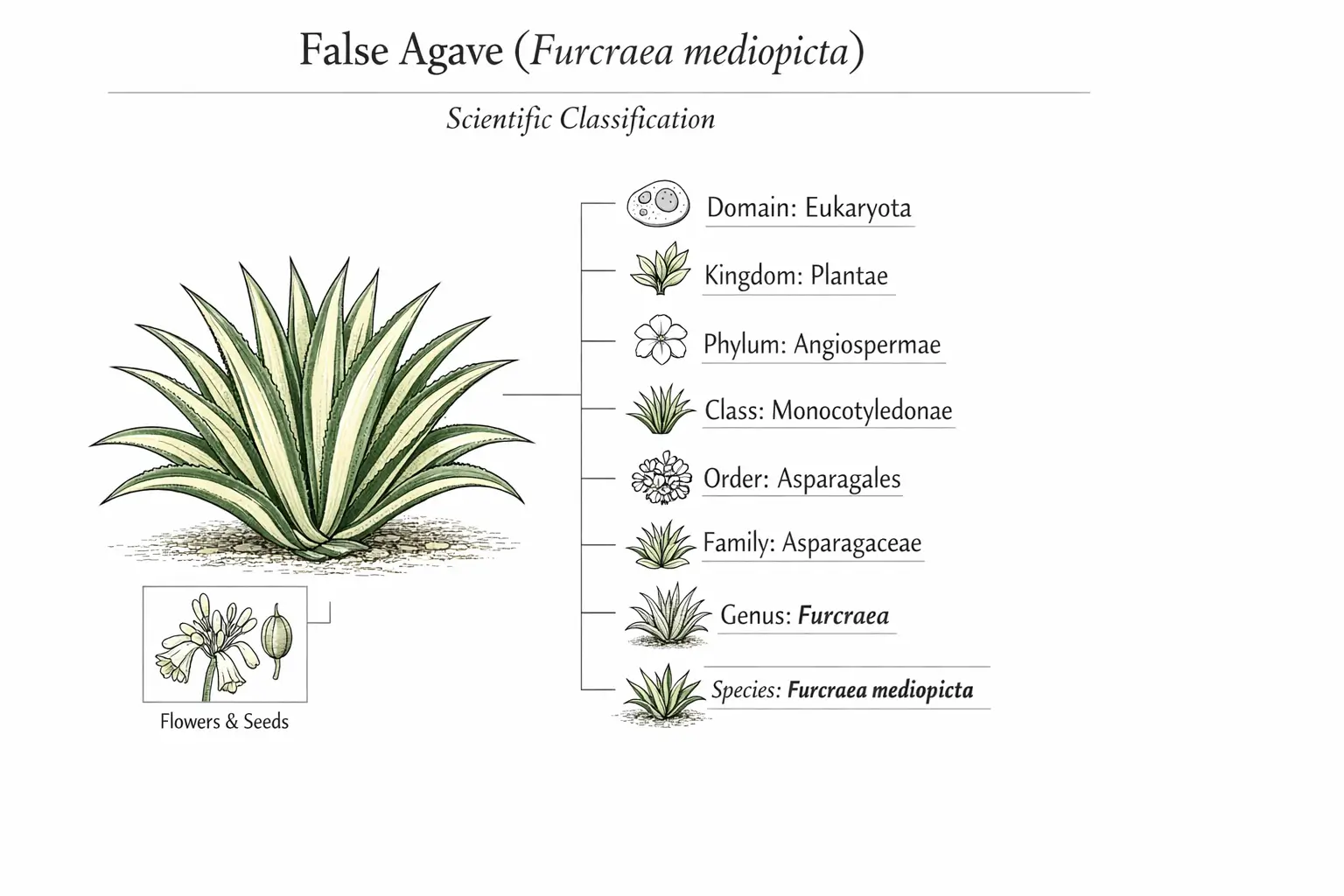
The most commonly recognized scientific name associated with the false agave plant is Furcraea mediopicta. This classification places it within the Furcraea genus, which includes several agave-like species known for ornamental use.
Some alternative scientific references may list it under closely related Furcraea varieties, depending on leaf coloration and growth patterns. However, Furcraea mediopicta remains the most widely accepted botanical identification.
Furcraea Foetida Mediopicta Explained
Furcraea foetida mediopicta is a cultivated form valued for its dramatic foliage and structured growth. Botanically, it differs from agave by producing a taller flowering stalk and by its method of reproduction, which often includes bulbils instead of seeds.
Key traits that separate it from agave include smoother leaf margins, different flowering behavior, and a longer-lived growth cycle. These features make it a popular alternative for gardeners seeking agave aesthetics without true agave limitations.
Furcraea Foetida Sweet Fluid
One natural characteristic of Furcraea foetida is the presence of sap, sometimes referred to as sweet fluid. This trait is useful for identification and distinguishes it from many true agave species.
The plant’s structural strength, leaf texture, and sap production all contribute to its unique botanical profile while maintaining an agave-like appearance.
Varieties of False Agave Plants
False agave plants are available in several ornamental varieties, each valued for its visual impact and adaptability. These types are commonly used in landscapes where bold, tropical forms are desired without the strict care demands of true agave.
Variegated False Agave
Variegated false agave is one of the most popular ornamental forms. It features dramatic leaf patterns with contrasting stripes or margins that enhance visual appeal.
- Cream, yellow, or light green variegation
- Strong contrast against deep green leaves
- Commonly labeled as false agave variegated in nurseries
This variety is especially prized in decorative and modern garden designs.
Tree Agave Appearance
Some false agave plants develop an upright growth habit, leading to the nickname “tree agave.” This appearance comes from a visible trunk-like stem supporting the leaf rosette.
It is called tree agave due to its height and structural form, even though it is not a true tree or a real agave. This growth habit makes it ideal as a focal plant in landscapes.
False Agave Plant Appearance and Growth
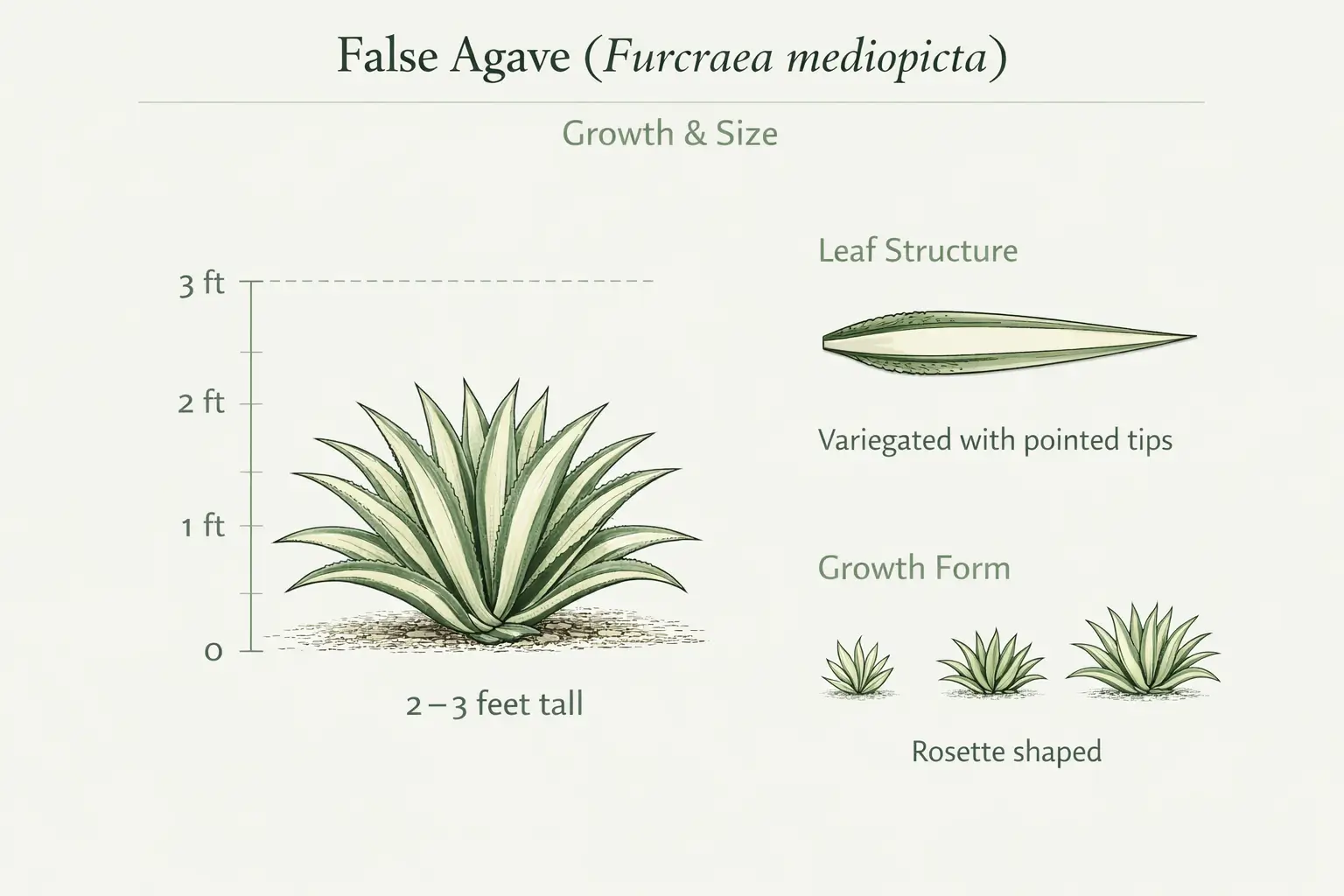
The false agave plant has a bold, symmetrical shape that closely matches popular agave varieties. It is often associated with agave plant big aesthetics and fits well into agave tropical landscape themes.
Its overall form is clean, structured, and visually striking, making it suitable for both residential and commercial landscapes.
Leaves, Color, and Structure
False agave leaves are long, stiff, and sword-like, forming a dense rosette. The foliage closely resembles plants that look like agave plant species commonly used in arid and tropical designs.
Leaf color ranges from deep green to variegated tones, depending on the variety. The smooth or lightly textured surface further adds to its ornamental value.
Mature Size and Landscape Impact
At maturity, false agave plants can reach several feet in height and width, depending on the species and growing conditions. Their size makes them ideal as statement plants.
They are well-suited for:
- Large garden beds
- Entryway focal points
- Modern and tropical landscapes
Their scale and structure create strong visual impact without overcrowding surrounding plants.
Growing False Agave Plant
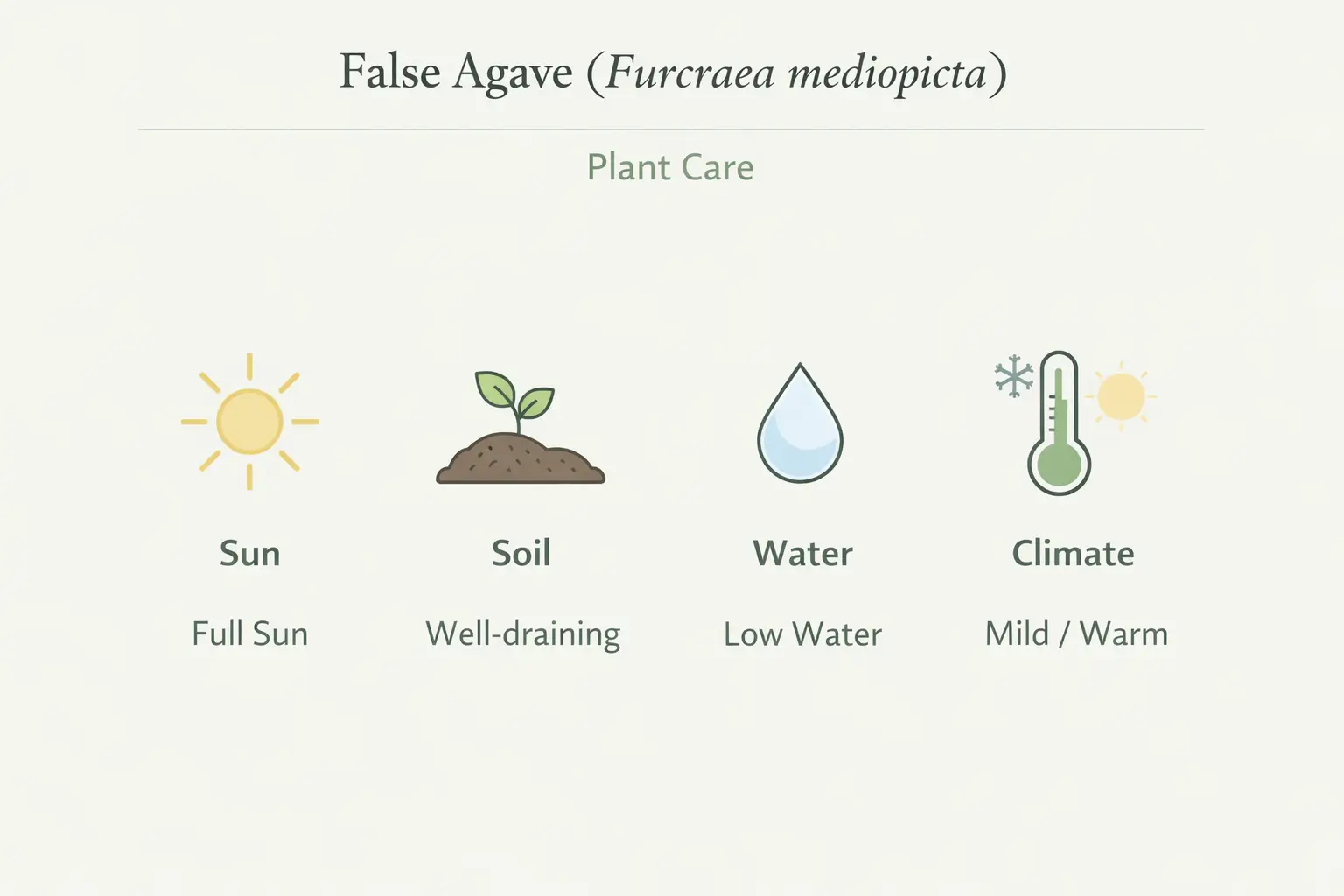
Growing a false agave plant is relatively straightforward due to its adaptable nature. It is known for being low-maintenance while still offering dramatic visual appeal.
False Agave Florida Growing Conditions
False agave Florida cultivation is common due to the plant’s tolerance for warm, humid climates. It performs well in regions with mild winters and consistent warmth.
Florida’s climate supports healthy growth, provided the plant is placed in well-draining soil and receives adequate sunlight.
Soil, Sunlight, and Water Needs
False agave plants prefer:
- Well-draining soil
- Full sun to partial shade
- Moderate watering once established
They are valued for their low-maintenance appeal and do not require intensive care, making them suitable for both beginner and experienced gardeners.
False Agave vs Agave — Key Differences
When comparing false agave vs agave, the differences become clearer beyond appearance. Growth cycle, flowering behavior, and lifespan vary significantly.
False agave plants generally have a longer lifespan and different flowering structures compared to true agave, which often flower once and die.
Visual Similarities That Cause Confusion
Many people mistake false agave for real agave because it looks like agave plant species commonly used in landscaping. The leaf shape, rosette form, and size all contribute to this confusion.
Structural and Botanical Differences
Key distinctions include:
- Different botanical genus
- Variations in flowering behavior
- Differences in sap, reproduction, and lifespan
These structural and botanical differences confirm that false agave is an agave look-alike rather than a true agave.
Uses of False Agave Plant
The false agave plant is primarily used for ornamental landscaping. Its strong form complements tropical, minimalist, and modern garden designs.
It is frequently chosen for:
- Residential landscapes
- Commercial properties
- Contemporary outdoor designs
Read Also:7 Stunning Purple Trailing Lantana Benefits for Easy Landscaping
Faux Agave Plant in Decorative Landscaping
Landscape designers favor the faux agave plant for its visual strength and low maintenance requirements. It provides the agave look without the strict care needs of true agave species.
Its durability, adaptability, and bold appearance make it a preferred choice in decorative landscaping projects.
Is False Agave Plant Safe and Easy to Maintain?
False agave plants are generally easy to maintain and suitable for a wide range of environments. They require minimal pruning and tolerate occasional neglect.
From a safety perspective, basic care should be taken when handling the plant due to its stiff leaves, but overall it is considered manageable and practical for most garden settings.
Conclusion
The false agave plant stands out for its bold, agave-like appearance combined with easier care and broader adaptability. While it closely resembles a true agave, its botanical differences, longer lifespan, and flexible growth habits make it a practical alternative for many landscapes. Choosing a false agave over a real agave is ideal when you want the same sculptural impact without the strict growth cycle or environmental limitations of true agave plants. Whether used as a focal point or a structural accent, it fits seamlessly into modern, tropical, and ornamental garden designs. Consider the false agave plant if you want strong visual appeal with low-maintenance performance in your landscaping or garden space.
Read Also: 9 Stunning Reasons to Grow Japanese Sweet Flag at Home
FAQs — False Agave Plant
What is the false agave plant used for?
The false agave plant is mainly used for ornamental landscaping. It is popular in tropical, modern, and architectural garden designs where a bold, agave-like form is desired without the care challenges of true agave.
Is false agave the same as agave?
No, false agave is not the same as agave. Although it looks similar, it belongs to a different botanical genus and differs in growth cycle, flowering behavior, and lifespan.
How big does a false agave plant grow?
A false agave plant can grow several feet tall and wide, depending on the variety and growing conditions. Its mature size makes it suitable as a statement plant in gardens and landscapes.
Can false agave grow in Florida?
Yes, false agave can grow well in Florida. Warm temperatures and adequate sunlight support healthy growth, making it well-suited for Florida’s climate.
What is Furcraea mediopicta?
Furcraea mediopicta is the scientific name most commonly associated with the false agave plant. It refers to an agave-like species known for its ornamental foliage and structured form.
Does false agave require special care?
False agave does not require special care. It prefers well-draining soil, moderate watering, and adequate sunlight, making it a low-maintenance option for most gardeners.




4 Comments on “False Agave Plant: 7+ Stunning Facts Gardeners Love”