
Introduction
Ficus flash growth rate refers to how quickly ficus hillii ‘flash’ develops in height, width, and density under different conditions. This popular evergreen hedge plant, scientifically related to Ficus microcarpa var. hillii, is known for its relatively fast growth, making it ideal for privacy screens, hedges, and landscaping. Gardeners and landscapers often choose ficus hillii ‘flash’ because it establishes quickly and forms dense greenery. However, its growth rate varies depending on climate, soil quality, sunlight, and planting method. Understanding these factors helps set realistic expectations and ensures proper care for achieving faster, healthier growth.
Quick Summary
- Ficus hillii ‘flash’ growth rate is typically fast to moderate depending on growing conditions
- Can grow 30–60 cm (1–2 ft) per year in ideal outdoor environments
- Growth varies based on climate, soil, light, and whether planted in ground or pots
- Widely used for ficus hedging and privacy screens due to dense foliage
What Is Ficus Hillii ‘Flash’?
Overview of the Plant
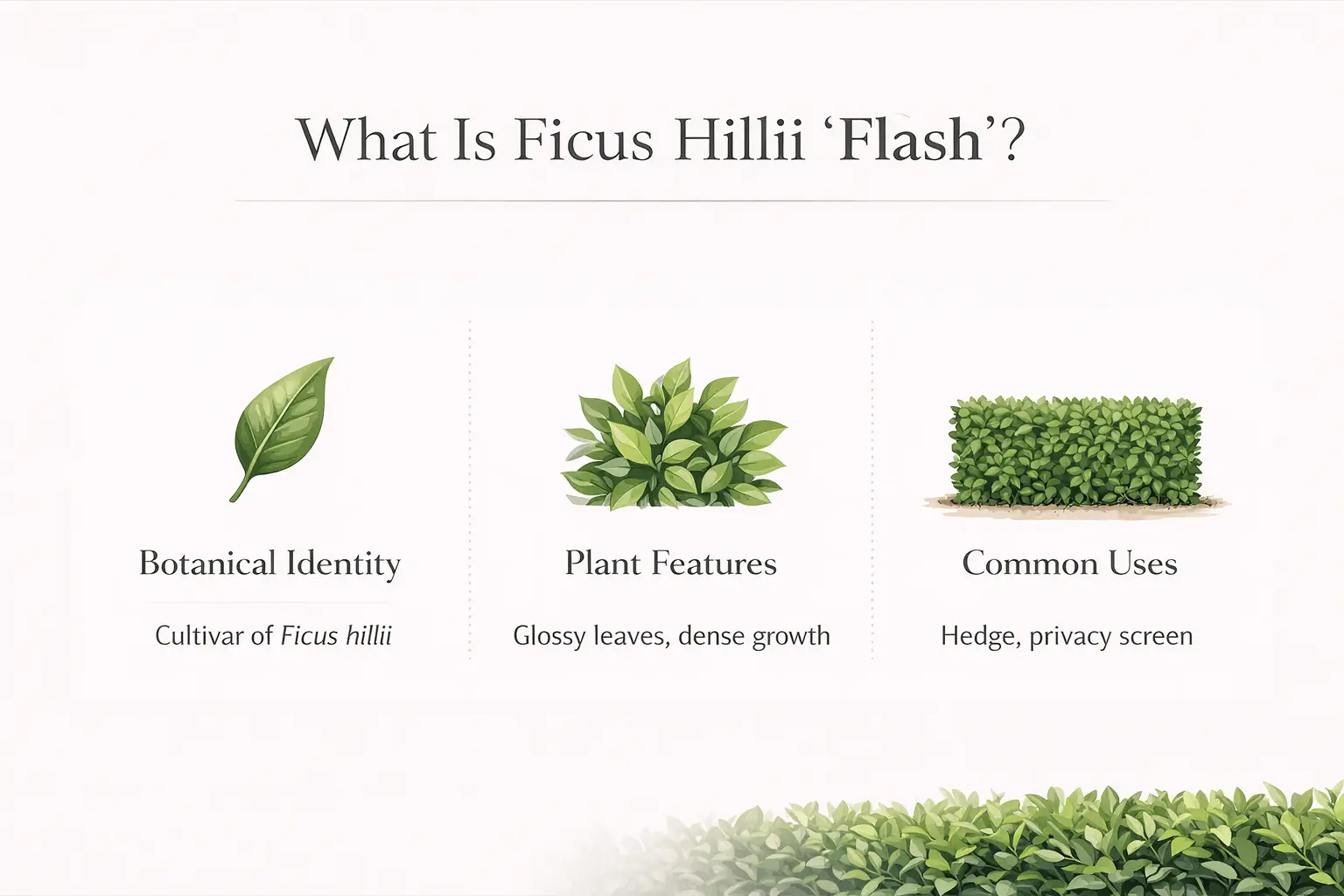
Ficus hillii ‘flash’ is a cultivated variety of ficus hillii, closely related to Ficus microcarpa hillii flash. It is an evergreen tree known for its glossy green leaves, compact structure, and upright growth habit. Compared to standard ficus hillii, the ficus flash variety is selected for denser foliage and more uniform hedge growth, making it highly suitable for landscaping.
Botanically, ficus hillii ‘flash’ belongs to the Ficus microcarpa group—learn more about its species background on Wikipedia.
Common Uses
Ficus hillii ‘flash’ is widely used as:
- A ficus hillii flash hedge for privacy and boundary screening
- A landscaping plant in residential and urban spaces
- Structured forms such as pleached ficus hillii for decorative design
Its adaptability and fast growth make it a preferred ficus hedging plant in many climates.
Ficus hillii ‘flash’ is often compared with other fast-growing screening plants—explore more options in Tropical Privacy Plants for Fast Screening to find the best fit for your landscape.
Ficus Flash Growth Rate Explained
How Fast Does Ficus Hillii ‘Flash’ Grow?
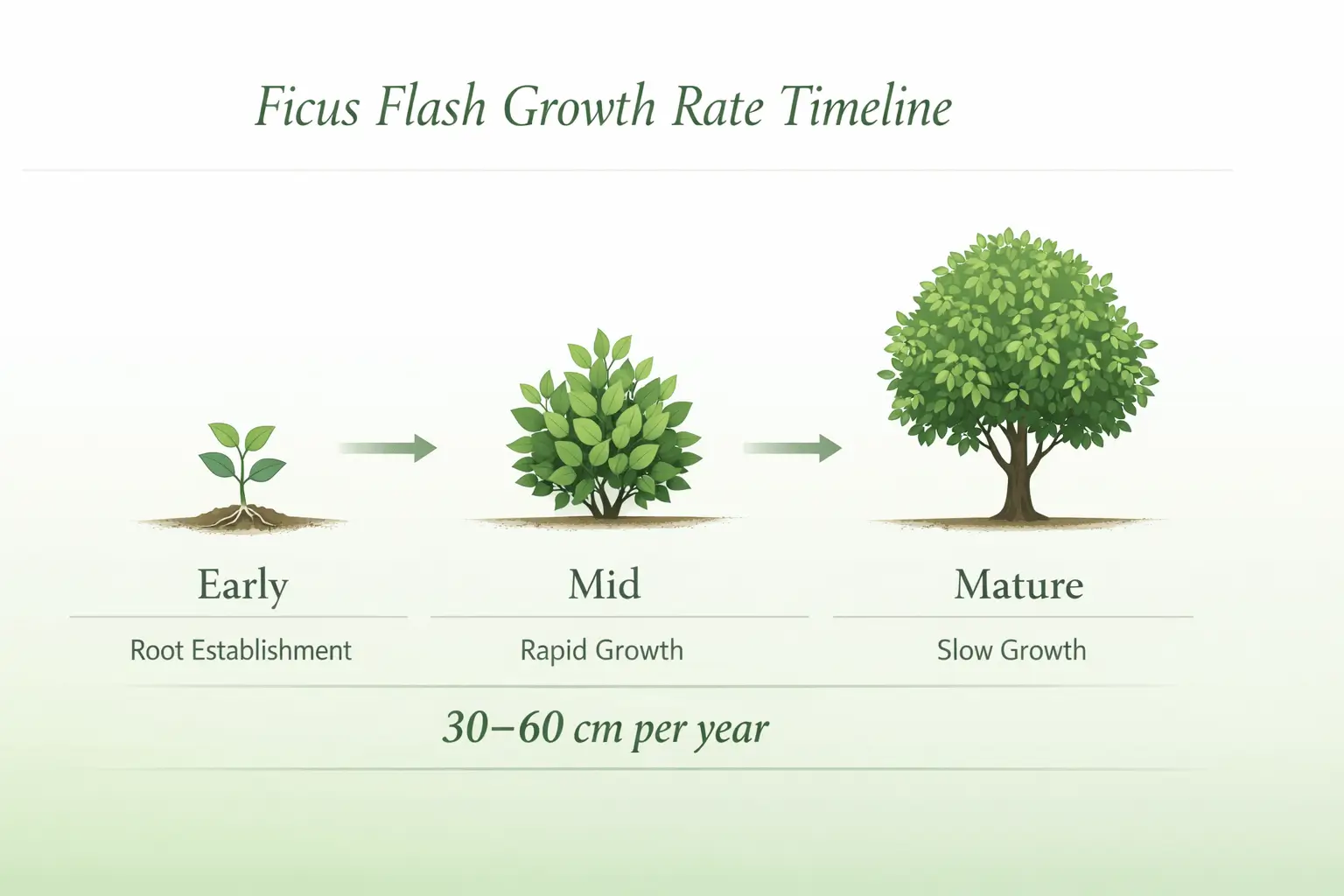
Ficus hillii flash growth rate is generally fast under optimal conditions, typically reaching 30–60 cm (1–2 ft) per year outdoors. In less ideal environments, such as poor soil or low light, growth slows significantly.
Growth Pattern Over Time
Ficus flash growth follows a predictable pattern:
- Early stage: Moderate growth while roots establish
- Mid stage: Rapid vertical and lateral expansion, ideal for hedge formation
- Mature stage: Growth slows as the plant approaches its full size
This progression helps explain why hedges fill quickly after the initial establishment phase. Growth speed can vary widely between species—for example, compare with fruiting trees in Pineapple Guava Tree Growth Rate to understand different growth patterns.
Growth Rate by Environment (Ground vs Pots)
Outdoor Ground Growth
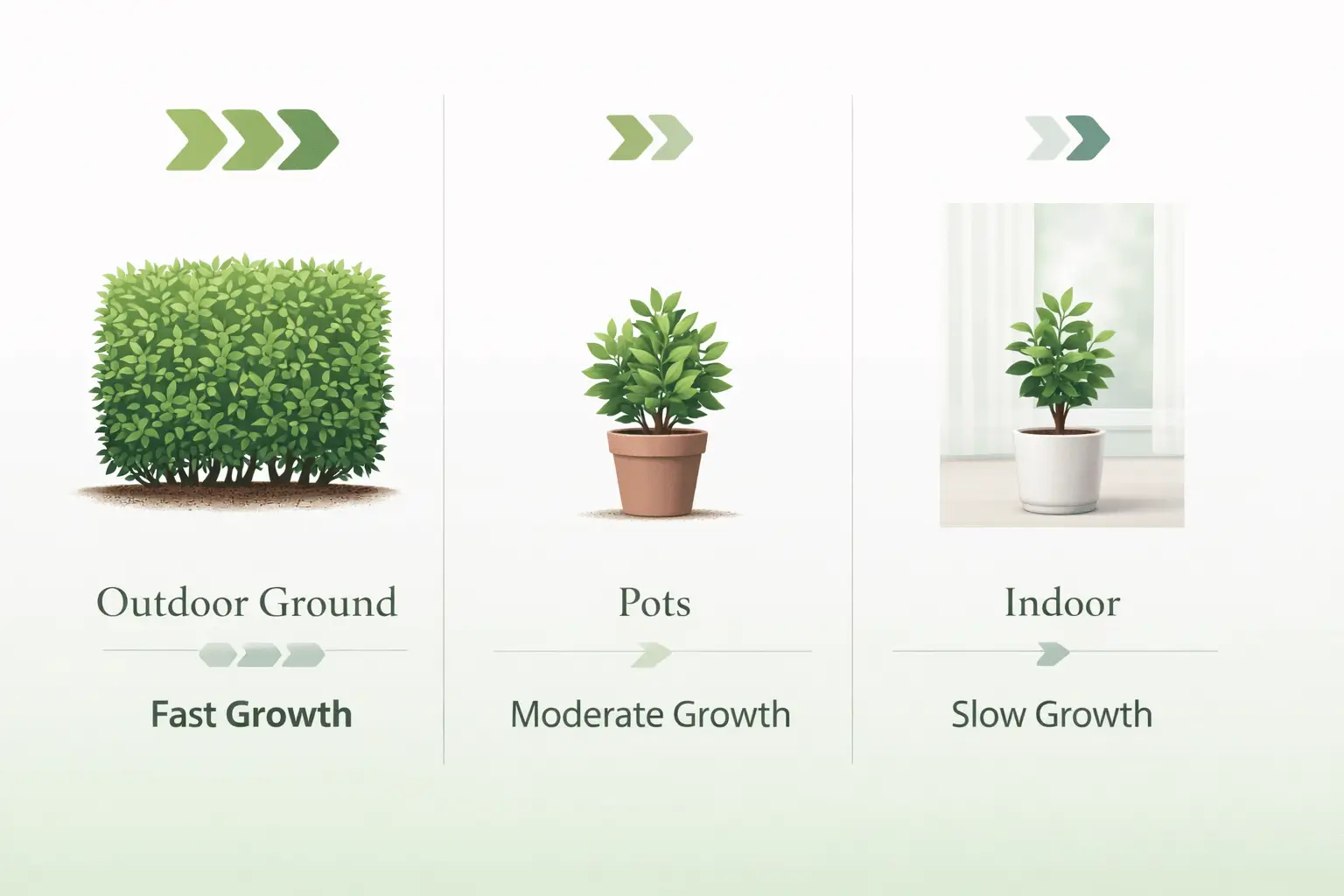
When planted in the ground, ficus hillii ‘flash’ grows faster due to unrestricted root expansion. This environment supports strong root systems, making it ideal for large hedges and privacy screens.
Growth in Pots
Ficus hillii flash in pots grows more slowly because roots are confined. This limitation reduces overall growth speed and requires:
- More frequent watering
- Regular fertilization
- Periodic repotting
Indoor vs Outdoor Growth
- Indoor growth: Slower due to limited light and environmental constraints
- Outdoor growth: Significantly faster with access to sunlight and space
Overall, ficus flash growth rate in pots or indoors is noticeably reduced compared to outdoor planting.
Ficus Hillii ‘Flash’ Size and Height Over Time
Typical Mature Size
If left unpruned, ficus hillii flash height can reach:
- Height: 6–10 meters (20–30 ft)
- Width: Variable depending on spacing and pruning
Hedge Size Control
For hedging, it is typically maintained at:
- 2–5 meters tall
- Dense and compact for privacy screening
Size Overview
| Growth Stage | Height Range | Growth Behavior |
| Young plant | 0.5–1.5 m | Establishing roots |
| Mid growth | 2–5 m | Rapid hedge formation |
| Mature ficus tree | 6–10 m+ | Slower, dense canopy |
Factors That Affect Ficus Flash Growth Rate
Key Growth Influencers
Several factors directly impact ficus flash growth rate:
- Sunlight: Full sun to partial shade promotes faster growth
- Soil quality: Fertile, well-draining soil supports healthy roots
- Watering: Consistent moisture without waterlogging
- Temperature: Warm climates accelerate growth
Growing Zones and Climate
Ficus hillii flash growing zones are typically warm and frost-free regions. It performs exceptionally well in climates like Australia, where conditions support faster and more consistent growth.
Care Guide for Faster Growth
Essential Care Practices
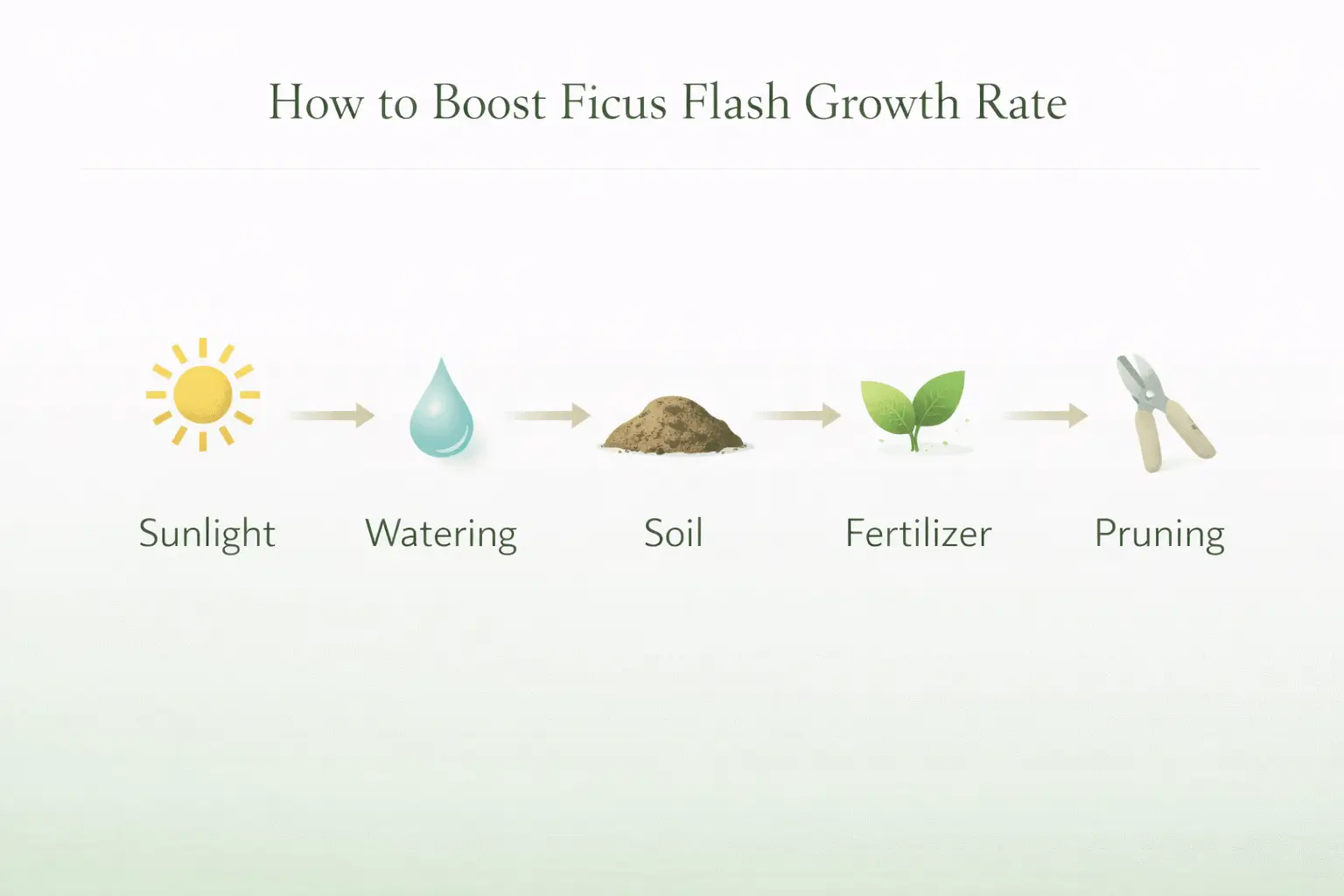
To maximize ficus hillii ‘flash’ growth rate:
- Watering: Keep soil evenly moist but well-drained
- Light: Provide full sun for optimal growth
- Soil: Use nutrient-rich, well-draining soil
- Fertilizer: Apply balanced fertilizer during the growing season
- Pruning: Regular trimming encourages dense hedging
Practical insight: Overwatering is a common mistake—roots need oxygen as well as moisture. Poor drainage can slow growth significantly.
Ficus Flash Hedge Growth and Spacing
How Fast a Ficus Hedge Fills In
A ficus flash hedge can become dense within 2–4 years under proper conditions. Faster results occur with consistent pruning and optimal care.
Spacing Guidelines
- Recommended spacing: 1–1.5 meters apart
- Closer spacing leads to quicker hedge formation but may require more maintenance
Proper spacing ensures balanced growth and reduces competition between plants. If you’re comparing hedge options, plants like ficus flash and cherry laurel both offer dense privacy—see how they differ in Carolina Cherry Laurel Hedge.
Common Problems That Slow Growth
Typical Issues
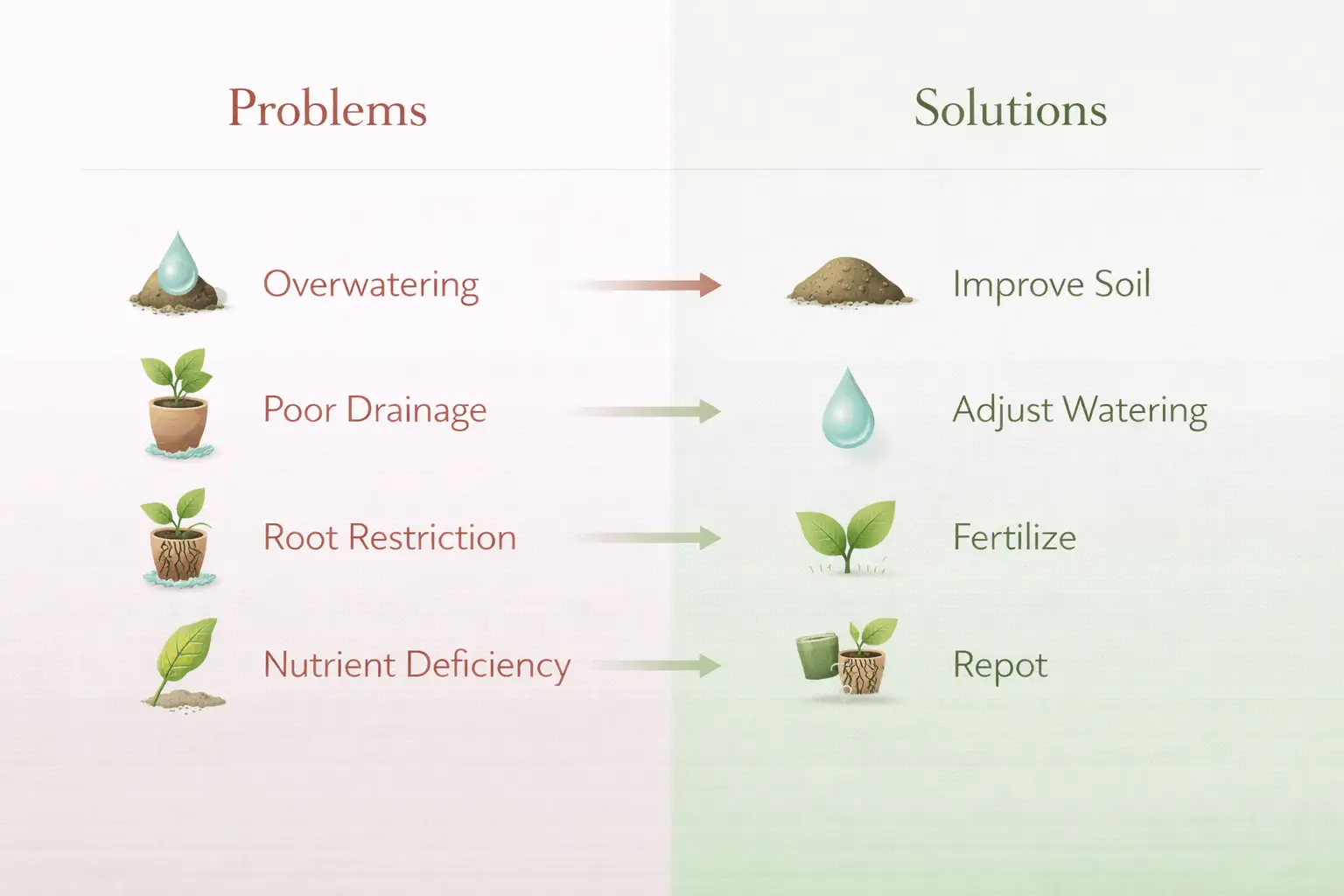
Ficus flash problems that reduce growth include:
- Root restriction or stress (especially in pots)
- Overwatering or poor drainage
- Nutrient deficiencies
- Environmental stress or pests
How to Fix and Prevent
- Improve soil structure and drainage
- Adjust watering frequency
- Use appropriate fertilizers
- Monitor plant health regularly
Addressing these issues early prevents long-term growth delays.
Comparison: Ficus Flash vs Other Ficus Varieties
Growth Rate Comparison
| Variety | Growth Speed | Common Use |
| Ficus hillii ‘flash’ | Fast | Hedging, screening |
| Ficus ruby | Moderate | Indoor ornamental |
| Ficus microcarpa | Fast | Bonsai, landscaping |
Ficus hillii ‘flash’ stands out for its combination of rapid growth and dense foliage, making it superior for hedging compared to many ornamental ficus types.
Beginner Mistakes That Affect Growth
Common mistakes that slow ficus hillii flash growth rate include:
- Planting in poor or compacted soil
- Overwatering, especially in pots
- Skipping pruning, leading to uneven growth
- Incorrect spacing, causing overcrowding
Fixes:
- Use well-draining soil
- Water only when needed
- Prune regularly for structure
- Follow proper spacing guidelines
Conclusion
The ficus flash growth rate makes ficus hillii ‘flash’ one of the best choices for fast-growing hedges and privacy screens. With proper care, sunlight, and spacing, it can quickly develop into a dense, mature ficus tree or hedge. However, environmental conditions and maintenance practices play a crucial role in determining growth speed. By understanding its requirements and avoiding common mistakes, gardeners can achieve healthier plants and faster, more consistent results.
FAQs
How fast does ficus hillii ‘flash’ grow per year?
It typically grows 30–60 cm per year in ideal outdoor conditions with proper sunlight, water, and soil quality.
Does ficus flash grow faster in the ground or pots?
Ficus flash grows significantly faster in the ground because roots can expand freely, improving nutrient and water uptake.
What is the maximum height of ficus hillii ‘flash’?
It can reach 6–10 meters in height if left unpruned, forming a large mature ficus tree.
Why is my ficus flash not growing?
Common causes include poor soil, lack of sunlight, overwatering, root restriction, or nutrient deficiencies.
How long does a ficus flash hedge take to grow?
A dense hedge usually forms within 2–4 years when planted with proper spacing and maintained correctly.
Can ficus hillii ‘flash’ grow indoors?
Yes, but growth is slower indoors due to limited light and environmental conditions compared to outdoor planting.