Introduction
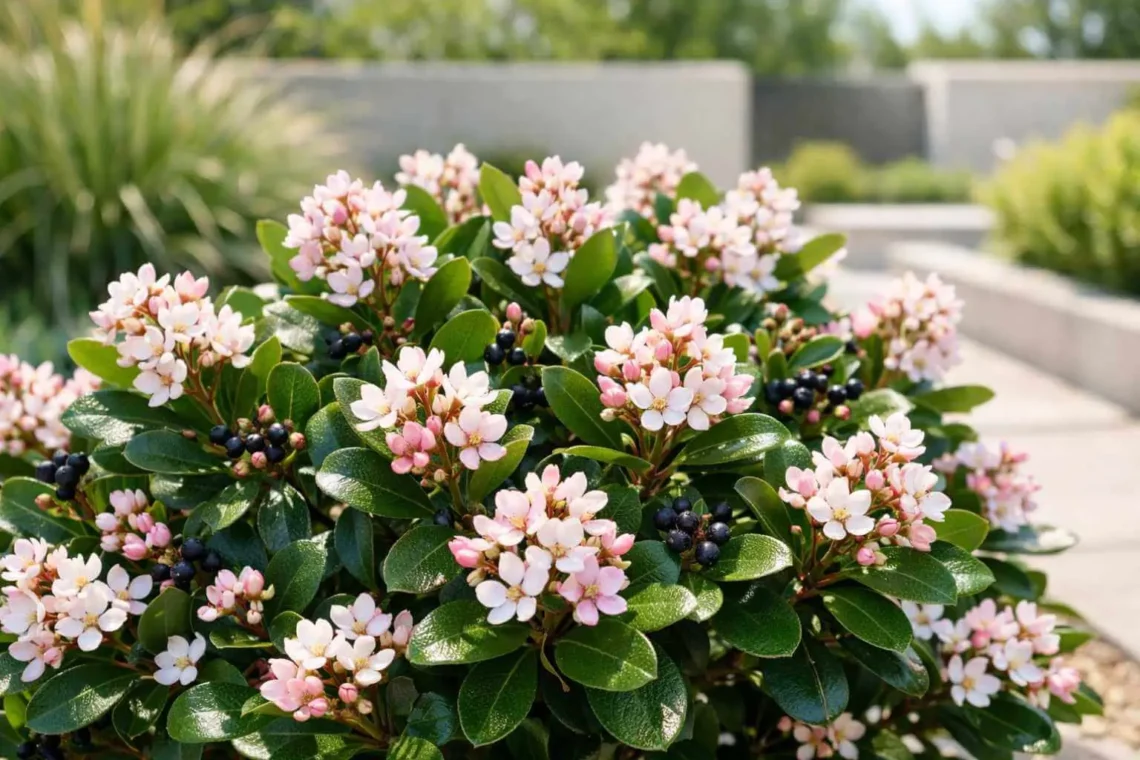
The indian hawthorn plant is a compact, evergreen shrub valued for its glossy foliage, seasonal flowers, and low-maintenance nature. Widely used in residential and commercial landscapes, it provides year-round structure while adding color during bloom periods. Botanically known as Rhaphiolepis indica, this plant is popular for hedges, borders, and foundation plantings due to its neat growth habit and adaptability. Gardeners appreciate its clusters of pink or white flowers, followed by small berries that enhance ornamental appeal and attract wildlife. With good drought tolerance and consistent evergreen coverage, the indian hawthorn plant is a reliable choice for warm-climate gardens seeking both beauty and durability.
What Is the Indian Hawthorn Plant?
-
Indian Hawthorn Scientific Name & Botanical Profile
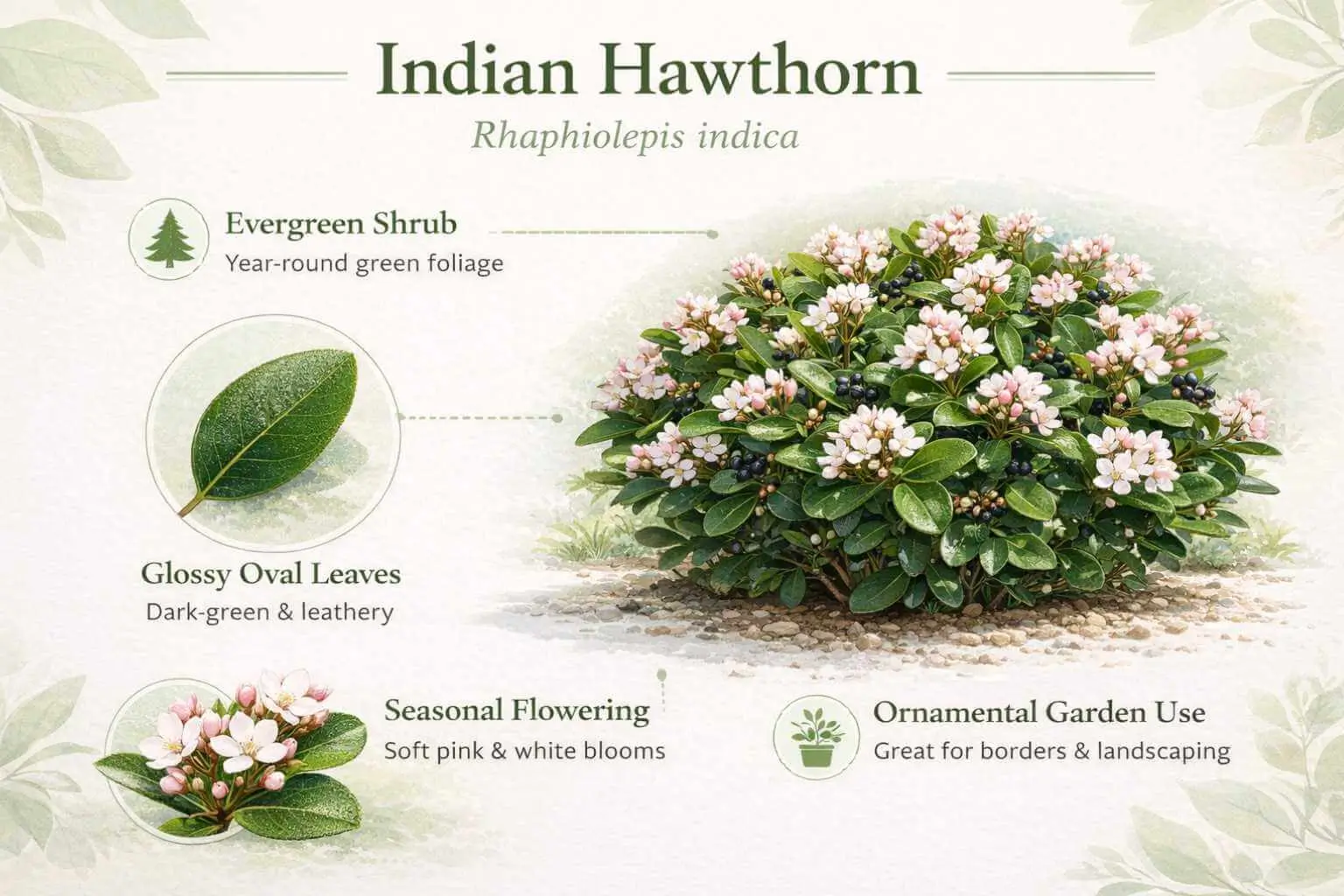
The indian hawthorn scientific name is Rhaphiolepis indica, a member of the rose family. This rhaphiolepis plant is an evergreen shrub with dense branching and leathery, oval-shaped leaves. Its foliage remains glossy green throughout most of the year, offering strong visual structure even outside the flowering season. Seasonal appeal increases in spring when flower clusters emerge, making rhaphiolepis a dependable ornamental shrub for landscapes that require year-round interest.
-
Indian Hawthorn Trees vs Shrubs
Indian hawthorn shrubs are often confused with small trees, but their natural growth habit is bush-like rather than tree-forming. An indian hawthorn shrub typically stays low and rounded, while an indian hawthorn tree appearance is achieved only through selective pruning. Indian hawthorn bushes are best suited for mass planting, hedges, and borders, whereas tree-style forms are uncommon and require ongoing shaping to maintain a single trunk.
Indian Hawthorn Varieties & Types
-
Popular Indian Hawthorn Varieties
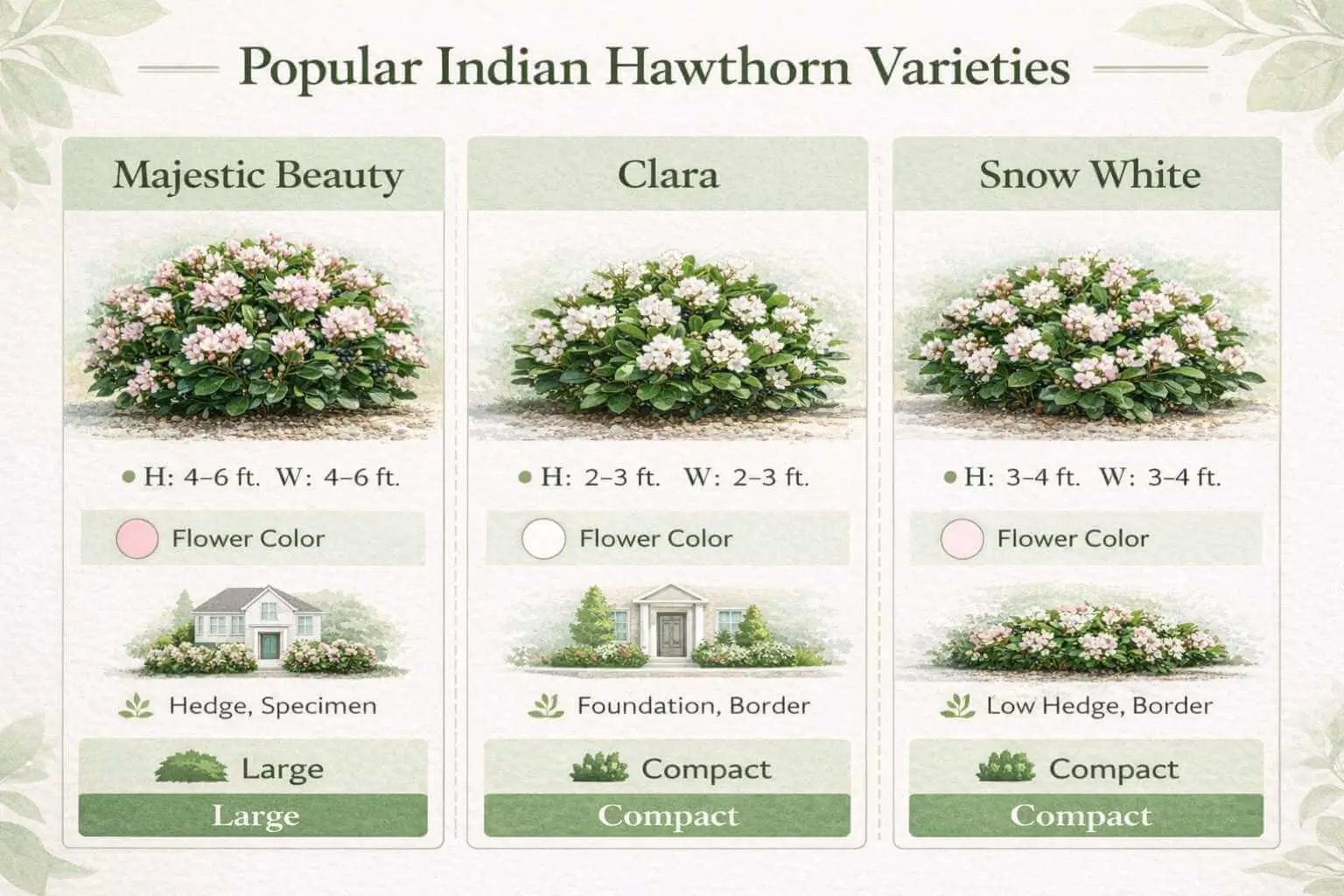
Indian hawthorn varieties differ in flower color, mature size, and growth habit. Common indian hawthorn types include compact shrubs for small gardens and larger cultivars for open landscapes. Flower colors range from soft pink to bright white, while foliage density and branching patterns vary by variety. Choosing the right cultivar depends on available space, desired height, and ornamental preference.
-
Majestic Beauty Indian Hawthorn
Rhaphiolepis indica ‘Majestic Beauty’ is a larger cultivar known for its vigorous growth and showy blooms. The majestic beauty indian hawthorn produces pale pink flowers and forms a broad, rounded shape. Often referred to as majestic indian hawthorn or majestic hawthorn, this variety can also be trained as a majestic beauty indian hawthorn tree in spacious landscapes, making it suitable for focal plantings.
-
Clara Indian Hawthorn
The clara indian hawthorn, botanically Rhaphiolepis indica ‘Clara’, is valued for its compact size and dense growth. This clara hawthorn shrub fits well in foundation beds and low hedges. When considering indian hawthorn clara size, gardeners can expect controlled growth that requires minimal pruning, making it ideal for smaller residential gardens.
-
Snow White & White Indian Hawthorn
The snow white indian hawthorn shrub stands out for its crisp white blooms. White-flowering cultivars, often called indian hawthorn white or white hawthorn shrub, provide a clean, bright contrast against dark green foliage. These varieties are commonly used in formal landscapes where uniform color and structure are desired.
Indian Hawthorn Plant Care Guide
-
Planting Indian Hawthorn
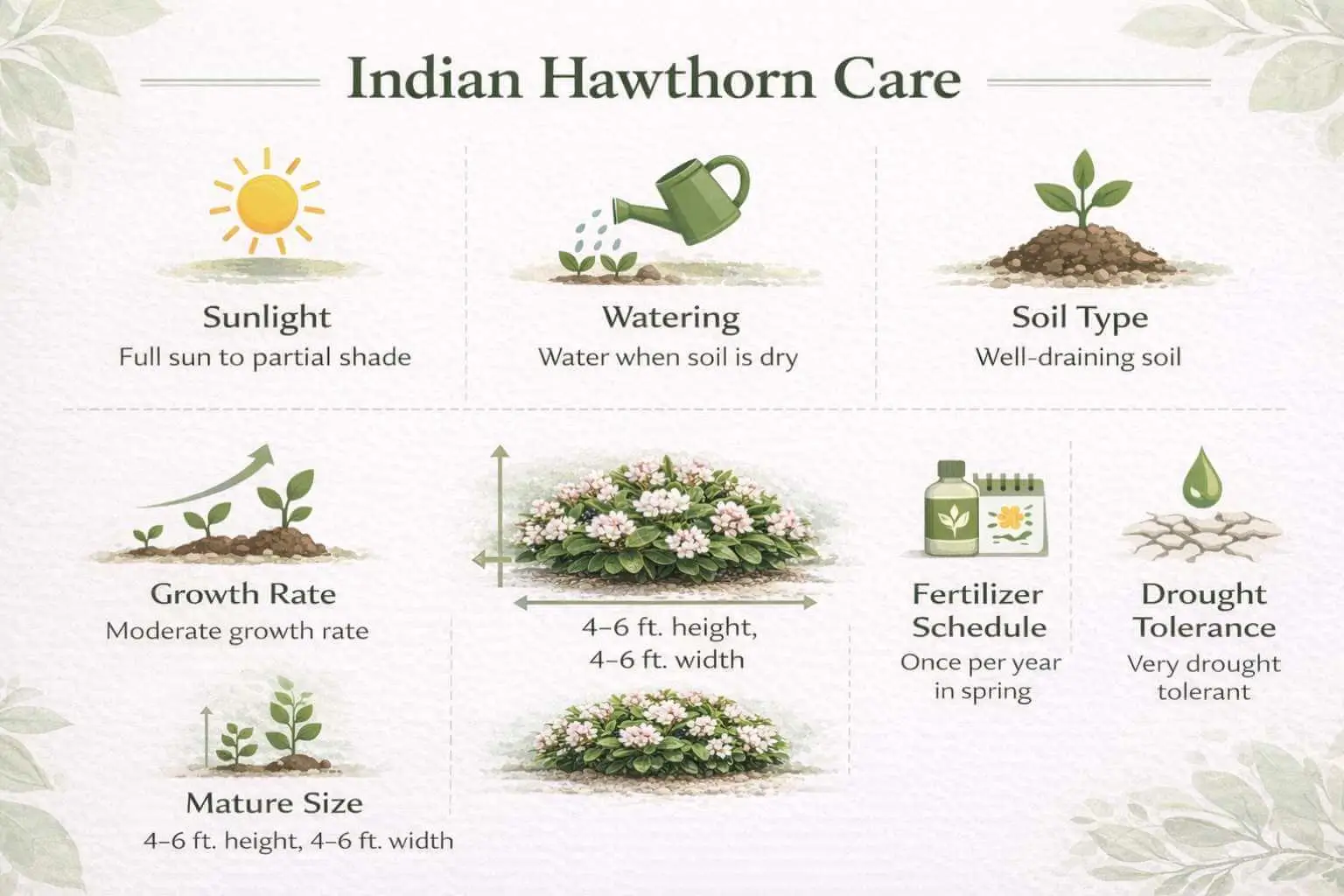
Planting indian hawthorn requires well-draining soil and full sun to partial shade. Proper spacing ensures air circulation and healthy growth. Shrubs should be planted with enough room to reach mature width without crowding, which helps reduce disease risk and supports uniform shape.
-
Indian Hawthorn Growth Rate & Size
The indian hawthorn growth rate is moderate, allowing the plant to establish steadily without aggressive spread. Gardeners often ask how big does indian hawthorn get; most varieties reach 3–6 feet in height and width, depending on cultivar and growing conditions.
-
Fertilizer for Indian Hawthorn
Using the right fertilizer for indian hawthorn supports healthy foliage and consistent flowering. A balanced, slow-release indian hawthorn fertilizer applied in early spring is usually sufficient. Over-fertilizing should be avoided, as excessive nutrients can encourage weak growth.
-
Watering & Evergreen Maintenance
As an indian hawthorn evergreen, this plant requires regular watering during establishment but shows good drought tolerance once mature. Consistent care includes seasonal watering adjustments and light pruning to maintain shape and airflow, which supports overall indian hawthorn care.
Indian Hawthorn Flowers, Berries & Bloom Time
-
When Does Indian Hawthorn Bloom?
Gardeners often ask when does indian hawthorn bloom. Flowering typically occurs in spring, with timing influenced by climate and local weather conditions. In warmer regions, blooms may appear earlier, answering both when does indian hawthorn bloom and when do indian hawthorn bloom questions.
-
Indian Hawthorn Flowers & Fragrance
Indian hawthorn flowers appear in clustered blooms, ranging from pale pink to bright white. These flowers offer light fragrance and add strong seasonal interest, making indian hawthorn flowers a highlight of spring landscapes.
-
Indian Hawthorn Berries & Fruit
After flowering, indian hawthorn berries develop as small, dark fruits. Indian hawthorn fruit provides visual interest and wildlife value. While birds consume them, gardeners often ask are indian hawthorn berries edible; they are generally not considered suitable for human consumption.
Common Indian Hawthorn Diseases & Problems
-
Fungal Diseases in Indian Hawthorn
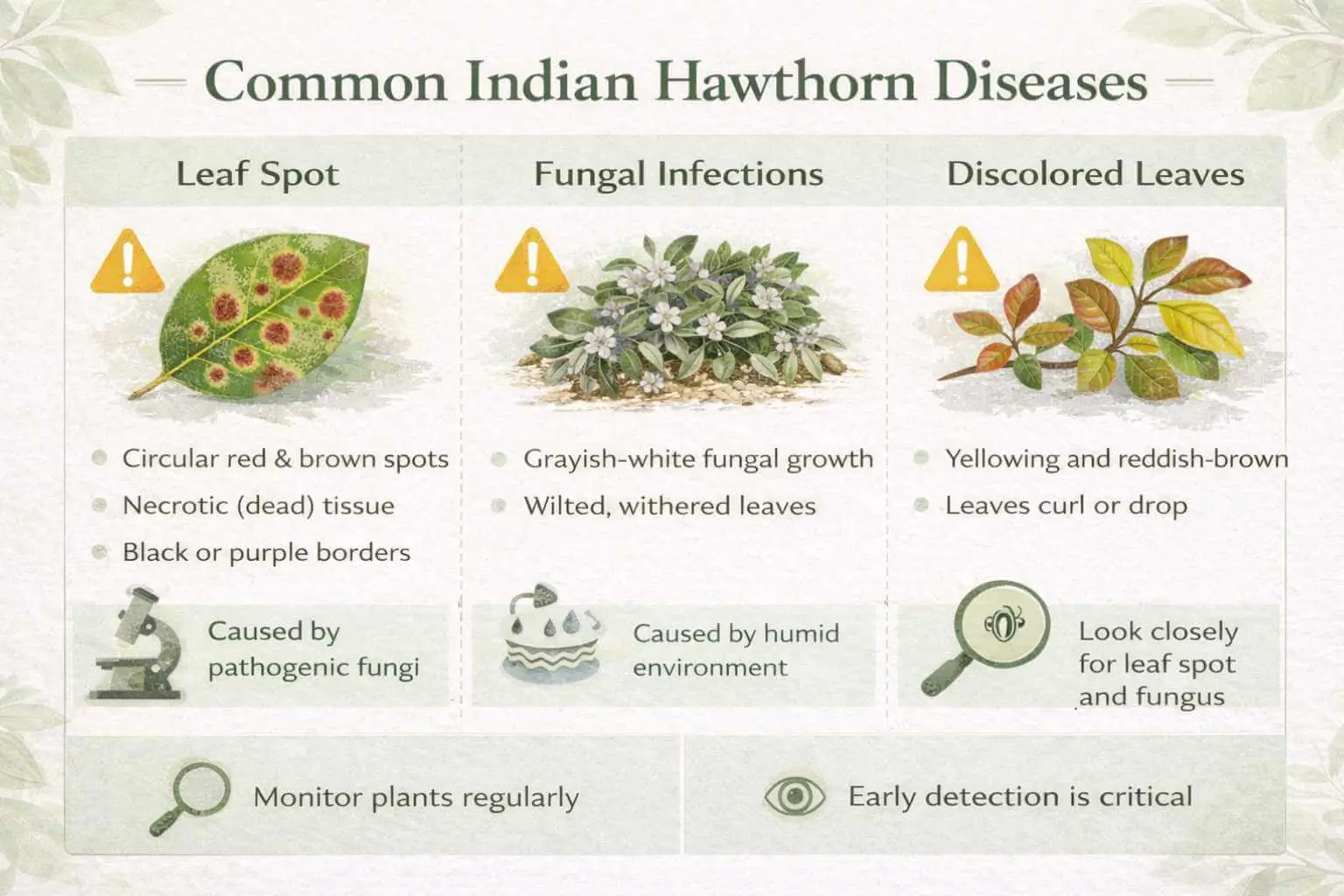
Fungus on indian hawthorn is a common concern, particularly in humid conditions. Indian hawthorn fungus issues often involve leaf infections that spread when air circulation is poor or moisture remains on foliage.
-
Leaf Spot Disease
Indian hawthorn leaf spot presents as dark, circular spots on leaves. Leaf spot indian hawthorn problems are often the first visible sign of fungal stress. Early detection allows for corrective care, including pruning affected foliage.
-
Indian Hawthorn Plant Diseases Overview
Indian hawthorn plant diseases include various fungal and environmental issues. Indian hawthorn diseases often show visible symptoms such as discolored leaves or premature drop. Reviewing indian hawthorn disease pictures can help identify problems and apply timely solutions.
Landscaping Uses of Indian Hawthorn Plant
-
Hedge, Border & Foundation Planting
The indian hawthorn plant works well as a hedge, border, or foundation shrub. Proper spacing and light pruning create a uniform miniature hawthorn bush suitable for formal and informal designs.
-
Best Climate & Garden Placement
This shrub performs best in warm regions, making it suitable where hawthorn in India and similar climates are common. Full sun placement enhances flowering and overall plant health.
Conclusion & Call to Action
The indian hawthorn plant offers evergreen structure, seasonal flowers, and adaptable landscape use. With multiple varieties available, gardeners can select options that match space and design needs. Explore suitable varieties or start planting today to add long-lasting beauty to your garden.
Learn more: 6+ Stunning Silver Sheen Tree Ideas to Transform Your Garden
FAQs — Indian Hawthorn Plant
- How big does an indian hawthorn plant get?
Most varieties grow between 3 and 6 feet tall and wide, depending on cultivar and care. - Is indian hawthorn evergreen year-round?
Yes, indian hawthorn is an evergreen shrub that retains foliage throughout the year. - Are indian hawthorn berries edible?
The berries are primarily ornamental and for wildlife; they are not recommended for human consumption. - What causes leaf spot on indian hawthorn?
Leaf spot is usually caused by fungal infections encouraged by moisture and poor air circulation. - Which indian hawthorn variety is best for small gardens?
Compact varieties like Clara indian hawthorn are ideal for limited spaces. - When does indian hawthorn bloom each year?
Blooming typically occurs in spring, with timing influenced by local climate conditions.