Introduction
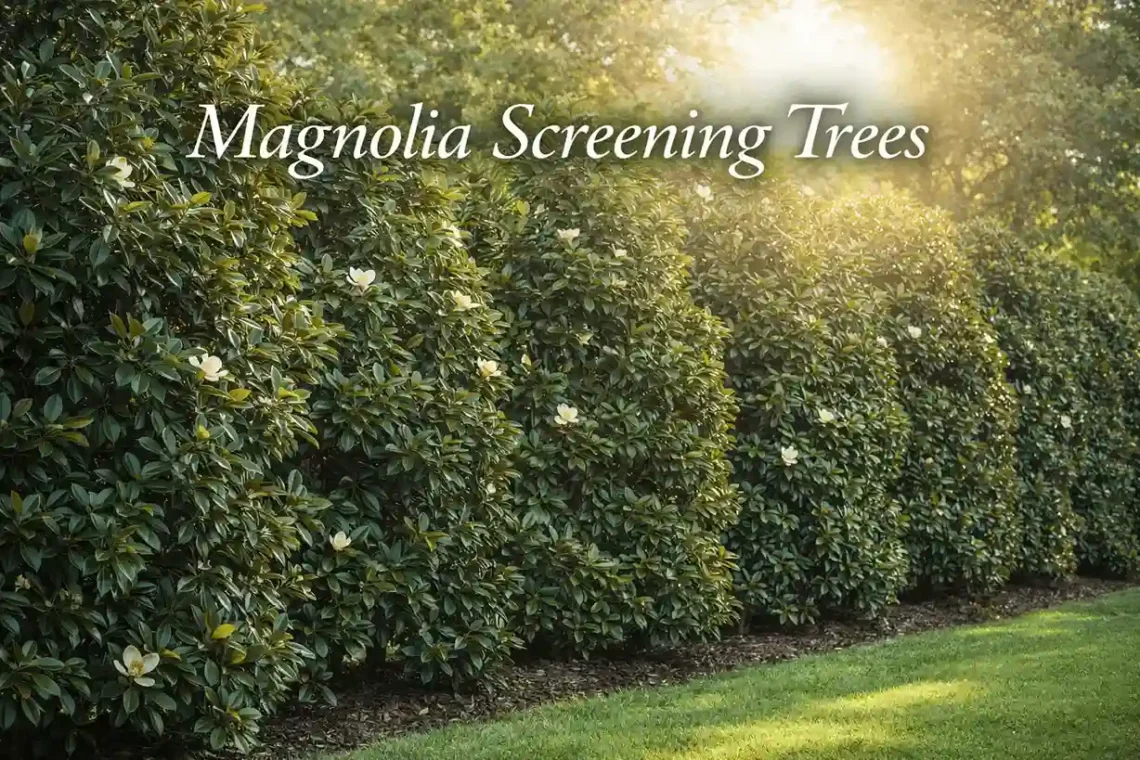
Magnolia screening trees are a practical and visually appealing solution for creating privacy in residential landscapes. These evergreen or semi-evergreen trees are widely used as natural screens, hedges, and fence-line barriers due to their dense foliage and structured growth habit. In Australia, evergreen magnolia varieties are especially popular because they provide year-round coverage and adapt well to local climates. With glossy green leaves, compact growth forms, and seasonal fragrant flowers, magnolia trees offer both functional screening and ornamental value. Their versatility makes them suitable for small gardens, large properties, and modern landscaping designs.
Quick Summary
- Magnolia screening trees are evergreen or semi-evergreen trees used for privacy hedges and natural screens.
- Popular varieties like Little Gem and Teddy Bear offer compact, dense growth ideal for small spaces.
- They are valued for moderate to fast growth, low maintenance, and attractive foliage.
- Best suited for fence lines, hedges, and structured garden design.
What Are Magnolia Screening Trees?
Magnolia screening trees are magnolia species specifically selected and planted to create natural privacy barriers, windbreaks, or visual boundaries in landscaping. These trees are typically evergreen magnolia varieties that maintain dense foliage throughout the year. Magnolia trees, a genus of flowering plants Wikipedia, are widely used for privacy screens, hedges, and garden ornamentation.
A magnolia screen, magnolia fence line, or screening magnolia refers to the use of magnolia trees arranged in rows or hedges to block views and define outdoor spaces. These trees can be pruned into formal hedges or left to grow naturally as layered screens.
Key characteristics include:
- Dense, glossy leaves that provide consistent coverage
- Upright or compact growth habits
- Adaptability to shaping and pruning
Magnolia tree details such as leaf structure, flower type, and growth form vary by species, but most screening varieties belong to Magnolia grandiflora, known for its evergreen nature and durability.
Are Magnolias Good for Screening? (Key Benefits & Limitations)
Yes, magnolias are good for screening because they provide dense, evergreen foliage and structured growth, making them effective natural privacy barriers. However, their performance depends on variety selection and growing conditions.
Benefits:
- Dense foliage creates effective visual screening
- Evergreen varieties offer year-round privacy
- Attractive flowers and formal structure enhance aesthetics
Limitations:
- Larger varieties require significant space
- Growth can slow in poor soil conditions
- Regular pruning may be needed for hedge shaping
Magnolias perform best in well-drained soil and full sun to partial shade, making them highly suitable for residential gardens when properly maintained.
Evergreen Magnolia Varieties for Screening
Evergreen magnolia varieties are the most commonly used types for screening due to their consistent foliage and structured growth.
Popular Compact Screening Varieties
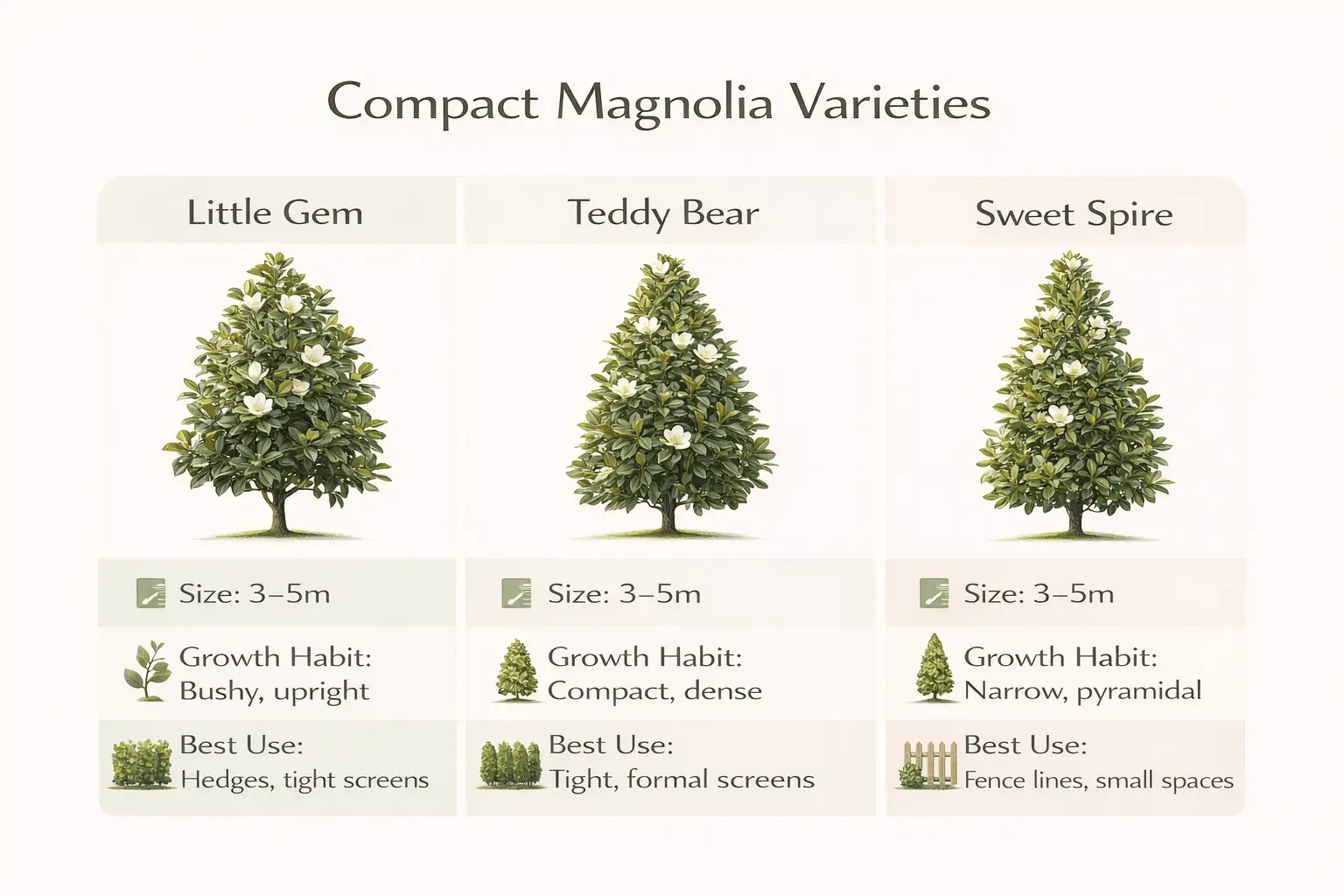
- Little Gem Magnolia: A compact form of Magnolia grandiflora, ideal for small hedges and tight spaces.
- Teddy Bear Magnolia: Known for its dense foliage and upright growth, perfect for narrow screening.
- Sweet Spire Magnolia: A fast-growing, upright variety suited for fence lines and vertical screening.
For a detailed comparison of compact screening options, see our guide on [Magnolia Little Gem vs Teddy Bear: 7+ Key Differences].
Larger Screening Magnolia Trees
- Magnolia Grandiflora types: Traditional large magnolia trees used for expansive properties.
- Large magnolia tree options: Suitable for wide screening areas where height and spread are required.
Comparison of Popular Magnolia Screening Varieties
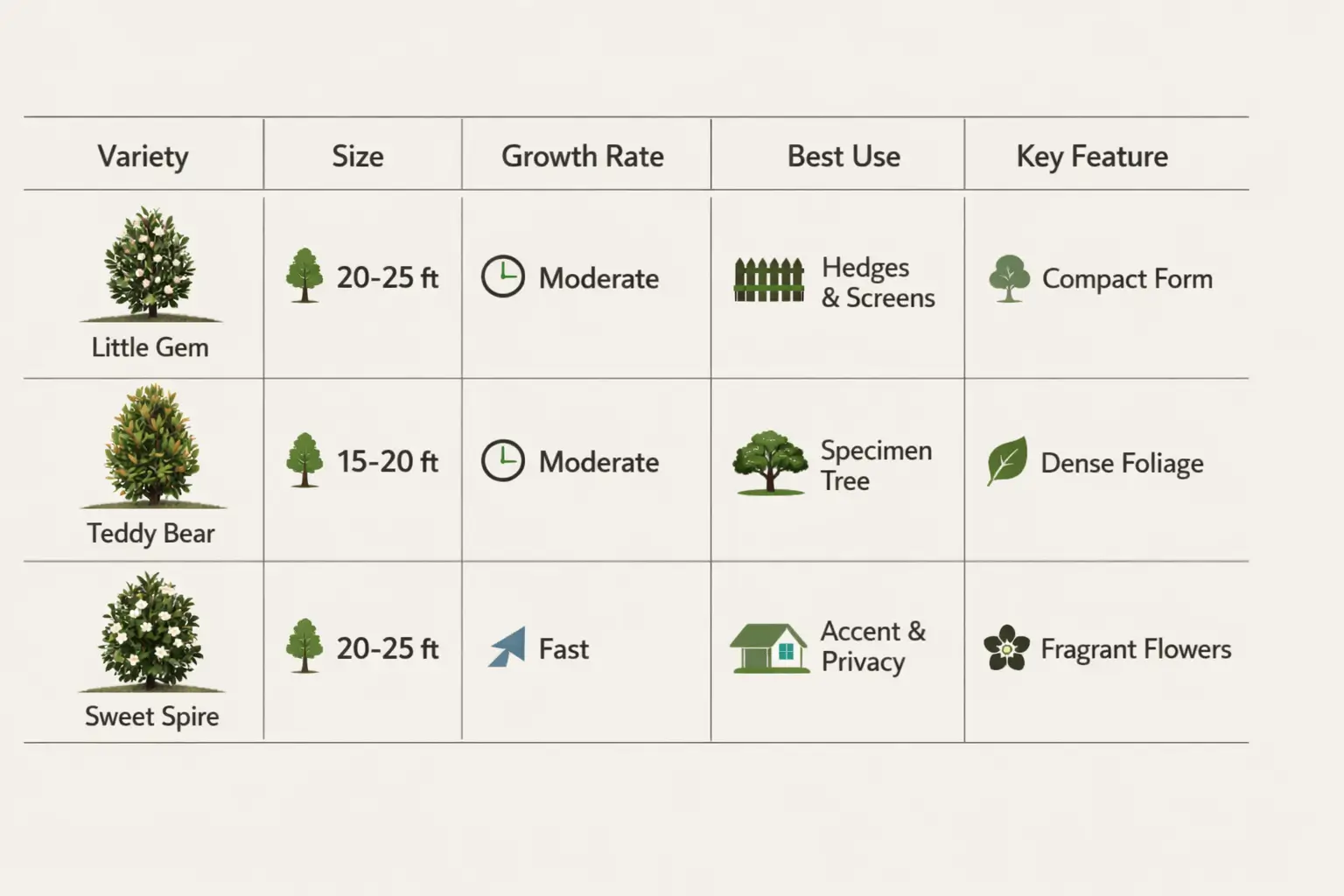
| Variety | Size | Growth Rate | Best Use | Key Feature |
| Little Gem | Compact | Moderate | Small hedges | Narrow form |
| Teddy Bear | Compact dense | Moderate | Tight screens | Dense foliage |
| Sweet Spire | Upright narrow | Fast | Fence lines | Vertical growth |
This comparison highlights differences in structure and growth, helping users choose between options like Little Gem vs Teddy Bear or Sweet Spire for specific landscaping needs.
Fast Growing Magnolia Trees for Screening
Fast growing magnolia trees for screening are typically selected for quicker privacy establishment, though growth rates vary by variety and conditions.
Key options include:
- Sweet Spire for faster vertical growth
- Magnolia Grandiflora varieties for larger-scale screening
Growth rate is influenced by:
- Soil quality and drainage
- Sun exposure (full sun promotes faster growth)
- Consistent watering, especially during establishment
While magnolias are generally moderate growers, optimal conditions can significantly improve growth speed. Learn how quickly Teddy Bear magnolias establish privacy by reviewing [Magnolia Teddy Bear Growth Rate: 5+ Key Facts Guide].
Magnolia Hedge and Fence Line Uses
Magnolia hedges and fence-line plantings are widely used for creating structured and functional garden boundaries.
Ideal uses include:
- Boundary planting for property lines
- Privacy hedges for residential gardens
- Structured landscaping designs
Key considerations:
- Spacing typically ranges from 1–2 meters depending on variety
- Regular pruning encourages dense hedge formation
- Alignment along fence lines improves screening effectiveness
Magnolia tree hedges are especially popular in Australian landscapes due to their durability and visual appeal.
Choosing the Right Magnolia for Your Space
Choosing the right magnolia depends on available space, climate, and intended use.
Guidelines:
- Small gardens → Little Gem, Teddy Bear
- Large properties → Magnolia Grandiflora varieties
- Pots → Smaller varieties suitable for container growth
Compact evergreen magnolias are ideal for urban settings, while larger trees provide better screening for expansive landscapes.
Magnolia Tree Requirements (Growth Conditions)
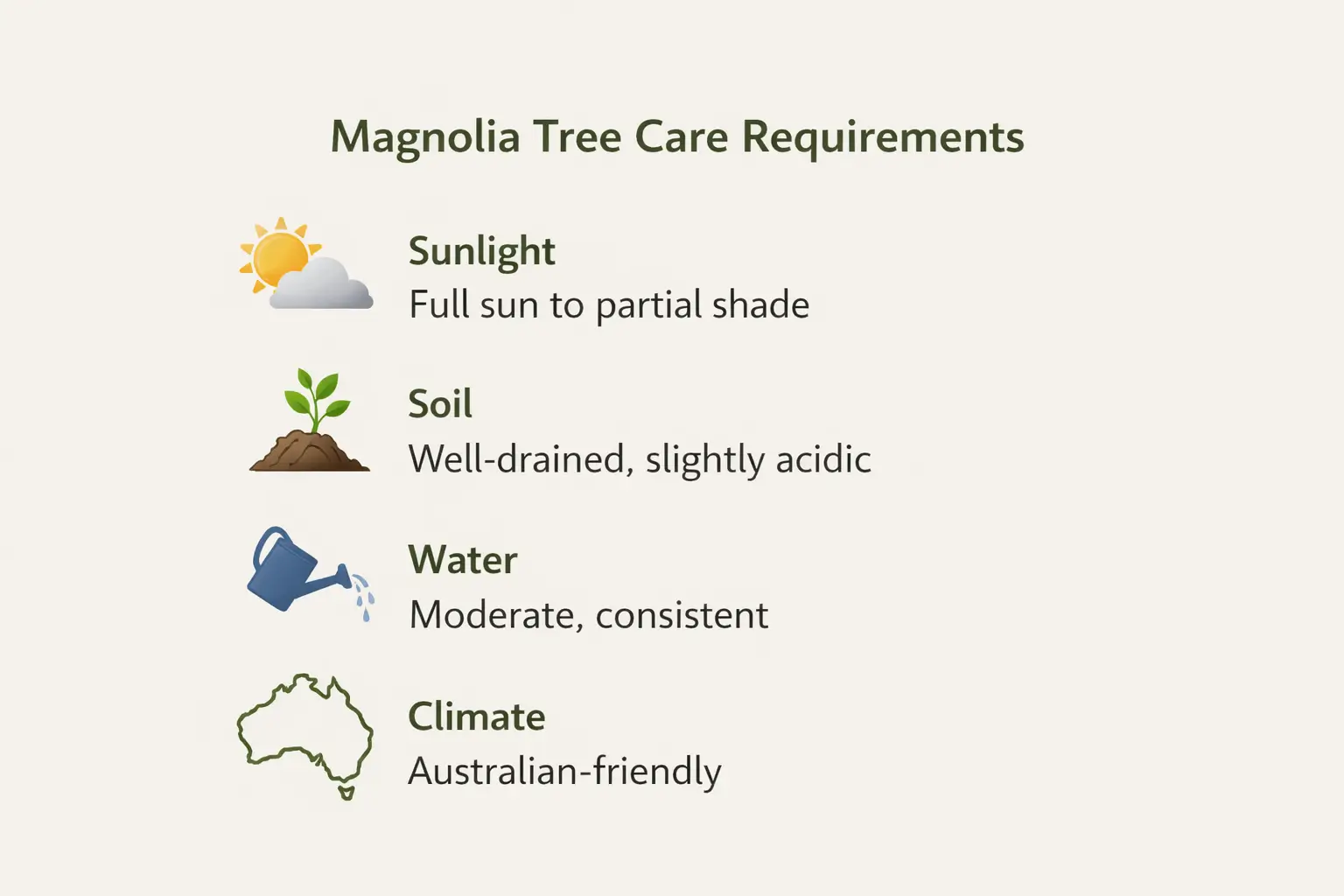
Magnolia tree requirements focus on providing the right environmental conditions for healthy growth and dense foliage.
Key conditions:
- Light: Full sun to partial shade
- Soil: Well-drained, slightly acidic soil
- Water: Moderate, consistent moisture
- Climate: Well-suited to Australian conditions
Proper site selection ensures optimal growth and long-term performance.
Care Guide for Magnolia Screening Trees
Magnolia screening trees require consistent care to maintain their structure and health.
Essential care practices:
- Water young trees regularly; established trees require less frequent watering
- Apply fertilizer during the growing season to support development
- Prune regularly to maintain hedge shape and density
- Use mulch to retain soil moisture and regulate temperature
Proper care improves growth rate and enhances screening effectiveness.
Growth Rate and Mature Size of Magnolia Trees
Magnolia trees generally grow at a slow to moderate rate, depending on the variety and environmental conditions.
Typical size ranges:
- Compact varieties: 3–5 meters in height
- Large varieties: 10–20 meters in height
Growth factors include:
- Soil quality
- Climate conditions
- Water availability
Understanding mature size helps prevent overcrowding and ensures proper spacing.
Common Magnolia Tree Problems and Solutions
Magnolia trees can experience common health issues, but most are manageable with proper care.
Common problems and solutions:
- Yellow leaves → Often caused by overwatering or poor drainage
- Slow growth → May indicate nutrient deficiency
- Pest issues → Scale insects can affect foliage
Prevention tips:
- Ensure well-drained soil
- Maintain proper watering schedules
- Monitor for pests and treat early
Magnolia Screening vs Similar Trees (Comparison Section)
Magnolia screening trees compare favorably with other common screening plants, but each option has unique characteristics.
Comparison points:
- Magnolia vs Lilly Pilly
- Magnolia: Structured growth, lower maintenance
- Lilly Pilly: Faster growth, requires frequent trimming
- Magnolia vs Ficus
- Magnolia: More controlled root system
- Ficus: Aggressive roots, faster coverage
- Magnolia vs Viburnum
- Magnolia: Evergreen with larger leaves
- Viburnum: Faster-growing but less structured
Magnolias offer a balance of aesthetics and functionality. For alternative evergreen screening options, explore our guide on [Best Lilly Pilly for Hedge: 7+ Proven Varieties Guide].
Magnolia Inspiration and Landscaping Ideas
Magnolia screening trees can be used in various landscaping designs to enhance both privacy and visual appeal.
Ideas include:
- Formal hedge designs for structured gardens
- Modern fence-line screening for contemporary spaces
- Mixed planting with shrubs for layered landscapes
- Feature tree use as focal points or standalone elements
Their versatility makes them suitable for multiple design styles.
Beginner Mistakes to Avoid with Magnolia Screening Trees
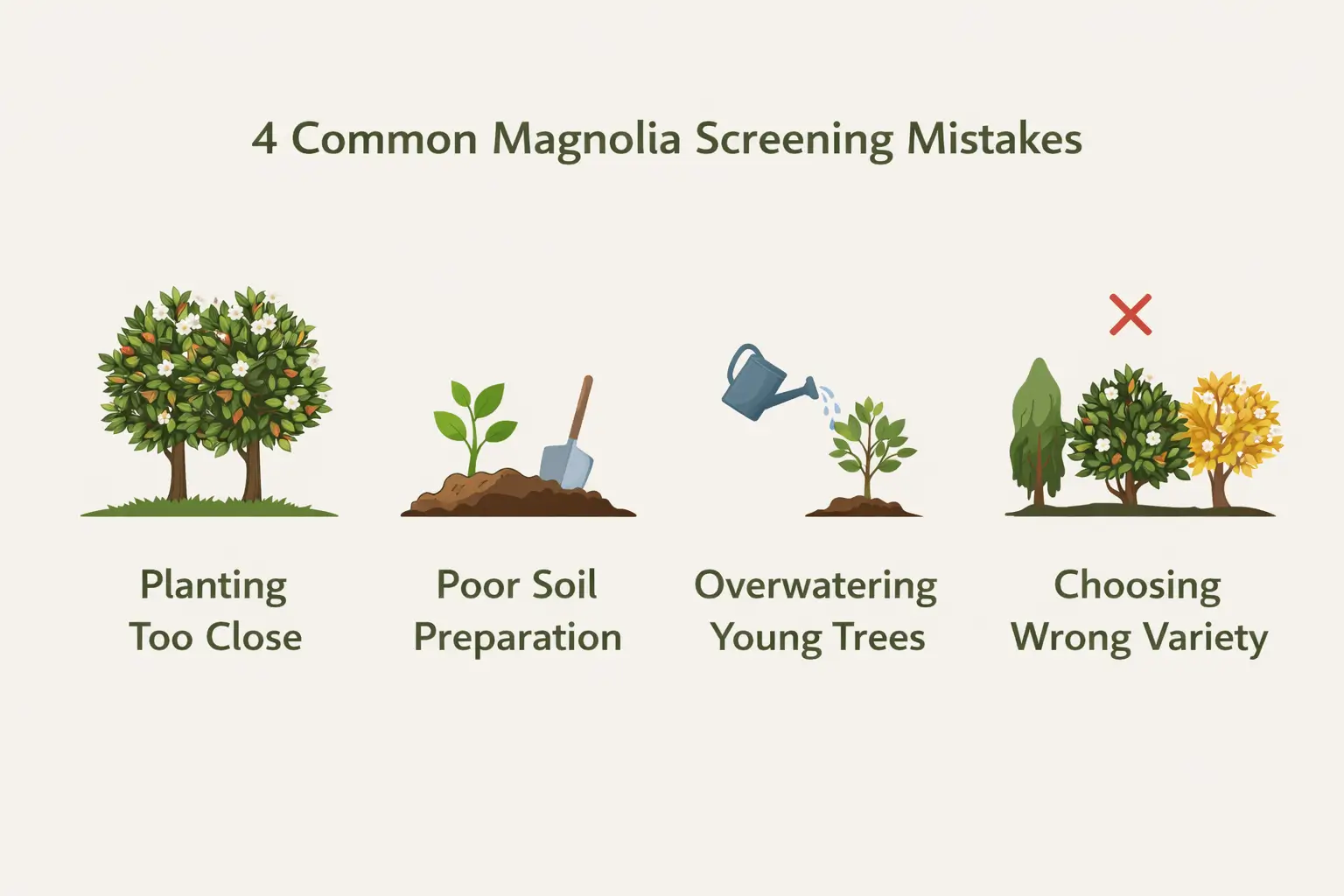
Avoiding common mistakes improves success with magnolia screening trees.
Key mistakes:
- Planting trees too close together, limiting growth
- Poor soil preparation before planting
- Overwatering young trees
- Choosing a variety unsuitable for available space
Careful planning ensures long-term performance and healthy growth.
Conclusion
Magnolia screening trees are an excellent choice for creating elegant, evergreen privacy screens in residential landscapes. With a wide range of compact and large varieties, they offer flexibility for hedges, fence lines, and garden design. By selecting the right variety and providing proper care, magnolias can deliver long-lasting structure, beauty, and effective screening. For a comprehensive look at plants suitable for home and garden screening, see our [Plants for Homes and Gardens Guide].
FAQs
Are magnolia trees evergreen all year round?
Most screening varieties like Little Gem and Teddy Bear are evergreen, maintaining foliage year-round in suitable climates.
Which magnolia is best for a privacy hedge?
Compact varieties such as Teddy Bear and Little Gem are ideal due to their dense growth and manageable size.
How fast do magnolia screening trees grow?
Growth rates vary, but most evergreen magnolias grow at a moderate pace, with some faster varieties like Sweet Spire.
Can magnolia trees be grown in pots?
Yes, smaller varieties like Little Gem can thrive in large pots with proper care.
What spacing is needed for a magnolia hedge?
Spacing depends on the variety, but typically ranges from 1–2 meters for dense screening.