Introduction
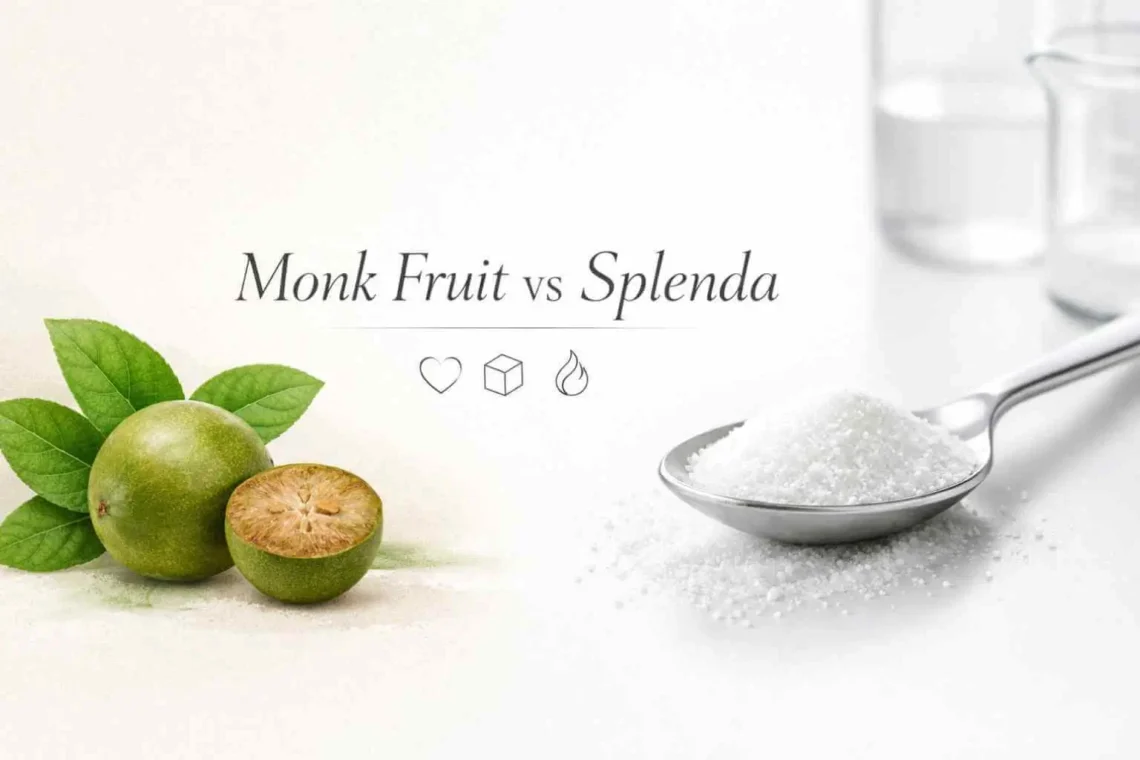
Monk fruit vs Splenda is a common comparison between two popular sugar substitutes used to reduce calorie and sugar intake. Monk fruit sweetener comes from a natural fruit extract, while Splenda is made from sucralose, a synthetic compound. Both are widely used in low-sugar diets, diabetic meal plans, and weight management strategies. Understanding how monk fruit extract and sucralose differ in taste, metabolism, and usage helps users choose the most suitable sweetener for their specific health goals and cooking needs.
Quick Summary
- Monk fruit is a natural, zero-calorie sweetener; Splenda (sucralose) is artificial.
- Monk fruit contains antioxidants, while Splenda offers no nutritional benefits.
- Both are suitable for diabetics with minimal blood sugar impact.
- Taste, cooking performance, and health priorities influence the better choice.
What Is Monk Fruit and What Is Splenda?
Monk fruit and Splenda are both sugar substitutes designed to provide sweetness without calories, but they differ in origin, composition, and processing. Monk fruit sweetener is derived from monk fruit extract, while Splenda is a brand primarily based on sucralose. Splenda is primarily made from sucralose, a chemically modified sugar compound (learn more about sucralose on Wikipedia).
Monk Fruit Sweetener Explained
Monk fruit sweetener is extracted from the fruit Siraitia grosvenorii, commonly known as monk fruit.
- Derived from monk fruit extract
- Sweetness comes from compounds called mogrosides
- Often blended with erythritol to improve texture and usability
Mogrosides provide intense sweetness without raising blood sugar levels.
Splenda (Sucralose) Explained
Splenda is a widely used artificial sweetener based on sucralose.
- Artificial sweetener made from sugar
- Main ingredient: sucralose
- Commonly found in processed foods and beverages
Sucralose is chemically altered sugar that passes through the body without being metabolized for energy.
Monk Fruit vs Splenda — Key Differences (Comparison Table)
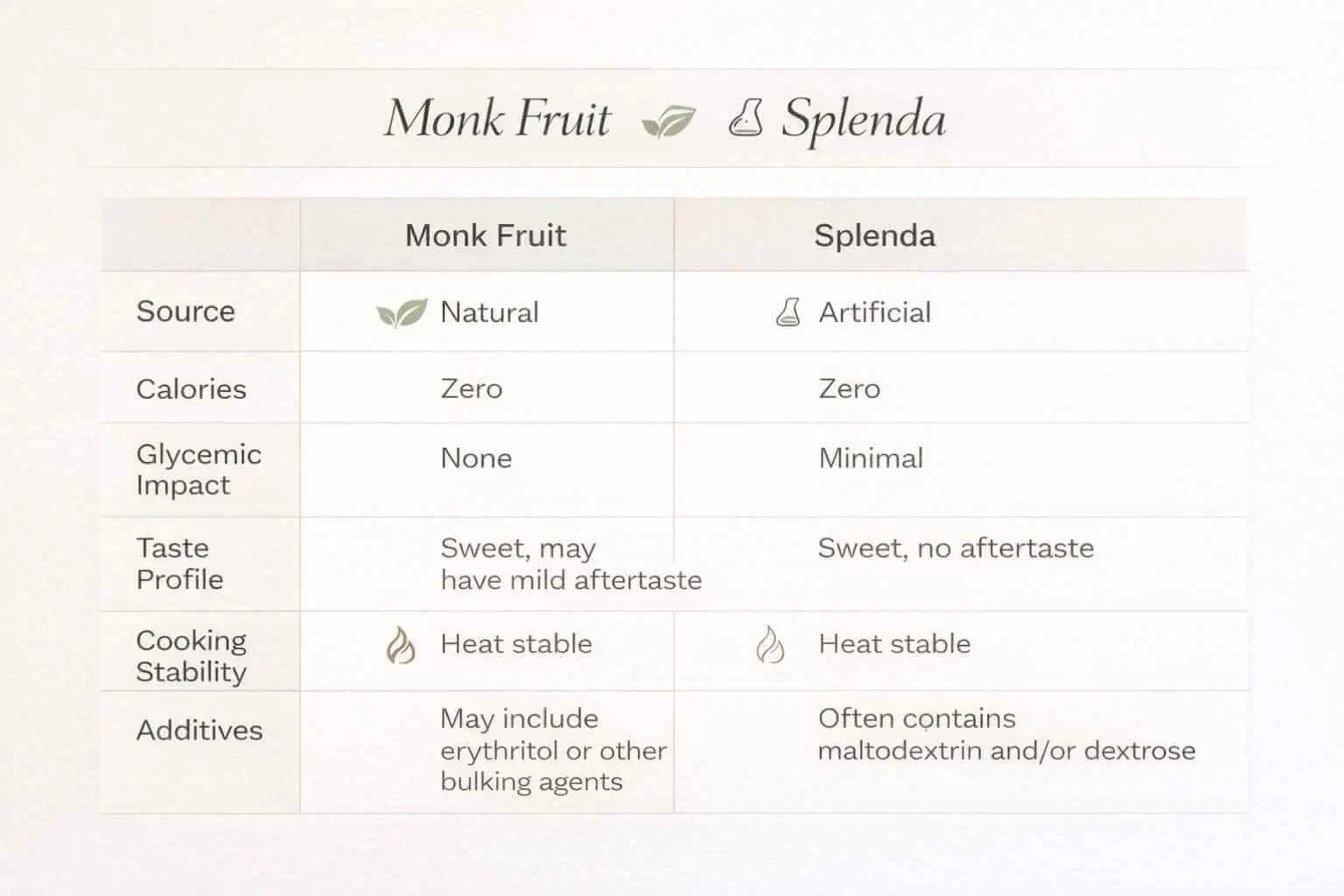
The difference between monk fruit vs Splenda lies in their source, composition, and functional use.
| Feature | Monk Fruit Sweetener | Splenda (Sucralose) |
| Source | Natural (fruit extract) | Artificial (synthetic) |
| Calories | Zero | Zero |
| Glycemic Impact | No effect on blood sugar | No effect on blood sugar |
| Taste Profile | Slight fruity aftertaste | Sugar-like, slight chemical note |
| Cooking Stability | Moderate (often blended) | High heat stability |
| Additives | Often contains erythritol | May contain fillers |
Taste Comparison — Which Sweetener Tastes Better?
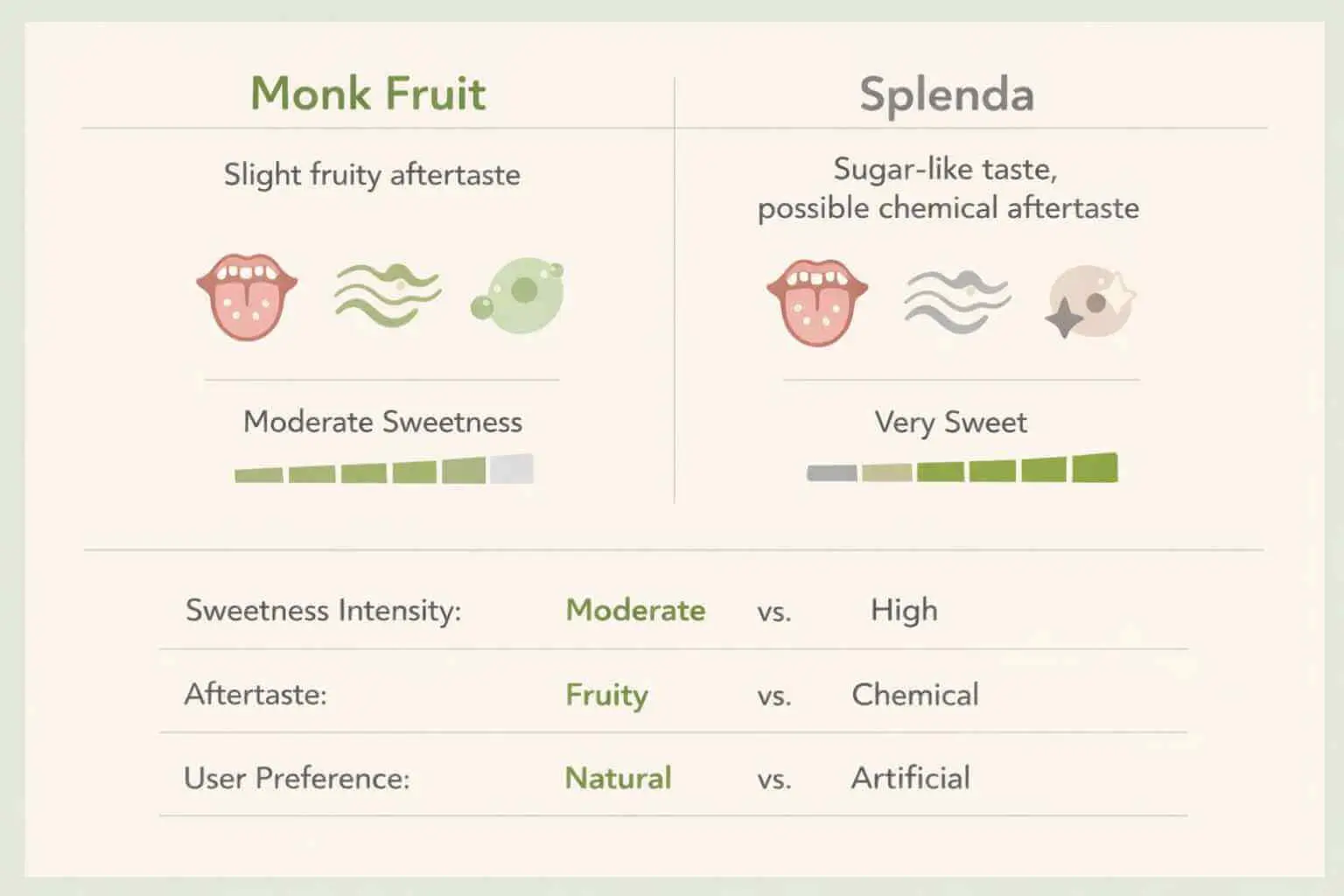
Splenda generally tastes closer to sugar, while monk fruit has a slightly fruity aftertaste that some users notice. Taste preference varies depending on individual sensitivity and product formulation.
Monk Fruit:
- Mild fruity undertone
- Clean sweetness for some users
Splenda:
- More sugar-like flavor
- Possible chemical aftertaste
Key Differences:
- Sweetness intensity: Both are highly concentrated sweeteners
- Aftertaste: Monk fruit is fruity; Splenda may taste artificial
- User preference: Highly subjective based on taste sensitivity
If you’re interested in how natural foods compare in flavor and nutrition, see our guide on Dragon Fruit vs Kiwi.
Health Effects — Is Monk Fruit Better Than Splenda?
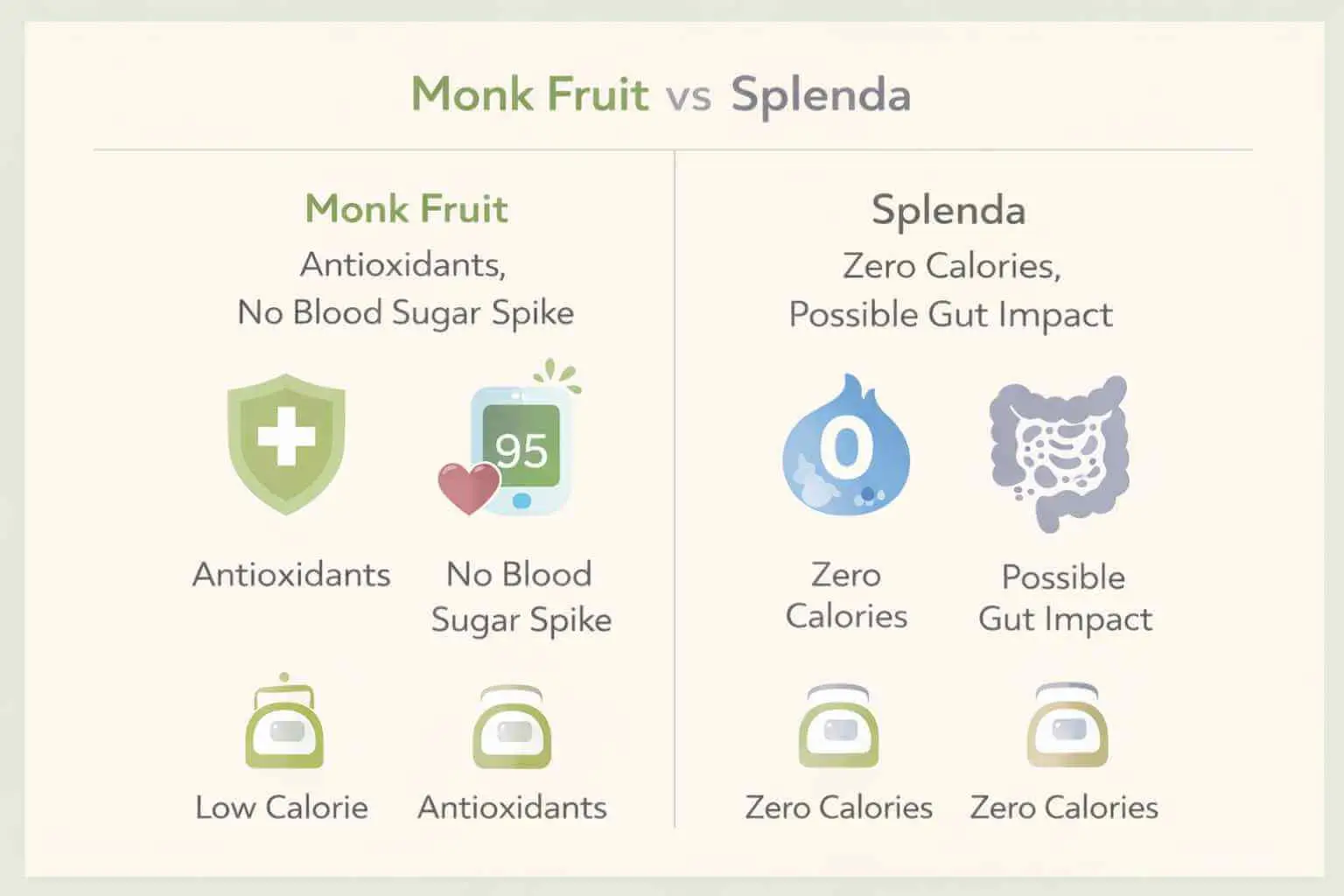
Monk fruit is often considered better from a natural and antioxidant perspective, while Splenda is valued for its stability and widespread use. Both are generally recognized as safe within recommended limits.
Monk Fruit Health Profile
Monk fruit offers a natural alternative with additional beneficial compounds.
- Zero calories
- Contains antioxidants (mogrosides)
- Does not spike blood sugar
- Minimal reported side effects
Splenda (Sucralose) Health Profile
Splenda provides sweetness without calories but has different metabolic considerations.
- Zero calories
- Does not raise blood glucose
- May affect gut bacteria in some studies
- Long-term effects are still debated
For Diabetics — Which Is Better?
Both monk fruit and Splenda are suitable for diabetics because they have a low glycemic impact. However, monk fruit is often preferred due to its plant-based origin and lack of synthetic processing.
Weight Loss and Metabolism Impact
Both monk fruit and Splenda can support weight loss by reducing sugar intake and lowering calorie consumption. However, excessive reliance on sweeteners may influence cravings.
Key Considerations:
- Appetite effects: May reduce sugar cravings but can maintain sweet preference
- Insulin response: Minimal effect compared to sugar
- Diet role: Useful in calorie-controlled diets when used in moderation
Monk Fruit vs Sucralose — Are They the Same as Splenda?
No, monk fruit and sucralose are not the same, and Splenda is a brand that uses sucralose as its primary ingredient. Monk fruit is plant-based, while sucralose is a chemically modified sugar compound.
- Splenda = brand containing sucralose
- Monk fruit = natural fruit-derived sweetener
- Different metabolic pathways and digestion
Baking and Cooking — Which Sweetener Performs Better?
Splenda performs better in baking due to its stability under heat, while monk fruit often requires blends for optimal results. The choice depends on the recipe and desired texture.
Monk Fruit:
- May require erythritol blends
- Less effective for browning
Splenda:
- Heat stable
- Maintains sweetness during cooking
Key Differences:
- Texture variations
- Limited caramelization
- Adjustments needed for sweetness levels
Conversion Guide — How to Substitute Monk Fruit and Splenda
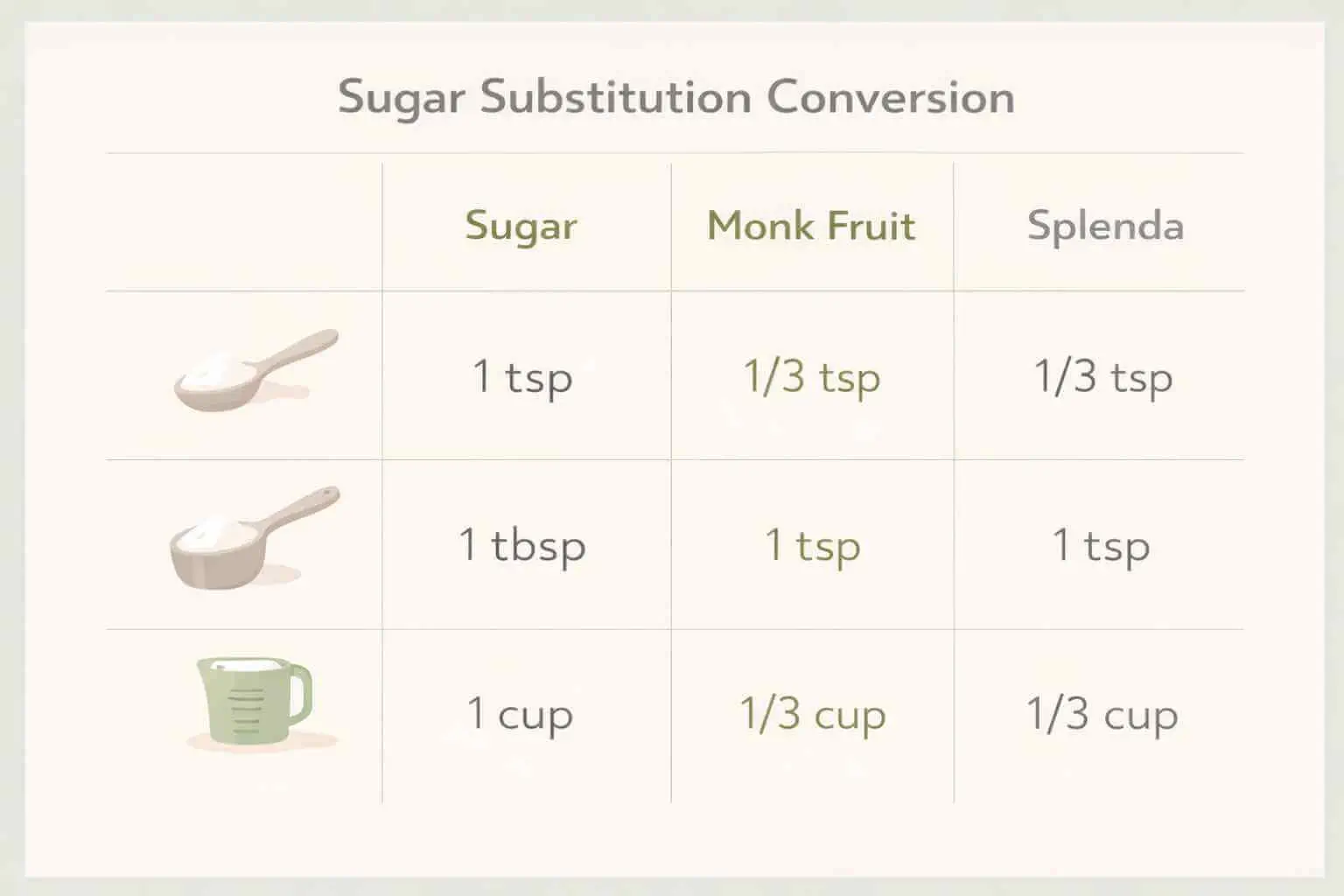
Accurate conversion is essential when replacing sugar with sweeteners.
| Sugar Amount | Monk Fruit Equivalent | Splenda Equivalent |
| 1 tsp | 1/2 tsp (varies) | 1/2 tsp |
| 1 tbsp | 1/2 tbsp | 1/2 tbsp |
| 1 cup | 1/2 – 2/3 cup | 1 cup (granular) |
Note: Ratios vary based on product blends and concentration.
Monk Fruit vs Splenda vs Stevia — How Do They Compare?
Monk fruit, Splenda, and stevia differ in source, taste, and health perception.
Comparison Overview:
- Source:
- Monk fruit: natural fruit
- Stevia: plant-based
- Splenda: artificial
- Taste:
- Monk fruit: mild fruity
- Stevia: slightly bitter
- Splenda: sugar-like
- Health Perception:
- Monk fruit and stevia are often seen as more natural
- Splenda is more processed
Monk Fruit vs Allulose and Other Alternatives
Allulose and monk fruit are both alternatives to traditional sugar, but they differ in structure and function.
Allulose:
- Low calorie (not zero)
- Similar texture to sugar
Monk Fruit:
- Zero calories
- Much sweeter than sugar
Key Differences:
- Digestive effects: Allulose may cause mild digestive issues in excess
- Best use: Allulose for baking; monk fruit for sweetening
- Safety: Both are generally recognized as safe
Common Problems and Mistakes When Using Sugar Substitutes
Many users experience issues when switching to sugar substitutes due to incorrect usage or expectations.
Common Mistakes:
- Using incorrect conversion ratios
- Expecting identical taste to sugar
- Overconsumption leading to digestive discomfort
Solutions:
- Follow proper conversion charts
- Start with small amounts
- Choose blended products for better results
Just like choosing the right sweetener matters, selecting the correct inputs is crucial in gardening too—learn more in Plant Food vs Fertilizer.
Environmental and Processing Differences
Monk fruit and Splenda differ significantly in how they are produced and processed.
Monk Fruit:
- Grown as an agricultural crop
- Requires harvesting and extraction
Splenda:
- Chemically processed
- Manufactured in controlled environments
Key Considerations:
- Sustainability factors
- Processing intensity
- Resource usage differences
Conclusion
Monk fruit vs Splenda ultimately depends on personal priorities such as natural ingredients, taste preference, and intended use. Monk fruit provides a plant-based, antioxidant-rich option, while Splenda offers a widely available and heat-stable alternative. By understanding their differences in composition, health effects, and cooking performance, users can make informed and practical decisions aligned with their dietary goals.
FAQs
1. Is monk fruit better than Splenda for daily use?
Monk fruit is often preferred for daily use due to its natural origin and antioxidant properties, although both sweeteners are considered safe when consumed in moderation.
2. Does monk fruit raise blood sugar like Splenda?
No, both monk fruit and Splenda have minimal impact on blood sugar levels, making them suitable for people with diabetes.
3. Which tastes more like sugar, monk fruit or Splenda?
Splenda typically tastes closer to sugar, while monk fruit may have a slight fruity aftertaste.
4. Can you bake with monk fruit instead of Splenda?
Yes, monk fruit can be used in baking, but it may require adjustments or blends to achieve similar results as Splenda.
5. Are there any side effects of monk fruit sweetener?
Monk fruit is generally safe, but blends containing erythritol may cause mild digestive discomfort when consumed in large amounts.