Introduction
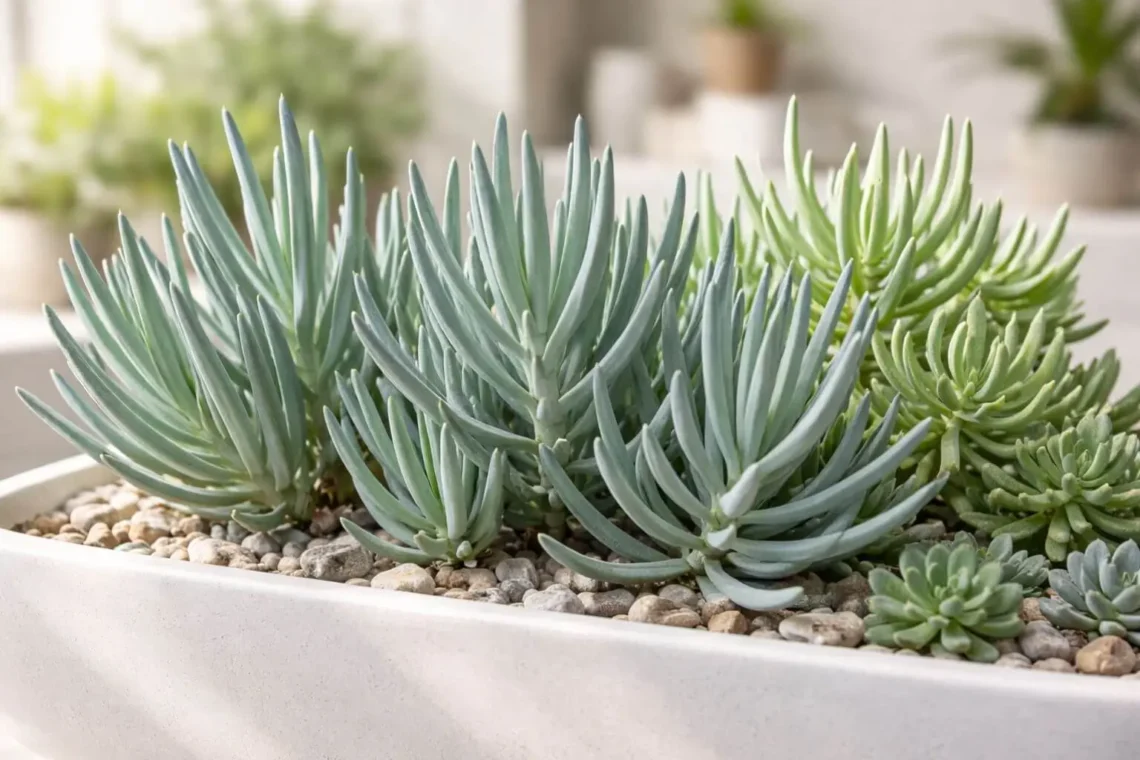
Narrow leaf chalksticks are a popular succulent variety known for their striking blue-grey foliage and cylindrical, slender leaves. Botanically identified as Senecio vitalis and Senecio serpens, these plants are prized for their drought tolerance and low-maintenance nature, making them ideal for both indoor and outdoor cultivation. Their compact, architectural appearance adds texture to succulent gardens, rockeries, and container arrangements. Gardeners and succulent enthusiasts often seek information on their care, propagation, and ideal growing conditions. Commonly referred to as blue chalksticks or senecio vitalis, these plants are versatile, resilient, and visually appealing, enhancing both decorative and functional landscaping applications.
What Are Narrow Leaf Chalksticks?
Botanical Classification and Varieties
Narrow leaf chalksticks belong to the genus Senecio, which encompasses a wide range of succulent species. Key species include:
- Senecio vitalis – commonly known as blue chalk fingers.
- Senecio serpens – the classic blue chalk sticks.
- Senecio mandraliscae – slightly larger, bluish-grey succulent.
- Senecio cylindricus – slender cylindrical leaves.
Hybrid varieties, such as Senecio talinoides (blue chalksticks hybrid), offer unique foliage textures and colors, combining the resilience of parent plants with aesthetic diversity. These hybrids are popular for both landscaping and container gardening.
Physical Characteristics
Narrow leaf chalksticks are distinguished by their slender, cylindrical leaves, typically displaying a blue-grey hue. Mature plants reach moderate heights and spread gradually, forming low, bushy mats. The leaf structure differentiates them from related varieties such as green chalk sticks and mini blue chalk sticks. Notably, the Senecio vitalis blue chalk fingers and blue chalk sticks succulent are valued for their uniform, upright leaves, adding a sculptural quality to gardens. Their compact, visually striking foliage makes them ideal for contrasting with other succulents and decorative plants.
Narrow Leaf Chalksticks Care Guide
Light Requirements
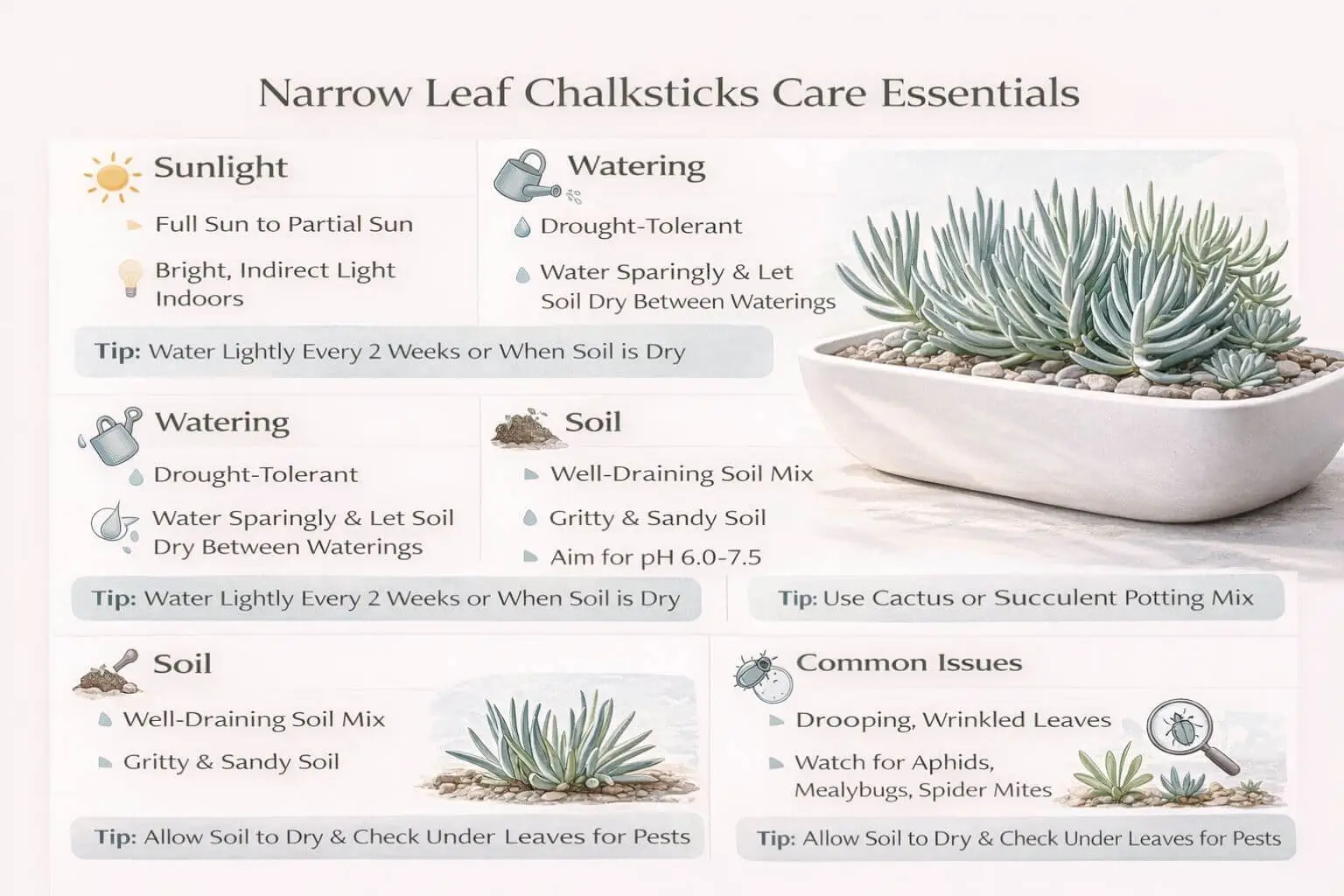
Narrow leaf chalksticks thrive in full sun but can tolerate partial sun. Outdoors, at least 6 hours of direct sunlight daily ensures healthy growth and vibrant coloration. Indoors, place the plant near a bright window with indirect light. Supplemental grow lights can support narrow leaf chalksticks indoors, especially in low-light conditions.
Watering Needs
These succulents require infrequent watering. Allow the soil to dry completely between waterings to prevent root rot. Overwatering leads to leaf drooping or rot, commonly observed in narrow leaf chalksticks drooping. Water sparingly during winter dormancy, increasing frequency slightly during active growth periods. Proper watering ensures compact, healthy foliage.
Soil and Fertilization
Use a well-draining succulent soil mix enriched with sand or perlite. Fertilize sparingly during the growing season using a diluted cactus or succulent fertilizer. A balanced schedule supports strong roots and vibrant blue-grey foliage. Avoid heavy, water-retentive soils that promote fungal issues.
Common Issues
- Leaf drooping – caused by overwatering or poor drainage.
- Pests – generally resistant, but watch for mealybugs or aphids.
- Overwatering signs – soft, discolored leaves.
Integrating senecio vitalis care practices, including proper watering and sunlight exposure, prevents most issues. Certain hybrid varieties, like narrow leaf chalksticks viper, may require similar preventive measures.
Propagation of Narrow Leaf Chalksticks
Propagation Methods
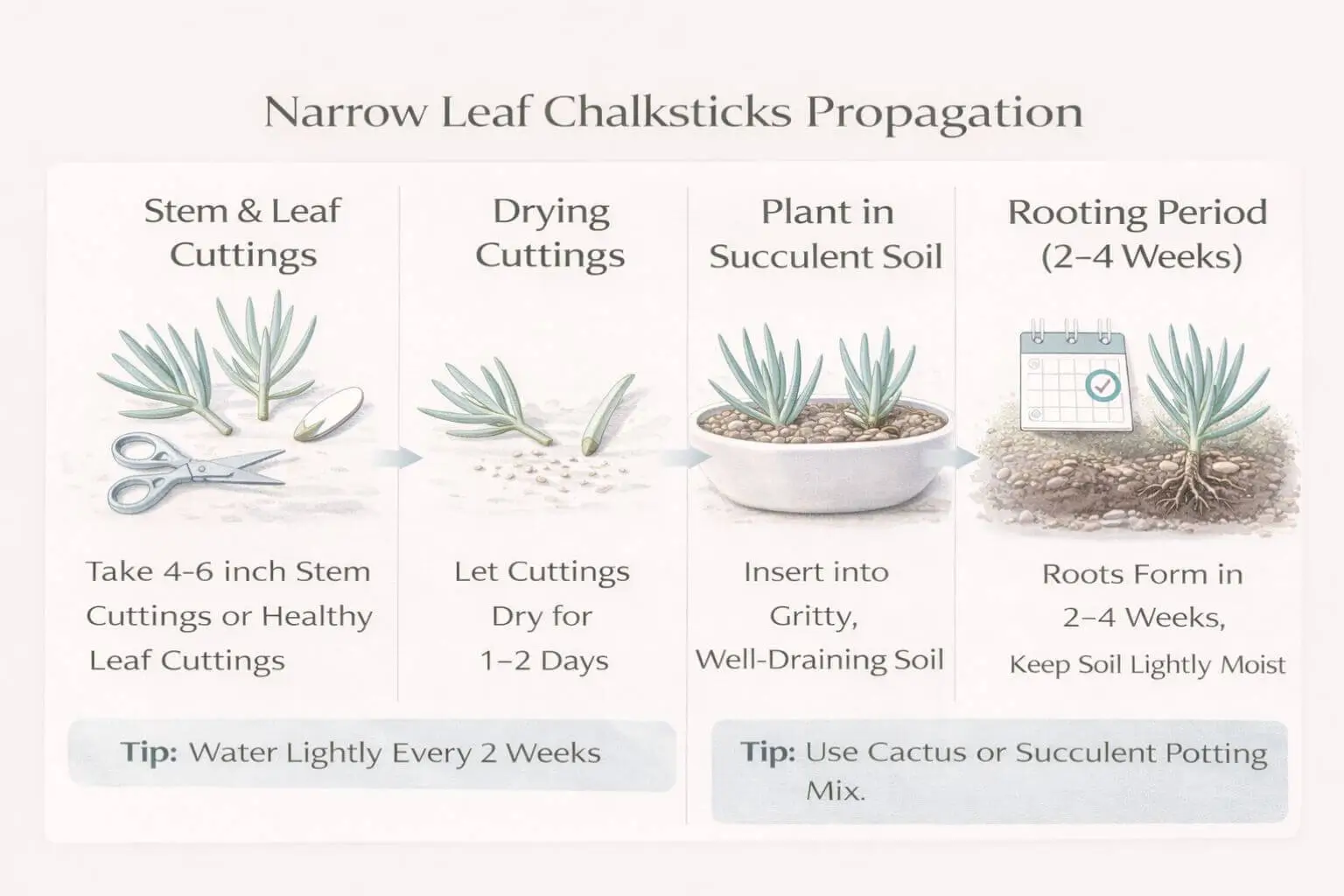
Propagation is primarily done through stem cuttings or leaf cuttings. The best season is spring or early summer, when the plant is actively growing. Cuttings are taken from healthy, mature stems to ensure optimal rooting success.
Step-by-Step Propagation Process
- Prepare cuttings – select healthy stems, cut 3–4 inches, and allow them to dry for 24 hours.
- Rooting – place cuttings in well-draining succulent soil.
- Planting tips – water sparingly until roots develop, usually within 2–4 weeks.
Following narrow leaf chalk sticks propagation steps ensures high survival and rapid establishment.
Crested and Hybrid Varieties
Crested Senecio vitalis and hybrids, such as curio talinoides propagation, follow similar propagation methods but may require careful handling due to unusual growth patterns. Proper placement and minimal handling preserve the crested form.
Popular Varieties of Narrow Leaf Chalksticks
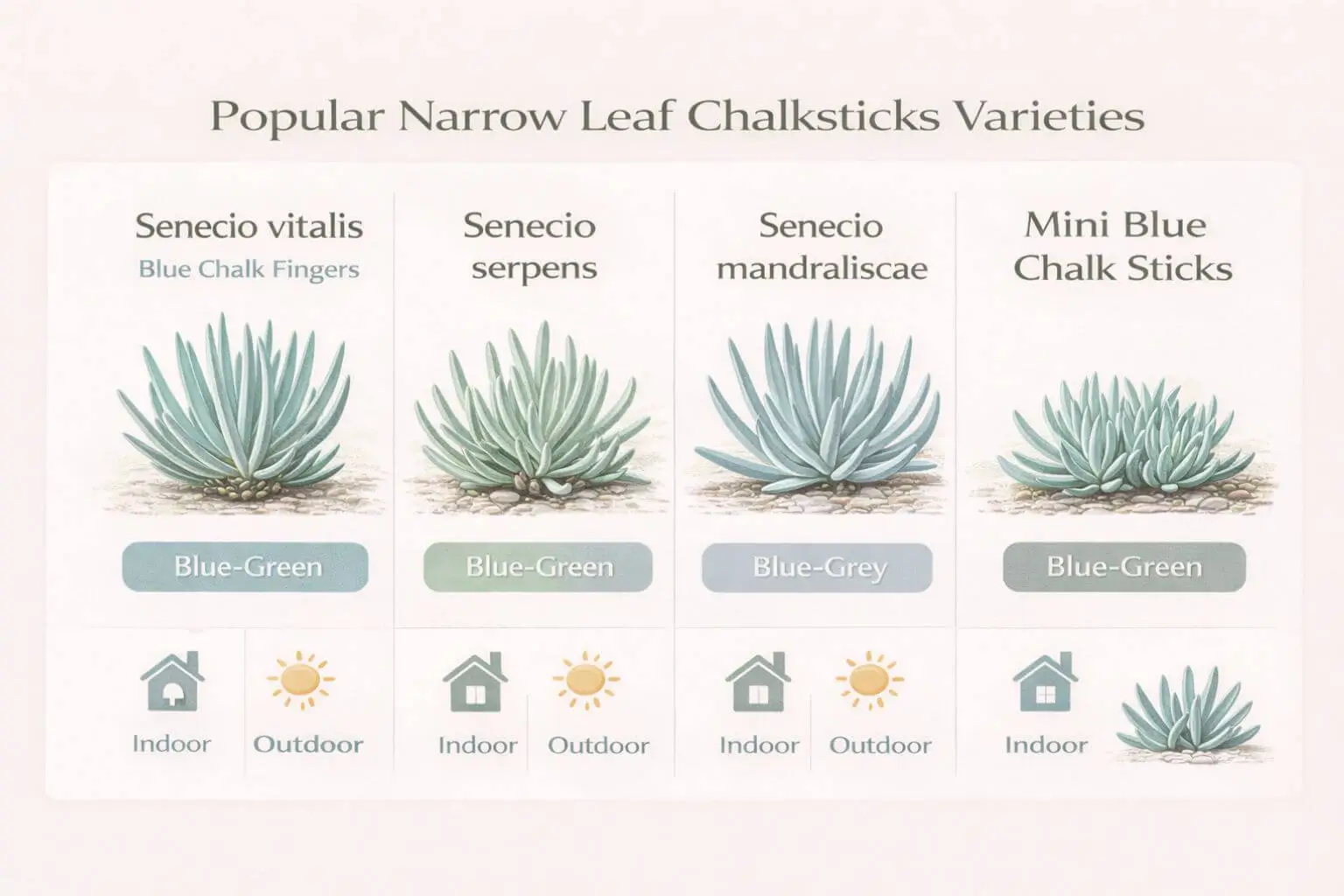
Blue Chalksticks Varieties
- Senecio vitalis – also called blue chalk fingers.
- Senecio mandraliscae – robust blue-grey succulent.
- Senecio serpens – classic blue chalk sticks, ideal for low-maintenance landscaping.
Green Chalksticks and Mini Varieties
Green chalk sticks and mini blue chalk sticks offer different color tones and growth habits, suitable for indoor gardens or compact arrangements. These variants provide versatility in decorative plantings.
Flowering and Seasonal Changes
Senecio serpens produces small seasonal flowers under optimal conditions. Seasonal growth patterns affect leaf density and color intensity. Including senecio vitalis serpents, serpens succulent, and mini blue chalk sticks in gardens enhances visual variety.
Using Narrow Leaf Chalksticks in Landscaping and Decor
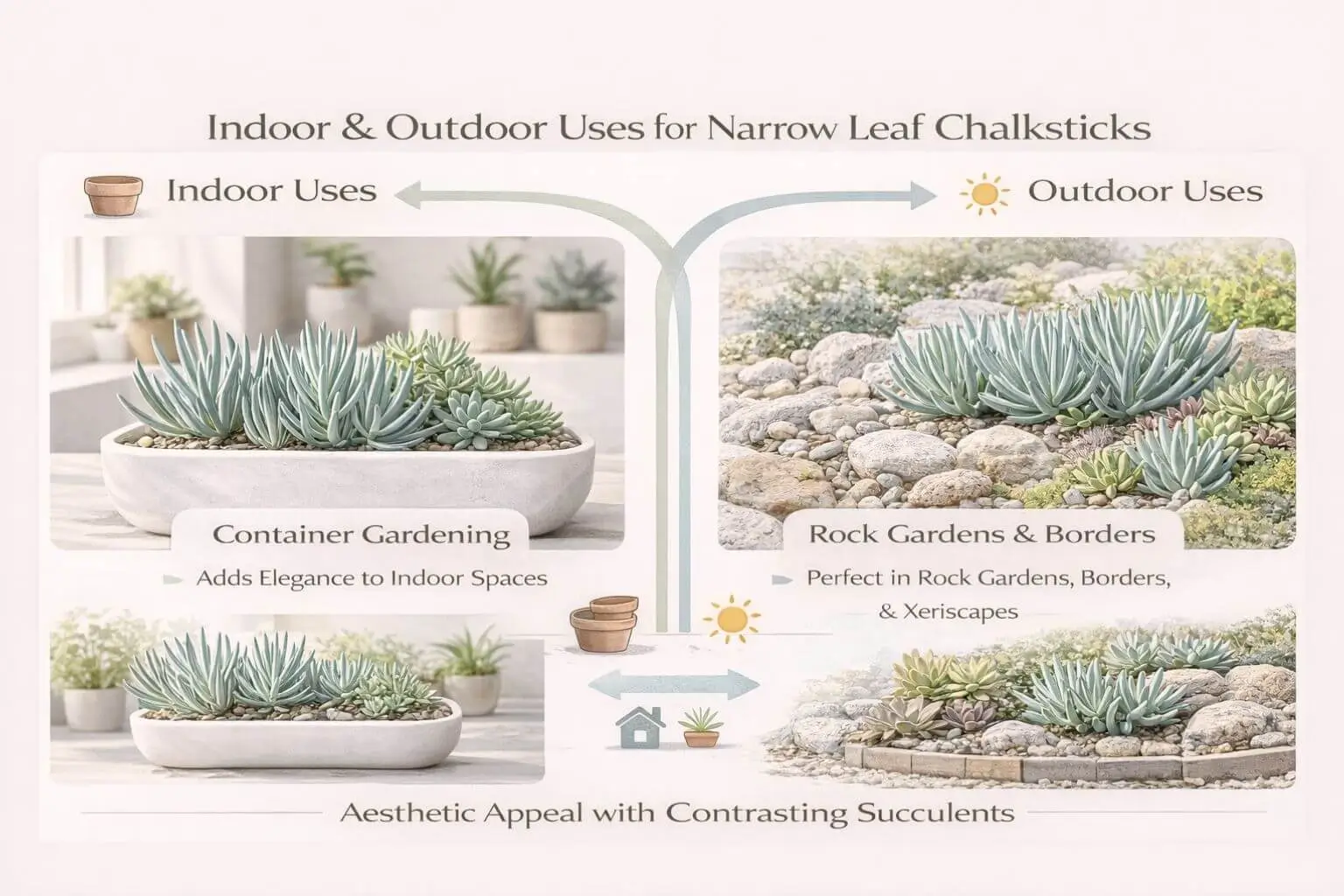
Indoor Applications
Ideal for container gardening, narrow leaf chalksticks indoors thrive in bright spots. They tolerate lower light conditions, making them suitable for offices, patios, or indoor succulent collections.
Outdoor Applications
These succulents excel in rock gardens, borders, and drought-tolerant landscapes. Their compact growth and resilience make them perfect for low-water landscapes and coastal gardens.
Aesthetic Appeal
Blue chalk stick plants add striking contrast to green foliage and colorful succulents. Their architectural form and textured leaves enhance visual interest in mixed plantings or minimalist designs.
Maintenance Tips for Long-Term Health
- Regular pruning removes dead or damaged leaves.
- Leaf cleaning prevents dust accumulation.
- Seasonal adjustments in watering and light improve overall vitality.
- Pest management ensures healthy growth.
Using senecio vitalis succulent care practices and narrow-leaf chalksticks care techniques maintains plant health. Senecio chalk fingers remain vibrant and sculptural with consistent maintenance.
Conclusion
Narrow leaf chalksticks offer an elegant, low-maintenance addition to gardens and indoor spaces. Understanding their care, propagation, and popular varieties ensures successful growth and visual appeal. Explore different varieties, try propagation techniques, and incorporate them in both indoor and outdoor decor. For enthusiasts, studying related Senecio species and succulent care guides expands gardening expertise and enhances sustainable, aesthetically pleasing landscapes.
Learn more: 5+ Stunning Society Garlic Variegated Tips You Must Try
FAQs
- What is the best way to care for narrow leaf chalksticks?
Provide full to partial sunlight, well-draining soil, and minimal watering; avoid overwatering to prevent leaf drooping. - How do I propagate narrow leaf chalksticks successfully?
Use stem or leaf cuttings, allow them to dry for a day before planting in succulent soil; roots develop in 2–4 weeks. - Can narrow leaf chalksticks be grown indoors?
Yes, they thrive in bright indoor light but may require supplemental grow lights in low-light conditions. - What are the common varieties of narrow leaf chalksticks?
Senecio vitalis, Senecio serpens, Senecio mandraliscae, and hybrids like curio talinoides. - Why are my narrow leaf chalksticks drooping?
Usually caused by overwatering, poor drainage, or insufficient sunlight. - Do narrow leaf chalksticks flower?
Some varieties like Senecio serpens produce small seasonal flowers under optimal conditions.