Introduction
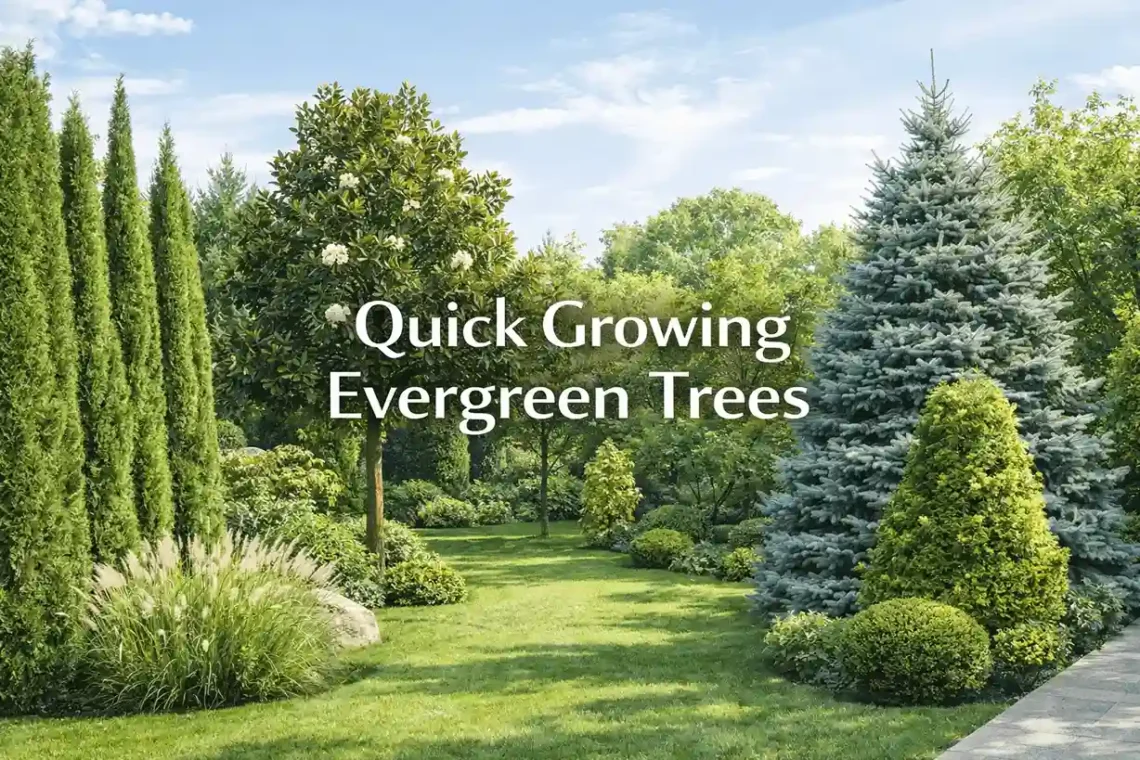
Quick growing evergreen trees are fast-maturing trees that retain their foliage year-round, providing continuous greenery and aesthetic appeal. These trees are highly valued in landscaping for their ability to create natural screens, shade, and visual interest throughout all seasons. Combining rapid growth with evergreen characteristics allows homeowners, landscapers, and urban planners to achieve immediate functional and decorative benefits, making them ideal for gardens, parks, and property boundaries. Their versatility in height, canopy shape, and environmental adaptability makes them a preferred choice across Australia, New Zealand, and the UK.
Quick Summary
- Quick growing evergreen trees maintain leaves year-round and grow faster than typical trees.
- Ideal for privacy, shade, and aesthetic landscaping in Australia, New Zealand, and the UK.
- Some varieties are drought-tolerant and low-maintenance, suitable for urban and rural gardens.
- Growth speed and mature size vary by species and environmental conditions.
Understanding Quick Growing Evergreen Trees
Quick growing evergreen trees are defined by two key features: rapid growth and persistent foliage. “Quick growing” typically refers to species that can reach maturity or substantial height within 5–15 years, depending on conditions. “Evergreen” refers to trees that retain their leaves year-round, ensuring continuous coverage. Growth speed is influenced by soil quality, water availability, sunlight, temperature, and proper care practices. Selecting the right species based on local climate and intended use is essential for achieving optimal results. Evergreen trees are species that retain their foliage year-round (Wikipedia).
Growth Characteristics
- Typical Growth Rates: Fast growers can add 60–120 cm (2–4 feet) per year, whereas slower species may take decades to reach similar heights.
- Maximum Height and Canopy Spread: Tall evergreen trees like Thuja Green Giant can reach 15–20 meters with broad canopies, while smaller fast-growing evergreens remain 4–6 meters tall, suitable for confined spaces.
- Environmental Adaptability: Most fast-growing evergreens adapt well to varied climates, tolerating Australian heat, New Zealand humidity, or temperate UK conditions. Soil type, pH, and water availability significantly affect growth potential.
Evergreen vs Deciduous Fast-Growing Trees
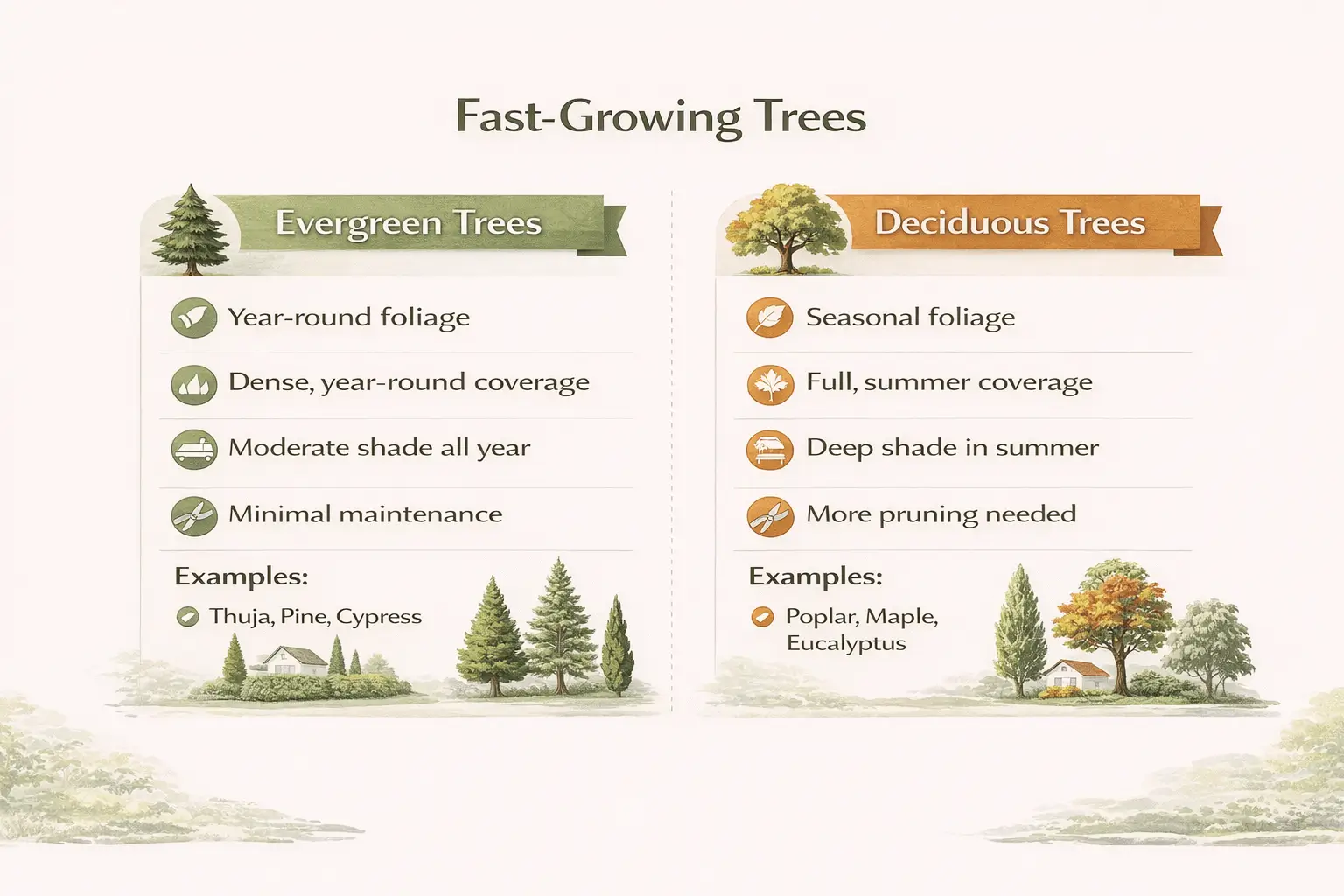
| Feature | Evergreen Fast-Growing Trees | Deciduous Fast-Growing Trees |
| Foliage | Year-round | Shed leaves seasonally |
| Privacy | Continuous coverage | Gaps in winter |
| Shade | Permanent | Seasonal |
| Maintenance | Moderate | Often lower in winter |
| Examples | Thuja Green Giant, Eastern White Pine | Hybrid Poplars, Silver Maple |
Evergreen trees provide consistent screening and aesthetic appeal, while deciduous trees are useful for seasonal shade but do not offer year-round privacy. Selection depends on the intended function in landscaping.
Popular Fast Growing Evergreen Trees
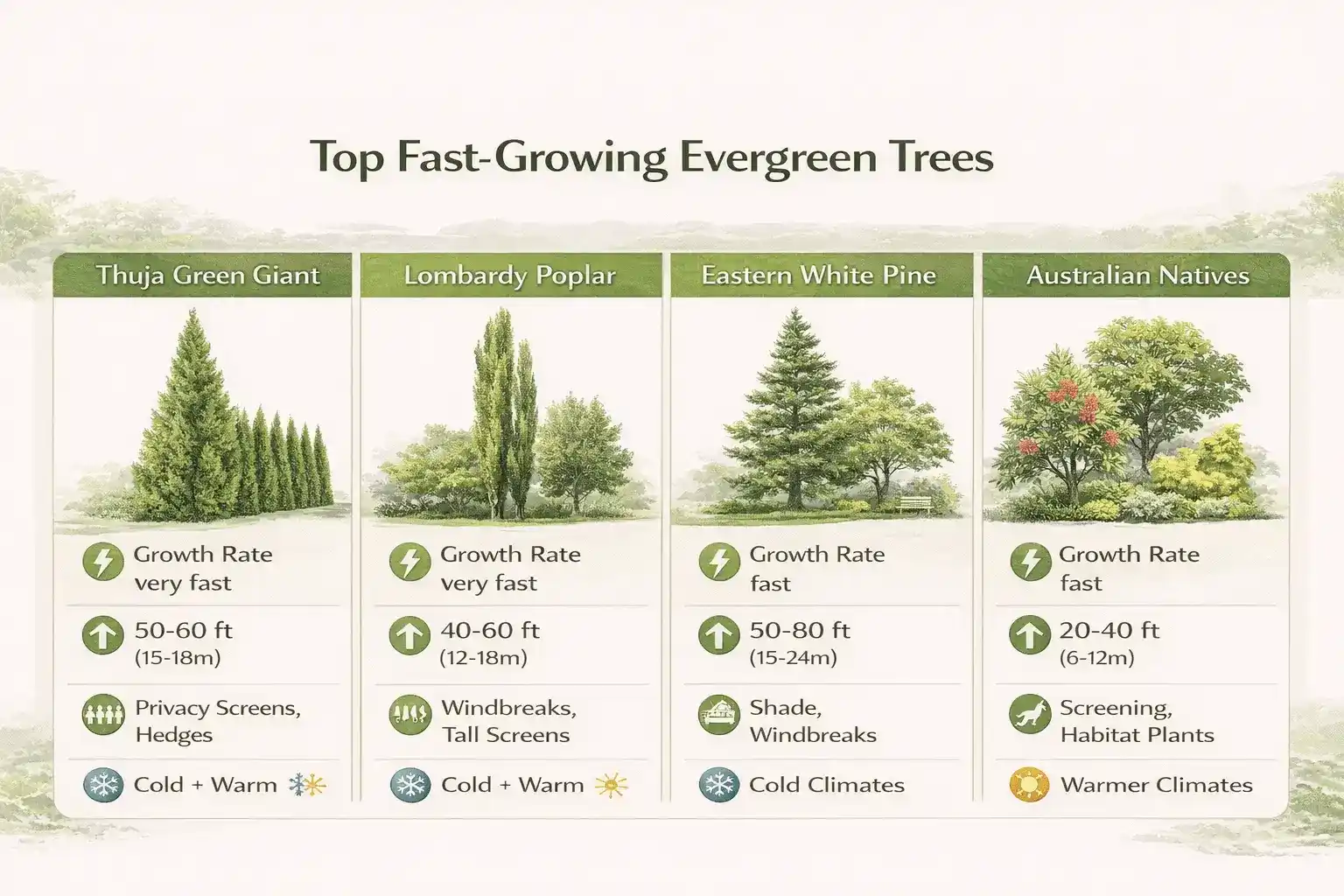
Several species thrive in varied climates and meet landscaping, privacy, and shading needs. For a complete reference on evergreen species, see our Ultimate Guide to Evergreen Trees: Proven Tips for Year-Round Greenery.
Key Species
- Thuja Green Giant – Rapid growth, excellent for privacy screens.
- Lombardy Poplar (evergreen hybrids) – Tall, narrow, and ideal for windbreaks.
- Eastern White Pine – Provides quick shade and greenery.
- Australian Natives – Species like Eucalyptus and Callistemon are drought-tolerant and low-maintenance.
| Species | Growth Rate | Height | Suitable Uses | Climate Adaptability |
| Thuja Green Giant | Fast | 15–20 m | Privacy, windbreak | Australia, NZ, UK |
| Lombardy Poplar | Fast | 12–18 m | Screening, aesthetic | Temperate regions |
| Eastern White Pine | Fast | 10–15 m | Shade, landscaping | Cool climates |
| Eucalyptus spp. | Moderate-Fast | 8–20 m | Shade, low maintenance | Drought-prone areas |
| Callistemon spp. | Fast | 4–6 m | Small screens, gardens | Australia, NZ |
Using Fast Growing Evergreen Trees for Privacy and Screening
Fast growing evergreen trees are ideal for natural barriers that block noise, provide windbreaks, and maintain year-round privacy. Proper planning ensures maximum benefit while minimizing maintenance. For tropical alternatives, check 7+ Essential Tropical Privacy Plants for Fast Screening, perfect for subtropical regions.
Screening Options
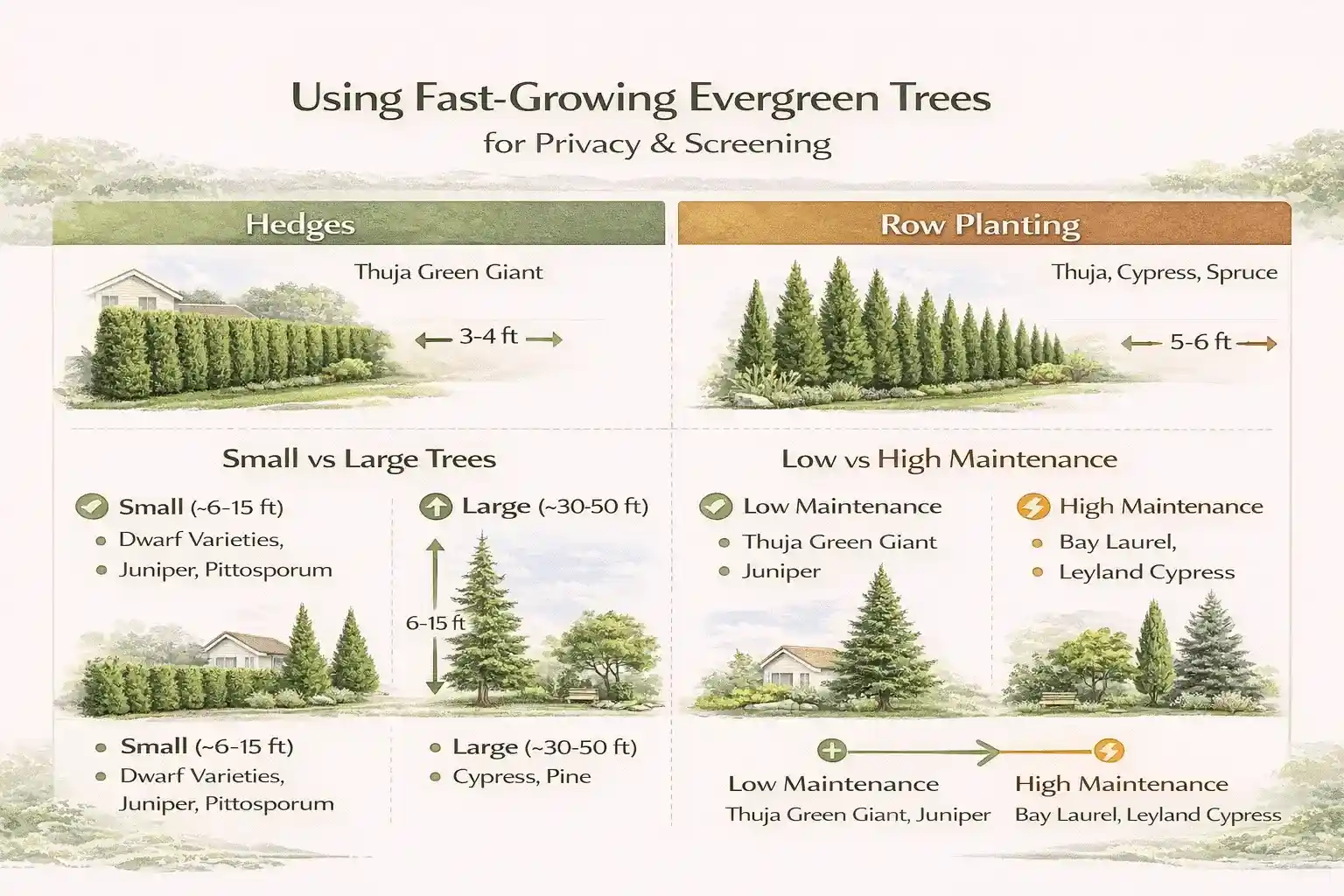
- Hedge planting for uniform coverage
- Row planting with staggered spacing
- Small vs large tree selection based on area and desired screening height
- Low-maintenance varieties for minimal upkeep
Tips for Maximum Privacy
- Maintain recommended planting distances to avoid overcrowding
- Combine species for dense, year-round coverage
- Follow regular maintenance schedules, including pruning, watering, and fertilization
Growth Optimization Techniques
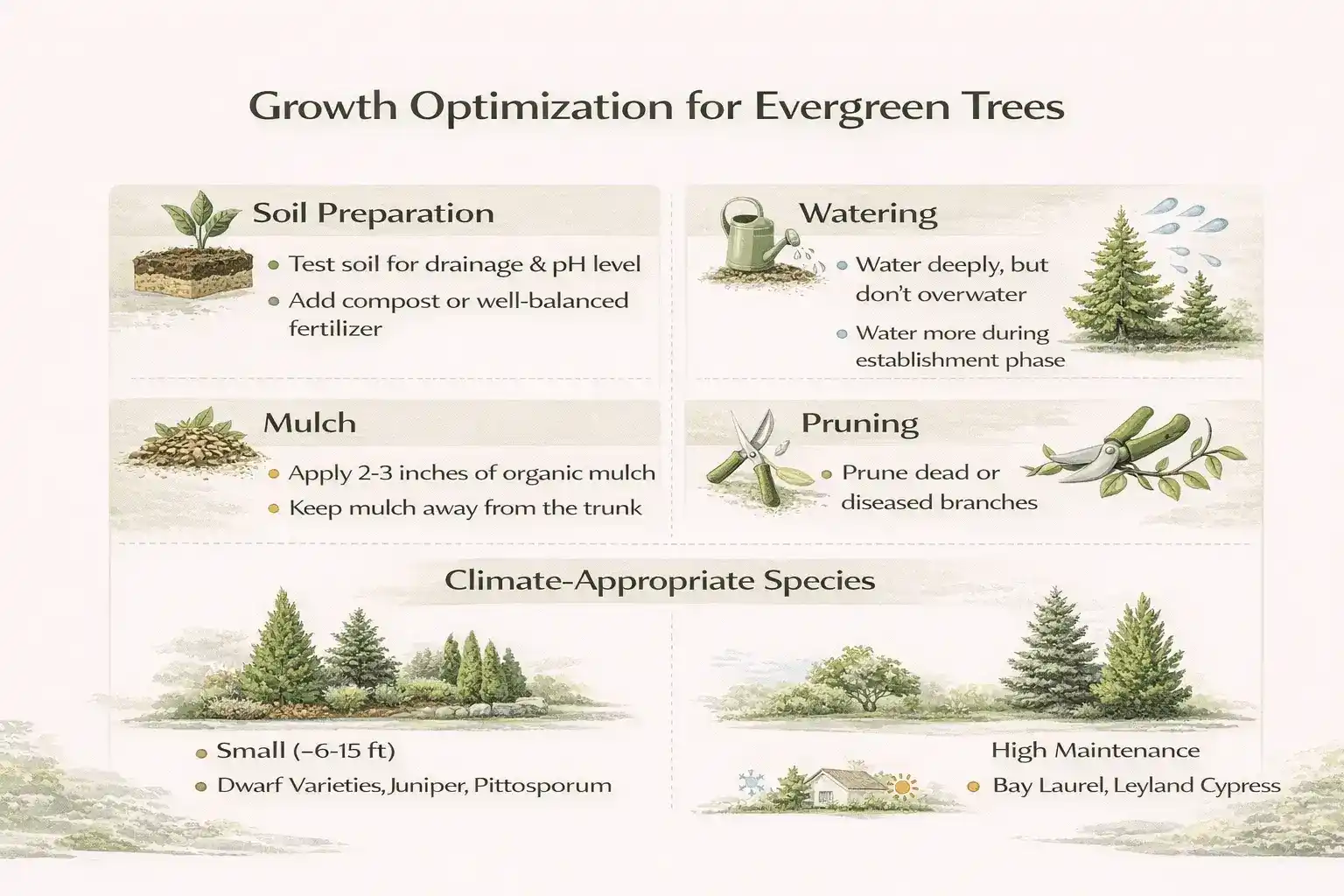
Enhancing growth while maintaining tree health requires proper care practices.
Growth Tips
- Soil preparation and nutrient-rich fertilization
- Consistent watering and drought management
- Mulching and selective pruning to encourage healthy growth
- Choosing species suited to the local climate and soil conditions
Environmental and Maintenance Considerations
Fast growing evergreen trees require specific attention to climate, soil, and potential threats to ensure longevity.
Climate and Soil
- Adaptation to Australia, NZ, and UK climates is crucial for survival
- Soil preferences include well-draining soil with neutral to slightly acidic pH levels
Pest and Disease Management
- Common pests include aphids, scale insects, and caterpillars
- Preventive measures include monitoring, pruning infected branches, and using natural predators
Drought and Shade Considerations
- Select drought-tolerant varieties such as Eucalyptus or Callistemon for dry areas
- Place trees strategically for shade, screening, or combined purposes
Differentiating Tree Selection
Choosing between small vs large, fast-growing vs fastest-growing, or shade vs screening species depends on purpose:
- Small trees: quick initial coverage, limited height
- Large trees: long-term privacy and shade
- Fastest-growing species: immediate impact, may require more maintenance
- Purpose-driven selection ensures functional and aesthetic benefits
Common Problems and Solutions
- Yellowing Leaves: Likely overwatering or nutrient deficiency → adjust soil and fertilization
- Slow Growth: Check sunlight, soil quality, and prune appropriately
- Pests: Introduce natural predators or use safe treatments to prevent infestations
Conclusion
Quick growing evergreen trees combine rapid growth, evergreen foliage, and functional benefits such as privacy, shade, and low maintenance. Species selection should consider climate, intended use, and growth speed to maximize landscape value. Following proper care techniques ensures healthy, long-lasting trees that provide year-round greenery and aesthetic appeal.
FAQs
What are the fastest growing evergreen trees for privacy?
Thuja Green Giant, Lombardy Poplar hybrids, and Eastern White Pine are top choices for rapid privacy screening.
How do I make evergreen trees grow faster in Australia?
Ensure proper soil preparation, adequate watering, mulching, pruning, and selection of climate-adapted species.
Which quick growing evergreen trees are drought-tolerant?
Australian natives such as Eucalyptus and Callistemon are excellent drought-tolerant options.
Can small evergreen trees provide privacy quickly?
Yes, small fast-growing evergreens provide initial screening but may require combination planting for full coverage.
What maintenance is needed for fast-growing evergreen shade trees?
Regular watering, pruning, pest monitoring, and soil management maintain health and accelerate growth.
Are there evergreen trees suitable for both NZ and UK climates?
Thuja Green Giant and certain Eucalyptus hybrids adapt well to temperate climates in both regions.
What is the difference between fast-growing and fastest-growing evergreen trees?
Fast-growing trees reach maturity in 10–15 years, while fastest-growing species can achieve substantial height within 5–10 years but may need more intensive maintenance.