

Introduction
Rosemary prostrate is a compact, evergreen herb known for its low-growing form and aromatic foliage. It combines ornamental value with practical use, making it a popular choice for ground cover, decorative landscaping, and culinary gardens. Gardeners favor rosemary prostrate for its ability to spread naturally while maintaining a tidy profile. Its creeping and trailing growth habits allow it to cover soil efficiently, spill over walls, or soften hard edges in garden designs. As a drought-tolerant plant, rosemary prostrate performs well in a range of climates while offering year-round greenery and edible leaves.
What Is Rosemary Prostrate?
Prostrate Rosemary vs Upright Rosemary
Prostrate rosemary is a spreading form of rosemary that grows horizontally rather than vertically. Unlike upright rosemary varieties that form woody shrubs, prostrate types stay low and extend outward. This growth habit makes rosemary prostratus ideal for ground coverage and cascading displays. Upright rosemary focuses on height and structure, while rosemary officinalis prostratus emphasizes spread, flexibility, and landscape coverage.
Botanical Classification of Rosemary Prostrate
Rosemary prostrate is commonly classified under the scientific names rosmarinus prostratus and rosmarinus officinalis prostratus. These names reflect its growth habit rather than a separate species. Naming variations are common, with differences in spelling and labeling depending on nurseries and regions, but all refer to the same trailing rosemary form.
Growth Habit and Size of Rosemary Prostrate
How Rosemary Prostrate Grows
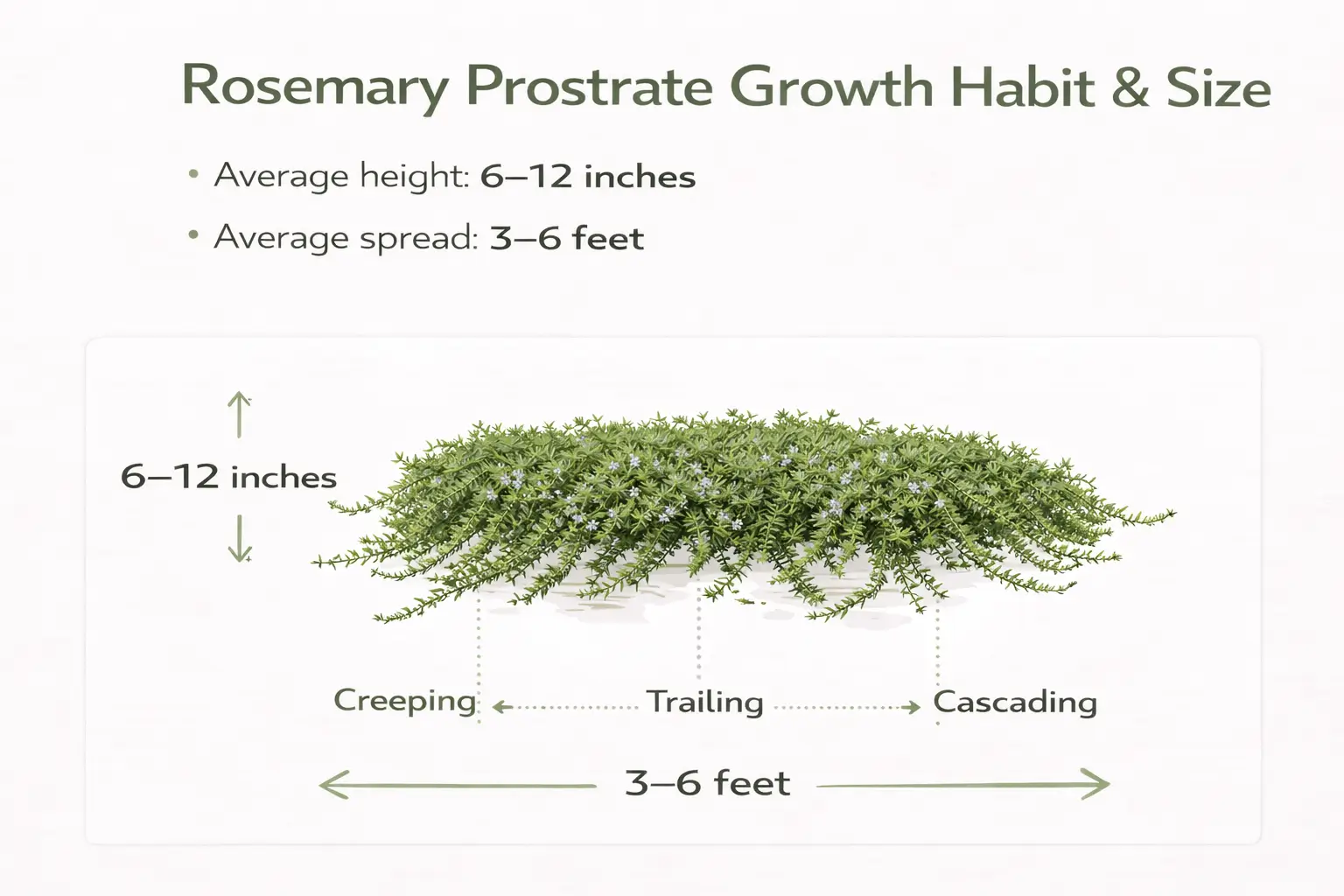
Rosemary prostrate grows with trailing, cascading, and creeping characteristics. Stems spread outward and root lightly where they contact soil, allowing natural expansion. This growth pattern helps the plant form dense coverage without aggressive invasion.
Rosemary Prostrate Size and Spread
On average, rosemary prostrate reaches 6–12 inches in height and spreads 3–6 feet wide. When considering rosemary size or rosemary bush size, prostrate varieties stay low but expand broadly. For gardeners asking how big do rosemary plants get, prostrate rosemary prioritizes width over height.
Rosemary Prostrate as Ground Cover
Prostrate Rosemary Ground Cover Benefits
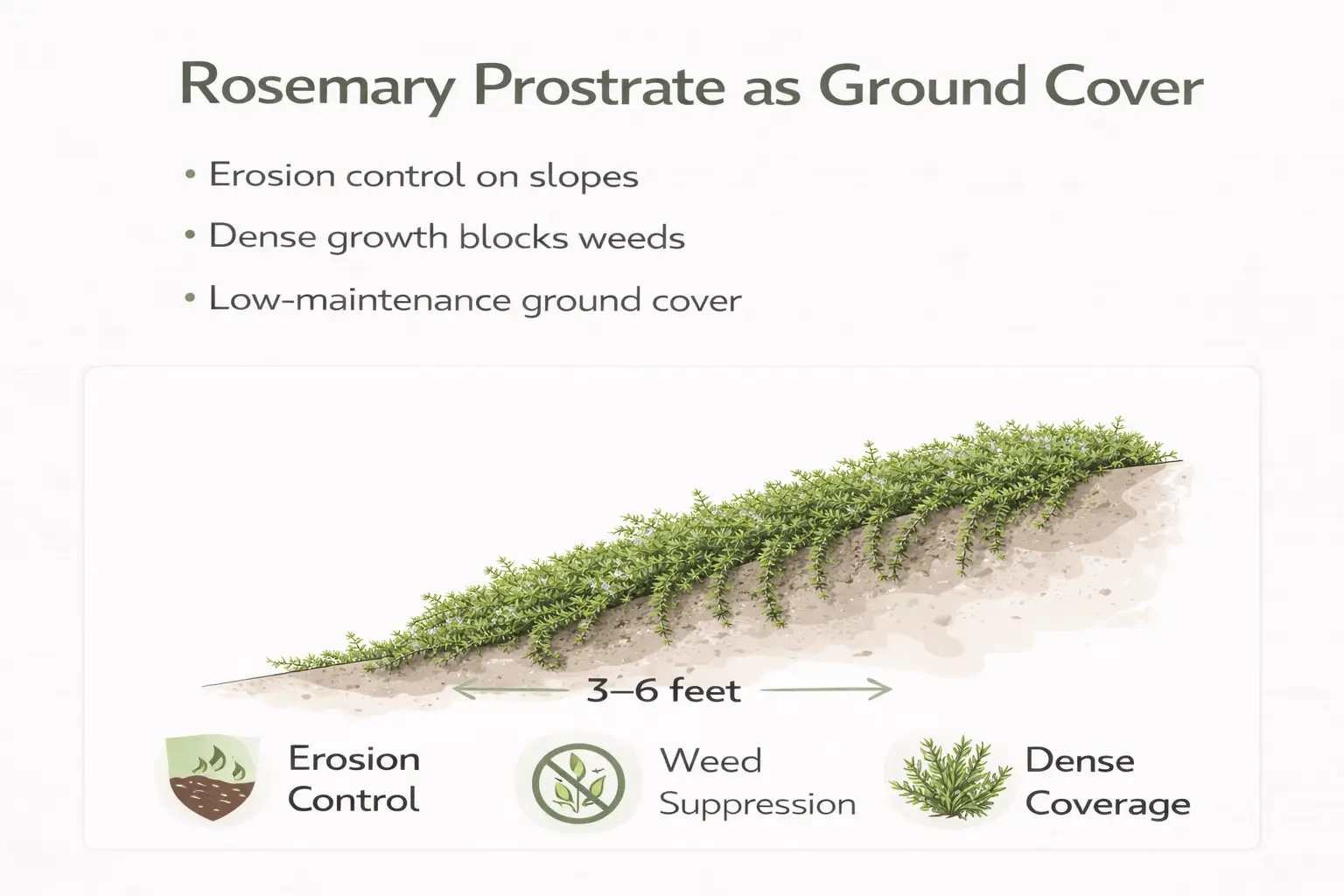
- Excellent erosion control on slopes
- Dense foliage reduces weed growth
- Low maintenance once established
Prostrate rosemary ground cover is valued for durability and visual consistency. Rosemary ground cover remains green year-round in suitable climates.
Using Rosemary Prostrate in Landscaping
Rosemary prostrate works well in slopes, borders, rock gardens, and front yards. As groundcover rosemary, it softens edges and fills gaps naturally. Many designers rely on rosemary as ground cover for both structure and fragrance.
Creeping Rosemary vs Prostrate Rosemary
Is Creeping Rosemary the Same as Rosemary Prostrate?
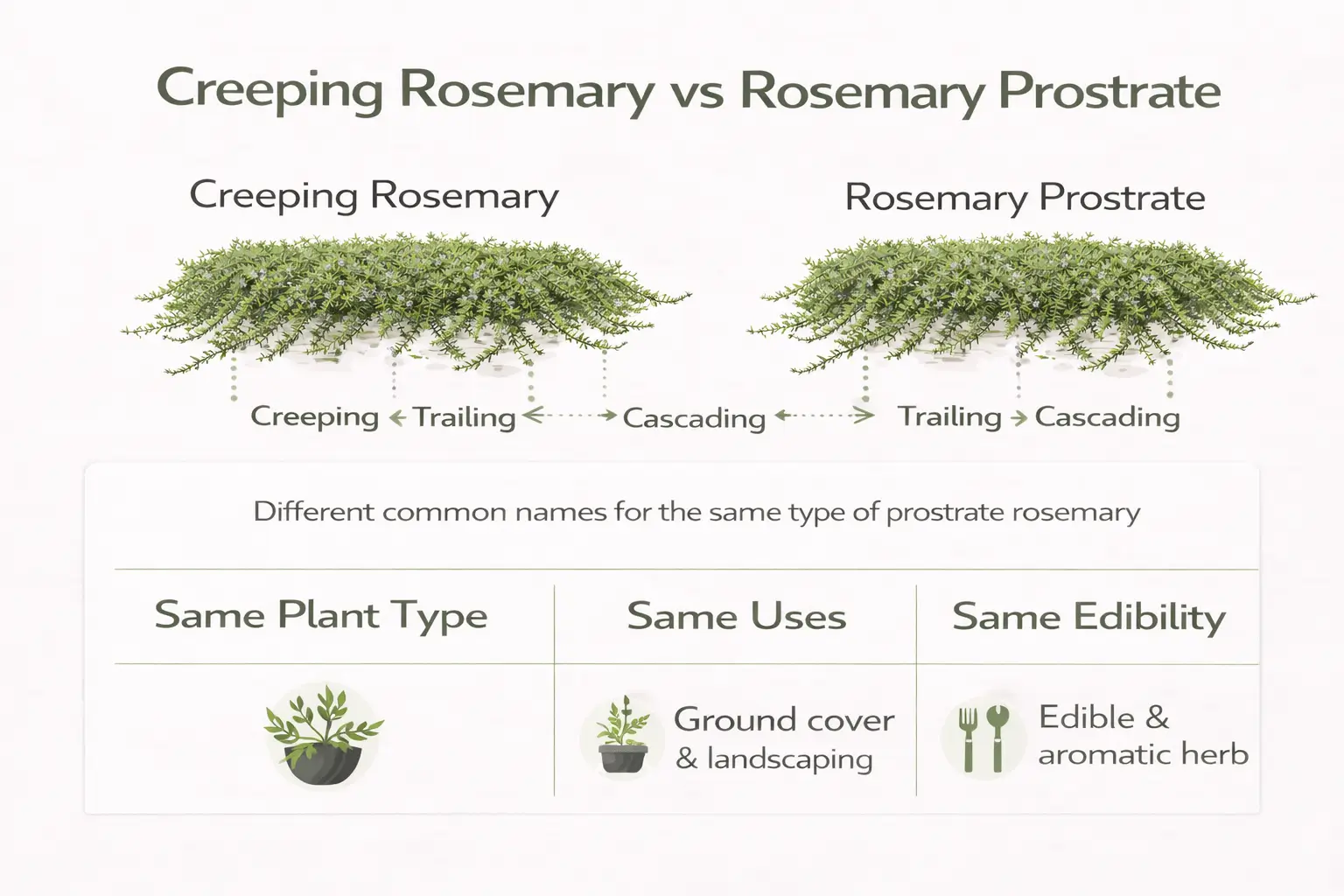
Creeping rosemary and rosemary prostrate are often used interchangeably. The terms describe the same low-growing form, and creeping rosemary plant labels typically refer to prostrate varieties.
Creeping Rosemary Ground Cover Uses
Creeping rosemary ground cover is used as a lawn alternative in low-traffic areas. Creeping rosemary lawn applications provide fragrance, texture, and drought tolerance without frequent mowing.
Trailing, Cascading, and Weeping Rosemary Varieties
Trailing and Cascading Rosemary Explained
Trailing rosemary and cascading rosemary describe growth styles where stems spill over edges or containers. These forms are visually dramatic and suitable for elevated planting.
Weeping Rosemary and Hanging Uses
Weeping rosemary plant varieties are ideal for containers, walls, and raised beds. Hanging rosemary creates vertical interest while maintaining aromatic appeal.
How to Grow and Care for Rosemary Prostrate
Sun, Soil, and Water Requirements
Rosemary prostrate requires full sun and well-draining soil. Poor drainage leads to root stress, making soil structure critical. Water sparingly once established.
Rosemary Prostrate Roots and Spreading
Rosemary roots are shallow but efficient. As stems spread, they anchor lightly, answering the common question: does rosemary spread naturally—yes, gradually and controllably.
Read Also: 5+ Proven Reasons to Grow Mexican Bird of Paradise Plant
Growing Rosemary Prostrate in Pots
Containers for Creeping Rosemary
Creeping rosemary in pots needs wide containers with drainage holes. Shallow but broad pots support lateral growth.
Hanging and Trailing Container Displays
Rosemary hanging displays highlight trailing stems. A rosemary trailing plant in containers adds fragrance and texture to patios and balconies.
Is Rosemary Prostrate Edible?
Culinary Uses of Prostrate Rosemary
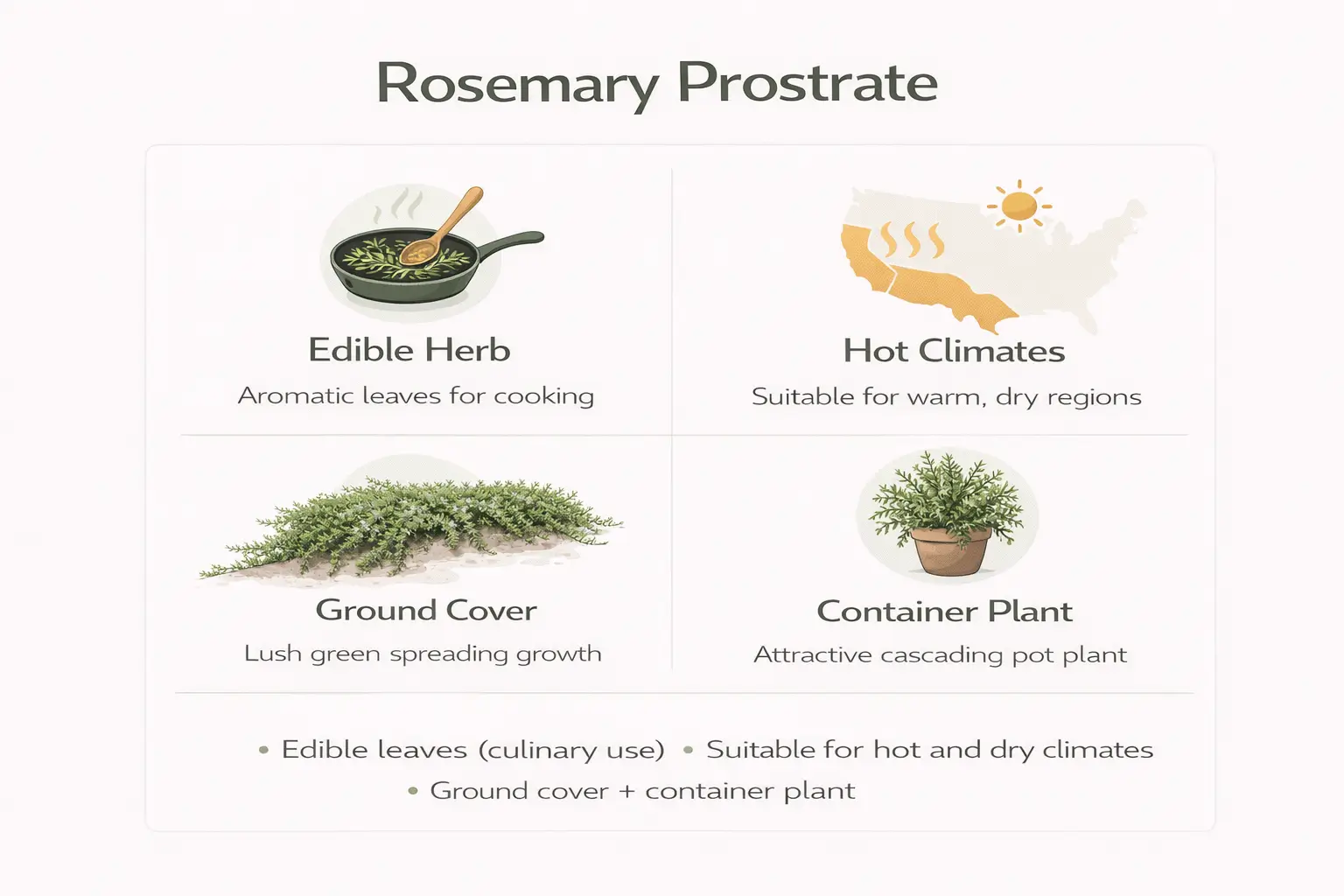
Prostrate rosemary edible leaves offer the same flavor as upright types. Harvest young stems for the best aroma and taste.
Is Creeping Rosemary Edible?
Yes, creeping rosemary is edible. For those asking is creeping rosemary edible, it is safe and comparable in flavor, though slightly milder in some cases.
Climate and Regional Growing Performance
Growing Rosemary Prostrate in Hot and Dry Regions
In arid climates, rosemary prostrate performs reliably with minimal irrigation. Creeping rosemary AZ plantings benefit from heat tolerance and low water needs.
Rosemary Prostrate in Texas and Southern Regions
Trailing rosemary Texas gardens thrive due to heat resilience. Proper drainage and airflow support long-term health.
Common Problems and Maintenance
Pruning and Shaping Prostrate Rosemary
Pruning maintains spread and prevents woody growth. Light trimming encourages dense coverage.
Pests, Diseases, and Stress Signs
Common issues include root rot from excess moisture and minor pest activity. Proper drainage, spacing, and sunlight prevent most stress-related problems.
Conclusion: Is Rosemary Prostrate Right for You?
-
Best Uses for Rosemary Prostrate
Rosemary prostrate is ideal for gardeners seeking a low-growing, functional, and attractive plant. It works exceptionally well as ground cover, where it provides dense coverage and erosion control. In containers, its trailing habit adds movement and fragrance to patios and balconies. As part of edible landscaping, rosemary prostrate offers both visual appeal and usable culinary leaves, making it a practical choice for multi-purpose gardens.
-
Final Landscaping and Growing Tips
For long-term success, plant rosemary prostrate in full sun with excellent drainage and avoid overwatering. Occasional pruning helps maintain shape and encourages dense growth. Choose planting locations where its natural spread can be appreciated without restriction. If you are looking for a hardy, aromatic, and versatile plant, choosing rosemary prostrate for gardens delivers lasting value in both form and function.
Read Also: Grass Palm Explained: 5+ Facts Every Plant Lover Should Know
FAQs
What is rosemary prostrate used for?
Rosemary prostrate is used as ground cover, in containers, on slopes, and in edible landscapes. It provides erosion control, decorative trailing growth, and aromatic leaves for cooking.
How fast does prostrate rosemary spread?
Prostrate rosemary spreads at a moderate rate. Under ideal conditions, it gradually expands outward each growing season without becoming invasive.
Is rosemary prostrate edible?
Yes, rosemary prostrate is edible. Its leaves have the same culinary uses as upright rosemary and can be harvested fresh or dried.
Can rosemary prostrate be used as ground cover?
Rosemary prostrate is an excellent ground cover. Its dense, spreading habit suppresses weeds and stabilizes soil while remaining low maintenance.
How big does rosemary prostrate grow?
Rosemary prostrate typically grows 6–12 inches tall and can spread 3–6 feet wide, depending on growing conditions and pruning.
Does creeping rosemary survive winter?
Creeping rosemary survives winter in mild climates. In colder regions, it may require protection or container planting to prevent frost damage.