Introduction
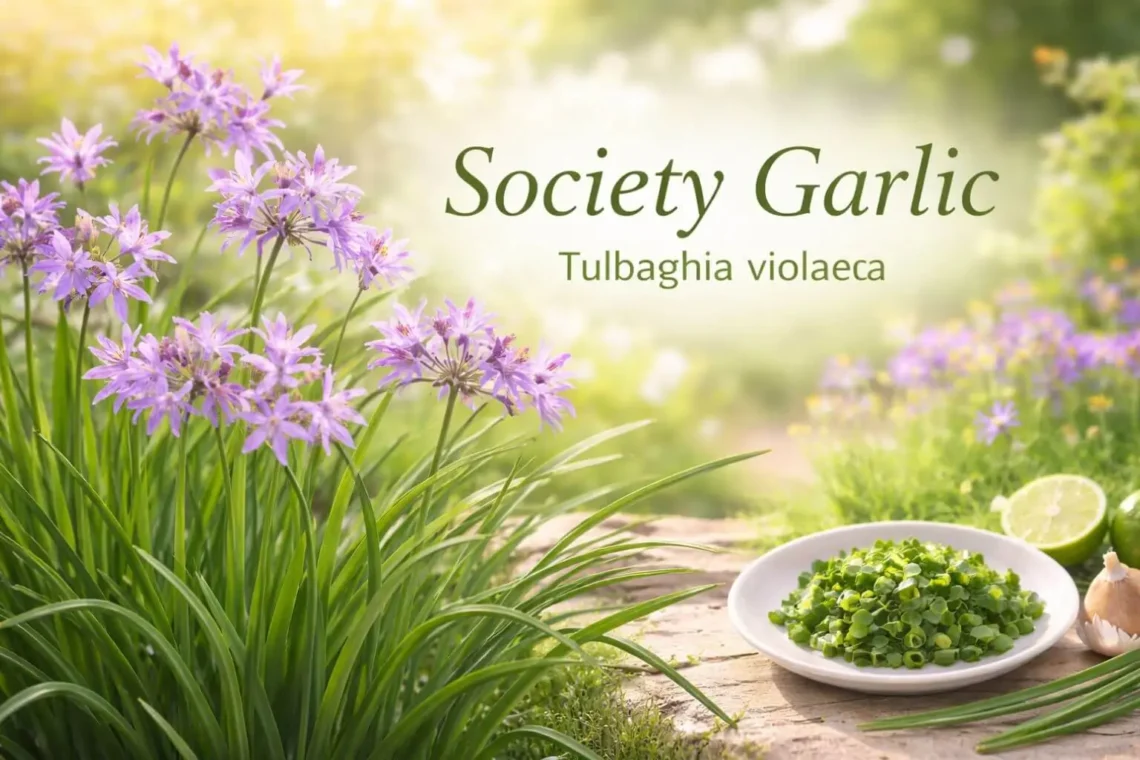
Society garlic (Tulbaghia violacea) is a versatile ornamental and edible plant that adds both beauty and utility to gardens. Known for its elegant purple flowers and lush green foliage, society garlic is easy to grow and maintain, making it a popular choice for landscapers and home gardeners alike. Beyond its visual appeal, society garlic edible leaves and flowers are used in cooking, offering a mild garlic flavor that enhances dishes naturally. Its adaptability, low maintenance, and multiple benefits make it a must-have plant for those wondering what is society garlic and why it is valued in gardens and kitchens alike. The society garlic benefits include aesthetic charm, culinary uses, and environmental advantages.
What is Society Garlic?
Botanical Name and Varieties
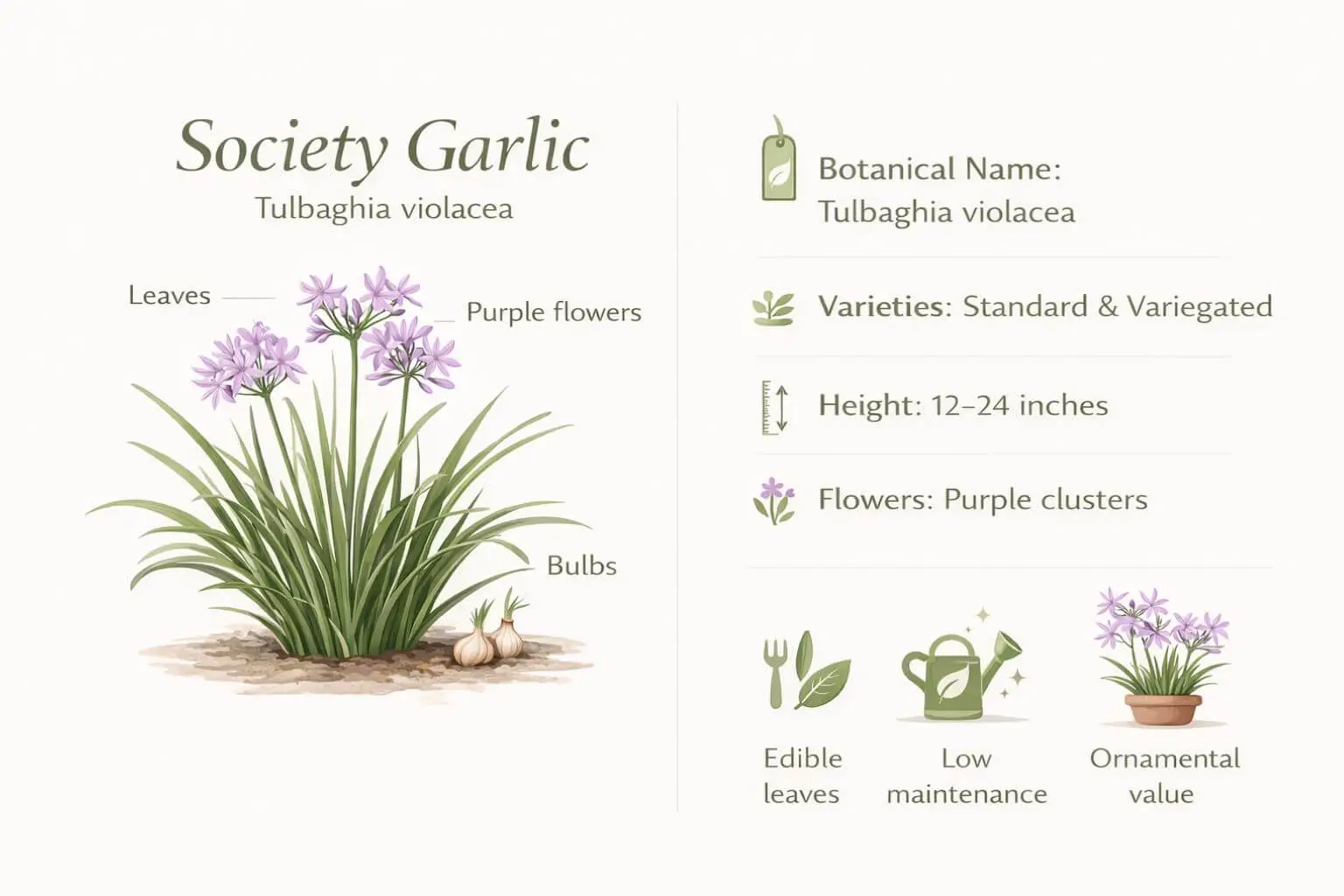
Society garlic, scientifically known as Tulbaghia violacea, belongs to the Amaryllidaceae family. This hardy perennial is native to Southern Africa and comes in several varieties. The most common is the standard purple-flowered form, while society garlic variegated offers cream-edged foliage for added visual interest. Another popular variety is tulbaghia violacea variegated society garlic, known for its striking leaves and attractive blooms, making it a versatile choice for ornamental gardening.
Physical Characteristics and Size
Society garlic grows to a manageable society garlic height of approximately 12–24 inches, forming clumps of slender, strap-like leaves. Its society garlic flowers are star-shaped, typically light purple, and bloom in clusters above the foliage. The foliage remains lush throughout the growing season, contributing to its appeal in both flower beds and container plantings. Society garlic size makes it perfect for borders, edging, or mixed garden beds.
Society Garlic Care Guide

Planting and Soil Requirements
When planting society garlic, choose well-draining soil with moderate fertility. The plant thrives in full sun but can tolerate partial shade, so consider society garlic sun or shade preferences when selecting a location. Whether planting bulbs or young plants, spacing should allow for growth and airflow. Proper society garlic plant care starts with selecting the right site and preparing the soil for long-term success.
Watering and Fertilizing
Growing society garlic requires moderate watering—soil should remain moist but not waterlogged. Fertilize during the growing season with a balanced, slow-release fertilizer to encourage healthy leaves and abundant blooms. Regular maintenance, including removing dead flowers and leaves, ensures vigorous society garlic care and prolonged ornamental value.
Propagation Methods
How to propagate society garlic is simple: divide established clumps or plant bulbs in spring. This method of society garlic propagation allows gardeners to expand their plantings or share with friends. Bulbs should be planted just below the soil surface and lightly watered until established.
Uses and Benefits of Society Garlic

-
Culinary Uses
One of the primary society garlic edible benefits is its use in cooking. The leaves and flowers have a mild garlic flavor, making them ideal for salads, soups, and garnishes. If you wonder is society garlic edible, rest assured that both leaves and blooms can be safely consumed. Tips on how do you eat society garlic include chopping fresh leaves into dishes or using flowers to add a colorful, flavorful touch. Yes, you can eat society garlic in a variety of culinary applications.
-
Landscaping and Garden Benefits
Society garlic is not only edible but also highly ornamental. It serves as a society garlic companion plant, repelling pests and attracting pollinators. Its unique look makes it ideal for society garlic landscape ideas in borders, rock gardens, or mixed plantings. Many gardeners use ornamental garlic plants to create texture and color, while ornamental garlic plants are valued for both aesthetics and practical garden benefits.
-
Health and Environmental Benefits
Beyond its culinary and ornamental uses, society garlic benefits include antioxidant properties and environmental advantages. The plant improves air quality, enhances soil structure, and supports beneficial insects. Overall, society garlic uses extend from health to ecological contributions in any garden space.
Society Garlic in Different Regions
Growing in Florida and Texas
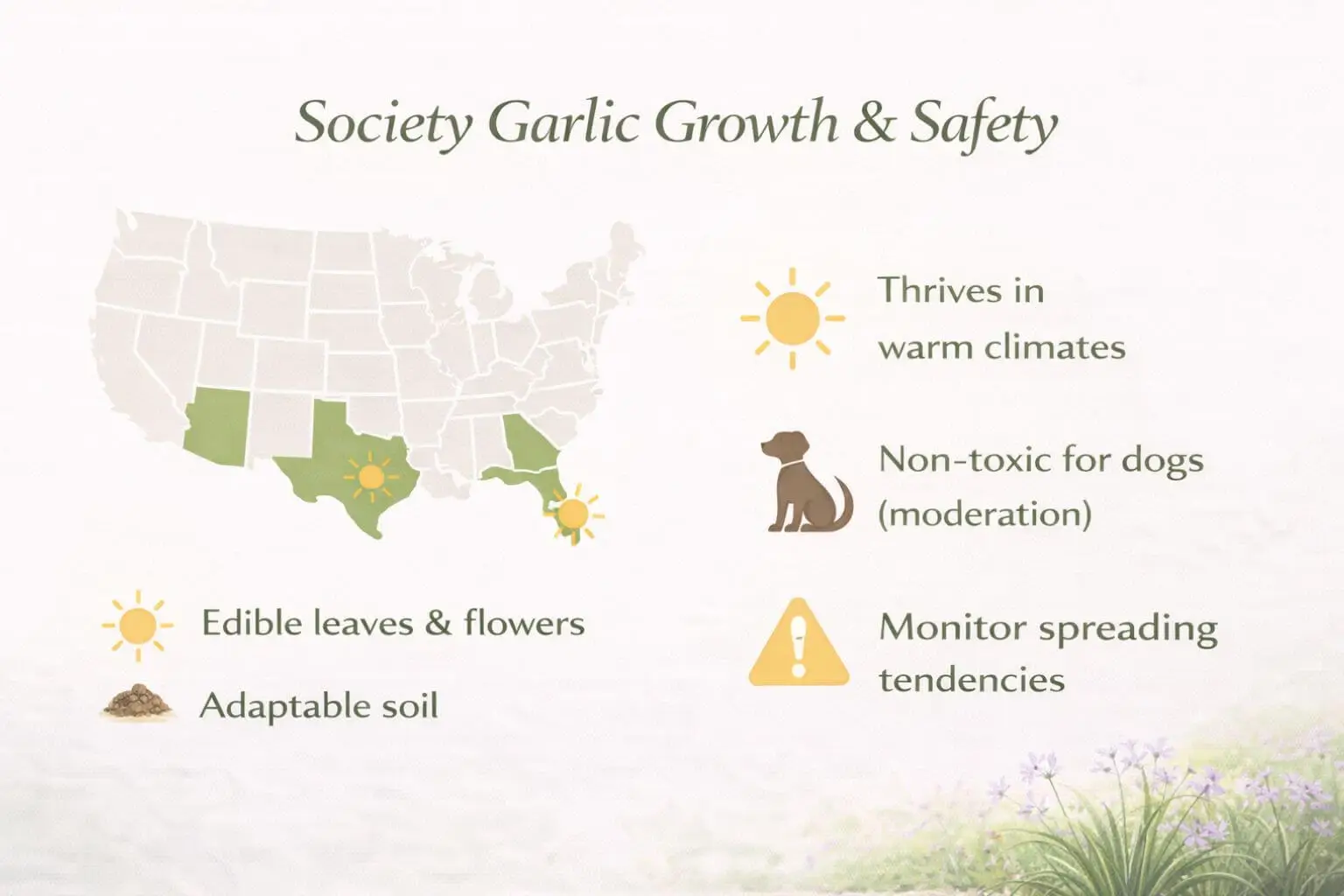
When growing society garlic Florida or society garlic Texas, consider regional soil types and climate. These plants thrive in warm climates and adapt well to local conditions, provided they receive adequate sun and well-draining soil.
Invasiveness and Safety
While hardy, gardeners should monitor does society garlic spread, as it can naturalize in favorable conditions. Pet owners should note that is society garlic toxic to dogs is generally no, but large quantities may cause mild digestive upset. Overall, is society garlic invasive depends on maintenance and control measures.
Variegated Society Garlic and Specialty Varieties
Variegated Forms and Decorative Use
Variegated society garlic features cream or yellow-edged leaves, adding visual interest to gardens. The tulbaghia violacea variegated society garlic pairs beautifully with other perennials, while the variegated garlic plant offers both ornamental appeal and edible benefits.
Companion Plants
When considering what to plant with society garlic, choose plants with similar sunlight and water needs. A society garlic companion plant enhances garden aesthetics and promotes healthy growth for all species involved.
Buying and Planting Society Garlic
For those searching for society garlic for sale or society garlic plants for sale, check local nurseries or online suppliers. Keywords like society garlic near me, society garlic plant for sale, and society garlic bulbs will help locate healthy specimens. Choose vibrant leaves, strong bulbs, and free-from-pests plants to ensure a successful planting experience.
Common Questions About Society Garlic
Blooming Period and Flower Care
When does society garlic bloom typically in late spring through summer. Society garlic flowers require minimal care, but removing spent blooms promotes continuous flowering.
Difference Between Society Garlic and Garlic Chives
Society garlic vs garlic chives differs mainly in appearance and hardiness. Society garlic has broader leaves and purple flowers, while garlic chives produce thinner leaves and white flowers.
Perennial or Annual Plant
Is society garlic a perennial? Yes, it is a hardy perennial that returns year after year in suitable climates.
Conclusion & Call-to-Action
Society garlic combines beauty, ease of care, and practical uses for both culinary and ornamental purposes. Its vibrant flowers, edible leaves, and environmental benefits make it an ideal addition to any garden. With simple planting and maintenance, you can enjoy the multiple society garlic benefits, including society garlic edible uses and easy society garlic care. Plant society garlic today to enhance your garden’s appeal and your kitchen’s flavor.
Learn more: 7+ Stunning Fan Aloe Plants for Easy Indoor & Outdoor Beauty
FAQs
- What is society garlic and is it edible?
Society garlic (Tulbaghia violacea) is an ornamental and edible plant. Both its leaves and flowers can be consumed, offering a mild garlic flavor. - How do I care for society garlic in my garden?
Plant in well-draining soil, provide full sun to partial shade, water moderately, fertilize during the growing season, and remove dead flowers for best results. - Does society garlic spread or become invasive?
Society garlic can spread in favorable conditions, but with proper maintenance, it remains controlled and non-invasive. - Can dogs safely be around society garlic?
Society garlic is generally safe for dogs, though large amounts may cause mild digestive upset. Monitor pets if planting in accessible areas. - How do I propagate variegated society garlic at home?
Propagate by dividing established clumps or planting bulbs in spring. Ensure soil is moist and well-draining for successful growth. - When does society garlic bloom, and how long do flowers last?
Society garlic blooms from late spring to summer. Flowers last several weeks, and deadheading promotes additional blooms.