Introduction
Tuscan plants are admired for their warm Mediterranean charm, natural textures, and relaxed elegance inspired by the Italian countryside. Rooted in centuries-old gardening traditions, this planting style blends beauty with practicality, making it both timeless and easy to maintain. Tuscan-style planting remains popular because it favors hardy plants, earthy colors, and organic forms that never feel overdesigned. These plants adapt well to both outdoor landscapes and indoor spaces, allowing homeowners to bring Mediterranean character into gardens, patios, and interiors alike. In this guide, readers will learn what defines Tuscan plants, which varieties work best indoors and outdoors, and how to apply Tuscan landscaping and garden ideas to create a cohesive, authentic Mediterranean look at home.
What Are Tuscan Plants?
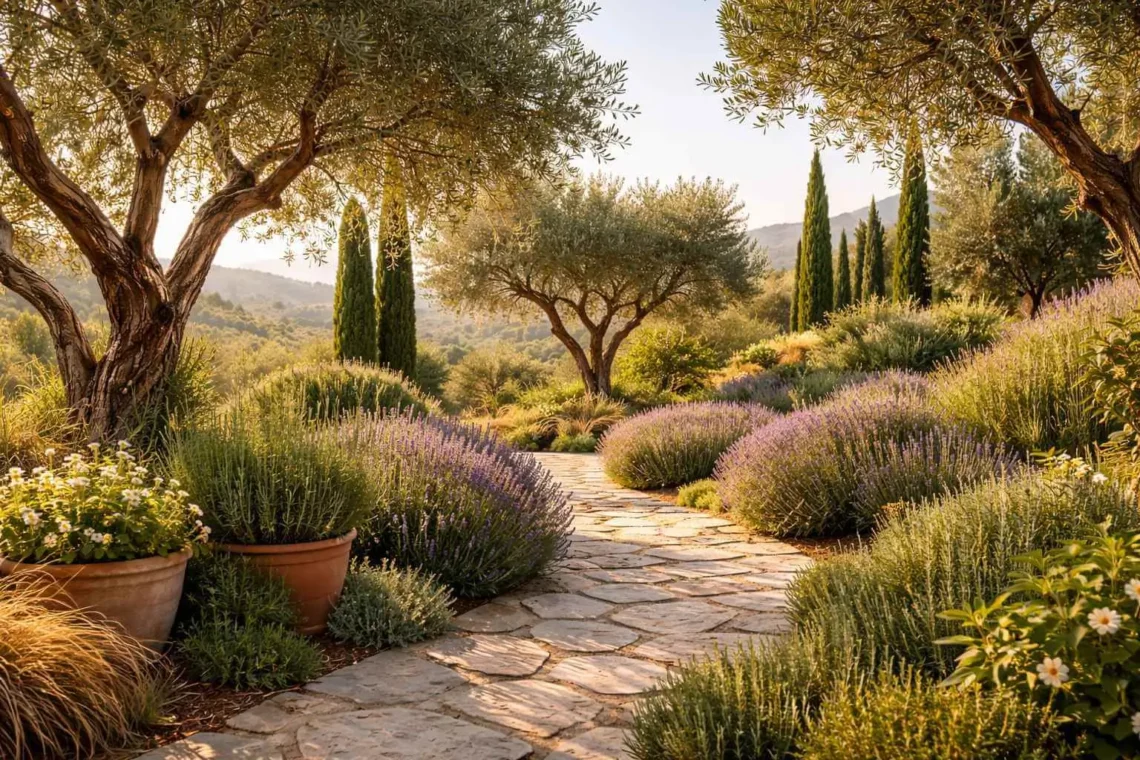
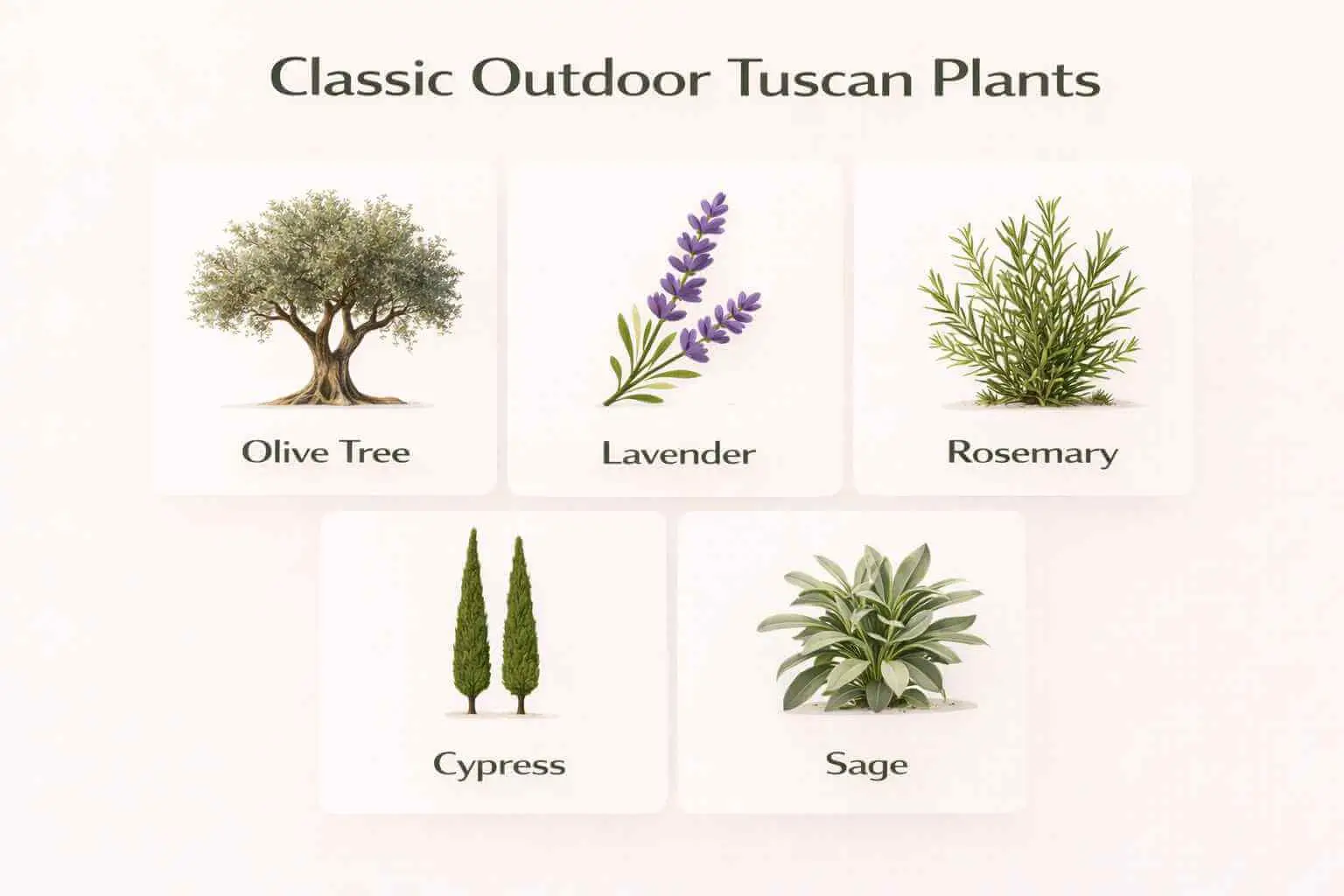
Tuscan plants are species traditionally associated with the Tuscany region of Italy and the broader Mediterranean basin. These plants are adapted to warm summers, mild winters, and dry conditions. They are valued for their resilience, subtle fragrance, and architectural forms. The Mediterranean climate strongly influences Tuscan plants, encouraging deep root systems, tough foliage, and efficient water use. Visually, they are recognized by silvery or gray-green leaves, narrow or leathery foliage, soft purple and blue flowers, and natural, slightly untamed growth patterns that enhance rustic appeal.
Key Features of Tuscan-Style Planting
- High drought tolerance and low ongoing maintenance
- Earthy tones, muted greens, and soft floral colors
- Natural forms that avoid rigid pruning
- Strong reliance on native Mediterranean species
Popular Tuscan Plants for Outdoor Gardens
Tuscan plants outdoor perform best in warm and temperate climates where sunlight is abundant. These plants thrive in open spaces with well-draining soil and full sun exposure. Their durability makes them ideal for gardens that prioritize long-term structure and minimal watering.
Learn more: 7+ Powerful Benefits of Coastal Rosemary for Stunning Gardens
Classic Outdoor Tuscan Plants
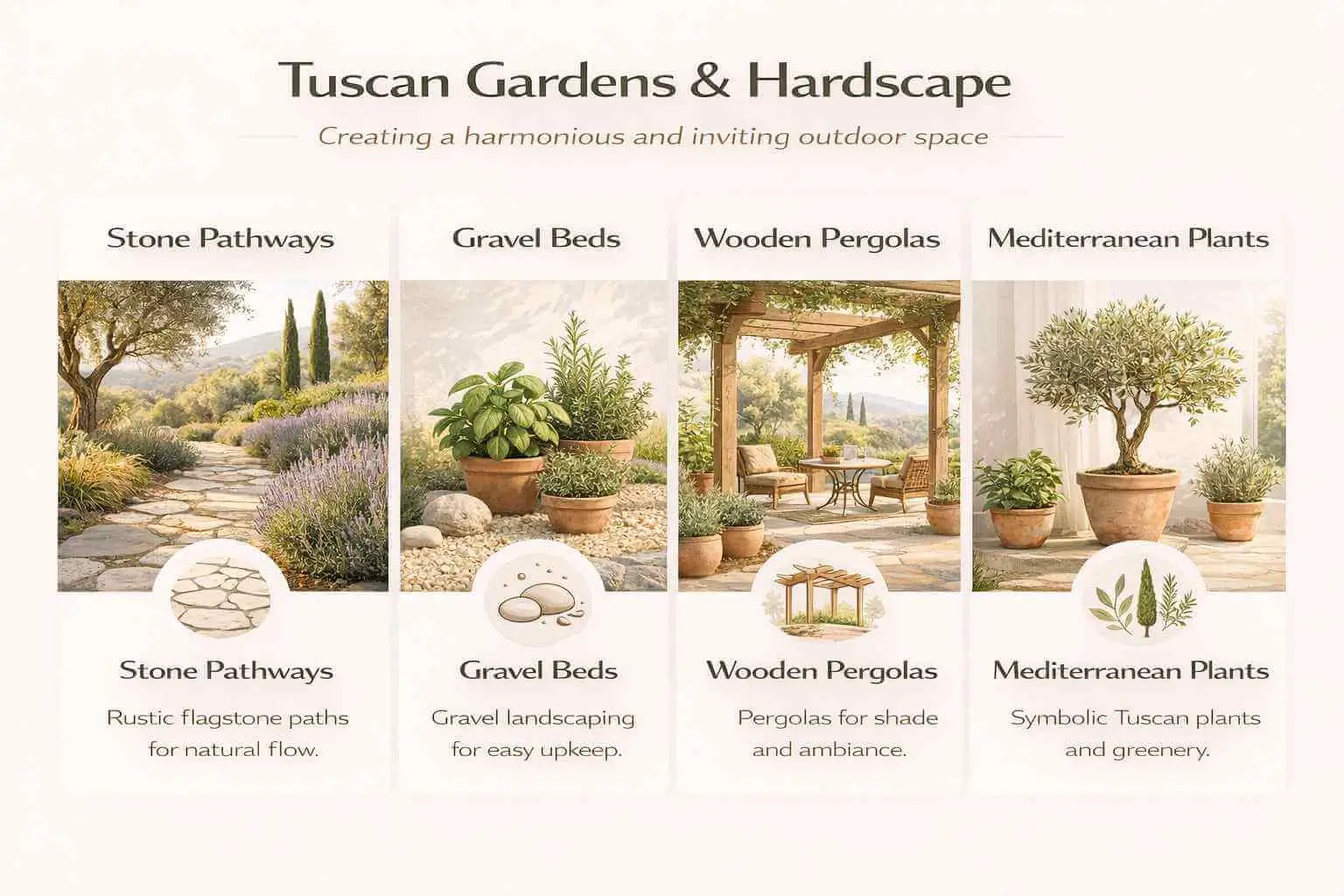
- Olive trees: Iconic, slow-growing trees with silvery leaves and strong architectural presence
- Lavender: Fragrant, drought-tolerant shrubs with purple blooms
- Rosemary: Evergreen herb with needle-like foliage and culinary value
- Cypress: Tall, slender trees often used for borders and pathways
- Sage: Aromatic foliage with soft textures and seasonal flowers
How to Arrange Outdoor Tuscan Plants
- Layer plants by height, placing trees at the back and herbs at the front
- Mix shrubs, herbs, and trees for visual balance
- Allow plants to grow naturally to maintain a rustic, countryside feel
Tuscan Plants for Indoor Spaces
Tuscan plants indoor bring warmth and Mediterranean character into living spaces. When placed correctly, these plants enhance air quality, soften interiors, and create a calm, grounded atmosphere reminiscent of Italian villas.
Best Indoor Tuscan Plants
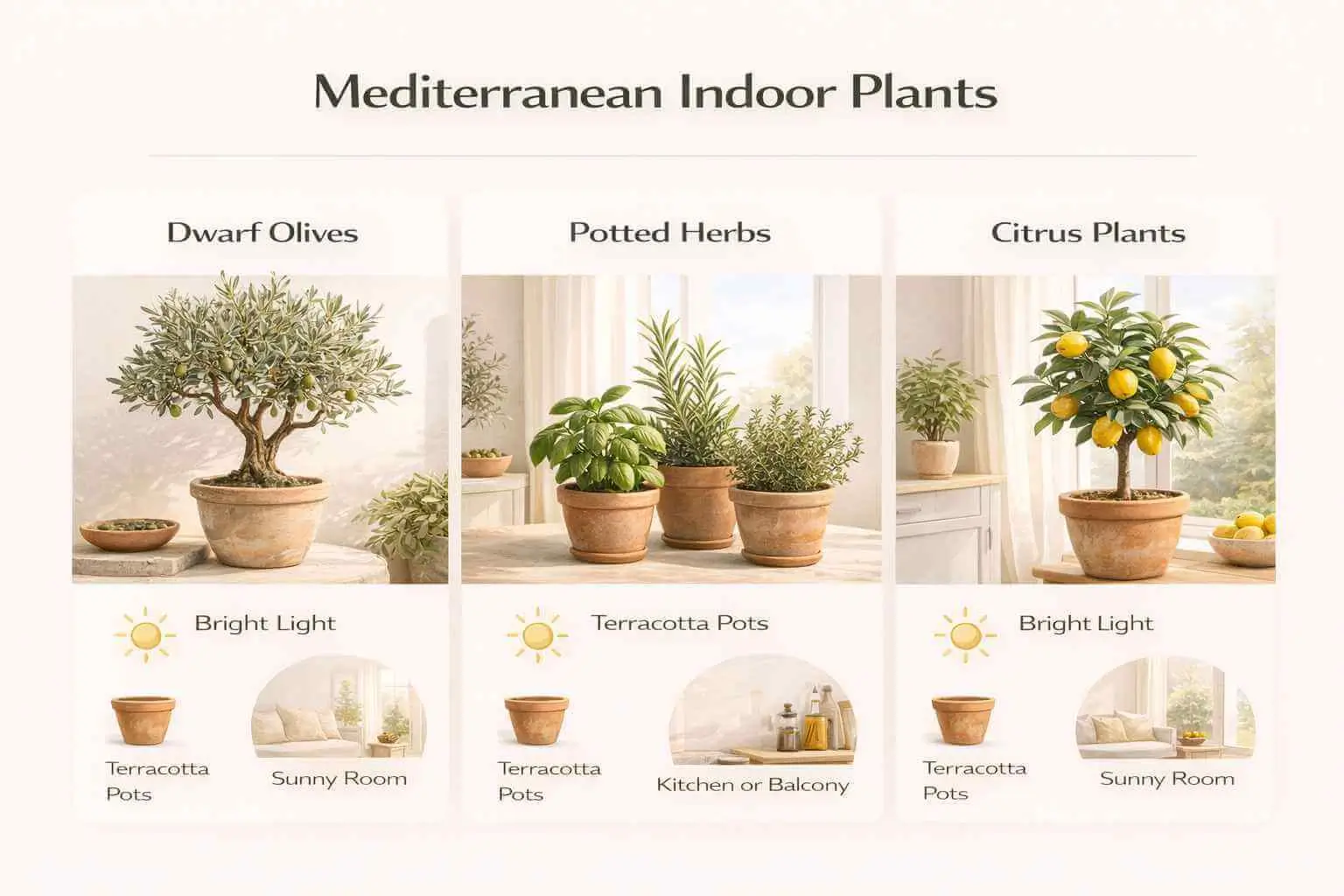
- Dwarf olive trees: Compact forms suitable for containers
- Potted herbs: Rosemary, thyme, and basil for scent and function
- Citrus plants: Lemon or orange trees for color and fragrance
Indoor Styling Tips
- Use clay and terracotta pots for authenticity
- Position plants near bright, natural light sources
- Keep décor minimal with rustic accents like wood and stone
Tuscan Landscaping Ideas for Home Gardens
Tuscan landscaping emphasizes harmony between plants and hardscape elements. Rather than focusing solely on greenery, this approach blends natural materials with planting to create balanced, livable spaces.
Small Tuscan Garden Ideas
- Apply small Tuscan garden ideas through container gardening
- Use vertical planting to save space
- Design courtyard-style layouts with enclosed seating areas
Tuscan Front Yard Landscaping
Tuscan front yard landscaping focuses on structure and symmetry. Entryways benefit from potted olive trees, lavender borders, and stone pathways that guide the eye. Balanced planting enhances curb appeal while maintaining a welcoming, understated elegance.
Tuscan Garden Ideas for a Complete Mediterranean Look
Tuscan garden ideas aim to extend outdoor living by combining plants, textures, and movement. Paths, seating areas, and greenery work together to create functional yet visually cohesive environments.
Hardscape Elements That Complement Tuscan Plants
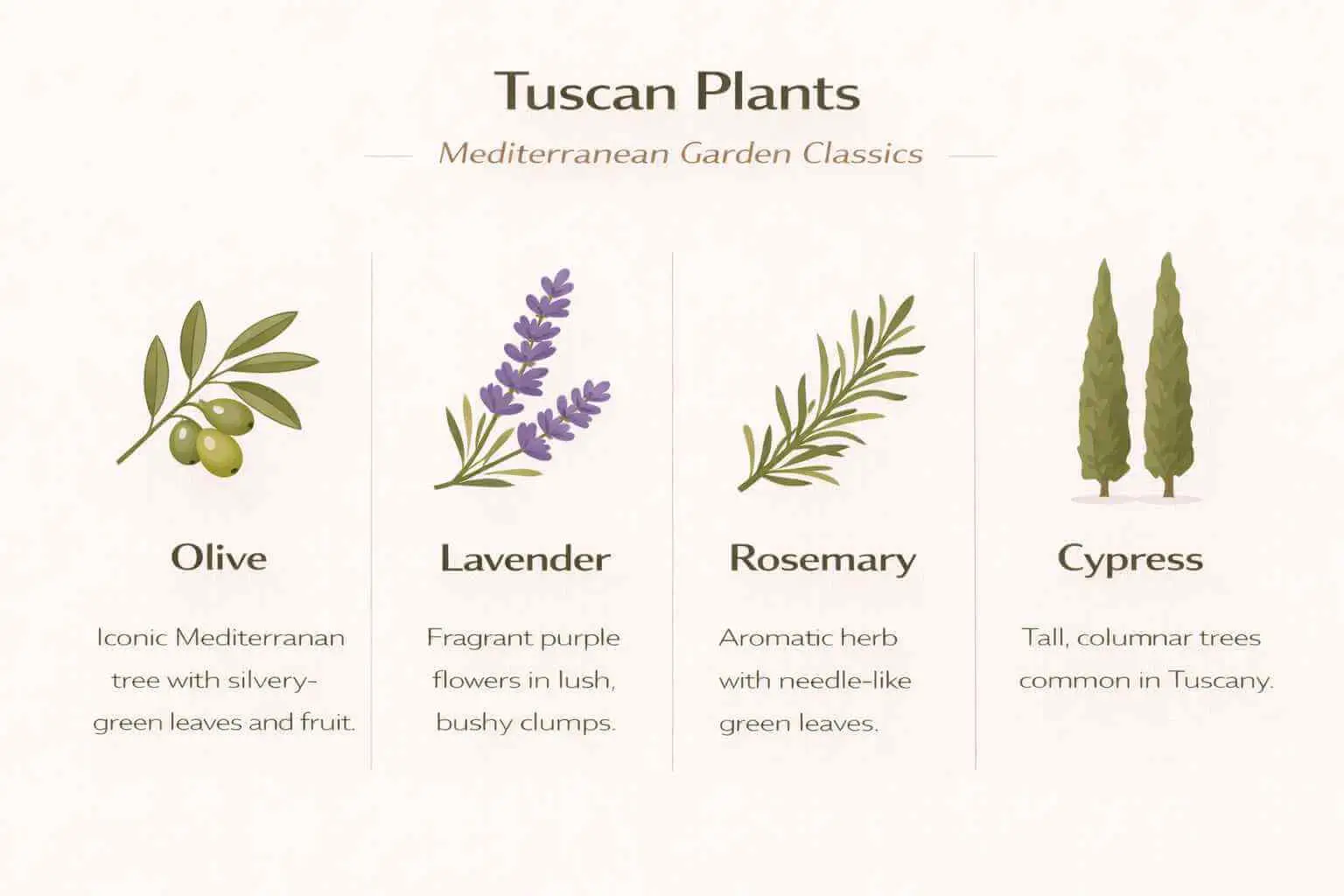
- Stone pathways that age naturally
- Gravel beds for drainage and contrast
- Wooden pergolas for shade and structure
Enhancing Your Garden with Tuscan Garden Products
Tuscan garden products play a key role in reinforcing style and usability. These elements support plants while contributing to the overall aesthetic.
Garden Accessories and Materials
- Terracotta planters for visual continuity
- Rustic benches for seating and relaxation
- Stone fountains to introduce sound and movement
Tuscan Garden Dressing and Final Touches
Tuscan garden dressing refers to the finishing elements that add warmth and authenticity. These details ensure the space feels complete rather than unfinished.
Finishing Details for a Tuscan Garden
- Soft outdoor lighting to highlight textures
- Consistent color coordination across plants and décor
- Seasonal plant rotation to maintain year-round interest
Conclusion & Call to Action
Tuscan plants bring together durability, natural beauty, and timeless Mediterranean elegance. Their drought tolerance, soft earthy colors, and relaxed growth habits make them ideal for both structured landscapes and informal garden designs. From outdoor olive trees and lavender borders to indoor herbs and citrus plants, Tuscan-style planting offers flexibility without sacrificing visual impact. Whether you are refreshing a small corner or redesigning an entire garden, this approach rewards simplicity and balance. Start small with a few well-chosen plants or gradually transform existing spaces using Tuscan landscaping principles. Experiment with Tuscan plants indoors or outdoors and enjoy a warm, authentic Mediterranean atmosphere that grows more beautiful over time.
Learn more: 7 Stunning Reasons to Grow a Copper Pinwheel Plant Today
Frequently Asked Questions (FAQs)
What are the best Tuscan plants for beginners?
Olive trees, lavender, rosemary, and sage are excellent choices for beginners. These Tuscan plants are hardy, low maintenance, and adapt well to full sun and well-draining soil.
Can Tuscan plants grow in cold climates?
Most Tuscan plants prefer mild, warm conditions. In colder climates, they can be grown in containers and moved indoors during winter or protected with proper insulation and placement.
Are Tuscan plants suitable for indoor gardening?
Yes, many Tuscan plants indoor perform well with sufficient light. Dwarf olive trees, potted herbs, and citrus plants thrive indoors when placed near sunny windows.
How do I create a small Tuscan-style garden at home?
Use small Tuscan garden ideas such as container planting, vertical arrangements, and gravel pathways. Focus on a limited plant palette and natural materials to maintain balance.
What accessories enhance a Tuscan garden design?
Terracotta planters, rustic benches, stone fountains, and warm outdoor lighting enhance Tuscan garden design while reinforcing its Mediterranean character.