Introduction
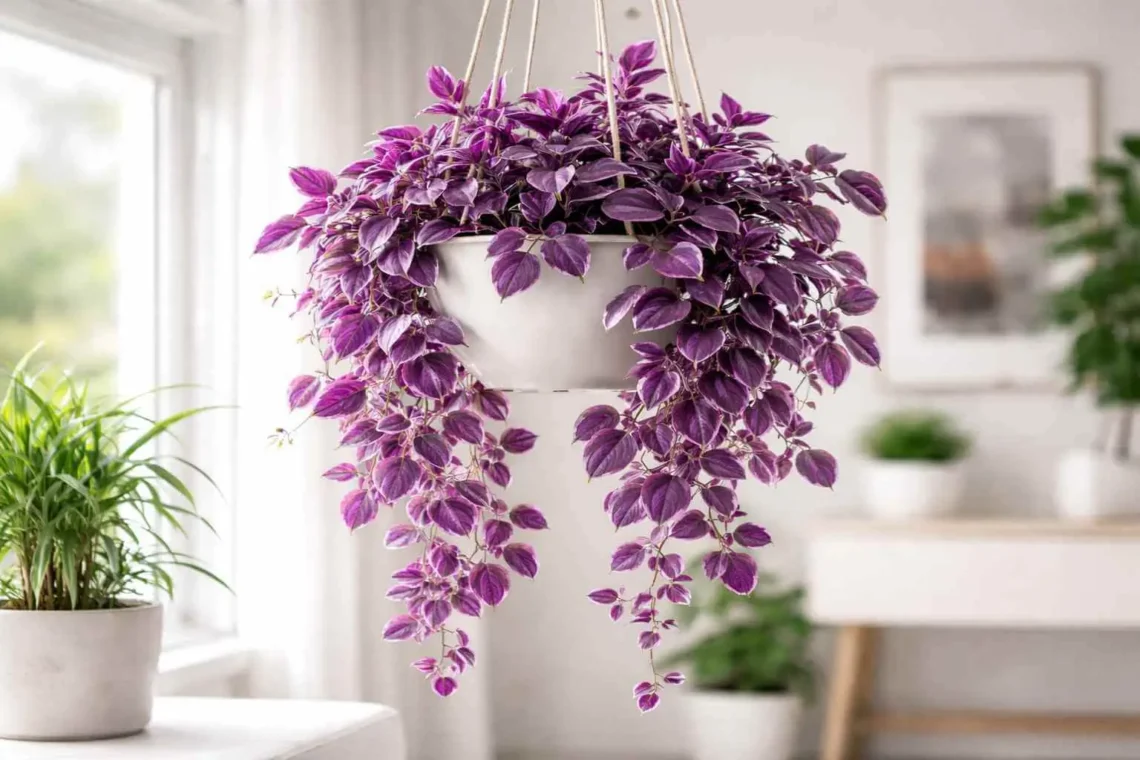
Wandering jew purple is a fast-growing ornamental houseplant valued for its rich purple foliage and trailing growth habit. Popular in indoor settings, it adapts well to containers, shelves, and hanging baskets, making it a favorite among beginners and experienced plant owners alike. The plant’s vibrant color intensifies under proper light, adding bold contrast to indoor décor. Due to its similar appearance, wandering jew purple is often confused with related varieties such as wandering jew pink and wandering jew purple heart. While closely related, these plants differ in leaf tone, growth pattern, and care response. Understanding these distinctions helps ensure correct identification and proper maintenance indoors.
What Is Wandering Jew Purple?
Wandering Jew Purple Name and Botanical Identity
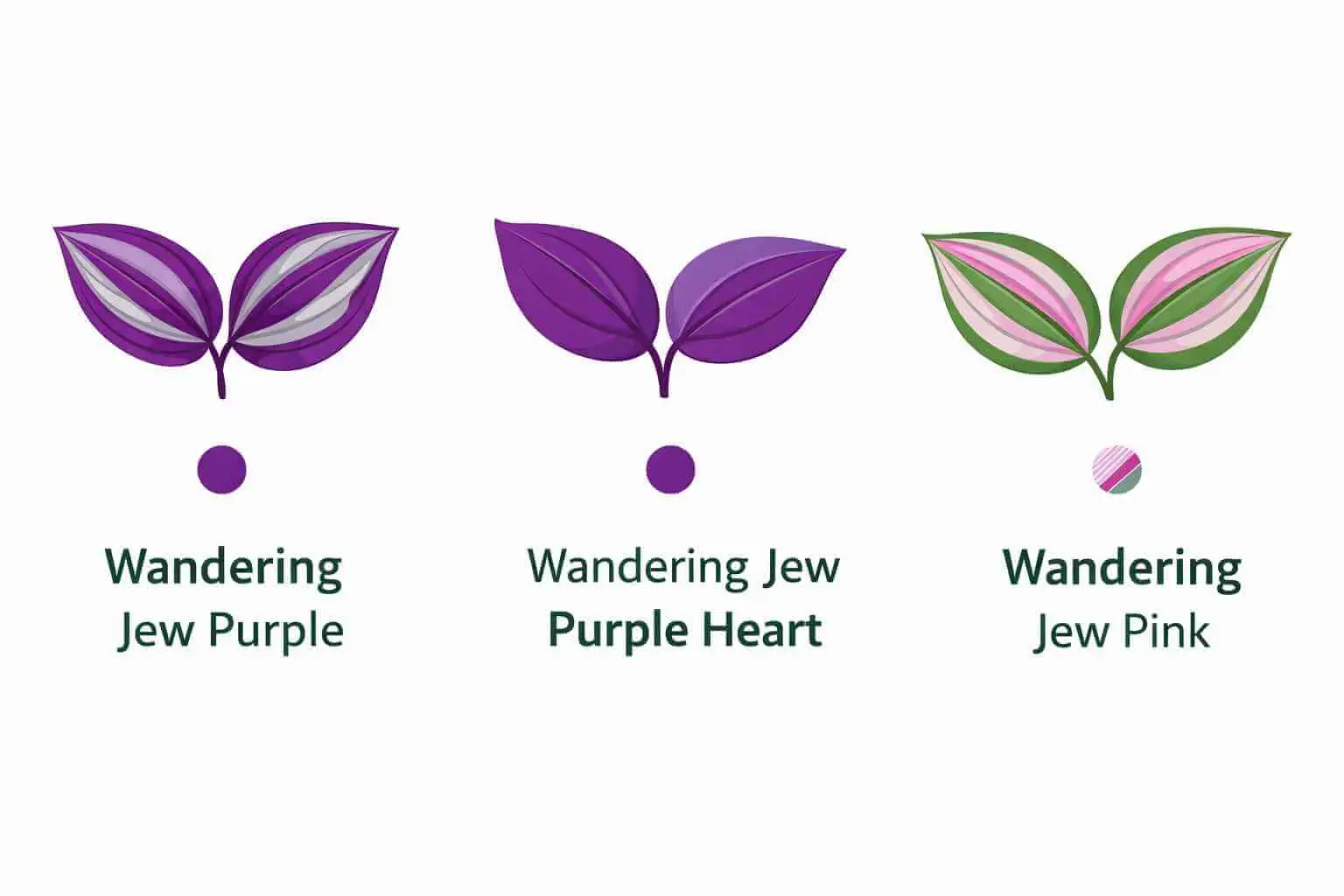
The wandering jew purple name is commonly used to describe purple-leaved Tradescantia varieties grown as houseplants. Botanically, it belongs to the Tradescantia genus, which includes several trailing species with colorful foliage. Confusion often arises between wandering jew purple heart and other purple-toned cultivars because they share similar growth habits and leaf shapes. Purple heart typically refers to Tradescantia pallida, while wandering jew purple may include cultivated forms with softer leaves and lighter purple hues. These cultivar distinctions are subtle and mainly affect color intensity and growth vigor rather than basic care requirements.
Wandering Jew Purple vs Wandering Jew Pink
Wandering jew purple and wandering jew pink differ primarily in leaf coloration and visual texture. Purple varieties display deep violet to dark purple leaves, while wandering jew pink features green leaves accented with pink and cream striping. Growth habits are similar, with both producing trailing stems, but pink varieties may grow slightly slower. Light requirements also vary; wandering jew pink needs brighter light to maintain variegation, while purple types retain color more easily under moderate bright indirect light.
Wandering Jew Purple Benefits
Decorative and Aesthetic Benefits
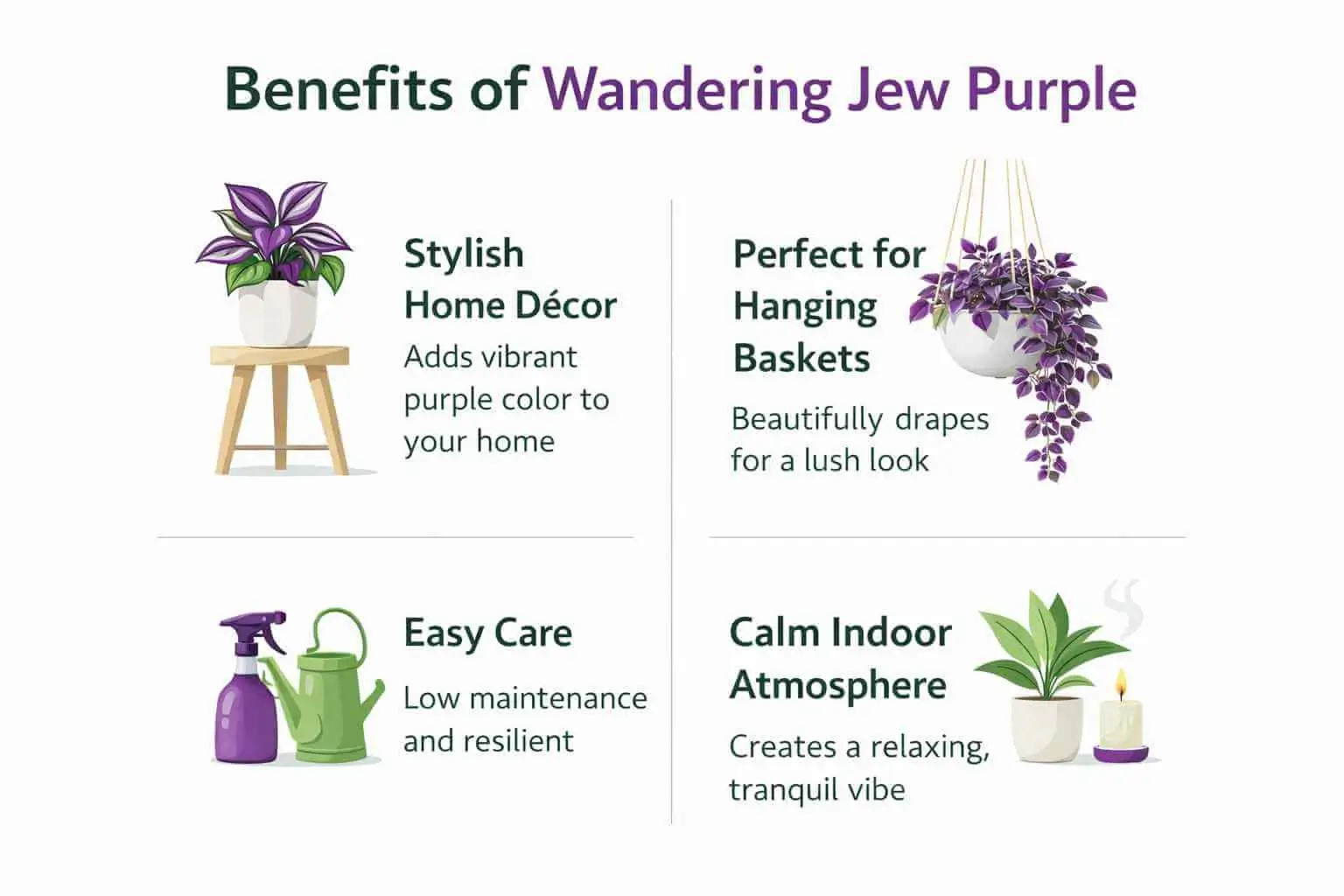
Wandering jew purple benefits include strong visual appeal for indoor spaces. Its deep purple foliage creates dramatic contrast against neutral interiors. It performs especially well in hanging baskets, where trailing stems can cascade naturally. In mixed plant arrangements, wandering jew purple adds depth and color balance alongside green or variegated plants, making it a versatile decorative choice.
Environmental and Lifestyle Benefits
While not a medical air purifier, wandering jew purple contributes to a fresher indoor environment through its living greenery presence. Many people find indoor plants help create a calming atmosphere, supporting stress reduction. Its low-maintenance nature makes it suitable for beginners who want an attractive plant without complex care routines.
Is Wandering Jew Purple Poisonous?
Toxicity to Humans and Pets
Concerns about wandering jew purple poisonous effects are generally mild. The plant is not highly toxic, but its sap can cause skin irritation in sensitive individuals. Pets may experience minor irritation if leaves are chewed, though severe reactions are uncommon. Avoid direct contact with sap and prevent ingestion as a precaution.
Safety Tips for Homes With Pets or Children
- Place the plant out of reach of pets and children
- Wear gloves when pruning or handling cut stems
- Rinse skin immediately if sap contact occurs
- Seek medical or veterinary advice if irritation persists
Wandering Jew Purple Care Guide
-
Light Requirements
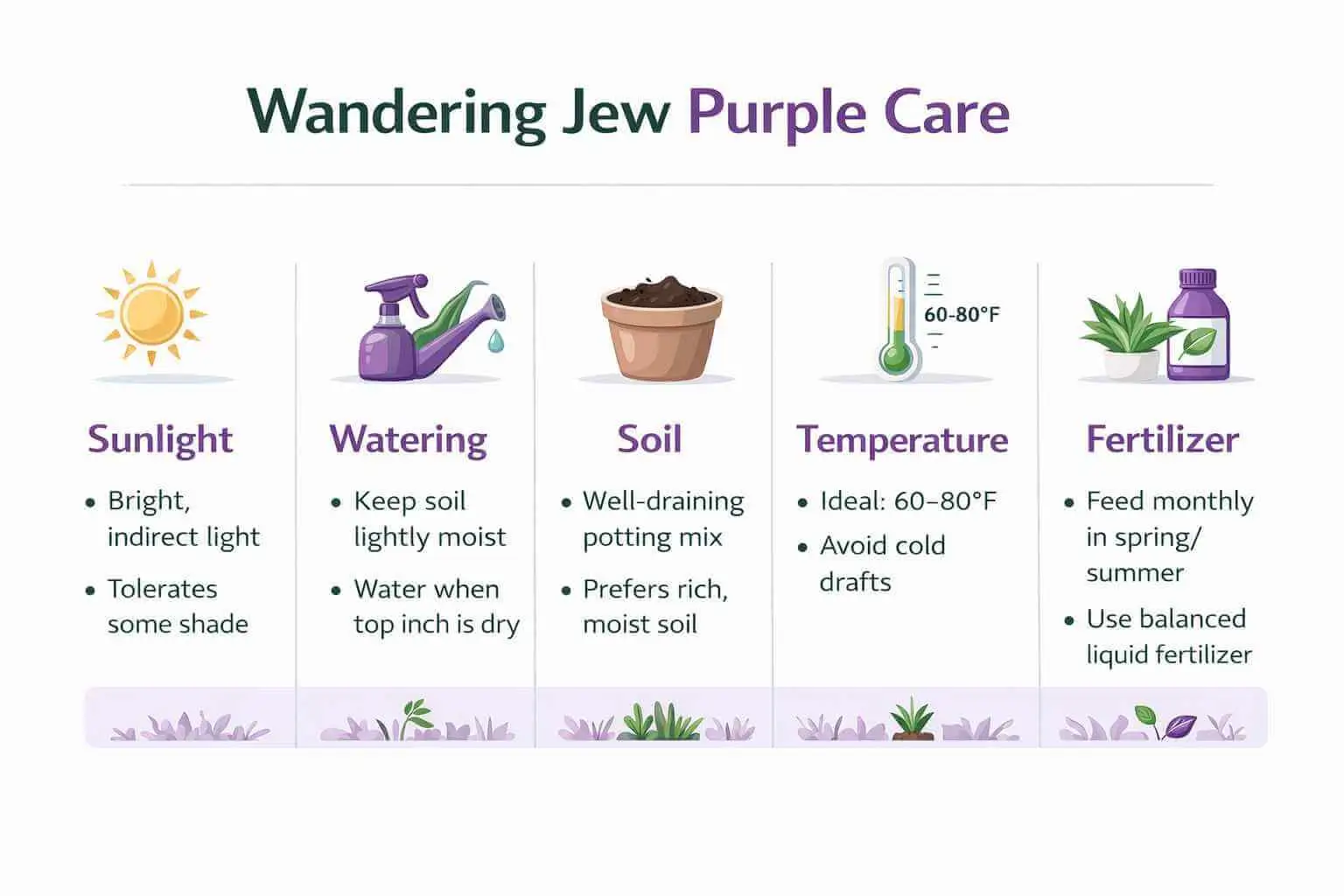
Wandering jew purple care starts with proper lighting. Bright, indirect light helps maintain intense purple coloration. Low light conditions cause leaves to fade and turn greener, while direct sunlight may scorch foliage. Balanced light exposure is key to healthy growth.
-
Watering and Soil Needs
Water when the top layer of soil feels dry. Overwatering leads to root rot, while underwatering causes leaf drop. Use well-draining potting soil to prevent excess moisture buildup and support healthy roots.
-
Temperature, Humidity, and Fertilizing
Ideal indoor temperatures range between 60–80°F (16–27°C). Wandering jew purple tolerates average household humidity well. Apply a balanced liquid fertilizer every 4–6 weeks during the growing season to support vigorous growth.
Growing Wandering Jew Purple Indoors
Best Containers and Placement
Wandering jew purple indoors grows well in both standard pots and hanging baskets. Hanging containers allow stems to trail freely. East- or west-facing windows provide ideal light exposure without harsh sun.
Common Indoor Problems and Solutions
- Fading color: Increase indirect light
- Leggy growth: Prune regularly and improve light
- Leaf drop: Adjust watering schedule and avoid cold drafts
Wandering Jew Purple Propagation
Stem Cutting Method (Step-by-Step)
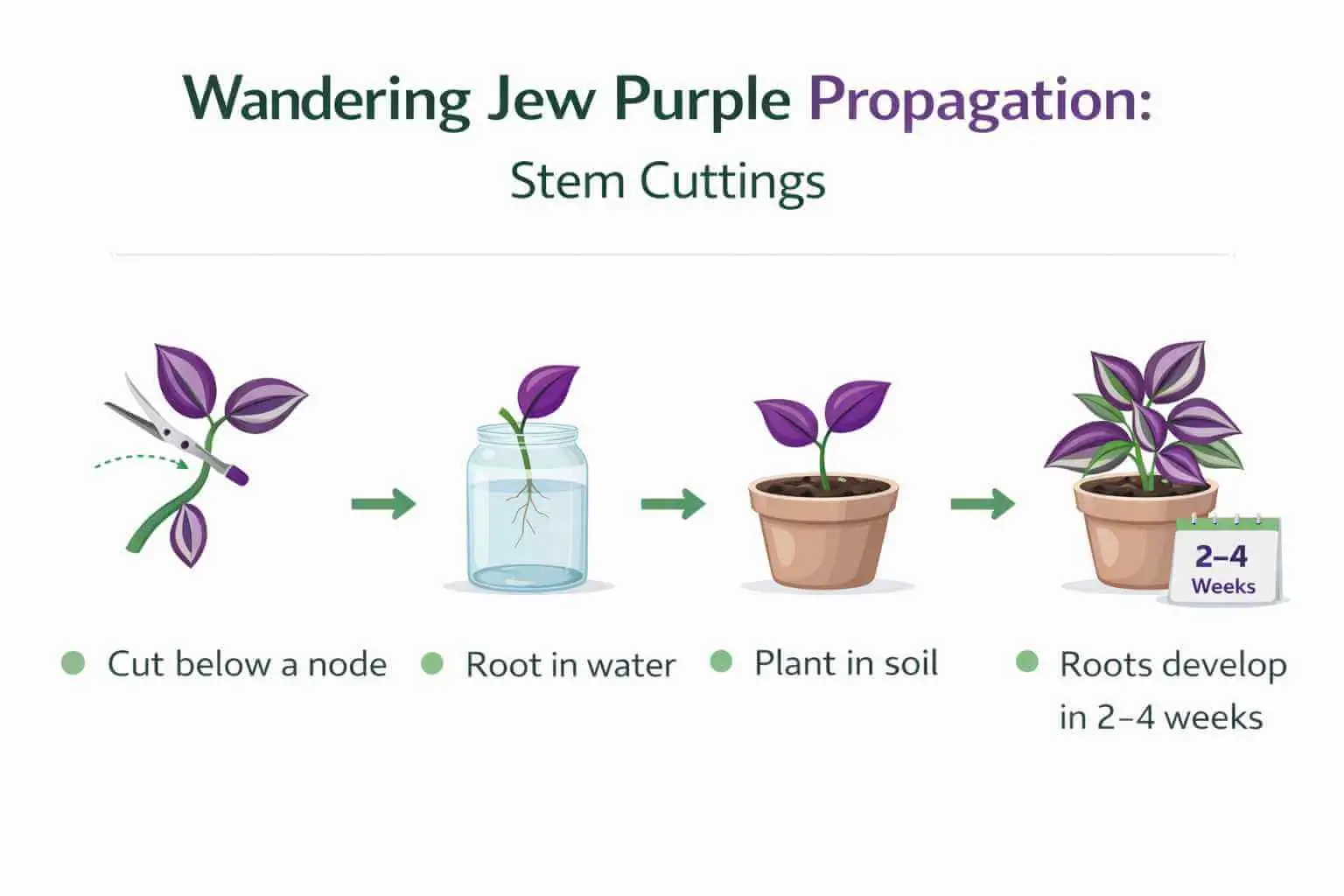
- Cut a healthy stem just below a leaf node
- Remove lower leaves
- Place cutting in water or moist soil
- Keep in bright indirect light
Propagation Success Tips
Wandering jew purple propagation works best in spring and summer. Roots typically develop within 1–2 weeks. Transfer rooted cuttings to soil once roots are established.
Learn more: Purple Jew Plant: 8+ Stunning Benefits & Care Secrets
Common Mistakes to Avoid
- Overwatering and poor drainage
- Placing in low-light areas
- Skipping regular pruning
- Allowing stagnant air circulation
Conclusion & Call to Action
Wandering jew purple stands out as an excellent indoor plant due to its vivid color, fast growth, and simple care needs. With proper light, watering, and safe handling, it thrives in most homes. Propagation allows easy expansion of your collection. Explore other trailing indoor plants or detailed care guides to create a vibrant indoor plant display.
Learn more : Variegated English Ivy: 7+ Stunning Facts You’ll Love
FAQs — Wandering Jew Purple
Is wandering jew purple the same as purple heart plant?
No. Purple heart usually refers to Tradescantia pallida, while wandering jew purple includes related cultivars with slightly different traits.
How often should I water wandering jew purple indoors?
Water when the topsoil dries out, typically once every 7–10 days.
Can wandering jew purple survive low light?
It can survive but will lose its purple color and become leggy.
Is wandering jew purple safe for pets?
It may cause mild irritation if chewed but is not highly toxic.
Why is my wandering jew purple turning green?
Insufficient light is the most common cause.
How fast does wandering jew purple grow?
It grows quickly under good light, often producing new growth within weeks.