Introduction
Wasabi plant vs horseradish is a common comparison because both produce a sharp, spicy flavor often associated with sushi and condiments. However, they are not the same plant, and the difference between wasabi and horseradish goes beyond taste. Many people wonder whether wasabi is horseradish or if horseradish is the same as wasabi. In reality, these plants differ in origin, flavor complexity, and cultivation requirements. Understanding how they are related and how real wasabi differs from common substitutes helps clear up confusion and allows for more informed culinary and botanical knowledge.
Learning how plants differ in structure, flavor, and growth conditions is an essential part of broader plant knowledge, especially when exploring comprehensive resources like a complete guide to house plants.
Quick Summary
- Wasabi and horseradish are related plants but belong to different species.
- Most “wasabi” served globally is actually horseradish-based.
- Real wasabi has a smoother, more complex flavor profile.
- Both contain similar compounds but differ in intensity and use.
What Is Wasabi and What Is Horseradish?
Understanding the Core Identity of Each Plant
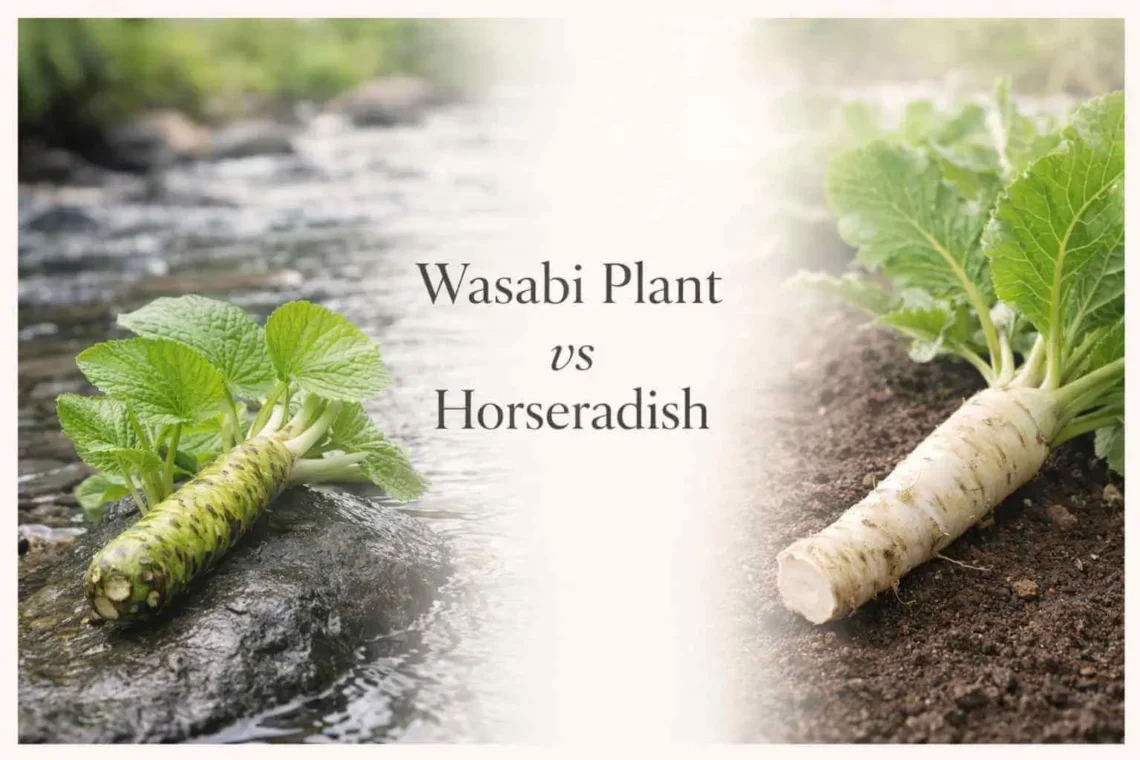
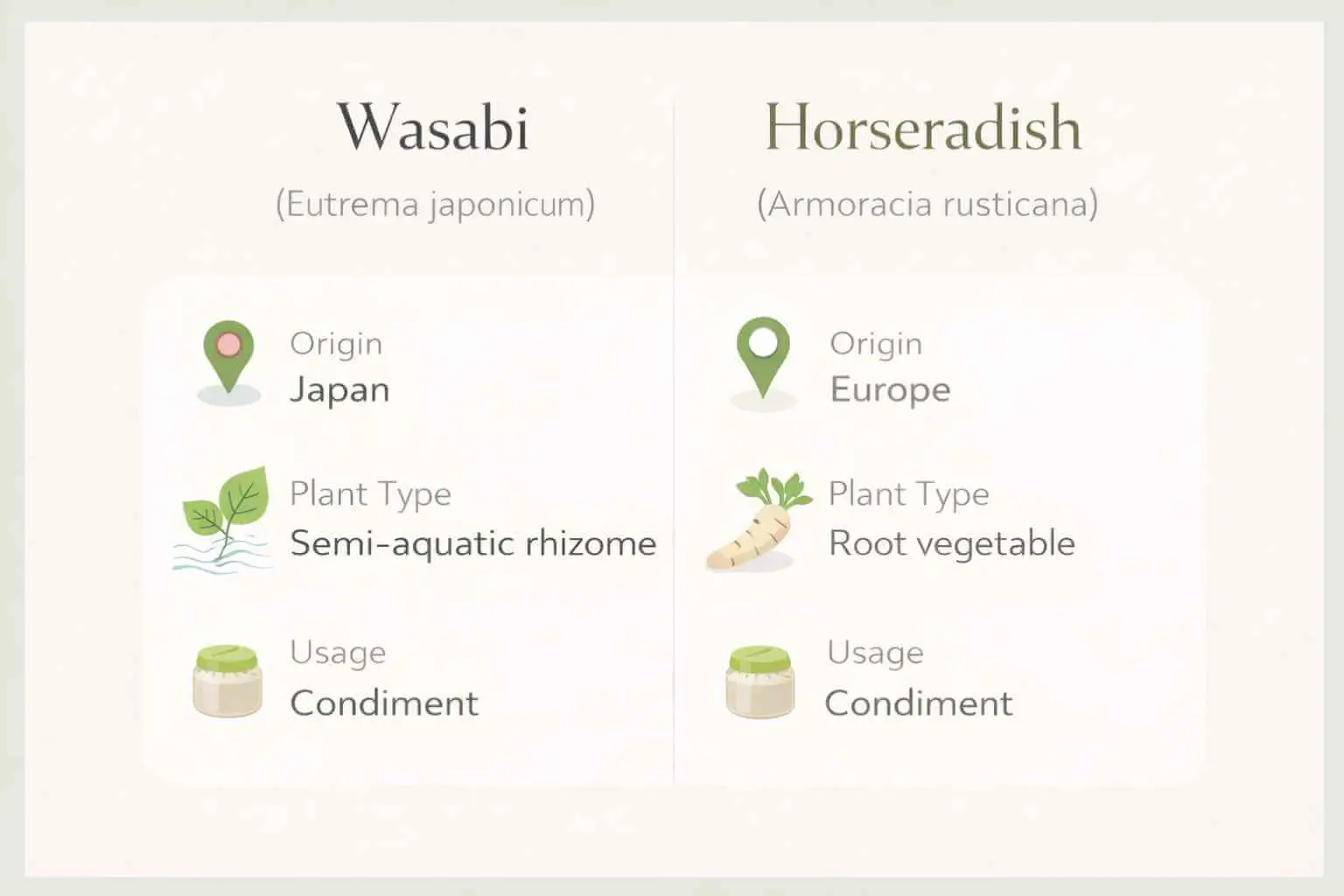
Wasabi and horseradish are distinct plants with different botanical identities and growing conditions. Wasabi refers to Wasabia japonica (Eutrema japonicum), a semi-aquatic plant native to Japan. It grows naturally along cool, shaded stream beds and produces a rhizome used as a condiment.
Horseradish, scientifically known as Armoracia rusticana, is a hardy root vegetable widely cultivated across Europe and other regions. It grows in soil and is valued for its pungent root.
The confusion often arises from the term “Japanese horseradish,” which incorrectly suggests that wasabi is simply a variation of horseradish. In reality, asking “is wasabi horseradish” or “is horseradish the same as wasabi” leads to a clear answer: they are different plants used similarly but sourced differently.
Key Points:
- Wasabi: semi-aquatic plant native to Japan
- Horseradish: soil-grown root vegetable
- Both used as condiments but originate from different environments
Are Wasabi and Horseradish Related?
Botanical Family and Plant Classification
Yes, wasabi and horseradish are related, but they are not the same plant. Both belong to the Brassicaceae (mustard family), a plant group that includes cabbage, broccoli, and mustard. This group includes other plants like mustard, cabbage, and broccoli.
Their relationship explains why both produce pungent compounds called isothiocyanates, responsible for their characteristic heat. However, they belong to different genera and grow in different environments. Understanding related but distinct concepts is important, much like distinguishing Plant Food vs Fertilizer, where similar functions can still represent different processes.
Key Points:
- Same family: Brassicaceae
- Shared compounds: isothiocyanates
- Different genus and growth conditions
- Related does not mean identical
Difference Between Wasabi and Horseradish (Core Comparison)
Side-by-Side Differences in Plant, Flavor, and Use
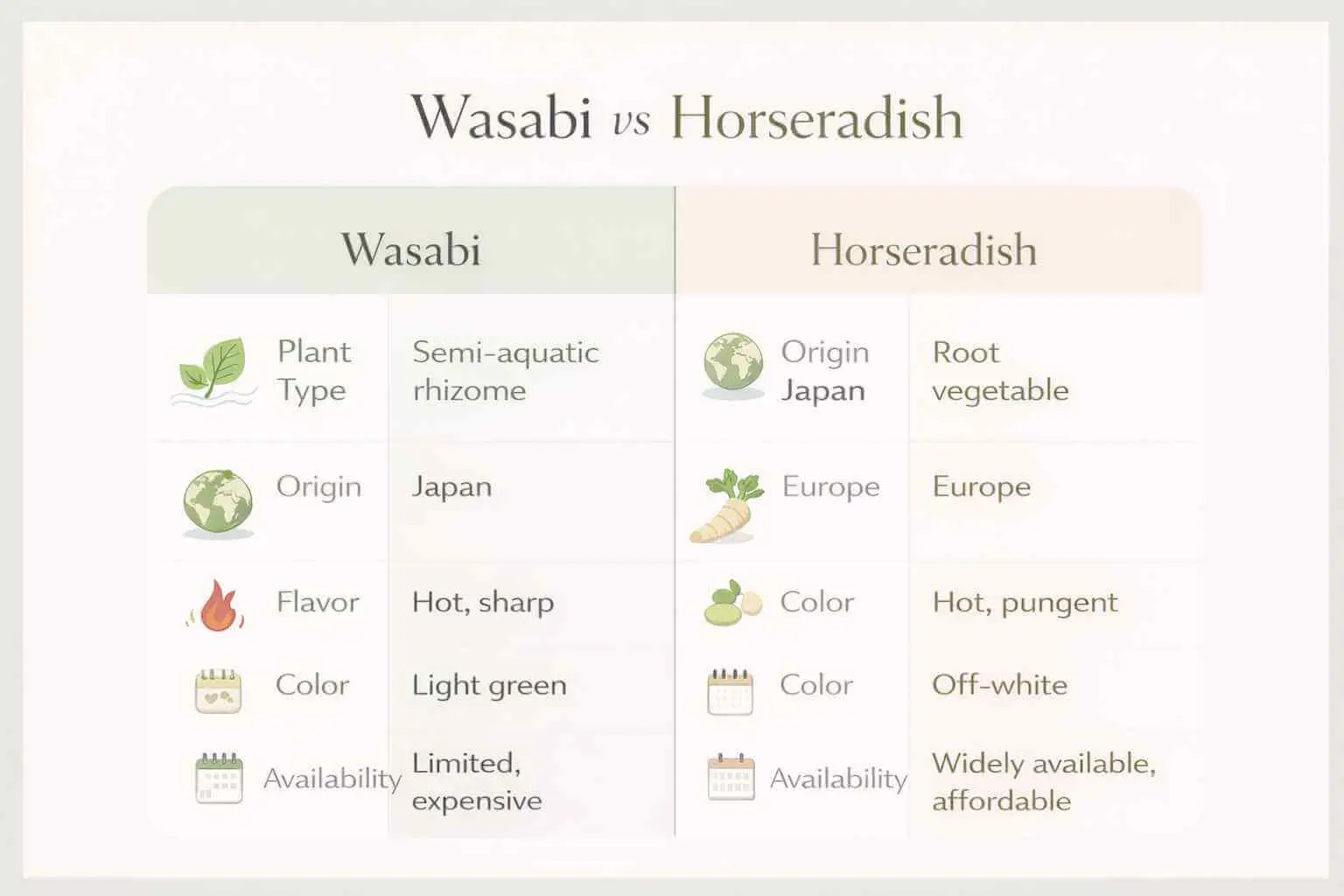
The difference between wasabi and horseradish lies in their plant structure, origin, flavor, and availability. While they are often compared interchangeably, their characteristics are distinct.
Comparison Table:
| Feature | Wasabi | Horseradish |
| Plant Type | Semi-aquatic rhizome | Root vegetable |
| Origin | Japan | Europe |
| Flavor | Smooth, aromatic heat | Sharp, intense heat |
| Color | Natural green | White (often dyed green) |
| Availability | Rare, expensive | Widely available |
This type of side-by-side comparison is similar to how tools are evaluated in guides like Plant Shears vs Scissors, where understanding small differences helps make better practical decisions.
Real Wasabi vs Horseradish (The Truth About “Fake Wasabi”)
Is Wasabi Made from Horseradish?
Yes, most wasabi served globally is actually made from horseradish, not true wasabi. Commercial “wasabi” typically contains a mixture of horseradish, mustard, and green coloring to mimic the appearance and heat.
Real Japanese wasabi is rare outside Japan because it requires very specific growing conditions. In countries like the United States, genuine wasabi is limited and often replaced with substitutes.
Key Points:
- Most “wasabi” = horseradish + mustard + coloring
- Real wasabi is uncommon outside Japan
- Authentic wasabi requires precise environmental conditions
Taste Comparison: Does Real Wasabi Taste Like Horseradish?
Flavor Profile and Sensory Differences
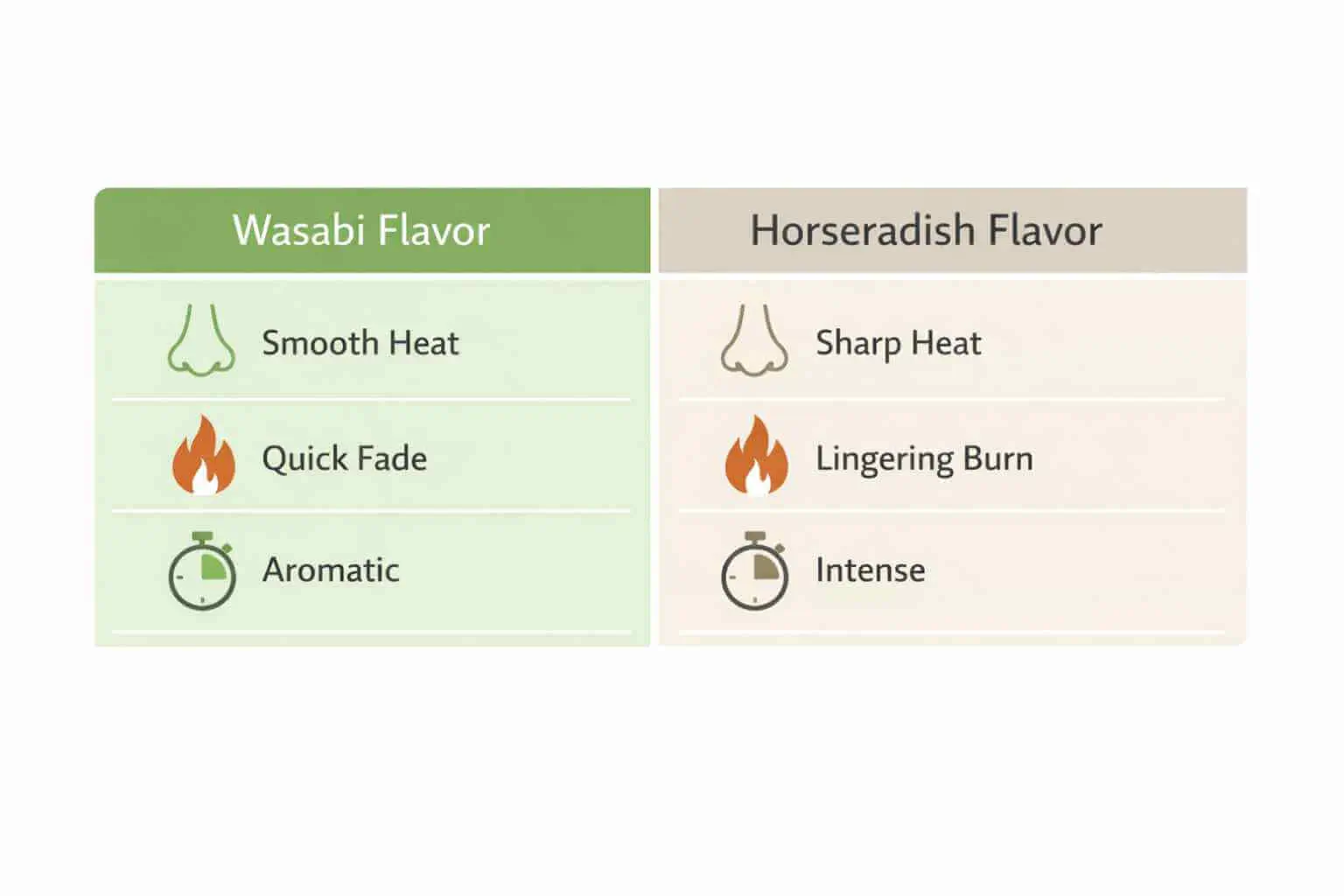
No, real wasabi does not taste like horseradish. While both deliver heat, real wasabi offers a smoother, fresher, and more aromatic flavor, whereas horseradish provides a stronger, more aggressive heat that lingers longer.
Wasabi:
- Fresh and slightly sweet
- Heat fades quickly
- Aromatic and herbal
Horseradish:
- Strong, sinus-clearing heat
- Lingering burn
- Less complex flavor
What Does Real Wasabi Look Like and How to Identify It
Visual and Physical Identification
Real wasabi appears as a green rhizome rather than a processed paste. The rhizome has a textured surface and is grated fresh to produce a coarse, moist paste.
Key Points:
- Whole rhizome resembles a green root
- Fresh paste is coarse and slightly fibrous
- Color is naturally bright green, not artificial
Wasabi vs Horseradish Health Benefits
Nutritional and Functional Differences
Both wasabi and horseradish offer health benefits due to their bioactive compounds, particularly isothiocyanates.
Wasabi:
- Antibacterial properties
- Anti-inflammatory compounds
- May support digestion
Horseradish:
- Rich in antioxidants
- Supports respiratory health
- Strong antimicrobial effects
Price and Availability Differences
Why Real Wasabi Is Expensive
Real wasabi is expensive because it is difficult to cultivate and requires very specific conditions. It grows best in cool, shaded environments with flowing water and takes 18–24 months to mature.
Horseradish, in contrast, is easy to grow in a wide range of climates and matures quickly, making it widely available and affordable.
Key Points:
- Wasabi needs controlled, stream-like conditions
- Long growth cycle increases cost
- Horseradish grows easily and is mass-produced
Wasabi Plant vs Horseradish Plant (Growth and Cultivation)
Environmental Needs and Growing Conditions
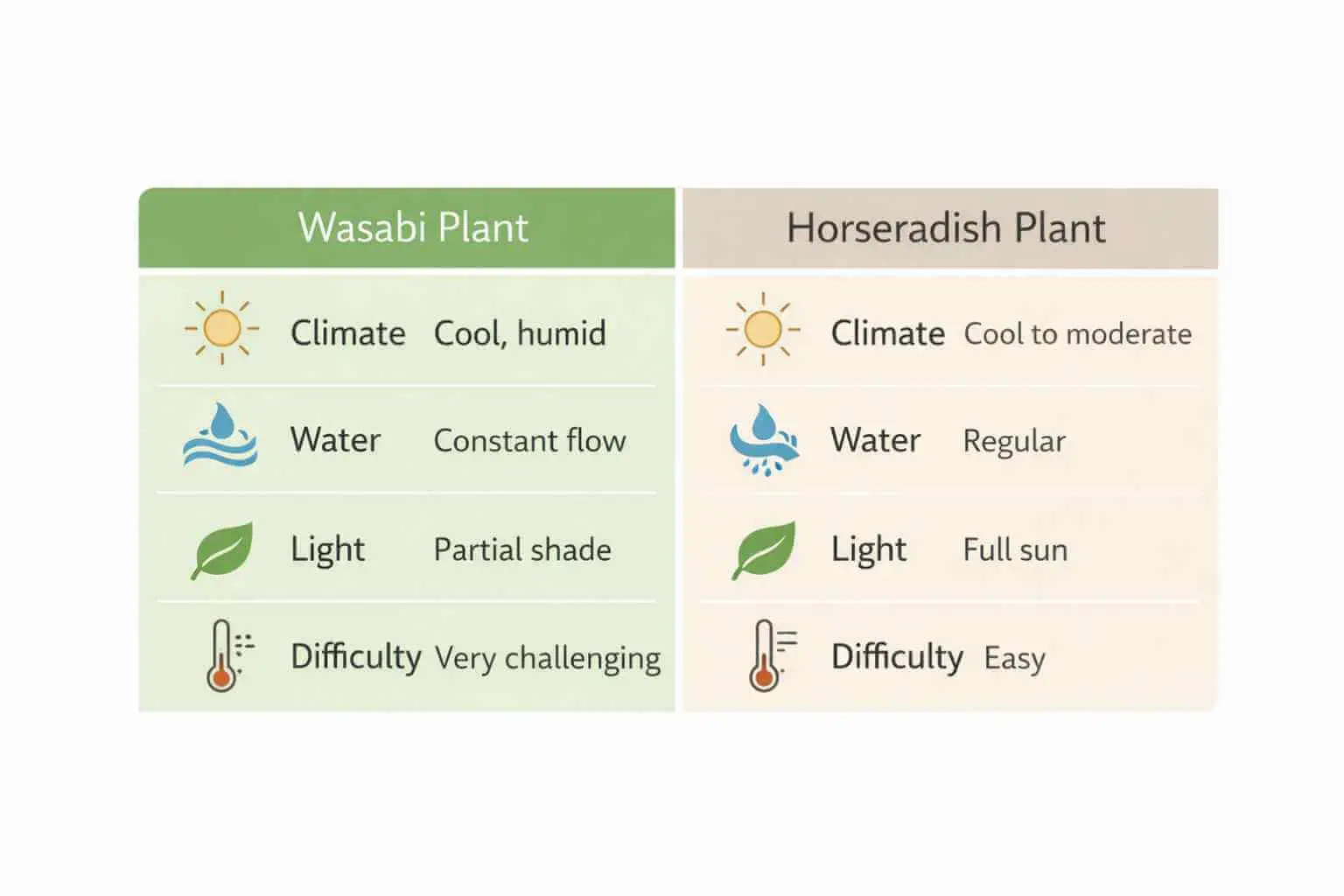
The cultivation differences between wasabi and horseradish are significant and influence their availability.
Comparison Table:
| Factor | Wasabi Plant | Horseradish Plant |
| Climate | Cool, humid | Wide adaptability |
| Water | Flowing water preferred | Moderate watering |
| Light | Shade | Full sun to partial shade |
| Difficulty | High | Easy |
Common Misconceptions About Wasabi and Horseradish
Clearing Confusion for Beginners
There are several common misconceptions about wasabi and horseradish that lead to confusion.
Key Points:
- “Wasabi = horseradish” → False
- Green paste does not guarantee real wasabi
- “Japanese horseradish” is a misleading term
This confusion is similar to identifying look-alike plants, such as in How to Identify Dill vs Fennel, where small visual and botanical differences often lead to misunderstanding.
When to Use Wasabi vs Horseradish
Culinary Applications and Best Uses
Wasabi and horseradish are used differently depending on the dish and desired flavor intensity.
Use wasabi for:
- Sushi and sashimi
- Fine dining applications
Use horseradish for:
- Meat dishes and sauces
- Sandwiches and strong flavor enhancement
Beginner Mistakes and Buying Tips
How to Avoid Fake Wasabi and Choose Quality Products
Many beginners unknowingly purchase imitation wasabi. Understanding labels and ingredients helps ensure better quality selection.
Key Points:
- Check ingredient list (horseradish is often the main ingredient)
- Look for labels like “100% wasabi”
- Expect higher prices for authentic wasabi
Conclusion
Wasabi plant vs horseradish is not just a simple comparison—they are related but distinctly different plants with unique flavors, uses, and growing conditions. While horseradish is commonly used as a substitute, real wasabi offers a more refined and complex taste. Understanding these differences allows for better culinary choices and a clearer understanding of plant classification and authenticity.
FAQs
1. Is wasabi the same as horseradish?
No, wasabi and horseradish are different plants. Although they belong to the same botanical family, they differ in species, flavor, and cultivation.
2. Is most wasabi actually horseradish?
Yes, most wasabi served outside Japan is made from horseradish mixed with mustard and coloring.
3. Does real wasabi taste like horseradish?
No, real wasabi has a milder, fresher, and more complex flavor compared to the intense heat of horseradish.
4. Are wasabi and horseradish related?
Yes, both belong to the Brassicaceae family, making them botanically related.
5. Why is real wasabi so expensive?
Real wasabi is expensive because it requires specific growing conditions, takes longer to mature, and is difficult to cultivate.