
Introduction
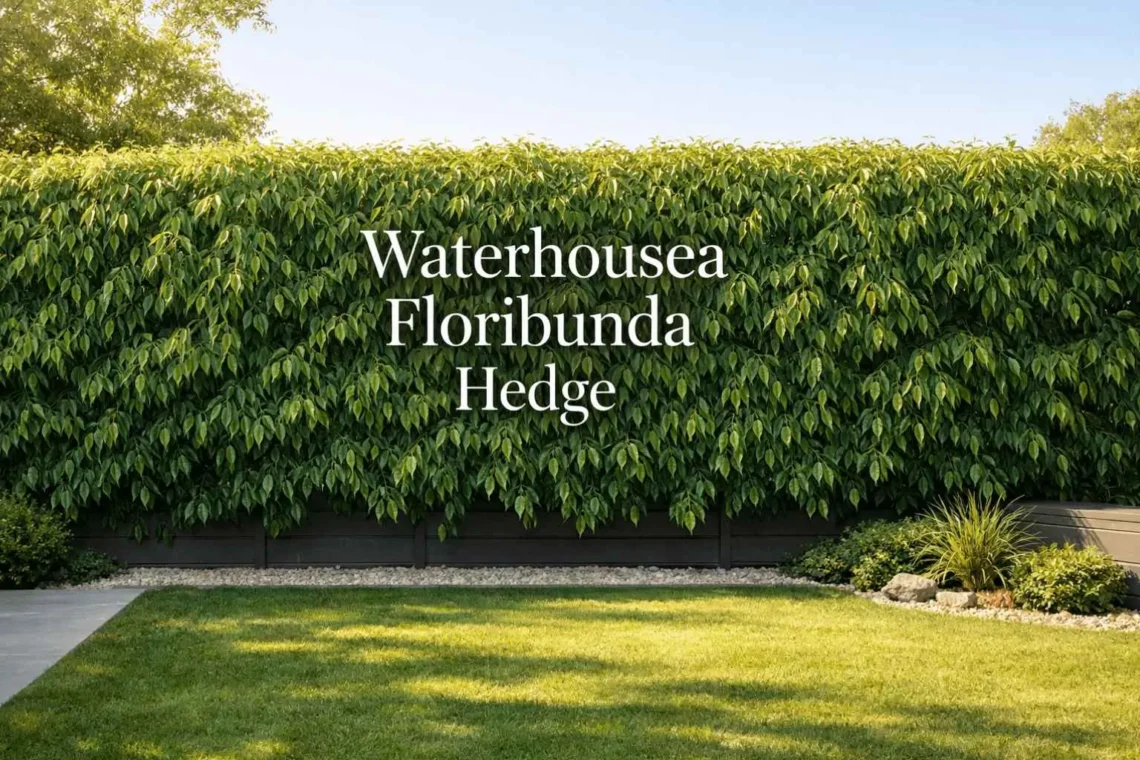
Waterhousea floribunda hedge (commonly known as the weeping lilly pilly hedge) is a fast-growing, evergreen screening plant valued for its soft foliage, graceful drooping form, and dense privacy coverage. It is widely used along garden borders and lilly pilly fence lines for natural screening. Unlike rigid hedge plants, its cascading structure creates a softer, more natural visual barrier. This guide explains how it grows, how to maintain it, and when it is the best choice for hedging, with clear, structured insights for both beginners and experienced gardeners.
Quick Summary
- Waterhousea floribunda hedge is a fast-growing, dense screening hedge with a soft, weeping structure.
- Ideal for privacy, wind protection, and fence line planting.
- Requires regular pruning and spacing control for optimal shape.
- Performs best in warm climates with well-drained soil and consistent moisture.
What Is Waterhousea Floribunda and Why Is It Used for Hedging?
Waterhousea floribunda is an evergreen Australian native tree species, also classified botanically as Syzygium floribundum, commonly referred to as waterhousea lilly pilly. It is widely used for hedging due to its dense foliage and naturally cascading growth habit. Botanically, Waterhousea floribunda is a member of the Myrtaceae family, closely related to other Syzygium species commonly used in hedging.
Key Characteristics
- Evergreen species from the Myrtaceae family
- Soft, drooping foliage (weeping form)
- Dense canopy suitable for screening
The term weeping lilly pilly hedge refers to its distinctive downward-growing leaves, which differ from upright Syzygium varieties. Variations like “waterhousea hedge” or “waterhousia hedge” are common spelling differences but refer to the same plant.
Why It Is Used for Hedging
- Provides tall, natural privacy screening
- Creates a softer visual barrier compared to rigid hedges
- Suitable for large garden boundaries and fence lines
Unlike ornamental trees, it responds well to trimming, making it ideal for structured hedging while retaining a natural appearance. To better understand how it compares with other similar hedge plants, explore different options in this guide on Lilly Pilly Varieties for Hedges & Screening.
Waterhousea Floribunda Hedge Size, Height, and Growth Rate
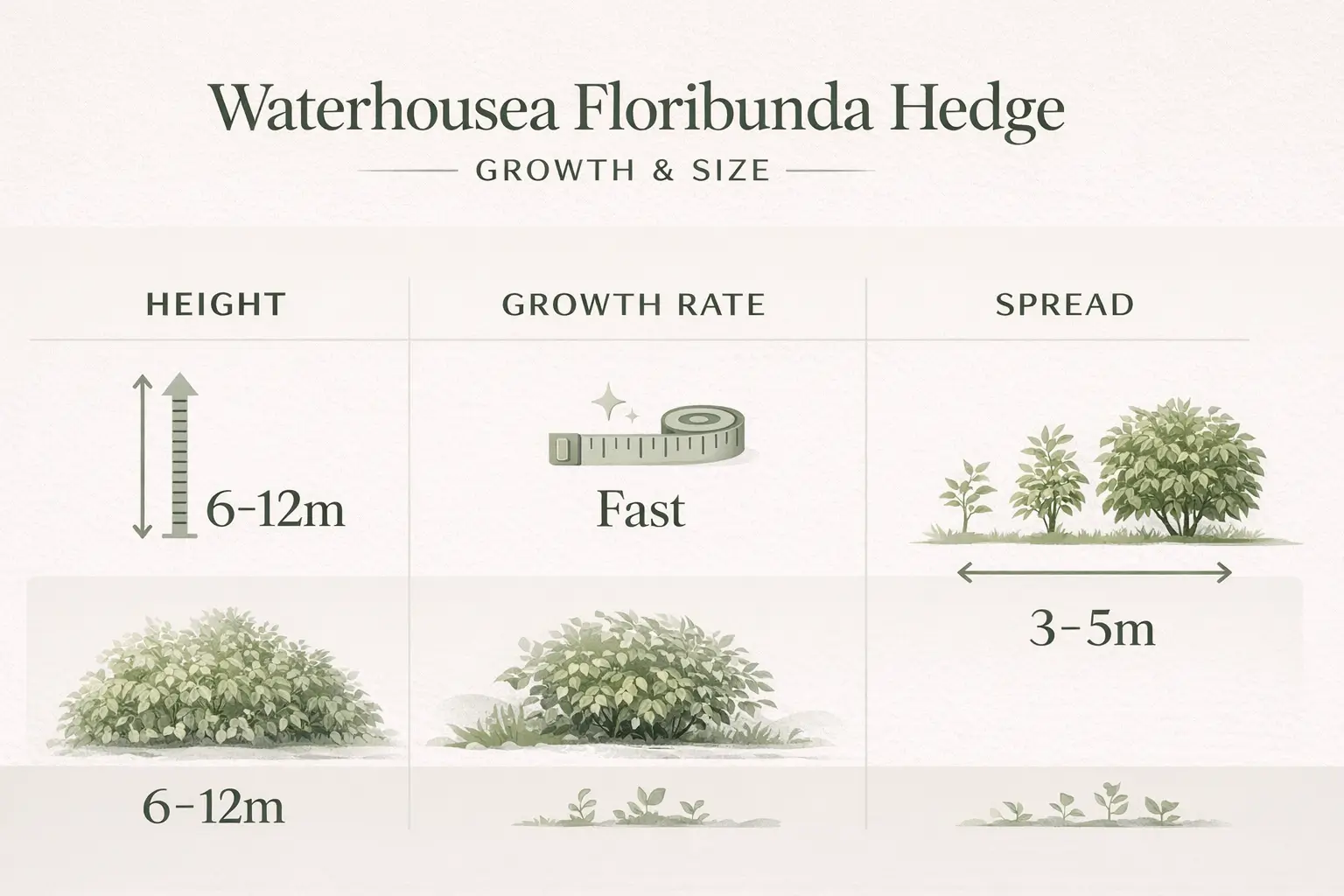
Waterhousea floribunda hedge typically grows tall and fast, making it suitable for large-scale privacy hedging. Under ideal conditions, it develops quickly into a dense, full screen.
Key Growth Metrics
- Typical hedge height: 6–12 meters (can be controlled with pruning)
- Mature spread: 3–5 meters
- Growth rate: Fast-growing (often 0.5–1 meter per year)
Growth Behavior
- Trimmed hedge: Maintains dense, compact structure
- Untrimmed growth: Develops into a tall, tree-like form
The weeping lilly pilly height can exceed standard hedge sizes if left unmanaged, which makes early pruning essential for control.
Ideal Spacing for a Dense Waterhousea Hedge
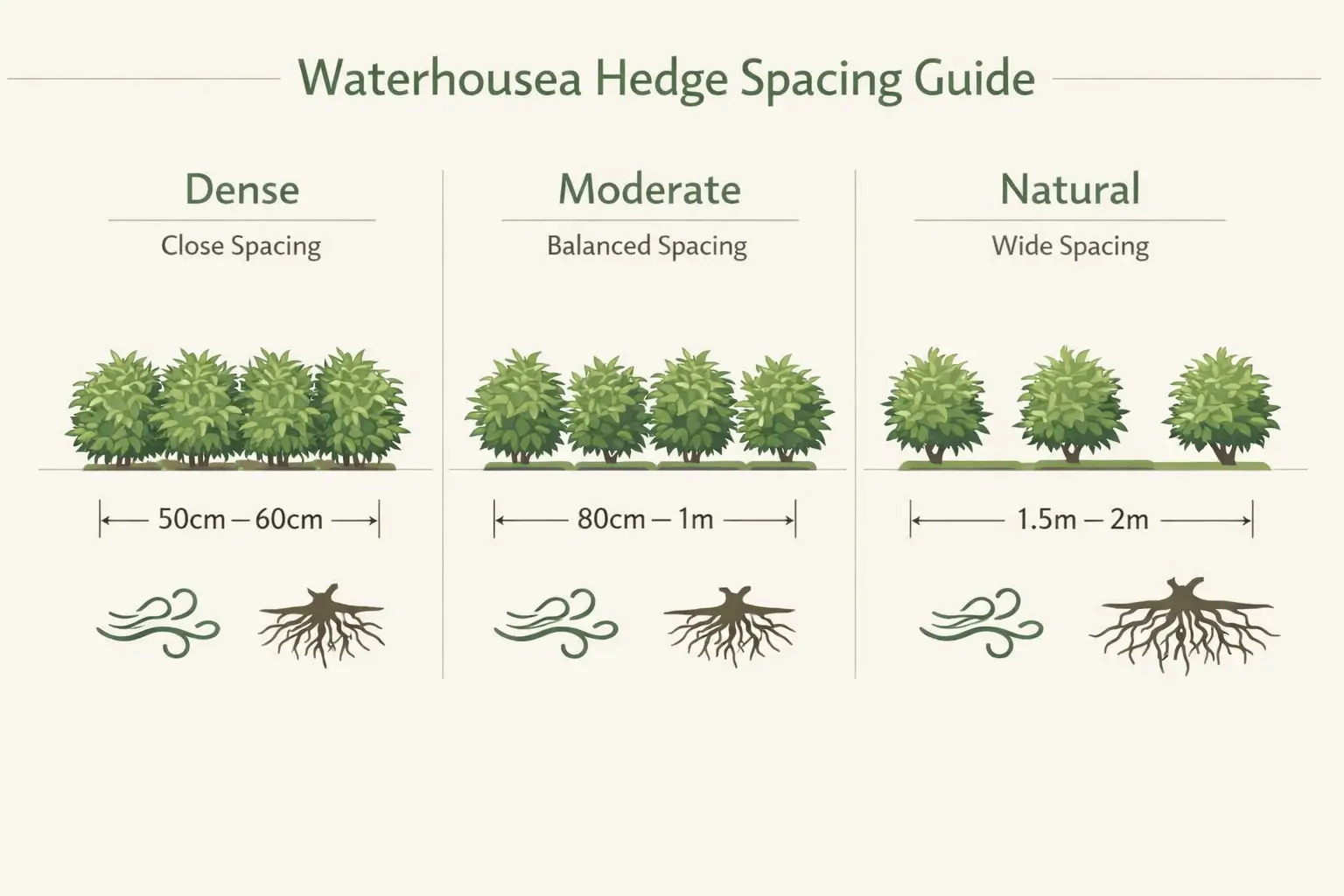
Proper spacing directly determines hedge density, airflow, and long-term plant health.
Recommended Spacing Table
| Desired Hedge Density | Plant Spacing | Result |
| Very dense screen | 1–1.5 meters | Faster coverage, thick hedge |
| Moderate hedge | 1.5–2 meters | Balanced growth and airflow |
| Natural look | 2–3 meters | Open, tree-like structure |
Spacing Considerations
- Close spacing increases density but raises root competition
- Wider spacing improves airflow and reduces disease risk
- Incorrect spacing is a common cause of uneven hedge growth
If you want to refine hedge spacing across different species, this guide on 5+ Expert Tips for Perfect Waxleaf Privet Hedge Spacing provides additional practical insights.
How to Plant a Waterhousea Floribunda Hedge
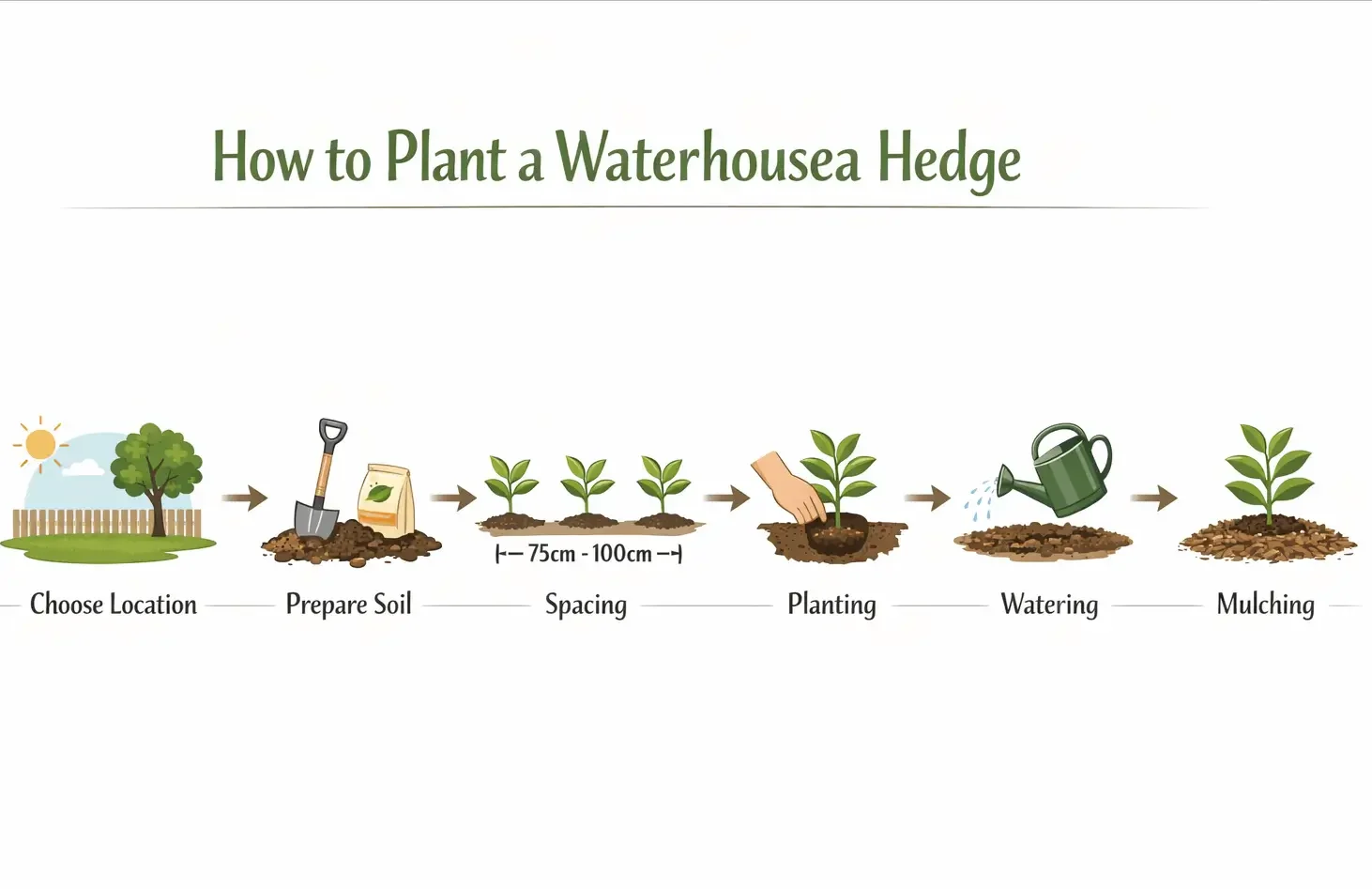
Planting a waterhousea hedge correctly ensures strong establishment and long-term growth.
Step-by-Step Process
- Choose location: Full sun to partial shade with enough vertical space
- Prepare soil: Well-drained soil enriched with organic matter
- Position plants: Follow spacing guidelines for desired density
- Planting depth: Same depth as nursery container
- Watering: Deep watering immediately after planting
- Mulching: Apply organic mulch to retain moisture
Establishment Phase Care
- Water regularly during the first 6–12 months
- Monitor soil moisture to prevent waterlogging
- Support early root development with consistent care
Pruning and Shaping a Weeping Lilly Pilly Hedge
Regular pruning is essential to maintain density and control the natural cascading form.
Key Pruning Guidelines
- Best time: Late spring to early summer
- Frequency: 2–3 times per year for formal hedges
- Light trimming: Encourages bushier growth
Shaping Techniques
- Formal hedge: Frequent trimming for straight edges
- Natural hedge: Minimal pruning to retain weeping form
Pruning directly affects density—consistent trimming results in a thicker, more uniform hedge.
Common Problems with Waterhousea Floribunda Hedges (and Solutions)
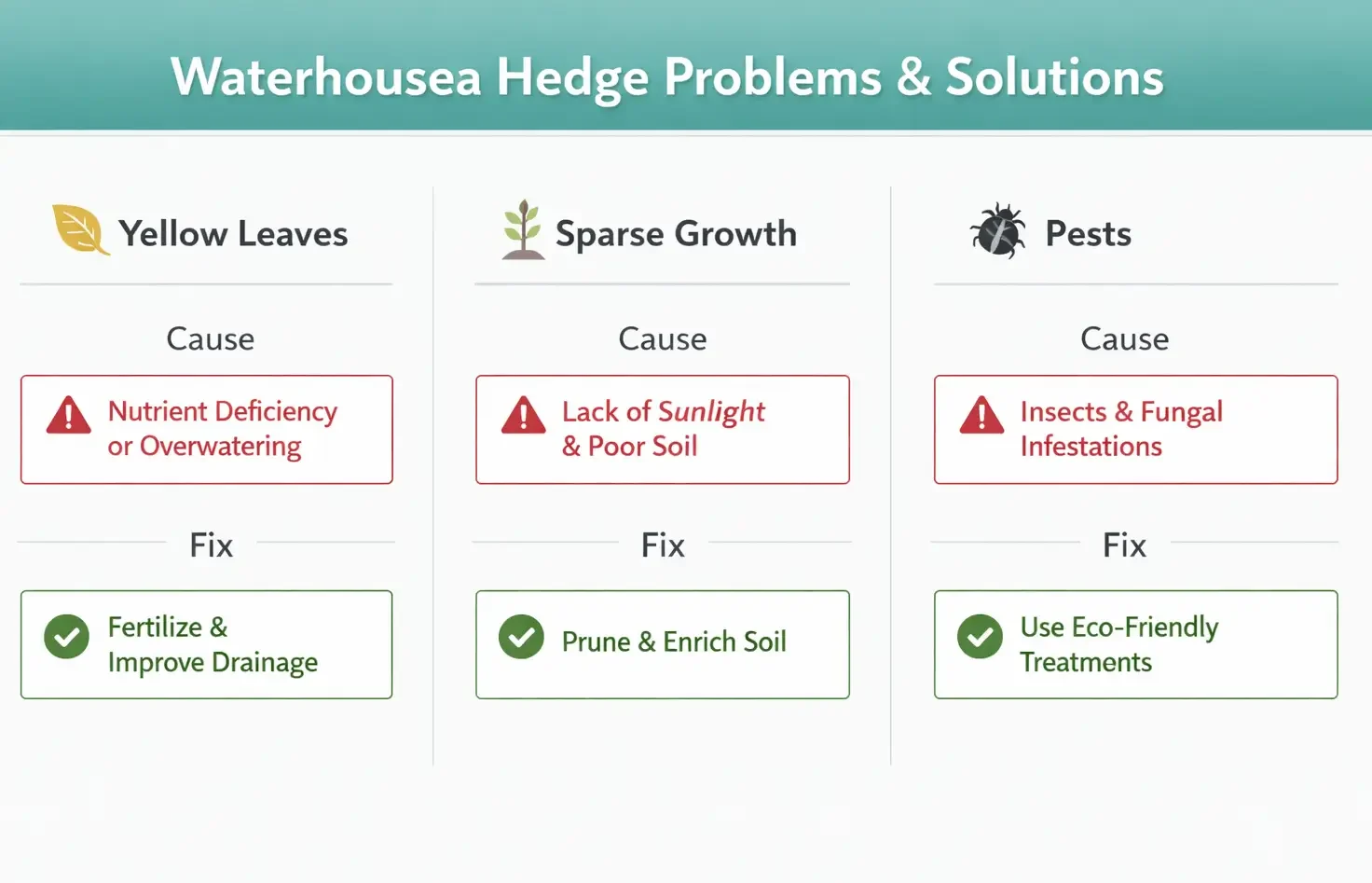
Waterhousea hedges are generally resilient but can develop issues if conditions are not optimal.
Yellowing Leaves
- Cause: Overwatering or poor drainage
- Solution: Improve soil drainage and reduce watering frequency
Sparse Growth
- Cause: Lack of pruning or incorrect spacing
- Solution: Regular trimming and spacing correction
Pest or Disease Issues
- Cause: General lilly pilly pest sensitivity
- Solution: Maintain airflow, monitor regularly, apply preventative treatments
Waterhousea Floribunda vs Other Lilly Pilly Hedges
Choosing the right hedge depends on growth style and landscape goals.
Comparison Table
| Feature | Waterhousea Floribunda | Other Lilly Pilly Varieties |
| Growth habit | Weeping | Upright |
| Hedge style | Soft, natural | Dense, formal |
| Growth rate | Fast | Moderate |
| Best use | Tall screening | Compact hedges |
Waterhousea is often considered one of the best lilly pilly options for screening due to its height and rapid growth. For a deeper breakdown of the most effective screening options, see this detailed guide on Best Lilly Pilly for Hedge.
Best Conditions for Growing a Healthy Waterhousea Hedge
Optimal growing conditions ensure long-term health and consistent growth.
Key Requirements
- Light: Full sun to partial shade
- Water: Regular moisture, especially during establishment
- Soil: Well-drained, fertile soil
- Climate: Warm, temperate to subtropical climates
Consistent moisture without waterlogging is critical for root health.
Beginner Mistakes When Growing a Waterhousea Hedge
Avoiding common mistakes improves hedge performance and longevity.
Common Errors
- Planting too close or too far apart
- Ignoring early shaping and pruning
- Overwatering or poor drainage conditions
Early-stage mistakes often lead to uneven growth and reduced density.
When to Choose Waterhousea Floribunda for Screening
Waterhousea floribunda is best chosen when a tall, soft, and natural hedge is required.
Ideal Use Cases
- Large garden boundaries
- Privacy screening with natural appearance
- Wind protection along fence lines
When It May Not Be Suitable
- Small gardens requiring compact hedges
- Areas needing low-maintenance plants
- Regions with poor drainage or cold climates
Topical Cluster Connections
Waterhousea floribunda hedging connects naturally with broader landscaping and plant care topics.
Related Concepts
- Indoor plant care (contrast with outdoor hedging needs)
- Landscaping plants for privacy and structure
- Plant propagation basics for expanding hedges
- Hedge maintenance principles for long-term care
For a broader understanding of how hedging plants fit into overall landscaping and plant selection, refer to the Plants for Homes and Gardens Guide.
Conclusion
The waterhousea floribunda hedge is one of the most effective natural screening options for creating a soft, dense, and visually appealing boundary. Its fast growth, graceful form, and adaptability make it ideal for privacy hedges and fence line planting. With proper spacing, pruning, and care, it provides long-term structure, reliable coverage, and strong aesthetic value in suitable climates.
FAQs
1. How fast does a waterhousea floribunda hedge grow?
Waterhousea floribunda is a fast-growing hedge that can increase in height by approximately 0.5 to 1 meter per year under ideal conditions such as proper watering, sunlight, and soil quality.
2. What is the ideal spacing for a weeping lilly pilly hedge?
The ideal spacing depends on the desired density, but typically ranges from 1 to 2 meters. Closer spacing creates a denser hedge more quickly, while wider spacing allows for better airflow and natural growth.
3. How tall does a waterhousea floribunda hedge get?
A waterhousea floribunda hedge can reach heights of 6 to 12 meters if left untrimmed. With regular pruning, it can be maintained at a manageable height for privacy screening.
4. How often should you prune a waterhousea hedge?
Pruning should be done 2 to 3 times per year to maintain shape and encourage dense foliage growth. Light trimming is especially effective during the growing season.
5. What problems affect weeping lilly pilly hedges?
Common problems include poor drainage, overwatering, lack of pruning, and general pest sensitivity. These issues can be managed with proper spacing, soil care, and regular maintenance.