
Introduction
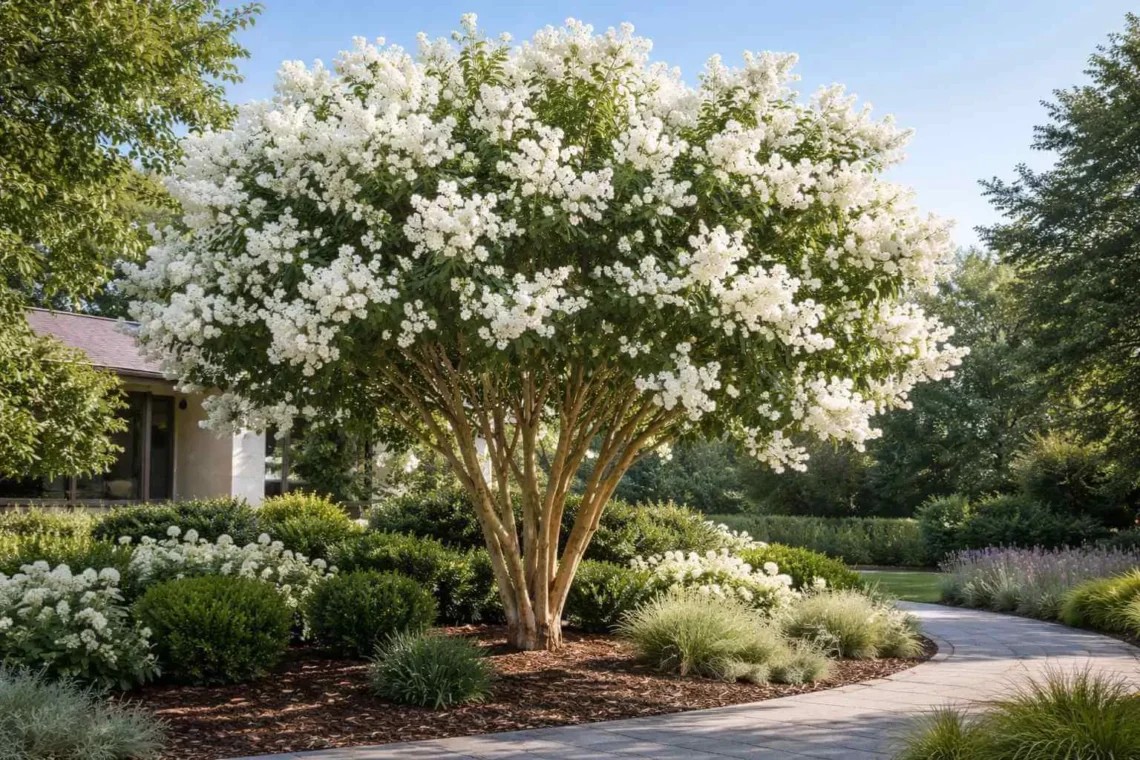
A white crepe myrtle is a refined ornamental flowering tree valued for its elegant blooms, smooth exfoliating bark, and long-lasting seasonal interest. White-flowering crape or crepe myrtles are especially popular in residential and urban landscapes because they offer a clean, timeless look that pairs easily with any design style. From late spring through summer, their crisp white flowers brighten gardens without overwhelming surrounding plants. In fall, attractive foliage color adds another layer of interest, while winter reveals sculptural bark. Beyond appearance, gardeners appreciate their adaptability, drought tolerance once established, and relatively low maintenance needs. These qualities make white crepe myrtle a reliable choice for homeowners and landscape designers seeking beauty with minimal upkeep.
What Is a White Crepe Myrtle?
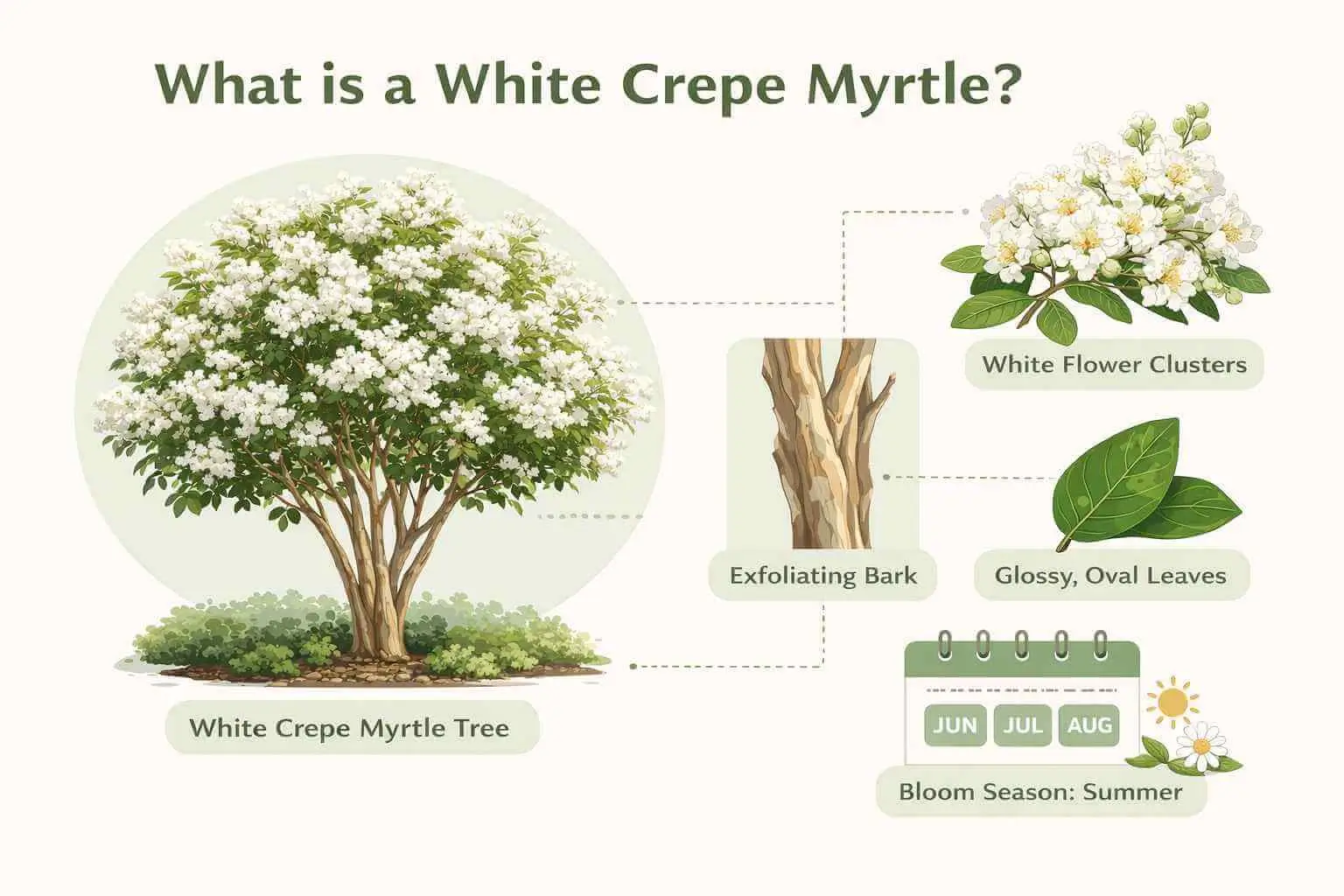
A white crepe myrtle is a flowering deciduous tree or large shrub from the Lagerstroemia genus, bred to produce white blossoms instead of the more common pink, red, or purple tones. It is known for its multi-season ornamental value, combining flowers, bark, and foliage in one plant.
The terms “crepe” and “crape” myrtle refer to the same plant. “Crape myrtle” is the botanically accepted spelling in horticulture, while “crepe myrtle” is a widely used alternative based on the flower’s crepe-like texture. Both spellings align with common search behavior.
White crepe myrtle trees produce clustered white flowers in summer, often lasting several weeks. Blooms contrast with glossy green leaves that may turn yellow, orange, or red in fall. Smooth, peeling bark exposes mottled gray, tan, and cinnamon tones, creating winter interest.
Growth Habit and Landscape Appeal
White crepe myrtles vary in structure depending on the cultivar and pruning approach. Upright forms develop a tall, vase-shaped profile suitable for shade trees and street plantings, while spreading forms create broader canopies for lawns and open garden spaces.
They are commonly used as shade trees, accent trees near patios or entryways, or as flowering focal points in landscape designs. Their balanced form and predictable growth make them easy to integrate into both formal and informal settings.
Popular White Crape Myrtle Varieties
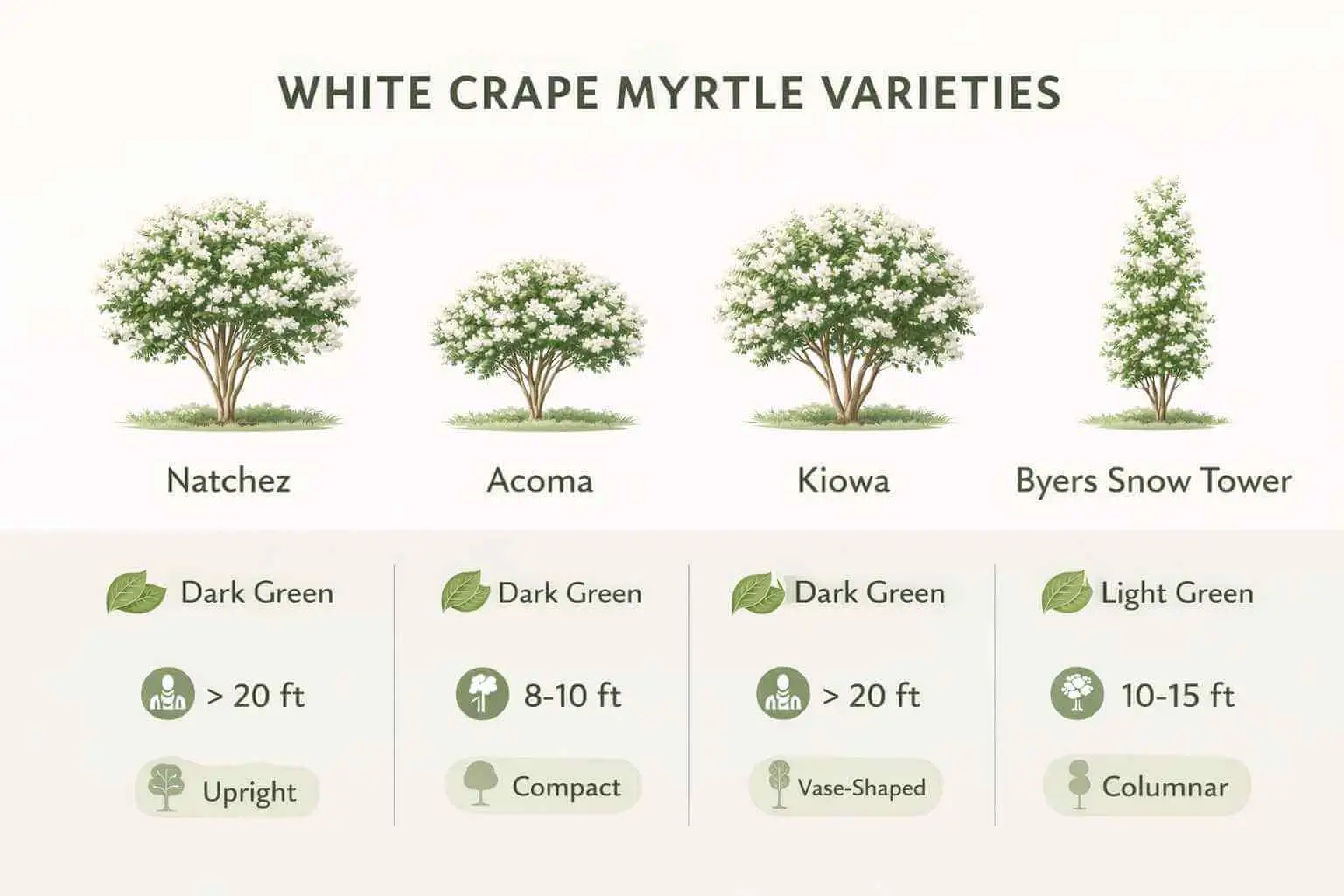
White crape myrtle varieties include traditional selections and improved cultivars developed for stronger disease resistance and enhanced ornamental traits. Modern cultivars often show improved tolerance to powdery mildew, richer bark coloration, and more consistent bloom performance, making them better long-term landscape choices.
White Crape Myrtle ‘Natchez’
White crape myrtle ‘Natchez’ is one of the most widely planted white cultivars due to its fast growth and graceful structure. It matures into a medium to large tree with an upright, slightly spreading habit.
This cultivar is known for its dramatic exfoliating bark, revealing smooth cinnamon and gray tones. Summer flowering is reliable and abundant, producing large white clusters over an extended period. In residential landscapes, it performs well as a lawn specimen, driveway tree, or light shade tree.
Pixie White Crape Myrtle
Pixie white crape myrtle features a compact growth habit designed for smaller spaces. It maintains a neat form without requiring heavy pruning.
Its reduced size makes it ideal for small gardens, patios, and container planting. Pixie white crape myrtle delivers bright white flowers while fitting comfortably into urban and space-limited landscapes.
Black Diamond Pure White Crape Myrtle
Black Diamond Pure White crape myrtle is valued for its bold contrast between dark foliage and bright white flowers. The deep, nearly black leaves create a dramatic visual effect throughout the growing season.
This modern cultivar suits contemporary landscape designs and works well as an accent or statement tree where strong contrast is desired.
White Chocolate Crape Myrtle
White Chocolate crape myrtle stands out for its distinctive foliage tones that range from bronze to deep chocolate shades. White blooms create a soft visual balance against the darker leaves.
Its ornamental value extends across multiple seasons, with foliage color, flowers, and bark contributing to year-round appeal.
White Crepe Myrtle Size and Growth Expectations
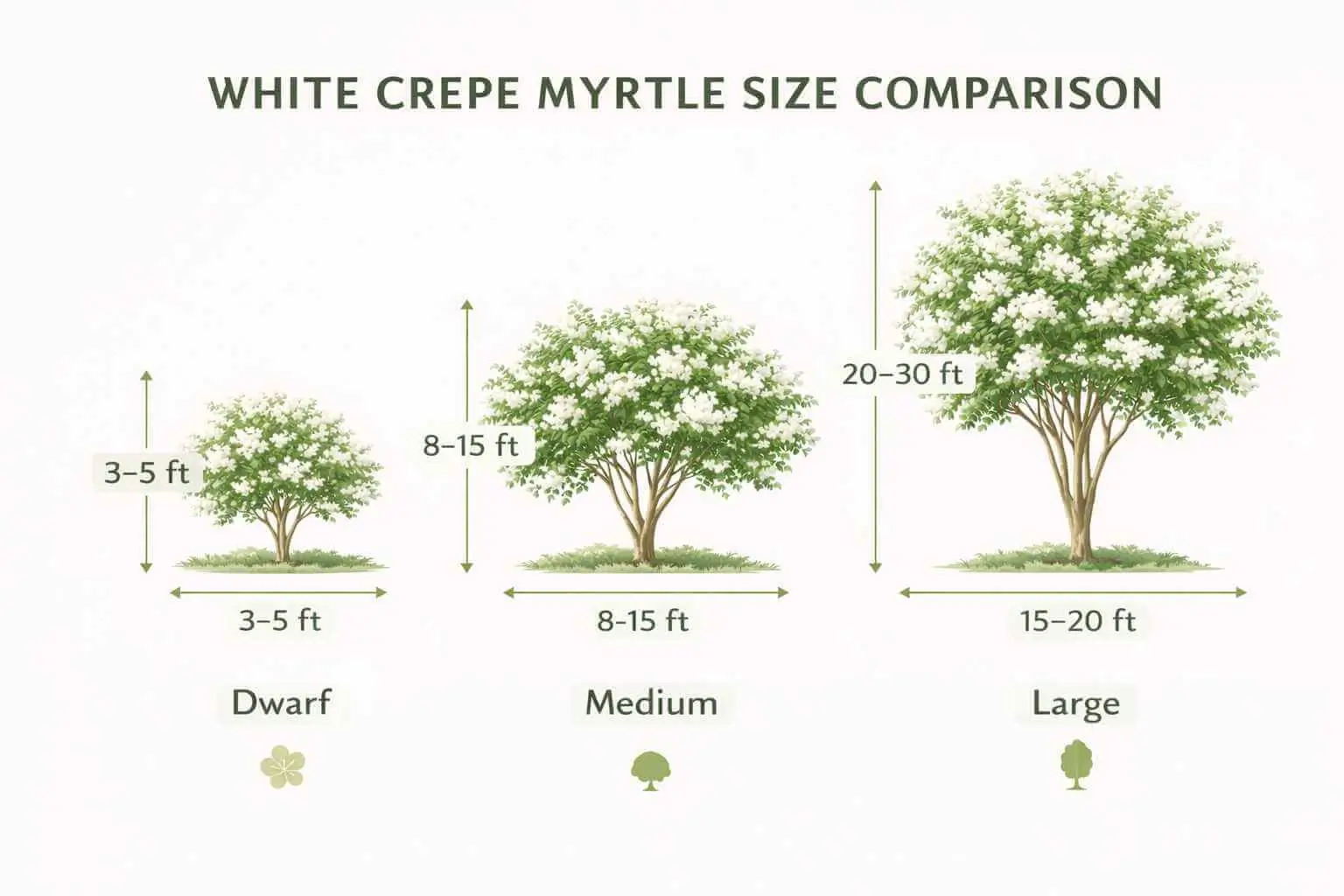
White crepe myrtle size depends on the selected cultivar. Mature heights typically range from 10 to 30 feet, with widths between 8 and 25 feet.
Tree-form varieties develop a single or multi-trunk structure suitable for canopy use, while shrub-form selections remain shorter and are often planted in groups or borders. Understanding mature size ensures proper placement and spacing.
Dwarf White Crape Myrtle Options
White crepe myrtle dwarf cultivars usually reach 6 to 10 feet in height with a compact spread.
These varieties are best planted near walkways, patios, or foundations where full-size trees would be impractical. Proper spacing improves airflow and supports long-term plant health.
Best Growing Zones for White Crepe Myrtle
White crepe myrtle performs best in warm climates and shows excellent heat tolerance. Long summers and consistent sunlight support strong growth and reliable flowering.
Cold tolerance varies by cultivar, but many modern selections withstand moderate winter temperatures when planted in suitable locations.
USDA Zones and Regional Performance
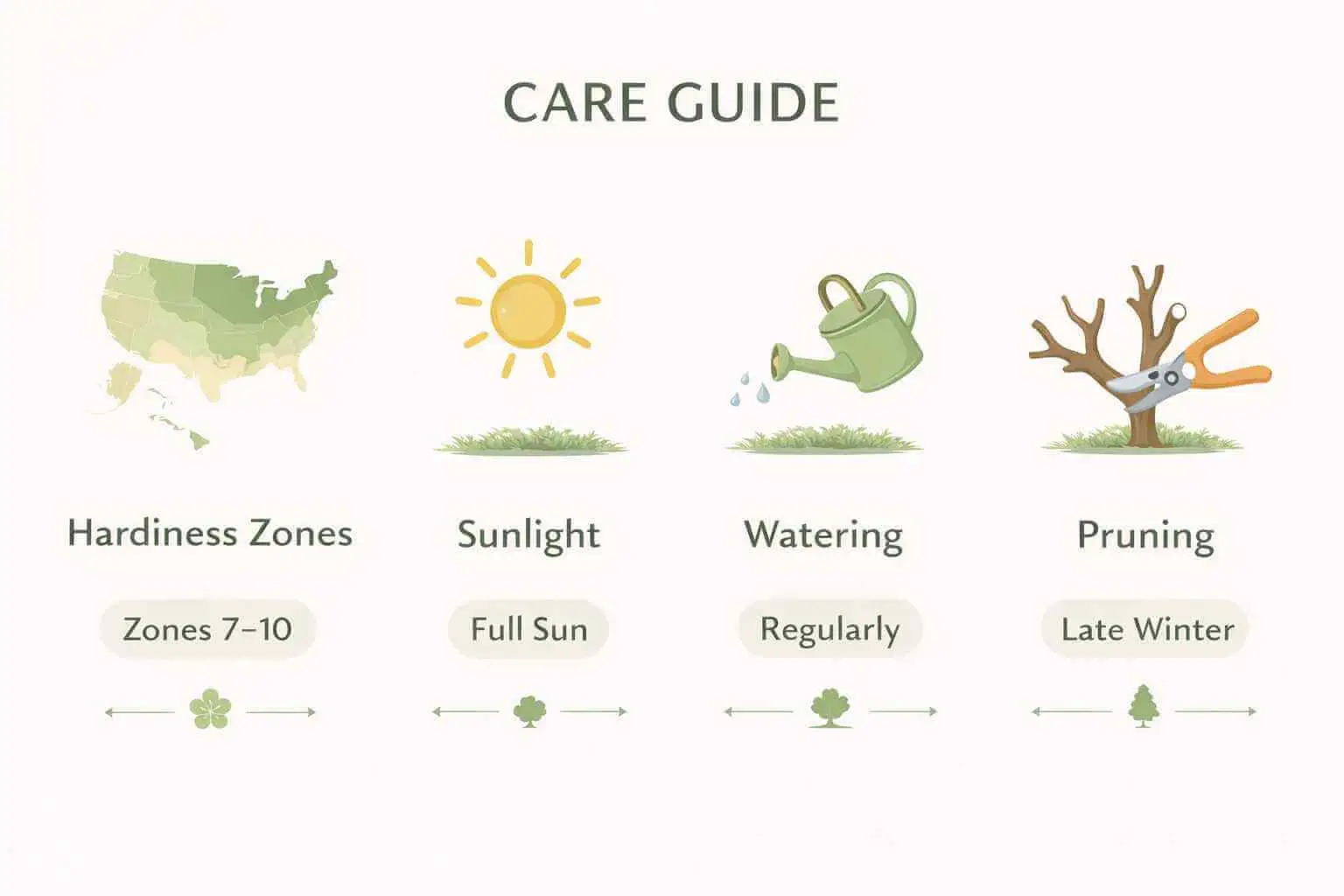
Most white crepe myrtle varieties thrive in USDA Zones 7 through 10, where flowering is strongest and growth is most vigorous.
In cooler regions, late frosts may delay leaf emergence or reduce bloom intensity. Selecting cold-hardy cultivars and planting in protected sites improves performance near zone boundaries.
How to Plant and Care for White Crepe Myrtle
Full sun is essential for white crepe myrtle, with at least six to eight hours of direct light daily. Insufficient sunlight reduces flowering and weakens structure.
Well-draining soil is required, although the plant adapts to various soil types. Regular watering during establishment helps roots develop, after which watering needs decrease significantly.
Pruning, Fertilizing, and Seasonal Care
Pruning should focus on removing dead, weak, or crossing branches while maintaining the tree’s natural form. Severe topping, often called “crape murder,” should be avoided because it damages structure and reduces bloom quality.
Fertilization needs are minimal. A balanced, slow-release fertilizer applied in early spring supports healthy growth without encouraging excessive foliage.
White Crepe Myrtle in Landscape Design
White crepe myrtle fits well in lawns, along driveways, and within border plantings. Its neutral flower color complements a wide range of companion plants, including ornamental grasses, evergreen shrubs, and flowering perennials.
In urban landscapes, it performs well along streets and commercial spaces, while in residential settings it provides structure and elegance without overpowering the design.
Common Problems and Solutions
Modern white crepe myrtle cultivars offer improved resistance to powdery mildew, reducing the need for chemical intervention. Selecting resistant varieties is the most effective preventive strategy.
Leaf drop may occur due to drought stress or sudden temperature changes. Common pests include aphids and scale insects, which are manageable through proper spacing, airflow, and routine monitoring. Choosing improved cultivars and providing correct growing conditions minimizes long-term issues.
Conclusion & Call to Action
White crepe myrtle stands out as a top ornamental choice because it delivers long-lasting beauty with minimal maintenance. Its elegant white blooms, attractive bark, seasonal foliage color, and adaptable growth habits make it suitable for a wide range of landscapes. With options available in tree, shrub, and dwarf forms, it’s easy to find a variety that fits both space limitations and local climate conditions. Selecting the right cultivar based on mature size and growing zone ensures healthier growth and better flowering performance. To get the best results, explore reputable local nurseries for region-appropriate varieties or consult landscape professionals who can help you choose and place white crepe myrtle effectively in your outdoor space.
Learn more: 7 Stunning Reasons to Grow a Purple Plum Bush Today
FAQs About White Crepe Myrtle
How tall does a white crepe myrtle grow?
White crepe myrtle height depends on the cultivar. Dwarf types typically grow 6 to 10 feet tall, while medium and large tree forms can reach 15 to 30 feet at maturity. Always check the mature size before planting.
Are white crape myrtle trees fast growing?
Yes, many white crape myrtle trees are considered moderate to fast growers. Under full sun and proper care, they can add 1 to 2 feet of growth per year, especially during the first several growing seasons.
What is the best white crape myrtle variety for small yards?
For small yards, compact cultivars such as Pixie white crape myrtle or dwarf white crepe myrtle varieties are ideal. These maintain a manageable size while still providing attractive blooms and ornamental value.
Can white crepe myrtle grow in colder zones?
White crepe myrtle can grow in cooler regions when cold-hardy cultivars are selected. Most varieties perform best in USDA Zones 7 through 10, but some improved selections tolerate colder winters with proper placement and care.
Do white crepe myrtles need full sun to bloom?
Yes, full sun is essential for strong flowering. White crepe myrtles require at least six to eight hours of direct sunlight daily to produce abundant blooms and maintain healthy structure.