Introduction
Aphids on plants are one of the most common and persistent gardening problems, affecting both indoor and outdoor plants across all seasons. These tiny sap-sucking insects multiply quickly and often go unnoticed until visible damage appears. Early identification and prompt treatment are critical, as untreated aphids on plants can weaken growth, spread plant diseases, and lead to severe infestations in a short time. Common plant damage caused by aphid infestations includes curled leaves, sticky residue on foliage, yellowing growth, and overall plant stress. Understanding how aphids behave, how to recognize early signs, and what causes them to appear helps gardeners protect plant health and prevent long-term damage.
What Are Aphids and Why Are They Harmful to Plants?
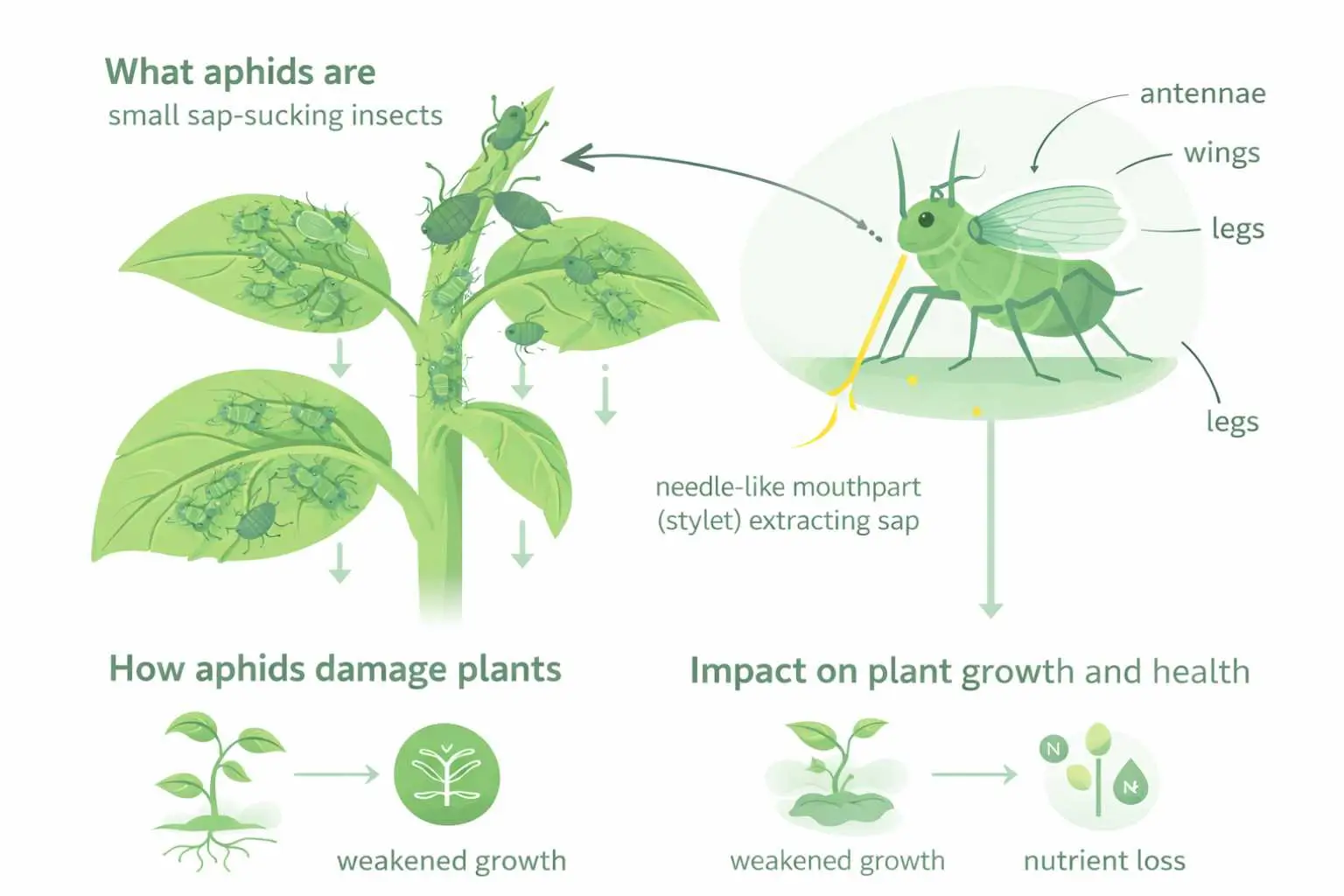
Aphids are small, soft-bodied insects that feed on plant sap using piercing mouthparts. They typically cluster on tender new growth, stems, and the undersides of leaves. Aphids on plants weaken growth by extracting essential nutrients, reducing the plant’s ability to photosynthesize and develop properly. As they feed, aphids also inject saliva into plant tissue, which can cause leaf distortion and abnormal growth patterns.
A wide range of plants are commonly affected, including vegetables, herbs, flowering plants, shrubs, fruit trees, and houseplants. Because aphids reproduce rapidly—often without mating—small populations can turn into widespread infestations within days.
Different Types of Aphids Found on Plants
White aphids on plants are often mistaken for other pests due to their pale, waxy appearance. They commonly infest houseplants, ornamental plants, and soft-stemmed growth, where they blend easily into light-colored foliage.
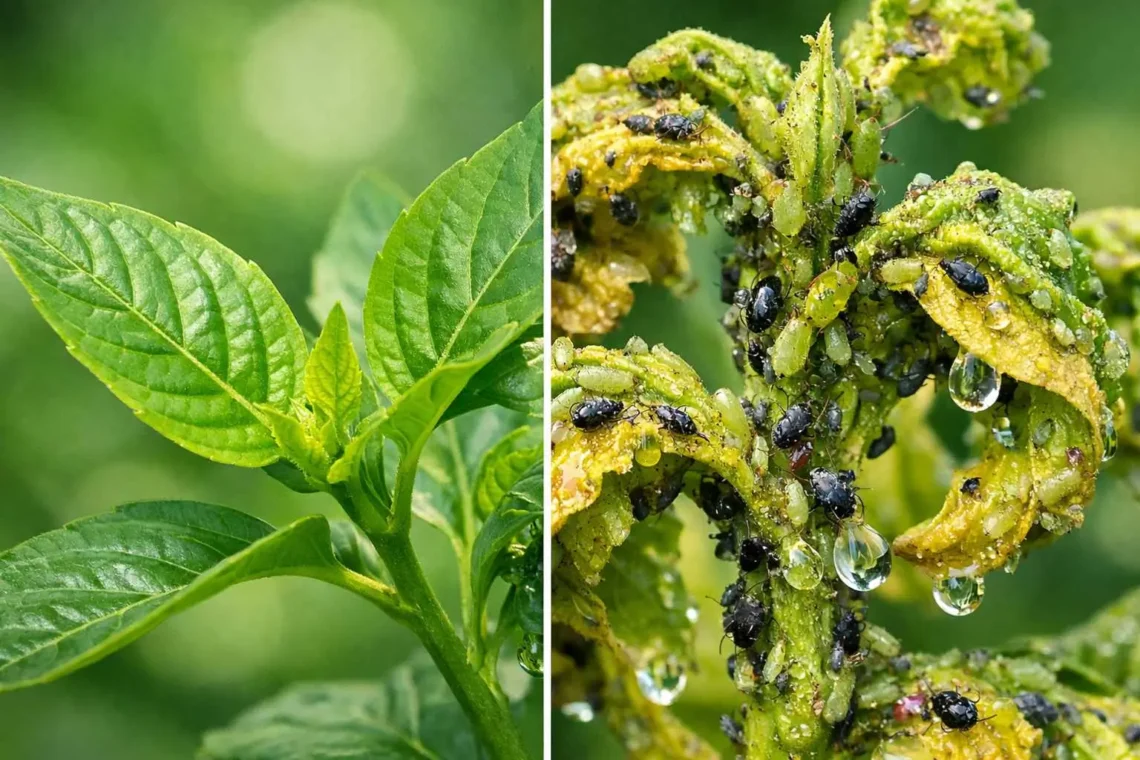
Black aphids on plants are more visible and usually appear on garden vegetables, roses, and fruit-bearing plants. They spread quickly along stems and leaf joints, especially during warm weather. Visual identification based on color, clustering behavior, and plant location helps distinguish aphids from similar-looking pests.
Signs of Aphids on Plants
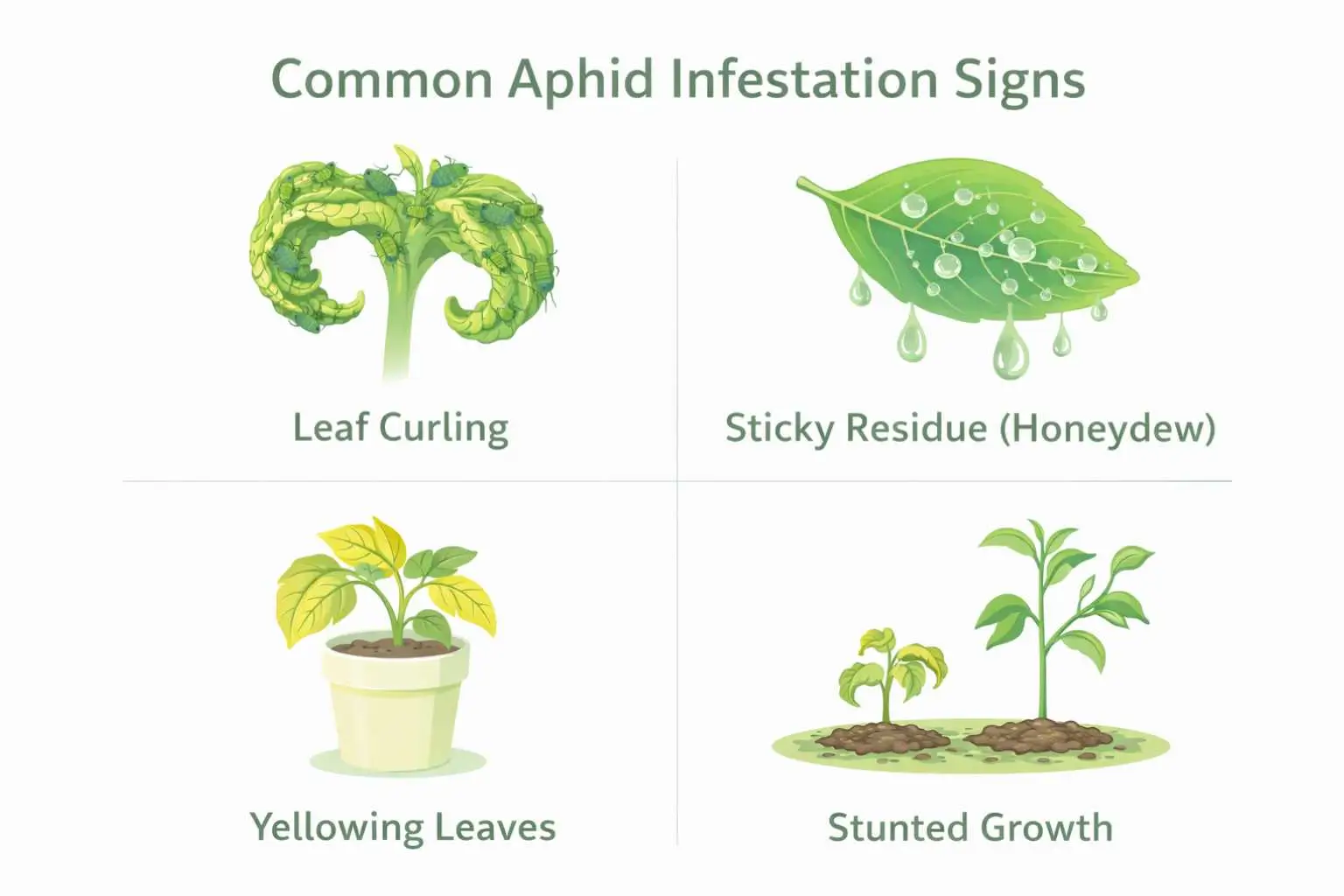
Early warning signs of aphids on plants often appear on new growth first. Leaves may begin to curl inward, twist, or show uneven development. One of the most recognizable indicators is sticky residue, known as honeydew, which aphids excrete as they feed. This substance can coat leaves, stems, and nearby surfaces.
As infestations progress, plants may develop yellowing leaves, reduced flowering, and stunted growth. Severe cases can lead to weakened stems and increased vulnerability to fungal diseases.
How to Identify Aphids Visually
Aphids usually hide on the undersides of leaves, along soft stems, and around leaf joints where plant tissue is most tender. They appear in clusters rather than moving individually. Photos of aphids on plants are a useful identification aid, as aphids vary in color and size depending on species.
Unlike spider mites or thrips, aphids are larger, pear-shaped, and move slowly. They do not produce webbing, and their presence is often accompanied by honeydew and ants attracted to the sugary residue.
What Causes Aphids on Plants?
Environmental and seasonal factors play a major role in the development of aphids on plants. Warm temperatures and mild weather conditions create ideal breeding environments. Rapid new plant growth, especially in spring, attracts aphids because young tissue is easier to feed on.
Nitrogen-rich soil can also contribute to infestations. Excess nitrogen encourages soft, lush growth that aphids prefer, making over-fertilized plants more susceptible.
What Causes Aphids on Indoor Plants
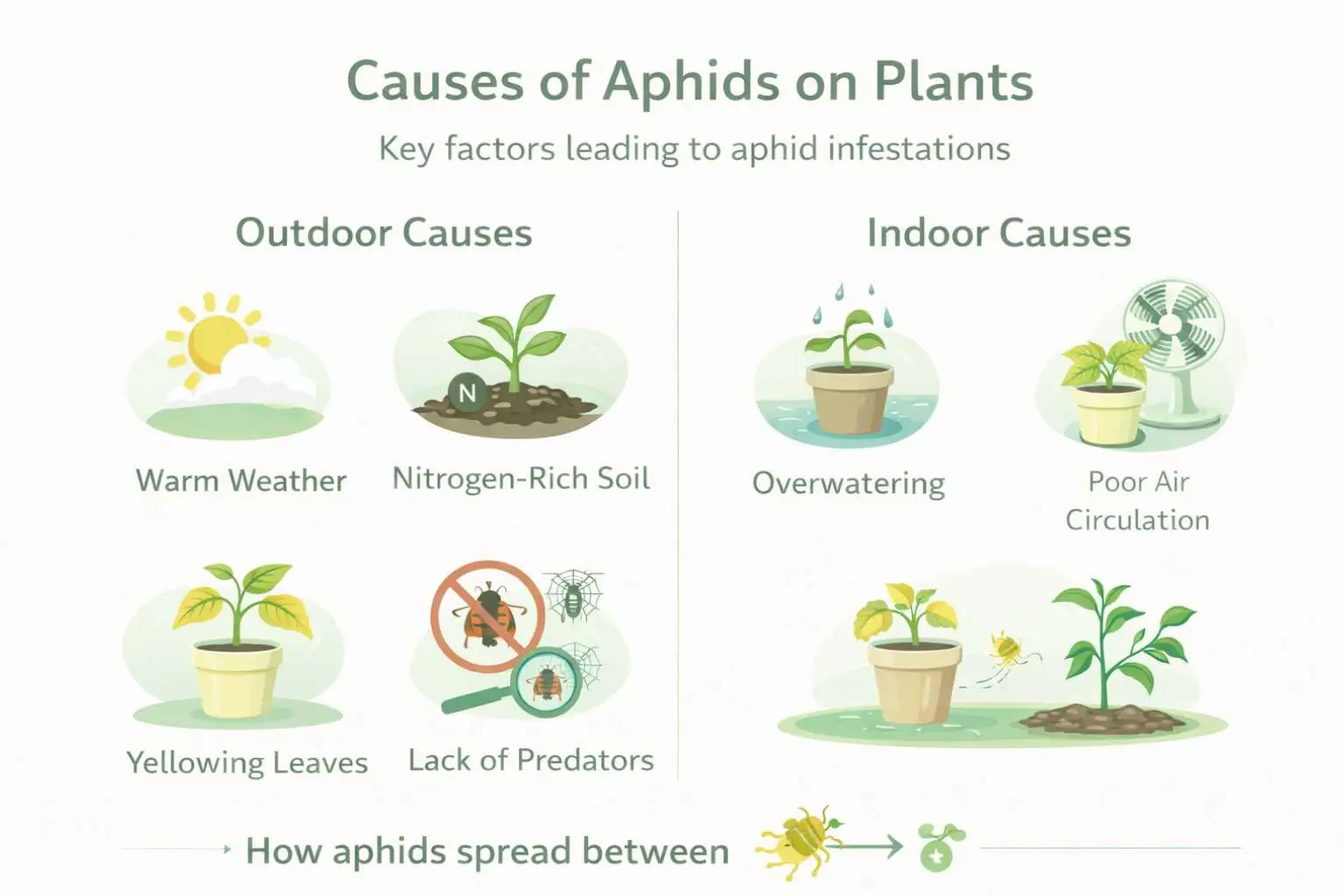
Aphids on indoor plants are primarily caused by the lack of natural predators found outdoors. Without insects like ladybugs to control populations, aphids multiply unchecked. Overwatering, poor air circulation, and plant stress further increase vulnerability.
Aphids often spread between houseplants through close contact, shared tools, or by hitchhiking on newly purchased plants. Even brief exposure can introduce aphids into an indoor environment.
Learn more: 7 Powerful Spider Plant Indoor Benefits for a Healthier Home
Aphids on Plants Treatment Options
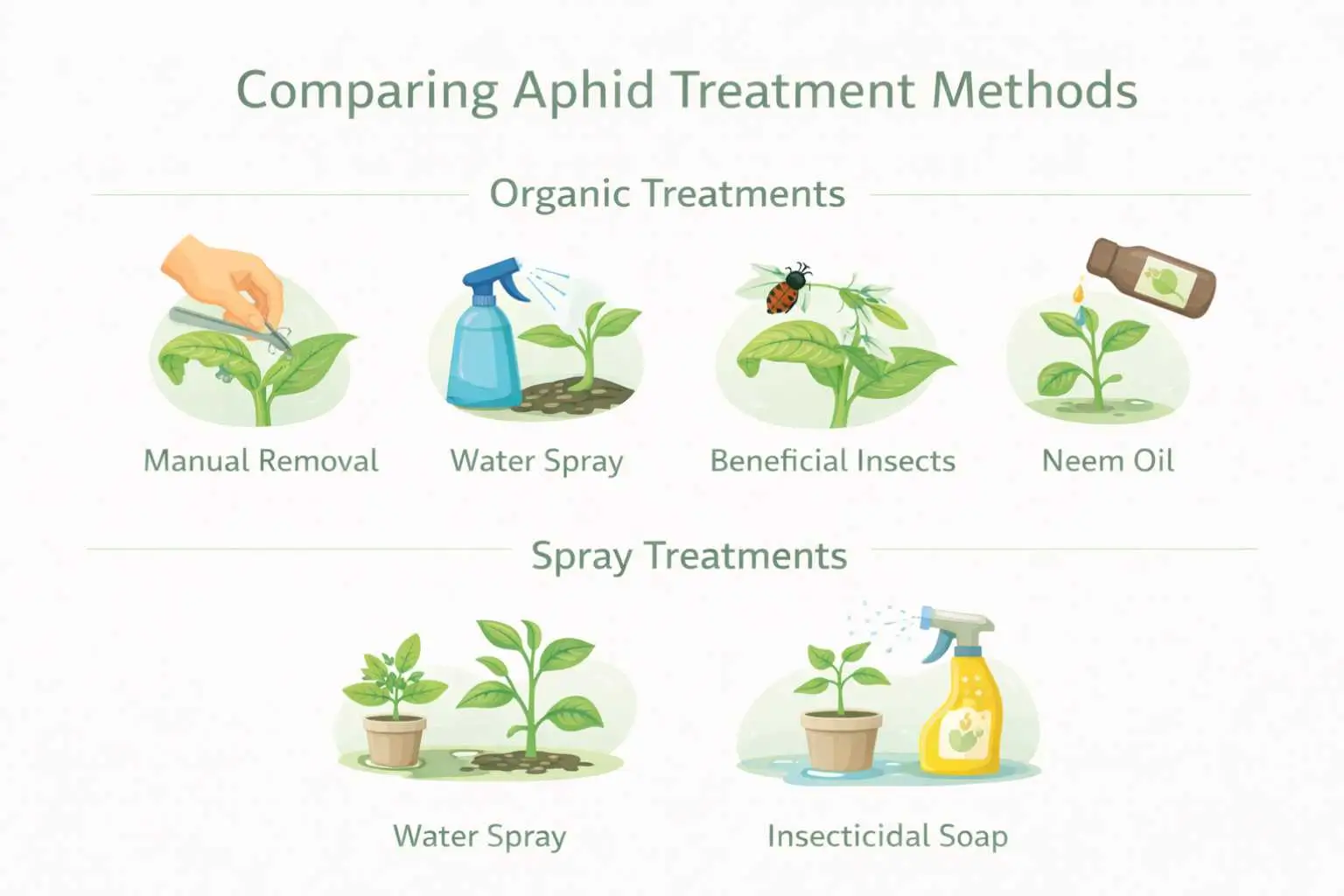
Treating aphids on plants early is essential to prevent plant damage and further spread. Small infestations are easier to control and require fewer interventions. Treatment options generally fall into two categories: organic control methods and chemical solutions.
Organic approaches are preferred for long-term plant health and environmental safety, while chemical treatments may be necessary for severe infestations when other methods fail.
Natural and Organic Aphid Control Methods
Effective natural control options include:
- Manual removal by wiping aphids off with a damp cloth or gloved fingers
- Strong water sprays to dislodge aphids from leaves and stems
- Encouraging beneficial insects such as ladybugs and lacewings in outdoor gardens
These methods reduce aphid populations without harming plants or beneficial organisms.
Using Aphid Spray Safely and Effectively
Aphid spray should be used when infestations persist despite manual or water-based methods. Common options include soap-based sprays, neem oil solutions, and commercially available aphid control products.
For safe use:
- Apply sprays during cooler parts of the day to prevent leaf burn
- Follow label instructions carefully, especially for indoor plants
- Avoid spraying beneficial insects and nearby pollinator plants
How to Prevent Aphids from Coming Back
Preventing recurring aphids on plants requires consistent care and monitoring. Healthy plants are naturally more resistant to pests. Maintaining proper watering, adequate spacing, and good air circulation reduces stress.
Balanced fertilization supports steady growth without excessive nitrogen. Regular inspection routines—especially checking new growth—allow early detection before aphids become established.
Common Mistakes to Avoid When Treating Aphids
One common mistake is overusing chemical sprays, which can harm beneficial insects and lead to resistant aphid populations. Ignoring early signs allows infestations to spread rapidly and become harder to control.
Another frequent issue is treating visible symptoms without addressing root causes such as poor plant care, excess fertilization, or environmental stress. Effective aphid management requires both treatment and prevention strategies working together.
Conclusion & Call to Action
Aphids on plants can cause serious damage if left unchecked, but early identification makes control far easier. Watching for curled leaves, sticky residue, and slowed growth helps confirm a problem quickly. Prompt treatment using natural methods or targeted aphid sprays reduces plant stress and limits spread. Long-term prevention depends on proper plant care, balanced fertilization, and regular inspections, especially during active growing periods. Make routine plant checks a habit and act as soon as signs appear. For deeper guidance, explore related plant care guides or share your experience managing aphids on plants to help other gardeners protect their greenery.
Learn more: Dodonaea Viscosa Hedge: 8+ Smart Reasons Homeowners Love It
FAQs About Aphids on Plants
What are the first signs of aphids on plants?
The first signs of aphids on plants usually include curled or distorted new leaves, sticky honeydew on foliage, and clusters of small insects on stems or leaf undersides. Early detection often occurs on fresh growth.
What causes aphids on plants to suddenly appear?
Aphids on plants often appear suddenly due to warm weather, rapid new growth, or nitrogen-rich soil. They can also spread from nearby plants or be introduced through newly purchased plants.
Are white aphids on plants more harmful than black aphids?
White aphids on plants are not inherently more harmful than black aphids. Damage depends on population size and feeding duration, not color. Both types weaken plants by draining sap and stressing growth.
What is the best aphids on plants treatment for indoor plants?
The best aphids on plants treatment for indoor plants includes manual removal, water sprays, and neem oil or insecticidal soap. These options are effective while minimizing harm to indoor environments.
Do aphid sprays harm beneficial insects or pets?
Some aphid sprays can harm beneficial insects if misused. Organic options like neem oil are safer when applied correctly. Always follow label instructions and keep pets away until treated plants are dry.