Introduction
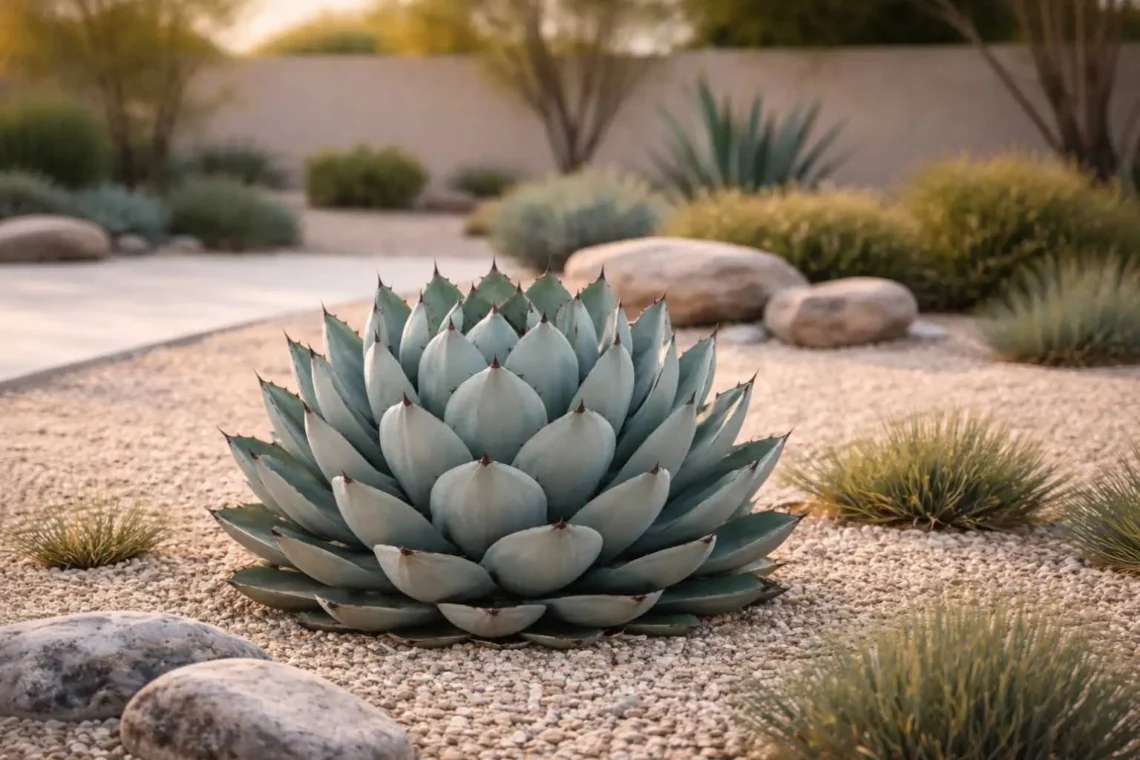
Artichoke agave is a bold, sculptural succulent admired for its tight rosette form and striking resemblance to an oversized artichoke. This artichoke-looking succulent has become a favorite in modern landscapes thanks to its symmetry, architectural presence, and low water needs. The artichoke agave plant fits seamlessly into xeriscaping, desert gardens, and minimalist outdoor designs where form and texture matter more than flowers. Often described as an artichoke succulent or artichoke looking succulent, it provides year-round visual interest without demanding constant care. Its compact shape, silvery-blue leaves, and drought tolerance make it a practical yet dramatic choice for contemporary landscapes focused on sustainability and clean design.
What Is Artichoke Agave?
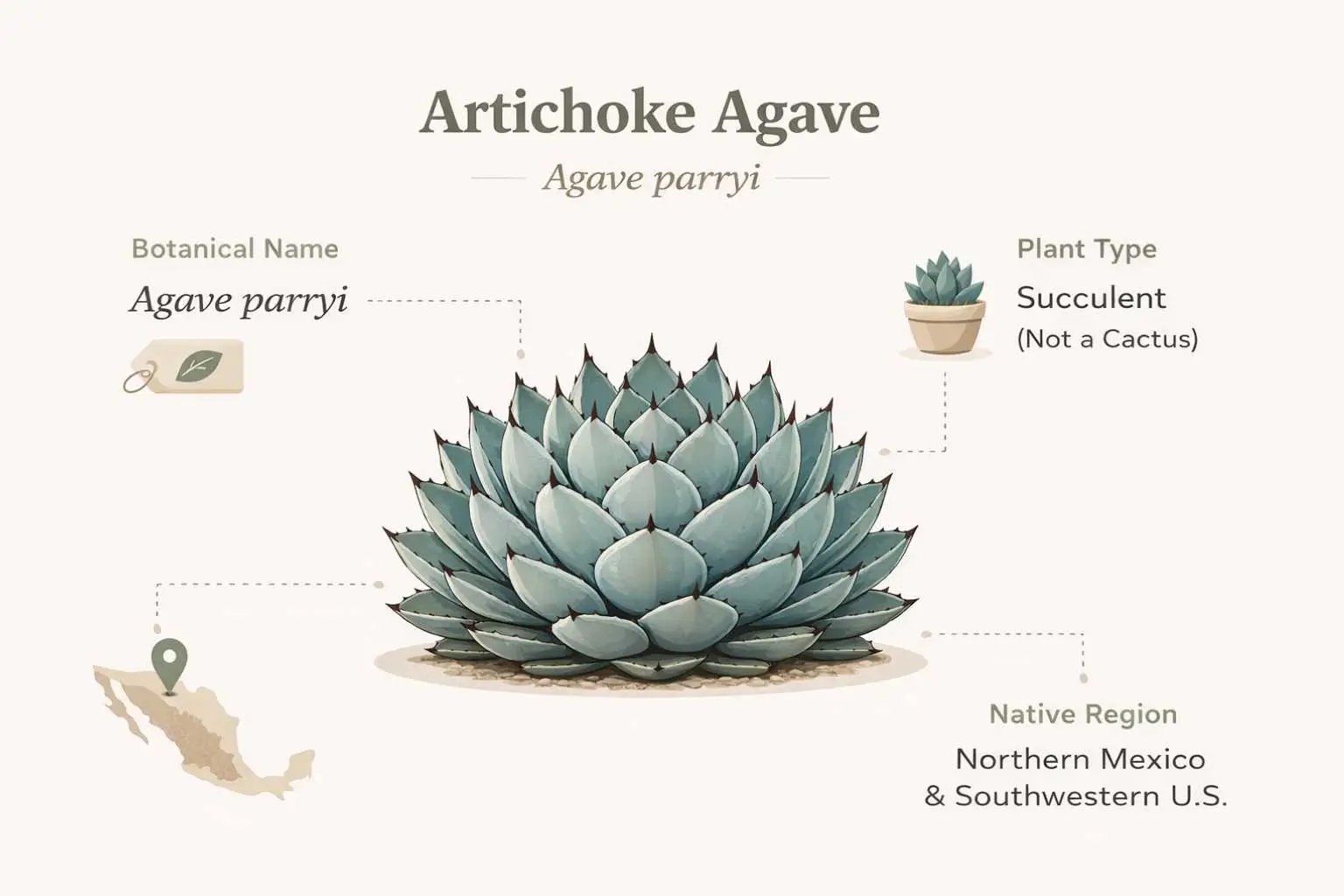
Botanical Name and Classification
Artichoke agave is botanically known as Agave parryi, a species native to the southwestern United States and northern Mexico. It belongs to the Asparagaceae family and is a true agave, not a cactus. This distinction is important, as artichoke agave is often confused with an artichoke cactus or unrelated agave species with looser rosettes. Unlike cacti, artichoke agave stores water in its thick leaves rather than its stem and lacks the ribbed structure typical of cactus plants.
Why It’s Called Artichoke Agave
The name comes from its dense, rounded rosette shape. The overlapping leaves resemble the tightly packed bracts of an edible artichoke. Each leaf curves inward, creating a layered, symmetrical form that closely mirrors an artichoke’s structure, especially when viewed from above.
Artichoke Agave Size, Shape, and Growth Rate
How Big Do Artichoke Agave Get
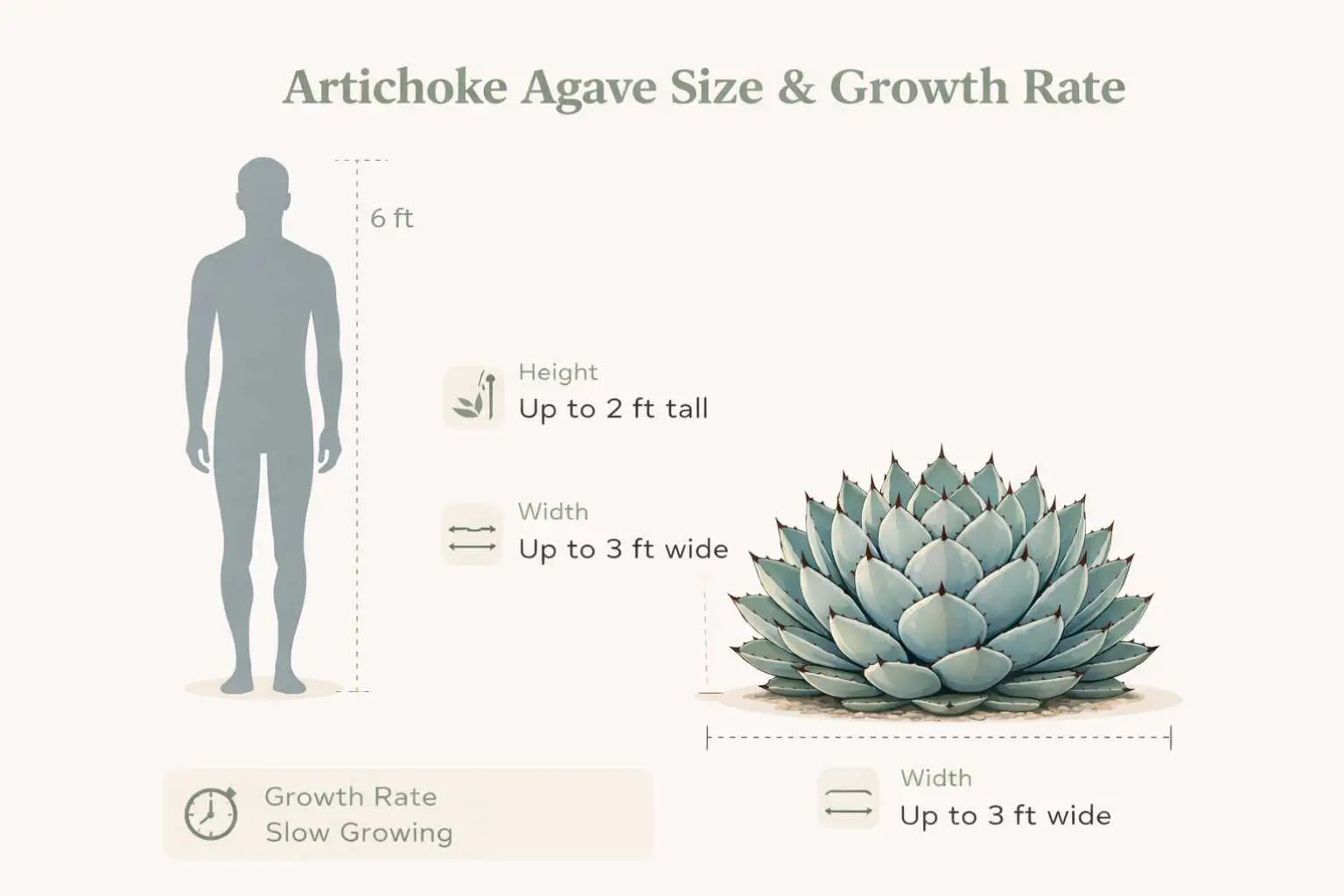
A common question is how big do artichoke agave get at maturity. Artichoke agave size typically ranges from 2 to 3 feet tall and 3 to 4 feet wide. The plant maintains a compact, globe-like profile, making it suitable for both open landscapes and large containers.
Artichoke Agave Growth Rate
Artichoke agave has a slow to moderate growth rate. It gradually expands outward rather than upward. For healthy development, ideal spacing between artichoke agave plants is at least 4 to 5 feet to allow full rosette formation without crowding.
Artichoke Agave Care Guide
-
Sunlight Requirements
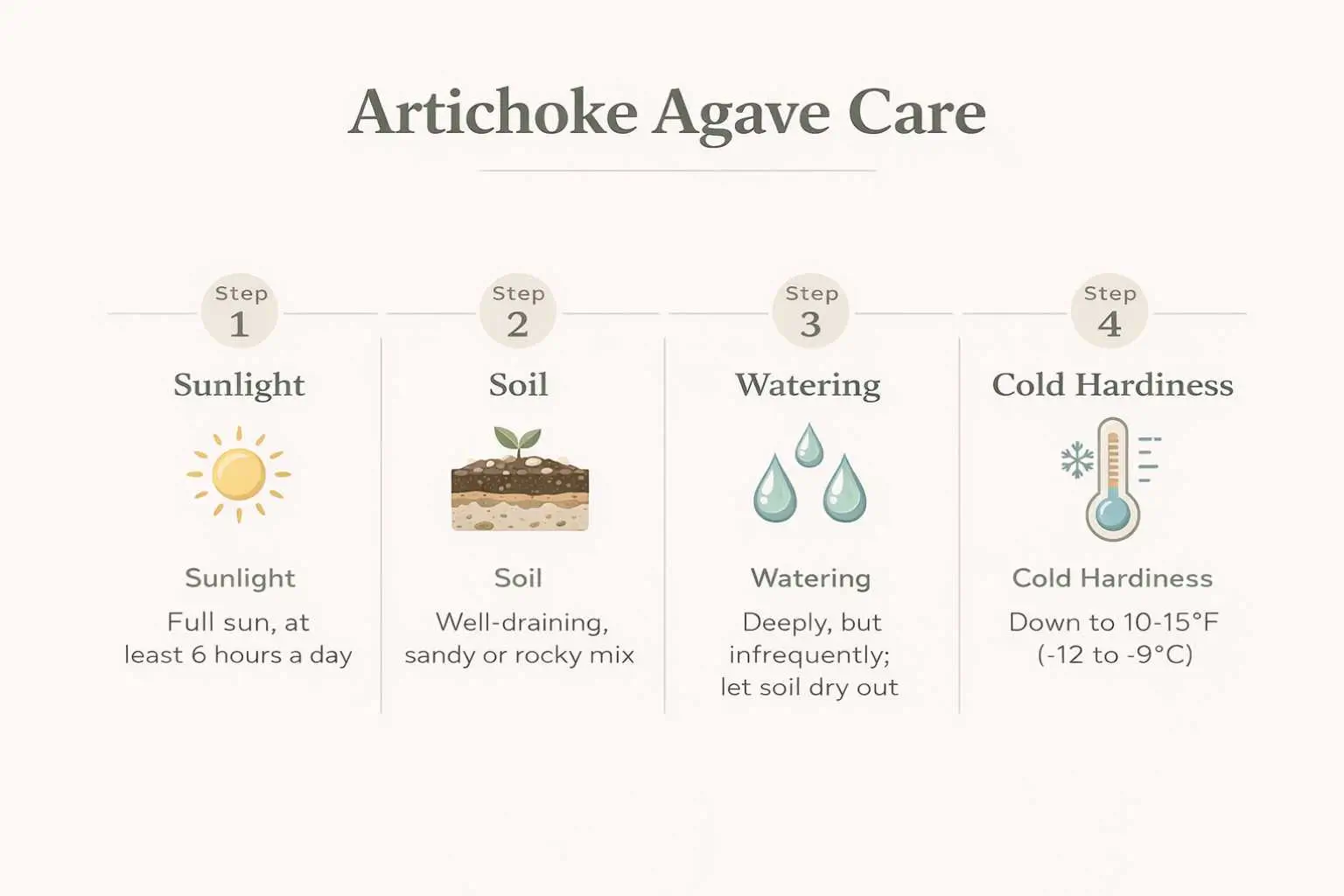
Artichoke agave performs best in full sun, where leaf color and form remain tight and compact. In extremely hot climates, partial shade can help prevent leaf scorch, especially during peak summer afternoons.
-
Soil and Drainage Needs
Well-draining soil is essential for proper artichoke agave care. A sandy or gritty soil mix designed for succulents works best. Poor drainage significantly increases the risk of root rot.
-
Watering Schedule
This plant is highly drought tolerant. Water deeply but infrequently, allowing the soil to dry out completely between watering. Overwatering is the most common cause of decline and should be avoided.
-
Cold Hardiness and Temperature Tolerance
Artichoke agave cold hardiness is impressive compared to many agave species. It can tolerate temperatures down to 10–15°F once established. It thrives outdoors in USDA hardiness zones 5 through 9, with excellent winter performance in dry conditions.
Artichoke Agave Flower and Bloom Cycle
-
When Does Artichoke Agave Bloom
Artichoke agave blooms late in its lifecycle, often after 10 to 20 years of growth. Blooming signals the final stage of the plant’s life.
-
Artichoke Agave Bloom and Flower Characteristics
The artichoke agave flower emerges on a tall, dramatic stalk that can reach 10 feet or more. The plant is monocarpic, meaning it flowers once and then dies. However, offsets may form at the base before or after blooming.
Artichoke Agave vs Similar Agave Varieties
-
Artichoke Agave vs Whale’s Tongue Agave
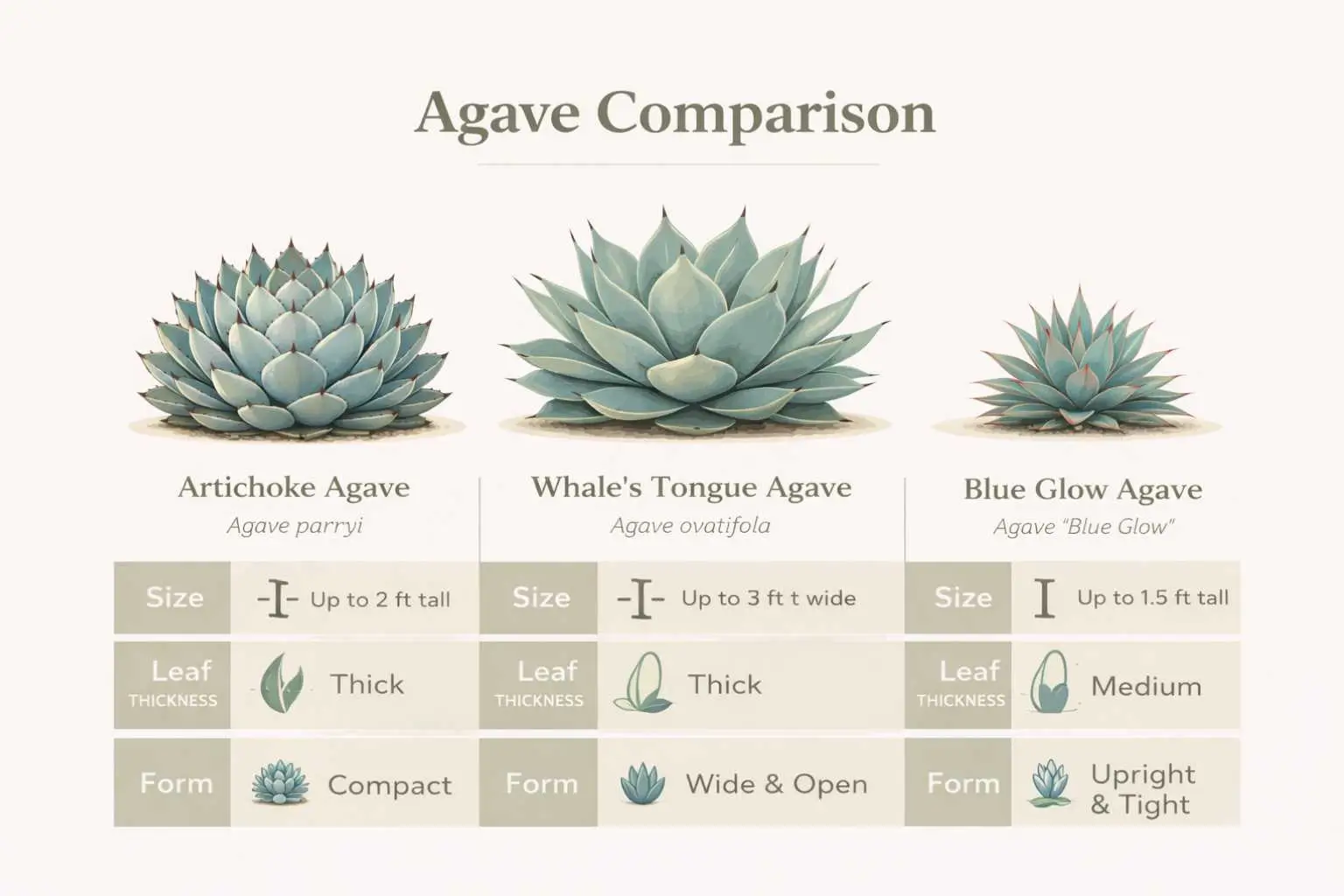
Whale’s tongue agave, also called whale tongue agave or whale agave, grows significantly larger. Whale’s tongue agave size can exceed 6 feet wide, with thicker, broader leaves. Its whale’s tongue agave flower is also taller and more imposing than that of artichoke agave.
-
Artichoke Agave vs Blue Glow Agave
Compared to artichoke agave, blue glow agave has a slimmer, more upright form with glowing leaf margins. Blue glow agave size is smaller overall, and blue glow agave care requires slightly more protection from frost.
-
Artichoke Agave vs Variegated Agaves
Artichoke agave differs from variegated agave varieties such as agave americana variegated. Century plant variegated forms have elongated leaves with cream or yellow striping and do not form the compact artichoke-like rosette.
Landscaping Uses of Artichoke Agave
-
Garden Design and Focal Point Placement
Artichoke agave works exceptionally well as a focal point in desert gardens, rock gardens, and large containers. Its symmetry makes it ideal for modern, geometric layouts.
-
Companion Plants
Pair artichoke agave with other succulents, ornamental grasses, and architectural plants that share similar water and sunlight needs for a cohesive design.
Buying and Planting Artichoke Agave
-
Artichoke Agave for Sale — What to Look For
When shopping for artichoke agave for sale, choose plants with firm leaves, consistent color, and a healthy root system. Avoid specimens with soft spots or discoloration.
-
Planting Tips for Long-Term Success
Plant in well-draining soil, space adequately, and avoid excessive watering during establishment. Proper placement ensures long-term success with minimal maintenance.
Conclusion and Call to Action
Artichoke agave stands out as a low-maintenance, high-impact plant that delivers structure, durability, and year-round appeal. Its drought tolerance and sculptural form make it ideal for sustainable, water-wise landscapes. Add artichoke agave to your garden to create a bold focal point with minimal effort. Explore more agave care guides or shop trusted nurseries to find the right plant for your space.
Learn more: 5+ Stunning Red Fountain Grass Ideas for Vibrant Gardens
FAQs About Artichoke Agave
- How big do artichoke agave get at maturity?
Most artichoke agave plants reach 2–3 feet tall and up to 4 feet wide. - Is artichoke agave a cactus or a succulent?
Artichoke agave is a succulent, not a cactus. - How often should I water artichoke agave?
Water only when the soil is completely dry. In most climates, this means every few weeks. - How cold hardy is artichoke agave in winter?
Artichoke agave can tolerate temperatures as low as 10–15°F in dry conditions. - Does artichoke agave flower more than once?
No. It is monocarpic and flowers only once before dying. - Can artichoke agave grow in containers?
Yes. It grows well in large containers with excellent drainage.