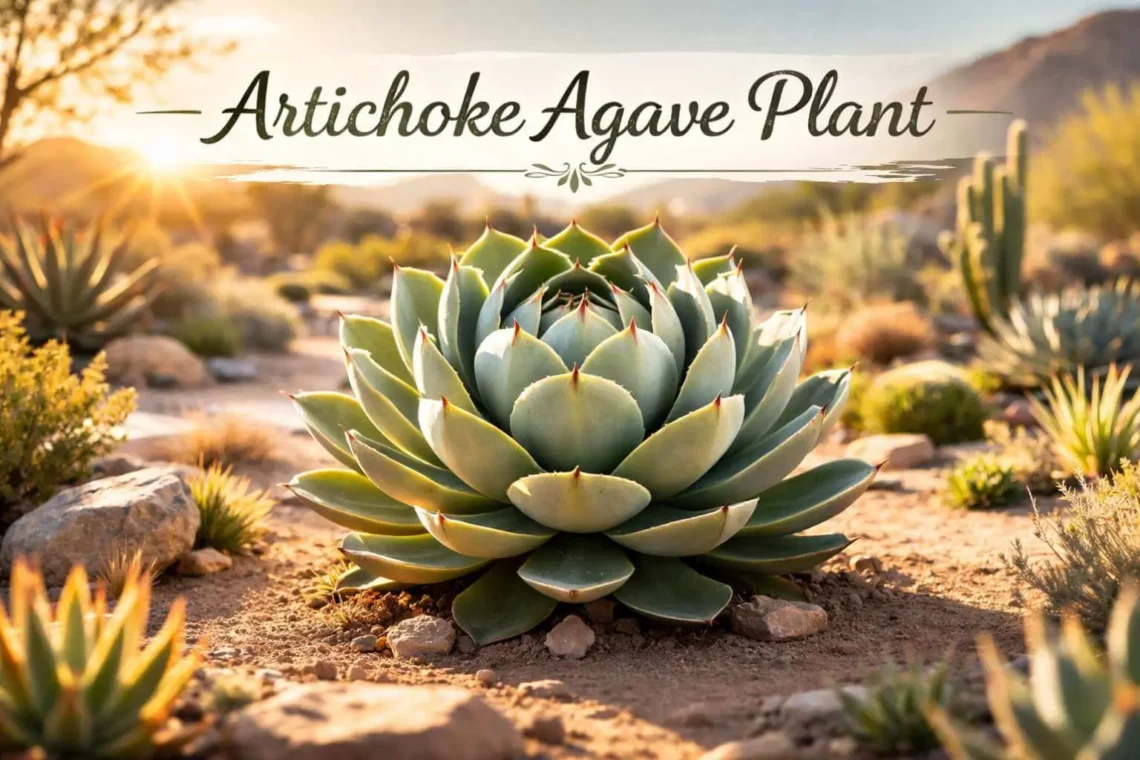
Introduction: What Is an Artichoke Agave Plant?
The artichoke agave plant is an ornamental succulent known for its symmetrical, rosette-shaped foliage that resembles an artichoke, giving the plant its common name. Despite this appearance, it is a true agave and not a cactus or a vegetable artichoke. Native to arid regions, it is prized for its low-maintenance nature, slow growth, and striking architecture. Typically, it grows for decades before producing a single, dramatic flowering stalk. Home gardeners and landscapers use it as a visually impactful, drought-tolerant accent in xeriscape gardens and rockeries. Home gardeners and landscapers use it as a visually impactful, drought-tolerant accent in xeriscape gardens and rockeries, as detailed in Artichoke Agave.
Botanical Identity and Classification
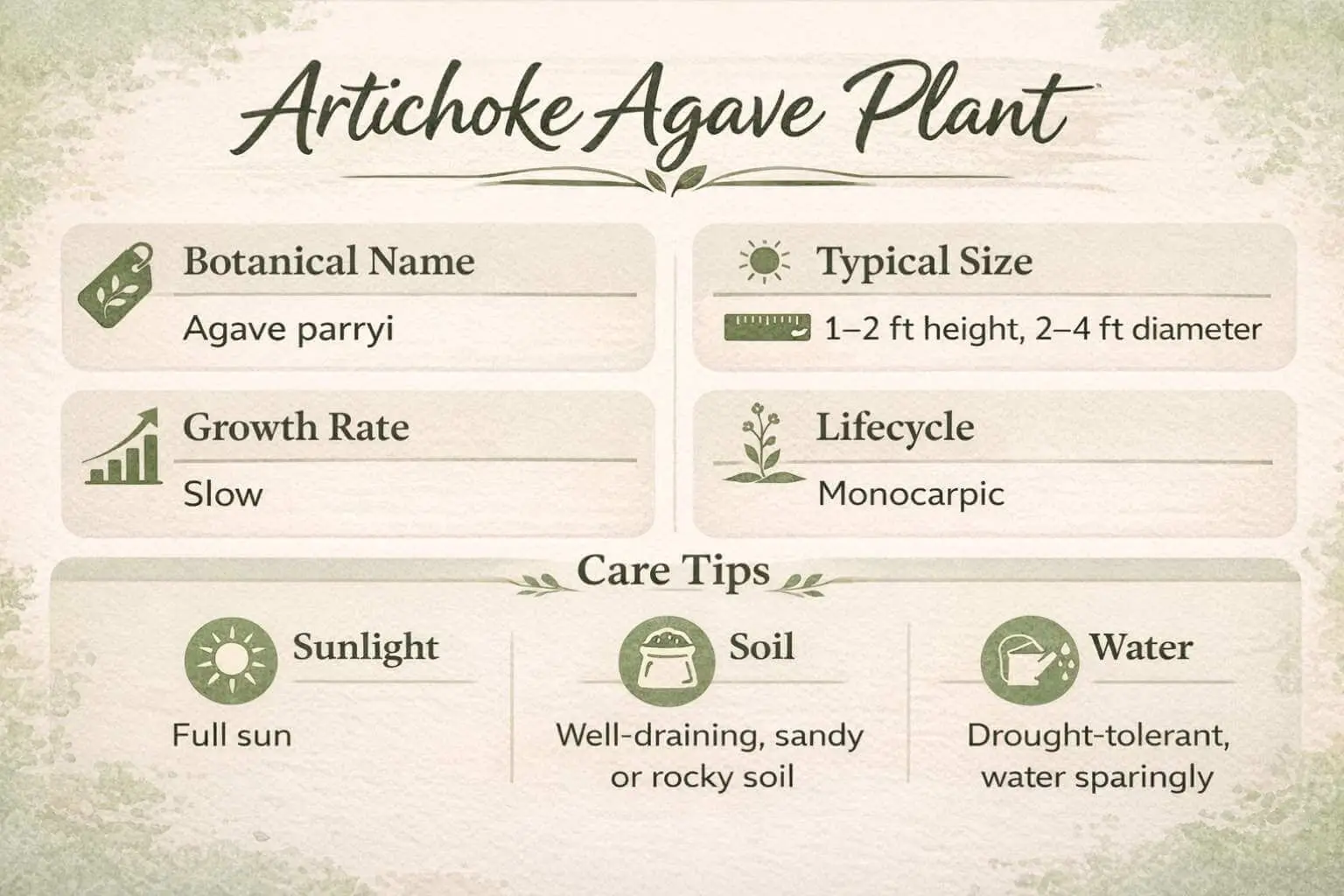
Artichoke agave belongs to the genus Agave, with the scientific name Agave parryi or closely related subspecies. The common name “artichoke agave” refers to its layered, edible-looking rosette leaves rather than any culinary use. It is often confused with Agave truncata and other agave species due to similar leaf formations. Unlike other agave varieties, the artichoke agave maintains a compact, tight rosette, helping distinguish it from larger, sprawling agaves. Accurate identification requires observing leaf shape, margins, and growth habit. It is often confused with other agave species, such as Agave Angustifolia, due to similar leaf formations, but differs in rosette compactness and flowering behavior. Artichoke agave belongs to the genus Agave (Wikipedia), with the scientific name Agave parryi or closely related subspecies.
Physical Characteristics and Appearance
The artichoke agave exhibits broad, triangular leaves that radiate symmetrically from the center. Leaves are typically gray-green to blue-green with smooth to slightly serrated edges. Its layered, overlapping structure is the reason it resembles an artichoke. Juvenile plants often have more compact rosettes, while mature plants develop a wider, pronounced leaf spread. Spines at leaf tips are present but usually moderate, providing protection without being overly hazardous.
Typical Size and Mature Dimensions
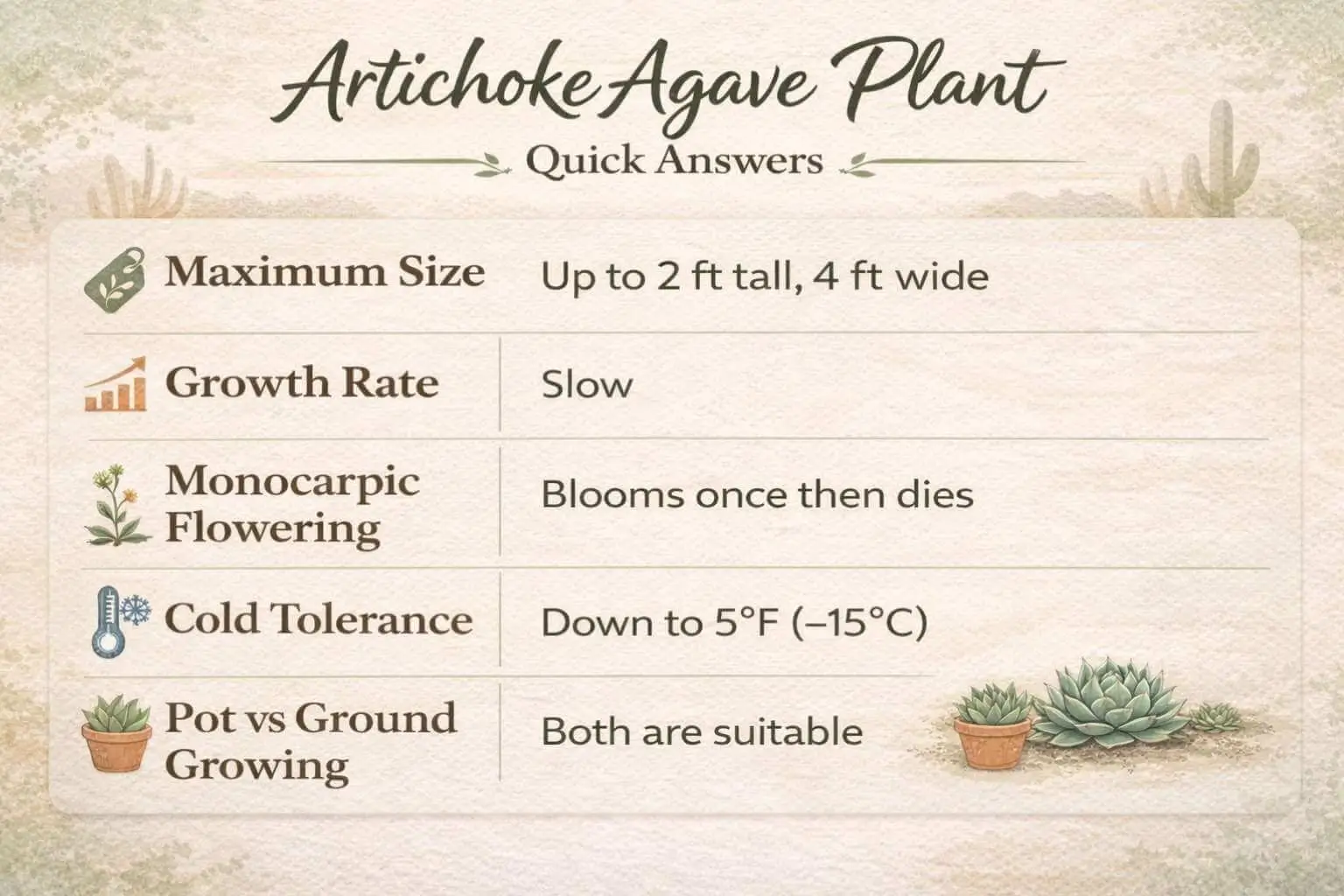
At maturity, artichoke agave plants typically reach 1 to 2 feet (30–60 cm) in height and 2 to 4 feet (60–120 cm) in diameter. Environmental factors such as soil fertility, sun exposure, and water availability influence final size. In optimal conditions, rosettes may expand slightly larger, but the plant generally retains a compact form suitable for both container and landscape use.
Growth Pattern and Lifecycle
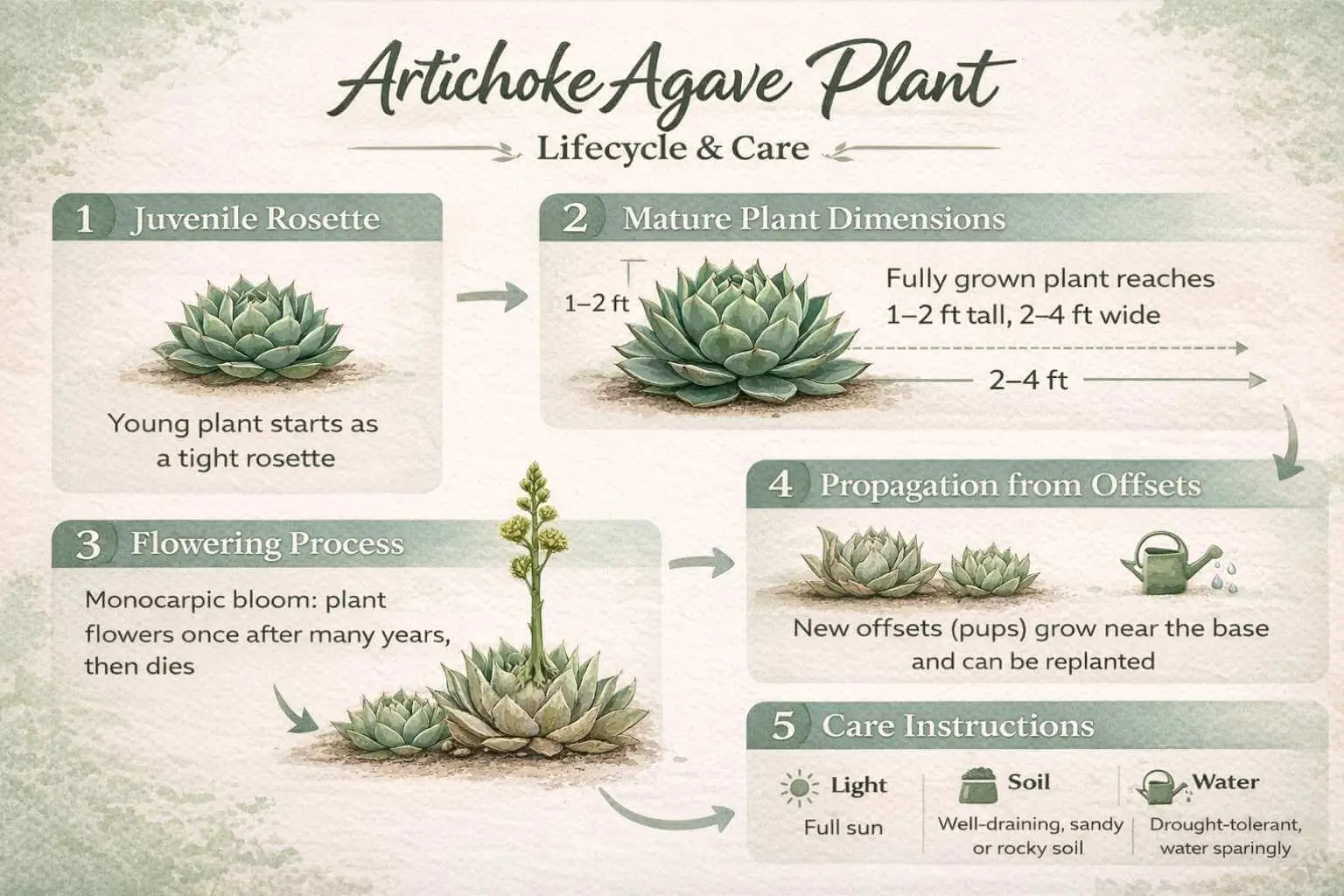
Artichoke agave is a slow-growing, long-lived succulent. Its growth rate is modest, often taking several years to reach maturity. Like all monocarpic agaves, it produces a single flowering event in its lifetime, after which the main rosette dies. This lifecycle is an adaptation to harsh environments, allowing the plant to invest energy into one substantial reproductive effort rather than multiple smaller blooms.
What Happens When the Artichoke Agave Blooms
When the plant reaches flowering age, usually after 10–30 years, it produces a towering flower stalk that can reach 6 to 10 feet (1.8–3 m). The stalk bears clusters of yellow-green flowers that attract pollinators like bats, birds, and insects. After flowering, the main rosette gradually declines, though it often produces offsets or “pups” at the base, allowing propagation and continuity of the plant.
Artichoke Agave Plant Care Requirements
Artichoke agave plants are low-maintenance when planted in suitable conditions. Key care requirements focus on providing adequate sunlight, well-draining soil, and minimal water. They thrive in environments that mimic their natural arid habitats, with few interventions required beyond occasional monitoring for pests and extreme weather.
Light, Soil, and Water Needs
These agaves prefer full sun to partial shade, ensuring dense rosette formation and optimal leaf coloration. Soil should be well-draining, typically sandy or rocky substrates, to prevent root rot. Watering should be infrequent, allowing soil to dry between irrigations. The species is highly drought-tolerant and performs best under minimal supplemental irrigation once established.
Cold Hardiness and Climate Tolerance
Artichoke agave tolerates mild frost but can be damaged below 20°F (-6°C). In regions with freezing temperatures, protective coverings or pot relocation may be necessary. It is well-suited for arid and semi-arid climates, with resilience against high heat and prolonged dry periods.
Growing Artichoke Agave in Pots vs Ground
Artichoke agave adapts well to containers, provided pots are large, well-draining, and stable. Container growth may slightly restrict size but allows mobility for climate protection. In-ground planting promotes natural spread and stability, often resulting in slightly larger rosettes and more robust offsets. Both methods suit ornamental displays, rockeries, and patio gardens.
Common Misidentifications and Look-Alike Plants
The artichoke agave is commonly mistaken for a cactus or called “artichoke cactus,” which is inaccurate. Unlike cacti, agaves have broad, fleshy leaves with terminal spines rather than ribs or areoles. Misidentifications occur because of the plant’s succulent appearance and rosette form. Correct identification requires understanding that agave is a monocarpic succulent, distinct from true cacti and other similar-looking succulents.
Ecological and Landscape Uses
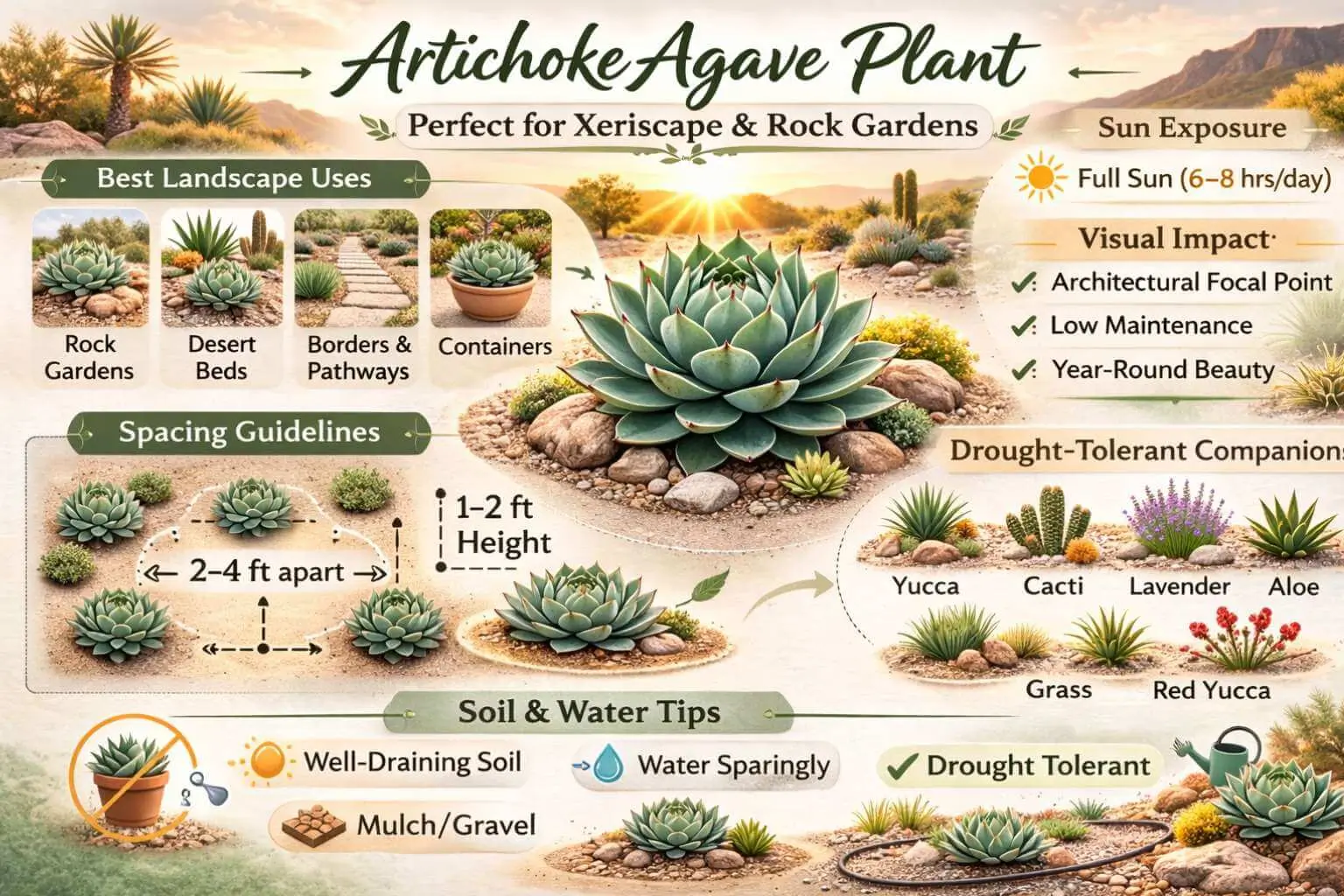
This plant is ideal for xeriscape gardens, desert landscapes, and rock gardens due to its drought tolerance. Its compact rosette provides visual impact and focal interest without requiring large amounts of space. Proper spacing ensures each rosette develops fully while allowing airflow and sunlight penetration. Artichoke agave’s architecture complements other drought-tolerant plants, enhancing both ecological value and aesthetic appeal.
Conclusion: Understanding the Artichoke Agave Plant
The artichoke agave plant is a unique, slow-growing, and ornamental succulent valued for its architectural rosette and minimal care requirements. Recognizing its monocarpic lifecycle, size potential, and environmental needs allows gardeners to plan placement effectively and enjoy its visual appeal. Understanding growth patterns, flowering behavior, and care considerations ensures long-term success in landscapes and containers.
FAQs
- How big does an artichoke agave plant get?
Mature artichoke agave plants typically reach 1–2 feet (30–60 cm) in height and 2–4 feet (60–120 cm) in diameter, though size can vary with soil, sunlight, and water conditions. - How fast does an artichoke agave plant grow?
It grows slowly, taking several years to reach maturity. The plant invests energy into gradual leaf formation and long-term survival. - Does the artichoke agave plant flower more than once?
No. The plant is monocarpic, producing a single flower stalk in its lifetime, after which the main rosette dies. - Can artichoke agave plants grow in cold climates?
They tolerate mild frost but can be damaged below 20°F (-6°C). In cold regions, protection or container relocation is recommended. - Is the artichoke agave plant a cactus or a succulent?
It is a succulent, not a cactus. Agave has fleshy, broad leaves with terminal spines, unlike cacti, which have ribs and areoles. - Can you grow an artichoke agave plant in a pot?
Yes. Containers should be large and well-draining. Potted plants may grow slightly smaller than in-ground specimens but are suitable for patios and balconies.