Introduction
What Is Australian Brush Cherry?
Australian brush cherry is a popular evergreen ornamental plant widely used as both a small tree and a dense hedge in residential and urban landscapes. Valued for its glossy foliage, neat growth habit, and adaptability, australian brush cherry fits well in gardens that require structure, privacy, and year-round greenery. It is commonly grown as a clipped hedge, screen, or standalone ornamental tree.
This plant is known by several common names, including brush cherry plant, australian cherry bush, and brush cherry tree, all of which refer to the same versatile species. Its tolerance to pruning, attractive foliage, and compact form make it especially suitable for formal hedges, boundary planting, and decorative landscaping in warm to mild climates.
Australian Brush Cherry Plant Overview
Botanical Identity and Classification
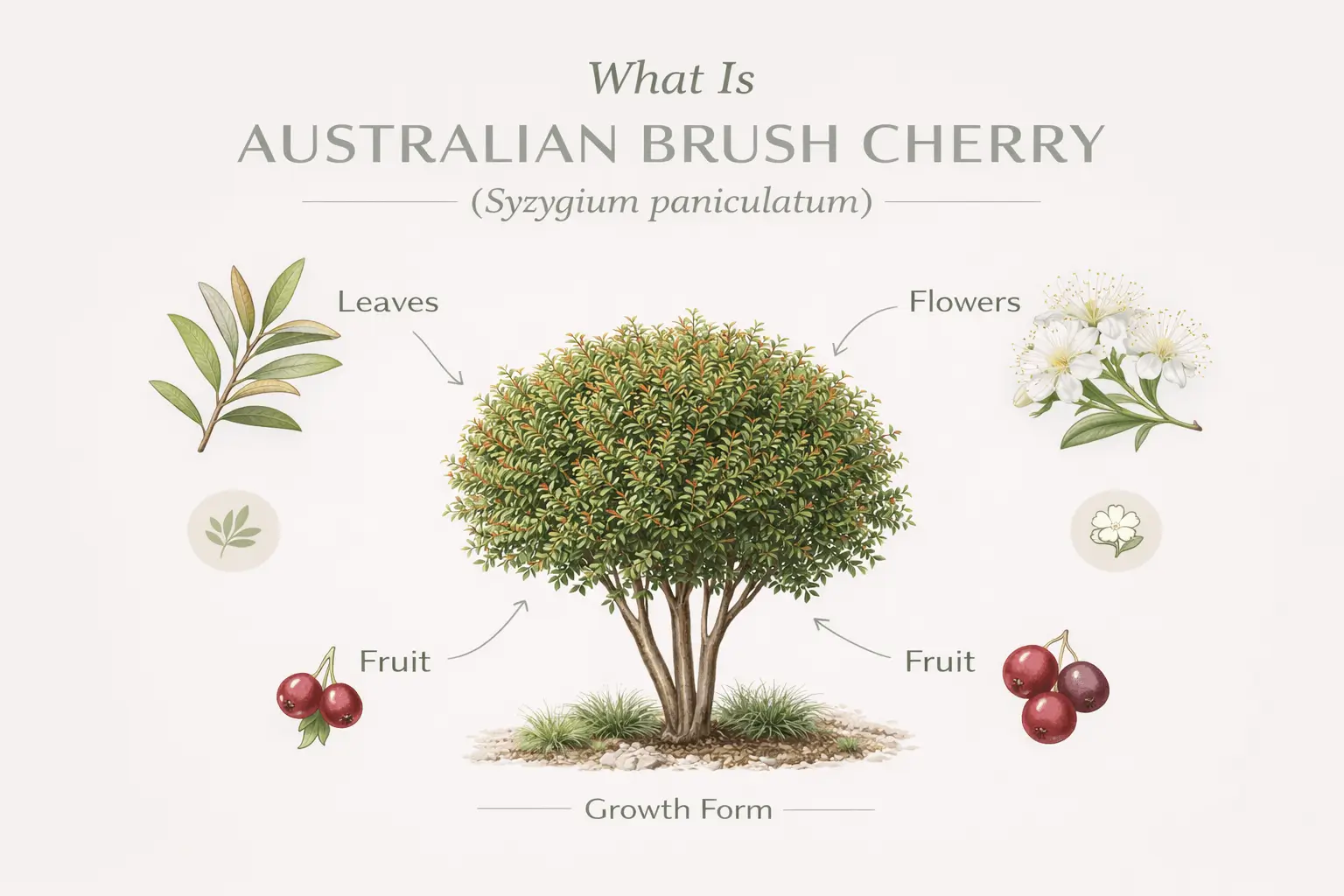
The scientific name of australian brush cherry is Syzygium paniculatum, a member of the Myrtaceae family. This species is native to eastern Australia and is known for its dense foliage and ornamental appeal.
In horticulture, it may still be referenced under older or mixed terminology such as eugenia syzygium paniculatum, but botanically it belongs to the Syzygium genus. When grown as a mature specimen, it is often described as a syzygium paniculatum tree, particularly in landscape and nursery classifications.
Common Names and Regional Variations
Australian brush cherry is commonly referred to as brush cherry, cherry brush, or cherry brush tree, depending on region and usage. In some markets, especially outside Australia, it is grouped under the broader name “eugenia,” which can cause confusion.
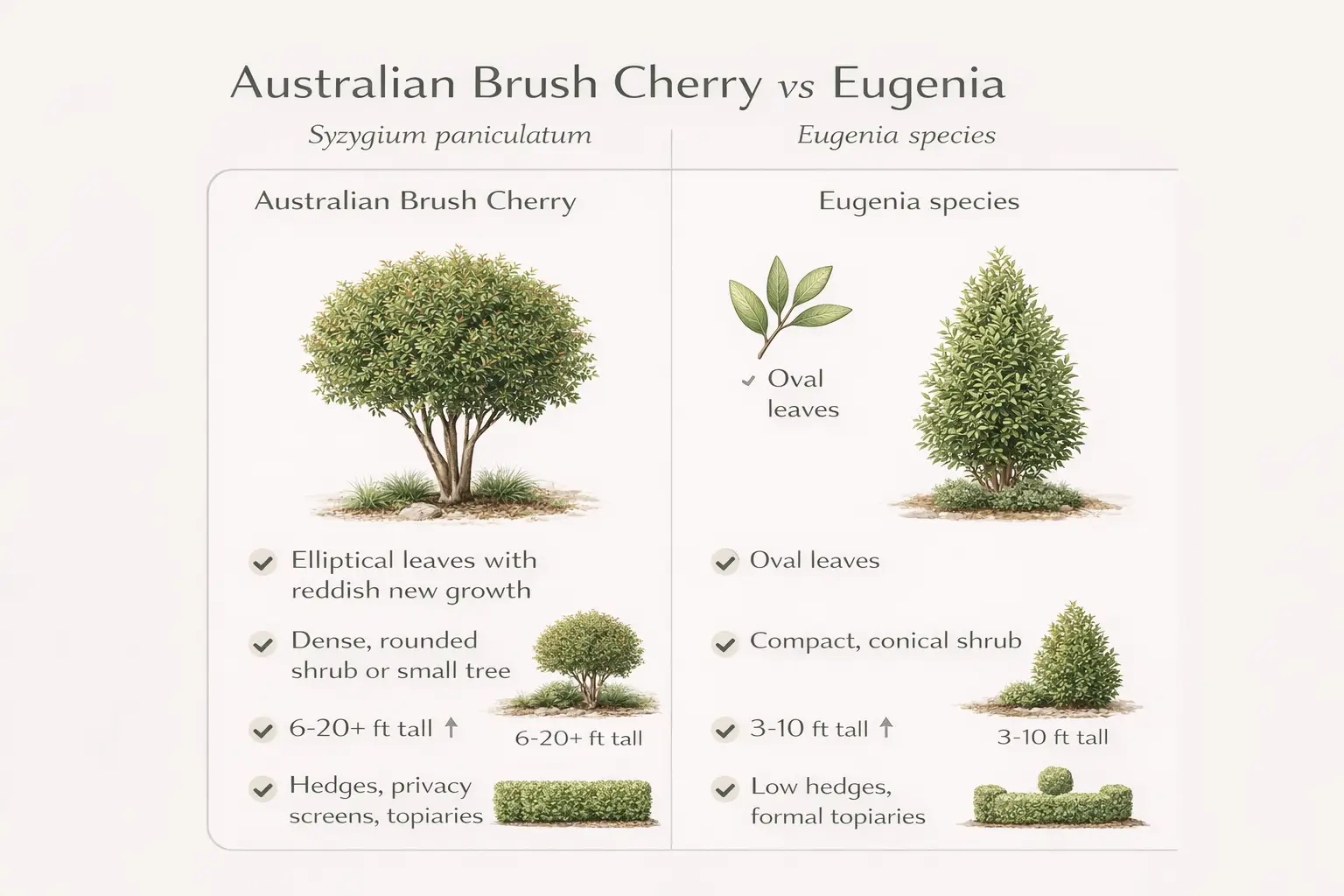
The key distinction is that australian brush cherry refers specifically to Syzygium paniculatum, while general eugenia trees may include multiple related species with different growth habits, sizes, and landscape uses.
Australian Brush Cherry Tree Characteristics
Growth Habit and Mature Size
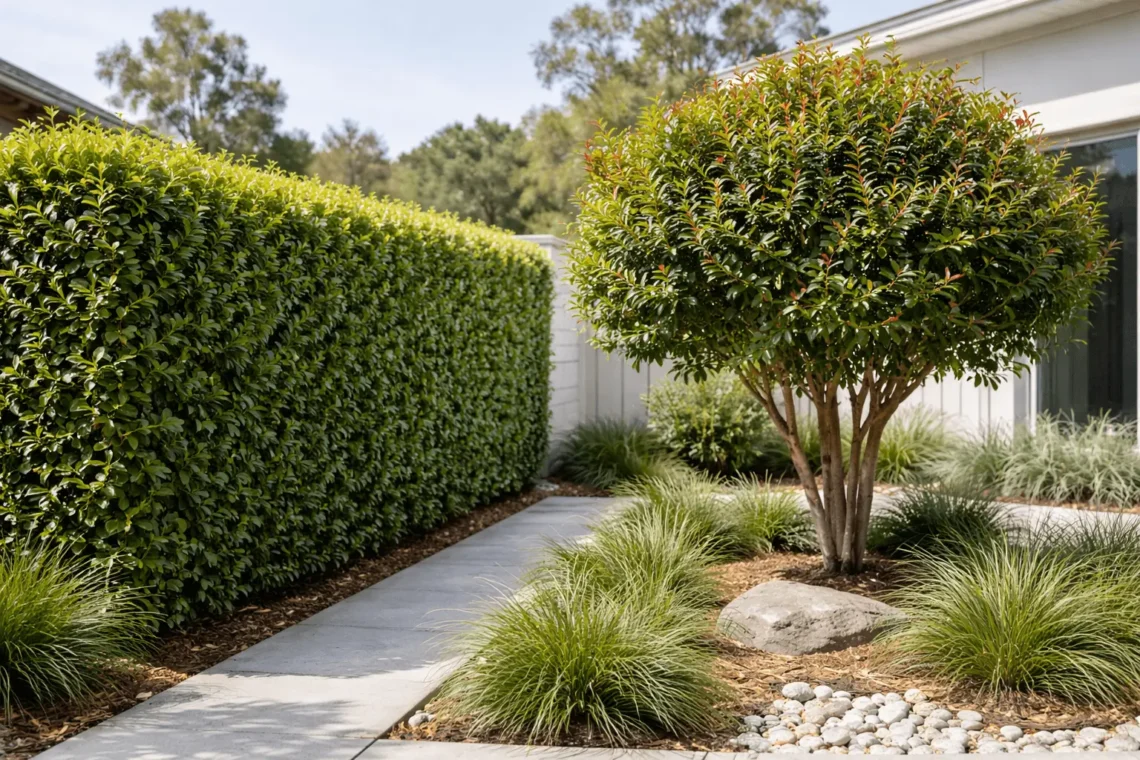
Australian brush cherry can be trained as either a dense shrub or a small ornamental tree. When left unpruned, it naturally develops a rounded to upright form with a compact canopy.
- Shrub form: Commonly maintained as a hedge or screen
- Tree form: Grows with a single or multi-trunk structure
- Mature height: Typically 10–30 feet, depending on pruning
- Spread: 6–15 feet
Its controlled growth makes it suitable for both small gardens and larger landscape designs.
Leaves, Flowers, and Fruit
The plant features glossy, evergreen leaves with a leathery texture, providing year-round visual appeal. New growth often emerges with a reddish or bronze tint before turning deep green.
Australian brush cherry produces small white flowers during the warm season, which attract pollinators such as bees. These flowers develop into small, cherry-like fruits that turn pink to red when ripe. While ornamental, the fruits also provide food for birds and contribute to the plant’s wildlife value.
Brush Cherry vs Eugenia — Are They the Same?
Eugenia Brush Cherry Explained
The term “Eugenia” has historically been used to describe several plants now classified under Syzygium. Names such as eugenia myrtifolia, eugenia bushes, and eugenia trees are still commonly used in landscaping and nursery trade.
This older naming system persists in many regions, even though botanical classification has changed. As a result, australian brush cherry is often sold under the eugenia label, despite being botanically distinct.
Modern Botanical Classification
Modern taxonomy recognizes Syzygium paniculatum as the correct scientific name for australian brush cherry. This classification reflects genetic and structural distinctions within the Myrtaceae family.
It is also important to distinguish between monterey brush cherry and true australian brush cherry. Monterey varieties are often different Syzygium species selected for regional performance, particularly in coastal California, while australian brush cherry refers specifically to the original Australian species.
Uses of Australian Brush Cherry in Landscaping
Brush Cherry as a Hedge or Screen
Australian brush cherry is highly valued as a hedge plant due to its dense foliage and excellent response to pruning.
- Forms thick, uniform cherry hedges
- Provides effective privacy and noise reduction
- Maintains shape well with regular trimming
Its evergreen nature ensures consistent coverage throughout the year.
Ornamental and Urban Landscaping Uses
Beyond hedging, australian brush cherry works well as a lawn specimen, driveway border, or container plant. It adapts easily to urban conditions, making it popular in residential and commercial spaces.
In regions such as California, it is often marketed under terms like eugenia hedge southern california or monterey bay eugenia, reflecting its widespread use in warm coastal landscapes.
How to Grow Australian Brush Cherry
Ideal Climate and Sunlight Requirements
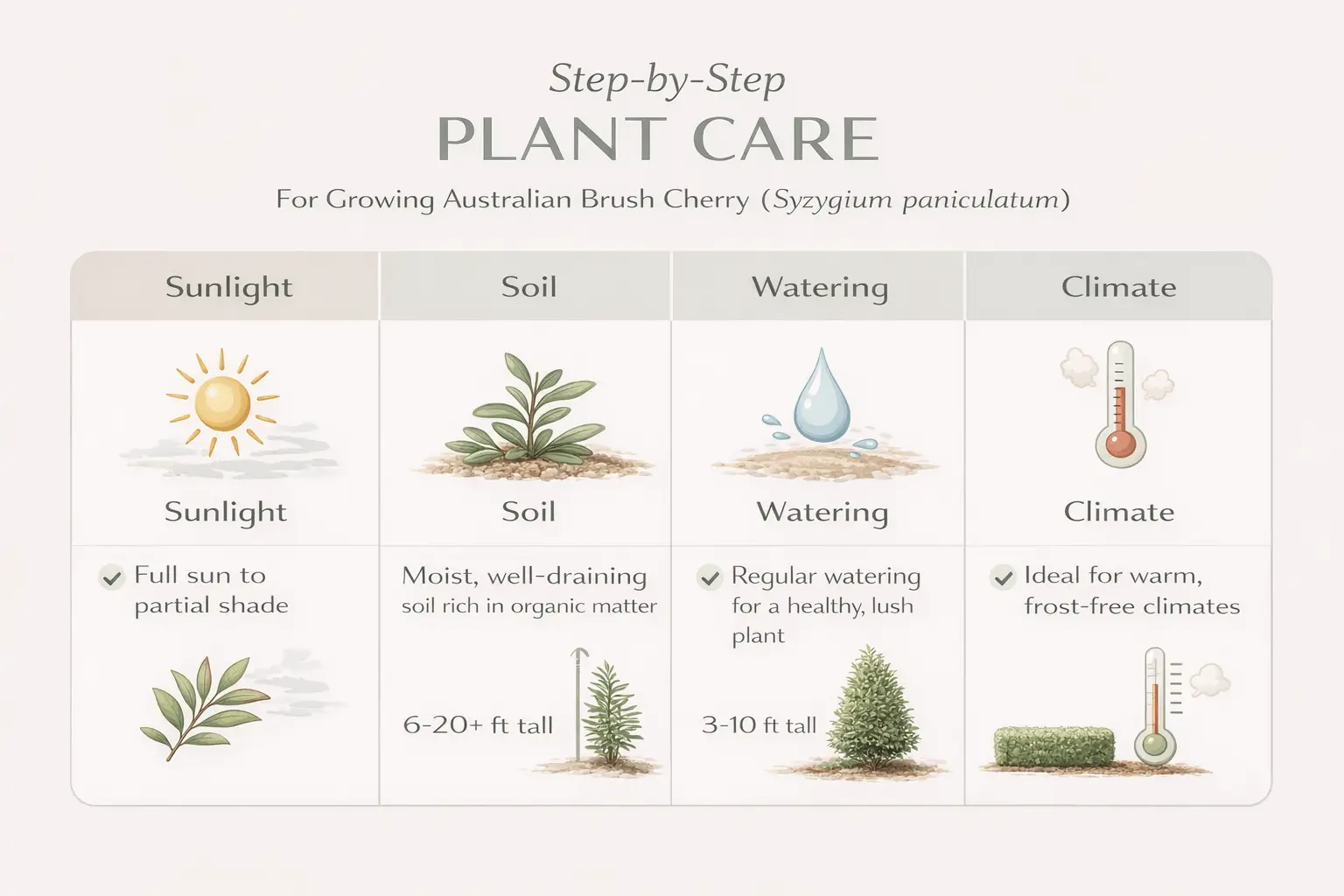
Australian brush cherry thrives in warm, temperate to subtropical climates. It tolerates light frost once established but performs best in mild conditions.
- Prefers full sun for dense growth
- Tolerates partial shade, though growth may be looser
- Performs well in coastal and urban environments
Soil, Watering, and Drainage Needs
This plant prefers well-draining soil with moderate fertility.
- Best soil: Loamy or sandy soil with good drainage
- Watering: Regular watering during establishment
- Drought tolerance: Moderate once mature
Avoid waterlogged conditions, as poor drainage can lead to root stress.
Read Also: 9 Stunning Reasons to Grow Japanese Sweet Flag at Home
Pruning and Maintenance of Brush Cherry Plant
Pruning for Shape and Hedge Control
Pruning is essential for maintaining shape and density.
- Best pruning time: Late spring to summer
- Hedge form: Regular trimming for clean lines
- Tree form: Selective pruning to develop structure
Frequent light pruning is more effective than heavy cutting.
Fertilizing and General Care
Feed australian brush cherry with a balanced fertilizer during the growing season to support healthy foliage.
Mulching around the base helps retain moisture, regulate soil temperature, and protect root health, especially in warm climates.
Common Problems and Troubleshooting
Pests and Diseases
Common issues include scale insects, leaf spotting, and occasional fungal problems. Poor air circulation and excess moisture can increase disease risk. Regular inspection helps manage problems early.
Growth Issues and Environmental Stress
Slow growth or yellowing leaves often result from overwatering, compacted soil, or poor drainage. Correcting irrigation practices and improving soil conditions usually restores plant health.
Australian Brush Cherry for Hedges vs Trees
Choosing the Right Form for Your Space
Hedge planting is ideal for privacy and boundary definition, while single-tree planting suits decorative and focal landscape designs. The choice depends on available space and maintenance preference.
Spacing and Planting Tips
For cherry hedge planting, space plants 3–5 feet apart to ensure dense coverage. Adequate spacing reduces competition and simplifies long-term maintenance.
Benefits of Australian Brush Cherry
Aesthetic and Functional Benefits
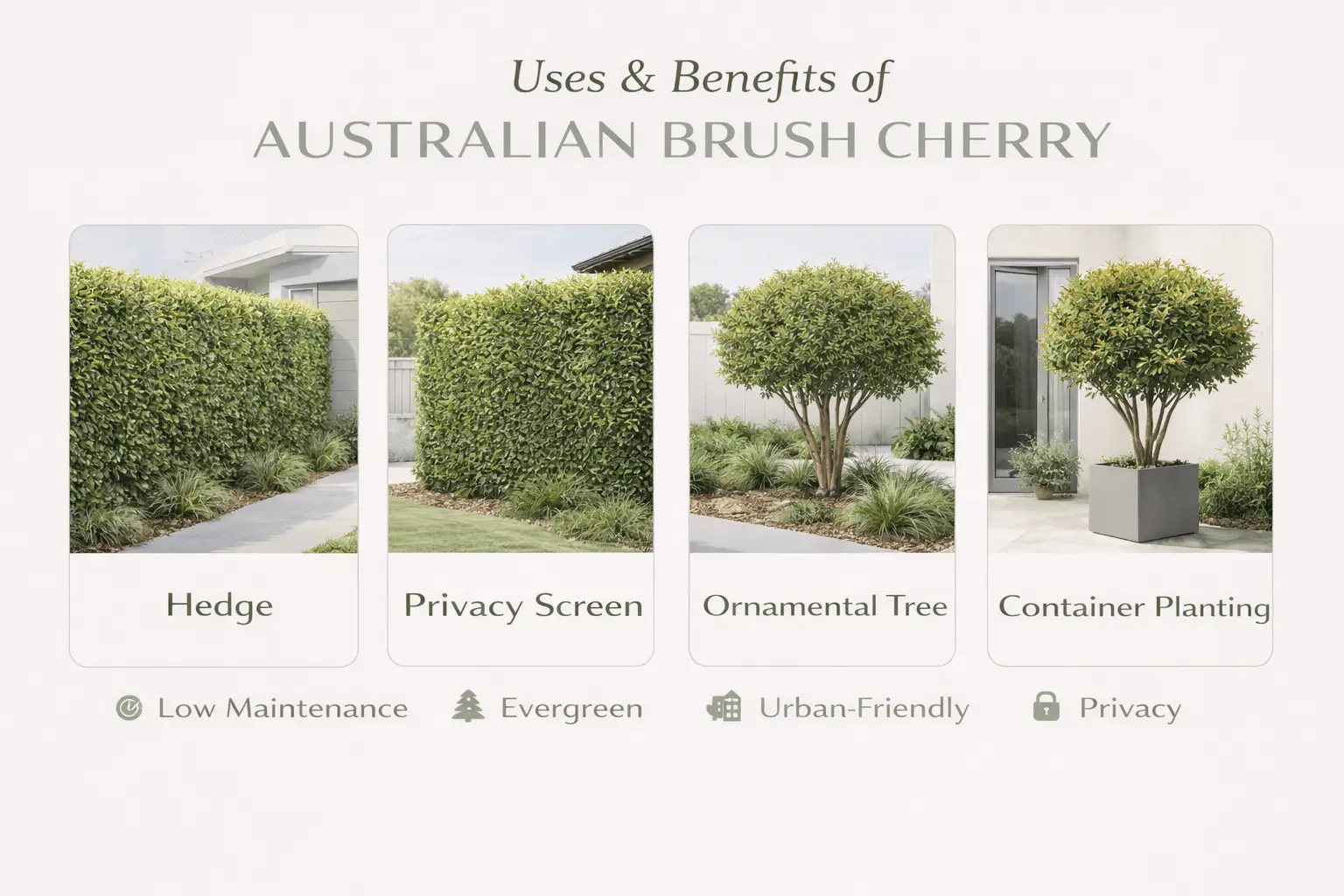
Australian brush cherry offers year-round evergreen appeal, making it valuable for privacy screens, windbreaks, and formal hedges. Its neat appearance enhances structured landscapes.
Low-Maintenance and Versatility
This plant is urban-friendly, adaptable, and suitable for residential landscapes. Its ability to thrive in containers, hedges, or tree form makes australian brush cherry a versatile and reliable landscaping choice.
Conclusion — Is Australian Brush Cherry Right for You?
Australian brush cherry is a highly adaptable landscaping plant that combines visual appeal with functional performance. Its evergreen foliage, controlled growth habit, and strong response to pruning make it suitable for both formal hedges and ornamental tree planting. Whether used for privacy screening, boundary definition, or as a standalone landscape feature, australian brush cherry performs reliably across residential and urban environments.
For gardeners seeking a clean, structured, and low-maintenance solution, the brush cherry plant offers long-term value. Its versatility allows it to function equally well as a dense hedge or an attractive ornamental tree, making it a practical choice for a wide range of landscape designs.
Read Also: 7+ Powerful Benefits of Coastal Rosemary for Stunning Gardens
FAQs — Australian Brush Cherry
Is australian brush cherry fast-growing?
Australian brush cherry has a moderate growth rate. Under ideal conditions, it establishes steadily and responds well to regular pruning, which helps encourage dense, compact growth rather than excessive height.
Can brush cherry be grown as a hedge?
Yes, brush cherry is commonly grown as a hedge. Its dense evergreen foliage and tolerance to frequent trimming make it ideal for privacy screens, boundary hedges, and formal landscape lines.
What is the difference between eugenia and australian brush cherry?
The difference is mainly botanical and naming-related. Australian brush cherry is correctly classified as Syzygium paniculatum, while “eugenia” is an older or informal term still used for related species. Not all eugenia plants are australian brush cherry.
Does australian brush cherry produce edible fruit?
Australian brush cherry produces small cherry-like fruits that are generally considered ornamental. While not toxic, they are not widely grown for culinary use and are mainly valued for attracting birds.
How tall does a brush cherry tree grow?
When grown as a tree, a brush cherry tree typically reaches 10 to 30 feet in height, depending on pruning practices and growing conditions. Regular trimming can keep it much smaller.
Is australian brush cherry suitable for container growing?
Yes, australian brush cherry is well-suited for container growing, especially when pruned regularly. Containers work best for patios, entryways, and urban spaces where size control is important.