
Introduction
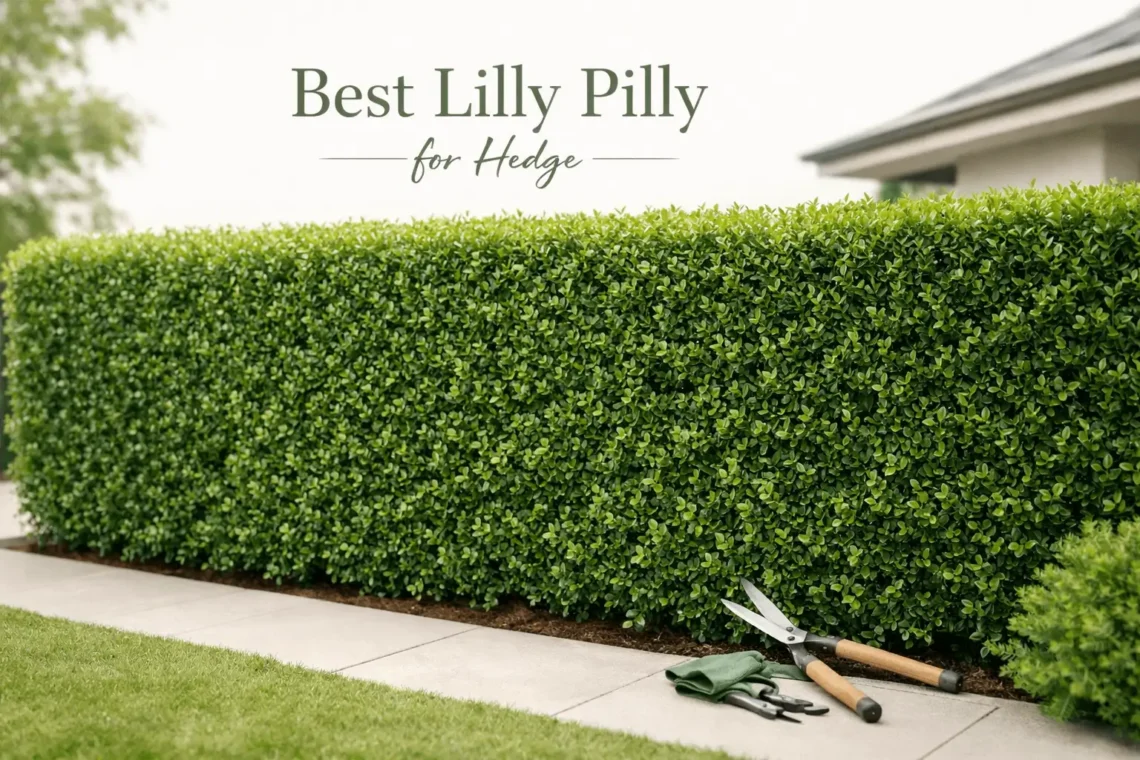
A lilly pilly hedge refers to a dense, evergreen hedge formed using plants from the Syzygium genus, commonly grown in Australian gardens. These shrubs and small trees are widely used for privacy screening, boundary hedging, and landscaping due to their lush foliage and adaptability.
The best lilly pilly for hedge depends on key factors such as foliage density, growth rate, pest resistance, and ease of height control. Gardeners often prefer psyllid-resistant varieties that maintain a clean, healthy appearance with minimal maintenance. Popular options like lilly pilly resilience and backyard bliss lilly pilly are frequently chosen for their reliability and performance in different hedge applications.
Quick Summary
- The best lilly pilly for hedge depends on height, width, and pest resistance needs
- Psyllid resistant lilly pilly varieties like Resilience are ideal for low maintenance
- Proper lilly pilly hedge spacing ensures dense and healthy screening
- Choosing the right variety (tall, narrow, or small hedge) is key to long-term success
What Are Lilly Pillies and Why They Work for Hedges
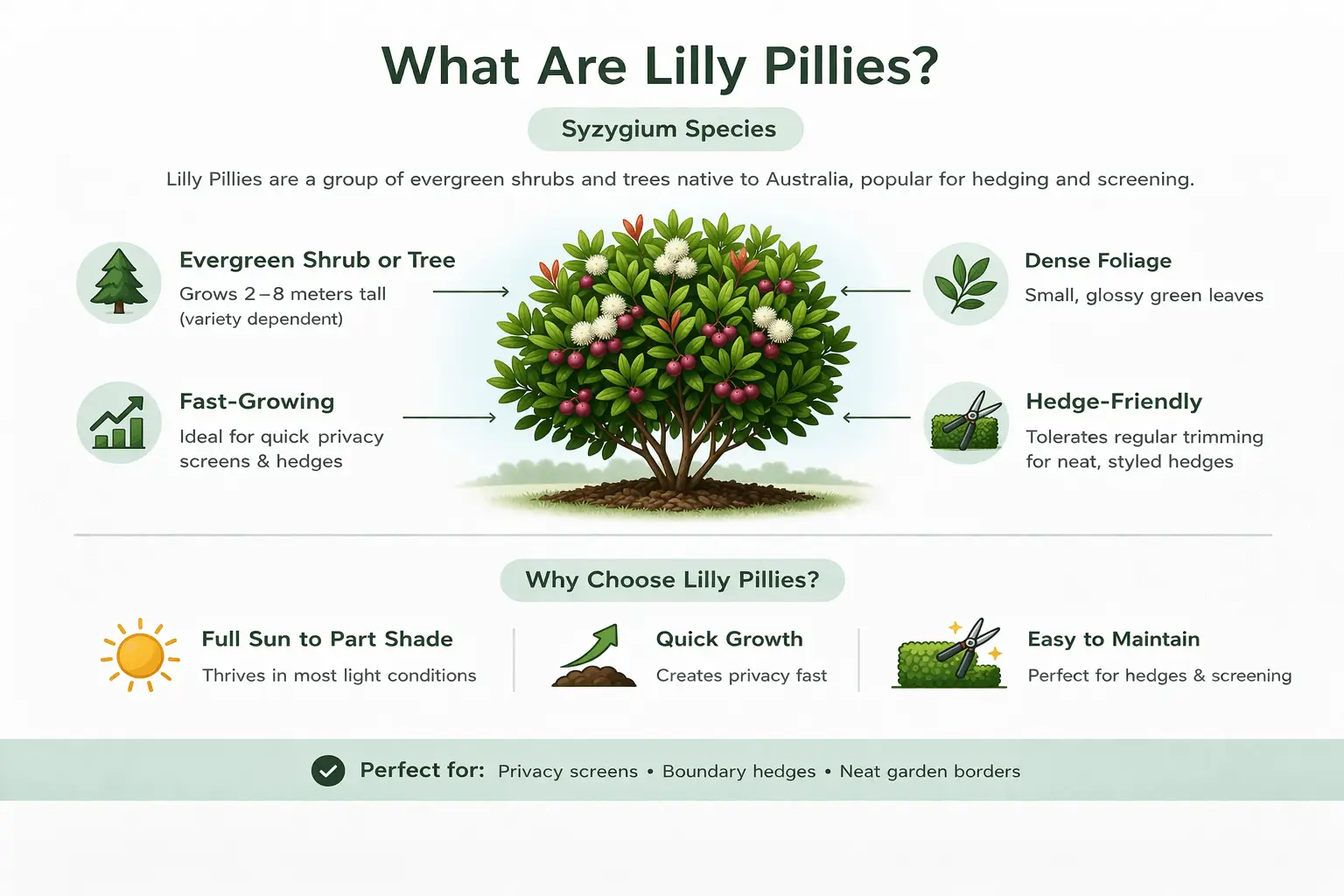
Lilly pillies are evergreen shrubs and trees belonging to the Syzygium species, closely related to plants like the Australian Brush Cherry, which is widely used for hedging and screening in similar conditions.
They are highly valued as lilly pilly screening plants because of their thick foliage and ability to form compact, structured hedges. Their adaptability to various climates and soil conditions makes them suitable for both residential and commercial landscapes.
Key reasons they are ideal for hedges:
- Fast-growing evergreen structure
- Dense foliage for privacy
- Suitable for shaping and hedging
- Adaptable to Australian climates
Lilly pillies are evergreen shrubs and trees belonging to the Syzygium genus, a group of native Australian plants widely recognized for their dense foliage and hedging potential.
Best Lilly Pilly Varieties for Hedges (By Use Case)
The best lilly pilly hedge varieties depend on the intended use, available space, and desired hedge height.
Best for Tall & Privacy Screening
The best lilly pilly for tall hedge provides strong vertical growth and dense coverage for privacy. Fast growing lilly pilly options like Syzygium australe and Resilience are commonly used.
These varieties:
- Grow quickly
- Form thick screens
- Are ideal for boundary hedges
Best for Narrow Spaces
The best lilly pilly for narrow hedge features compact, upright growth habits. These are suitable for tight spaces or urban gardens.
Characteristics include:
- Minimal lateral spread
- Easy shaping
- Space-efficient structure
Best for Small or Low Hedges
The best lilly pilly for small hedge includes dwarf and compact varieties designed for low hedging or decorative borders.
These varieties:
- Require less pruning
- Maintain low height
- Suit small gardens and pathways
Popular Lilly Pilly Varieties in Australia
Common lilly pilly varieties Australia gardeners prefer include:
- Resilience
- Backyard Bliss (Syzygium australe Backyard Bliss)
- Big Red
- Straight and Narrow
These lilly pilly varieties for hedging are selected for their growth habits, pest resistance, and ease of maintenance. For a deeper breakdown of top-performing hedge options, explore this complete guide on lilly pilly varieties for hedges and screening.
Lilly Pilly Resilience vs Backyard Bliss (Which Is Better?)
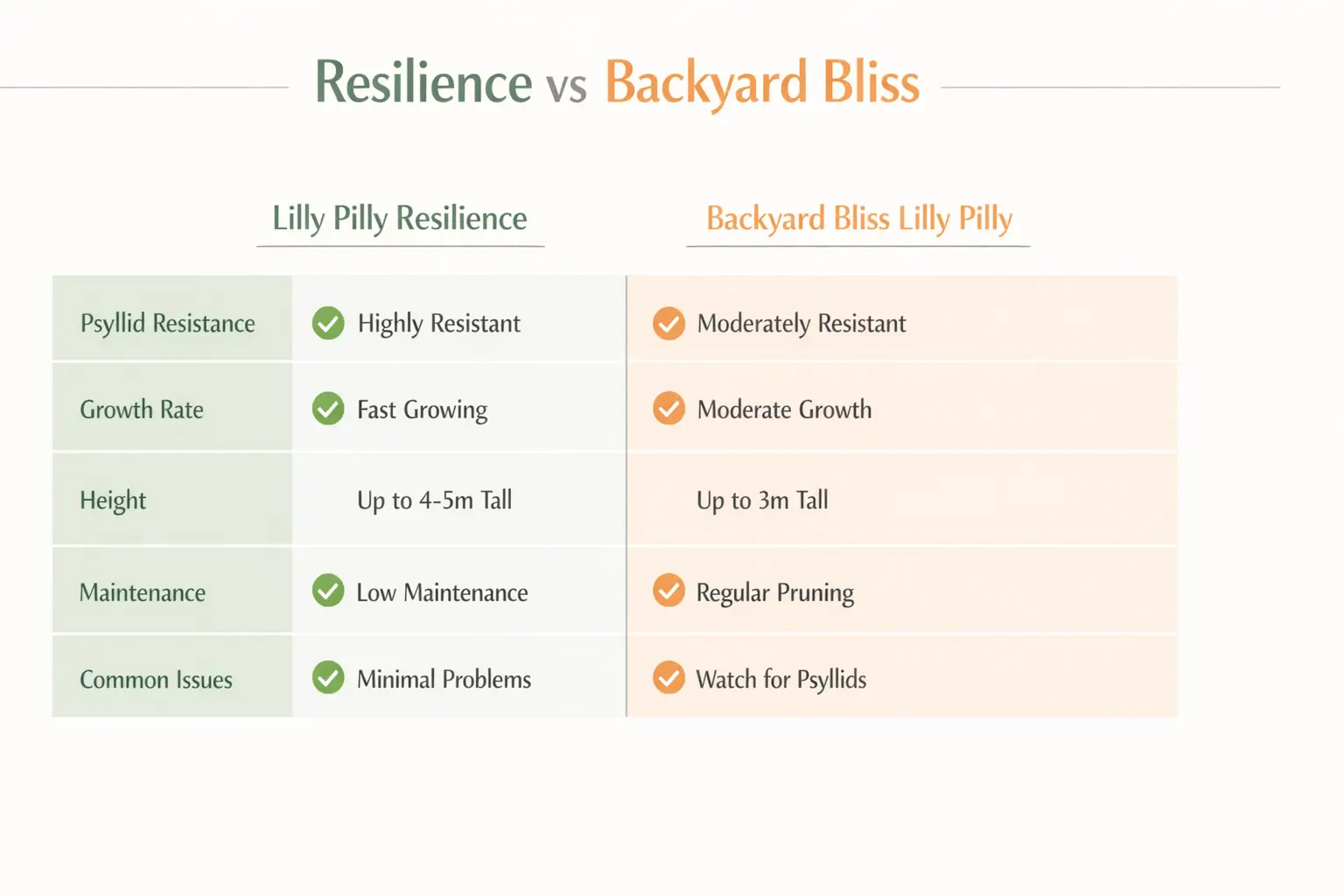
Lilly pilly resilience is generally better for low-maintenance hedging due to its high psyllid resistance and faster growth, while backyard bliss lilly pilly offers a more compact form but may require more care.
Both belong to Syzygium australe but differ in performance and maintenance requirements.
| Feature | Lilly Pilly Resilience | Backyard Bliss Lilly Pilly |
| Psyllid resistance | High (psyllid resistant lilly pilly) | Moderate |
| Growth rate | Fast | Moderate |
| Height | Up to 6–8 meters (lilly pilly resilience height) | Medium height (3–5 meters) |
| Maintenance | Low | Medium |
| Common issues | Few | Possible pest and growth issues |
Backyard bliss lilly pilly problems may include occasional psyllid damage and slower establishment compared to Resilience.
How Fast Do Lilly Pillies Grow and How Tall Do They Get
Lilly pillies grow at a moderate to fast rate, typically reaching 30–60 cm per year under ideal conditions. The exact growth depends on the variety and environmental factors.
They can grow anywhere from 2 meters for dwarf varieties to over 8 meters for larger hedge types.
Factors affecting growth:
- Soil quality
- Sunlight exposure
- Watering consistency
- Fertilization
Key growth insights:
- Growth rate varies by variety
- Faster growth occurs in warm seasons
- Regular feeding can improve growth speed
To make lilly pilly grow faster, ensure proper watering, nutrient-rich soil, and adequate sunlight.
Planting a Lilly Pilly Hedge (Step-by-Step Guide)
Best Time to Plant
The best time to plant lilly pilly in Australia is during spring or early autumn. These seasons provide moderate temperatures and stable moisture conditions.
Soil and Location Requirements
Lilly pillies prefer:
- Well-drained soil
- Full sun to partial shade
- Sheltered locations for young plants
Step-by-Step Planting Process
- Prepare soil by improving drainage and adding organic matter
- Dig holes slightly larger than root balls
- Position plants evenly along the hedge line
- Water thoroughly after planting and maintain consistent moisture
Lilly Pilly Hedge Spacing Guide (Critical for Dense Growth)
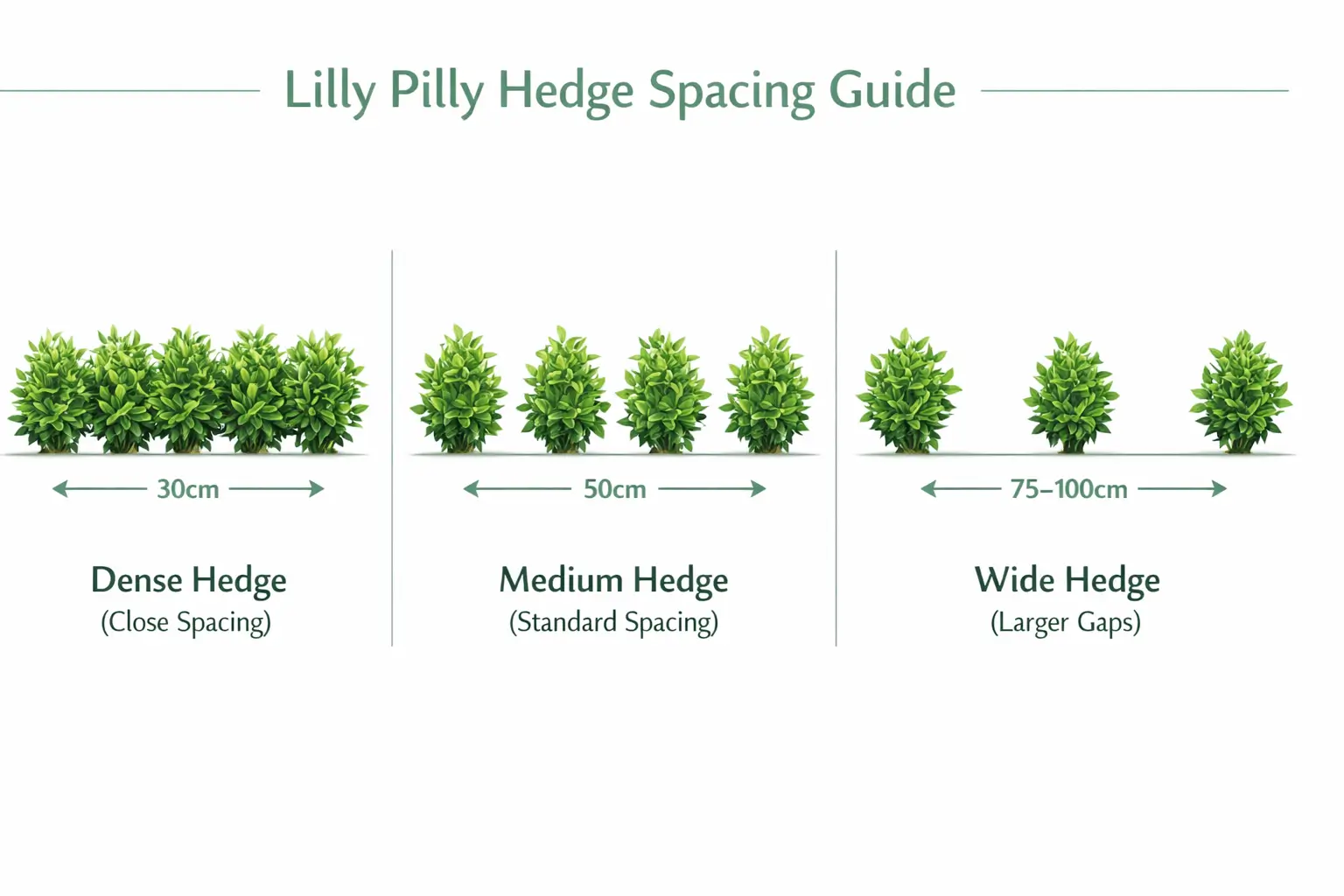
Proper lilly pilly hedge spacing ensures uniform growth and dense coverage. Incorrect spacing can lead to gaps or overcrowding.
| Hedge Type | Recommended Spacing |
| Dense hedge | Close spacing (50–70 cm) |
| Medium hedge | Standard spacing (70–100 cm) |
| Wide hedge | Larger gaps (100–150 cm) |
Lilly pilly resilience spacing can be slightly wider due to its vigorous growth.
How to Shape and Maintain a Lilly Pilly Hedge
Yes, you can hedge lilly pilly effectively with regular pruning and shaping.
Maintenance practices:
- Prune 2–3 times per year
- Use a quality hedge trimmer for clean cuts
- Shape gradually to maintain density
- Trim the top slightly narrower than the base for light penetration
Care Guide for a Healthy Lilly Pilly Hedge
Proper care ensures long-term health and dense foliage.
Essential care tips:
- Water regularly, especially during dry periods
- Use the best fertilizer for lilly pilly hedge (balanced slow-release fertiliser)
- Apply mulch to retain soil moisture
- Ensure climate suitability and protection from extreme conditions
Common Problems with Lilly Pilly Hedges and How to Fix Them
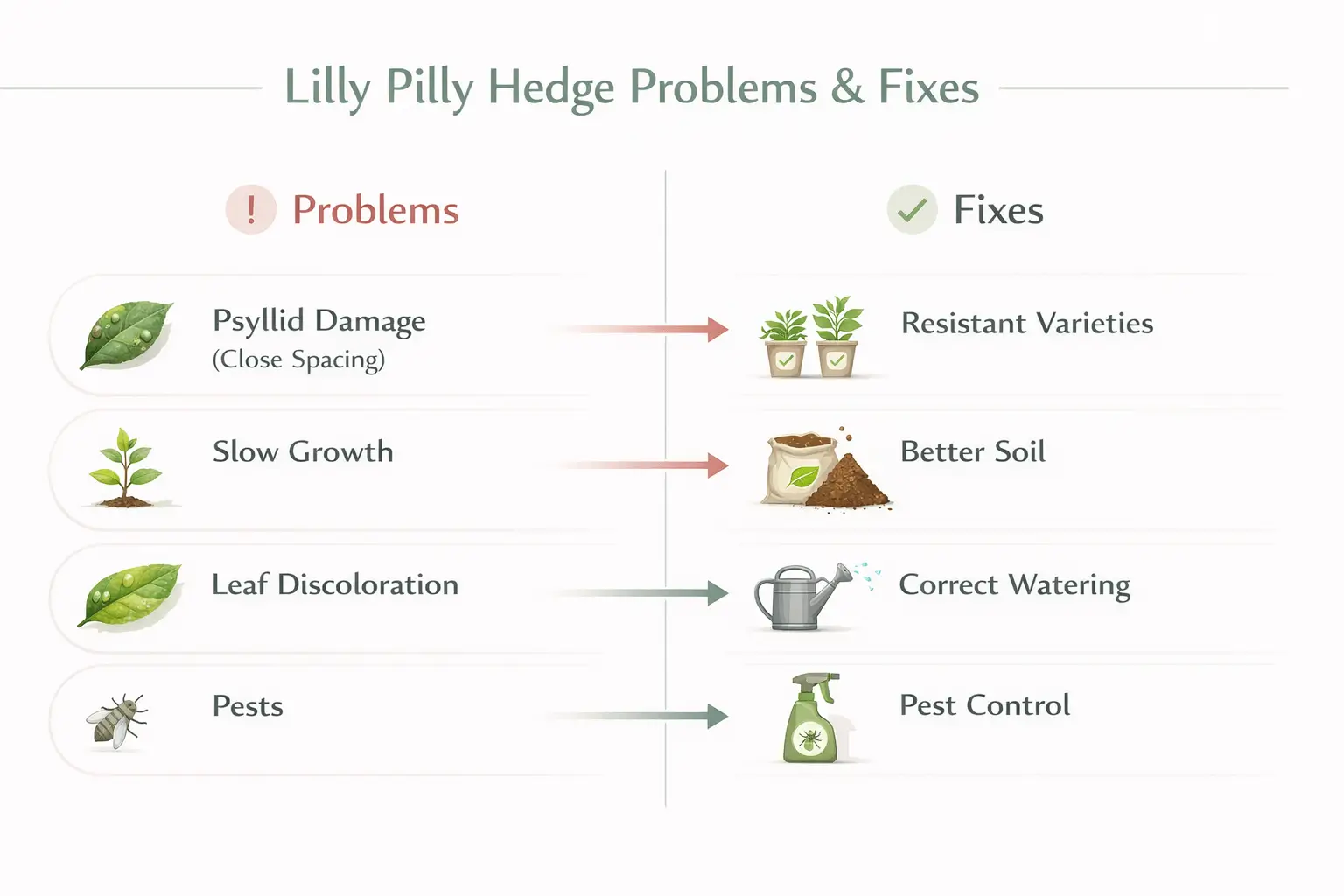
Common lilly pilly problems include pests, slow growth, and leaf discoloration, but most can be resolved with proper care.
Problem → Solution:
- Psyllid damage → Use psyllid resistant lilly pilly
- Slow growth → Improve soil and feeding
- Leaf discoloration → Adjust watering and nutrients
- Pest infestations → Apply appropriate treatments
Beginner Mistakes to Avoid When Growing Lilly Pilly Hedges
Avoiding common mistakes improves hedge success and longevity.
- Overcrowding plants
- Incorrect spacing
- Ignoring pruning schedules
- Poor soil preparation
Environmental and Landscaping Considerations
Lilly pillies are versatile in landscaping and suitable for both urban and large gardens.
They are:
- Effective screening plants
- Adaptable to different climates
- Suitable for structured garden designs
The backyard bliss lilly pilly root system is generally non-invasive, making it safe for residential use near structures.
Conclusion
Choosing the best lilly pilly for hedge depends on your specific needs, including hedge height, spacing, and maintenance preferences. Selecting the right variety, such as Resilience for low maintenance or Backyard Bliss for compact growth, ensures better results. Proper spacing, planting, and care are essential for achieving a dense, healthy hedge that provides long-term privacy and visual appeal.
FAQs
What is the best lilly pilly for hedge in Australia?
The best lilly pilly for hedge in Australia is typically Resilience due to its psyllid resistance, fast growth, and low maintenance requirements.
How far apart should I plant a lilly pilly hedge?
Lilly pilly hedge spacing ranges from 50 cm to 150 cm depending on the desired density and variety.
Which lilly pilly is psyllid resistant?
Lilly pilly Resilience is one of the most popular psyllid resistant lilly pilly varieties.
How fast does a lilly pilly hedge grow?
A lilly pilly hedge grows around 30–60 cm per year under ideal conditions.
Can you keep a lilly pilly hedge small?
Yes, regular pruning allows you to maintain a lilly pilly hedge at a small and controlled height.
What is the difference between Resilience and Backyard Bliss?
Resilience grows faster and is more pest resistant, while Backyard Bliss is more compact but may need more maintenance.
What is the best fertilizer for lilly pilly hedge?
A balanced slow-release fertilizer designed for hedging plants is best for healthy growth.