Introduction
Cupaniopsis anacardioides is a widely planted evergreen tree valued for its dense canopy, glossy foliage, and strong shade potential. Commonly known as the carrotwood tree, it is native to Australia but has been introduced to many warm regions worldwide. Understanding cupaniopsis anacardioides characteristics is essential before planting, especially in areas like carrotwood tree Florida, where invasiveness and regulation are part of ongoing discussions. This guide explains what the tree is, how large it grows, its growth habits, common uses, and important safety considerations. Readers will also learn about seeds, toxicity, edibility, and whether this species is suitable for home gardens, pets, and urban environments.
What Is Cupaniopsis Anacardioides?
Botanical Overview
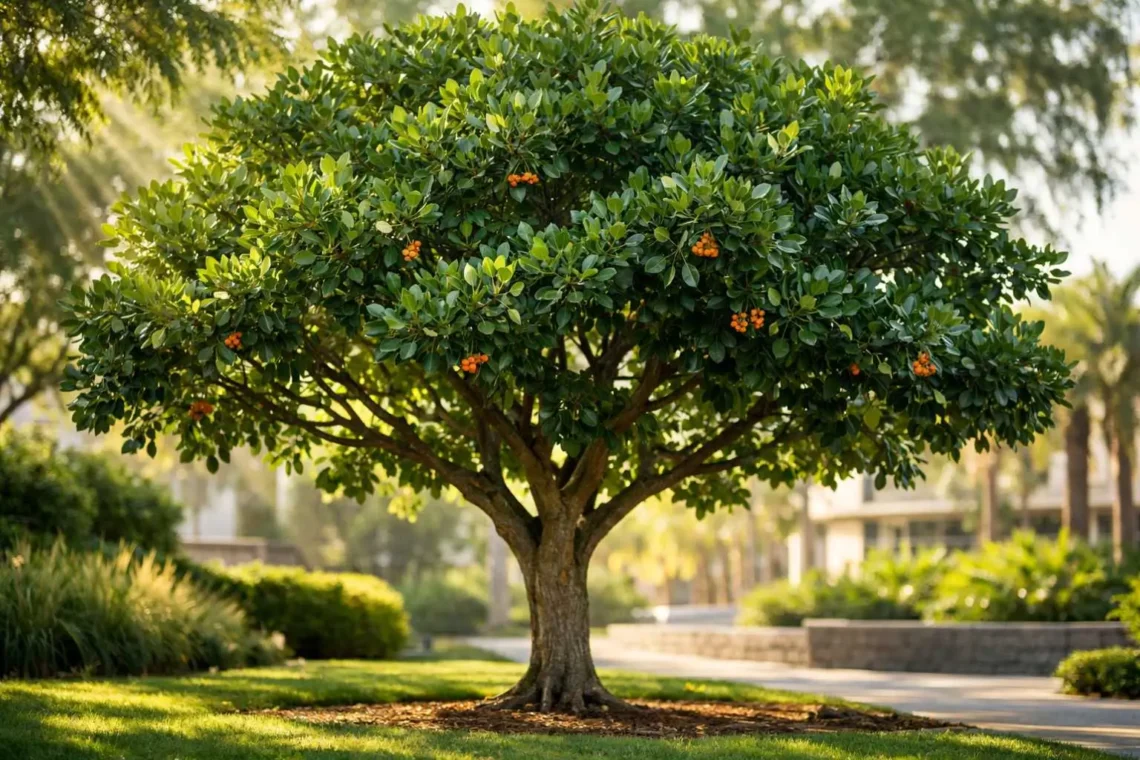
Cupaniopsis anacardioides belongs to the Sapindaceae family and is classified as a broadleaf evergreen tree. It maintains foliage year-round in warm climates, making it popular for shade and screening. The species is native to coastal and subtropical regions of eastern Australia. Common names include carrotwood tree and tuckeroo, with recognition based on its orange fruit capsules and leathery green leaves commonly seen in urban landscapes.
Cupaniopsis Anacardioides Characteristics
Cupaniopsis anacardioides characteristics include oval to elliptical leaves with a glossy surface and thick texture. The canopy is dense and rounded, providing consistent shade. Bark is gray-brown and becomes slightly fissured with age, while branching is compact and well-structured. These features give the tree strong ornamental value in landscaping, especially where visual uniformity and shade coverage are priorities.
Cupaniopsis Anacardioides Size and Growth Habit
Mature Size and Spread
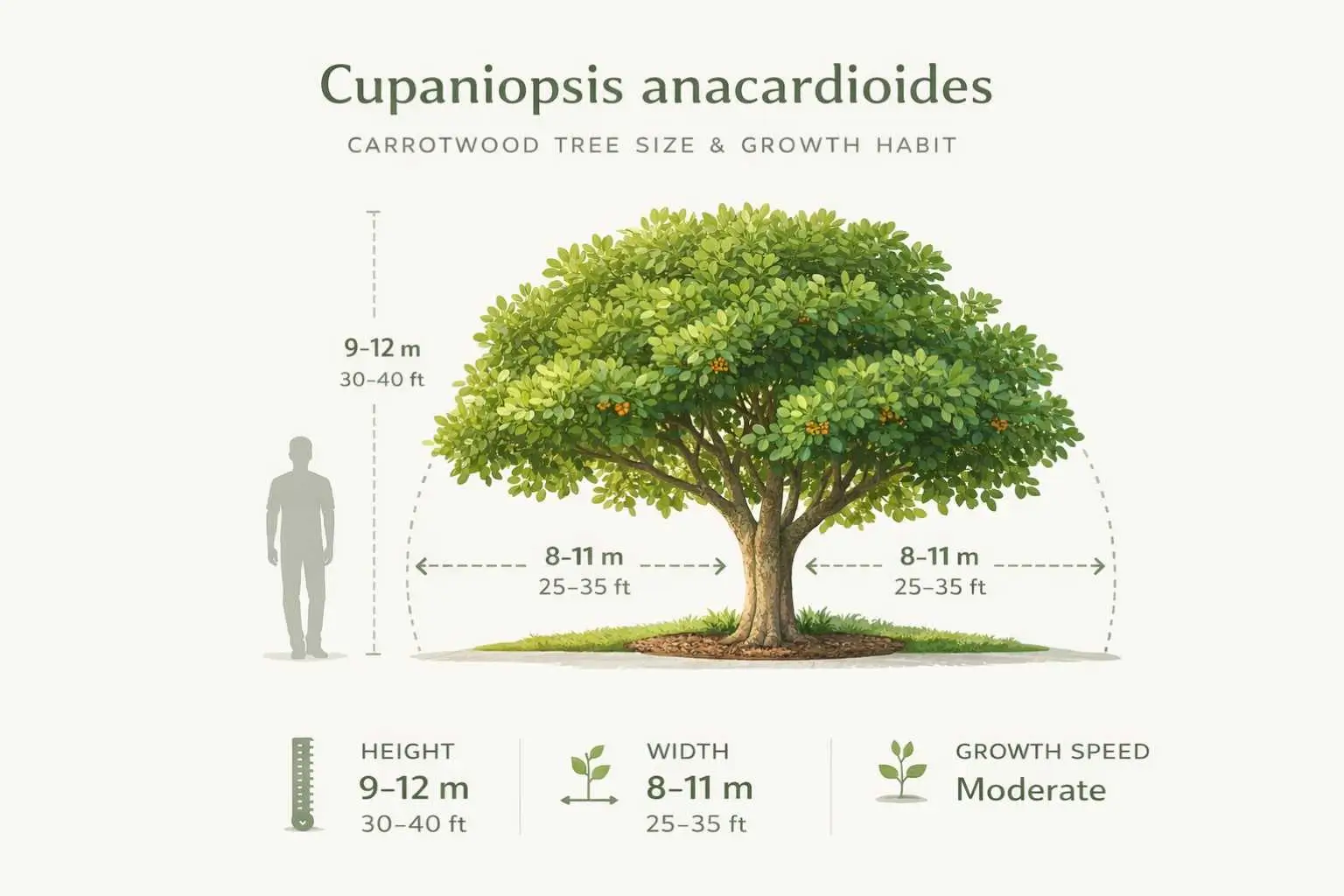
The average cupaniopsis anacardioides size ranges from 30 to 40 feet in height at maturity. Canopy width often matches or slightly exceeds height, creating a broad, spreading form. Adequate planting space is essential, as the tree requires room for lateral branch development and root expansion, particularly in residential settings.
Cupaniopsis Anacardioides Growth Rate
Cupaniopsis anacardioides has a slow to moderate growth rate. Growth speed depends on climate warmth, soil drainage, and consistent watering during establishment. Once mature, the tree is long-lived and relatively low maintenance, with minimal pruning needs and strong tolerance to urban conditions.
Uses of Cupaniopsis Anacardioides
Landscaping and Shade Uses
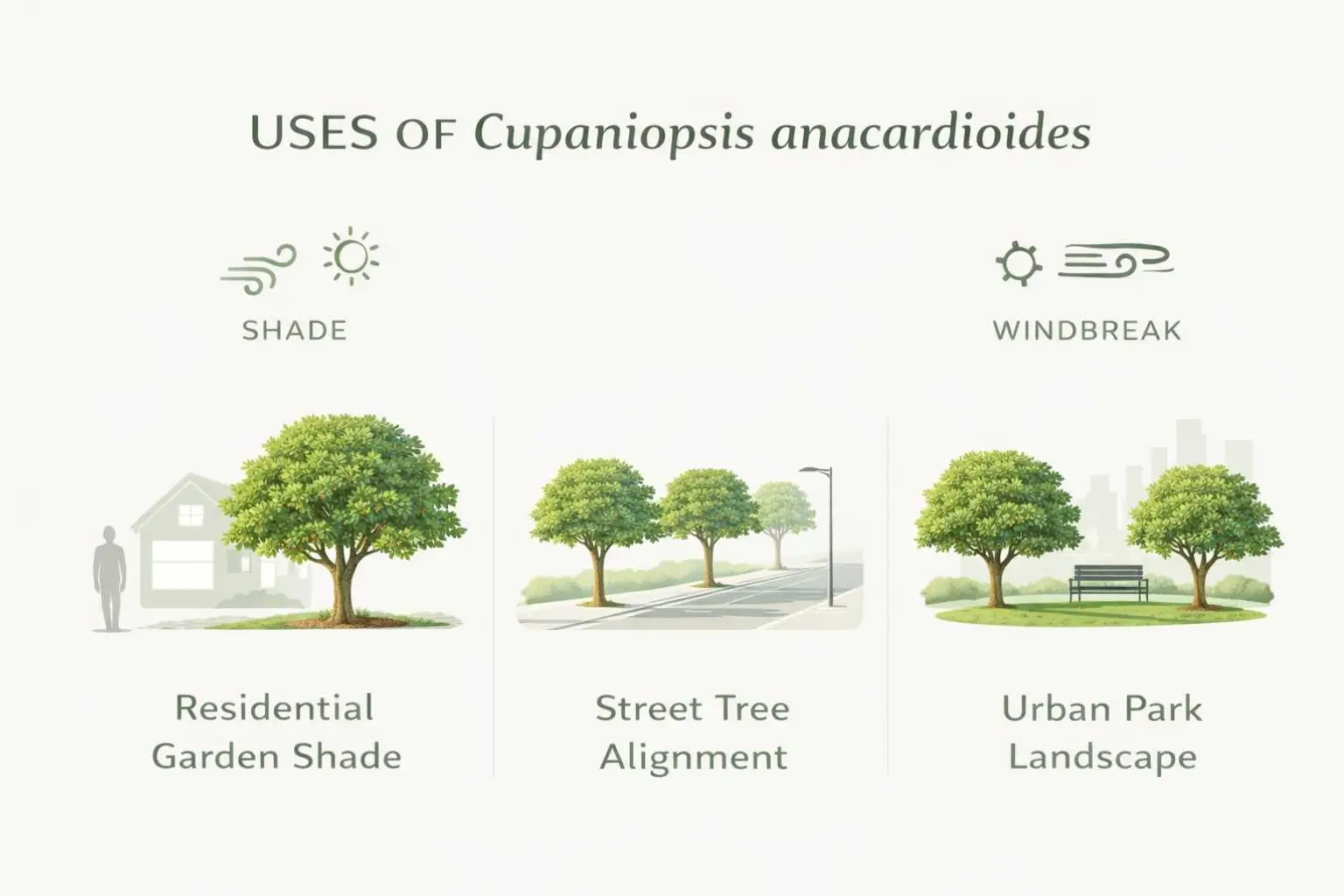
Cupaniopsis anacardioides uses in gardens primarily include shade provision and visual screening. It is commonly planted as a street tree, in parks, and in residential landscapes. The dense canopy offers windbreak benefits and helps reduce heat in open spaces, making it suitable for large yards and public areas.
Environmental and Urban Applications
The species shows high urban tolerance, with resistance to pollution, heat, and compacted soils. Its root system contributes to soil stabilization on slopes and road verges. In regions such as carrotwood tree Florida, overuse has led to ecological concerns, prompting regulations to limit planting due to invasive behavior in natural ecosystems.
Cupaniopsis Anacardioides Seeds and Fruit
Seed Description and Appearance
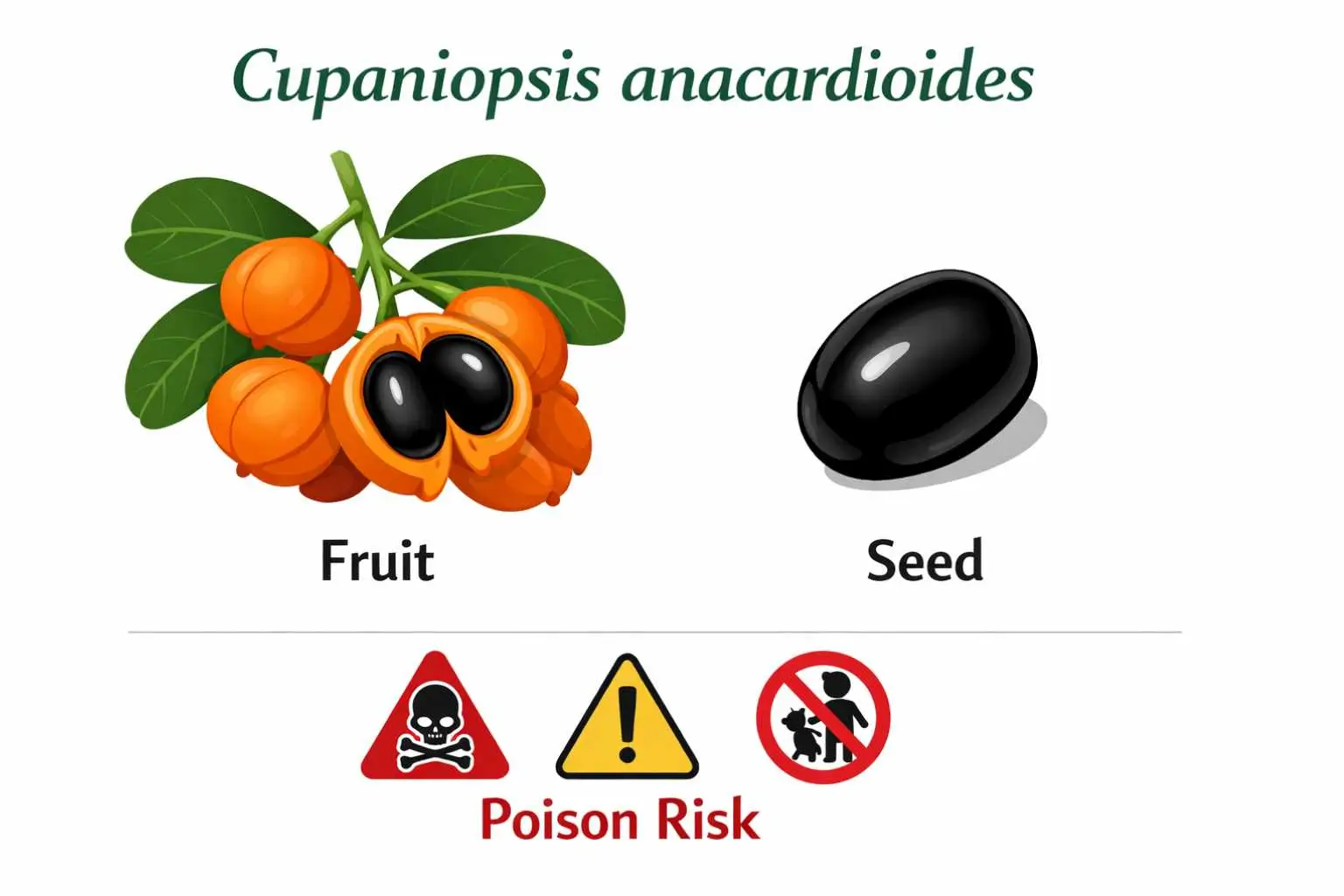
Cupaniopsis anacardioides seeds are enclosed within orange, fleshy fruit capsules that split open when mature. The seeds are dark, rounded, and typically exposed once the capsule opens. Fruiting is seasonal, usually occurring in warmer months, with noticeable fruit drop beneath mature trees.
Are Cupaniopsis Anacardioides Seeds Poisonous?
Cupaniopsis anacardioides seeds poisonous potential is a significant concern. The seeds contain compounds that can be harmful if ingested. Risks apply to humans and animals, particularly children and pets. Safe handling includes avoiding direct consumption and promptly removing fallen fruit from accessible areas.
Is Cupaniopsis Anacardioides Edible?
Fruit Edibility Explained
Cupaniopsis anacardioides edible status is often misunderstood. While some traditional sources note limited historical use, modern guidance does not recommend consumption. The fruit lacks nutritional value and presents safety concerns, which is why it is generally not eaten today.
Safety Considerations
The tree contains toxic compounds, especially in the seeds. There is a clear difference between something being technically edible in rare contexts and being safe to eat. For practical purposes, the fruit should be considered unsafe for consumption.
Cupaniopsis Anacardioides Toxicity and Pet Safety
Cupaniopsis Anacardioides Toxic to Dogs
Cupaniopsis anacardioides toxic to dogs is a documented issue. Ingestion of seeds or fruit can cause vomiting, lethargy, and digestive distress. Dogs are at higher risk due to curiosity and exposure to fallen fruit.
Cupaniopsis Anacardioides and Dogs
Preventive planting advice includes avoiding this tree in yards with pets or fencing off fruiting areas. Pet owners should be aware of toxicity risks and consider pet-safe landscaping alternatives that do not produce harmful seeds or fruit.
Pros and Cons of Planting Cupaniopsis Anacardioides
Advantages
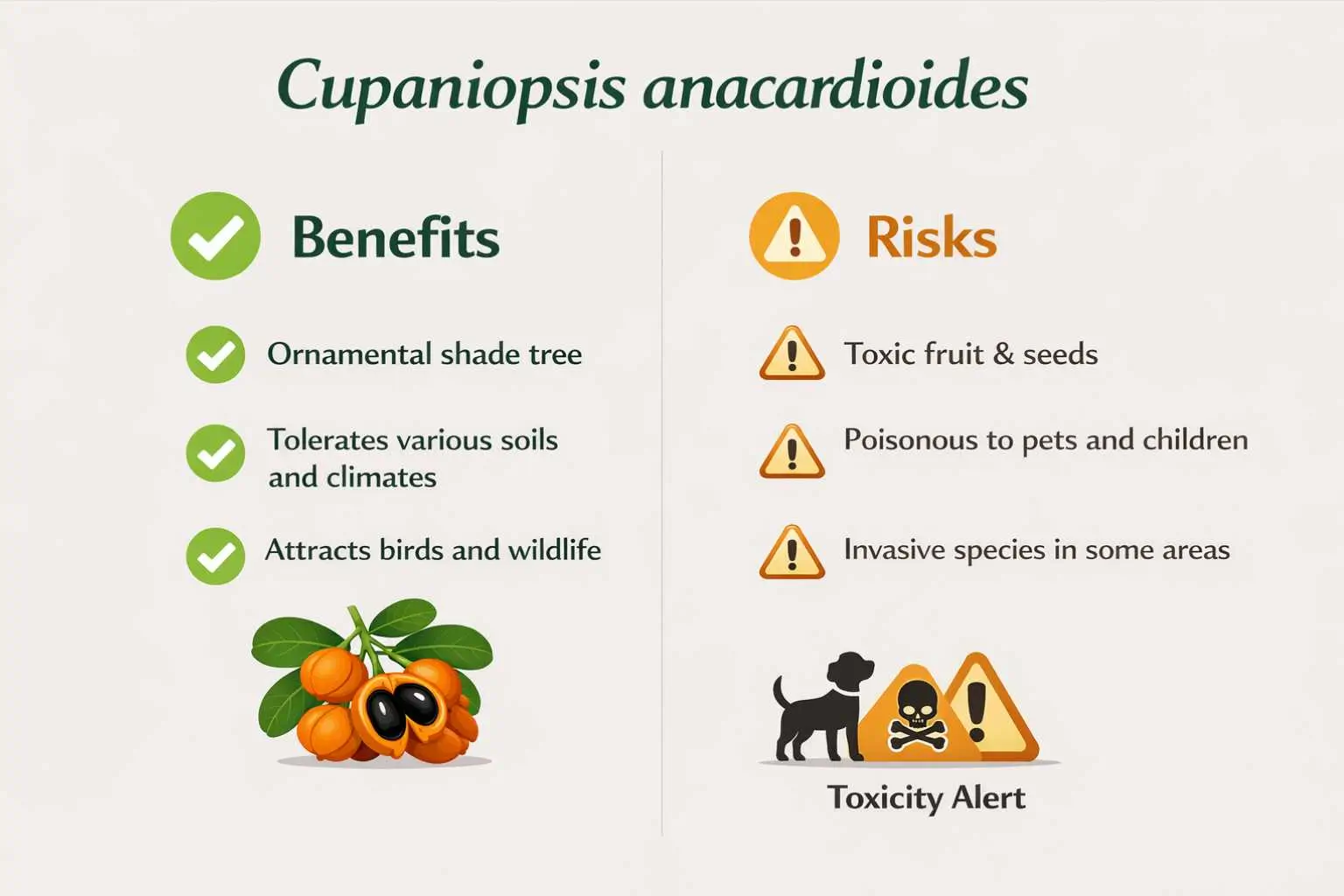
- Dense shade and strong aesthetic appeal
- Durable evergreen structure
- Low maintenance once established
Disadvantages
- Toxicity concerns for pets and children
- Invasiveness in certain regions
- Messy fruit drop requiring cleanup
Conclusion & Call to Action
Cupaniopsis anacardioides is a visually appealing, durable shade tree with notable benefits and clear drawbacks. It suits large landscapes without pets and regions where it is not invasive. Homeowners should assess climate, pet safety, and local regulations before planting. If concerns exist, exploring safer or native alternatives is the responsible choice.
Learn More: 7+Powerful Benefits of Dymondia Ground Cover You’ll Love
FAQs About Cupaniopsis Anacardioides
- Is cupaniopsis anacardioides safe to grow in home gardens?
It is safe in regions where it is not invasive and where pets and children are not exposed to fallen fruit. - How big does cupaniopsis anacardioides get at maturity?
It typically reaches 30–40 feet in height with a similarly wide canopy. - Are cupaniopsis anacardioides seeds poisonous to humans?
Yes, the seeds contain toxic compounds and should not be ingested. - Is cupaniopsis anacardioides toxic to dogs and pets?
Yes, ingestion can cause gastrointestinal symptoms and should be avoided. - What are the most common uses of cupaniopsis anacardioides?
Common uses include shade trees, street planting, parks, and windbreaks. - How fast does cupaniopsis anacardioides grow?
Growth is slow to moderate, depending on climate and growing conditions.