Introduction
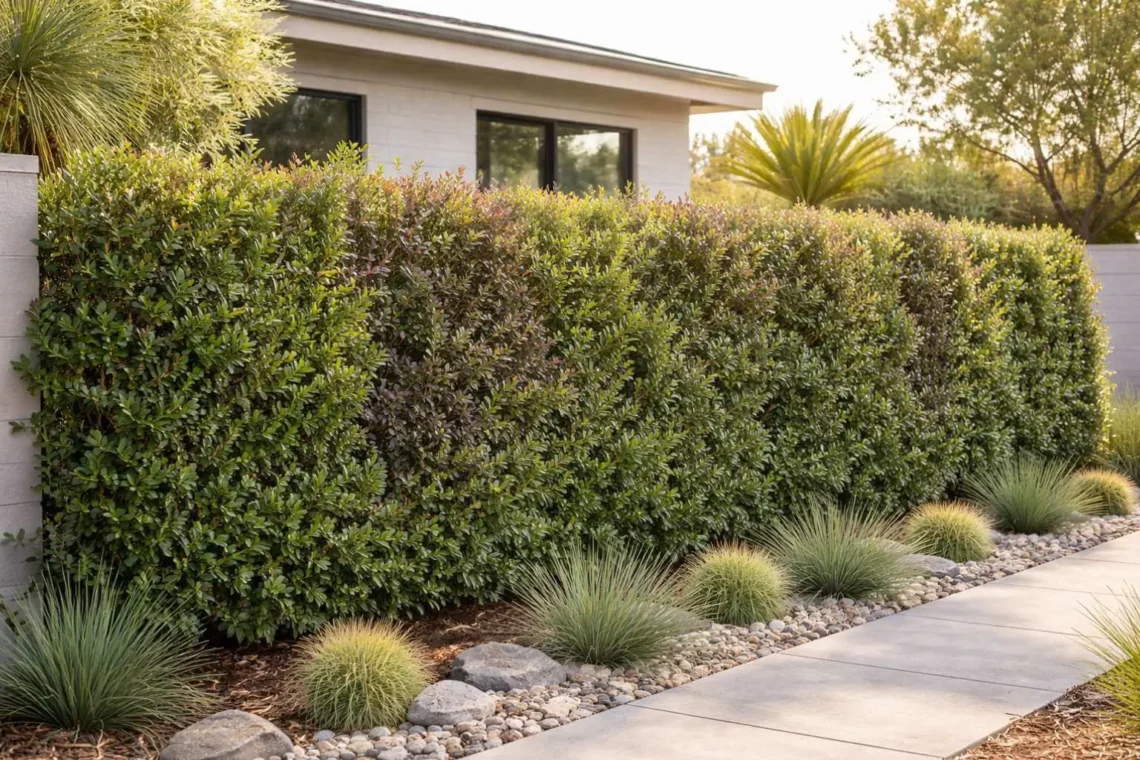
A dodonaea viscosa hedge is a popular evergreen hedge choice for homeowners and landscape designers seeking year-round structure, privacy, and durability. Known for its dense foliage and tidy growth habit, this hedge is widely planted for privacy screening, windbreaks, and clean landscape borders. Hopseed plants adapt exceptionally well to warm climates, making them a reliable option in arid and semi-arid regions where many hedges struggle. Their low-maintenance nature, combined with drought tolerance and minimal pruning needs, adds to their appeal for both residential and commercial landscapes. Whether used as a formal hedge or a more natural screen, dodonaea viscosa delivers consistent performance with a polished, modern look.
What Is Dodonaea Viscosa (Hopseed Plant)?
Botanical Overview
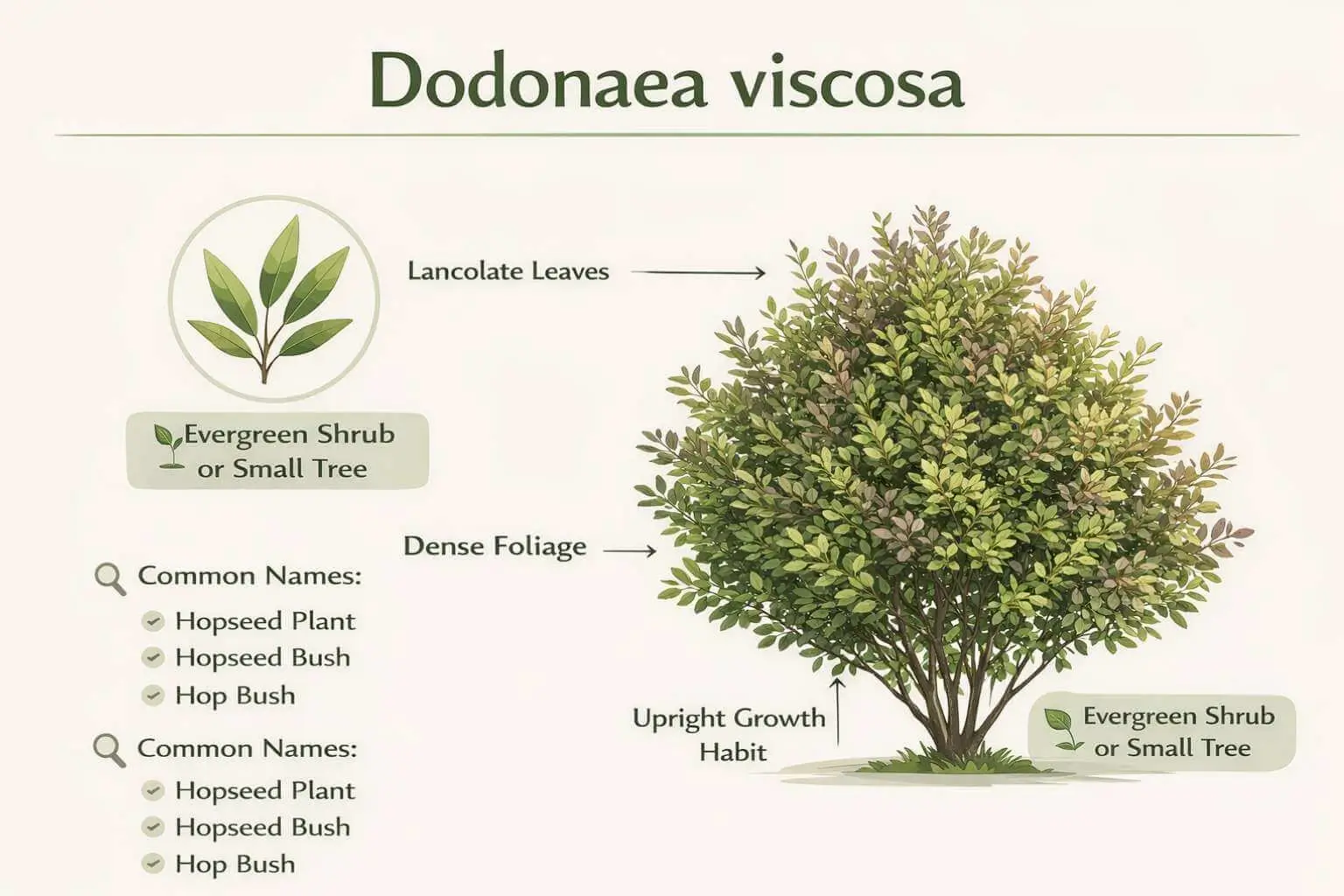
Dodonaea viscosa is an evergreen shrub or small tree valued for its resilience and adaptability. It is commonly known as the hopseed plant, hopseed bush, or hop bush. The plant features narrow, glossy leaves that form a compact canopy, making it ideal for hedge applications. Its natural growth habit is upright and dense, allowing it to respond well to regular pruning and shaping.
Dodonaea Viscosa vs Hopseed Bush Terminology
Terms such as hopseed bushes, hop bush, and hopbush tree all refer to the same core plant species: dodonaea viscosa. The different names are used interchangeably based on regional preference or growth form. Whether planted as a hedge or allowed to grow taller as a tree, the botanical identity remains the same.
Types of Dodonaea Viscosa Used for Hedges
-
Green Hopseed Hedge (Dodonaea Viscosa Green)
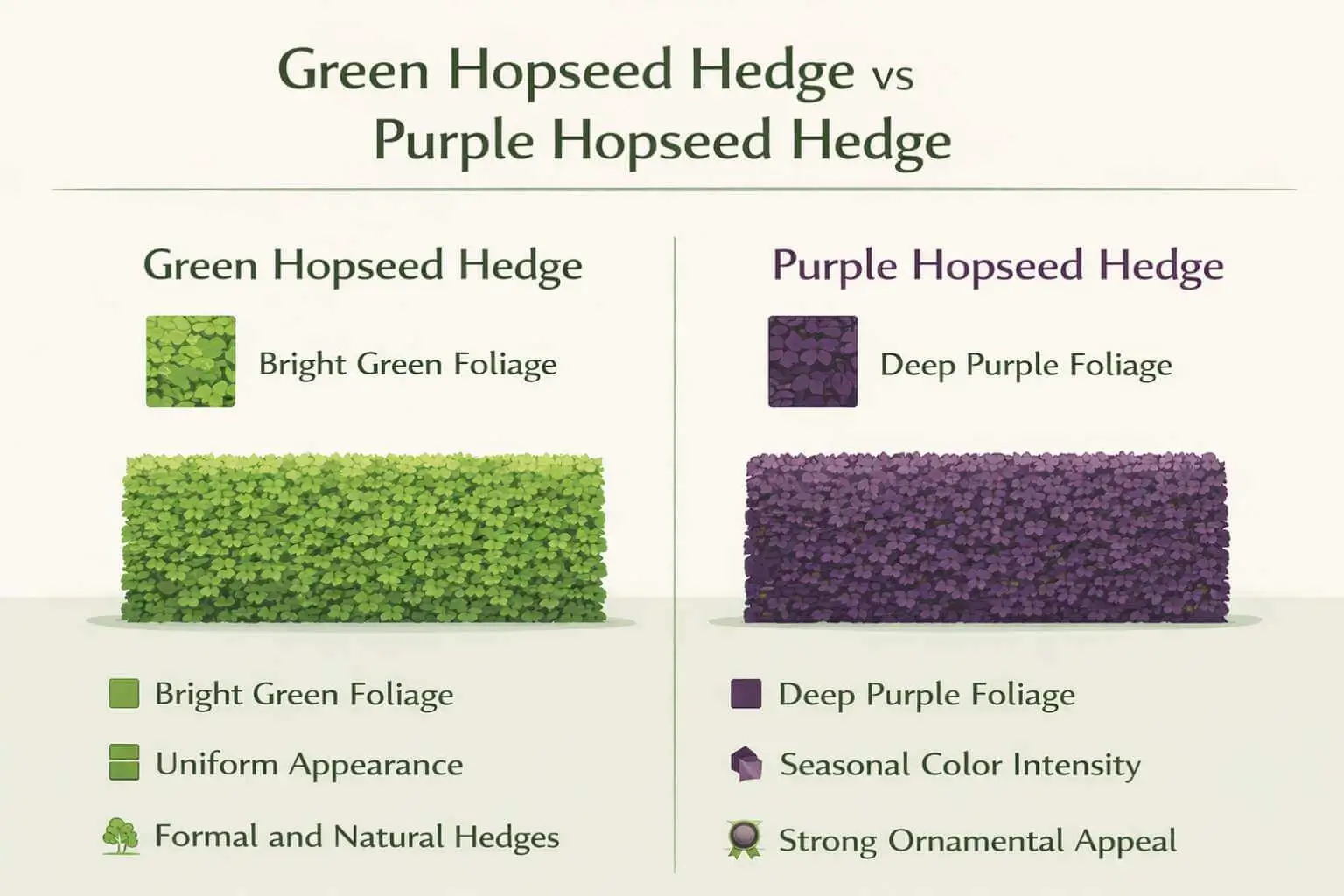
The green hopseed hedge features vibrant green foliage that stays consistent throughout the year. It is commonly used for both formal hedging and natural screens due to its uniform growth. A green hopseed bush hedge grows upright and responds well to shaping, making it suitable for clean lines along boundaries and pathways.
-
Purple Hopseed Hedge (Dodonaea Viscosa Purpurea Hedge)
A purple hopseed hedge is prized for its deep burgundy to purple-toned foliage. The purple hopseed bush hedge often displays stronger coloration in cooler months, adding seasonal visual interest. Compared to green varieties, purple forms offer higher ornamental value but may require optimal sun exposure to maintain color intensity.
Why Choose Dodonaea Viscosa as a Hedge Plant
Privacy and Screening Benefits
Dense foliage makes a hopseed hedge highly effective for privacy and visual screening. When planted closely, it forms a solid barrier that reduces noise, blocks wind, and creates clear property boundaries.
Climate Adaptability
Dodonaea viscosa performs exceptionally well in warm and arid regions. It is a proven option for hopseed hedge Arizona landscapes and similar climates where heat and drought tolerance are essential.
Low Maintenance Advantages
- High drought tolerance once established
- Requires less frequent pruning than many traditional hedges
- Maintains shape and density with minimal intervention
Growth Rate and Size of Dodonaea Viscosa Hedge
Growth Rate Expectations
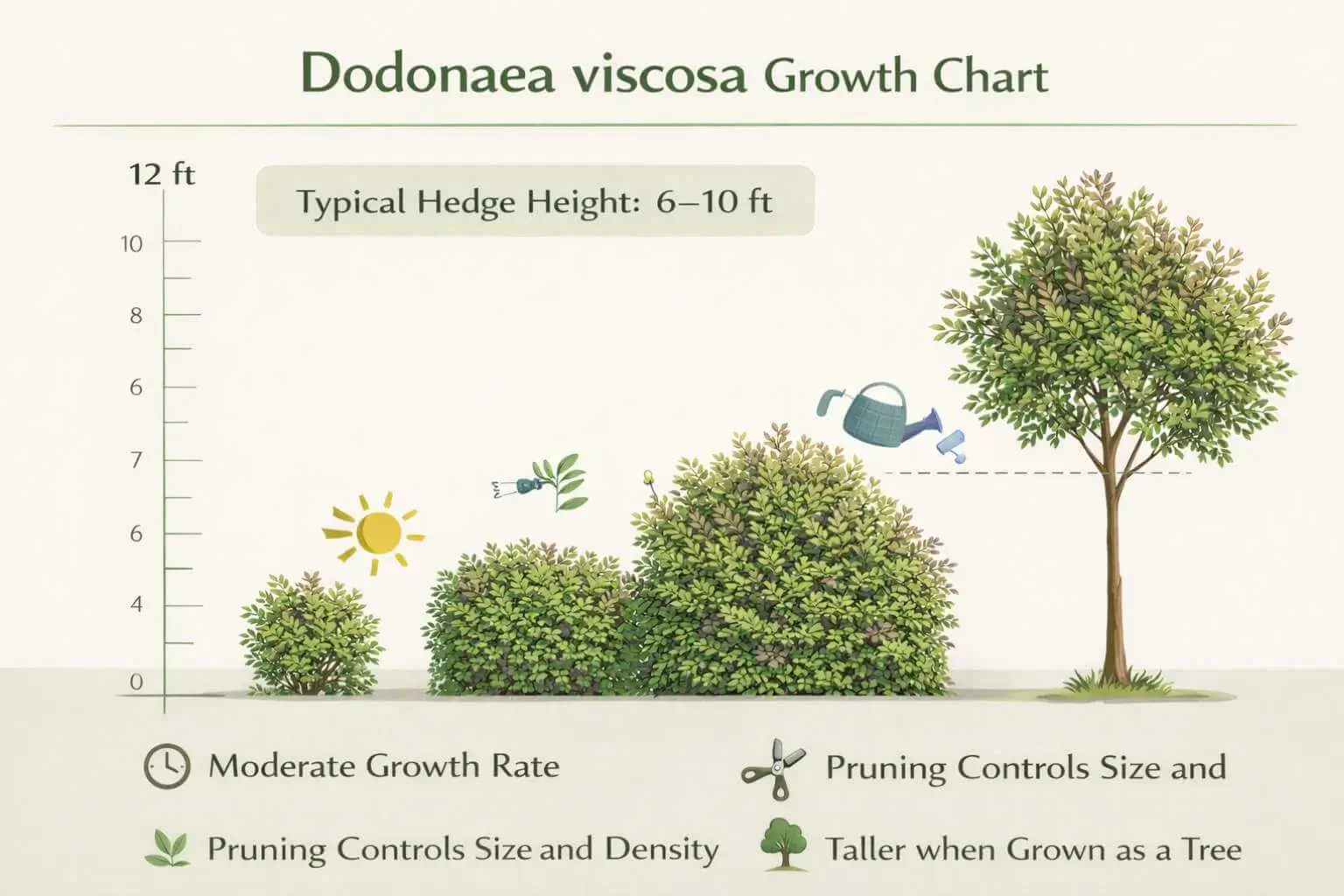
A typical green hopseed bush growth rate is moderate, allowing steady hedge development without aggressive maintenance. Growth speed is influenced by sun exposure, soil quality, watering practices, and pruning frequency.
Mature Height and Width
When grown as a hedge, dodonaea viscosa is usually maintained at 6–10 feet tall. In tree form, it can reach greater heights if unpruned. Regular trimming helps control width and height while encouraging dense growth.
How to Plant a Dodonaea Viscosa Hedge
Spacing and Layout for Hedges
- Recommended spacing for hopseed bush hedge: 3–5 feet apart
- Closer spacing produces a thicker, more uniform hedge line
- Consistent alignment ensures even growth and appearance
Soil and Sun Requirements
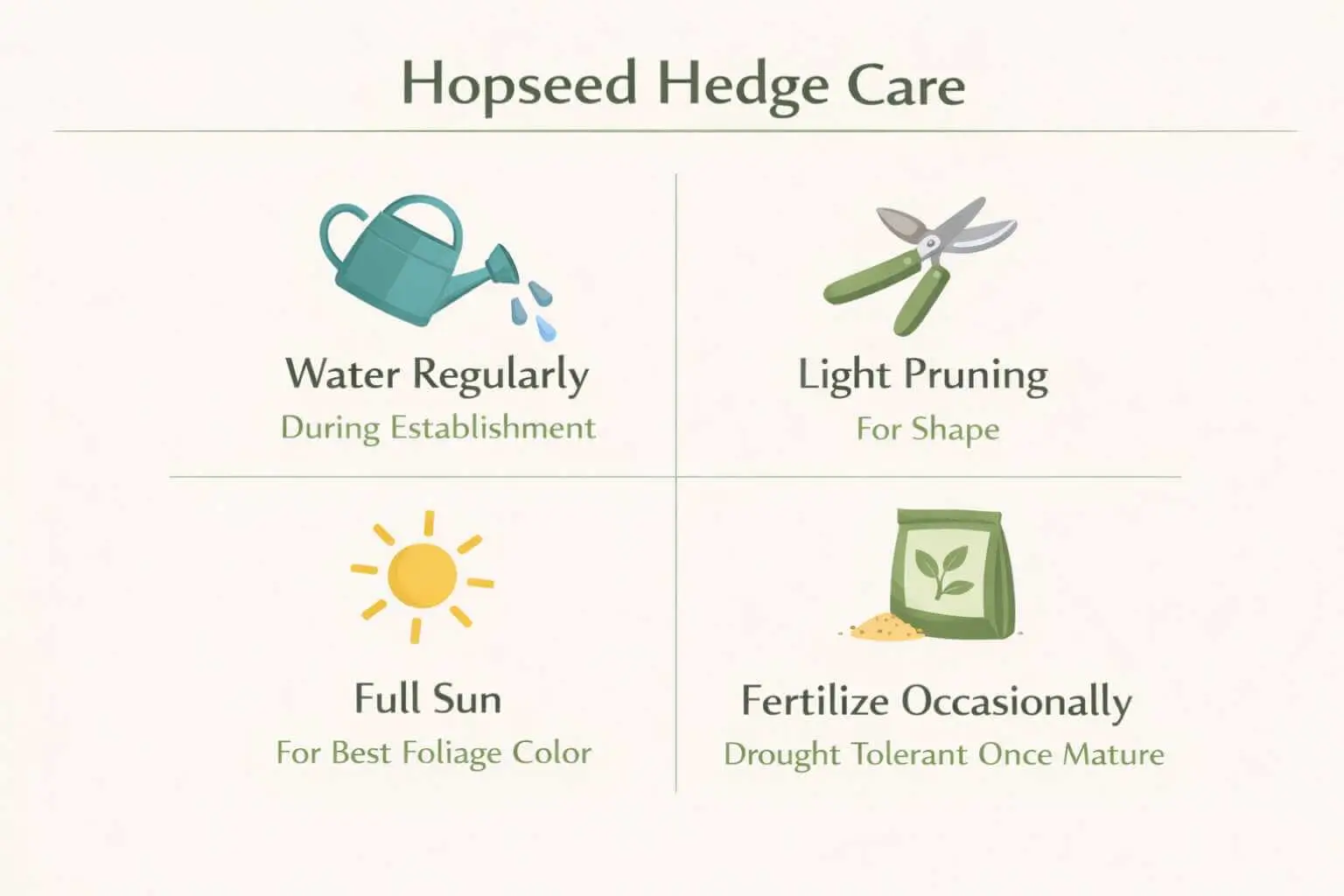
Dodonaea plant growth is best in well-draining soil. It tolerates poor soils but performs best in full sun, which promotes stronger foliage density and better color, especially for purple varieties.
Care and Maintenance of Hopseed Hedges
Watering and Fertilizing
During establishment, regular watering is essential. Once established, hopseed hedges require minimal supplemental watering. A balanced fertilizer applied once or twice a year supports healthy growth.
Pruning and Shaping
- Prune lightly but regularly to maintain hedge shape
- Formal hedges require more frequent trimming
- Natural hedge forms benefit from selective pruning
Dodonaea Viscosa as Hedge vs Tree
Hedge Form vs Tree Form
A dodonaea hedge is kept compact and dense through pruning, while a dodonaea tree is allowed to grow taller with a defined trunk. A hopbush tree is suitable where vertical accent planting is desired.
Landscape Uses
- Hedges provide privacy and wind protection
- Trees serve as focal points or structural accents
Learn more: 7 Stunning Reasons to Love the White Crepe Myrtle Tree
Common Problems and Solutions
Leggy Growth or Thin Hedges
Leggy growth is often caused by insufficient sunlight or improper pruning. Corrective pruning and improved sun exposure help restore density.
Color Fading in Purple Varieties
Purple hopseed shrub color may fade due to low light or nutrient deficiencies. Full sun and balanced fertilization help maintain rich coloration.
Best Landscape Uses for Dodonaea Viscosa Hedge
Residential and Commercial Landscaping
Dodonaea viscosa hedge is widely used in front yards, backyards, and along property borders for clean, modern screening.
Modern and Desert Landscape Designs
- Pairs well with drought-tolerant plants
- Fits minimalist and desert-style landscapes
- Enhances structured, low-water designs
Conclusion
A dodonaea viscosa hedge is an excellent choice for durable, attractive, and low-maintenance hedging. Its adaptability to warm climates, strong screening ability, and availability in green and purple varieties make it suitable for a wide range of landscapes. Selecting the right variety, spacing plants correctly, and following basic maintenance practices ensures long-term success and a polished outdoor space.
Learn more: English Ivy Hanging Plant: 6+ Stunning Benefits for Any Home
Frequently Asked Questions (FAQs)
- How fast does a dodonaea viscosa hedge grow?
It has a moderate growth rate, typically adding steady height and density each year under proper conditions. - Is green hopseed or purple hopseed better for hedging?
Green hopseed is more uniform and forgiving, while purple hopseed offers higher ornamental value with adequate sun. - How often should a hopseed hedge be pruned?
Light pruning two to three times per year is usually sufficient. - Can dodonaea viscosa hedge grow in hot climates like Arizona?
Yes, it is well-suited for hot, arid climates and performs reliably in Arizona landscapes. - How tall can a hopseed hedge get if left untrimmed?
If left untrimmed, it can exceed 12 feet and begin transitioning toward a tree form.