Introduction
Dwarf karo, scientifically known as Pittosporum crassifolium compactum, is a highly popular ornamental plant admired for its dense foliage, compact growth, and versatility in both indoor and outdoor landscapes. This evergreen shrub is favored in gardens, landscaping projects, and container planting due to its low-maintenance requirements and aesthetic appeal. Dwarf karo is part of a broader Pittosporum family that includes related entities like Pittosporum nana, Wheeler’s dwarf, and variegated dwarf karo, offering gardeners multiple options for design. This guide provides detailed insights into dwarf karo’s care, growth, varieties, and applications, aiming to educate gardeners and plant enthusiasts effectively.
Overview of Dwarf Karo
What is Dwarf Karo?
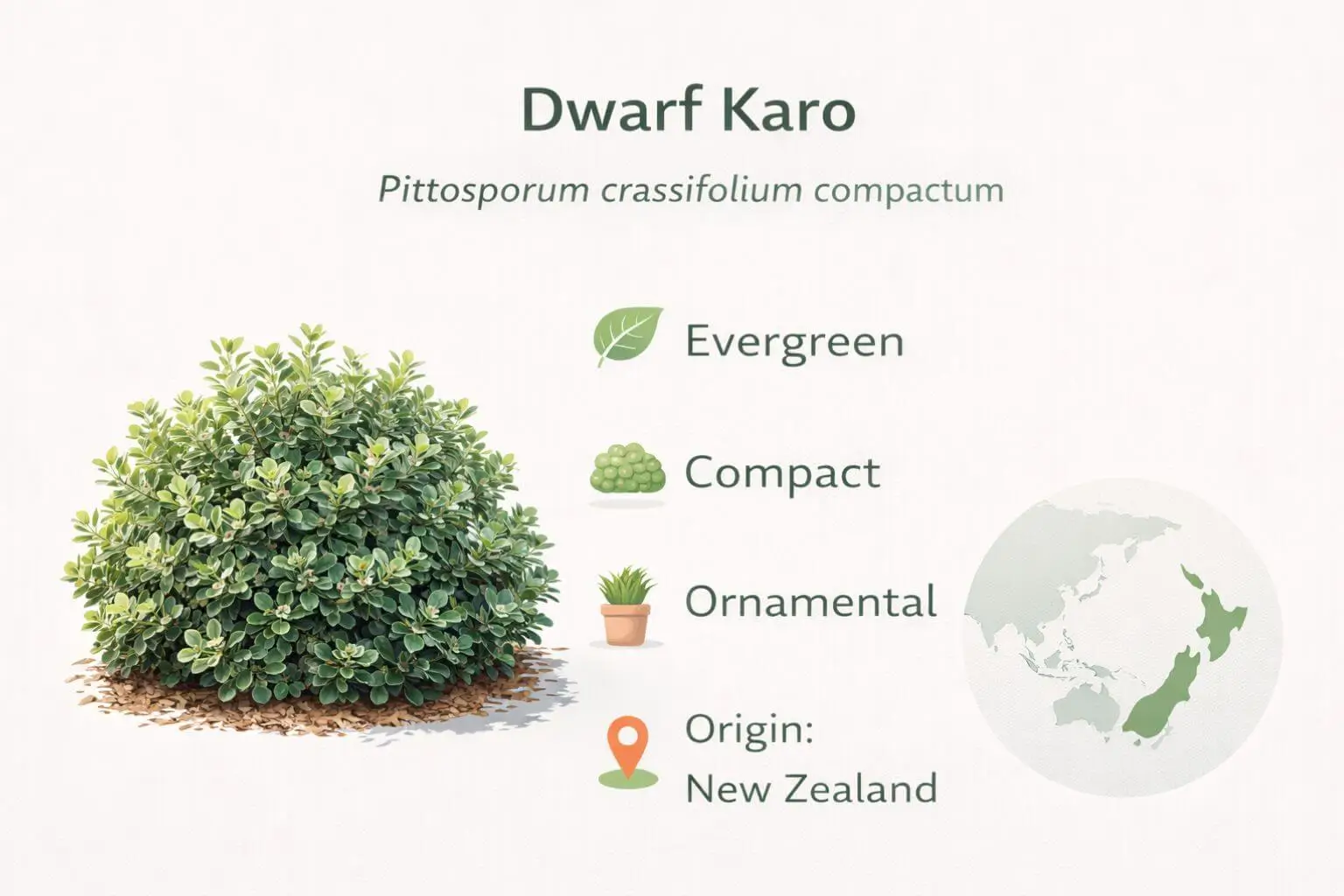
Dwarf karo is the compact form of Pittosporum crassifolium, a member of the Pittosporaceae family. Native to New Zealand, it thrives in coastal and subtropical environments. Key features include:
- Evergreen, dense foliage
- Compact size suitable for small gardens and containers
- Ornamental value with glossy leaves and uniform growth
Its adaptability makes dwarf karo a preferred choice for landscape architects and hobby gardeners alike.
Varieties and Related Species
Several varieties and related species expand the dwarf karo family:
- Pittosporum crassifolium nana – A true dwarf variety, ideal for tight spaces.
- Pittosporum crassifolium variegatum – Features decorative variegated foliage for visual contrast.
- Wheeler’s dwarf Pittosporum – A hardy hybrid with distinguishing characteristics suited for landscaping.
Semantic variations such as dwarf pittosporum, Pittosporum compacta, and Pittosporum crassifolium karo are commonly used in horticulture references.
Physical Characteristics of Dwarf Karo
-
Size and Growth
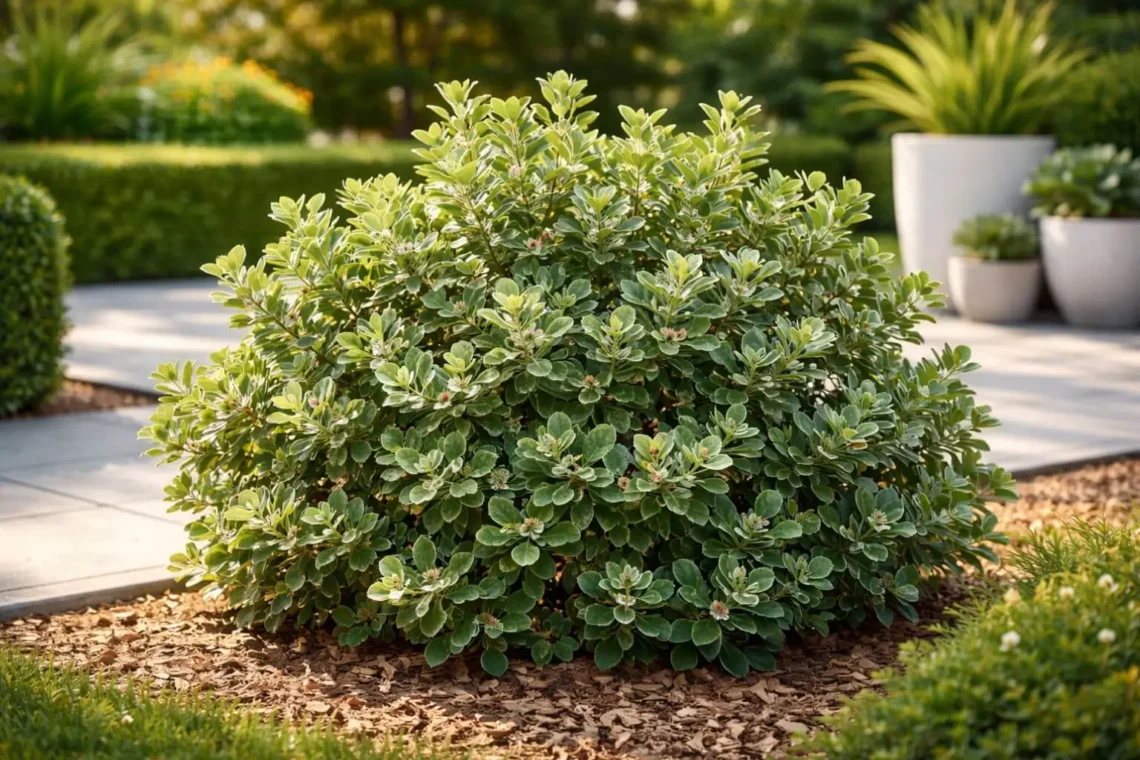
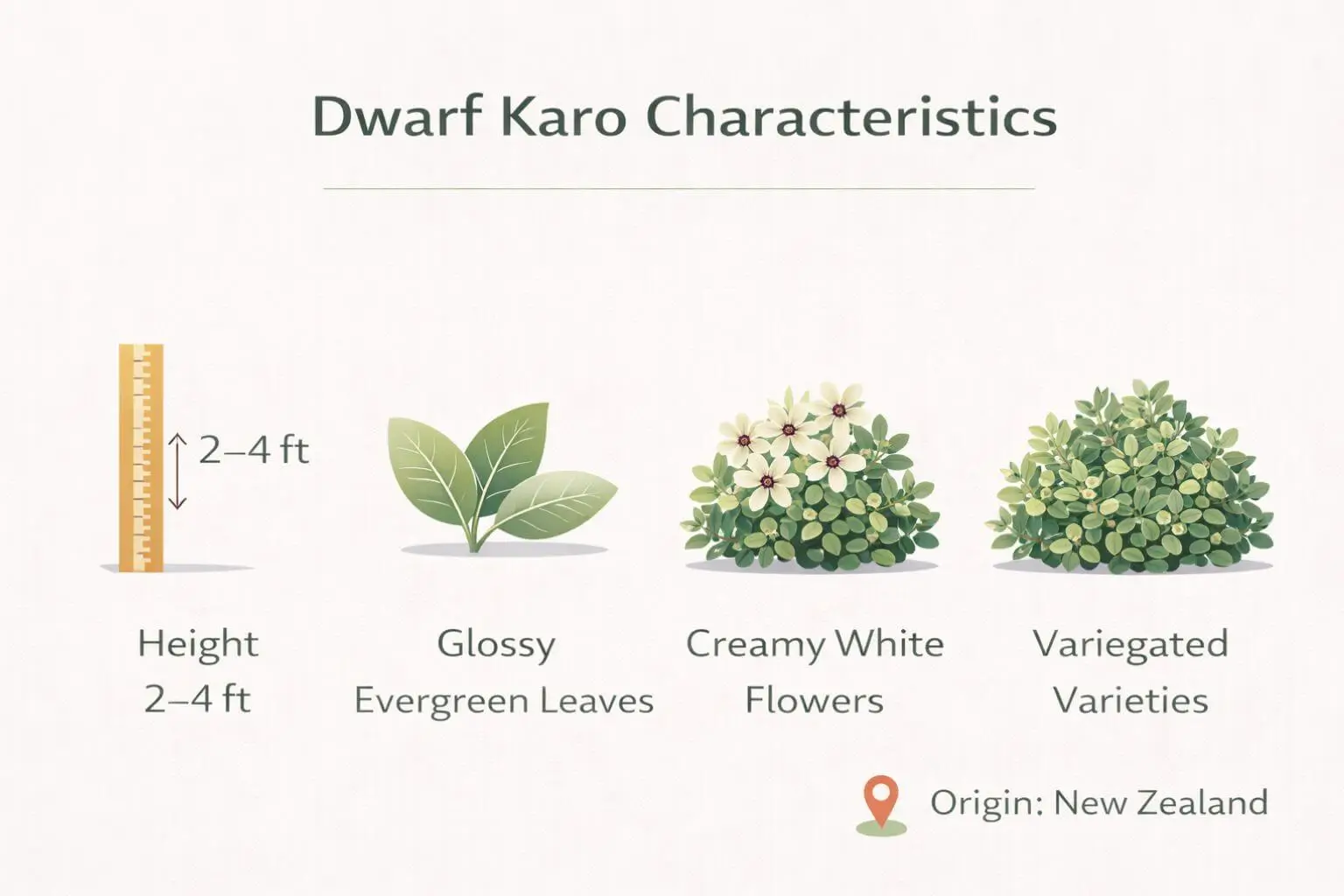
Dwarf karo exhibits a compact growth habit, typically reaching 2–4 feet in height with a similar spread. Its slow-growing nature allows easy maintenance and shaping, making it suitable for hedges, borders, and container planting. Keywords like dwarf karo height and dwarf pittosporum size are relevant for gardeners tracking its dimensions.
-
Foliage and Appearance
Leaves are glossy, dark green, and densely packed along the stems. Variegated varieties display white or cream margins, adding ornamental interest. Seasonal color changes are minimal, ensuring consistent aesthetics throughout the year.
-
Flowers and Fragrance
Dwarf karo produces small, creamy-white flowers, typically in spring. The flowers may emit a subtle, pleasant fragrance, enhancing garden appeal. While the flowers are modest, they contribute to the plant’s overall landscape aesthetics.
Growing and Caring for Dwarf Karo
Soil and Light Requirements
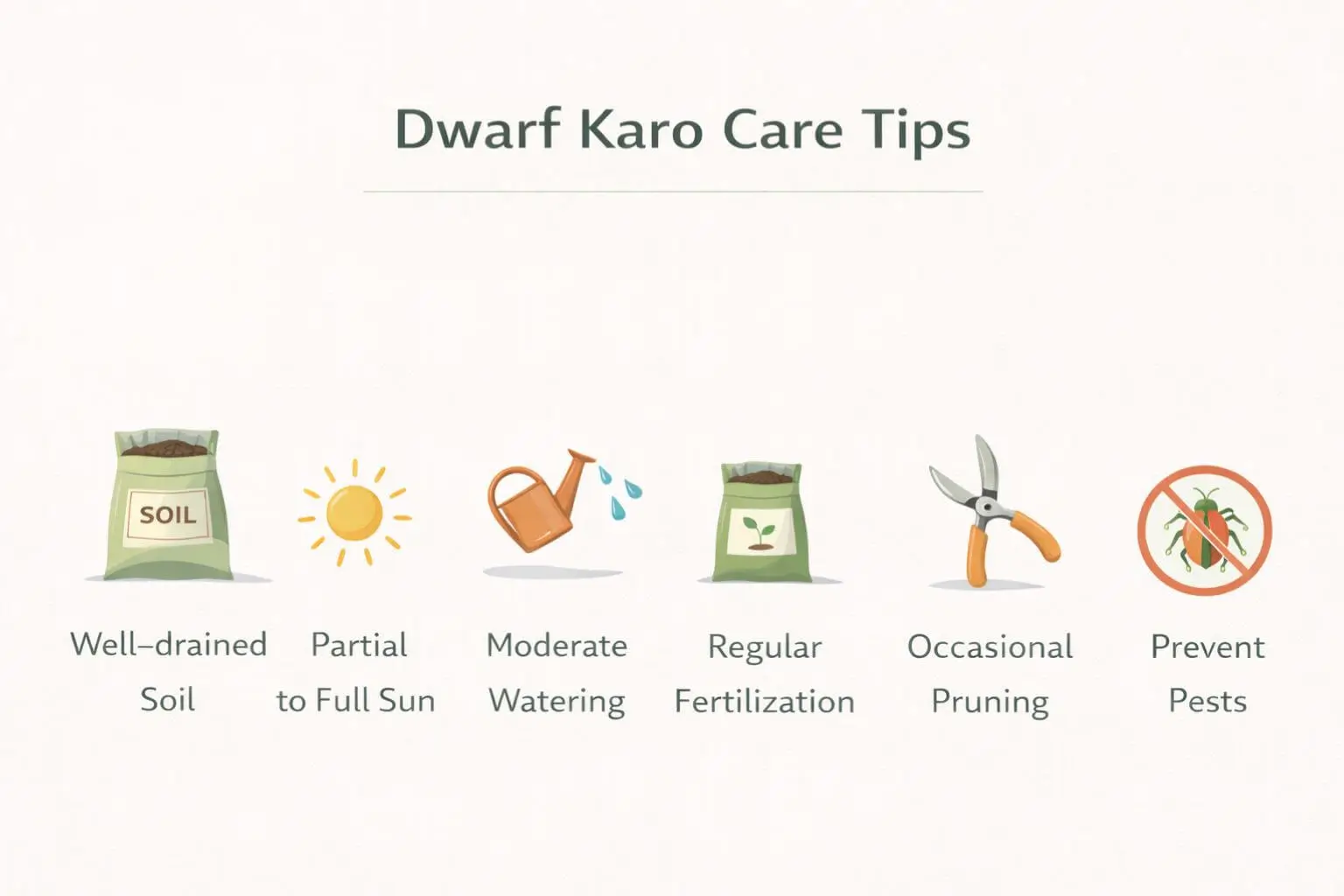
Dwarf karo prefers well-drained soil and tolerates sandy or loamy substrates. It thrives in full sun to partial shade, with optimal growth observed in areas receiving morning sunlight.
Watering and Fertilization
Maintain a moderate watering schedule, allowing the soil to dry slightly between sessions. Fertilize with a balanced, slow-release fertilizer to support compact growth and vibrant foliage.
Pruning and Maintenance
Regular pruning helps maintain the desired shape and density. Prune lightly several times a year, focusing on removing dead or overly long branches. This encourages a healthy, compact canopy.
Common Problems and Solutions
- Pests: Scale insects and aphids can affect growth; treat early with horticultural oil or insecticidal soap.
- Diseases: Root rot and leaf spots may occur in poorly drained soils; ensure proper drainage and avoid overwatering.
- Preventive care: Routine inspection, proper watering, and pruning reduce risks significantly.
Landscaping and Decorative Uses
Garden Applications
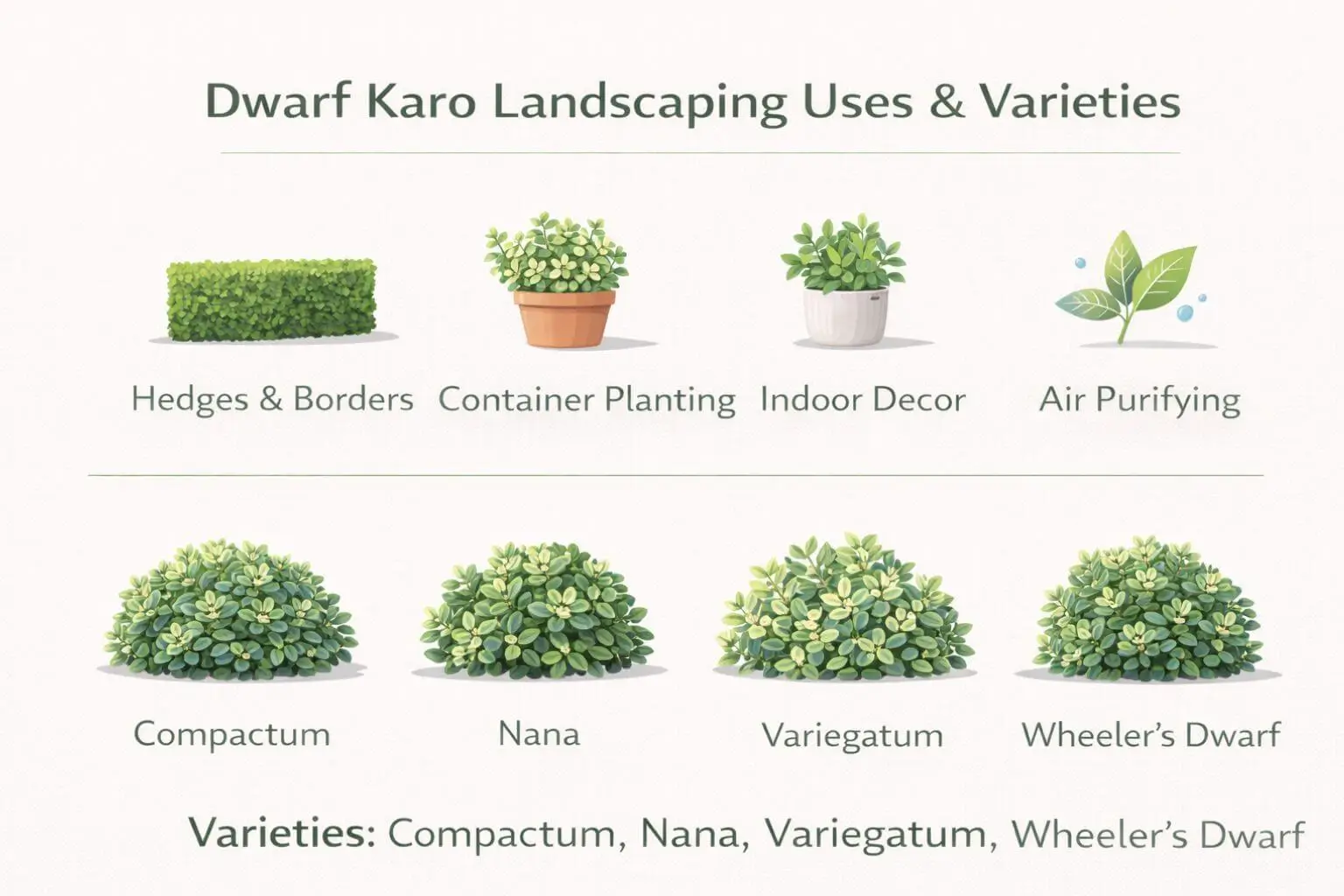
Dwarf karo is ideal for borders, hedges, and topiary designs. Its dense foliage allows clean lines, while companion planting with flowering shrubs enhances visual contrast.
Indoor and Container Planting
It adapts well to containers, making it suitable for patios or indoor areas with sufficient sunlight. Use well-draining potting mixes and position near bright, indirect light.
Environmental Benefits
- Acts as a natural air purifier
- Requires minimal maintenance, promoting sustainable gardening
- Provides year-round greenery with low environmental impact
Related Dwarf Karo Varieties and Hybrids
-
Pittosporum crassifolium Compactum – Standard Dwarf Karo
This is the classic dwarf karo, known for its dense foliage and slow growth, ideal for hedges and container gardening.
-
Pittosporum crassifolium Nana – Smaller Variety
A true dwarf form, Pittosporum nana remains exceptionally compact, perfect for tight spaces and decorative bonsai-style planting.
-
Pittosporum crassifolium Variegatum – Decorative Foliage
The variegated form features creamy-edged leaves for added visual interest, making it popular in ornamental landscapes.
-
Wheeler’s Dwarf Pittosporum – Hardy Hybrid
This hybrid offers enhanced hardiness and adaptability, suitable for diverse climates and low-maintenance landscaping projects. Semantic mentions include pittosporum nana, pittosporum karo, and pittosporum tobira Wheeler’s dwarf.
Conclusion
Dwarf karo is a versatile, low-maintenance ornamental plant offering compact growth, dense foliage, and aesthetic appeal. Its varieties, including nana, variegated, and Wheeler’s dwarf, allow gardeners to select the ideal type for their landscape, container, or indoor garden. With proper care—adequate light, watering, fertilization, and pruning—dwarf karo thrives while enhancing environmental and visual benefits. Explore companion planting and sustainable garden use to fully leverage the ornamental and ecological value of this exceptional plant.
Learn more: 5+ Stunning Tropical Plants for Backyard Paradise
Frequently Asked Questions (FAQs)
What is dwarf karo?
A compact ornamental plant, Pittosporum crassifolium compactum, known for its dense foliage, evergreen nature, and slow growth.
How tall does a dwarf karo grow?
Typically grows 2–4 feet in height, maintaining a compact and bushy shape suitable for hedges and borders.
How do I care for dwarf karo?
Requires well-drained soil, moderate watering, occasional pruning, and partial to full sunlight for optimal growth.
What are the common varieties of dwarf karo?
Common varieties include Pittosporum crassifolium nana, variegatum, and Wheeler’s dwarf, each offering unique ornamental features.
Can dwarf karo be grown indoors?
Yes, it thrives in containers with adequate light and proper care, making it suitable for indoor or patio planting.
What pests affect dwarf karo?
Scale insects and aphids are common; routine inspection and preventive care reduce infestation risks.
Is dwarf karo suitable for hedges?
Yes, its compact and dense growth makes it ideal for hedges, borders, and ornamental shaping.