
Introduction
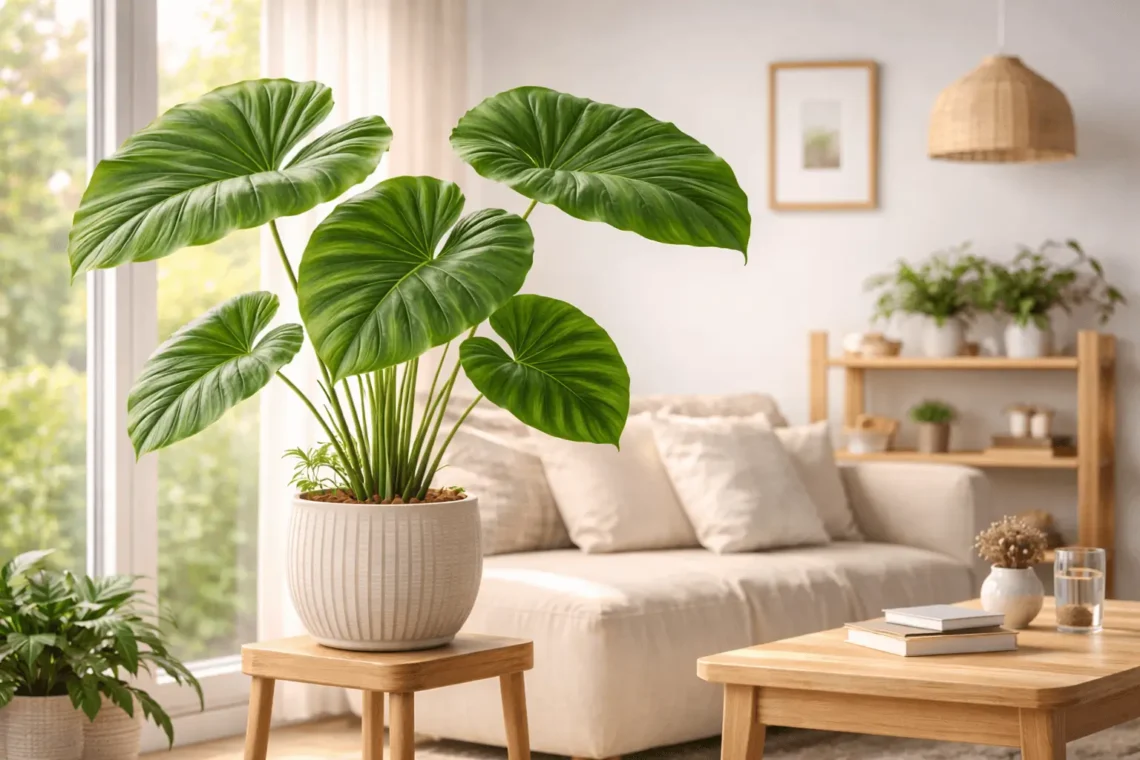
Elephant ear plant indoor benefits make this bold tropical plant a favorite choice for modern homes. Known for its large, dramatic leaves and refreshing green presence, the elephant ear plant helps create a healthier, more vibrant indoor environment while adding a strong decorative statement to any space.
The Colocasia elephant ear plant is widely appreciated as both an ornamental and functional indoor plant. Its broad, heart-shaped foliage enhances air freshness, supports a calming atmosphere, and brings a natural tropical charm into living rooms, offices, and indoor gardens.
The elephant ear plant scientific name (Colocasia esculenta) reflects its botanical identity and long-standing use in both decorative and practical plant collections around the world.
With the rising popularity of indoor greenery and aesthetic home styling, the elephant ear plant has become a top choice for plant lovers who want beauty, wellness, and visual impact in one powerful indoor plant.
What Is an Elephant Ear Plant?
An elephant ear plant is a tropical foliage plant known for its oversized, heart-shaped leaves that closely resemble the ears of an elephant. This striking plant is widely grown as an ornamental indoor and outdoor plant because of its bold structure, lush greenery, and strong visual impact. The plant belongs to the Colocasia group and is admired for its ability to transform indoor spaces into a vibrant, tropical environment.
Elephant ear plants are commonly used as statement plants in homes, offices, and indoor gardens due to their fast growth, large leaf size, and architectural appearance. Their dramatic foliage makes them one of the most recognizable and visually powerful indoor plants available today.
Elephant Ear Plant Scientific Name & Botanical Identity
The elephant ear botanical name is Colocasia esculenta, a species that belongs to the Araceae family. This plant is widely known as the Colocasia elephant ear plant and is native to Southeast Asia and tropical regions around the world.
The plant is commonly referred to by several botanical and common variations, including:
- Elephant ears colocasia
- Elephant ear colocasia
- Colocasia elephant ears
Colocasia elephant ears are characterized by their massive, arrow-shaped leaves, thick stems, and underground corms. The plant thrives in warm, humid environments and is well adapted for indoor cultivation when provided with proper light, moisture, and temperature conditions.
Different Types of Elephant Ear Plants
Elephant ear plants come in a wide range of varieties, each offering unique colors, leaf shapes, and growth patterns. Some are grown mainly for decoration, while others are cultivated for food purposes.
Common and popular types include:
- Purple elephant ear plant – Known for its deep purple or dark burgundy foliage, this variety adds a bold and dramatic contrast to indoor plant collections.
- Asian elephant ears – Traditional tropical varieties with large green leaves commonly grown in Southeast Asia.
- Indian elephant ears – Popular for both ornamental use and as a food crop, especially in South Asian cuisine.
- Colossal elephant ears – Giant varieties that produce massive leaves and are ideal for creating a tropical jungle look indoors.
- Elephant ears plant food varieties – Special cultivars grown for their edible roots and leaves, commonly known as taro.
Each type of elephant ear plant offers a unique appearance and purpose, making Colocasia one of the most versatile and visually impressive plant groups for indoor and decorative use.
Elephant Ear Plant Indoor Benefits
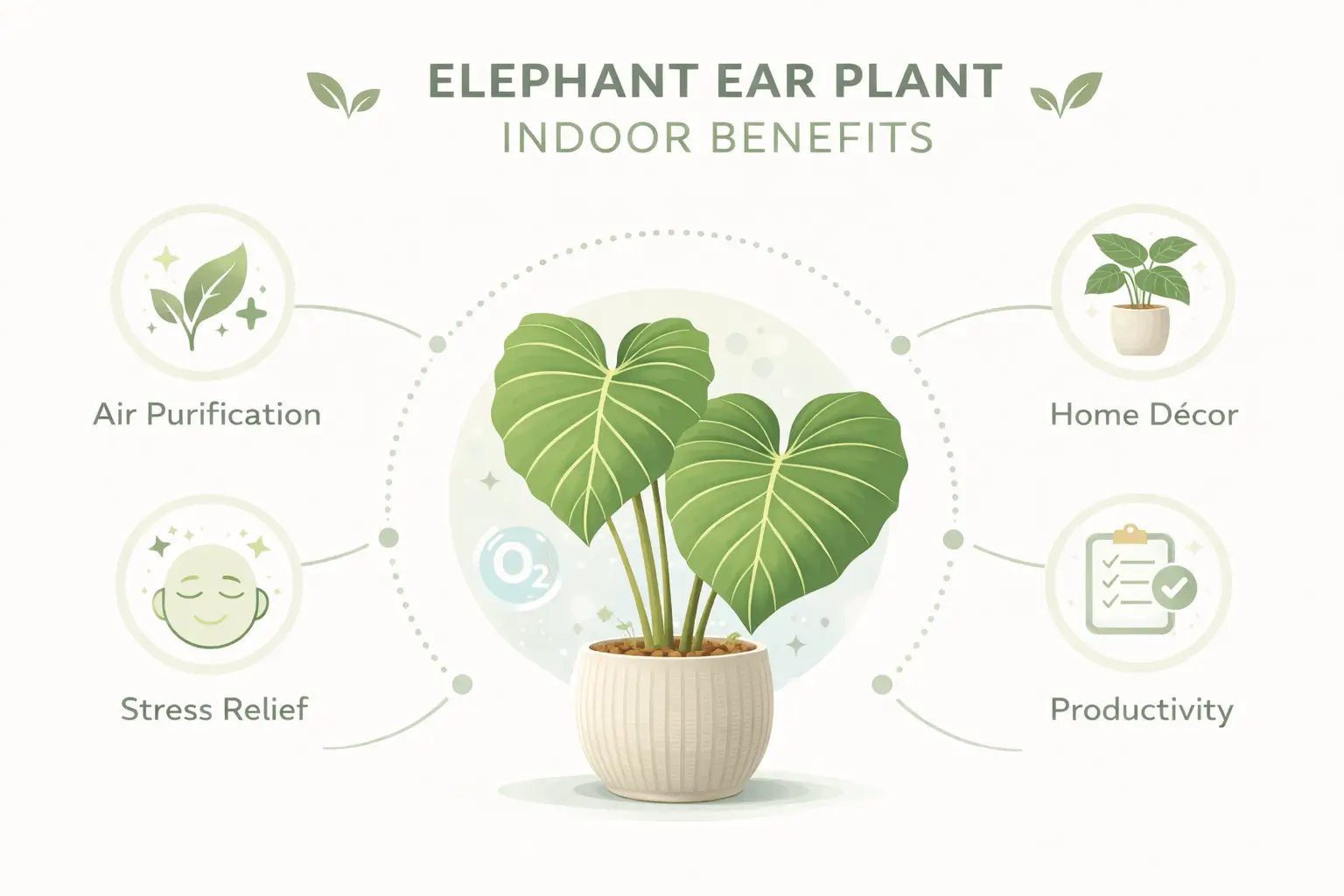
The elephant ear plant offers a powerful combination of visual beauty and functional wellness benefits for indoor spaces. With its large, lush leaves and strong tropical presence, this plant enhances air quality, improves home aesthetics, and supports mental well-being. Its ability to thrive indoors makes it a valuable addition to modern homes, offices, and wellness-focused interiors.
Air Purifying Benefits of Elephant Ear Plant
One of the most valued elephant ear plant indoor benefits is its contribution to cleaner and fresher indoor air. The plant’s large leaf surface helps improve the overall indoor environment by supporting natural air filtration.
Key air-related benefits include:
- Improves indoor air quality by supporting natural air circulation and freshness
- Absorbs toxins from the surrounding environment through its large foliage surface
- Oxygen enhancement by releasing oxygen and increasing humidity levels, which helps reduce dryness in closed indoor spaces
The broad leaves act as natural air collectors, helping trap dust particles while maintaining a healthier indoor atmosphere.
Elephant Ear Plant for Home Decor & Aesthetic Appeal
The elephant ear plant is widely used as a statement décor plant because of its bold leaf size and architectural structure. Its dramatic foliage instantly transforms any room into a tropical-inspired living space.
Often categorized among premium plants with elephant ear leaves, this plant is admired for its tall, tree-like growth habit and oversized leaves that resemble a tree with elephant ear leaves. As a decorative centerpiece, the elephant leaf plant brings depth, texture, and greenery into modern interiors.
Whether placed in corners, near windows, or in open-plan living areas, the elephant leaves plant adds a luxurious botanical feel. The striking appearance of elephant ear tree leaves makes the plant ideal for minimalist, boho, and tropical décor styles.
Elephant Ear Plant for Mental Health & Stress Relief
Indoor greenery has a strong impact on emotional well-being, and the elephant ear plant is especially effective due to its size and natural presence.
Its benefits for mental wellness include:
- Creates a calming indoor environment by softening harsh interiors and adding natural balance
- Improves mood through visual connection with greenery and nature-inspired surroundings
- Enhances productivity by promoting focus, relaxation, and mental clarity in work and study spaces
The soothing green tones and gentle movement of its large leaves help reduce stress and create a peaceful atmosphere, making the elephant ear plant an ideal companion for indoor wellness living.
Health Benefits of Elephant Ear Plant (Colocasia Esculenta)
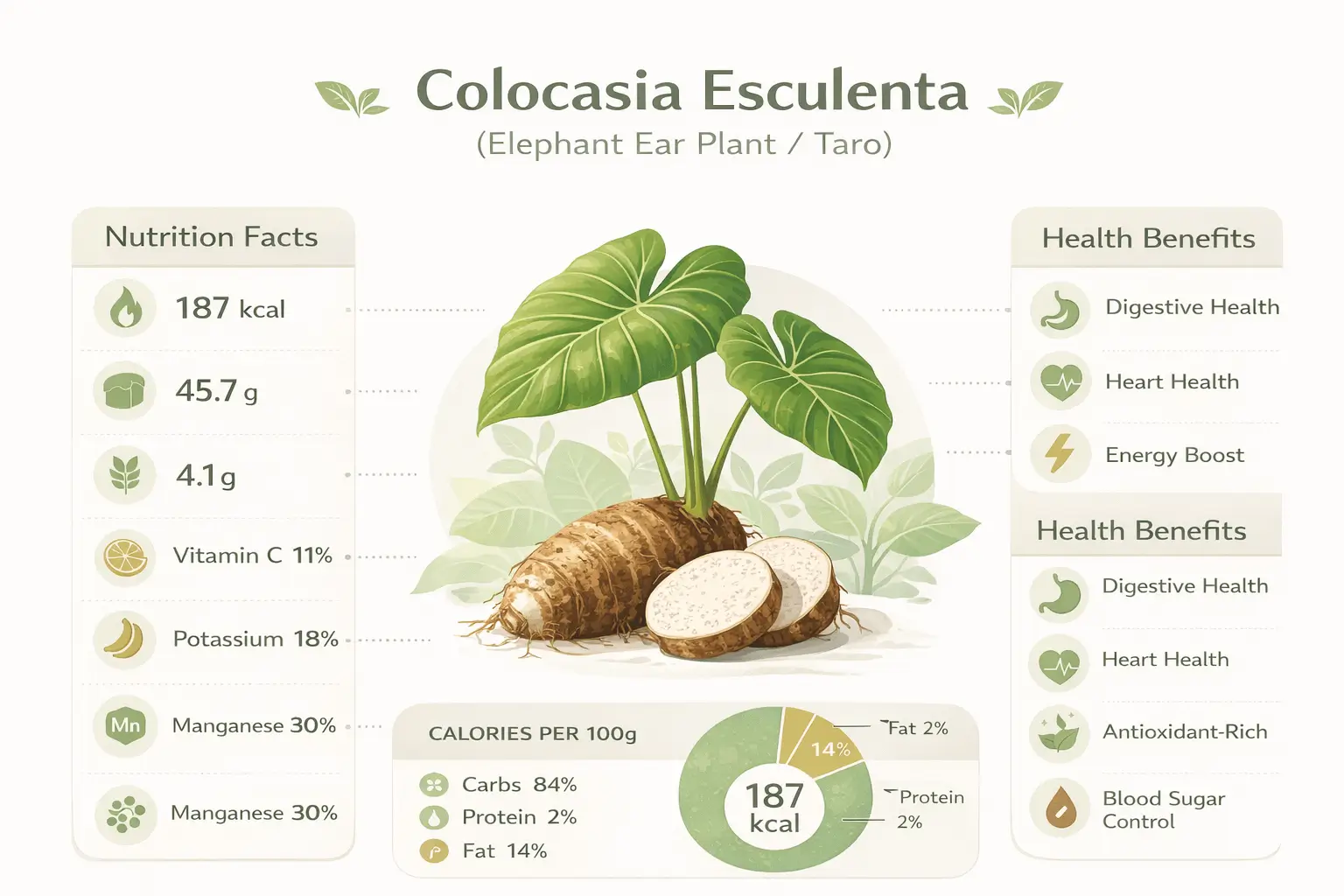
The elephant ear plant, scientifically known as Colocasia esculenta, is not only valued for its ornamental beauty but also for its nutritional and health-supporting properties. Commonly known as taro, this plant has been used for centuries in traditional diets across Asia, Africa, and tropical regions. Its roots and leaves provide essential nutrients that support overall wellness and balanced nutrition.
Elephant Ear Nutrition Profile
Elephant ear nutrition is mainly derived from its edible root, widely known as taro. The root is rich in complex carbohydrates, dietary fiber, and essential minerals, making it a valuable food source in many cultures.
Key taro plant nutrition facts include:
- High in complex carbohydrates for sustained energy
- Rich in dietary fiber for digestive health
- Contains potassium, magnesium, and iron
- Provides vitamin C, vitamin E, and B-complex vitamins
When it comes to calories in elephant ear, the root is considered a moderate-calorie food. On average, cooked taro contains approximately 140 calories per 100 grams.
If you are wondering how many calories in an elephant ear or how many calories are in an elephant ear, the exact number depends on portion size and preparation method, but it generally ranges between 130 to 150 calories per 100 grams when cooked.
This balanced nutritional profile makes elephant ear root a filling, energy-rich, and nutrient-dense food.
Colocasia Esculenta Health Benefits
The health benefits of colocasia come from its rich nutrient content and traditional medicinal uses. Both the root and leaves have been used in natural diets to support digestion, immunity, and heart health.
Important Colocasia esculenta health benefits include:
- Supports digestive health due to high fiber content
- Helps regulate blood pressure because of its potassium levels
- Strengthens immunity with antioxidant vitamins
- Supports heart health by improving cholesterol balance
- Provides long-lasting energy from complex carbohydrates
Well-known taro plant health benefits also include improved gut health, better blood sugar control, and support for muscle and nerve function.
In traditional wellness systems, elephant root benefits include its role in improving digestion, boosting stamina, and supporting overall vitality. Common elephant root uses include cooking, medicinal preparations, and nutritional supplementation in tropical regions.
Together, these benefits make Colocasia esculenta a powerful plant that combines ornamental beauty with valuable nutritional and health advantages.
Learn more: 13 Best Indoor Plants for Mental Health
Are Elephant Ear Plants Edible?
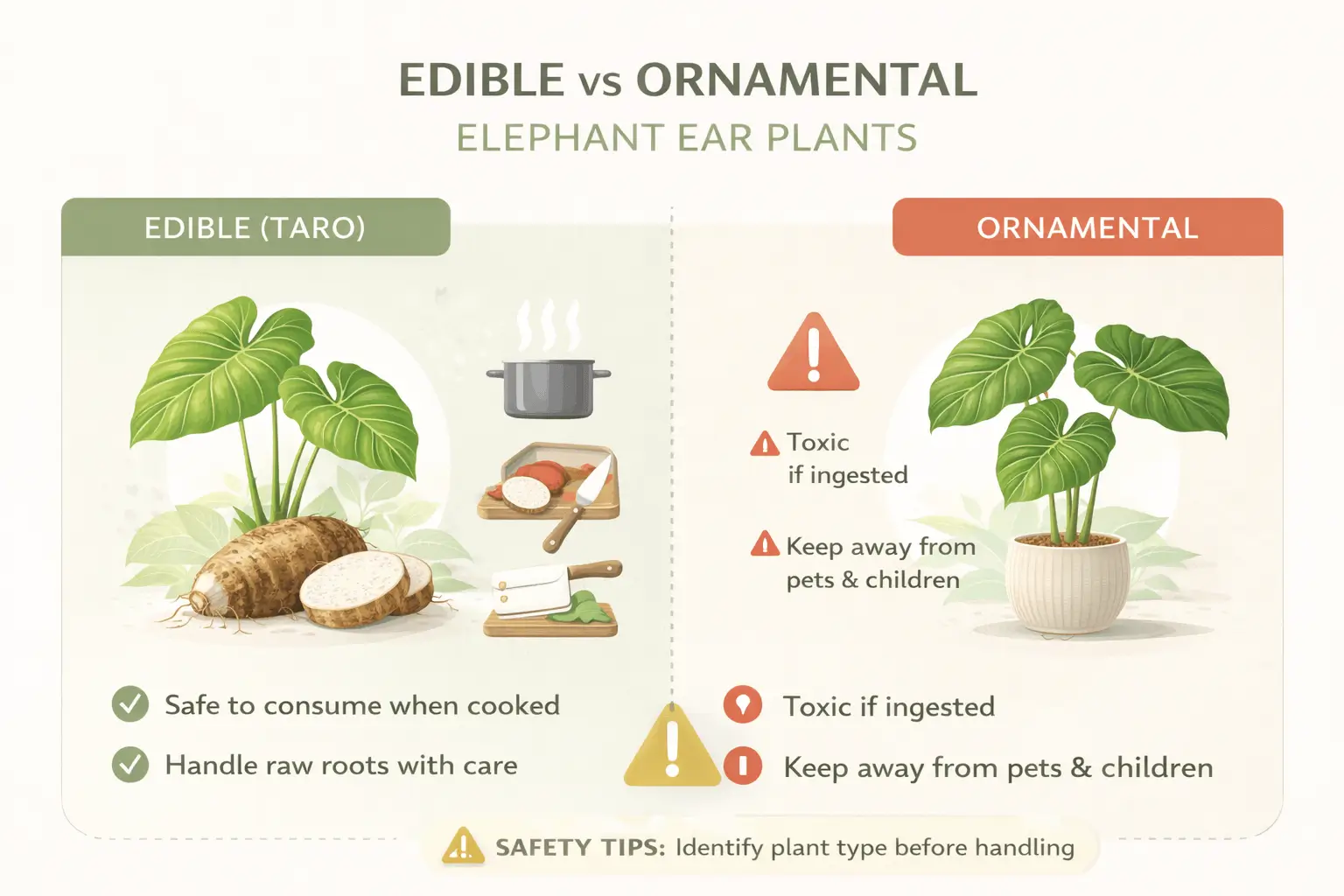
Elephant ear plants are widely known for their ornamental beauty, but certain varieties are also cultivated as an important food source in many parts of the world. The edible forms belong mainly to Colocasia esculenta, which is commonly known as taro. When properly prepared, specific parts of the plant are safe to consume and are used as staple vegetables in tropical and subtropical cuisines.
Edible Elephant Ear Plant Facts
Many people ask: are elephant ears edible? The answer is yes — but only certain cultivated varieties and only after proper cooking. The edible elephant ear plant is primarily grown for its underground root, which is used as a vegetable.
Important facts about elephant ear edibility include:
- Elephant ear edible varieties belong mainly to the taro family
- Is elephant ear edible? Yes, when it is the correct variety and fully cooked
- Can you eat elephant ears? Yes, but raw consumption is unsafe
- Edible elephant ear plant varieties are grown as food crops in Asia, Africa, and the Pacific
- The elephant ear vegetable refers to the taro root used in many traditional dishes
- The so-called elephant ear fruit is not a true fruit; the edible portion is the underground corm
Only cultivated food-grade varieties should ever be used for consumption. Ornamental elephant ear plants sold for decoration are not grown for eating.
Elephant Ear Leaves & Root Uses
Different parts of the elephant ear plant are used in cooking and traditional food preparation, especially in South Asian, Southeast Asian, and Pacific Island cuisines.
Common edible parts and their uses include:
- Elephant ear leaf and elephant ear leaves are used as leafy vegetables when fully cooked
- Elephant leaf and colocasia leaves are used in curries, stews, and wrapped dishes
- Leaf taro is a popular green vegetable in tropical cooking
- Taro leaves benefits include fiber, vitamins, and minerals for balanced nutrition
- Arbi leaves are widely used in Indian cuisine for dishes like patra and saag
- Colocasia leaf is consumed after proper boiling or steaming
The underground portion is the most widely consumed part of the plant:
- Elephant ear root is the main edible portion
- Elephant ear root edible varieties are cultivated as staple crops
- Elephant ear plant root is rich in carbohydrates and dietary fiber
- Colocasia roots are boiled, roasted, fried, or ground into flour
All edible parts must be thoroughly cooked to remove natural irritants and make them safe for consumption. When prepared correctly, elephant ear plants provide both nutritional value and culinary versatility.
Elephant Ear Plant vs Taro Plant
The elephant ear plant and the taro plant are often confused because they belong to the same botanical group and share similar leaf shapes and growth habits. In many cases, they are actually the same plant species used for different purposes. Understanding the difference between ornamental elephant ear plants and edible taro plants helps in proper identification, usage, and care.
Taro vs Elephant Ear Comparison
The comparison of taro vs elephant ear mainly depends on whether the plant is grown for decoration or for food. Botanically, both belong to Colocasia esculenta, but they are cultivated differently based on their intended use.
In the elephant ear vs taro discussion, elephant ear usually refers to ornamental varieties grown for their large, dramatic leaves, while taro refers to food-grade varieties grown for their edible roots and leaves.
The term elephant ear taro is commonly used because taro plants naturally have the iconic elephant ear–shaped foliage. Similarly, taro elephant ear highlights the visual similarity between the food crop and ornamental plant.
The taro plant elephant ear label is used in agriculture and gardening to describe taro varieties that produce the classic elephant ear leaf shape. In contrast, the elephant ear plant taro description is used when referring to taro grown as an ornamental plant rather than a food crop.
In summary, taro and elephant ear plants are closely related and often botanically identical. The main difference lies in cultivation purpose — taro is grown mainly for food, while elephant ear plants are commonly grown for decorative and indoor landscaping use.
How to Grow Elephant Ear Plant Indoors
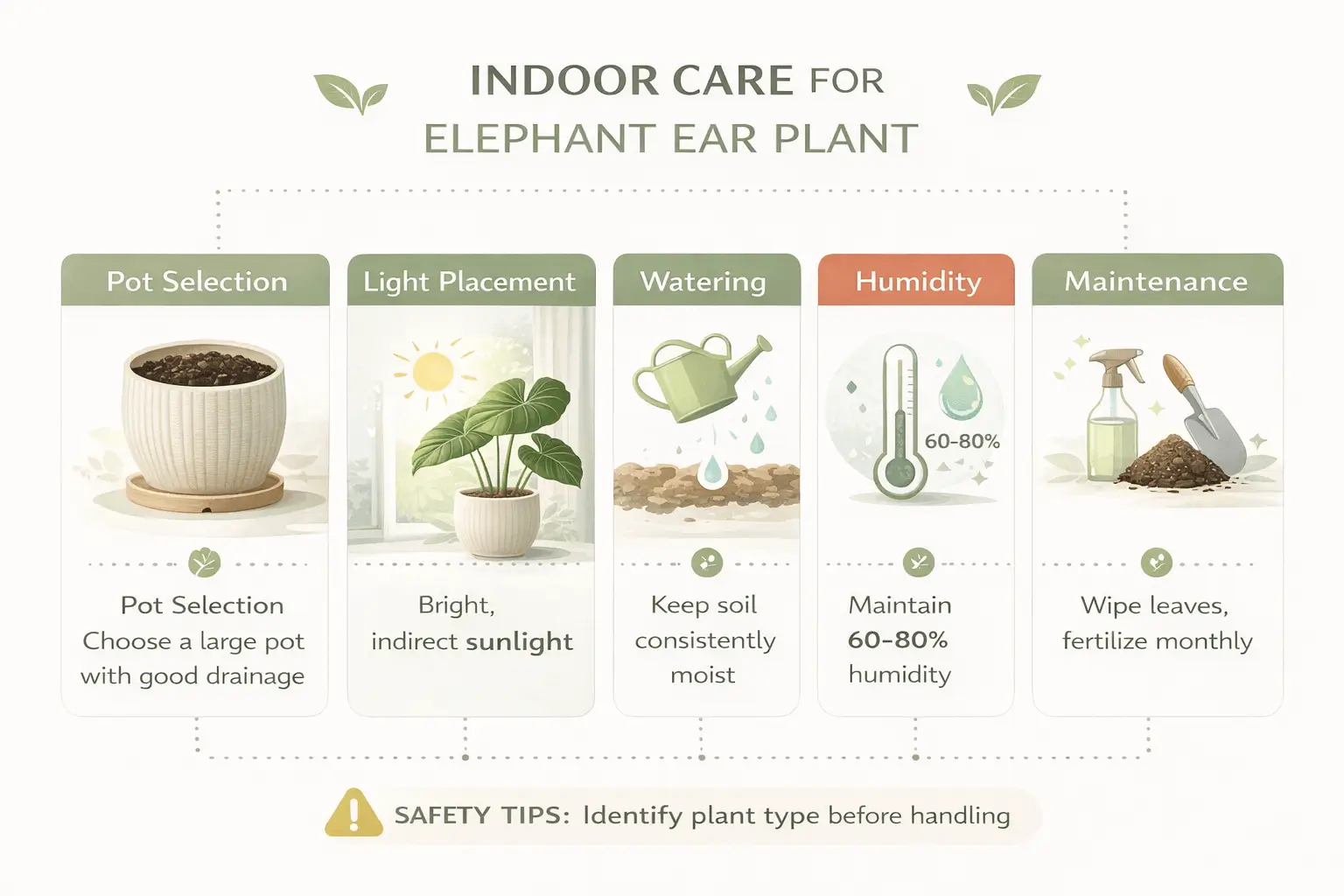
Growing an elephant ear plant indoors is simple when the right environment is provided. This tropical plant thrives in warm, bright, and humid conditions, making it ideal for indoor spaces with good light and airflow. With proper pot selection, watering routine, and regular care, the elephant ear plant grows into a bold, healthy statement plant.
Pot Selection & Soil Requirements
Choosing the correct container and soil is essential for healthy root development and stable plant growth.
Important planting requirements include:
- A large pot for elephant ear plant growth to support its fast-growing roots and heavy foliage
- Use a deep container with drainage holes to prevent water stagnation
- Planting is done using the elephant ear bulb, also known as the corm
- When planting, place the elephant ear bulb top and bottom correctly — the pointed side faces upward, while the flatter side goes downward
- The elephant ear root needs loose, nutrient-rich soil that allows moisture retention without becoming waterlogged
The ideal soil mix should be well-draining, rich in organic matter, and slightly acidic to neutral in pH.
Light, Water & Temperature Needs
Elephant ear plants require consistent care to maintain their lush foliage and rapid growth indoors.
Essential growth conditions include:
- Bright, indirect light near windows or well-lit rooms
- Follow proper indoor placement tips by avoiding harsh direct sunlight that can scorch the leaves
- Keep soil consistently moist without overwatering
- Maintain good moisture & humidity levels using misting or a humidifier
- Ideal growth conditions include warm temperatures between 18°C to 30°C
Cold drafts and sudden temperature drops should be avoided, as the plant is highly sensitive to cold environments.
Maintenance & Care Tips
Routine care keeps the elephant ear plant healthy, vibrant, and pest-free.
Key maintenance practices include:
- Regular elephant ear plant leaves care by wiping dust from the leaves to improve breathing and photosynthesis
- Timely elephant ear plant leaf maintenance by trimming yellow or damaged leaves
- Use natural methods for pest prevention such as neem oil or mild insecticidal soap
- Monitor soil moisture regularly to prevent root rot
- Feed with balanced liquid fertilizer during the growing season
With proper attention and consistent care, the elephant ear plant grows into a stunning indoor centerpiece with long-lasting beauty.
Plants Similar to Elephant Ear Plant
Elephant ear plants are famous for their oversized, dramatic foliage, but several other tropical and ornamental plants share a similar bold leaf structure and growth habit. These plants are often chosen as alternatives when the elephant ear plant is not available or when gardeners want a similar visual impact with slightly different care requirements.
Elephant Ear Look-Alike Plants
There are many beautiful plants similar to elephant ear plant varieties that offer the same large-leaf tropical appeal. These plants are often mistaken for elephant ears because of their broad, heart-shaped or arrow-shaped foliage.
Popular plants that look similar to elephant ears include:
- Alocasia varieties – Often called African Mask plants, these are the closest relatives and are commonly considered the best similar to elephant ear plant option
- Xanthosoma – Known for its thick stems and massive leaves, this is one of the most popular plants similar to elephant ear plant in tropical landscapes
- Caladium – A colorful alternative with softer leaves and decorative patterns
- Philodendron giganteum – A climbing tropical plant with enormous heart-shaped leaves
- Anthurium crystallinum – Grown for its large, velvety foliage and striking veins
These similar to elephant ear plant varieties are widely used in indoor décor and landscaping because they create the same bold, jungle-style aesthetic. Their large foliage makes them ideal for statement corners, indoor gardens, and tropical-themed interiors.
If you love the dramatic look of elephant ears, these look-alike plants offer equally stunning greenery with unique textures, colors, and growth patterns.
Decorative & Landscaping Uses of Elephant Ear Plant
The elephant ear plant is widely used in decorative styling and landscaping because of its bold foliage, tropical character, and strong visual presence. Its oversized leaves create instant impact, making it a favorite for both indoor décor themes and outdoor garden designs. Whether placed as a focal point or used in layered plant arrangements, the elephant ear plant brings a lush, resort-style atmosphere to any space.
Indoor & Outdoor Styling Ideas
Elephant ear plants are highly versatile and can be styled in multiple creative ways for homes, offices, patios, and landscapes.
Popular décor and styling ideas include:
- Using elephant ears images plant as inspiration for tropical, jungle, and resort-themed interiors
- Creating an elephant with leaves styling theme for nature-inspired living rooms, cafés, and wellness spaces
- Designing bold corners with elephant plant leaves decor as a statement centerpiece
- Achieving a soft, leafy aesthetic with the elephant lettuce decorative look for balconies and indoor gardens
For indoor styling, elephant ear plants work beautifully in large floor pots near windows, in open-plan living rooms, and in office reception areas. Their tall structure and broad leaves add height, depth, and greenery to modern interiors.
In outdoor landscaping, they are commonly used around patios, walkways, garden borders, and water features. Their tropical appearance blends perfectly with palm trees, ferns, and flowering plants to create a lush green landscape.
With their dramatic form and rich foliage, elephant ear plants serve as both functional greenery and powerful design elements in any decorative setting.
Safety & Precautions
Elephant ear plants are admired for their beauty and, in some varieties, their edible value. However, safety is a critical factor when handling or consuming any part of the plant. While certain cultivated types are grown specifically for food, ornamental elephant ear plants are not intended for consumption and can be harmful if eaten incorrectly.
Understanding proper handling, preparation, and plant identification is essential to avoid health risks.
What Happens If You Eat Elephant Ear Plant Raw?
Many people ask: what happens if you eat elephant ear plant without cooking it properly? The raw plant contains natural compounds that can cause irritation and discomfort.
Important safety facts include:
- Can you eat elephant ear plants? Only food-grade varieties and only after proper cooking
- Is elephant ear plant edible? Yes, but only specific cultivated taro varieties are considered safe
- Raw elephant ear contains calcium oxalate crystals that can cause burning, swelling, and irritation in the mouth and throat
- In severe cases, raw consumption may lead to nausea, vomiting, or digestive upset
For proper elephant ear edible safety, always follow these precautions:
- Never eat ornamental elephant ear plants
- Only consume certified edible taro varieties
- Always cook the leaves and roots thoroughly before eating
- Avoid tasting any part of the plant raw
When prepared correctly, edible elephant ear varieties are safe and nutritious. When consumed raw or misidentified, they can cause serious irritation and health issues. Proper knowledge and preparation ensure safe and beneficial use of this powerful tropical plant.
Conclusion — Why You Should Grow Elephant Ear Plant Indoors
The elephant ear plant is a powerful combination of beauty, wellness, and functionality, making it an excellent choice for modern indoor spaces. The most valuable elephant ear plant indoor benefits include improved air freshness, enhanced home aesthetics, and a calming natural environment that supports mental well-being.
With its large tropical leaves, the plant contributes to air purification, helping create a cleaner and more refreshing indoor atmosphere. Its bold structure and dramatic foliage add natural beauty to any room, while its soothing green presence supports health and wellness by reducing stress and improving mood.
If you are looking for a statement indoor plant that offers both visual impact and practical benefits, the elephant ear plant is a perfect choice. Add it to your home, office, or indoor garden and enjoy a healthier, greener, and more vibrant living space every day.
Read Also: 7 Powerful Spider Plant Indoor Benefits for a Healthier Home
FAQs
What are the main elephant ear plant indoor benefits?
The main elephant ear plant indoor benefits include improved indoor air freshness, enhanced home décor, and a calming natural environment. Its large leaves help create a refreshing atmosphere, while its bold tropical appearance adds beauty and visual impact to any indoor space.
Is elephant ear plant safe for indoor use?
Yes, the elephant ear plant is safe for indoor use when handled properly. It is an excellent ornamental houseplant, but it should be kept away from pets and children because its sap can cause skin and mouth irritation if touched or eaten.
Are elephant ear plants edible?
Some elephant ear plants are edible, but only specific food-grade varieties of Colocasia esculenta. Ornamental elephant ear plants grown for decoration are not meant for consumption and should never be eaten.
How to care for elephant ear plant indoors?
To care for an elephant ear plant indoors, provide bright indirect light, keep the soil consistently moist, maintain warm temperatures, and ensure good humidity levels. Regular leaf cleaning, proper watering, and occasional fertilizing help keep the plant healthy and vibrant.
What is the scientific name of elephant ear plant?
The scientific name of elephant ear plant is Colocasia esculenta. It belongs to the Araceae family and is widely grown as both an ornamental and food plant.
Does elephant ear plant purify indoor air?
Yes, the elephant ear plant helps improve indoor air quality by supporting natural air circulation, increasing humidity, and trapping dust particles on its large leaves, creating a fresher indoor environment.
Can elephant ear plant grow in low light?
Elephant ear plants prefer bright indirect light for healthy growth. While they can tolerate moderate light conditions, low light may slow growth and reduce leaf size. For best results, place the plant near a well-lit window without direct sunlight.





6 Comments on “7+ Powerful Elephant Ear Plant Indoor Benefits You’ll Love”