Introduction
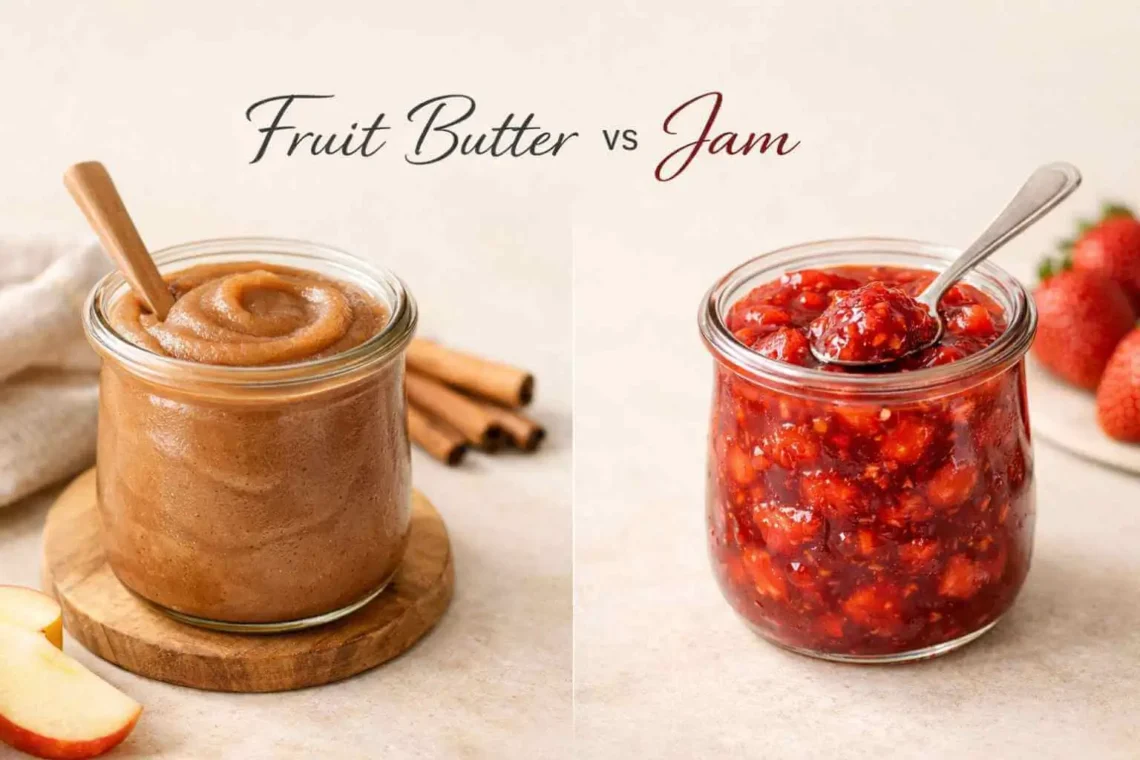
Fruit butter vs jam is a common comparison when choosing fruit spreads, but they differ significantly in texture, preparation, and ingredients. While both are made from fruit, fruit butter is slow-cooked into a smooth, concentrated spread, whereas jam contains crushed fruit pieces and a thicker, gel-like consistency. These differences affect flavor, texture, and usage. Understanding how fruit butter and jam compare to jelly, preserves, and other fruit spreads helps clarify which option works best for specific needs, whether for baking, spreading, or cooking.
Quick Summary
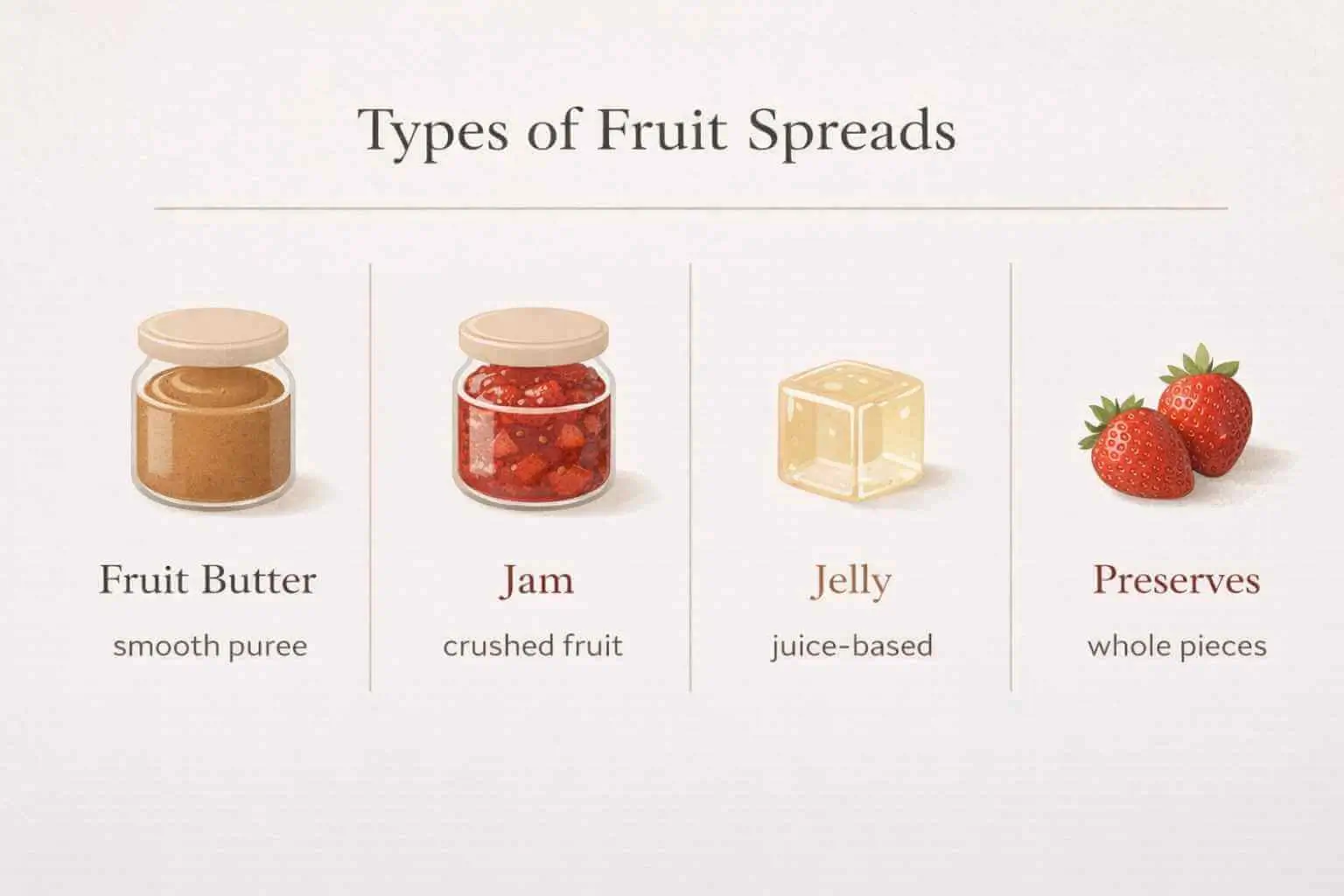
- Fruit butter is smooth and concentrated, made by slow-cooking fruit pulp.
- Jam contains crushed fruit and has a thicker, chunkier texture.
- Jelly is clear and made from fruit juice, not pulp.
- Preserves contain whole or large fruit pieces, offering a different texture experience.
What Is Fruit Butter?
Fruit butter is a smooth, thick fruit spread made by slowly cooking fruit puree until it becomes concentrated and creamy. It contains no visible fruit chunks or gel structure and relies on natural reduction rather than added pectin for thickness.
Key Characteristics
- Made by slow-cooking fruit puree for several hours
- Smooth, spreadable texture with no chunks
- Common example: apple butter
- Can also be made from pears, berries, or stone fruits
How It’s Made
Fruit butter is prepared by cooking fruit pulp at low heat over time. As moisture evaporates, natural sugars caramelize, creating a deep, rich flavor. This long cooking process enhances sweetness without requiring large amounts of added sugar.
What Is Jam?
Jam is a fruit spread made from crushed or chopped fruit that retains small fruit pieces and a thick, spreadable consistency. It is typically thickened using natural or added pectin.
Key Characteristics
- Contains fruit pulp and small chunks
- Thick but slightly textured
- Uses pectin to achieve a gel-like consistency
- Balanced between smooth and chunky
Jam vs Spread
Jam follows traditional definitions and often includes specific fruit-to-sugar ratios. In contrast, “fruit spread” is a broader term that may include variations with reduced sugar or alternative ingredients.
Fruit Butter vs Jam: Key Differences
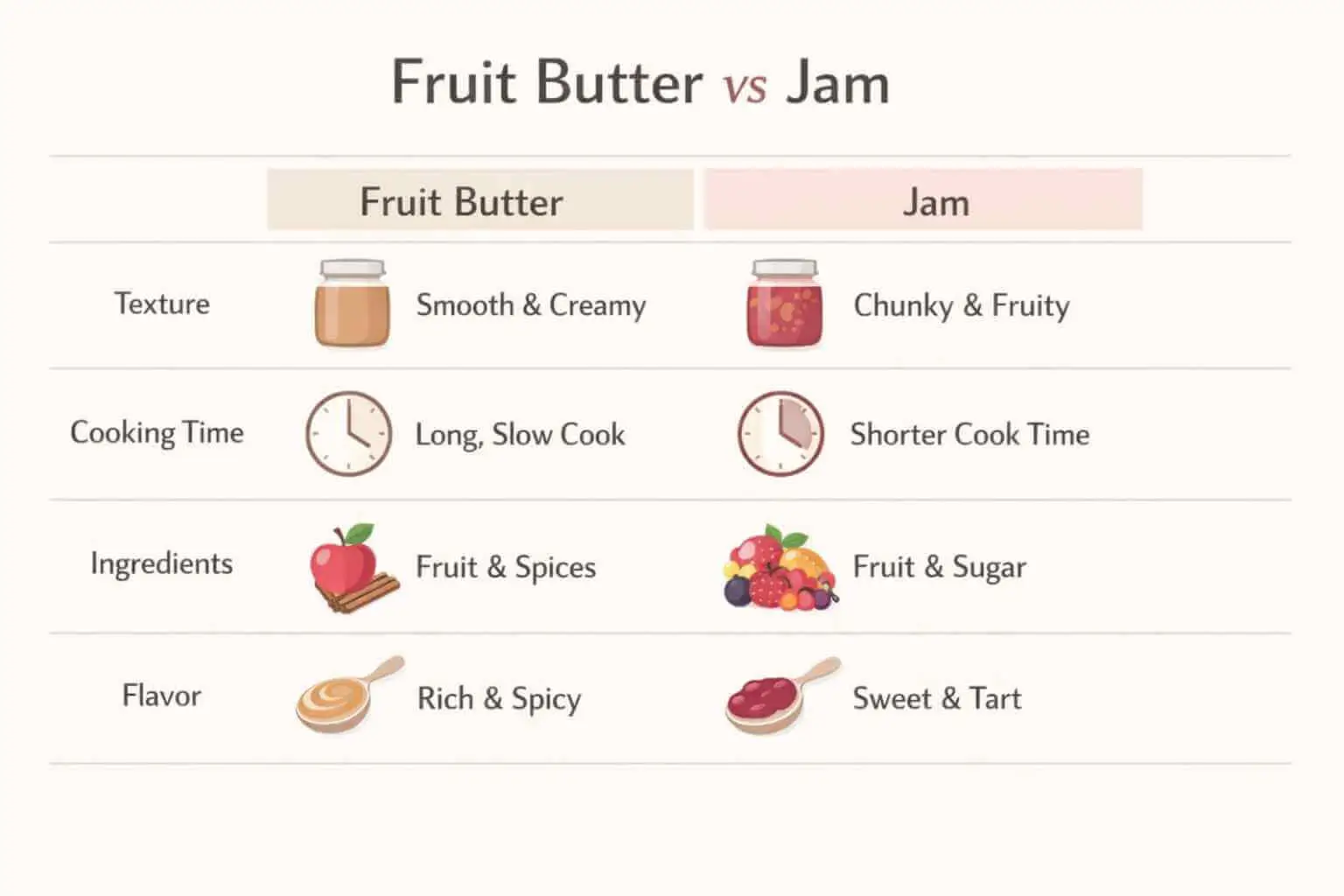
Fruit butter vs jam differs mainly in texture, cooking method, ingredients, and flavor profile. Fruit butter is smooth and slow-cooked, while jam is chunkier and prepared more quickly with pectin.
Core Differences
- Texture: Smooth (fruit butter) vs chunky (jam)
- Cooking method: Slow reduction vs quicker cooking
- Ingredients: Fruit puree vs crushed fruit with pectin
- Flavor: Deep, caramelized vs fresh and fruity
Comparison Table
| Feature | Fruit Butter | Jam |
| Texture | Smooth, creamy | Thick with fruit pieces |
| Ingredients | Fruit puree, sugar, spices | Crushed fruit, sugar, pectin |
| Cooking Time | Long, slow cooking | Shorter cooking time |
| Flavor Profile | Deep, rich, concentrated | Fresh, bright, fruity |
Jam vs Jelly vs Fruit Butter vs Preserves
Fruit butter vs jam vs jelly comparisons help clarify how each spread differs in fruit content, texture, and preparation method.
Key Differences Explained
- Jelly: Made from filtered fruit juice, resulting in a clear, firm texture
- Jam: Contains crushed fruit and pulp
- Preserves: Include whole or large fruit pieces
- Fruit butter: Smooth and slow-cooked from puree
According to standard definitions of fruit preserves, these spreads differ based on fruit content, texture, and preparation methods.
Comparison Table
| Type | Fruit Content | Texture | Cooking Style |
| Jelly | Juice only | Clear, firm | Boiled with pectin |
| Jam | Crushed fruit | Thick, spreadable | Moderate cooking |
| Preserves | Whole fruit pieces | Chunky | Gentle cooking |
| Fruit Butter | Puree | Smooth | Slow reduction |
Preserves vs Jam vs Jelly: What’s the Difference?
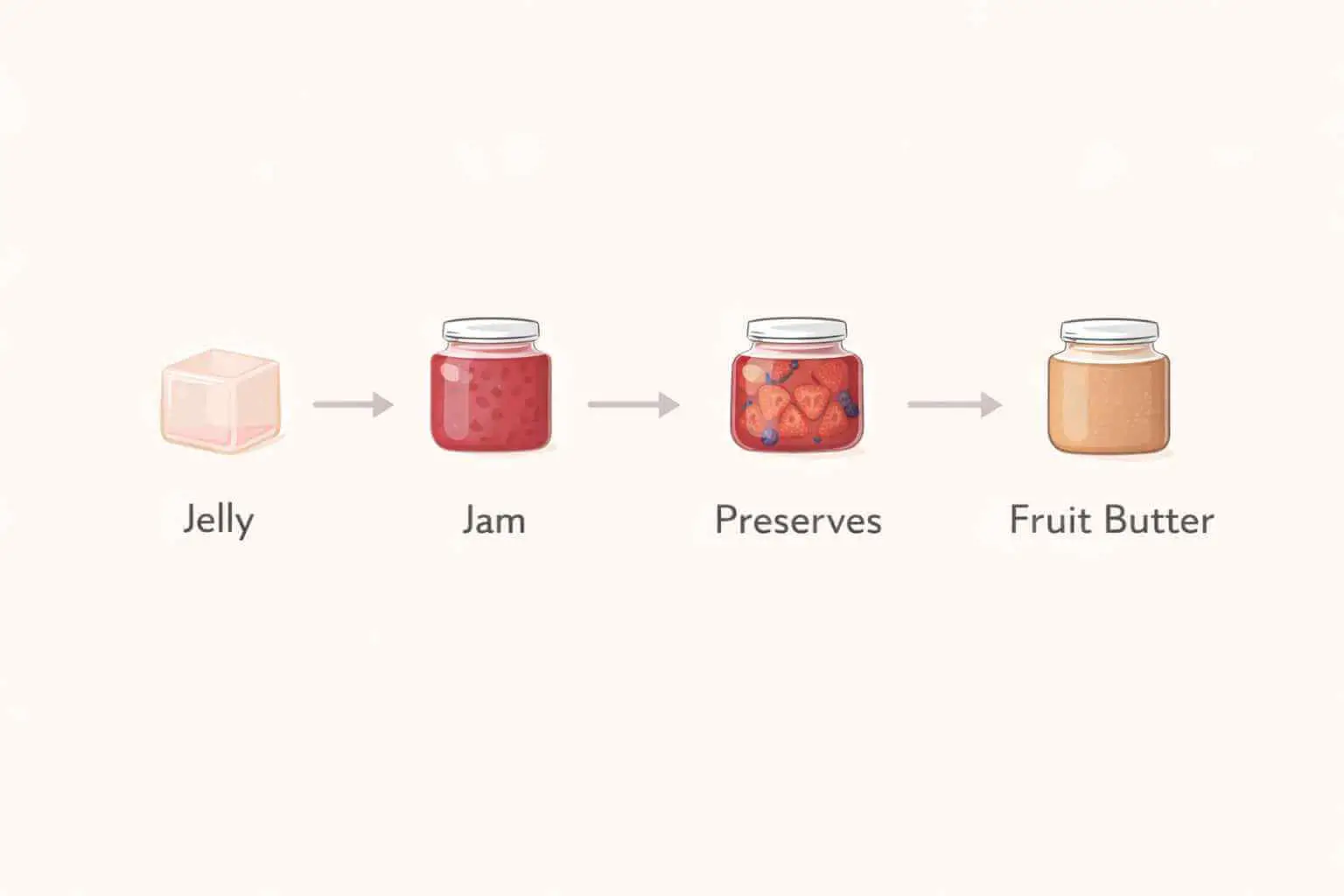
Preserves vs jam vs jelly differ primarily in fruit size and texture. Preserves contain the largest fruit pieces, jam uses crushed fruit, and jelly is made only from juice without pulp.
Texture Progression
- Jelly: smooth and clear
- Jam: slightly textured with pulp
- Preserves: chunky with large fruit pieces
This progression helps visually and physically distinguish each spread.
Fruit Spread vs Jam: Are They the Same?
Fruit spread vs jam is not exactly the same, though they are similar in use. Fruit spreads are a broader category, while jam follows more traditional preparation rules.
Key Differences
- Fruit spreads may contain less sugar or no added pectin
- Jam uses defined fruit and sugar ratios
- Texture and sweetness vary depending on formulation
- “Spread” can include jams, preserves, and other variations
This kind of labeling confusion is similar to gardening terms explained in Plant Food vs Fertilizer, where names often overlap but meanings differ.
Apple Butter vs Apple Jelly vs Jam
Apple butter vs apple jelly vs jam highlights how the same fruit can produce very different textures and flavors.
Key Differences
- Apple butter: Smooth, spiced, slow-cooked
- Apple jelly: Clear, firm, made from juice
- Apple jam: Contains crushed apples and pulp
These differences show how processing methods define the final product more than the fruit itself.
Fruit Butter vs Jelly: Texture and Processing Differences
Fruit butter vs jelly differs mainly in processing and texture. Fruit butter uses whole fruit pulp, while jelly uses strained juice, resulting in very different consistencies.
Key Differences
- Fruit butter: creamy and dense
- Jelly: firm and gel-like
- Fruit butter: slow-cooked
- Jelly: boiled with pectin
This contrast makes them suitable for different culinary uses.
Jam vs Marmalade vs Compote vs Conserves
Jam vs marmalade vs compote vs conserves comparisons provide deeper insight into fruit-based preparations.
Key Differences
- Marmalade: Citrus-based with peel included
- Compote: Loosely cooked fruit in syrup
- Conserves: Combination of fruits, often with nuts or dried fruits
- Jam: Crushed fruit with pectin
Each offers a unique texture and flavor profile depending on ingredients and cooking style. Similar to fruit spread comparisons, fruit varieties also differ in flavor and texture, as explained in Yellow Dragon Fruit vs Pink.
Which Is Healthier: Fruit Butter or Jam?
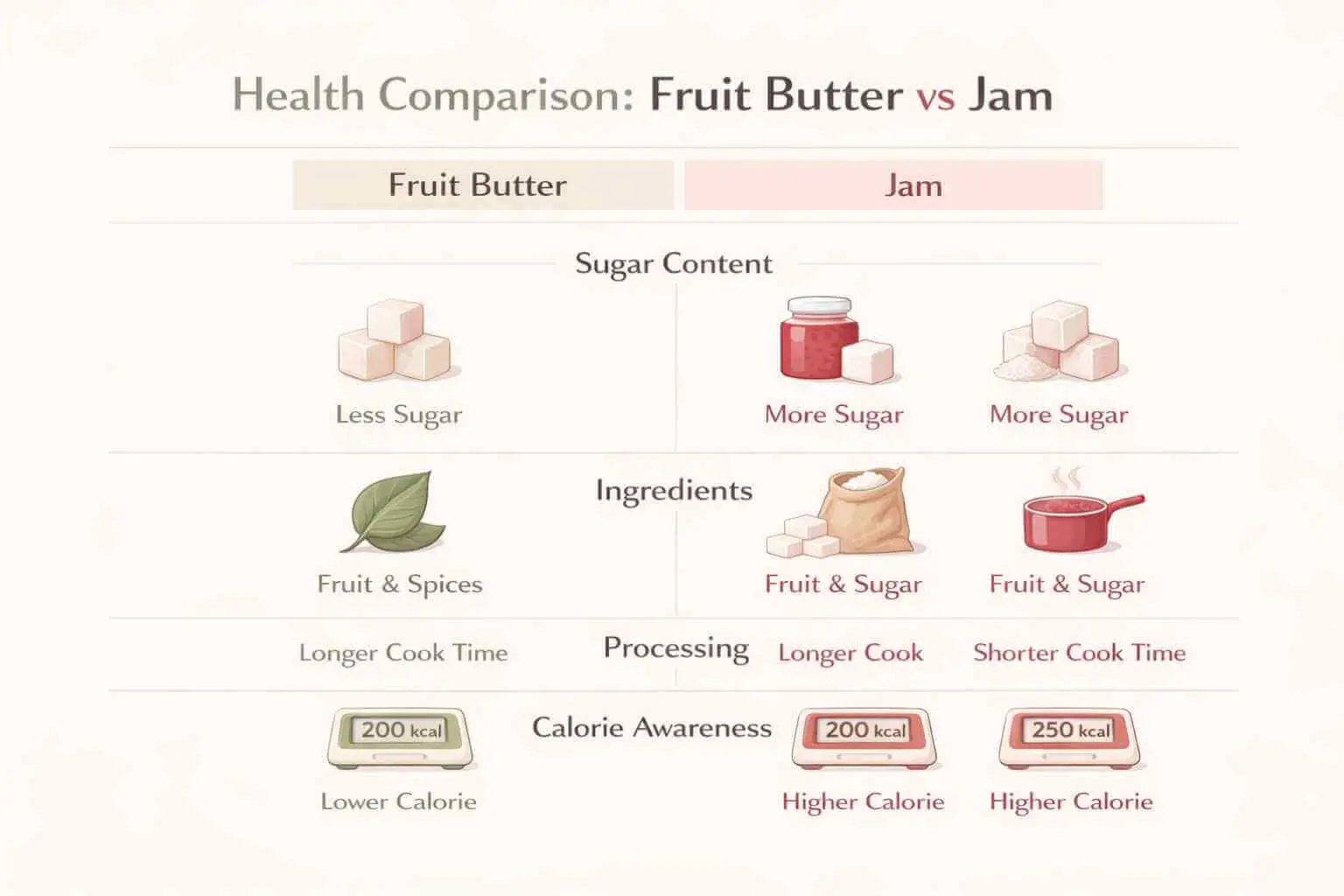
Fruit butter vs jam health depends mainly on sugar content and preparation method. Fruit butter may have less added sugar due to natural reduction, while jam often includes added sugar and pectin. For a deeper understanding of how fruit-based foods compare nutritionally, see our guide on Dragon Fruit vs Kiwi.
Key Considerations
- Fruit butter can be naturally sweetened through slow cooking
- Jam typically contains added sugar for preservation and texture
- Nutritional value varies by recipe
- Portion size significantly affects overall health impact
Common Mistakes When Choosing Fruit Spreads
Common Errors
- Confusing jelly with jam
- Assuming all fruit spreads have the same nutritional value
- Ignoring sugar content differences
- Misinterpreting labels like “fruit spread”
These mistakes can lead to selecting the wrong product for dietary or culinary needs.
Practical Uses: When to Choose Fruit Butter vs Jam
Best Uses
- Fruit butter: Ideal for toast, baking, and adding depth to recipes
- Jam: Perfect for sandwiches and desserts
- Jelly: Suitable for smooth spreads without texture
- Preserves: Great for dishes where fruit texture is desired
Choosing the right spread depends on the desired texture and flavor.
Conclusion
Fruit butter vs jam comes down to texture, cooking method, and fruit content. Fruit butter offers a smooth, deeply concentrated flavor created through slow cooking, while jam provides a fresher, slightly chunky consistency with a brighter taste. When compared to jelly, preserves, and other fruit spreads, each option serves a distinct purpose. Understanding these differences allows for better choices based on taste preferences, texture needs, and intended culinary use.
FAQs
1. What’s the difference between jam and jelly?
Jam contains crushed fruit and pulp, while jelly is made from filtered fruit juice and has a clear, firm texture.
2. Is fruit butter the same as jam?
No, fruit butter is smoother and cooked longer, while jam contains fruit pieces and is thickened with pectin.
3. What is fruit butter made of?
Fruit butter is made from fruit puree, sugar, and sometimes spices, slow-cooked until thick and smooth.
4. What is the difference between preserves and jam?
Preserves contain larger fruit chunks, while jam uses crushed fruit for a more uniform texture.
5. Is apple butter the same as apple jelly?
No, apple butter is thick and smooth from cooked pulp, while apple jelly is clear and made from fruit juice.
6. Which is healthier: jam or fruit butter?
It depends on sugar content, but fruit butter may have less added sugar if naturally reduced.