Introduction
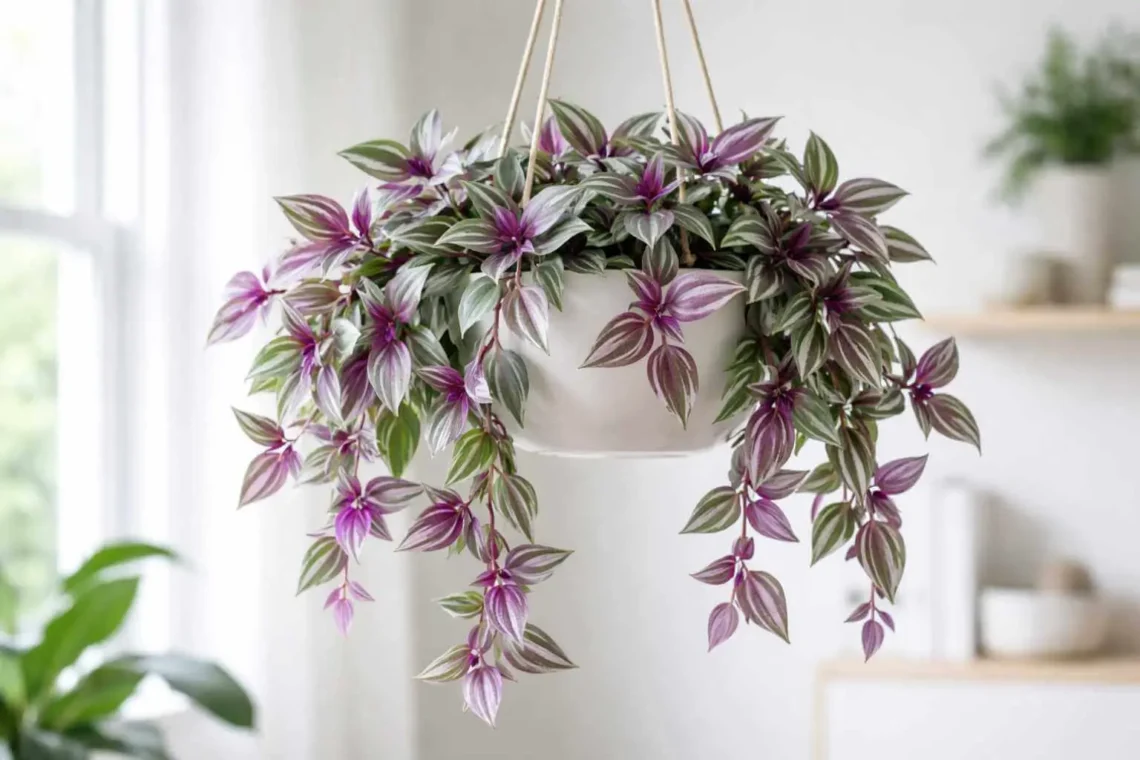
The jewish plant is a fast-growing, trailing houseplant valued for its vibrant foliage and easy-care nature. Popular in both modern and traditional interiors, it’s widely chosen for shelves, hanging baskets, and tabletops where its cascading stems add instant visual interest. The plant is especially loved for how well it adapts to a jewish plant indoor environment, tolerating a range of light and care conditions. Commonly referred to as the wandering jew plant, it stands out for its colorful leaves, quick propagation, and decorative versatility. Its ability to thrive indoors with minimal effort makes it a favorite among beginners and experienced plant owners alike, blending ornamental appeal with practical, low-maintenance growth.
What Is a Jewish Plant?
The jewish plant is a trailing ornamental houseplant known for its soft stems, colorful foliage, and rapid growth. Botanically associated with Tradescantia species, it spreads easily and adapts well to indoor conditions. The plant is commonly grown in pots or hanging containers, where its stems can trail freely.
It is widely known by several common names, with wandering jew plant being the most recognized in everyday usage. Its popularity as a houseplant comes from its resilience, ability to grow in varied lighting, and quick response to basic care. These qualities make it a practical choice for indoor plant collections.
Jewish Plant vs Wandering Jew Plant
The terms jewish plant and wandering jew plant are often used interchangeably in gardening and indoor plant discussions. Both names typically refer to the same group of Tradescantia plants. For beginners, this can create confusion, but the difference lies in naming rather than plant type.
In care guides and plant discussions, the wandering jew plant name is frequently used when talking about visual traits, varieties, and even wandering jew plant benefits such as decorative growth and ease of maintenance. Understanding that both names point to the same plant helps avoid misunderstandings when following care instructions or purchasing plants.
Jewish Plant Indoor Growing Guide
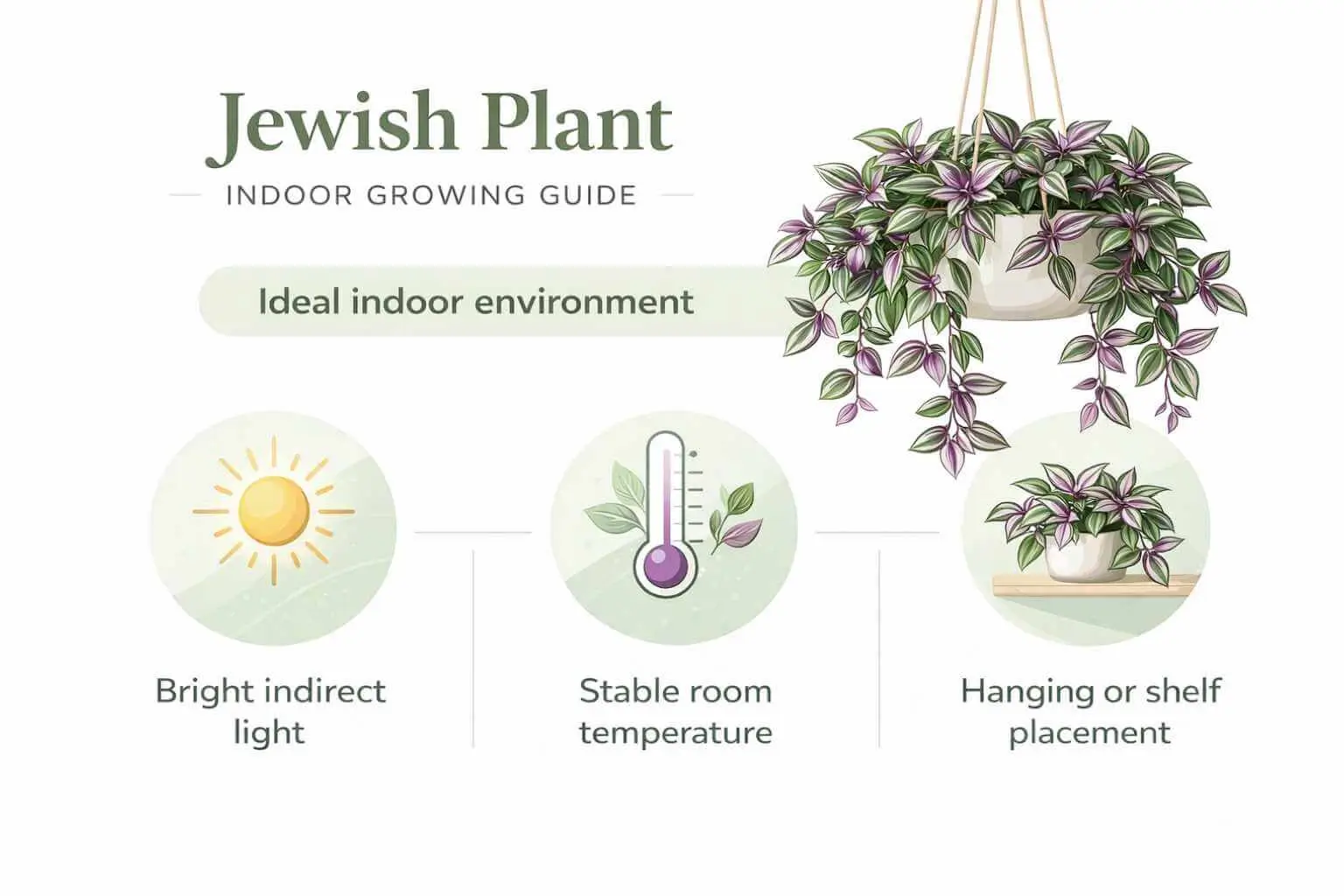
A jewish plant indoor setup works exceptionally well because the plant naturally adapts to controlled environments. It thrives in homes where temperatures remain stable and light exposure is moderate. Indoor growth allows better control over watering and prevents environmental stress.
Ideal home environments include living rooms, bedrooms, and offices with indirect light and good air circulation. The plant responds well to indoor humidity levels and continues to grow steadily when placed away from extreme heat or cold.
Light Requirements for Jewish Plant Indoors
The jewish plant grows best in bright, indirect light. This lighting supports strong leaf color and compact growth without causing leaf scorch.
Placement tips include:
- Near east- or north-facing windows
- A few feet away from bright south-facing windows
- Well-lit apartments with filtered sunlight
Low light is tolerated, but growth may become leggy and leaf color may fade over time.
Soil and Pot Selection
Well-draining soil is essential for healthy root development. A light potting mix that allows excess water to escape prevents root-related problems.
Recommended pot choices:
- Pots with drainage holes
- Lightweight plastic or terracotta containers
- Hanging baskets for trailing growth
Good drainage supports steady growth and reduces the risk of overwatering.
Jewish Plant Care Guide
A complete jewish plant care routine is simple and beginner-friendly. The plant’s easy-care nature makes it suitable for busy households and first-time plant owners. Consistent light, controlled watering, and occasional pruning are usually sufficient to keep it healthy.
Jewish Plant Care Indoors
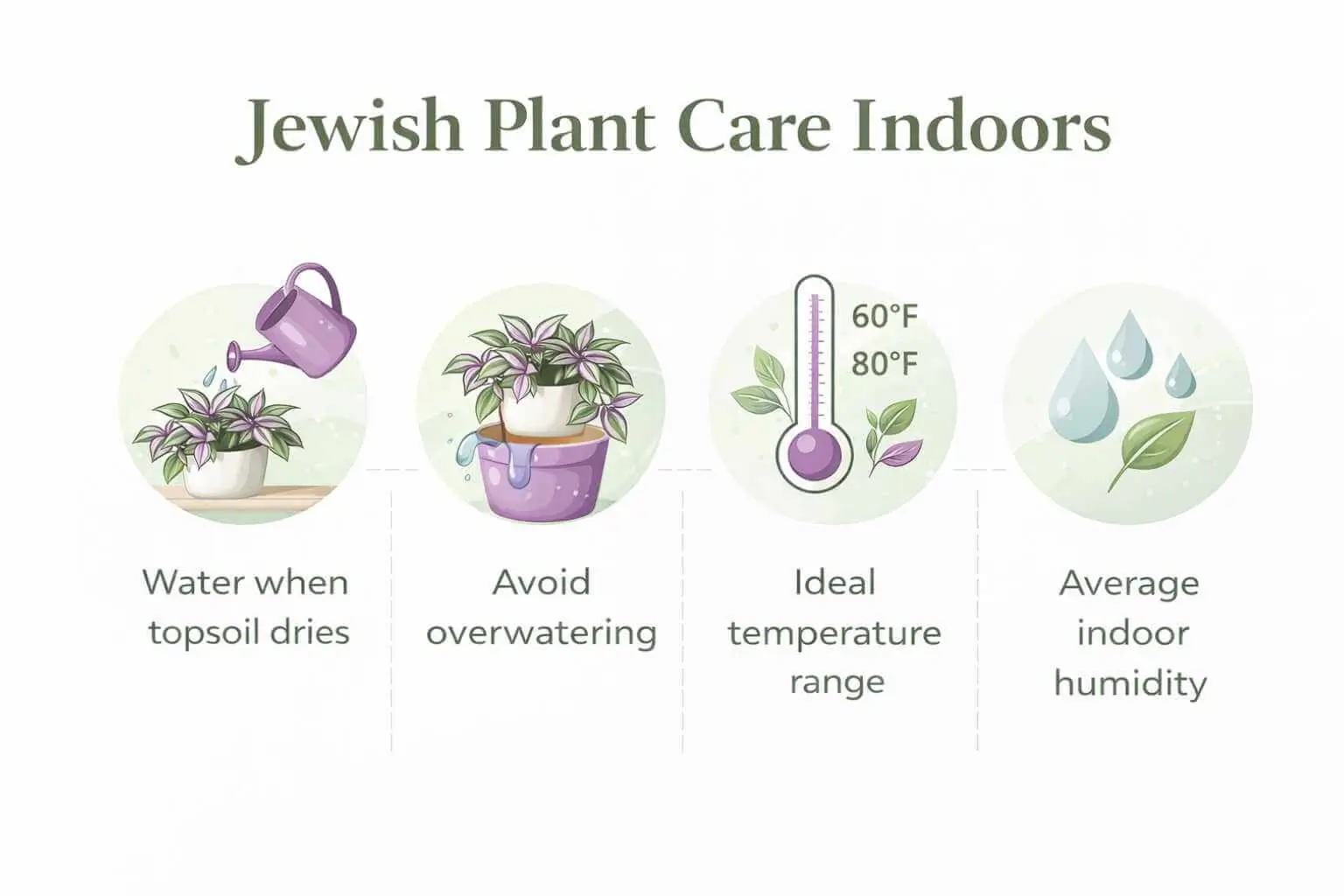
Effective jewish plant care indoors focuses on balanced watering and stable conditions. Water the plant when the top layer of soil feels dry. Overwatering is a common mistake and should be avoided.
Care essentials include:
- Moderate watering, not soggy soil
- Indoor temperatures between 18–27°C
- Average household humidity
Avoid placing the plant near air conditioners or heaters, as sudden temperature changes can stress the foliage.
Pruning and Maintenance Tips
Regular pruning encourages bushier, fuller growth. Trimming long stems helps the plant maintain a compact shape and prevents legginess.
Maintenance benefits include:
- Improved plant density
- Healthier leaf growth
- Easier control of trailing length
This is also where wandering jew varieties with pictures can be introduced visually during content expansion to show how pruning affects different forms.
Jewish Plant Benefits
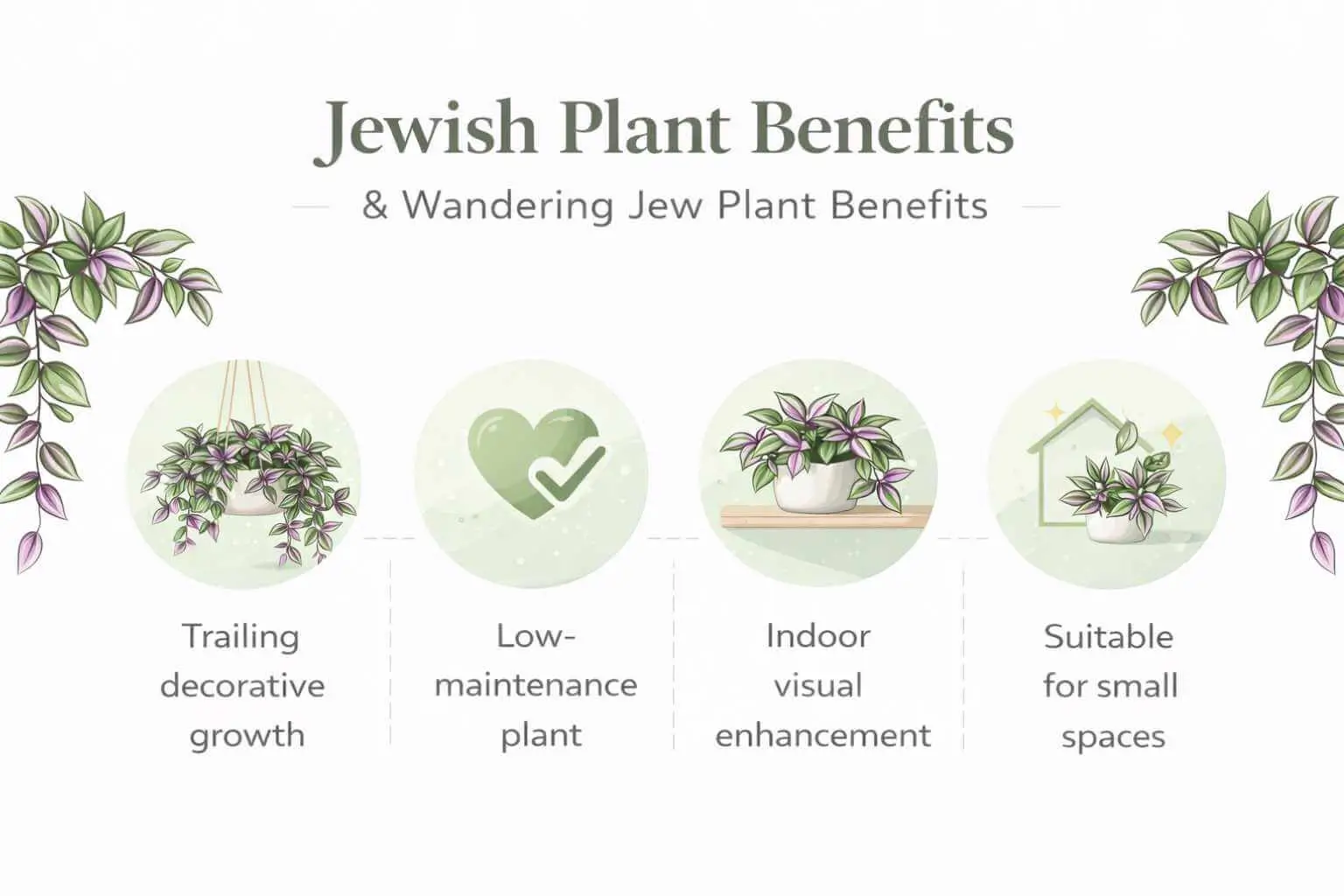
The jewish plant offers strong visual appeal through its trailing stems and patterned leaves. Its cascading growth makes it ideal for decorative displays, shelves, and hanging planters.
Key benefits include:
- Enhanced indoor aesthetics
- Space-friendly growth habit
- Low-maintenance decorative value
Detailed wandering jew plant benefits can be highlighted here, especially its adaptability and contribution to indoor visual freshness.
Wandering Jew Plant Spiritual Meaning
The wandering jew plant is often associated with symbolic ideas related to growth, endurance, and continuity. In many cultural interpretations, its fast-growing nature represents resilience and adaptability.
Common beliefs link the plant to:
- Steady personal growth
- Persistence through change
- Renewal through propagation
For positive energy, it is commonly placed in bright indoor spaces without making direct claims, allowing personal interpretation to guide placement.
Jewish Plant Varieties
There are several popular jewish plant varieties, each differing in leaf color, pattern, and growth habit. Some feature deep purple foliage, while others display green, silver, or striped leaves.
Varietal differences include:
- Leaf texture and coloration
- Stem thickness
- Growth speed and spread
Wandering Jew Varieties With Pictures
This section is ideal for visual reference, where images can showcase how wandering jew varieties differ in appearance. Pictures help readers compare leaf patterns and understand subtle care differences among varieties.
Is the Jewish Plant Safe for Pets?
Pet safety is an important concern for households with animals. While visually appealing, the jewish plant requires careful placement in homes with pets to reduce exposure.
Wandering Jew Plant Toxic to Cats
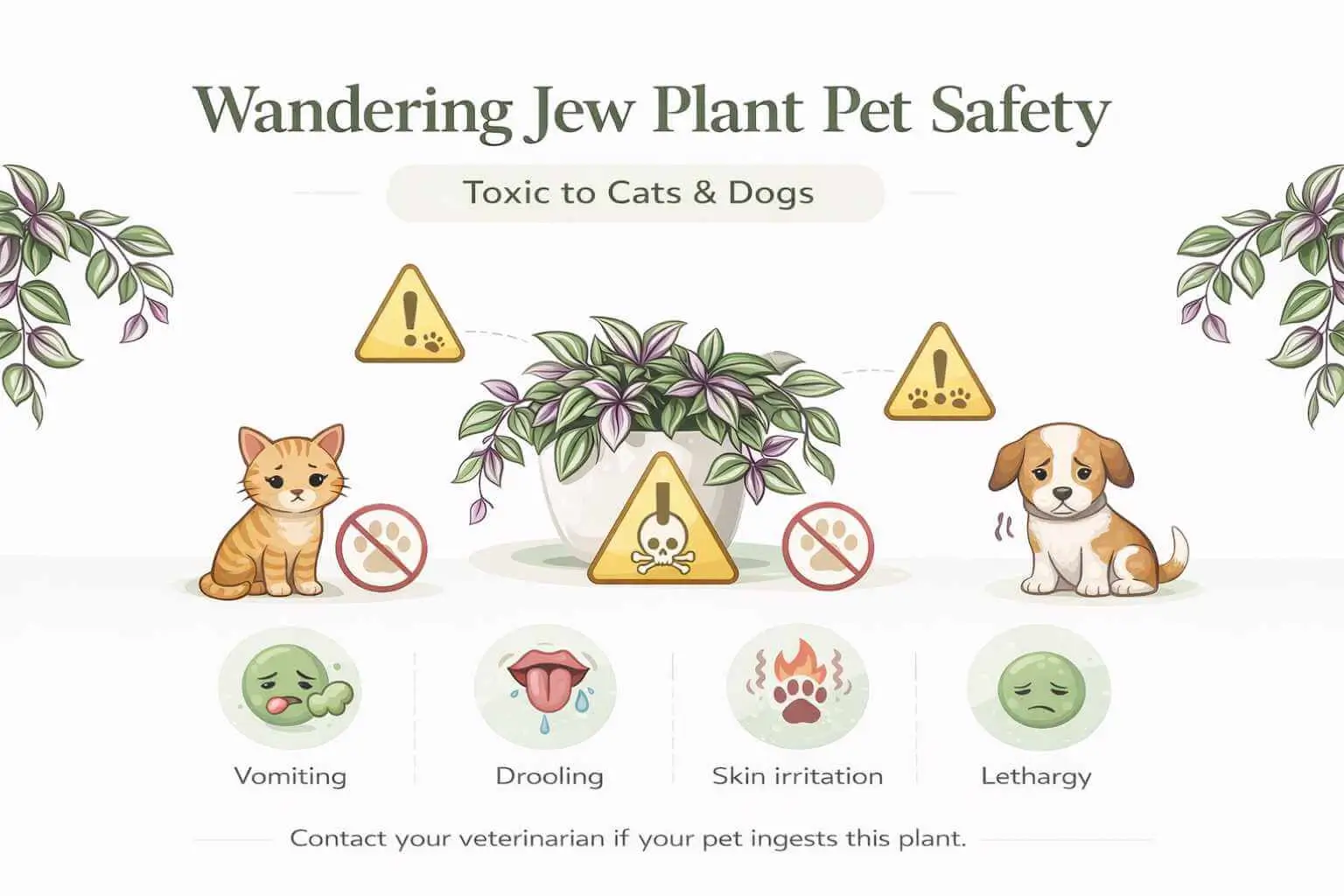
The wandering jew plant toxic to cats concern is valid. The plant’s sap can cause skin irritation and digestive discomfort if ingested.
Symptoms may include:
- Mouth or skin irritation
- Drooling
- Mild stomach upset
Safety precautions include keeping the plant out of reach and monitoring pets around trailing stems.
Jewish Plant for Sale – What to Know Before Buying
A jewish plant for sale is commonly found at garden centers, nurseries, and online plant shops. Before purchasing, it’s important to check the plant’s overall health.
Look for:
- Firm stems and vibrant leaves
- No signs of pests or discoloration
- Well-draining soil in the pot
Healthy plants establish faster and adapt better to indoor environments.
Common Problems and Solutions
Common issues with the jewish plant are usually care-related and easy to correct.
- Yellowing leaves: Often caused by overwatering or poor drainage
- Leggy growth: Results from low light conditions
- Overwatering issues: Leads to root stress and weakened growth
Adjusting light exposure, watering habits, and pruning routines typically resolves these problems quickly.
Conclusion
The jewish plant stands out as a low-maintenance, visually striking houseplant that fits easily into most indoor spaces. Its trailing growth, adaptable nature, and minimal care needs make it suitable for beginners and experienced plant owners alike. With proper light, well-draining soil, moderate watering, and occasional pruning, the plant maintains healthy growth and vibrant foliage year-round. The combination of easy care and strong ornamental value highlights the long-term jewish plant benefits for indoor environments. If you’re new to houseplants, this is an ideal option to start with—try growing it indoors, explore different varieties, or share cuttings to expand your collection.
Learn more: 5+ Stunning Dwarf Myrtle Hedge Ideas for Elegant Gardens
FAQs
Is the jewish plant easy to grow indoors?
Yes, the jewish plant is considered very easy to grow indoors. It adapts well to indoor conditions, tolerates minor care mistakes, and grows steadily with basic light and watering routines.
How often should I water a jewish plant?
Water the jewish plant when the top layer of soil feels dry. Overwatering should be avoided, as consistently wet soil can lead to root issues and yellowing leaves.
Does the wandering jew plant need direct sunlight?
No, the wandering jew plant does not require direct sunlight. Bright, indirect light is ideal and helps maintain strong color and compact growth without damaging the leaves.
Is the wandering jew plant toxic to cats and dogs?
Yes, the wandering jew plant can be mildly toxic to cats and dogs. Contact with the sap or ingestion may cause irritation, so it’s best to keep the plant out of reach of pets.
What are the benefits of growing a jewish plant indoors?
Growing a jewish plant indoors offers decorative trailing growth, easy maintenance, and adaptable care requirements. It enhances indoor aesthetics while requiring minimal effort to maintain healthy growth.