
Introduction
A panda plant is a popular indoor succulent known for its fuzzy, silvery-green leaves and distinctive brown tips. Botanically, it is identified as Kalanchoe tomentosa, a member of the Crassulaceae family, prized for its slow growth and low-maintenance appeal. Valued in succulent collections and indoor gardening, the panda plant succulent combines aesthetic charm with practical care advantages. Its soft, velvety leaves, drought tolerance, and compact form make it ideal for homes and offices. Like the Purple Jew Plant, panda plants are popular indoor succulents that offer both aesthetic charm and low-maintenance care. Understanding panda plant care, from light requirements to propagation techniques, ensures healthy growth and adds a decorative touch to any space. Botanically, it is identified as Kalanchoe tomentosa, a member of the Crassulaceae family prized for its slow growth and low-maintenance appeal.
Characteristics of Panda Plants
Panda plants are characterized by thick, fuzzy leaves covered in silvery-white hairs with brown or rust-colored tips. They typically grow upright and compact, reaching an average height of 12–18 inches indoors. These succulents are slow-growing, with a lifespan that can extend over several years when properly cared for. Panda plant flowers are small, tubular, and usually emerge in clusters during the plant’s bloom cycle. Unlike similar succulents, such as the chocolate soldier, panda plants feature more pronounced fuzziness and a unique leaf tip coloration. Understanding how big do panda plants get and their physical traits helps differentiate them from other indoor succulents.
Types and Varieties of Panda Plants
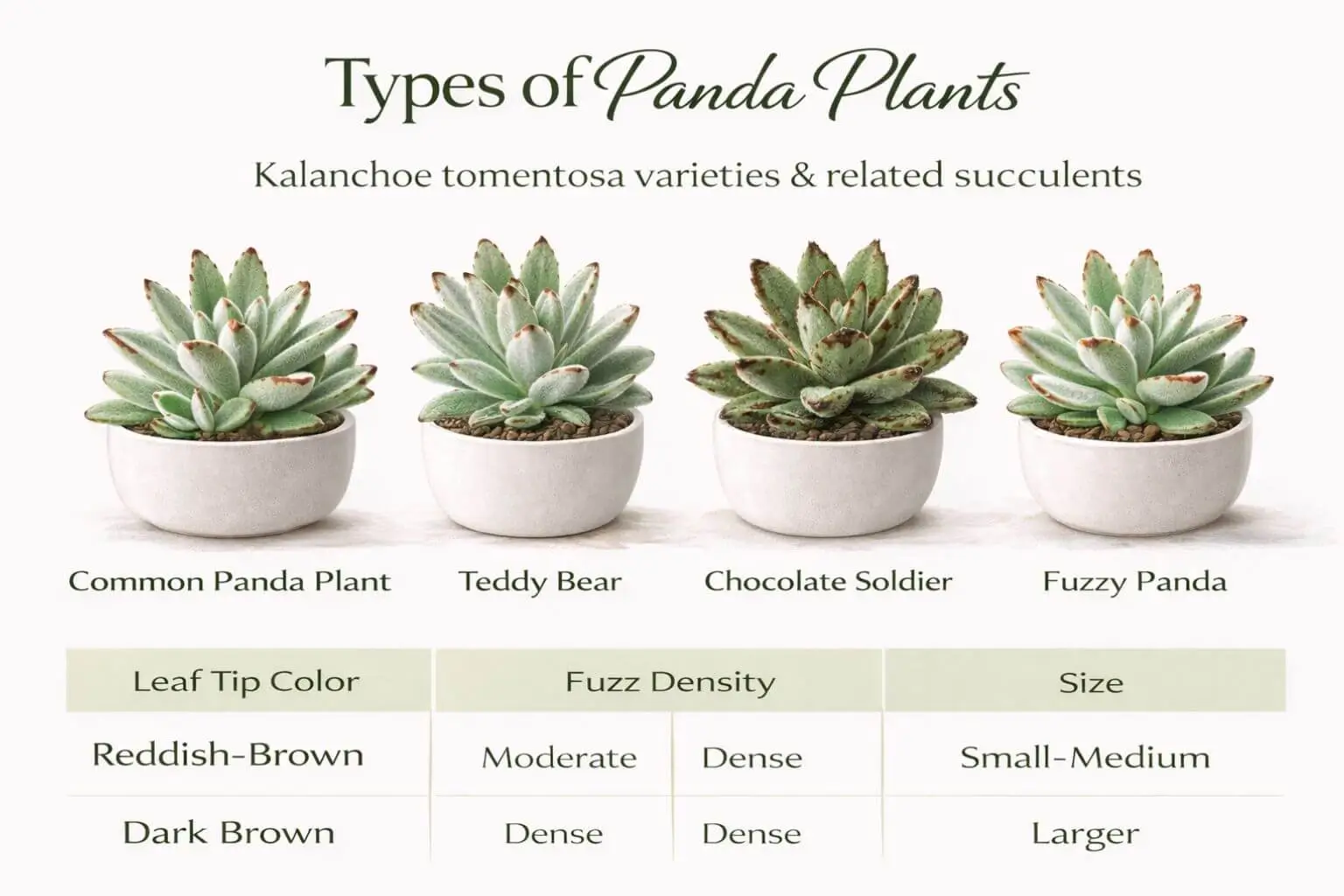
The Kalanchoe tomentosa species includes several varieties, each with subtle differences in leaf color, fuzz density, and tip shade. Popular forms include the traditional panda plant with brown-tipped leaves and hybrid types such as the chocolate panda plant, which exhibits darker leaf tips. While panda plants remain compact indoor succulents, outdoor plants such as Rock Cotoneaster provide similar visual interest in garden landscaping. Related plants like chocolate soldier vs panda plant show visual similarities but differ in leaf shape and hair texture. Exploring types of panda plants allows collectors to choose varieties that fit specific aesthetic preferences or indoor gardening conditions.
Panda Plant Care
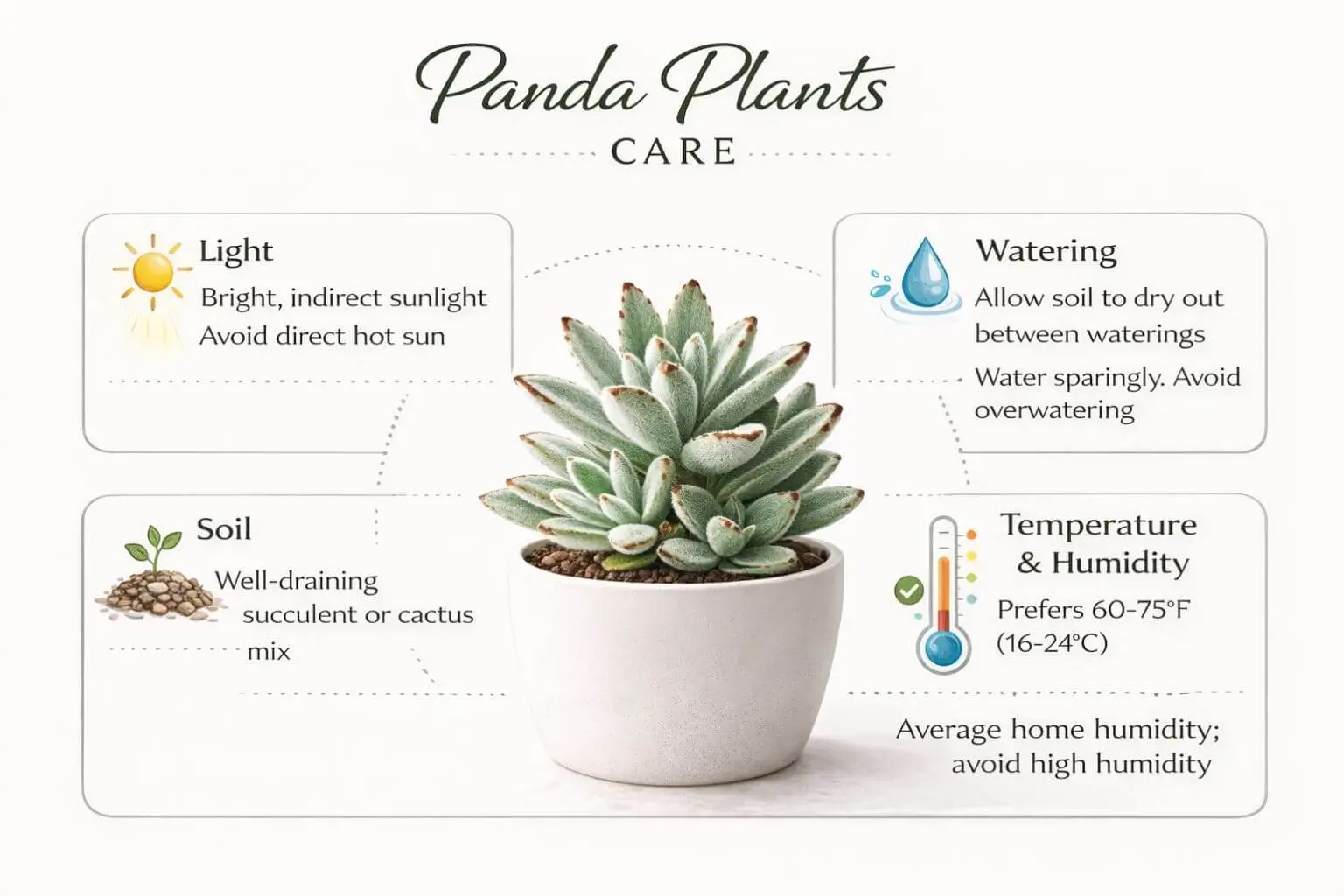
Caring for a panda plant requires attention to light, water, soil, and environment. These succulents thrive in bright, indirect sunlight, although they can tolerate partial direct exposure. Overwatering can cause root rot, so allow the soil to dry completely between watering sessions. Use well-draining, sandy succulent soil and choose pots with drainage holes to prevent water accumulation. Panda plants tolerate typical indoor temperatures but prefer moderate humidity. Observing underwatered panda plant signs, such as shriveled leaves, and adjusting care accordingly ensures steady growth.
Propagation of Panda Plants
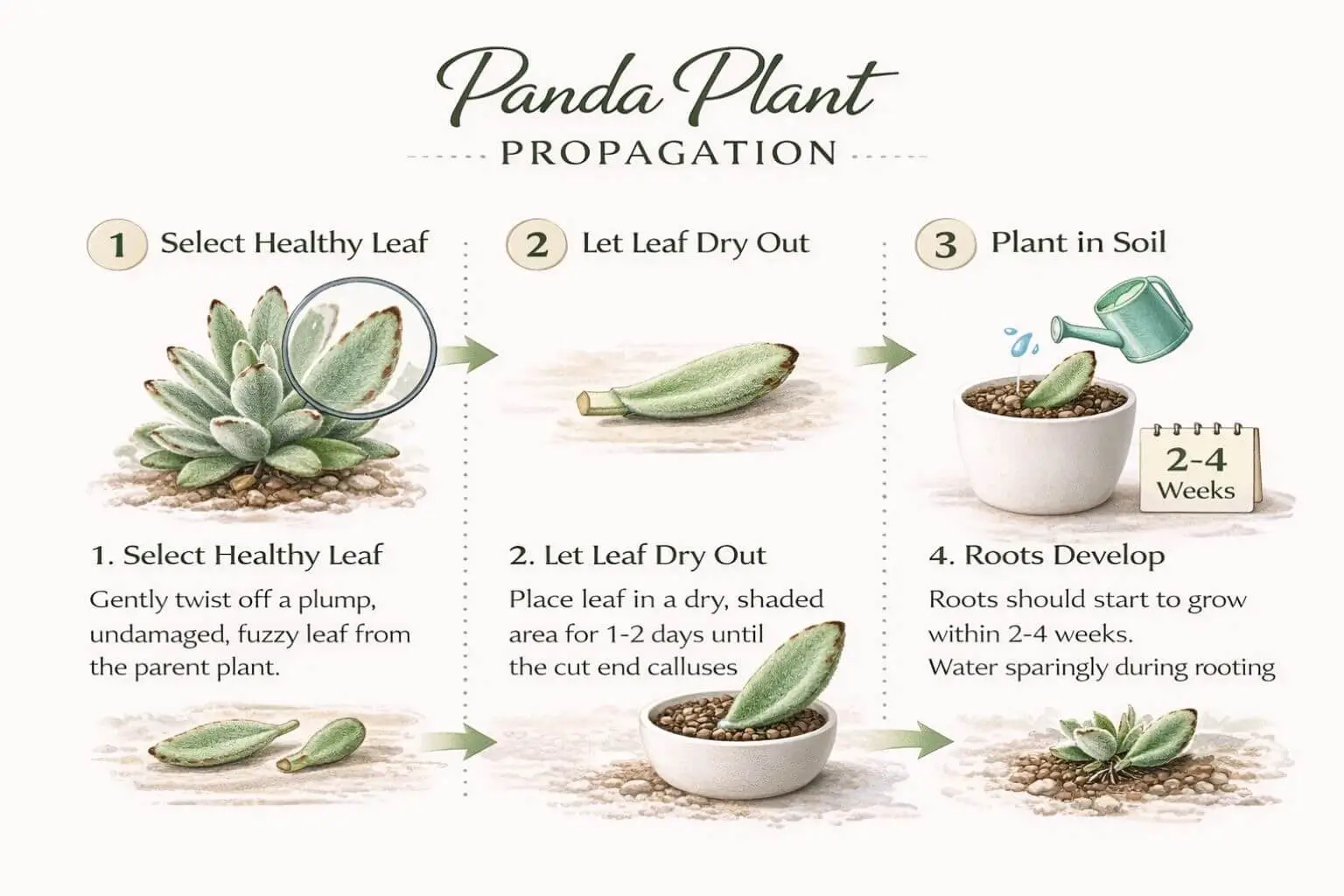
Panda plant propagation is commonly done through leaf cuttings. Select a healthy, mature leaf and allow it to dry for a day or two to prevent rot. Prepare a well-draining soil mix and insert the leaf base slightly into the soil. Maintain moderate warmth and indirect light; roots typically form within 2–4 weeks. Avoid overwatering during this period to prevent fungal issues. Successful propagating panda plant techniques depend on leaf health, soil preparation, and stable environmental conditions. Regular observation and gentle handling minimize propagation failures.
Flowering and Growth Cycle
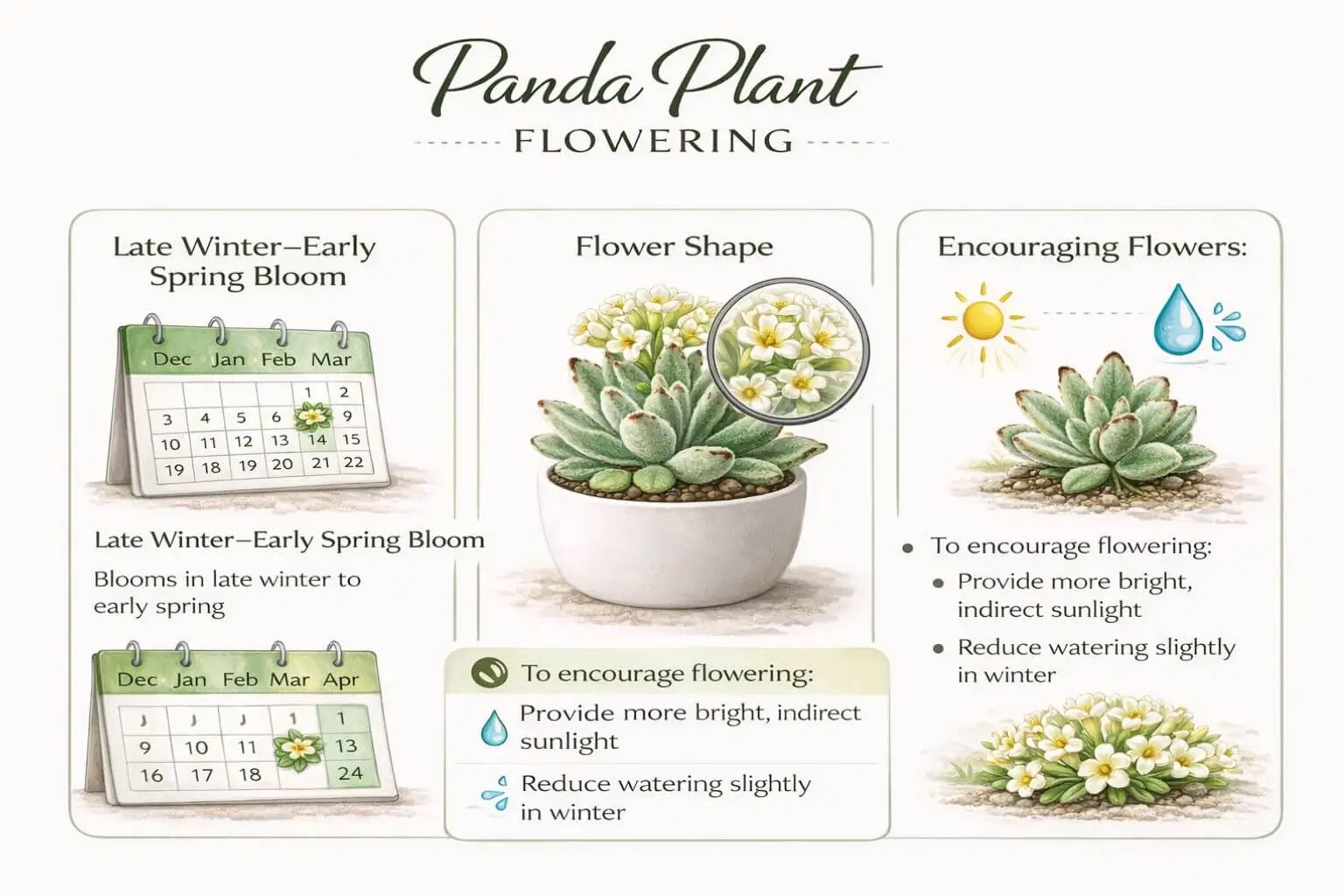
Panda plants generally flower in late winter to early spring under favorable conditions. Indoor blooming requires sufficient light, slight reductions in watering, and stable temperatures. Flowers appear as small clusters of tubular blooms, often in cream or pale yellow shades. Seasonal adjustments, such as moderating water and ensuring light exposure, encourage flowering. Understanding the panda plant flower cycle allows growers to anticipate blooms and maintain healthy growth throughout the year.
Safety and Toxicity
Panda plants contain mild compounds that may cause gastrointestinal upset in pets if ingested. They are considered toxic to cats and dogs in significant amounts, although casual contact or handling is generally safe. Human exposure usually poses no serious risk, but it is advisable to wash hands after handling leaves. Keeping the plant out of reach of pets and young children ensures safety while maintaining the ornamental value of panda plants poisonous to cats or dogs.
Common Issues and Troubleshooting
Common problems with panda plants include leaf discoloration, pests such as mealybugs, and fungal infections from overwatering. Slow growth or drooping leaves often indicates water stress, either from underwatering or poor drainage. Corrective actions involve adjusting watering routines, improving soil drainage, and providing proper light exposure. Observing underwatered panda plant signs early can prevent permanent damage and maintain healthy growth.
Conclusion
Panda plants are unique, ornamental succulents prized for their fuzzy leaves, slow growth, and indoor adaptability. Understanding their propagation, flowering cycles, and care requirements ensures they thrive in home or office settings. With proper attention, these visually appealing succulents offer long-lasting decorative value and an engaging experience for succulent enthusiasts.
FAQs About Panda Plants
- How do I propagate a panda plant successfully?
Use healthy leaf cuttings, allow them to callous for 1–2 days, plant in well-draining soil, and keep in indirect light. Roots appear in 2–4 weeks. - Do panda plants need direct sunlight?
They prefer bright, indirect light but tolerate some direct sun. Avoid prolonged harsh sunlight to prevent leaf burn. - Are panda plants safe for cats and dogs?
Panda plants contain mild toxins that may upset pets if ingested. Handle with care and keep out of reach of animals. - When do panda plants flower and what do the flowers look like?
Panda plants flower in late winter to early spring. Flowers are small, tubular, and cream or pale yellow, usually forming clusters. - How large do panda plants grow indoors?
Indoors, panda plants typically reach 12–18 inches in height with a similar spread, depending on light and care conditions.