Introduction
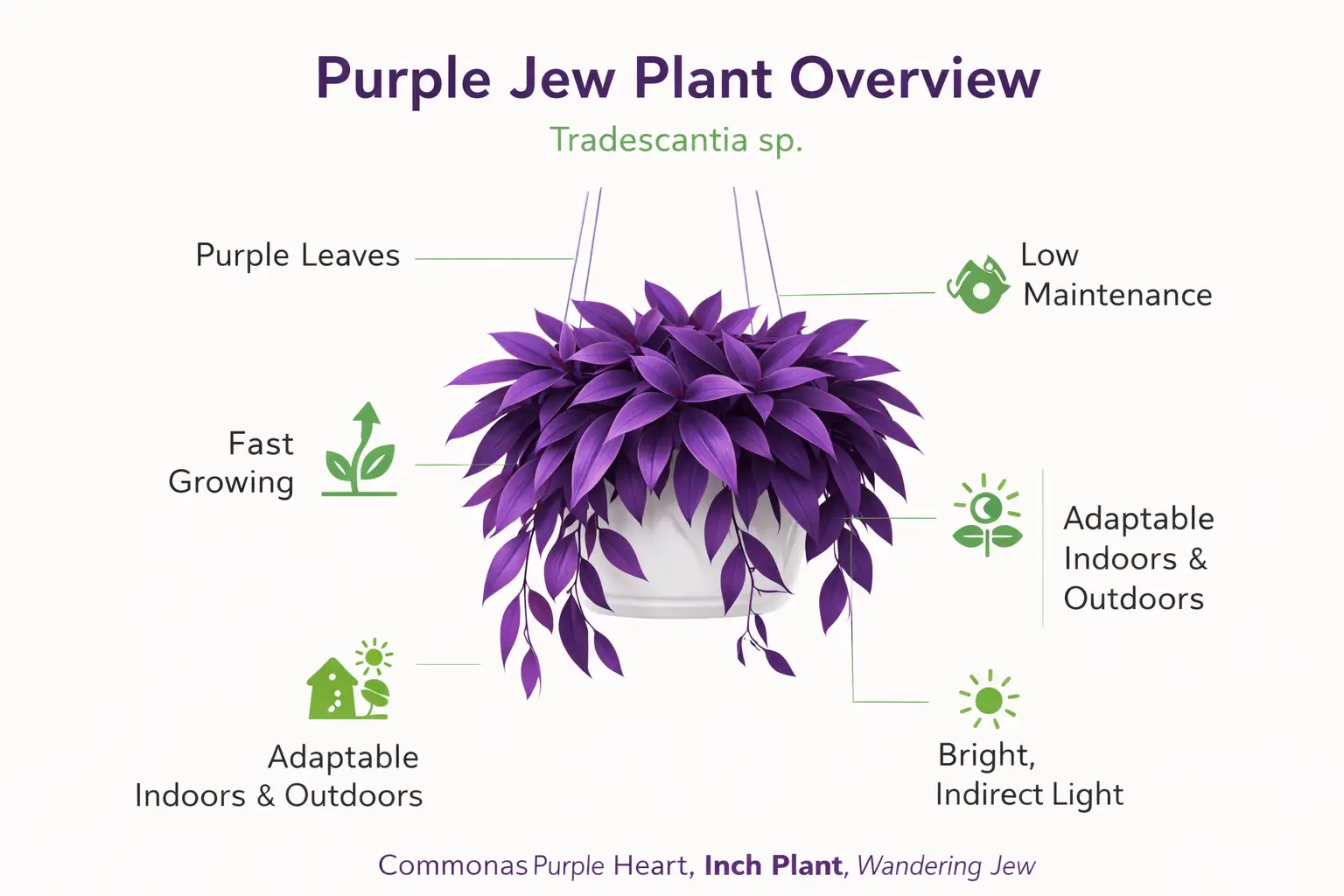
The purple jew plant is a fast-growing, visually striking plant known for its rich purple foliage and trailing growth habit. Popular in both indoor and outdoor gardening, this plant stands out for its vibrant color, adaptability, and ease of care. Gardeners often choose the purple jew plant because it thrives in containers, hanging baskets, and ground cover applications with minimal effort. Its ability to grow quickly, tolerate a range of light conditions, and maintain bold coloration makes it a favorite for beginners and experienced growers alike. Whether used as a decorative houseplant or an outdoor accent, the purple jew plant delivers strong visual impact without demanding intensive maintenance.
What Is a Purple Jew Plant?
What does the purple jew plant look like
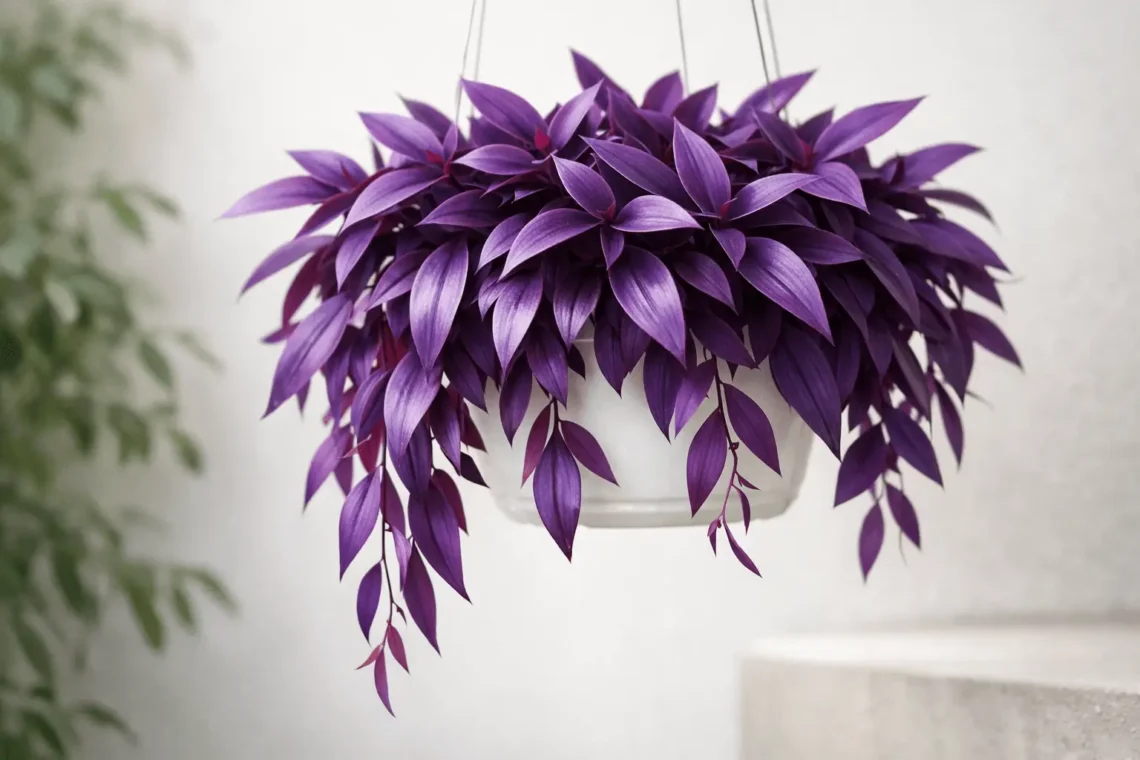
The purple jew plant features elongated, pointed leaves with a smooth surface and deep purple to violet coloration. Leaves grow along trailing or spreading stems, creating a dense, cascading appearance. Color intensity increases under bright light, while shaded conditions may produce greener tones. Compared to other wandering jew varieties, the purple jew plant has more uniform coloration and a stronger upright-to-trailing growth habit.
Purple jew plant scientific classification
The purple jew plant belongs to the genus Tradescantia, commonly referred to as Tradescantia wandering jew purple. It is closely related to the purple heart wandering jew and shares similar growth characteristics. These plants are part of the Commelinaceae family and are valued for ornamental foliage rather than flowers.
Purple Jew Plant vs Wandering Jew
Purple jew plant vs purple heart wandering jew
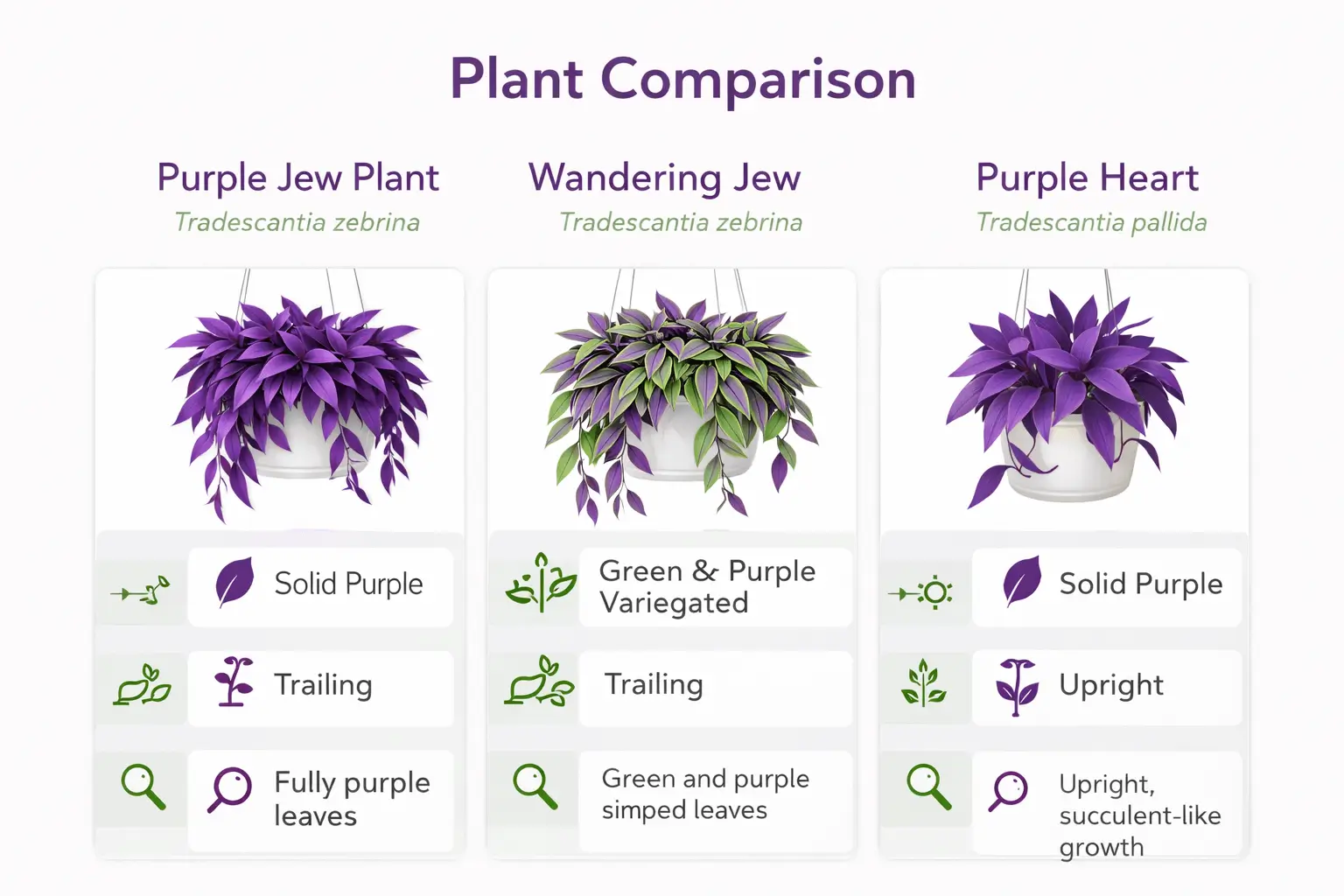
The purple jew plant and purple heart wandering jew are closely related but differ slightly in leaf thickness and growth form. Purple heart varieties typically have longer, narrower leaves and a more upright structure, while the purple jew plant tends to trail more freely.
Wandering jew vs purple heart plant
Wandering jew plants often show green, silver, or striped foliage, whereas purple heart plants maintain a deeper, solid purple tone. Growth styles also vary, with wandering jew spreading horizontally and purple heart forming denser clumps.
Purple heart vs wandering jew plant identification
Correct identification depends on leaf color, shape, and stem structure. Solid purple leaves with minimal striping usually indicate purple heart or purple jew plant types, while variegated patterns suggest other wandering jew varieties.
Types of Purple Jew Plant Varieties
-
Purple heart wandering jew plant
This is the most common variety, recognized for its deep purple leaves and hardy growth. It performs well in containers and outdoor beds.
-
Purple queen wandering jew
The purple queen wandering jew features richer purple foliage and small pink flowers. It is often used as a decorative indoor plant.
-
Lilac wandering jew and burgundy wandering jew
These varieties display lighter purple, lilac, or burgundy tones. They are popular in landscape designs where softer color contrast is desired.
-
Purple fuzzy wandering jew plant
This variety has fine hairs on the leaf surface, giving it a soft texture and muted purple appearance compared to smoother-leaf types.
Purple Jew Plant Growing Conditions
-
Wandering jew sun or shade requirements
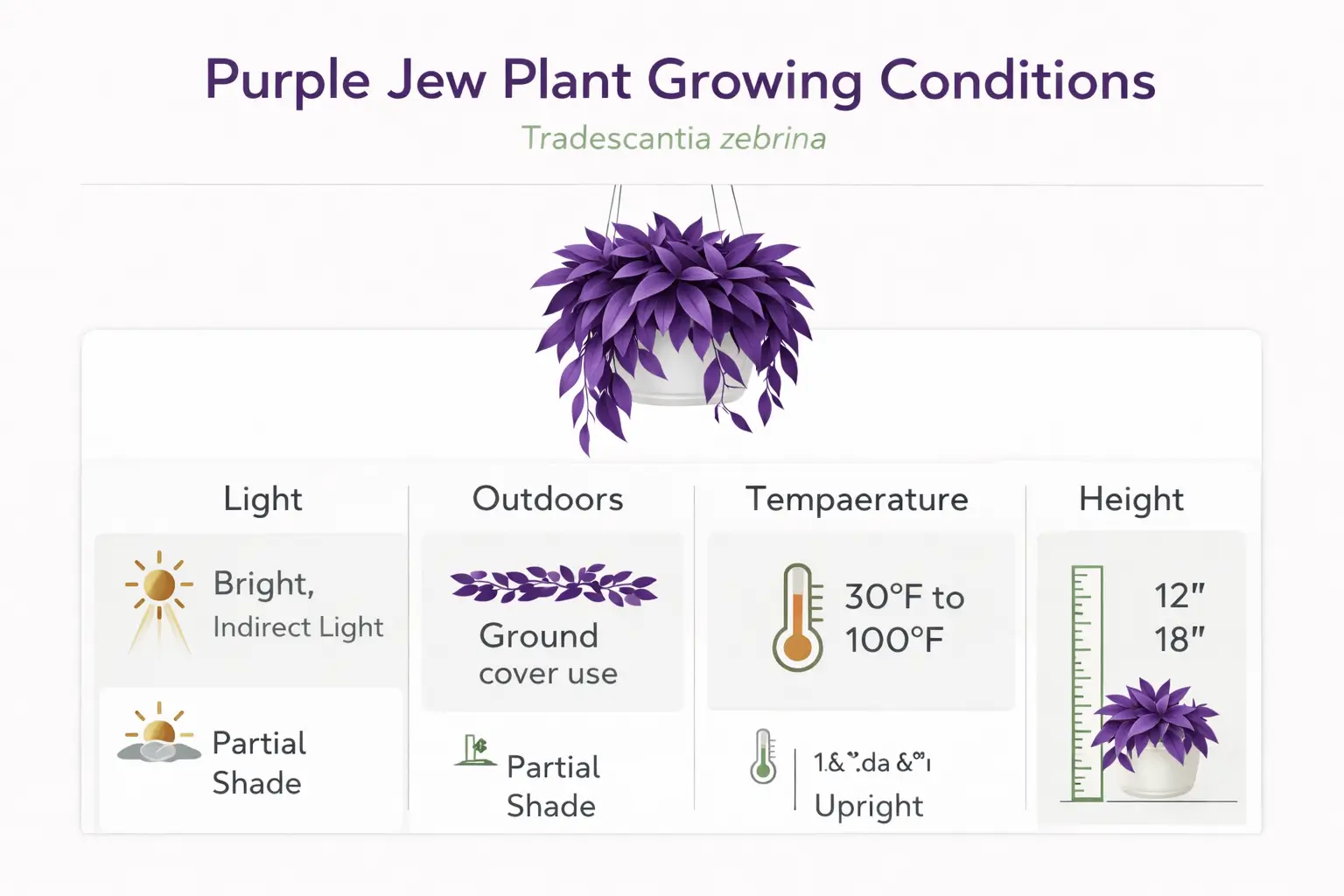
Full sun enhances purple coloration, while partial shade promotes faster growth with greener tones. Bright indirect light is ideal indoors.
-
Outdoor wandering jew planting
When planted outdoors, the purple jew plant works well as ground cover due to its spreading habit and soil-hugging growth.
-
Wandering jew cold tolerance and height
The plant tolerates mild frost but performs best in warm climates. Average height ranges from 8 to 14 inches, with longer trailing stems.
Purple Jew Plant Care Guide
Purple heart wandering jew plant care
- Water when the topsoil feels dry
- Use well-draining soil
- Avoid waterlogged roots
Caring for purple wandering jew plant
- Regular pruning encourages bushier growth
- Remove leggy stems to maintain shape
- Rotate indoor plants for even light exposure
Brown spots on wandering jew plant
Brown spots are caused by overwatering, fungal issues, or excessive direct sunlight. Proper drainage and airflow help prevent this problem.
Does the Purple Jew Plant Flower?
-
Wandering jew flowers and blooming season
The plant produces small, three-petaled flowers, usually pink or violet, during warm seasons.
-
Do wandering jew plants flower outdoors
Outdoor plants flower more reliably due to higher light exposure and natural growing conditions.
-
Tradescantia purple flowers characteristics
Flowers attract pollinators and add ornamental value, though foliage remains the primary feature.
Is Purple Jew Plant a Perennial or Annual?
-
Is wandering jew a perennial plant
Yes, wandering jew plants are perennials in warm climates and regrow annually from established roots.
-
Can a wandering jew plant live outside year-round
Year-round outdoor growth depends on climate. In colder regions, plants are treated as annuals or overwintered indoors.
Landscaping Uses of Purple Jew Plant
Purple jew plant as ground cover
- Dense soil coverage
- Helps reduce erosion
- Suppresses weeds
Read more: 7+ Powerful Reasons to Choose Australian Brush Cherry
Hanging purple leaf plant uses
Ideal for hanging baskets and containers where trailing stems create a cascading effect.
Wandering jew weed concerns
Controlled pruning and containment prevent aggressive spreading in garden beds.
Common Problems With Purple Jew Plant
-
Wandering jew not purple
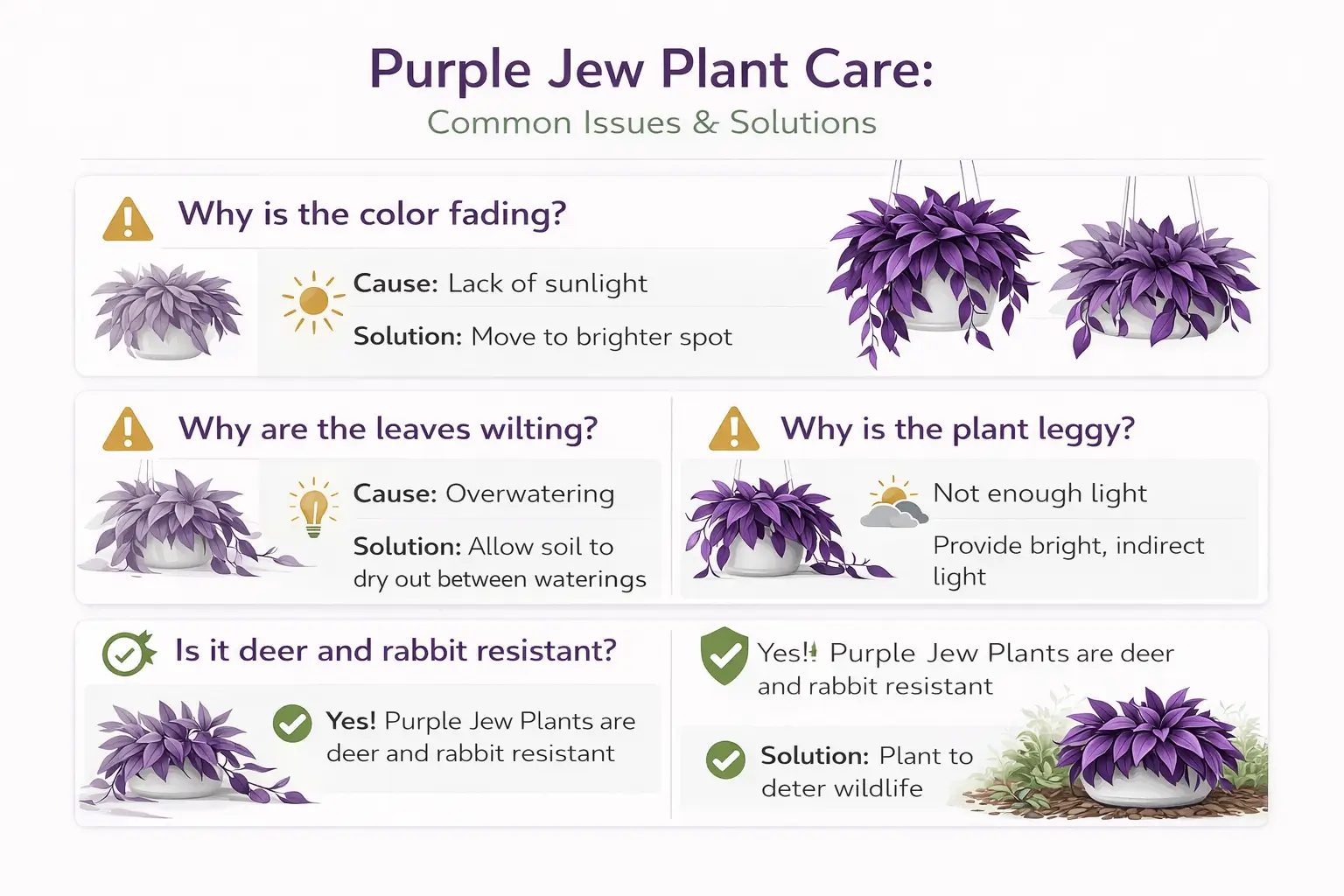
Lack of sunlight, nutrient imbalance, or excess water can cause fading. Increasing light usually restores color.
-
Do deer eat wandering jew plants
Deer generally avoid wandering jew plants, making them a low-risk choice for outdoor gardens.
Wandering Jew Plant New Name
The plant is increasingly referred to by its scientific name, Tradescantia, to promote inclusive and accurate plant naming.
Conclusion / Call-to-Action
The purple jew plant offers vibrant color, rapid growth, and easy maintenance, making it a versatile choice for homes and gardens. Its adaptability across containers, ground cover, and hanging displays adds to its popularity. Explore proper care techniques and select the right variety to enjoy long-lasting, healthy growth.
Read more: 5+ Proven Reasons to Grow Mexican Bird of Paradise Plant
FAQs: Purple Jew Plant
What is a purple jew plant?
It is a Tradescantia plant valued for purple foliage and trailing growth.
Is purple jew plant the same as purple heart wandering jew?
They are closely related but differ slightly in growth habit and leaf structure.
Does the purple jew plant flower?
Yes, it produces small pink or violet flowers under good conditions.
Is wandering jew plant a perennial?
Yes, it is perennial in warm climates.
Can purple jew plant grow outdoors?
Yes, especially in warm or mild regions.
How do I make my wandering jew more purple?
Increase sunlight exposure and avoid overwatering.
Is purple jew plant good as ground cover?
Yes, it spreads quickly and provides dense soil coverage.