
Introduction
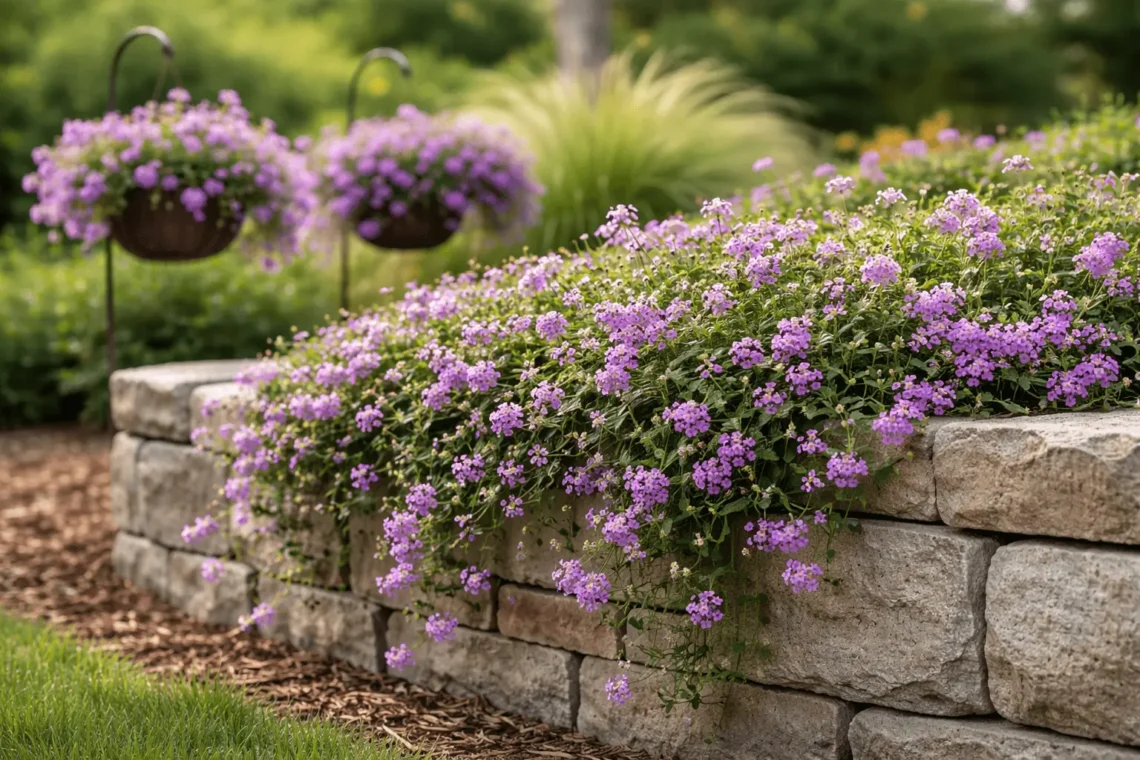
Purple trailing lantana is a low-growing, spreading ornamental plant recognized for its vivid purple blooms and cascading growth. Commonly identified as lantana montevidensis purple, this trailing lantana is widely used as a ground cover, hanging basket feature, and container spiller in warm climates. The purple lantana plant forms a dense, creeping mat that spreads horizontally rather than upright, making it visually distinct from bush-type lantana varieties. Its fine-textured foliage, continuous flowering, and strong heat tolerance explain its popularity in residential landscapes and decorative planters. With a naturally trailing and creeping growth habit, purple trailing lantana delivers long-lasting color with minimal upkeep, making it a practical and decorative choice for gardeners seeking reliable coverage and ornamental impact.
What Is Purple Trailing Lantana?
Botanical Classification and Plant Description
Purple trailing lantana belongs to the lantana species group and is botanically classified as lantana montevidensis. Unlike upright lantana hybrids, this plant displays a spreading, vine-like structure with flexible stems that root lightly as they extend. A typical lantana plant description includes small, textured green leaves with a slightly rough surface and clusters of tubular purple flowers that bloom continuously in warm conditions. While some lantana varieties are considered lantana hybrid plants bred for compact growth, lantana montevidensis maintains a naturally trailing form. The plant is valued for its fine foliage texture, consistent flowering, and ability to cover ground evenly without forming woody shrubs.
Trailing vs Creeping vs Mounding Lantana
Trailing lantana and creeping lantana are often used interchangeably, but both differ significantly from mounding lantana types. Creeping lantana, including purple creeping lantana, grows horizontally along the soil surface, while mounding lantana develops into a rounded, bush-like form. Lantana creeping varieties remain low to the ground and spread outward rather than upward. Purple trailing lantana fits firmly into the creeping category, offering a low-growing alternative to taller lantana plants while avoiding the dense, upright structure associated with mounding lantana cultivars.
Purple Trailing Lantana Growth Habit & Size
How Tall and Wide Does Purple Trailing Lantana Grow?
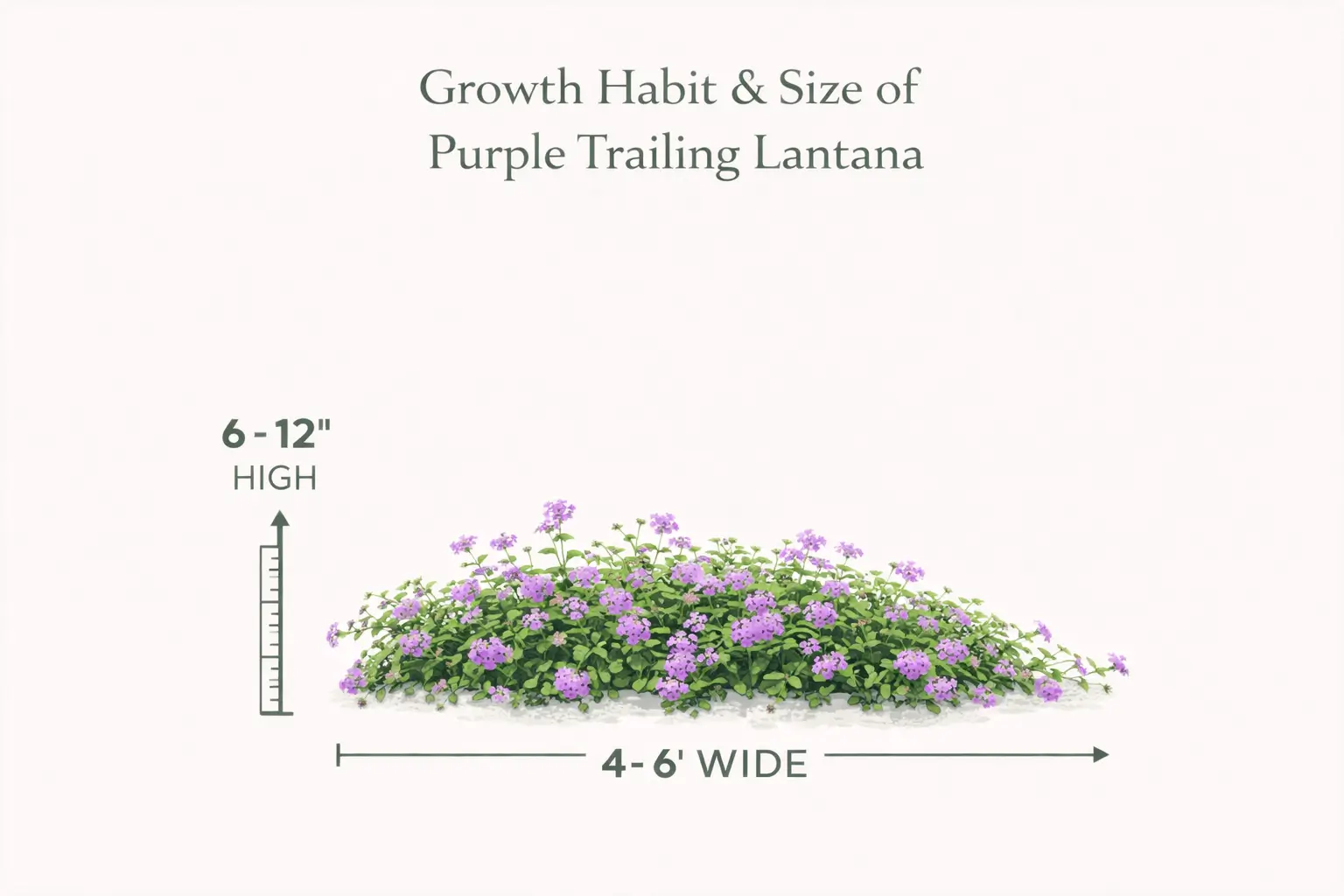
Gardeners often ask how tall do lantana grow and how big do lantana get when planning landscape spacing. Purple trailing lantana typically reaches a height of 6–12 inches, while its spread can extend 3–6 feet under ideal conditions. Compared to compact or bush lantana, which may grow 2–4 feet tall, this variety prioritizes width over height. Lantana height and width vary by climate, but the lantana plant size remains consistently low and spreading. In terms of overall lantana size, trailing types are best classified as ground-hugging plants rather than shrubs.
How Fast Does Purple Trailing Lantana Grow?
In warm regions, gardeners frequently ask how fast does lantana grow. Purple trailing lantana establishes quickly and shows vigorous lateral growth during the growing season. How fast do lantana grow depends on sunlight, temperature, and soil drainage, but spreading lantana can cover large areas within one season. Growth accelerates in late spring and summer, allowing rapid ground coverage and consistent flowering until cooler weather slows expansion.
Purple Trailing Lantana as Ground Cover
Why It’s Ideal for Ground Cover Landscaping
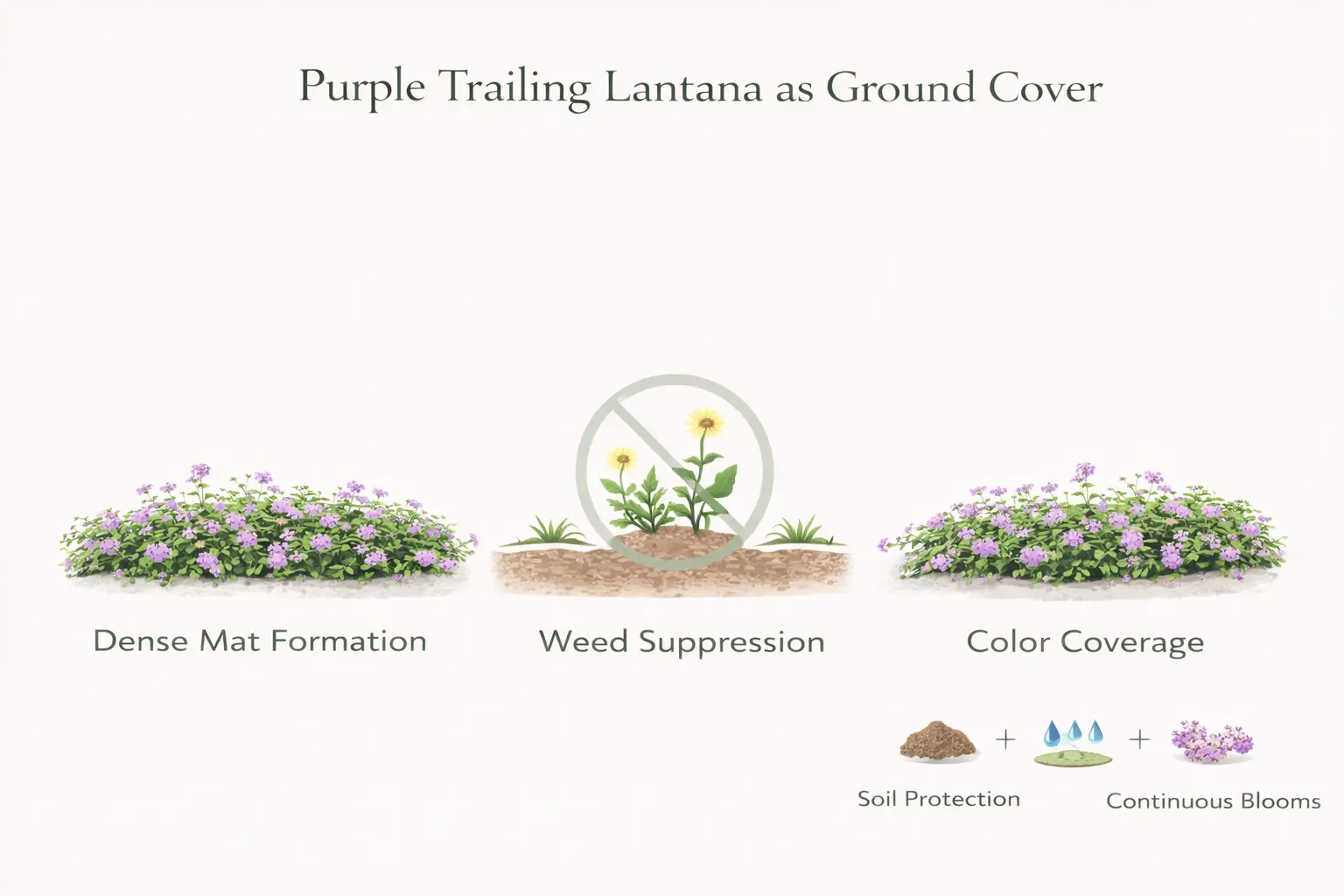
Purple trailing lantana ground cover is prized for its ability to form a dense mat that suppresses weeds and stabilizes soil. The interconnected stems of purple lantana ground cover reduce open soil exposure, limiting weed germination. As a lantana groundcover, it delivers continuous color while maintaining a low profile. Lantana plant ground cover options are especially effective in sunny areas where other plants struggle with heat and drought stress.
Best Landscape Uses
Purple trailing lantana performs well in multiple landscape applications:
- Front yards where low-growing lantana provides neat, colorful coverage
- Borders that benefit from spreading plants without vertical obstruction
- Slopes and erosion-prone areas where roots help stabilize soil
These uses make it a reliable low growing lantana option that functions similarly to a lantana hedge without the height of shrub forms.
Growing Purple Trailing Lantana in Pots & Hanging Baskets
Trailing Lantana in Containers
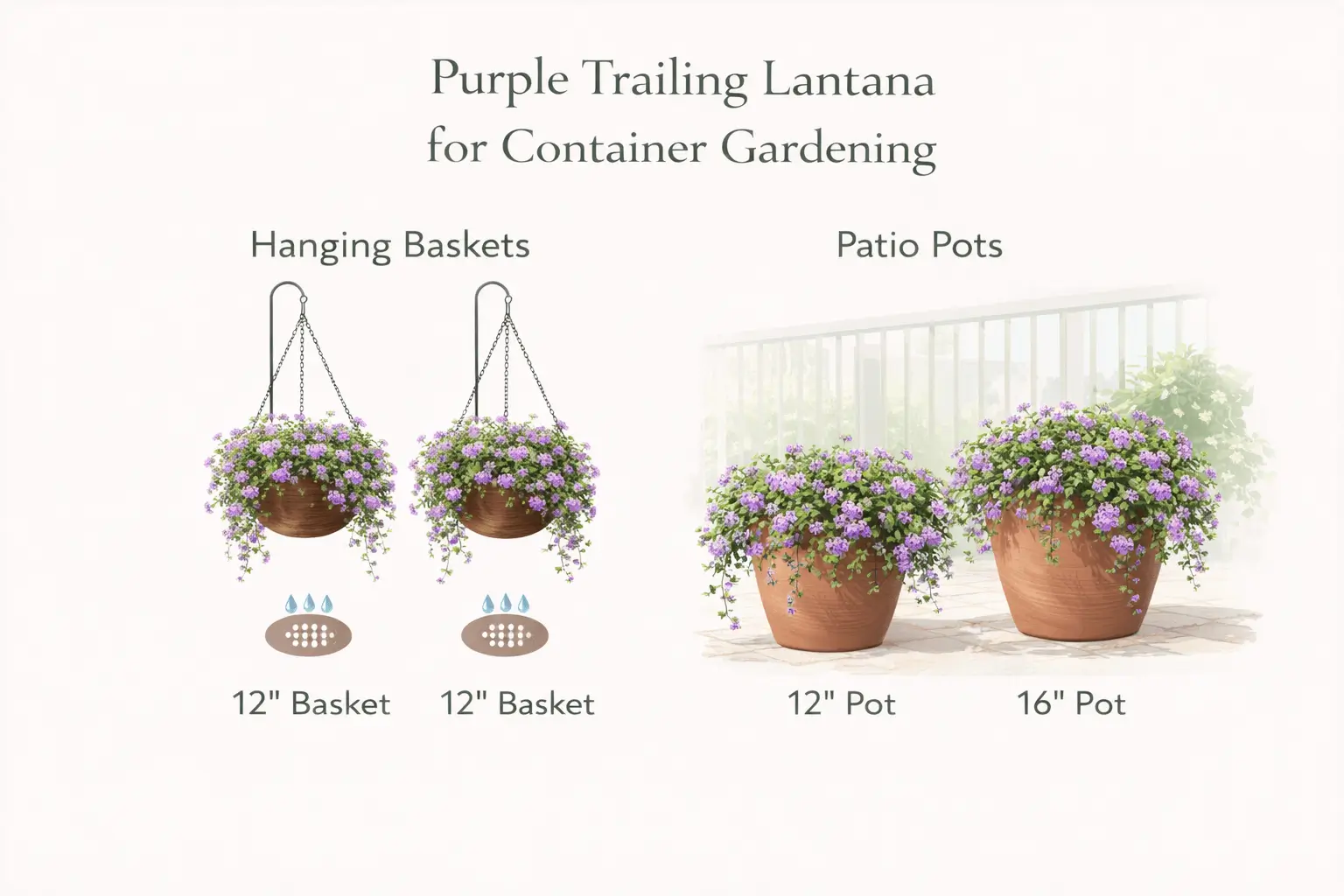
Trailing lantana in pots performs best in containers with excellent drainage. A 1 gallon lantana plant is suitable for small planters, while larger containers allow broader spread. Trailing lantana hanging basket arrangements require drainage holes to prevent water retention around roots. Container-grown plants maintain their trailing form while offering flexible placement options.
Best Trailing Effect for Patios & Balconies
Purple trailing plants are commonly used in elevated planters to emphasize cascading growth. Trailing purple plants create visual softness when allowed to spill over edges. As a purple trailing plant, lantana adds layered texture and long-season color to patios and balconies without excessive maintenance.
Purple Trailing Lantana Care Guide
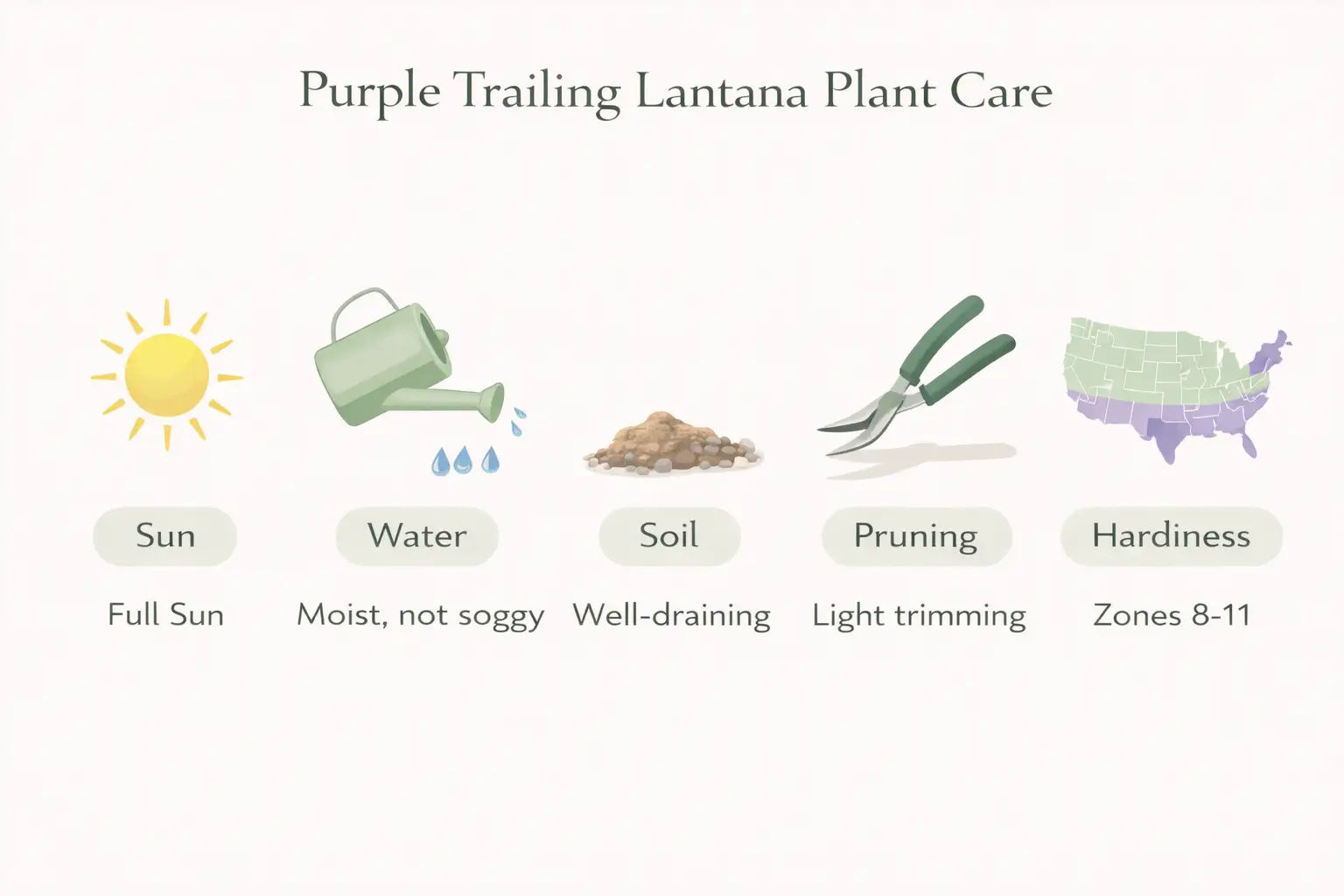
Sunlight Requirements
Lantana shade tolerance is limited. Purple trailing lantana performs best in full sun, producing more flowers and tighter growth. Partial shade may reduce bloom density and slow spreading.
Watering, Soil & Maintenance
Trailing lantana care is minimal once established. The plant shows strong drought tolerance and prefers well-draining soil. Occasional pruning helps manage spread and encourages fresh growth without intensive maintenance routines.
Hardiness & Perennial Zones
Cold tolerance varies by region. In warmer climates, lantana perennial zone 8 and above allows purple trailing lantana to return yearly. In cooler zones, overwintering may require mulching or container relocation to protected areas.
Popular Purple Trailing Lantana Varieties
Common Cultivars & Color Variations
Popular selections include lantana purple falls, trailing lavender lantana, dark purple lantana, and lavender lantana tones. Lantana lavender plant types and lantana lila selections offer subtle color variation while maintaining the same growth habit.
Trailing vs White & Mixed Color Varieties
Trailing white lantana and mixed-color varieties differ primarily in bloom color rather than structure. Trailing lantana colors range from white to yellow and multicolor blends. When comparing colors of trailing lantana, growth performance remains consistent across most trailing lantana varieties.
Buying Purple Trailing Lantana Plants
Where to Buy Purple Trailing Lantana
Gardeners looking for where to buy trailing lantana can choose between local nurseries, online plant sellers, and big-box retailers. Purple lantana plants for sale are commonly available during spring and summer. Options include lantana plants to buy at regional garden centers and lantana plants for sale Home Depot locations. Searches for trailing lantana near me or purple lantana near me often yield seasonal availability. Purple lantana plants for sale online provide wider cultivar selection.
What to Look for When Purchasing
When selecting a lantana bush for sale, inspect foliage for healthy color and absence of pests. A strong root system with visible white roots indicates good plant health and successful establishment potential.
Conclusion — Why Purple Trailing Lantana Is a Landscaping Favorite
Purple trailing lantana stands out as a practical and visually impactful ornamental plant for a wide range of landscapes. Its low-growing, spreading habit makes it ideal for ground cover, containers, and hanging baskets, while its long flowering period delivers consistent color with minimal effort. The plant’s strong heat tolerance, drought resistance, and ability to form dense mats reduce maintenance demands compared to many traditional ornamentals. For homes and gardens, purple trailing lantana works especially well in sunny front yards, borders, slopes, patios, and balconies. Its adaptability, reliable performance, and decorative trailing form make purple trailing lantana a smart choice for gardeners seeking a low-maintenance ornamental that balances beauty with functionality.
Read Also: 7+ Stunning Reasons Sweet Flag Grass Transforms Gardens
FAQs About Purple Trailing Lantana
Is purple trailing lantana a perennial plant?
Purple trailing lantana is a perennial in warm climates, typically in USDA zones 8 and above. In cooler regions, it is often grown as an annual or overwintered indoors or in protected areas.
How quickly does purple trailing lantana spread?
Purple trailing lantana spreads quickly during warm growing seasons. Under full sun and proper drainage, it can cover several feet in a single season through lateral growth.
Can purple trailing lantana grow in partial shade?
Purple trailing lantana can tolerate partial shade, but flowering and overall density are reduced. Full sun produces the best growth, spread, and bloom performance.
Is purple trailing lantana good for hanging baskets?
Yes, purple trailing lantana is well suited for hanging baskets. Its cascading stems create a strong trailing effect, and its drought tolerance makes it easier to maintain in containers.
Does purple trailing lantana attract pollinators?
Purple trailing lantana attracts pollinators such as butterflies and bees due to its clustered, nectar-rich flowers, making it beneficial for pollinator-friendly gardens.
How do you control the spread of trailing lantana?
The spread of trailing lantana can be controlled through regular pruning and edge trimming. Removing excess stems helps maintain boundaries and encourages fresh, compact growth.


7 Comments on “7 Stunning Purple Trailing Lantana Benefits for Easy Landscaping”