Introduction
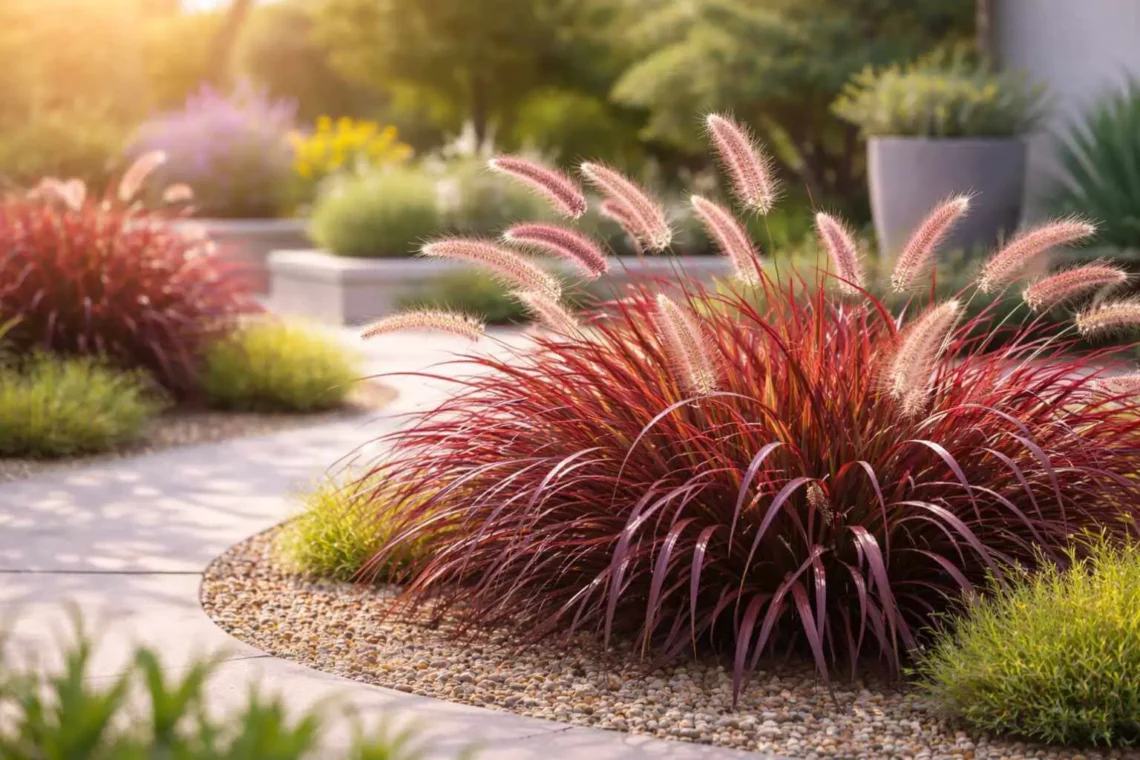
Red fountain grass is a vibrant ornamental and perennial grass variety that enhances garden landscapes with its bold color and graceful movement. Its striking red foliage, arching leaves, and feathery flower spikes make the red fountain grass plant a favorite for borders, mass plantings, and container gardens. Beyond visual appeal, this red fountain grass perennial is appreciated for its low-maintenance qualities, requiring simple and consistent red fountain grass care. Its combination of texture, color, and natural sway in the wind creates dynamic movement in outdoor spaces, making it an ideal choice for both novice and experienced gardeners.
What is Red Fountain Grass?
-
Overview and Botanical Information
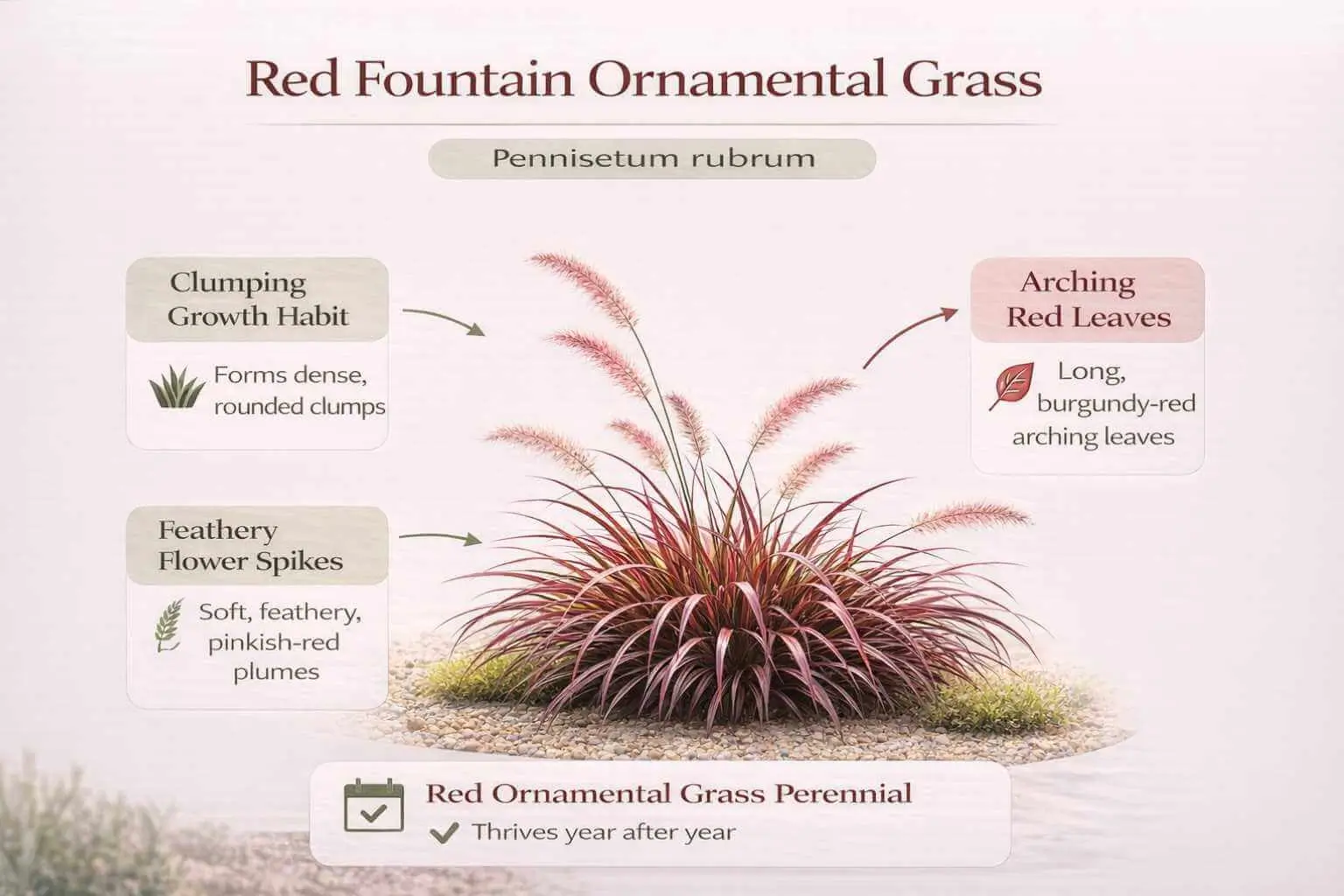
Scientifically named Pennisetum rubrum, red fountain grass is a beautiful red fountain ornamental grass known for its clumping growth habit and arching red leaves. It produces delicate, feathery flower spikes that add softness and motion to landscapes. As a red ornamental grass perennial, it thrives in sunny locations with well-draining soil. The red fountain grass plant is versatile, enhancing borders, containers, and garden beds, while maintaining its vibrant color and texture throughout the growing season with proper care.
-
Types and Varieties
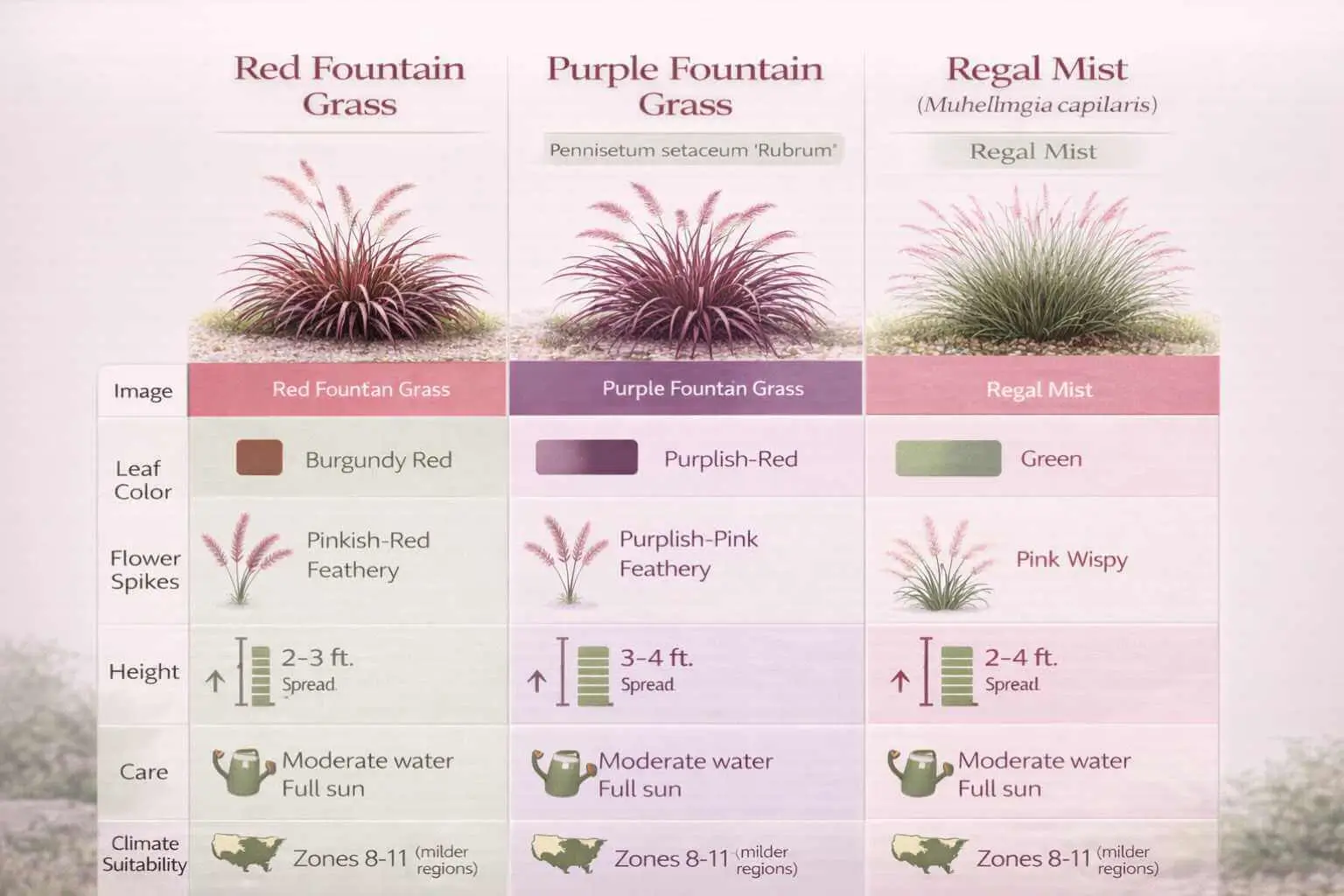
Red fountain grass comes in dwarf and standard varieties, offering options for small or large spaces. Dwarf red fountain grass works well in containers or smaller garden plots, while standard varieties create bold, eye-catching displays. When comparing red fountain grass vs purple fountain grass, differences in leaf color, size, and care requirements become apparent. Other notable types include Regal Mist (Muhlenbergia capillaris) and purple fountain grass, both providing unique textures and seasonal color variations for diverse landscape designs.
Planting Red Fountain Grass
-
Choosing the Right Location
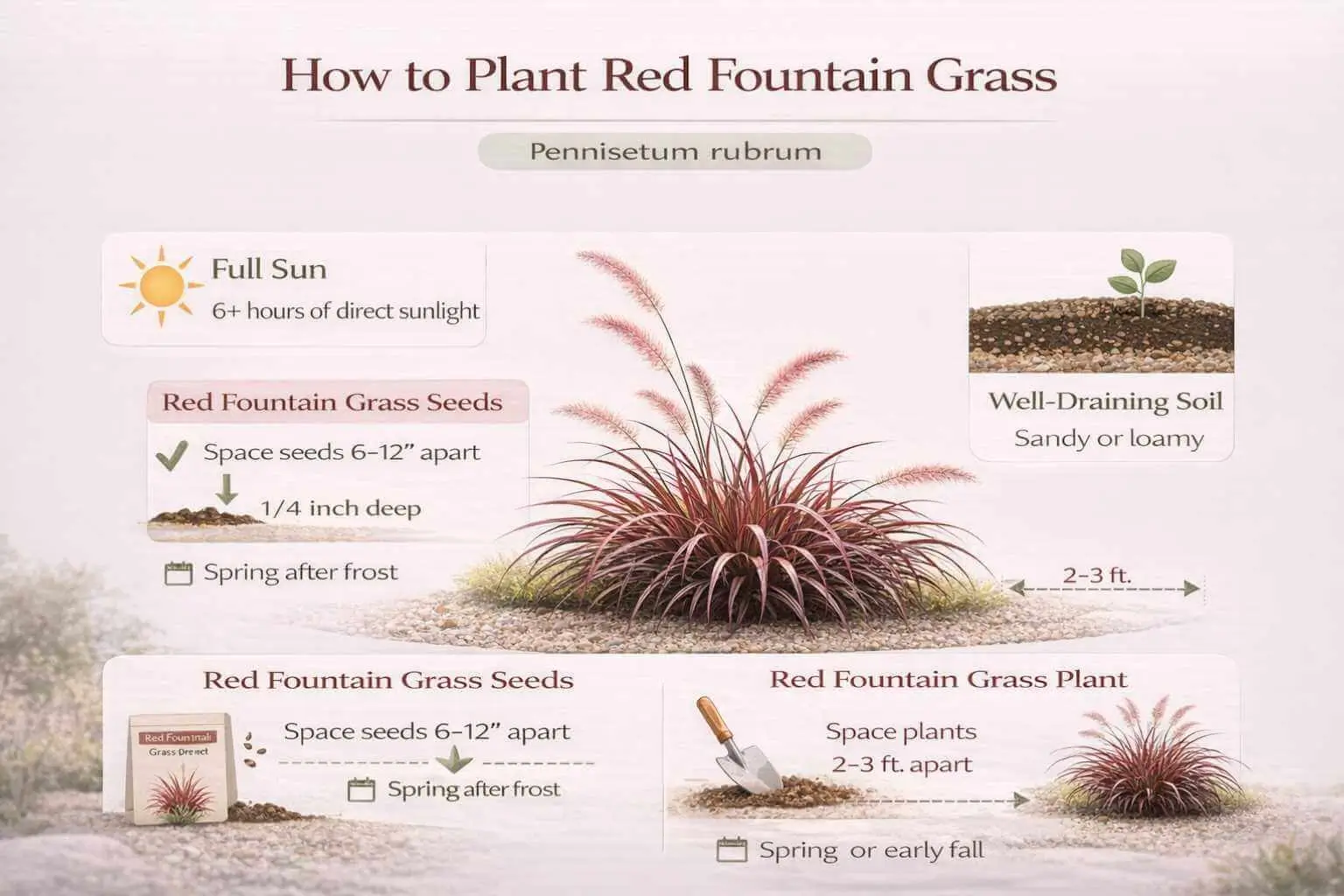
To ensure vibrant growth, plant red fountain grass in full sun, which enhances its red coloration. The soil should be well-draining and moderately fertile, preventing root rot while supporting healthy growth. Red fountain grass is suited to specific USDA zones, including the red fountain grass zone and red fountain grass Florida, where it thrives naturally with minimal intervention.
-
Planting Guidelines
Red fountain grass can be started from seeds or nursery plants, such as red fountain grass seeds or established red fountain grass plants. When planting, space the grasses adequately to allow for clump expansion and growth. Plant seeds or young plants at recommended depths and follow seasonal planting tips to ensure optimal establishment. Early spring or late summer is typically ideal for planting, depending on local climate conditions.
Care and Maintenance of Red Fountain Grass
-
Watering and Soil Care
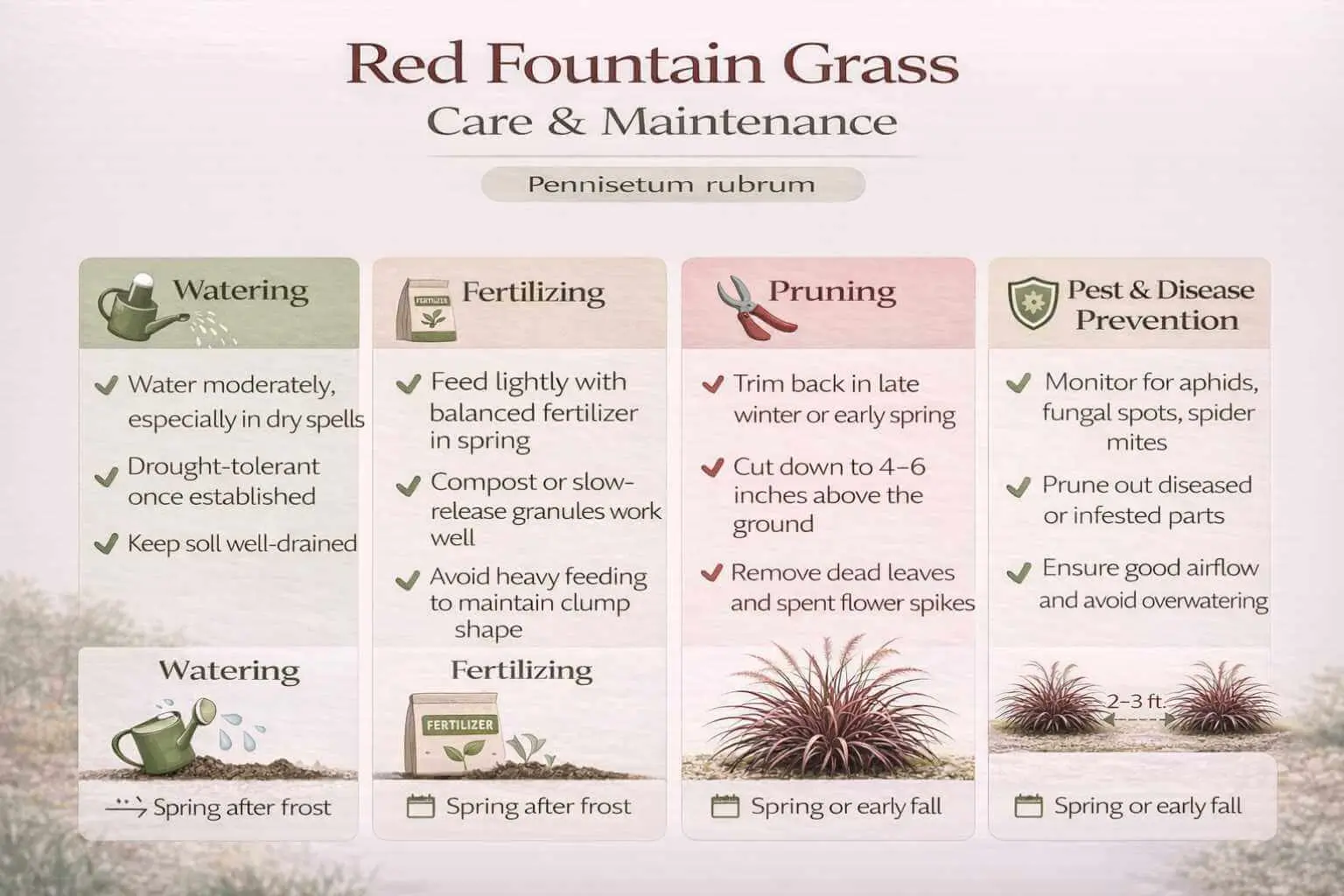
Once established, red fountain grass is moderately drought-tolerant but benefits from regular watering during dry periods. Fertilizer can be applied seasonally to promote vigorous growth and maintain vibrant foliage. Well-drained soil helps prevent root issues while supporting healthy clump formation.
-
Pruning and Seasonal Care
Trimming is essential for maintaining the clumping shape and encouraging new growth. Cut back dead foliage in late winter or early spring to prepare the plant for the growing season. Regular pruning ensures a tidy appearance and enhances the plant’s ornamental impact.
-
Common Issues and Troubleshooting
Red fountain grass is generally low-maintenance but may face minor issues like pests or diseases. Prevent problems by monitoring for infestations and ensuring proper soil drainage. Gardeners with pets should note the toxicity concerns, specifically answering the question: is red fountain grass toxic to dogs? Proper care and location help minimize risks.
Growth and Size
-
Height and Spread
Red fountain grass typically reaches a height of 3–5 feet, depending on the variety. The red fountain grass height contributes to its role as a statement plant in landscapes. Clumps can spread widely, creating lush, textured mounds. Knowing the red fountain grass size helps in planning garden layouts and spacing.
-
Annual vs Perennial Growth
Understanding that red fountain grass is a perennial is important for long-term garden planning. In warmer climates, it will persist year after year, while in cooler zones it may behave as an annual. Its lifespan varies with climate, but with proper red fountain grass care, it provides lasting beauty and structural interest.
Landscaping with Red Fountain Grass
-
Design Ideas and Uses
Red fountain grass works beautifully in borders, containers, mass plantings, and as accent plants. It complements other landscape elements, such as evergreen fountain grass and decorative grass purple, creating contrast and seasonal interest. Its versatility allows designers to craft both formal and naturalistic garden styles.
-
Aesthetic Appeal
The color of red fountain grass shifts subtly through the seasons, from vibrant red to warm bronze tones in autumn. Its graceful movement in wind and feathery texture add depth and elegance to garden designs, enhancing visual interest and creating a dynamic landscape feature.
Red Fountain Grass vs Other Ornamental Grasses
-
Purple Fountain Grass Comparison
Compared to purple fountain grass, red fountain grass exhibits distinct red coloration and slightly different growth patterns. While care requirements are similar, purple fountain grass may adapt better to certain climates. Gardeners should note purple fountain grass care, maintenance, and the variety purple fountain grass rubrum for proper selection.
-
Regal Mist Grass Comparison
Regal Mist (Muhlenbergia capillaris Regal Mist) offers fine-textured foliage and soft pinkish flower plumes. Best planted in sunny, well-drained locations, it complements red fountain grass in mixed borders. Proper timing and care practices ensure optimal performance and visual harmony in landscapes.
Conclusion & Call-to-Action
Red fountain grass is an ideal choice for enhancing garden landscapes with color, texture, and movement. Its perennial nature, striking red foliage, and ease of care make it a versatile and low-maintenance ornamental grass. Gardeners are encouraged to plant, maintain, and enjoy this vibrant grass. For convenience, consider visiting local nurseries to find red fountain grass near me or ordering seeds online for easy home planting.
Learn more: 5+ Stunning Texas Ranger Plants to Transform Your Garden
FAQs
- Is red fountain grass a perennial or annual?
Red fountain grass is primarily a perennial, though in cooler climates it may behave like an annual. With proper care, it can thrive year after year. - How tall does red fountain grass grow?
It typically grows 3–5 feet tall, depending on the variety and growing conditions. - How do I care for red fountain grass in Florida?
Plant in full sun, use well-draining soil, provide moderate watering, and trim dead foliage in winter or early spring. Florida’s climate supports year-round growth. - Is red fountain grass toxic to pets?
No, red fountain grass is generally non-toxic to dogs and cats, but it’s best to discourage chewing to prevent minor digestive upset. - What are the differences between red fountain grass and purple fountain grass?
Red fountain grass has red leaves and flower spikes, while purple fountain grass exhibits purple tones. Care requirements are similar, but each adapts differently to climate conditions. - Can I grow red fountain grass from seeds?
Yes, red fountain grass can be grown from seeds or nursery plants, though seedlings may take longer to reach full size. - What is dwarf red fountain grass, and how is it different?
Dwarf red fountain grass is smaller and ideal for containers or limited spaces, whereas standard varieties grow taller and create bolder landscape statements.