Introduction
The Rio Dipladenia plant is a striking tropical vine admired for its vibrant flowers and lush green foliage. This versatile plant thrives both as a potted specimen and planted directly in the garden, making it suitable for patios, containers, and garden beds alike. Its bold colors and rapid growth allow gardeners to create eye-catching displays easily. In this guide, we will explore rio dipladenia flower varieties, the best ways to grow rio dipladenia in pots or rio dipladenia in ground, along with comprehensive care instructions. We’ll also cover planting tips, perennial vs. annual lifespan, winter care strategies, and safety concerns, ensuring you have all the knowledge to cultivate a healthy, thriving Rio Dipladenia.
What is Rio Dipladenia?
-
Botanical Overview
The rio dipladenia vine is a tropical plant renowned for its vigorous growth and glossy green leaves. As a rio tropical plant, it develops a climbing or trailing habit, making it ideal for trellises, fences, or hanging baskets. The plant produces clusters of trumpet-shaped blooms that attract pollinators while adding ornamental value to gardens and patios. Its adaptable growth habit makes it suitable for both indoor and outdoor cultivation in appropriate climates.
-
Flowering Features
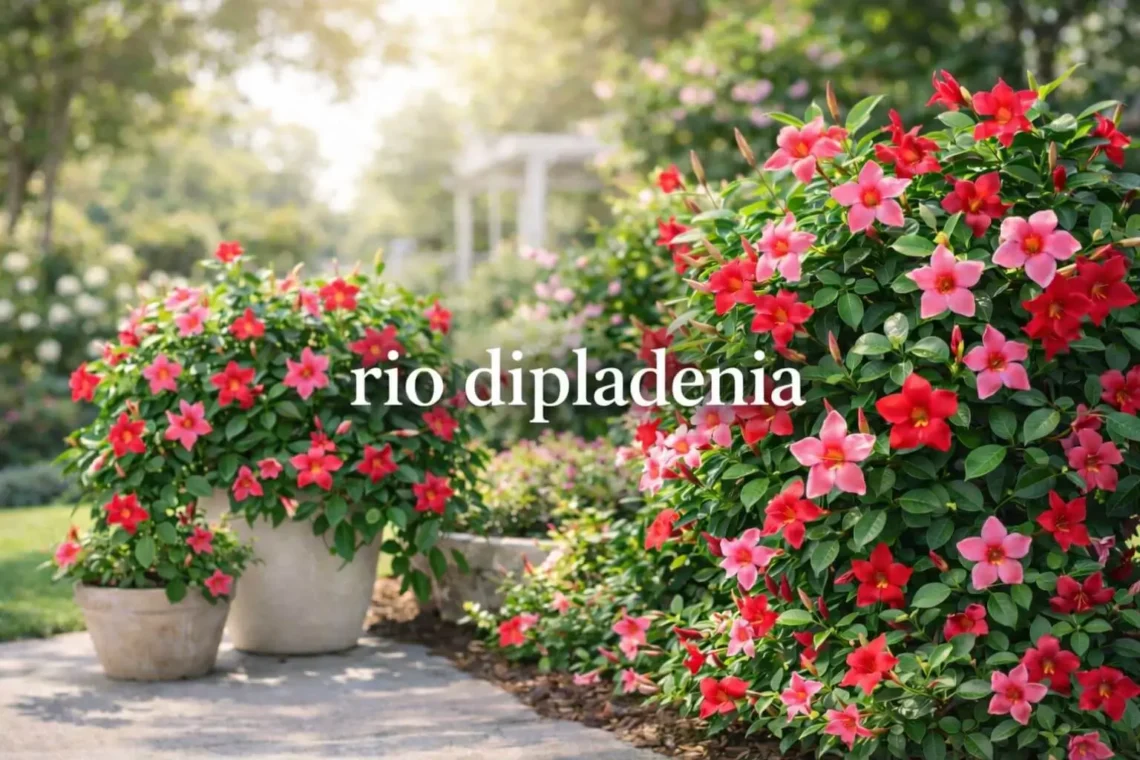
Rio dipladenia flowers are available in a range of bright colors, including pink, red, and white. The rio pink dipladenia is particularly popular for its soft blush hue and extended bloom season, typically from late spring through early fall. With proper sunlight, watering, and fertilization, rio flowers care becomes straightforward, producing continuous, vibrant displays that enhance garden aesthetics. Their long-lasting blooms make Rio Dipladenia an excellent choice for decorative borders, container arrangements, and mixed planting beds.
-
Comparison with Mandevilla
Many gardeners wonder, is mandevilla the same as dipladenia? While closely related, there are notable differences. Dipladenia vs mandevilla typically refers to smaller, bushier growth with thicker leaves in dipladenia, compared to the taller, more vigorous mandevilla vines. Understanding the difference between dipladenia and mandevilla helps gardeners select the right plant for containers or ground planting, depending on space and desired ornamental effect.
Rio Dipladenia Planting and Growth
-
Planting in Pots and Containers
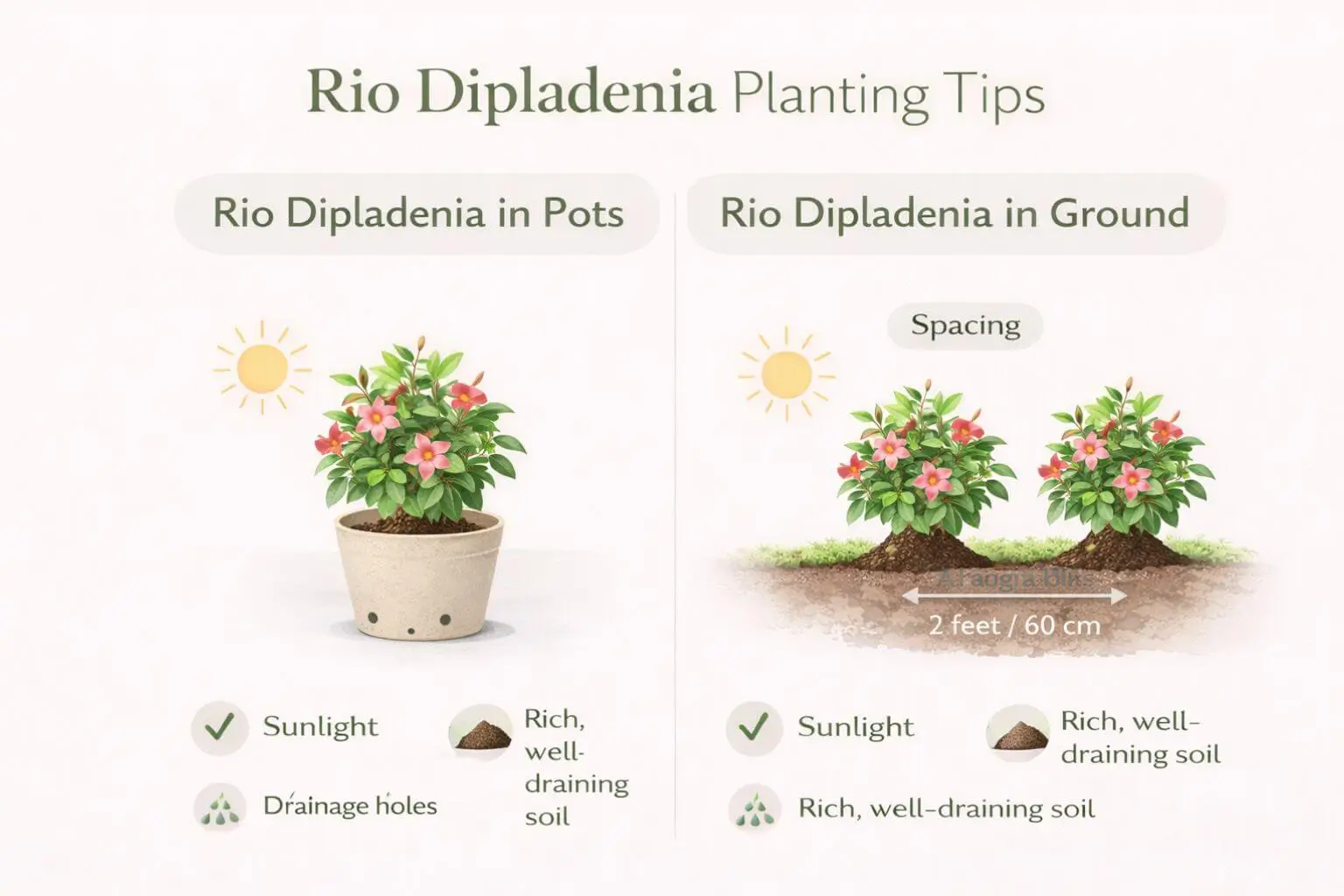
For optimal growth, plant your rio dipladenia in containers using a well-draining potting mix rich in organic matter. Choose containers with adequate drainage holes to prevent waterlogging. Place your rio dipladenia in pots in a location receiving bright, indirect sunlight, ensuring at least 4–6 hours of daily light. Regular monitoring of moisture and occasional fertilization supports strong flowering and healthy foliage. Following proper rio dipladenia plant care will keep potted plants vigorous and blooming.
-
Planting in Ground
When planting rio dipladenia in ground, select fertile soil with good drainage and a sunny spot for maximum flower production. Space multiple plants adequately to allow airflow and accommodate growth. Gardeners in warmer regions can plant directly, while cooler zones may require seasonal protection. Questions like can you plant rio dipladenia in the ground and rio dipladenia zone suitability are essential for long-term success.
-
Growth Patterns
The rio dipladenia bush in ground tends to develop dense, rounded foliage, while trailing or climbing habits can be trained using supports. Both dipladenia bush and dipladenia shrub forms produce prolific blooms along stems and branches, typically flowering from spring through fall. With consistent care, the plant maintains an attractive structure and steady flowering pattern.
Rio Dipladenia Care Guide
-
Watering and Fertilizing
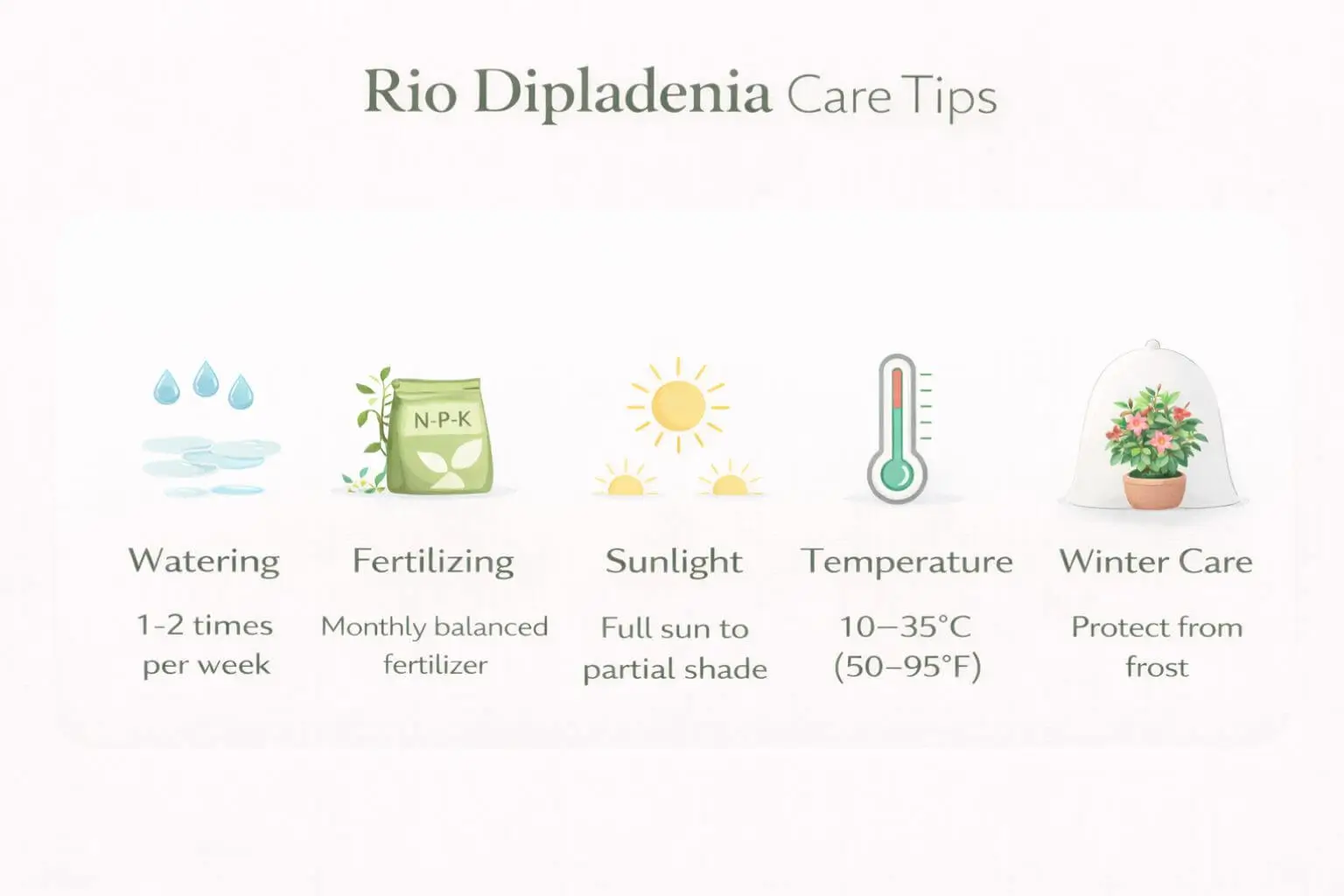
Rio dipladenia care revolves around maintaining even moisture without waterlogging. Regular watering encourages root establishment and lush foliage. Fertilize monthly with a balanced liquid fertilizer to enhance bloom frequency and flower quality. Following general rio plant care and dipladenia plant care guidelines ensures vibrant, long-lasting flowers.
-
Sunlight and Temperature Requirements
Rio dipladenia temperature tolerance ranges from warm tropical conditions to mild subtropical zones. While the plant thrives in full sun, partial shade is acceptable in extremely hot regions. Understanding rio dipladenia cold tolerance and monitoring rio plant in winter conditions helps prevent stress and ensures continuous flowering.
-
Winter Care and Overwintering
In colder climates, rio dipladenia winter care is essential. Bring potted plants indoors or into a greenhouse to prevent frost damage. Techniques like overwintering dipladenia or adjusting indoor care routines allow plants to survive colder months. Proper dipladenia care winter strategies answer the common question: can dipladenia survive winter?
Perennial or Annual? Understanding Lifespan
Lifespan and Regrowth
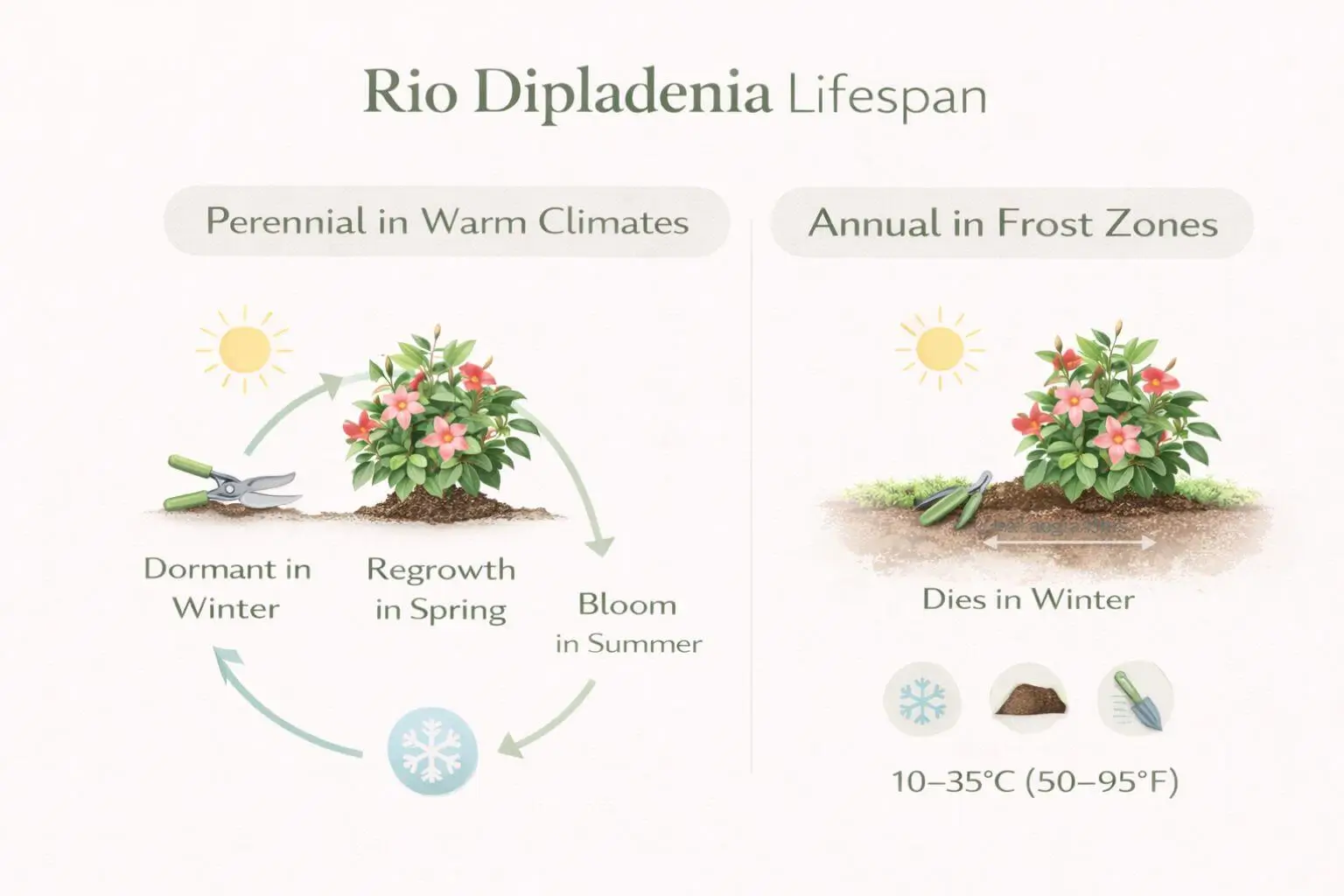
Gardeners often ask if Rio Dipladenia is rio dipladenia annual or perennial. In tropical climates, plants behave as perennials, returning each year (are rio dipladenia perennials). In cooler regions, frost may prevent regrowth (do rio dipladenia come back every year), making them functionally annual. Recognizing is rio dipladenia a perennial in your zone informs planting strategies.
Factors Affecting Longevity
The longevity of Rio Dipladenia depends on climate, soil fertility, and winter protection measures. Proper care significantly influences how long do rio dipladenia last, with optimal conditions extending plant life and flowering potential.
Safety and Resistance
Toxicity Concerns
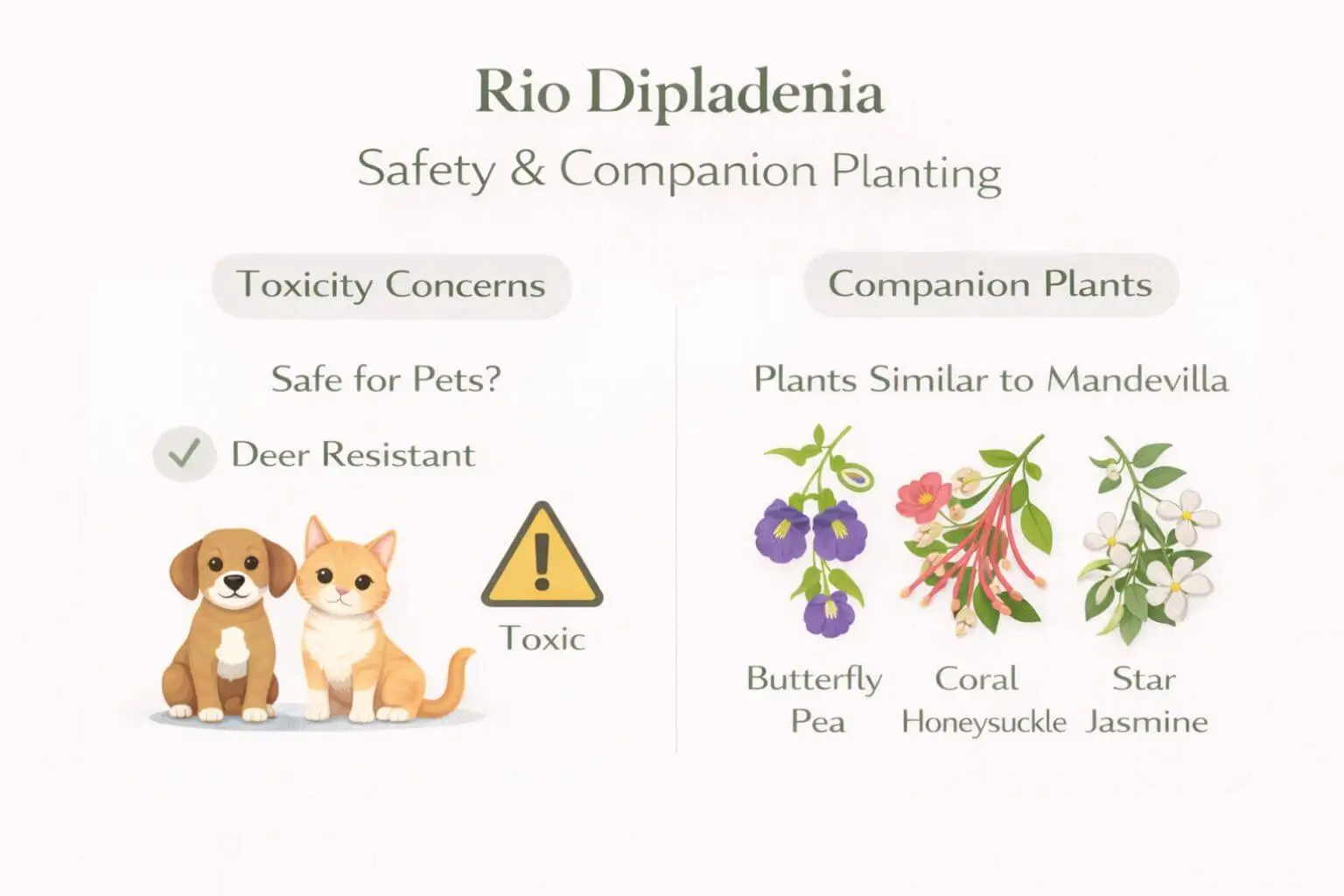
While beautiful, gardeners should be aware that is rio dipladenia poisonous to humans or pets. Certain plant parts are considered toxic: is dipladenia poisonous to dogs, dipladenia toxic to cats, and precautions are advised to ensure dipladenia safe for dogs.
Pest and Deer Resistance
Rio Dipladenia is naturally rio dipladenia deer resistant, making it a practical choice for gardens prone to wildlife browsing. Common pests are manageable with standard plant care routines, ensuring minimal disruption to plant health.
Tips for Buying and Choosing Rio Dipladenia
-
Available Varieties
Available types include vibrant colors and forms, from climbing vines to compact shrubs. Popular options include rio dipladenia plant varieties and rio pink dipladenia, catering to aesthetic and spatial preferences.
-
Where to Buy
Garden centers, nurseries, and reputable online sellers provide rio dipladenia for sale, making it easy to source plants suited for your climate and planting goals.
-
Companion Plants
For complementary landscaping, choose plant like mandevilla or plants similar to mandevilla. These options harmonize with Rio Dipladenia in terms of color, growth habit, and tropical appeal.
Conclusion
Growing rio dipladenia plant offers gardeners a blend of vibrant flowers, flexible planting options, and manageable care routines. Whether cultivated in containers or rio dipladenia in ground, consistent attention to watering, sunlight, and winter protection ensures stunning blooms. By understanding rio dipladenia care, perennial vs. annual habits, and safety considerations, you can confidently introduce this tropical beauty to your home garden or patio.
Learn more: 5+ Stunning Benefits of Trachelospermum Jasminoides You’ll Love
Frequently Asked Questions
- Is Rio Dipladenia an annual or perennial plant?
Rio Dipladenia acts as a perennial in warm climates, returning each year, but may behave as an annual in frost-prone areas. - How do I care for Rio Dipladenia in winter?
Protect plants from frost by bringing potted specimens indoors, reducing watering, and maintaining bright, indirect light. - Can Rio Dipladenia be grown in pots or containers?
Yes, Rio Dipladenia thrives in pots with well-draining soil, regular watering, and adequate sunlight exposure. - Is Rio Dipladenia safe for pets?
Parts of the plant can be toxic. Avoid ingestion by dogs and cats, and place plants out of reach. - What’s the difference between Rio Dipladenia and Mandevilla?
Dipladenia is generally bushier with smaller leaves, while Mandevilla is taller with vigorous climbing habits. - How long does Rio Dipladenia last each year?
Under optimal care, Rio Dipladenia can flower for multiple seasons, though longevity depends on climate, soil, and winter protection.