
Introduction
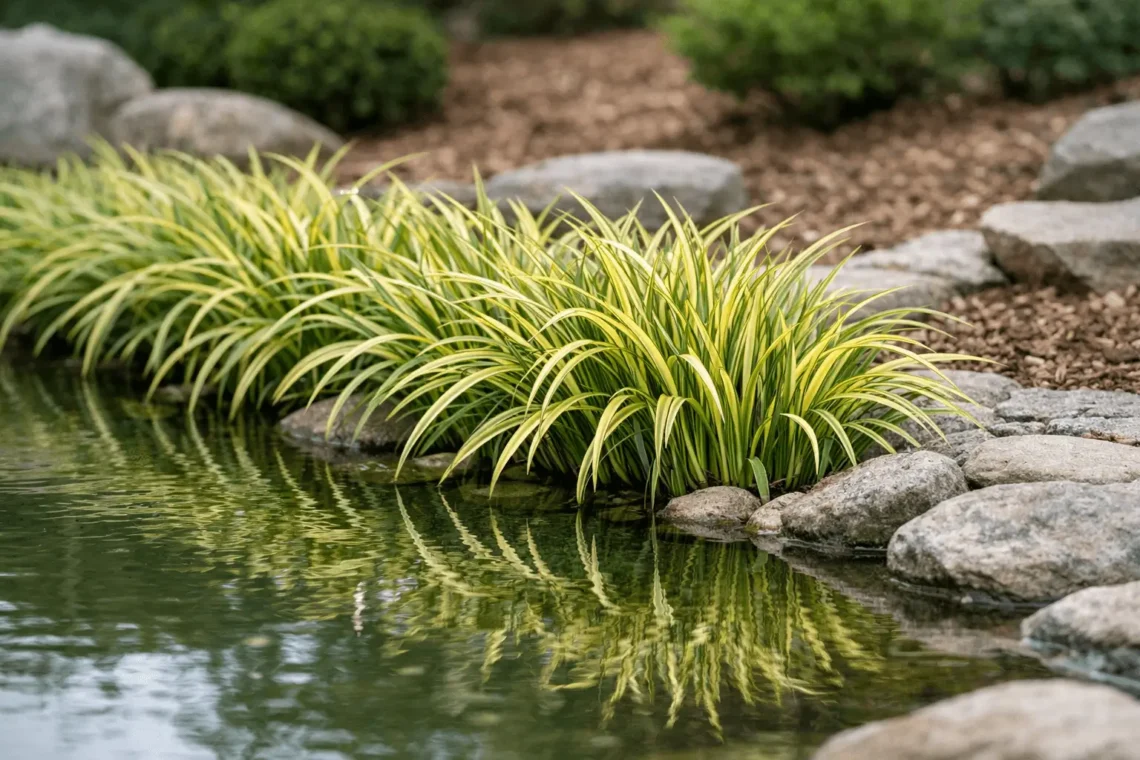
Sweet flag grass is a low-growing ornamental plant valued for its graceful, grass-like foliage and strong adaptability to moist environments. It is widely used in gardens, water features, and containers because of its neat growth habit and year-round visual appeal. Sweet flag grass forms dense clumps of narrow, arching leaves that add texture and movement without becoming invasive or unruly.
This plant is commonly known as sweet flag, sweetflag, and flag grass, names that reflect both its appearance and traditional use in landscape design. Botanically, sweet flag grass is identified as Acorus gramineus, a species known for its refined form, tolerance of wet soil, and suitability for decorative planting in both small and large spaces.
Sweet Flag Grass Plant Overview
Botanical Name and Classification
The botanical name of sweet flag grass is Acorus gramineus, a perennial plant belonging to the Acorus genus. It is closely related to acorus sweet flag grass, a group of ornamental plants known for their aromatic foliage and moisture-loving nature.
Unlike traditional ornamental grasses, sweet flag grass is not a true grass. It lacks the hollow stems and seed heads typical of grasses and instead grows from rhizomes, producing soft, blade-like leaves. This distinction makes sweet flag grass easier to manage and better suited for wet areas where many ornamental grasses struggle.
Common Names and Varieties
Sweet flag grass is known by several common names that are often used interchangeably in gardening and landscaping contexts:
- Sweet flag
- Japanese sweet flag
- Dwarf sweet flag
- Flag grass
- American flag grass
These names usually reflect the plant’s size, origin, or growth habit rather than major botanical differences.
Types of Sweet Flag Grass (Popular Varieties)
Japanese Sweet Flag (Acorus gramineus)
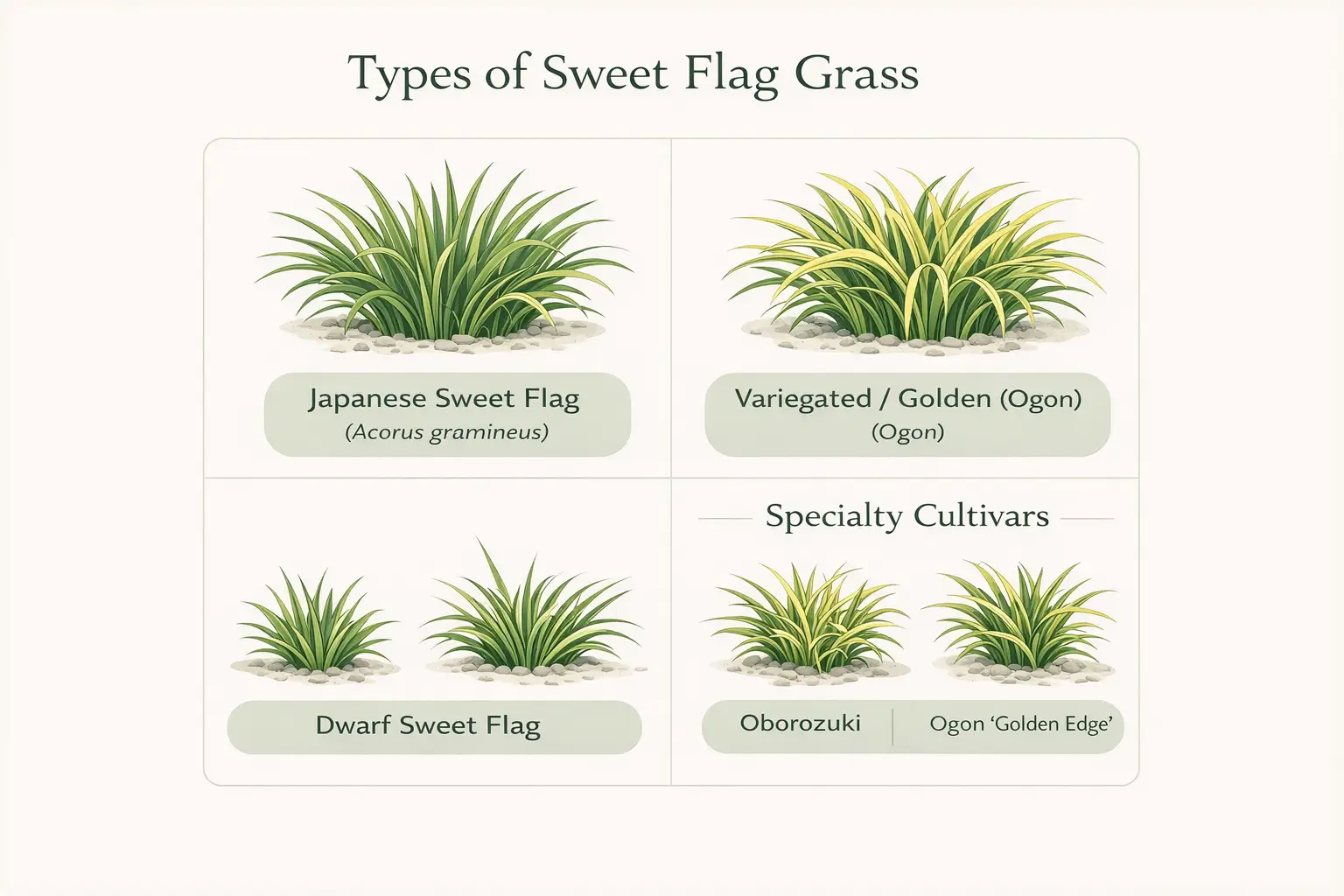
Japanese sweet flag grass is the most widely grown form of Acorus gramineus. It features fine-textured green foliage and a compact, mounded shape that works well in borders and water gardens. This variety is often referred to as Japanese sweet flag acorus gramineus or Acorus gramineus Japanese sweet flag, especially in nursery labeling and landscape design references.
Variegated & Golden Varieties
Variegated and golden forms of sweet flag grass are prized for their bright foliage and strong ornamental impact. Common selections include:
- Golden variegated sweet flag
- Acorus variegated sweet flag
- Ogon sweet flag
- Acorus ogon sweet flag
- Sweet flag ogon
- Grass Ogon
- Ogon grass
These varieties display yellow or cream striping along the leaves, making them especially effective as accent plants in shaded or water-adjacent areas.
Dwarf Sweet Flag Varieties
Dwarf sweet flag varieties maintain a compact growth habit, typically staying low and tidy throughout the year. Dwarf sweet flag is ideal for:
- Small garden spaces
- Containers and planters
- Border edging
Its controlled size and slow spread make it suitable for formal and informal designs alike.
Specialty Cultivars
Several specialty cultivars offer unique color patterns and refined foliage texture, including:
- Oborozuki sweet flag
- Acorus ogon grass
- Acorus grass
- Ogon plant
These cultivars are often selected for collectors’ gardens or design-focused landscapes where subtle color variation is desired.
How to Grow Sweet Flag Grass
Light Requirements
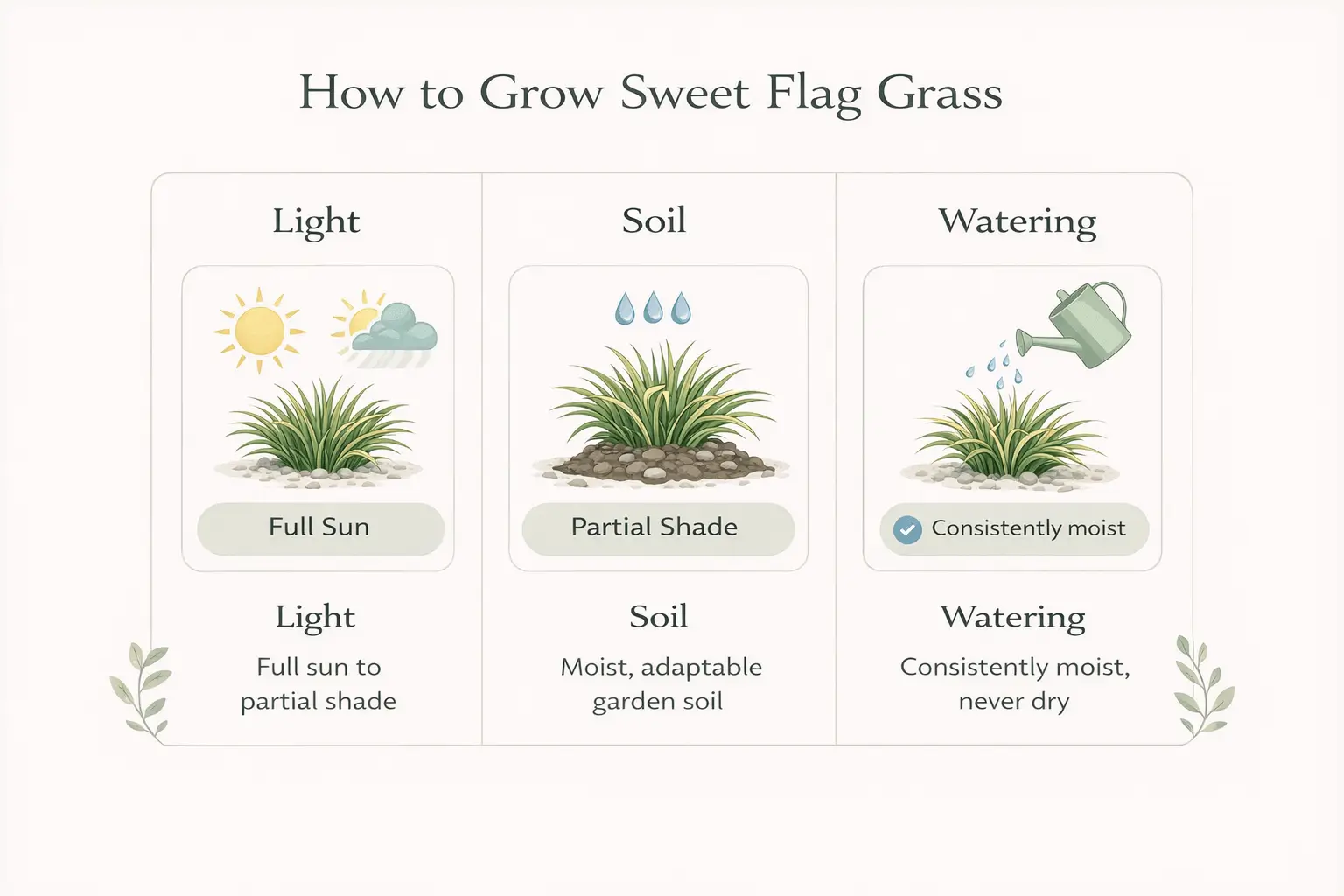
Sweet flag grass grows well in both full sun and partial shade. While it tolerates full sun in consistently moist soil, partial shade is often ideal for maintaining leaf color and preventing stress. Variegated varieties perform best with bright, indirect light, which enhances striping without scorching the foliage.
Soil Requirements
This plant prefers consistently moist soil and performs exceptionally well in damp or low-lying garden areas. Sweet flag grass adapts easily to standard garden soil as long as it does not dry out completely. It is also suitable for wet locations where drainage is limited.
Watering Needs
Sweet flag grass has a moisture-loving nature and should never be allowed to dry out for extended periods. Regular watering is essential, especially in containers or sunny locations. Its tolerance for wet conditions makes it highly suitable as a sweet flag pond plant or marginal planting near water features.
Sweet Flag Grass as a Pond & Water Garden Plant
Why Sweet Flag Works in Ponds
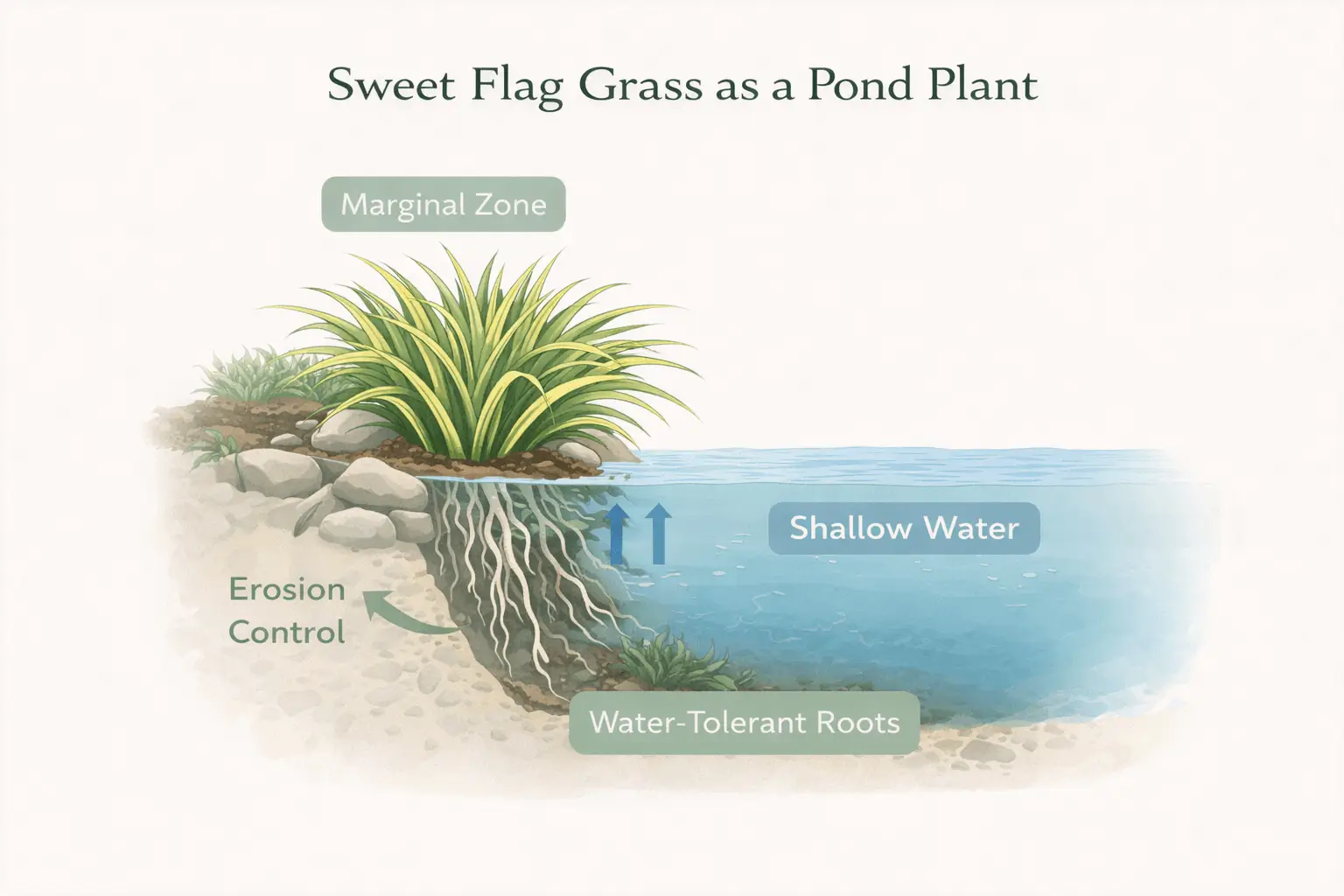
Sweet flag grass thrives in shallow water and saturated soil, making it an excellent choice for ponds and water gardens. It tolerates standing water at the roots and helps stabilize soil along edges. Its dense root system also contributes to erosion control, particularly along pond margins.
Planting Sweet Flag in Ponds
When used as a sweet flag pond plant, placement is important for long-term success. It should be positioned in shallow water or consistently wet soil rather than deep submerged zones. Ideal conditions include:
- Shallow water depth with the crown above water
- Marginal planting zones along pond edges
- Stable placement to prevent floating or uprooting
Fertilizing Sweet Flag Grass
Does Sweet Flag Grass Need Fertilizer?
Sweet flag grass has low to moderate feeding needs and does not require frequent fertilization. In nutrient-rich soil or pond environments, it often grows well without additional feeding.
Best Fertilizer Options
When fertilization is needed, a balanced fertilizer for ornamental grass is sufficient. An ornamental grass fertilizer applied lightly in spring supports healthy foliage development. Over-fertilizing should be avoided, as excessive nutrients can reduce leaf color quality and encourage weak growth.
Sweet Flag Grass Care & Maintenance
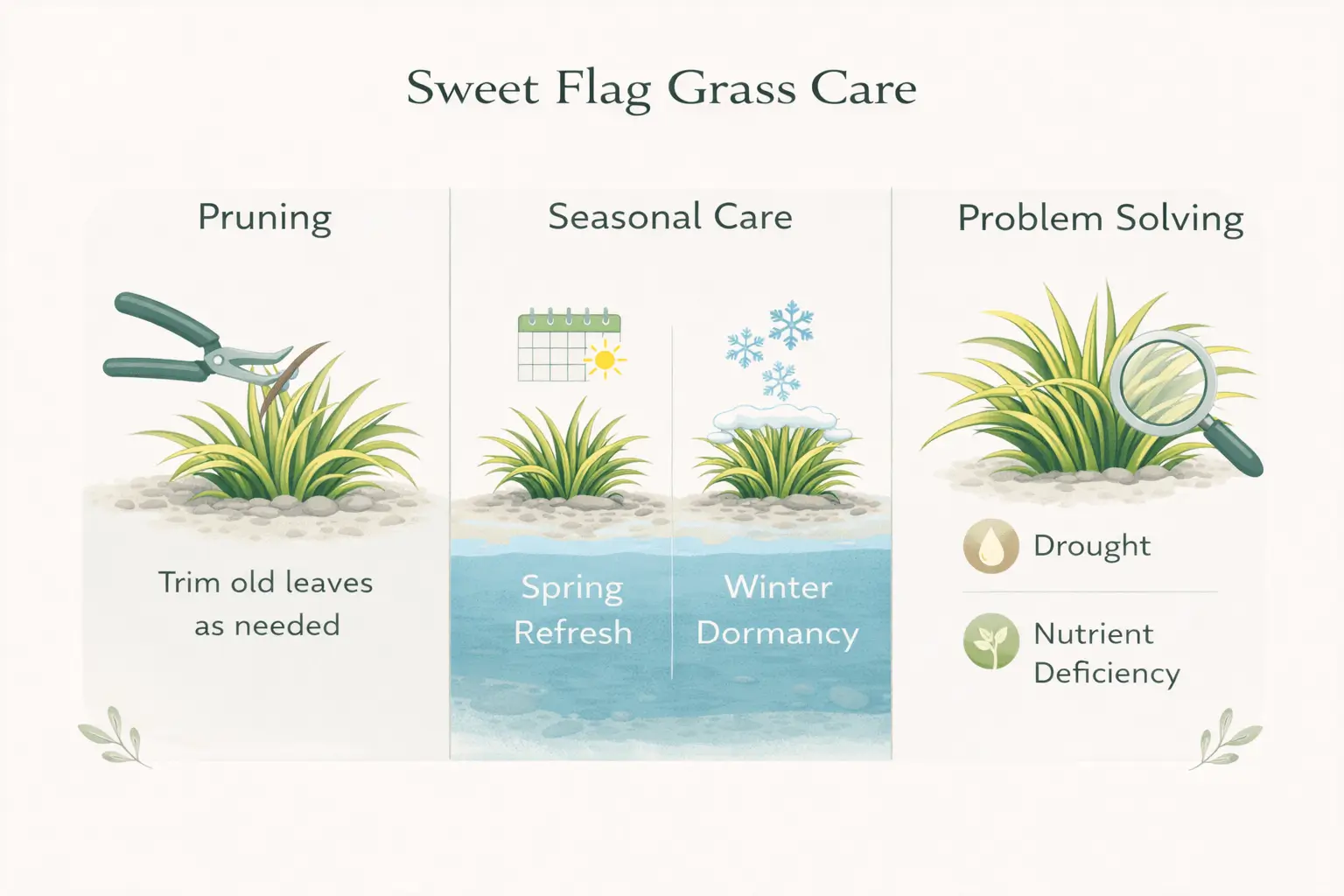
Pruning and Trimming
Maintenance is minimal and primarily involves removing old or damaged leaves. Trimming back dead foliage improves appearance and encourages fresh growth, especially at the start of the growing season.
Seasonal Care Tips
In spring, a light cleanup refreshes the plant and promotes new growth. Sweet flag grass shows good winter tolerance and may remain evergreen or semi-evergreen depending on climate. In colder regions, growth slows, but the plant typically returns without issue.
Common Problems
Occasional issues may include yellowing leaves, often caused by nutrient imbalance or water stress. Overwatering combined with poor drainage can lead to root problems, while dry soil can cause leaf discoloration. Maintaining consistent moisture resolves most issues.
Landscape Uses of Sweet Flag Grass
Garden & Border Uses
Sweet flag grass works well as an edging plant along paths and borders. Its fine texture provides contrast when paired with broad-leaf plants, making it an effective accent grass in landscape design.
Container & Indoor Accent Uses
This plant adapts well to containers and decorative pots, making it suitable for patios, balconies, and entryways. When provided with adequate moisture and light, it also functions as a refined indoor accent plant.
Sweet Flag Grass Leaves & Visual Appeal
Leaf Shape, Color & Texture
Sweet flag leaves are narrow, arching, and soft in texture. Depending on the variety, foliage may be solid green or display variegated striping in yellow or cream tones. The clean lines of the leaves contribute to a polished ornamental look.
Ornamental Value Throughout the Year
Sweet flag grass maintains ornamental value across seasons. Its evergreen to semi-evergreen nature ensures continued texture and color, while its fine foliage creates contrast against larger plants and hardscape elements throughout the year.
Conclusion — Why Sweet Flag Grass Is a Versatile Ornamental Plant
Sweet flag grass stands out as a versatile ornamental plant because of its clean form, moisture tolerance, and wide range of landscape uses. Its grass-like foliage adds year-round texture, while its adaptability allows it to thrive in ponds, water gardens, borders, and containers. Sweet flag grass performs especially well in damp soils and marginal water zones where many other ornamentals fail.
Whether used as a pond-edge stabilizer, a soft border accent, or a decorative container plant, sweet flag grass offers reliable performance with minimal maintenance. Gardeners looking for a refined, low-growing plant that combines beauty with practicality will find sweet flag grass an excellent addition to both modern and traditional landscapes.
Read Also: 7+ Powerful Purple Heart Plant Indoor Benefits for Health & Home
FAQs
Is sweet flag grass easy to grow for beginners?
Yes, sweet flag grass is easy to grow and well suited for beginners. It requires consistent moisture, basic light conditions, and minimal pruning, making it a low-maintenance ornamental plant.
Can sweet flag grass grow in water or ponds?
Sweet flag grass can grow in shallow water and is commonly used as a pond or water garden plant. It performs best in marginal zones where the roots stay wet but the crown remains above water.
What is the difference between Japanese sweet flag and sweet flag grass?
Japanese sweet flag refers specifically to Acorus gramineus, while sweet flag grass is a broader term used for ornamental sweet flag varieties. Japanese sweet flag is the most commonly grown and recognized form.
Does sweet flag grass need fertilizer regularly?
Sweet flag grass does not need frequent fertilization. In most garden and pond settings, natural soil nutrients are sufficient. Light feeding in spring is optional if growth appears weak.
How tall does dwarf sweet flag grow?
Dwarf sweet flag typically grows between 6 and 12 inches tall. Its compact size makes it ideal for borders, containers, and small garden spaces.
Is sweet flag grass invasive?
Sweet flag grass is not considered invasive. It spreads slowly through rhizomes and remains well-behaved in gardens, containers, and water features when properly maintained.



9 Comments on “7+ Stunning Reasons Sweet Flag Grass Transforms Gardens”